It was listed by Jason Clarke Antiques. Sold pieces stay on Sellingantiques as a record of what has passed through, and the next one is rarely far away.
Jason Clarke Antiques has dated this piece to the 1860s.
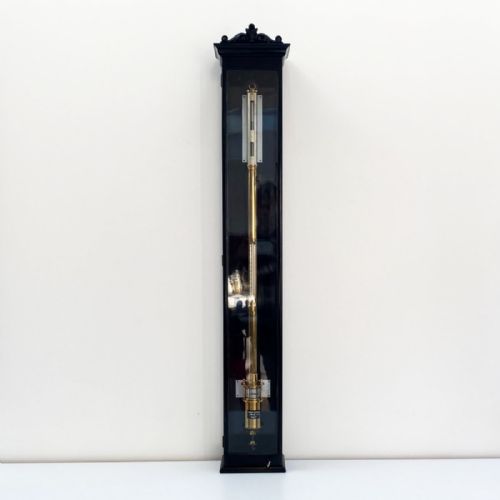
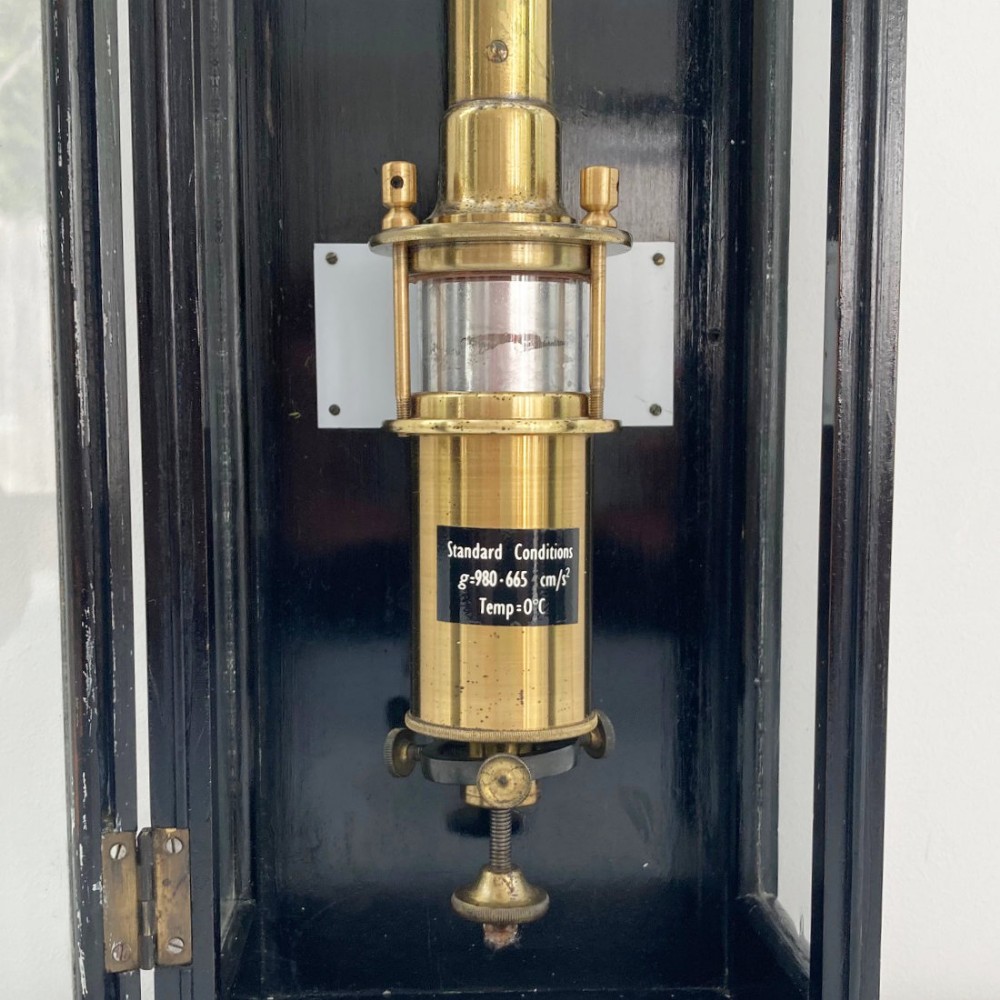
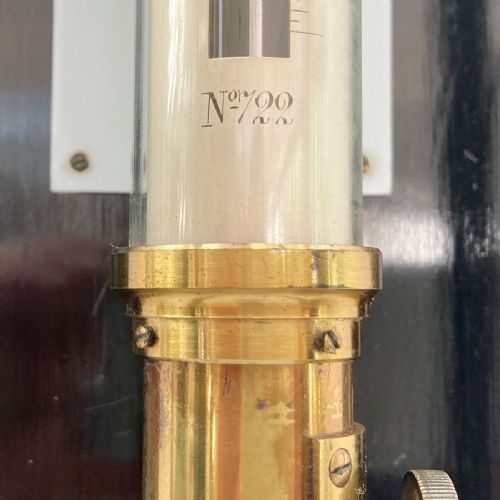
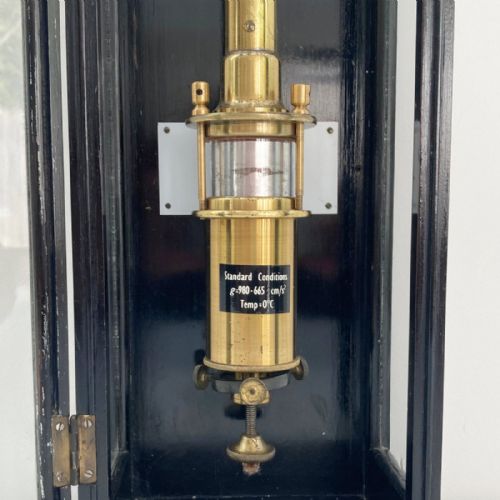
Comprised of a tubular brass body hung from a brass ring at the tip and with a brass surround at the base into which the lower part of the cistern is stabilised and levelled by three screws. The main part of the cistern is fashioned from a glass tube held down by a collar and screws around the outside and which allows the mercury level to be visible to the observer. A small internal spike hanging from the ceiling of the cistern inside allows the contents to be adjusted and levelled ahead of measurement.
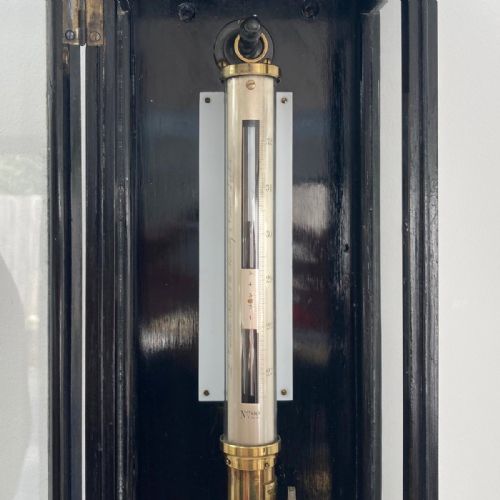
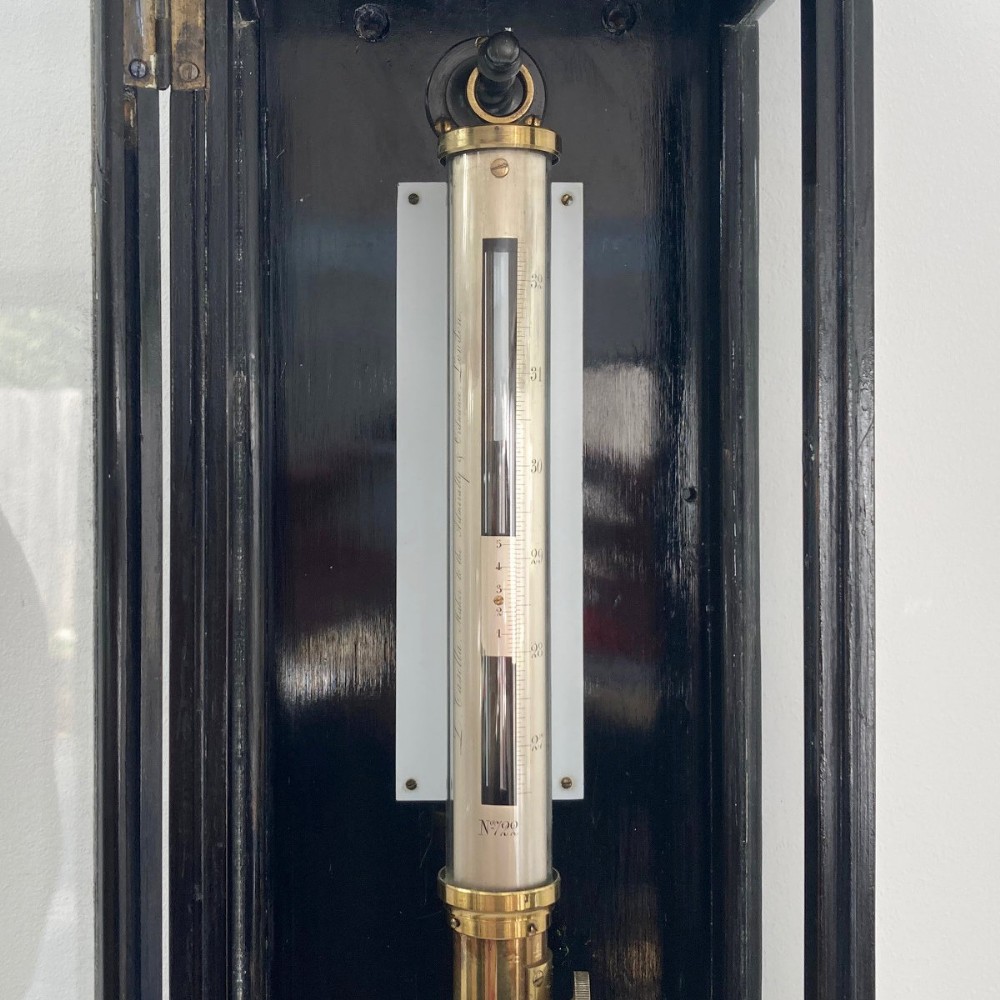
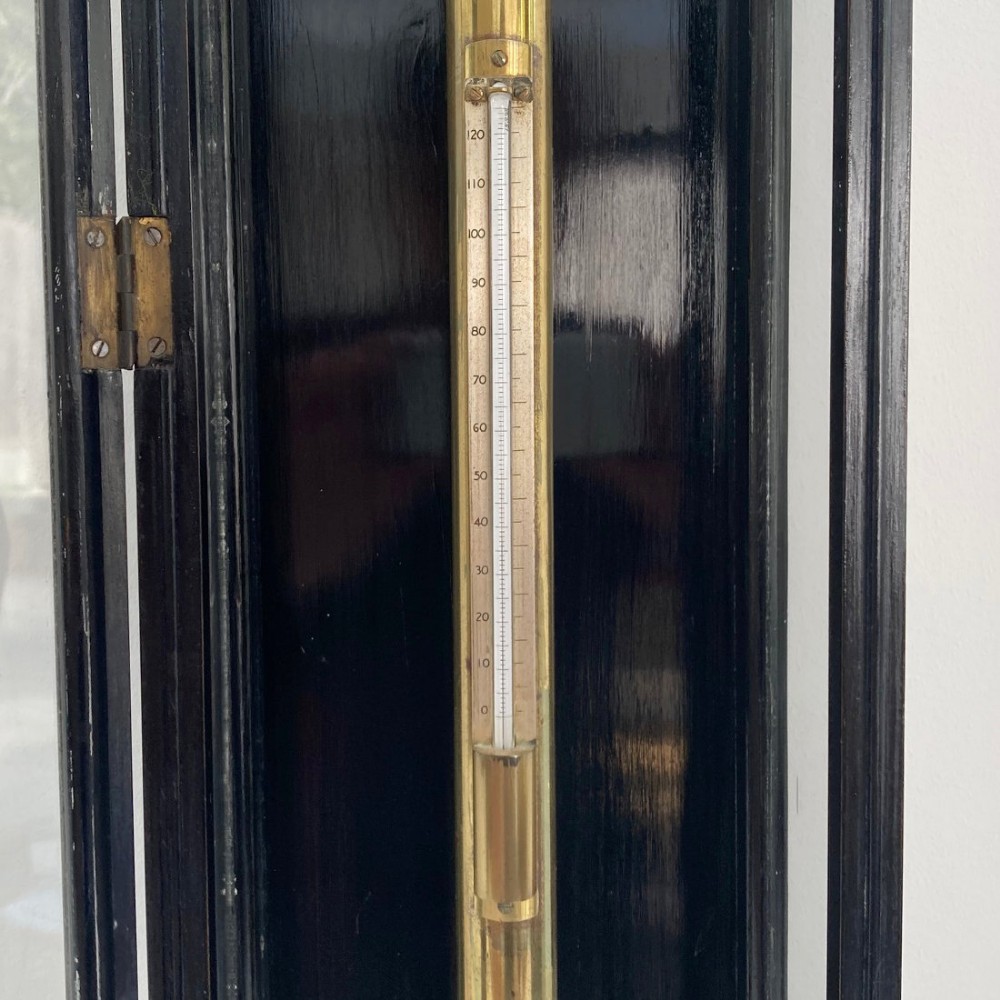
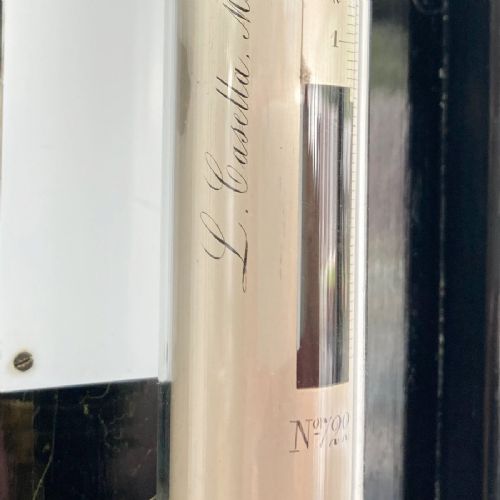
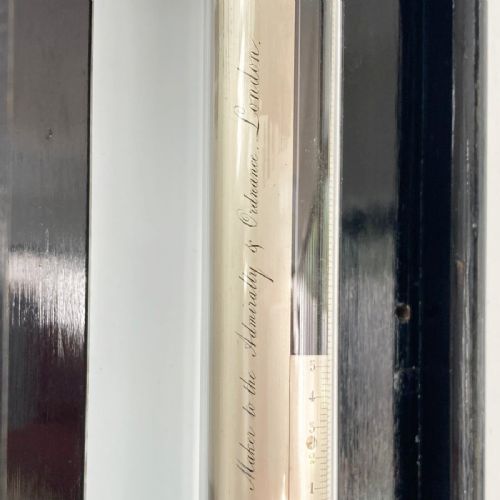
The glass tube rises up through the brass body onto which an enamel backed and engraved Fahrenheit thermometer with brass protective casing is provided at the front. Where the tube reaches the dial at the top, the centre of the tube is cut away on back and front in order that the level can be observed against the scale. The silvered scale itself is engraved for 27 to 32 inches of barometric pressure to the right hand side and the left is beautifuly engraved with the maker’s name, L. Casella, Maker to the Admiralty & Ordnance, London. The base section has the serial No: 722.
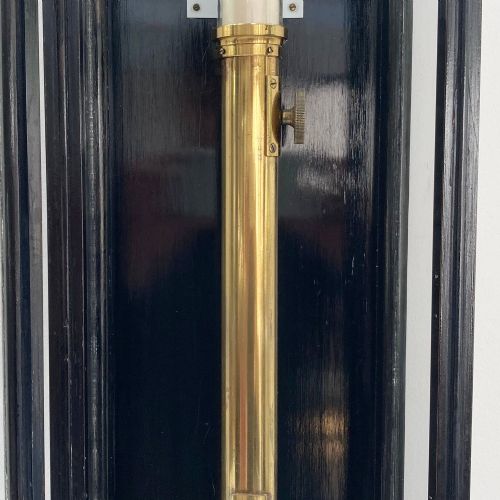
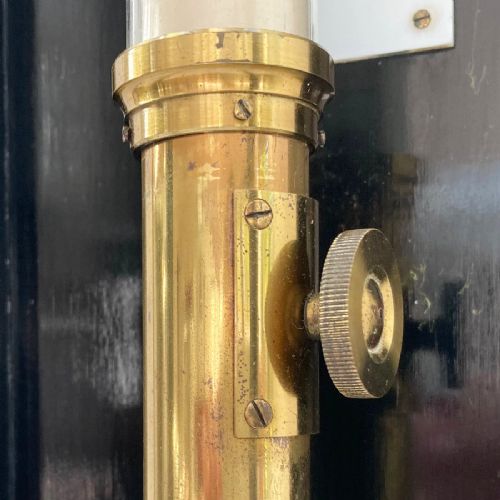
The centre of the scale also contains a Vernier for more precise reading and is operated by a knurled brass turn to the bottom right of the scale. The dial is surrounded by a protective glass sleeve which may be removed by unscrewing the domed finial to the tip of the instrument.
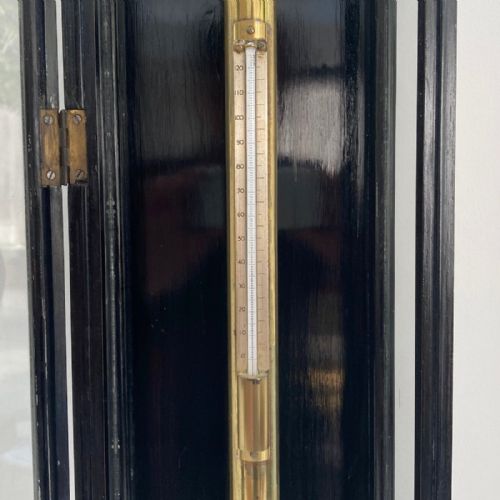
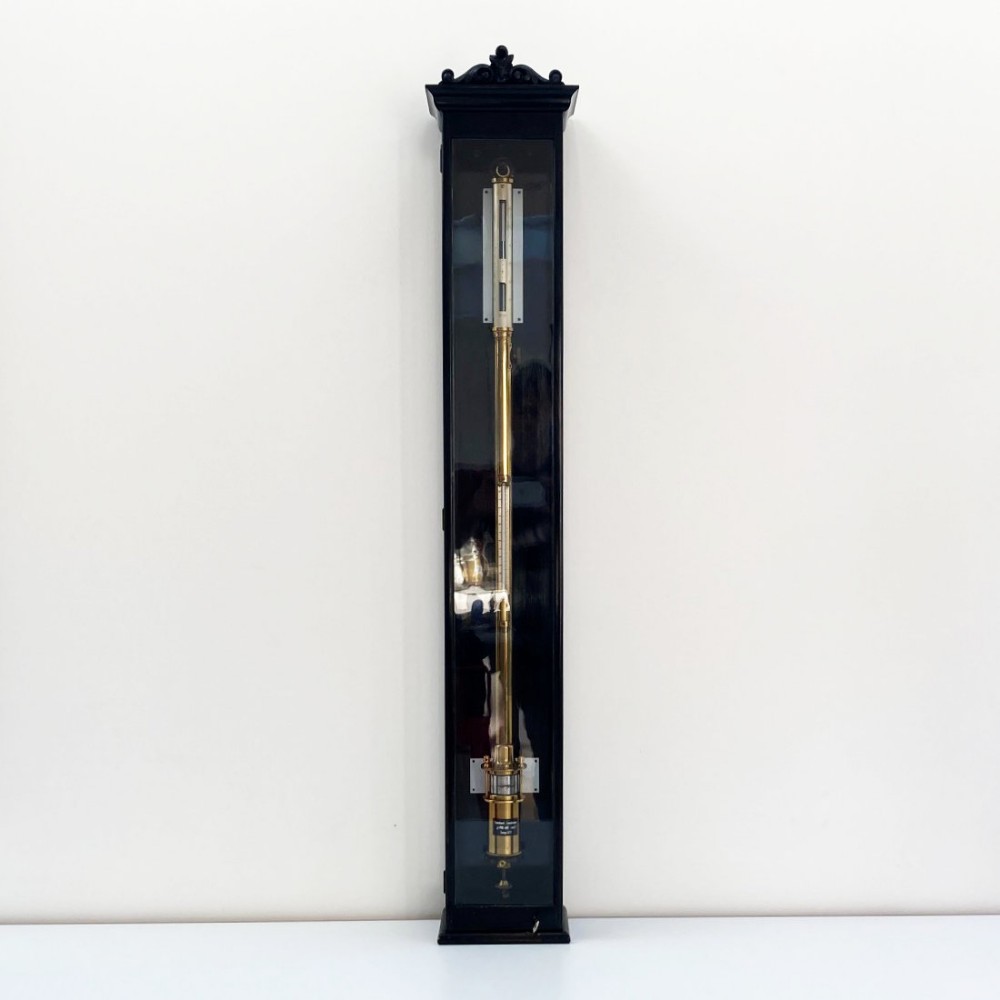
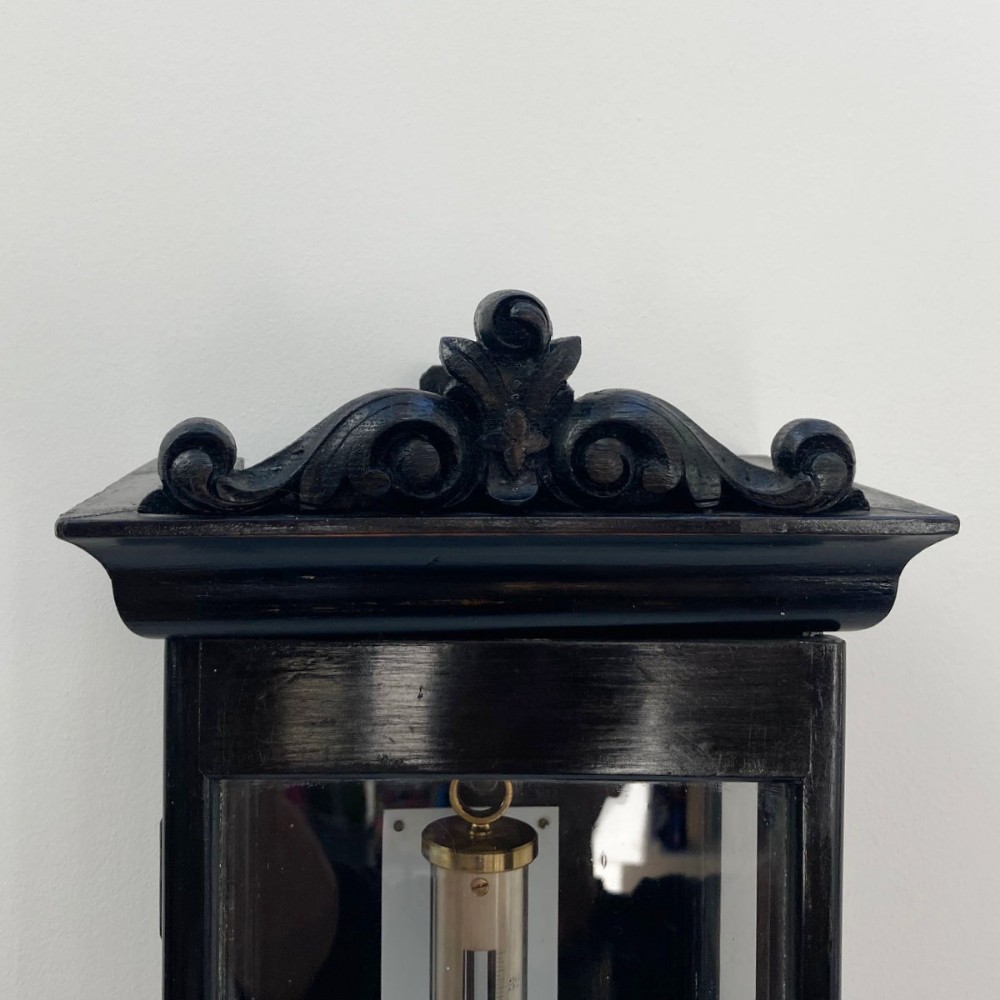
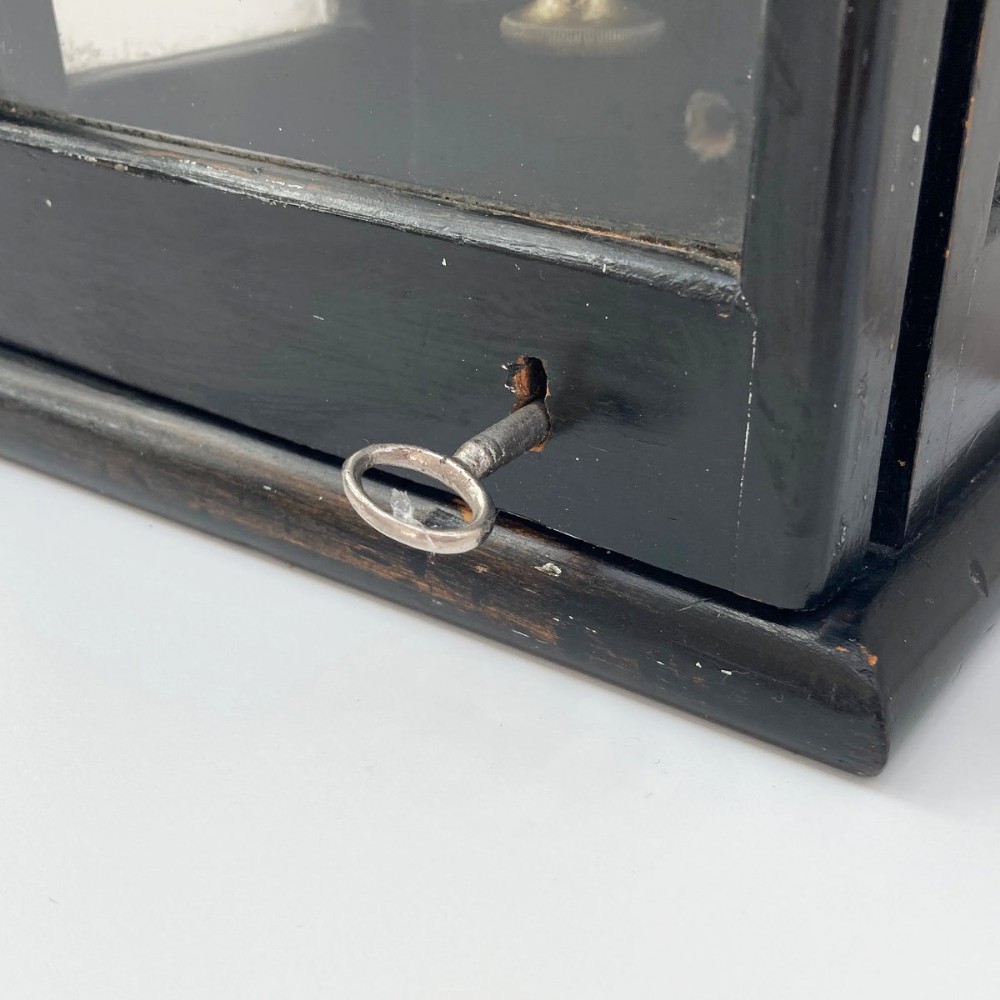
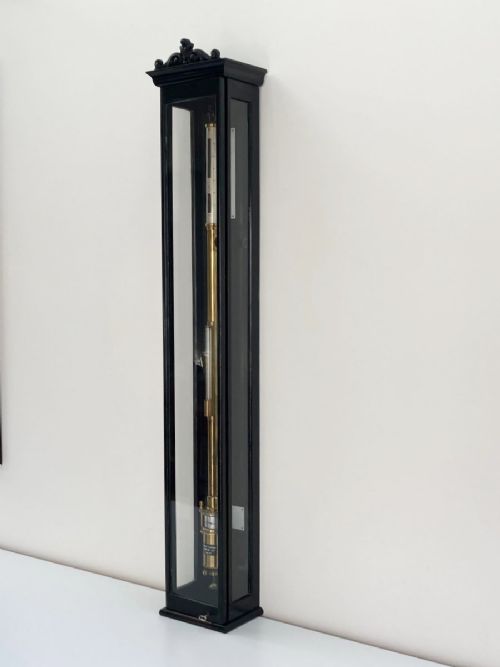
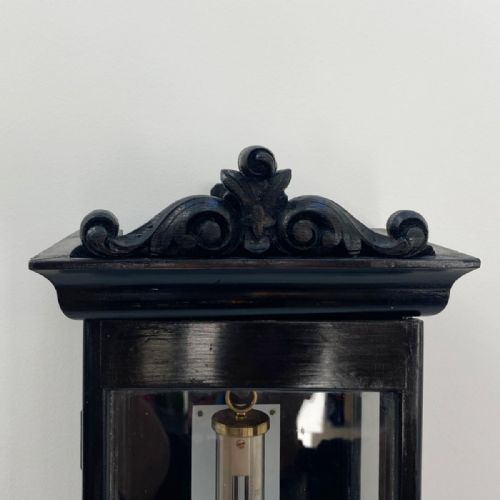
The barometer comes complete with its original protective glazed case with hinged door and working lock and key to the base. The internal back wall is provided with white plastic backing for the cistern and the dial to ensure that the levels can be properly assessed. Clearly meant for display, this unusual example has been ebonised and has also been provided with a small and well executed carved pediment to the top, giving it a little more decorative distinction than others.
The maker, Luigi Pasquale Casella was the son of a musician who came to The British Isles in the Early Nineteenth Century and the anglicised “Louis” was born in Edinburgh in 1812. His Father eventually rose to be a music tutor to George III’s daughters but by the 1830’s, his son had apprenticed to Cesar Tagliabue, a noted Italian scientific instrument maker who had been in London since the turn of the century.
Casella eventually married Tagliabue’s daughter in 1837 and shortly after formed the partnership of Tagliabue and Casella with his new father in law in 1838. Tagliabue was already known to have been exporting his products to South America and Europe and must have provided Casella with a perfect grounding in both instrument making and more importantly in the business of selling them.
It is somewhat strange that this partnership should ever had existed given that Cesar is known to have had three sons, John, Anthony & Angelo but presumably his focus was on providing his daughter and her husband an equally good opportunity in life. The numerous Tagliabue’s listed in trade directories of the period would suggest that the family remained close knit in any case and the son John also went on to form an early partnership with Joseph Zambra prior to the latter’s more famous partnership with Henry Negretti in 1850.
Cesar Tagliabue died in 1844 leaving the business to be solely managed by his son in law Louis Casella and the under his long stewardship became one of the most renowned scientific instrument making firms of the nineteenth century, providing products to the likes of Darwin and Livingstone. Cordial relations were almost certainly maintained with Negretti & Zambra over the years as Casella’s catalogue of the 1860’s shares numerous similarities
Jason Clarke Antiques has dated this piece to the 1860s.
You can view the stock and full dealer information on the Jason Clarke Antiques Profile Page
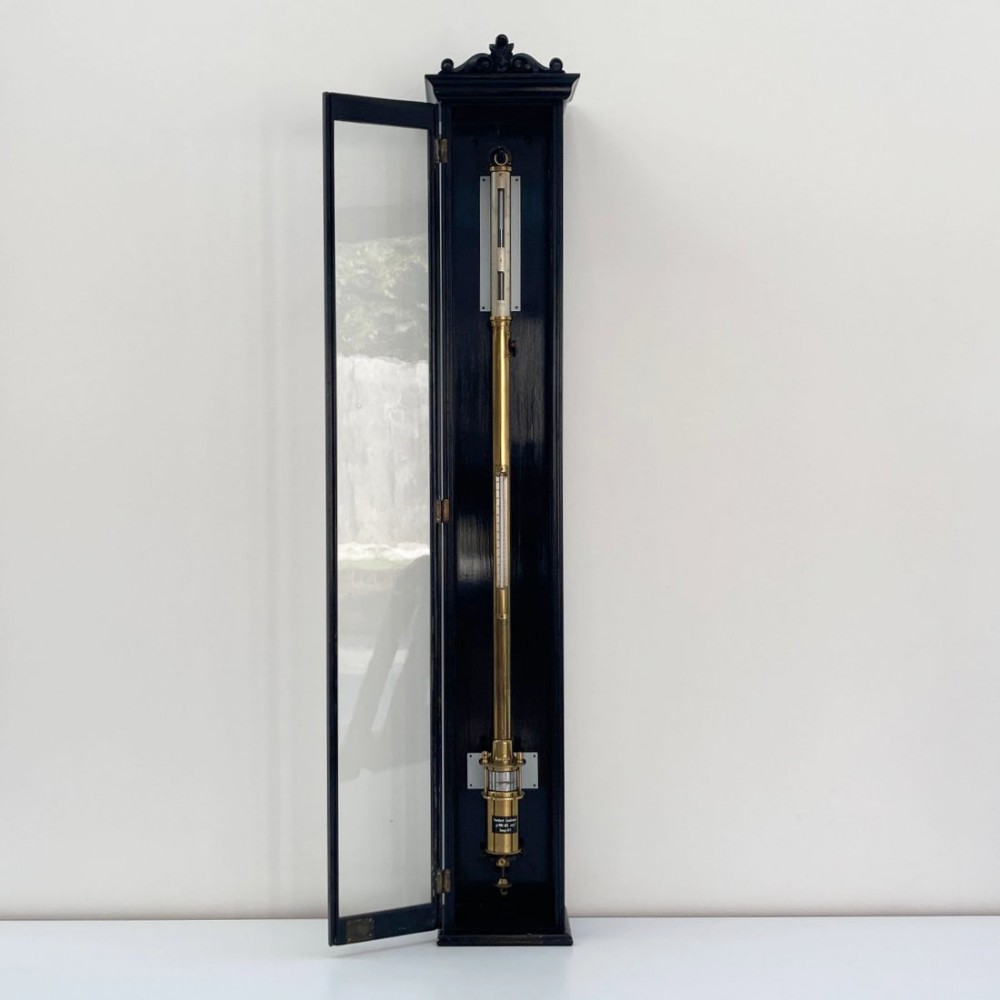
Mid Victorian Ebonised Cased Fortin Barometer by Louis Casella London