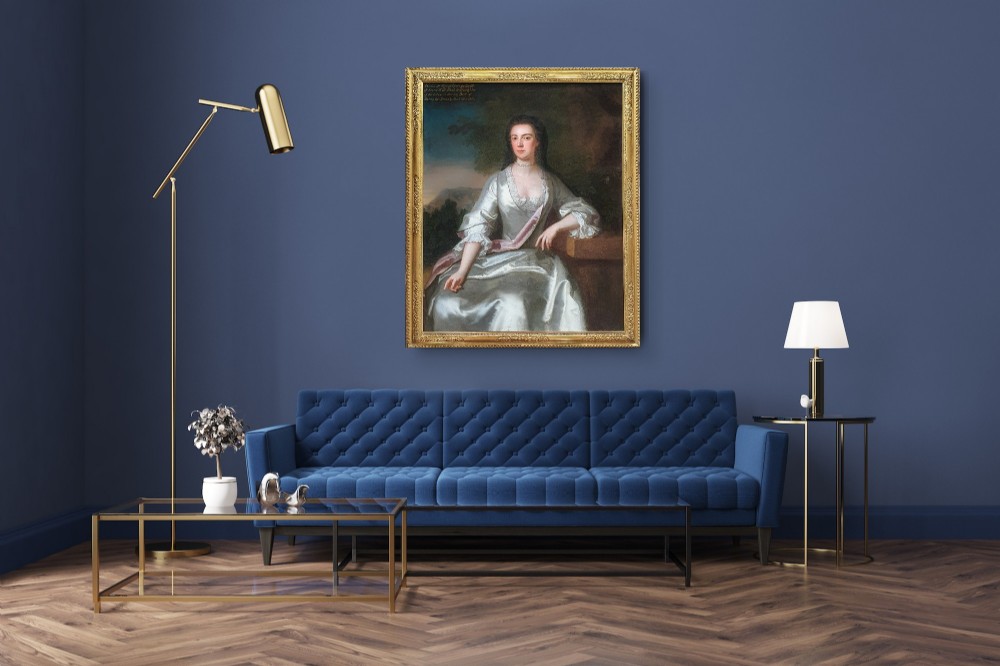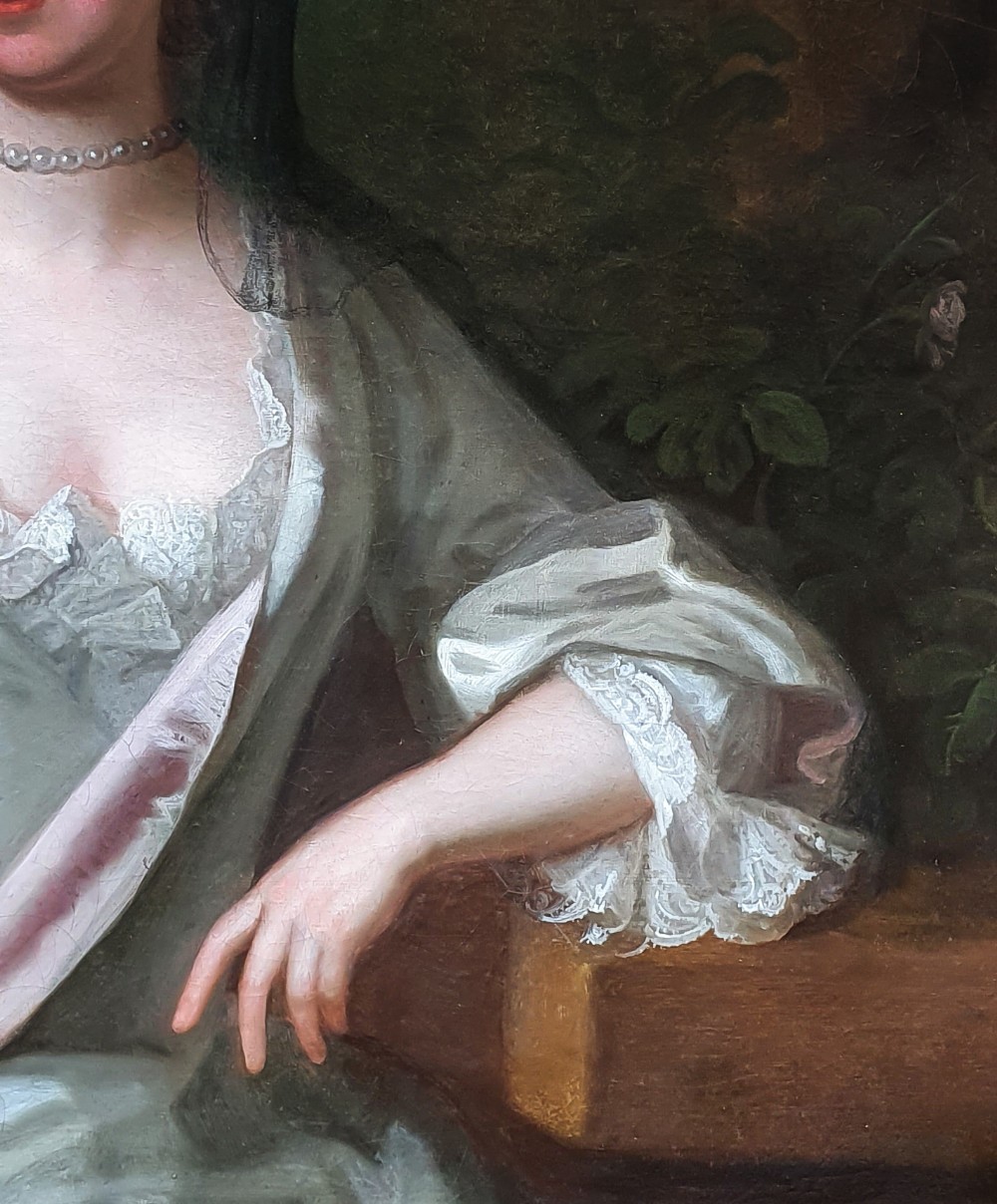
Titan Fine Art has dated this piece to the 18th Century.
This work formed part of the collection of family pictures and heirlooms of the ancient Scott family at Scot’s Hall in Kent, the family seat for many centuries - the house was one of the most magnificent manorial residences in the county.
The family are lineal descendants of the ancient Norman family of Balliol, and can trace their descent from David le Scot, King of Scotland.
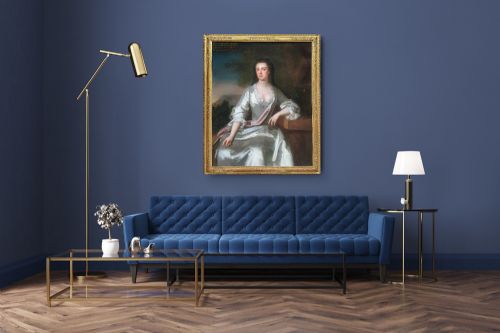
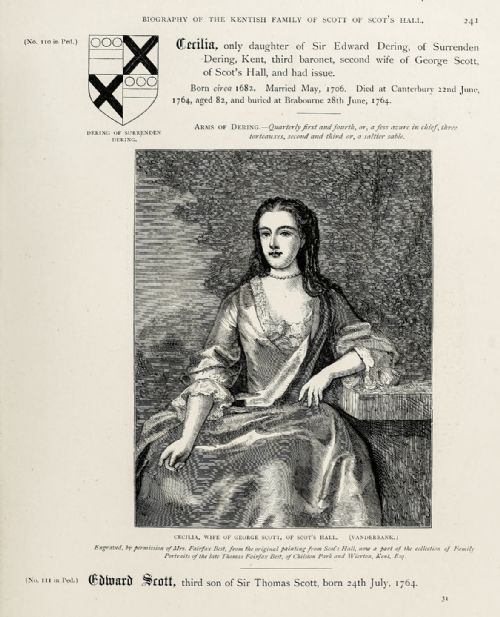
Our portrait along with other family portraits were reproduced as engravings in 1876 with the permission of widow of Thomas Fairfax Best (1786-1849) who was a great-grandson of George Scott (our sitter’s husband).
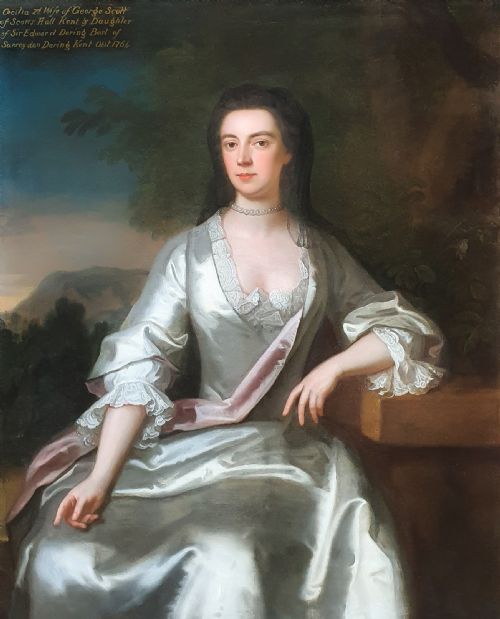
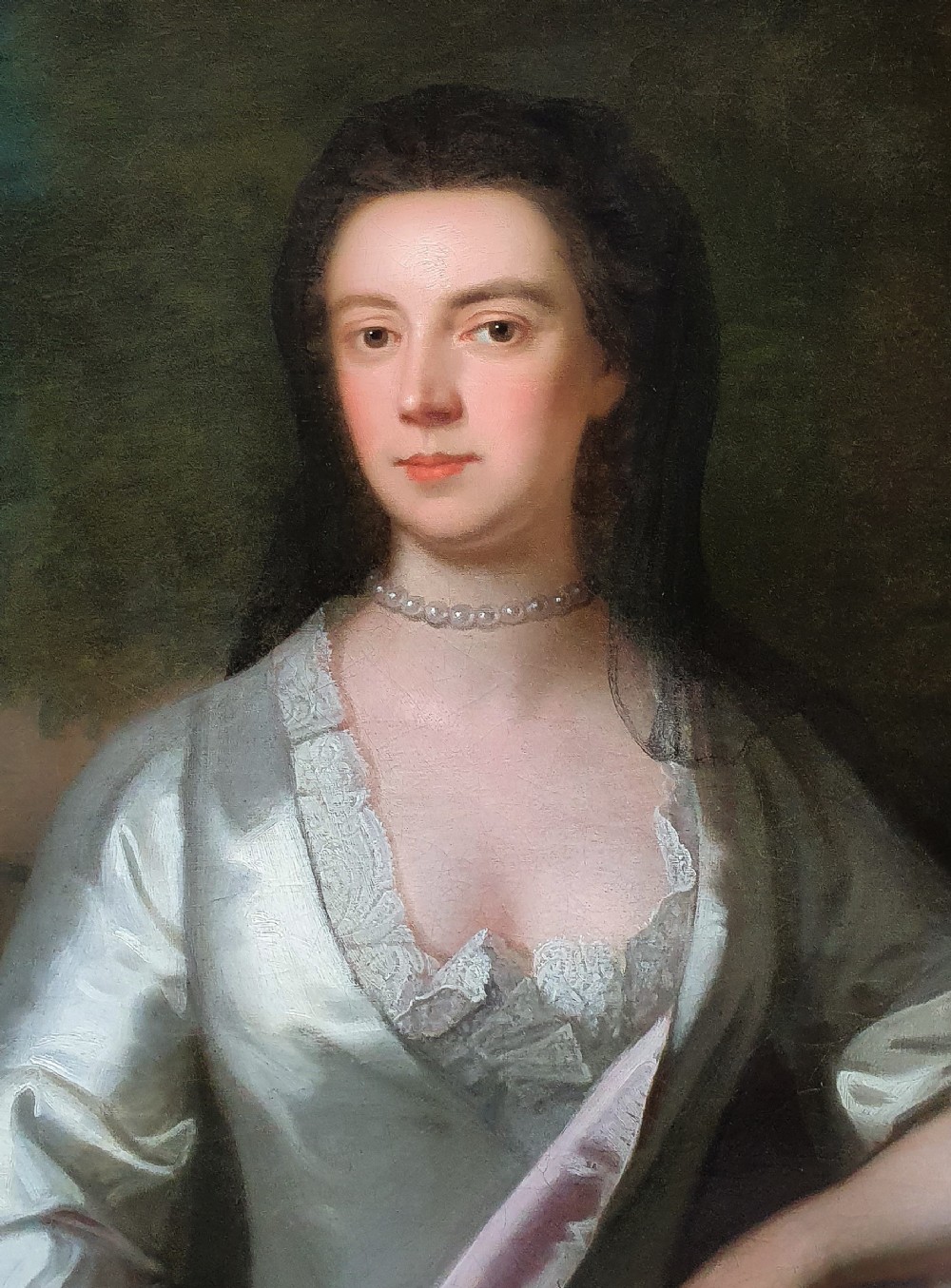
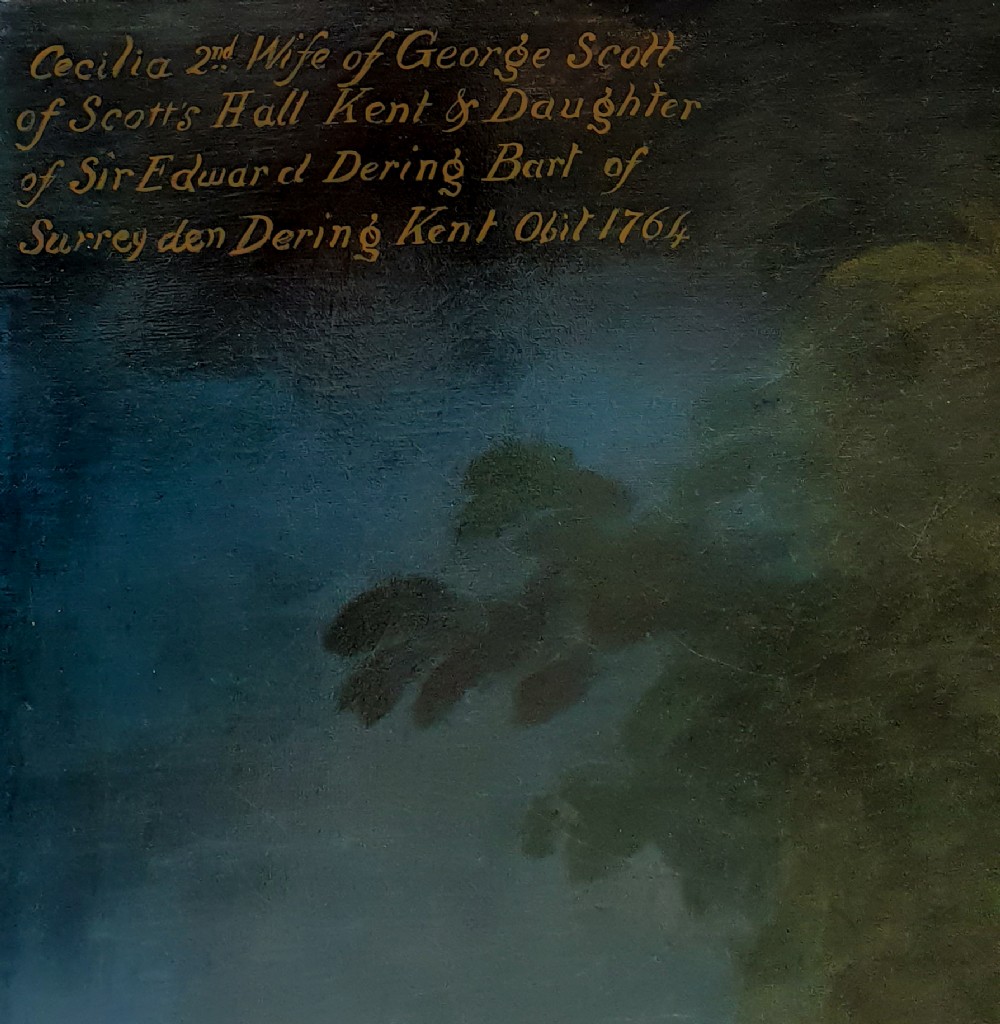
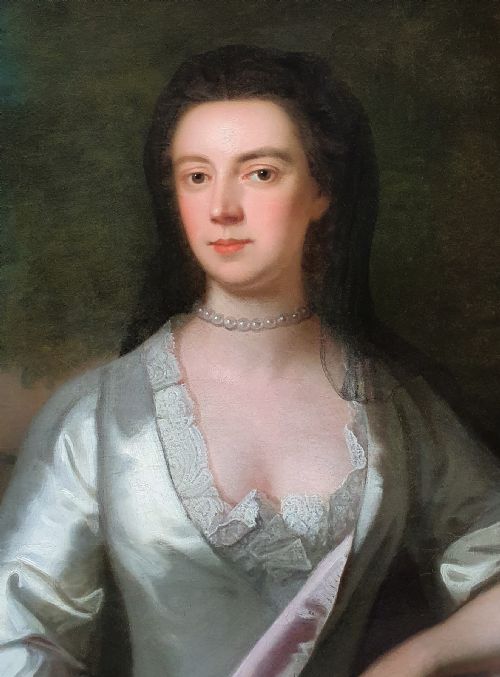
The sitter is Cecilia Dering Scott (1682-1764), the only daughter of Sir Edward Dering third baronet and Elizabeth Cholmeley. She married George Scott (1673-1728) in 1706 and became his second wife (George’s first wife, Anne Pemberton (1672-1705), died in childbirth). George was a son of Sir Thomas Scott (c.1638-c.1688). Cecilia and George had fourteen children. Cecilia died at Canterbury in 1764.
The heir to George and his first wife, Anne Pemberton, was Edward (1700-1765). He was taken prisoner by the Pretender at the battle of Preston Pans, and confined in Dumbarton Castle. There he met his wife, Margaret Sutherland (1725-1819) and couple married. Margaret procured an interview with Charles Stuart at Holyrood Palace, and obtained his release. Later, Margaret was a foster-mother to the Prince of Wales (afterwards George IV.), and had the principal charge of him and she also governess to the Princess Royal, the eldest daughter of George III. Their eldest son, Francis Scott inherited Scot’s Hall and was the last to live there.
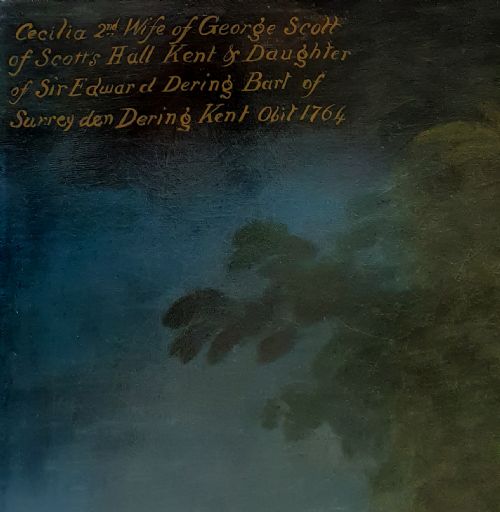
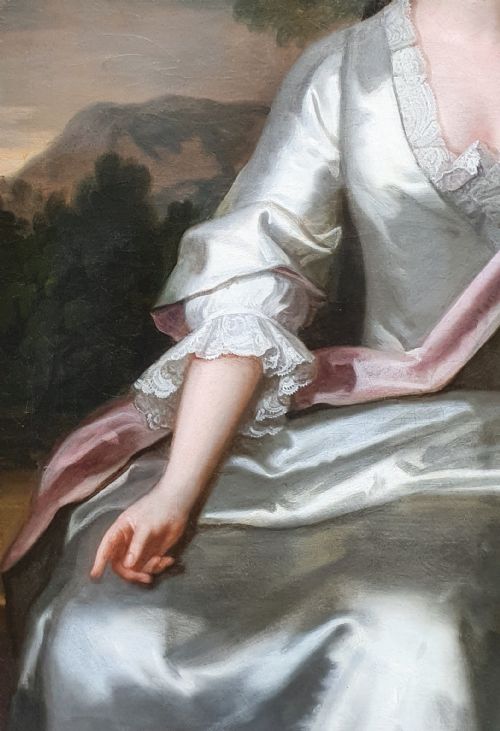
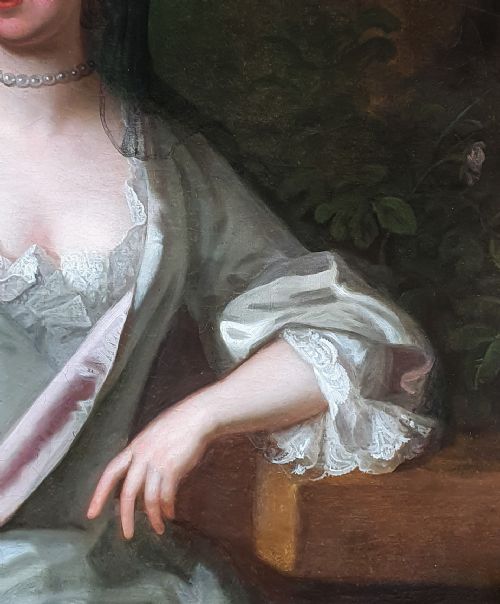
The portrait can be dated to c.1728, the time of the death of Cecilia’s husband, George.
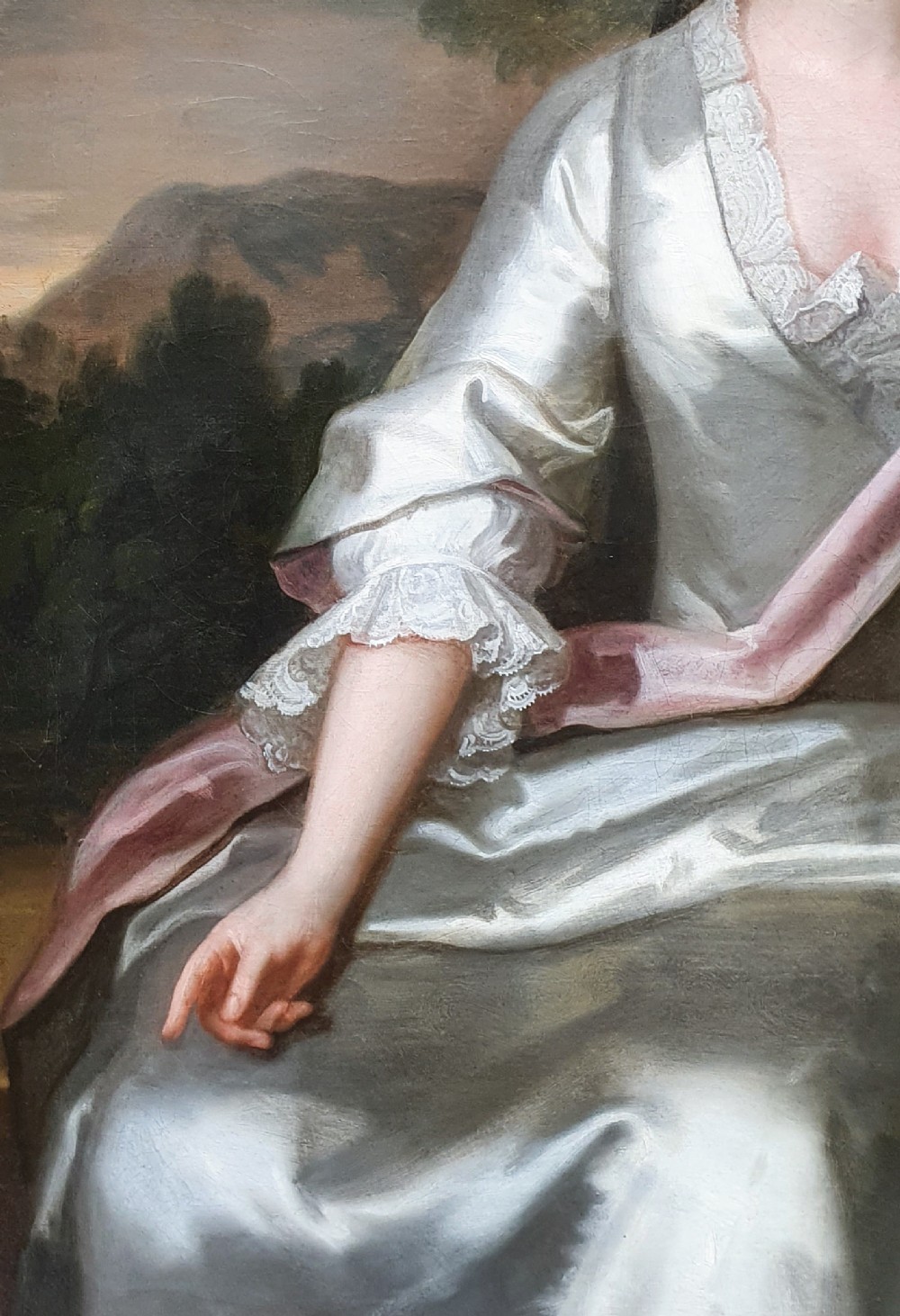
Held in a fine period gilded carved frame.
The Scots resided in Kent from the early 14th century to the late 18th century. The “Scot's Hall scrolls” consist of beautifully illustrated vellums and scrolls complete with coats of arms of the families of their various spouses. They had many connections to the Royal families and they held thirty manors in Kent alone. When it was suggested to Queen Elizabeth that Sir Thomas Scott (our sitter’s father-in-law) should be ennobled for services rendered to his country as Commander of the Kentish forces on the approach of the Spanish Armada, the monarch declined the suggestion remarking with characteristic vehemence that " Sir Thomas Scott already possessed more influence in Kent than majesty itself". Indeed, Sir Thomas’ on the receipt of the orders on the approach of the Spanish Armada, was able to assemble 4000 men fully equipped and armed the following day.
A fine collection of family portraits, some dating from the time of Henry VII, originally at Scot's Hall, still exist - many are now in the North Carolina Museum of Art in the US.
Held in a fine quality antique carved and gilded frame.
John Vanderbank was born in London into an artistic family in 1694. He studied painting with his father and with Jonathan Richardson. He was one of Godfrey Kneller's earliest pupils at the Academy of Painting from 1711, and in 1720 he started his own Academy of painting and became very successful in portraiture. In 1738 the antiquary George Vertue wrote 'Mr John Vanderbank has of late or some years had a gret run of Busines - painting persons of Quality and distinction'. He died in London in 1739.
Provenance:
From the sitter at Scot's Hall in Kent, and thence by descent through marriage to;
Thomas Fairfax Best (1786-1849), Chilston Park and Wierton, Kent, before 1876; and thence by descent through the family to;
Hugh Scott (1885-1960);
Phillips London Dec 14, 1993 Attributed to Johan Vanderbanck the Elder;
Private collection France
Titan Fine Art has dated this piece to the 18th Century.
Specialist in 17th & 18thc portraits. Highly curated selection, museum-level research & pro conservation. Exceptional art, expertly vetted.
You can view the stock and full dealer information on the Titan Fine Art Profile Page

Portrait of Cecilia Scott (1682-1764) C.1728; Circle of John Vanderbank (1694-1739), Antique Oil on Canvas