Jason Clarke Antiques has dated this piece to the 1850s.
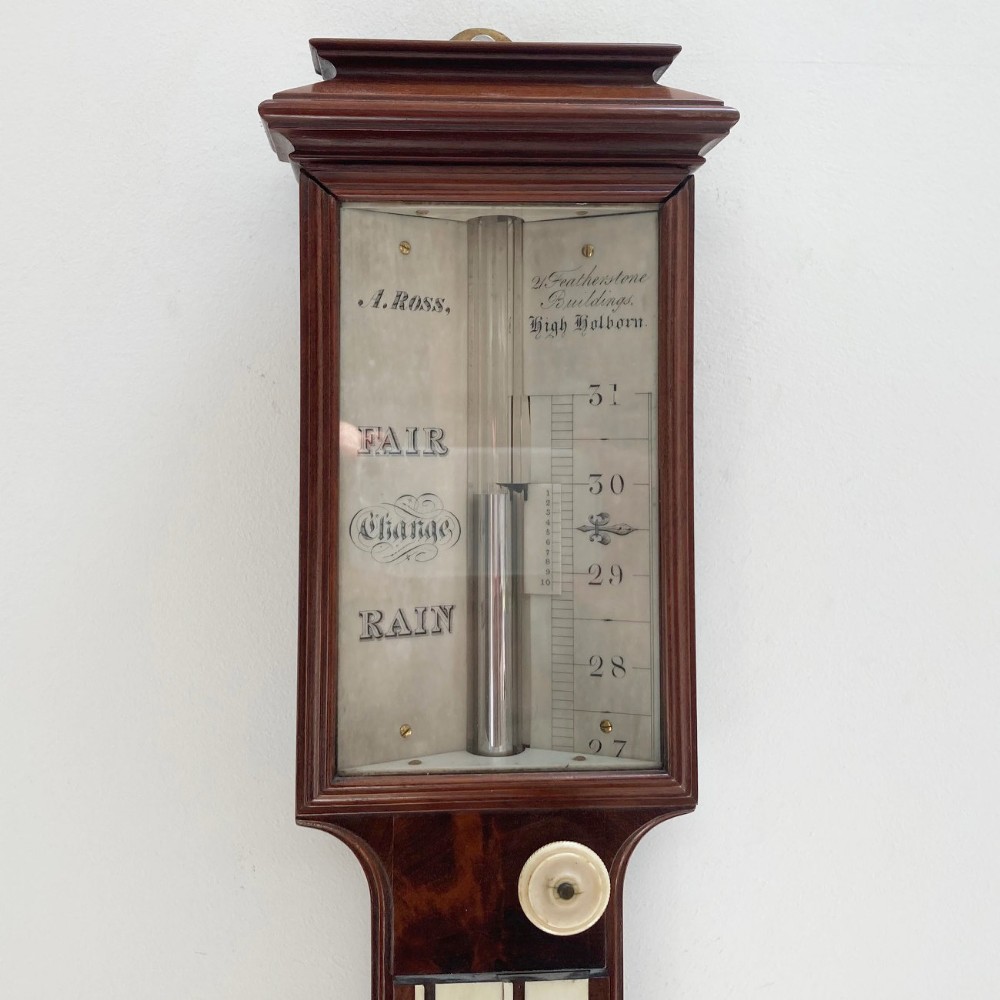
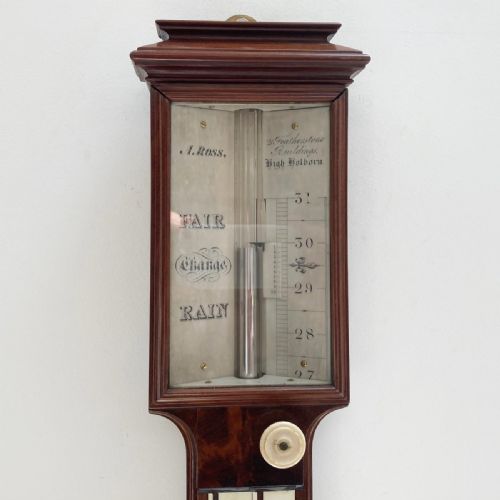
This instrument is constructed of quality mahogany with a square moulded pediment above a “v” sectioned scale plate with gothic style engraving reflecting three weather indications, “Fair, Change & Rain” and showing 27 to 31 degrees of barometric pressure. Above is engraved the maker’s name of “A. Ross - 21 Featherstone Buildings, High Holborn”.
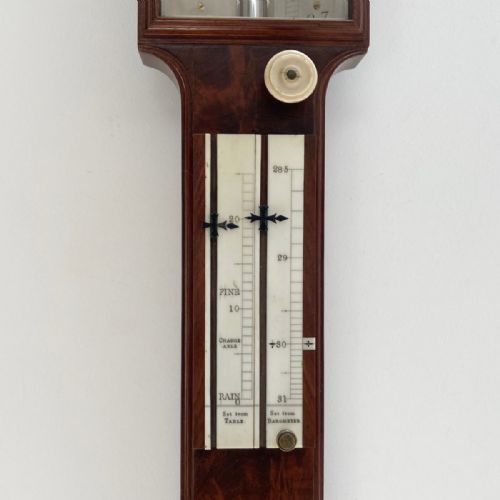
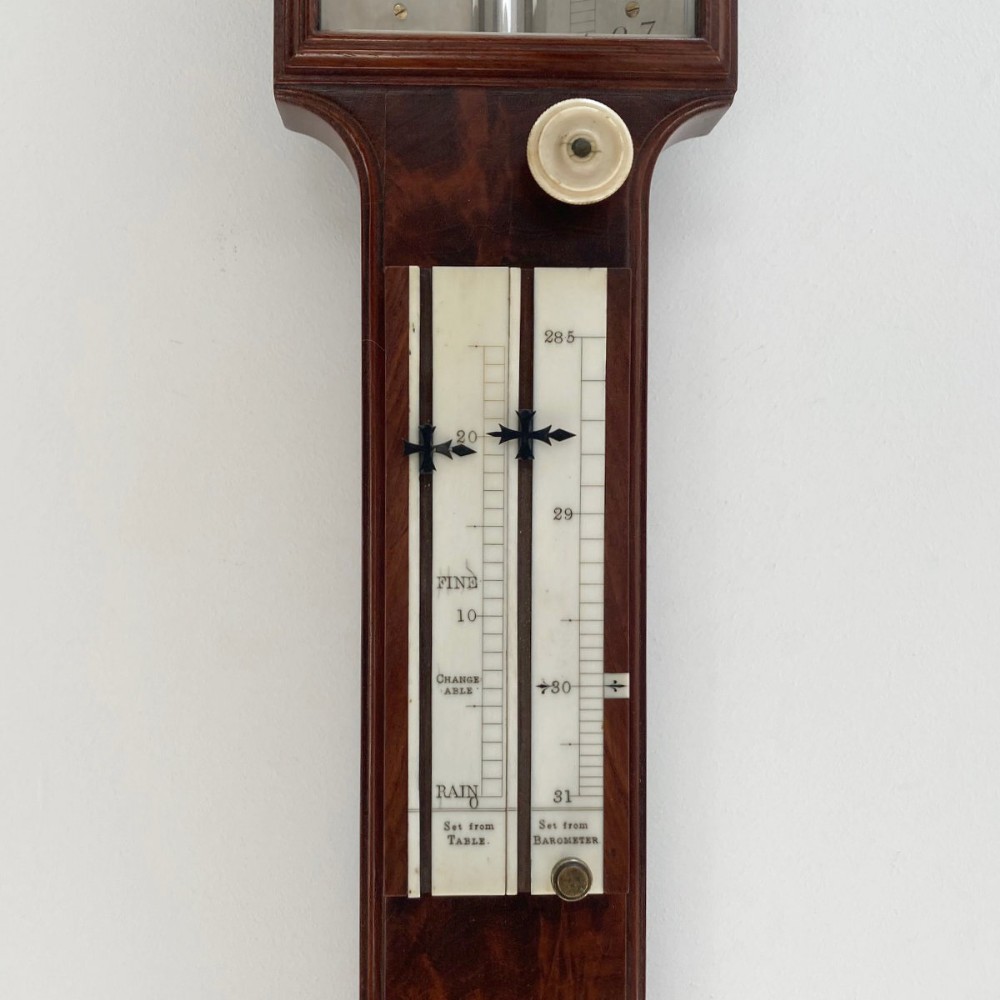
The trunk space ordinarily retained for a thermometer or a choice piece of flame mahogany on most examples, has been instead utilised very adeptly by Ross to provide a vast improvement to humidity measurement than any other barometer that had gone before.
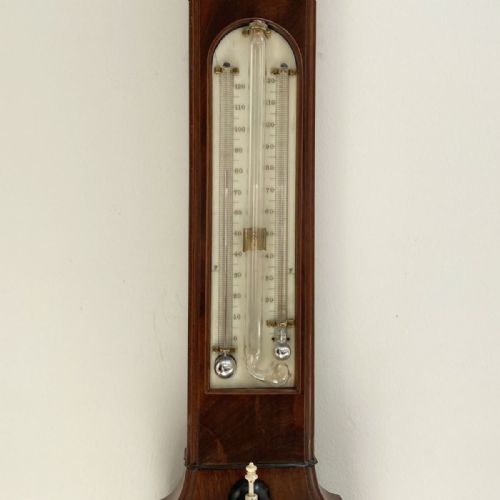
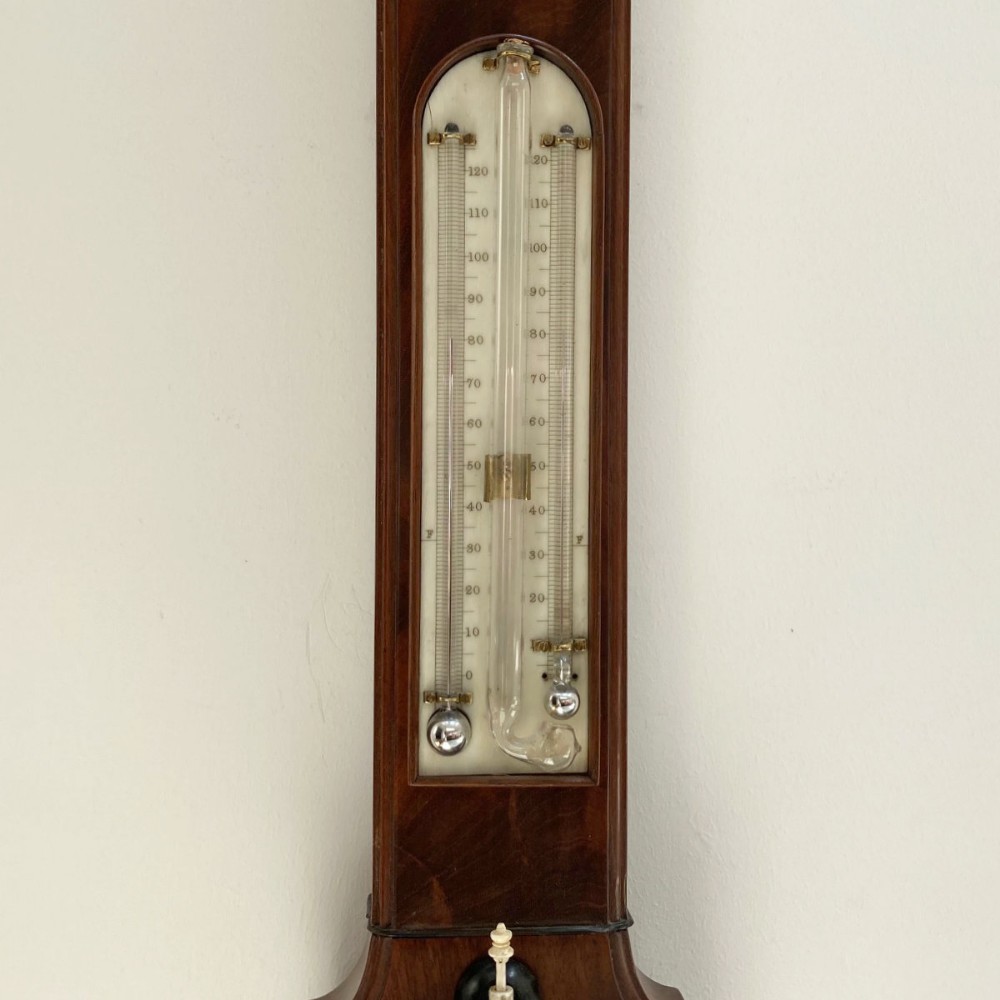
At the base is provided a wet and dry bulb thermometer (variously known as a psychrometer or hygrometer), comprising of two thermometers. One which is exposed to the open air and the other whose bulb is covered with a linen sock which is kept damp by the central water vessel to the centre of the instruments scale.
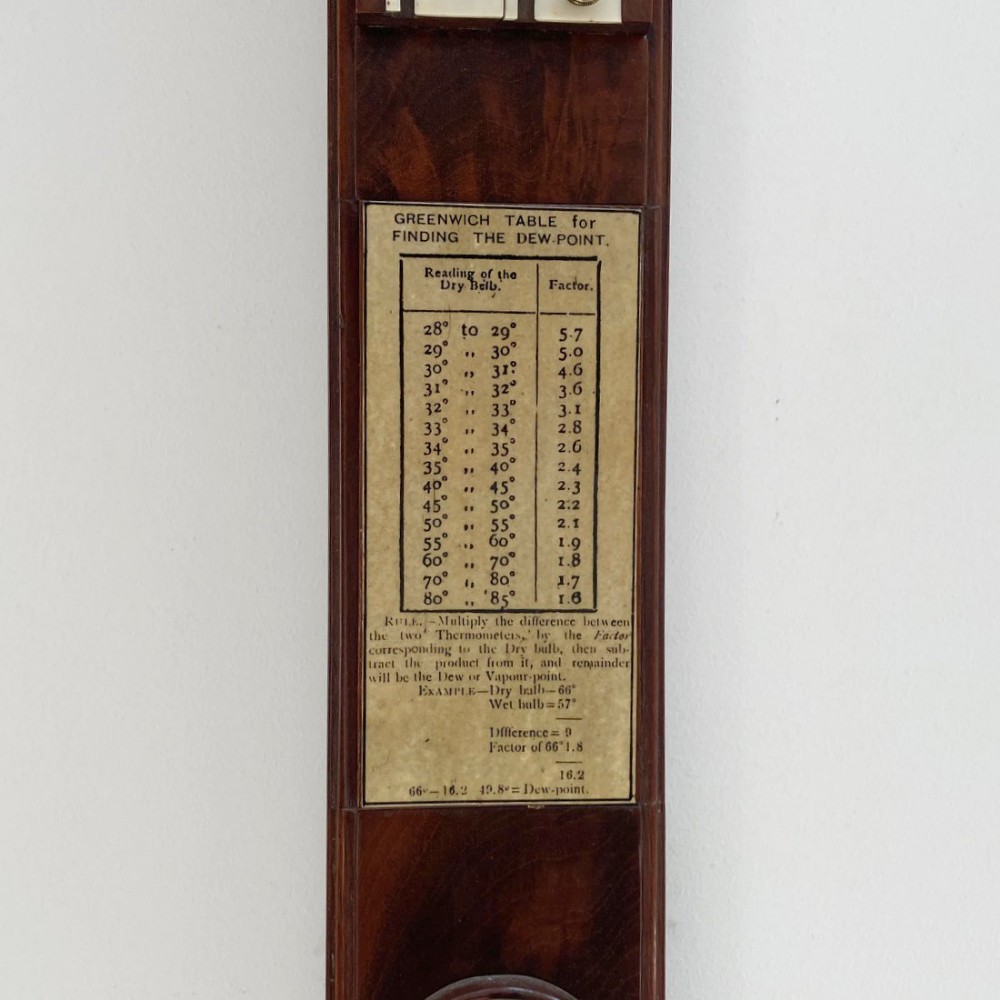
Above the thermometers is a table which provides simple guidance on how to calculate the dew point from the readings provided between the two thermometers which allows the user to understand the humidity of the air at a given time. This reading is then transposed onto a manual scale above which records and compares both the humidity reading and the barometer reading. The two combined provide a more accurate weather predictions than any other instrument that preceded it.
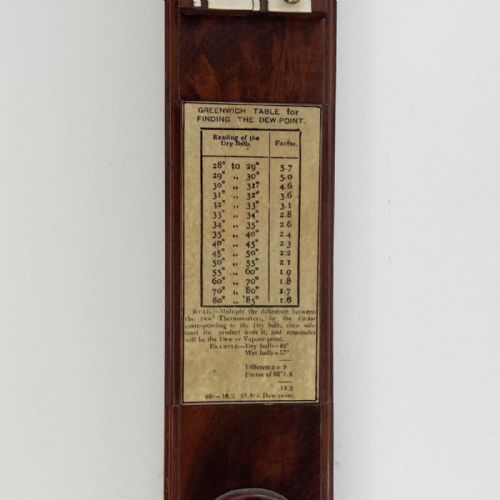
Simple and hugely inaccurate hygrometers had of course been included on wheel barometers for some time before but they were in the form of wheat beards that responded to wet and dry conditions in the same way as pine cones. The development of this early understanding transformed by breakthroughs in scientific developments using the same principles but with more accuracy is simply fascinating.
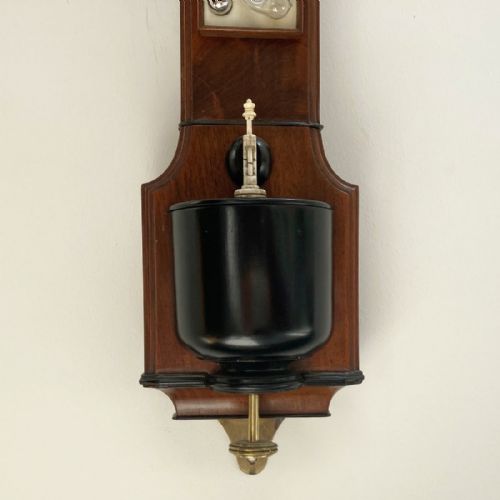
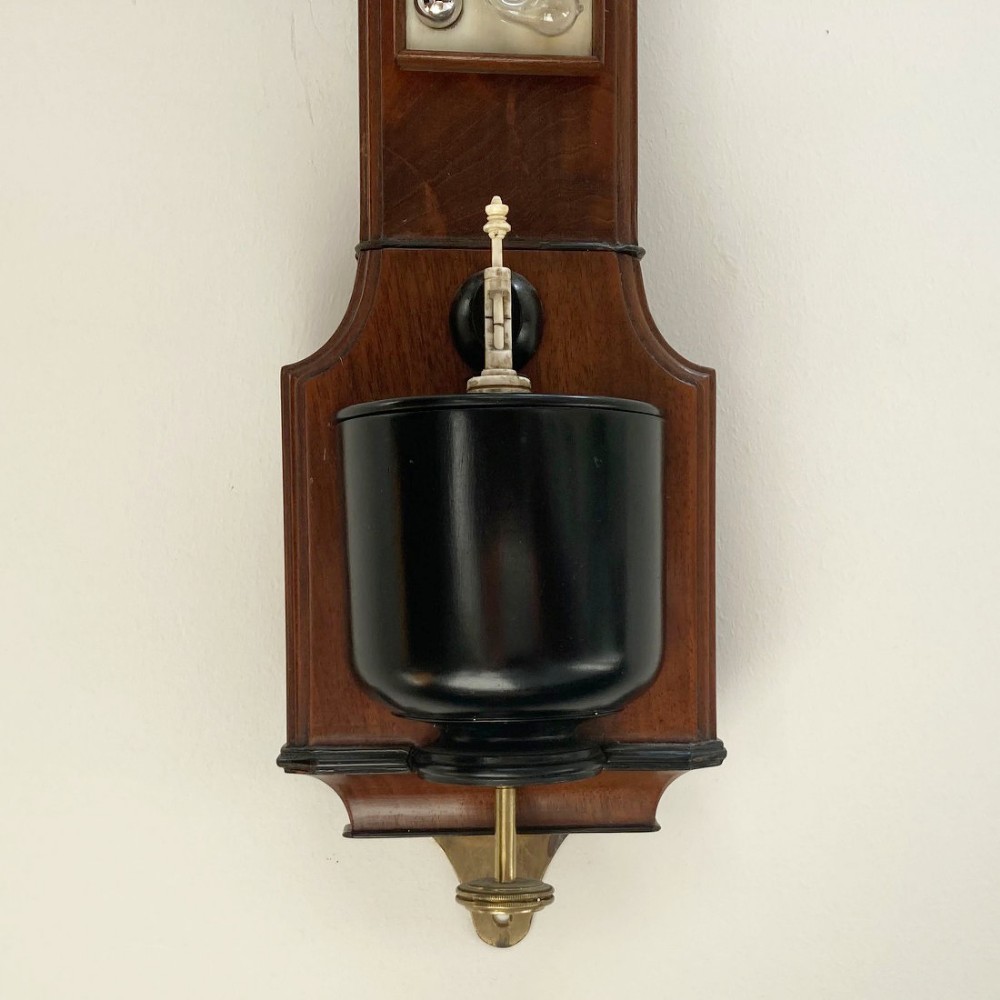
The base of the barometer is no less fascinating with its urn shapes cistern cover and original bone float. These floats are a very seldom encountered feature on stick barometers and only found on the highest quality examples. Originally conceived by the famous instrument maker, Jesse Ramsden, the float was considered to be a solution to eliminating errors in the cistern level of the barometer and to zero balance the scale for correct reading.
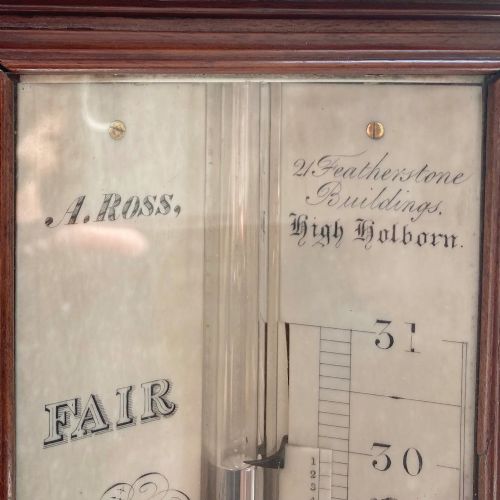
No thought has been spared in ensuring that this weather instrument is of the utmost accuracy and given its date of manufacture (1842-1847) it comes at a time just prior to the advent of the aneroid barometer which changed the barometer market forever. This, alongside the sympiesometer represents the final scientific developments of the stick barometer and would have been the Rolls Royce of its type. A hugely fascinating piece and in superb condition.
The maker, Andrew Ross was born in 1798. His Father John was a staymaker based in Fleet Street but given the proliferation of top flight scientific instrument makers surrounding him during his upbringing, it is perhaps unsurprising that he graduated towards the industry and was apprenticed in 1813 to the London maker John Corless for the obligatory seven year period. As an interesting aside Corless had business associations with a Michael Dancer who was a relation to the latterly famous maker John Benjamin Dancer, both he and Ross were later to make their respective names in the field of microscopy.
Ross left Corless in 1820 and spent three years working for a mechanical engineer before taking up a position with the famous firm of W&T Gilbert. He eventually set up his business from 5 Albermarle St in Clerkenwell in 1830. Often considered a “jobbing” lens maker (albeit a very adept one) until the latter part of the decade, the Transactions of The Society o
Jason Clarke Antiques has dated this piece to the 1850s.
You can view the stock and full dealer information on the Jason Clarke Antiques Profile Page
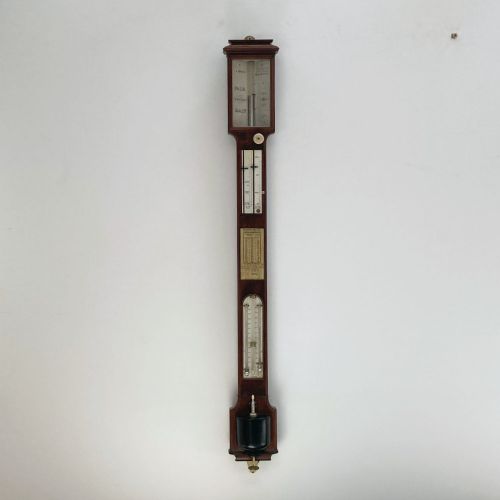
Early Victorian Weather Station Stick Barometer by Andrew Ross London