It was listed by Jason Clarke Antiques. Sold pieces stay on Sellingantiques as a record of what has passed through, and the next one is rarely far away.
Jason Clarke Antiques has dated this piece to the 1900s.
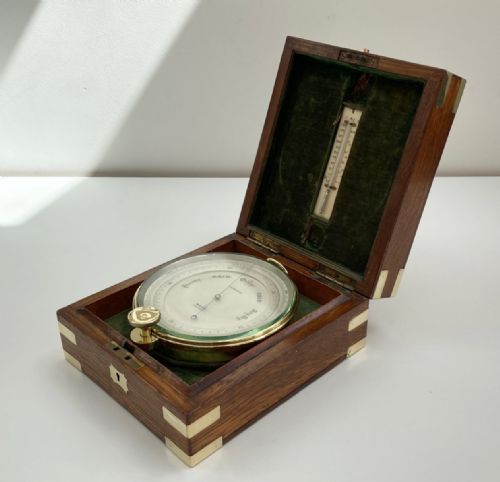
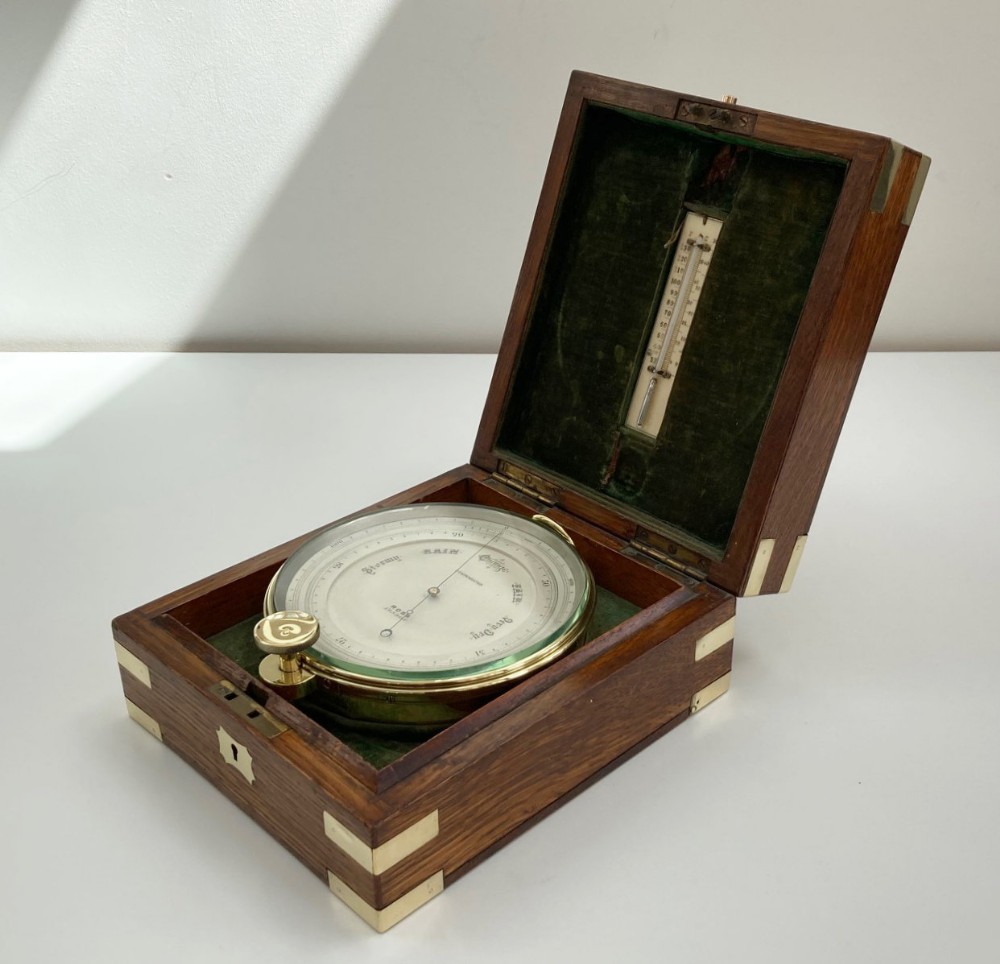
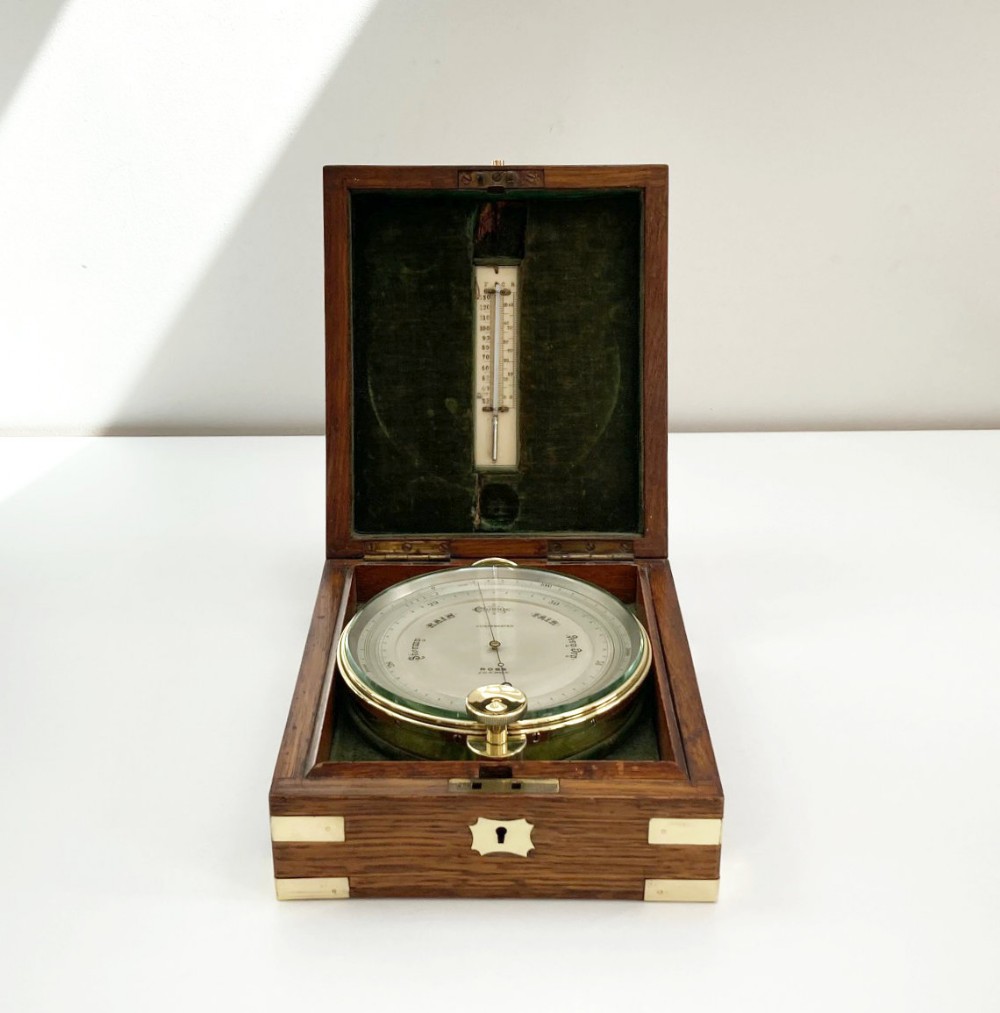
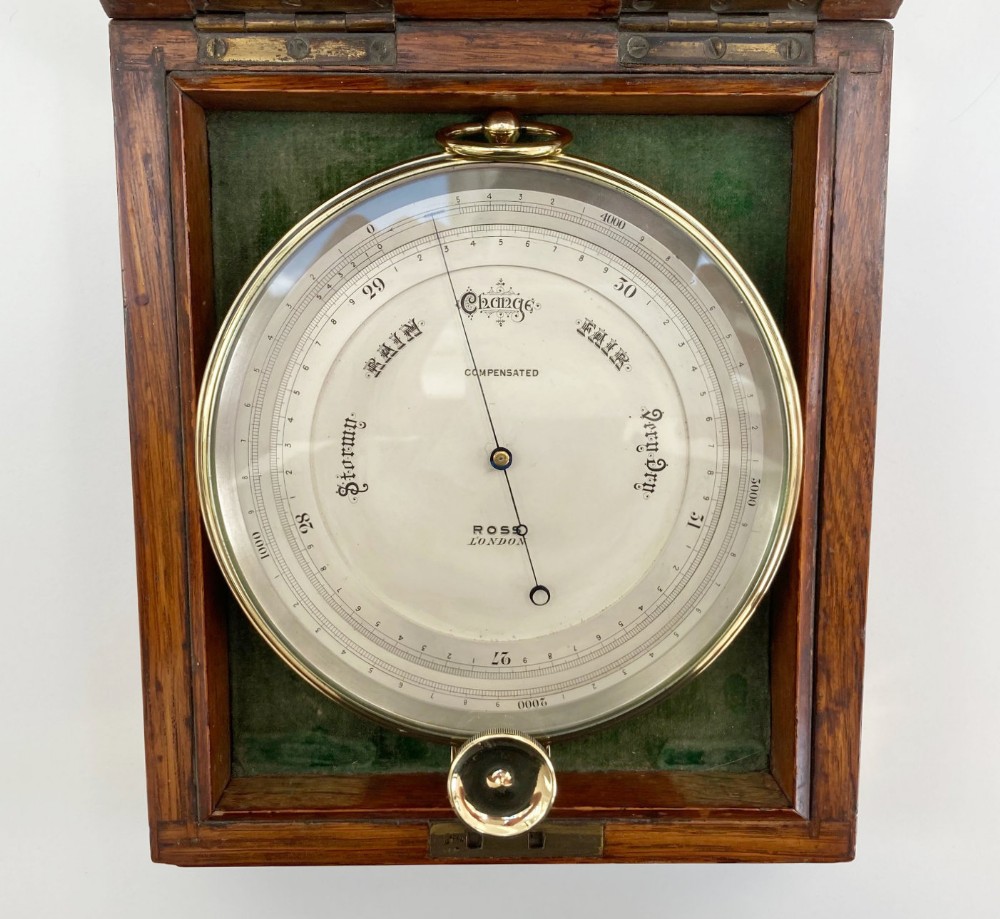
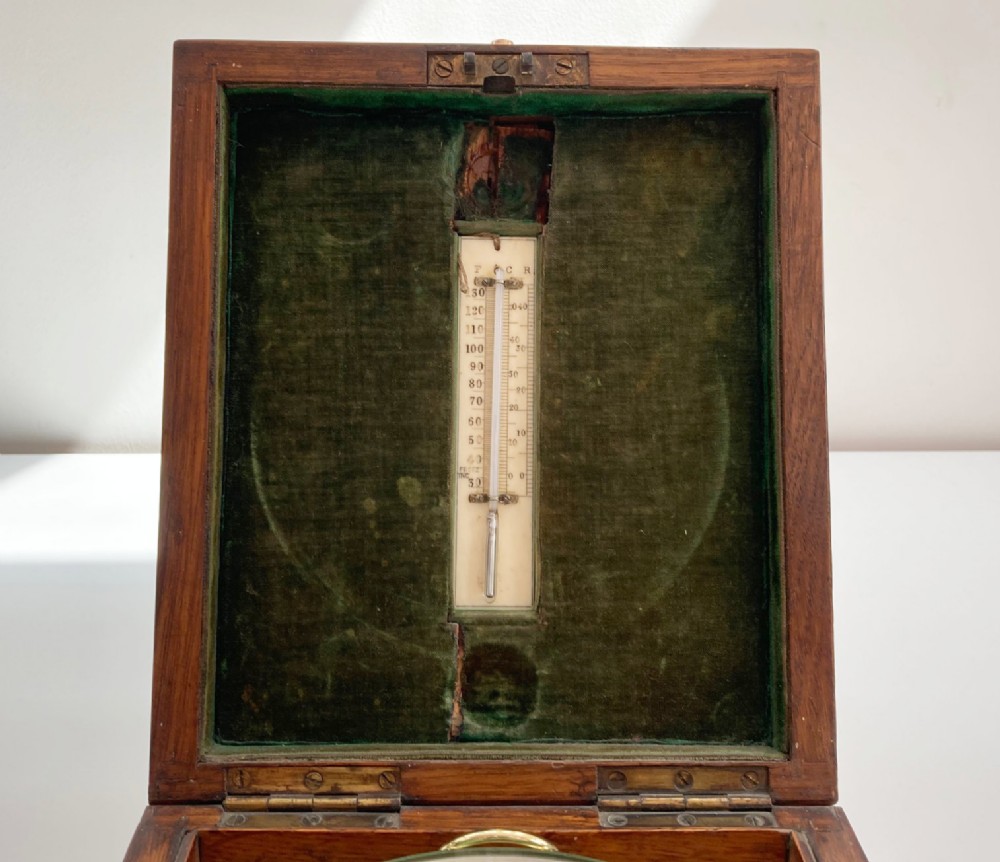
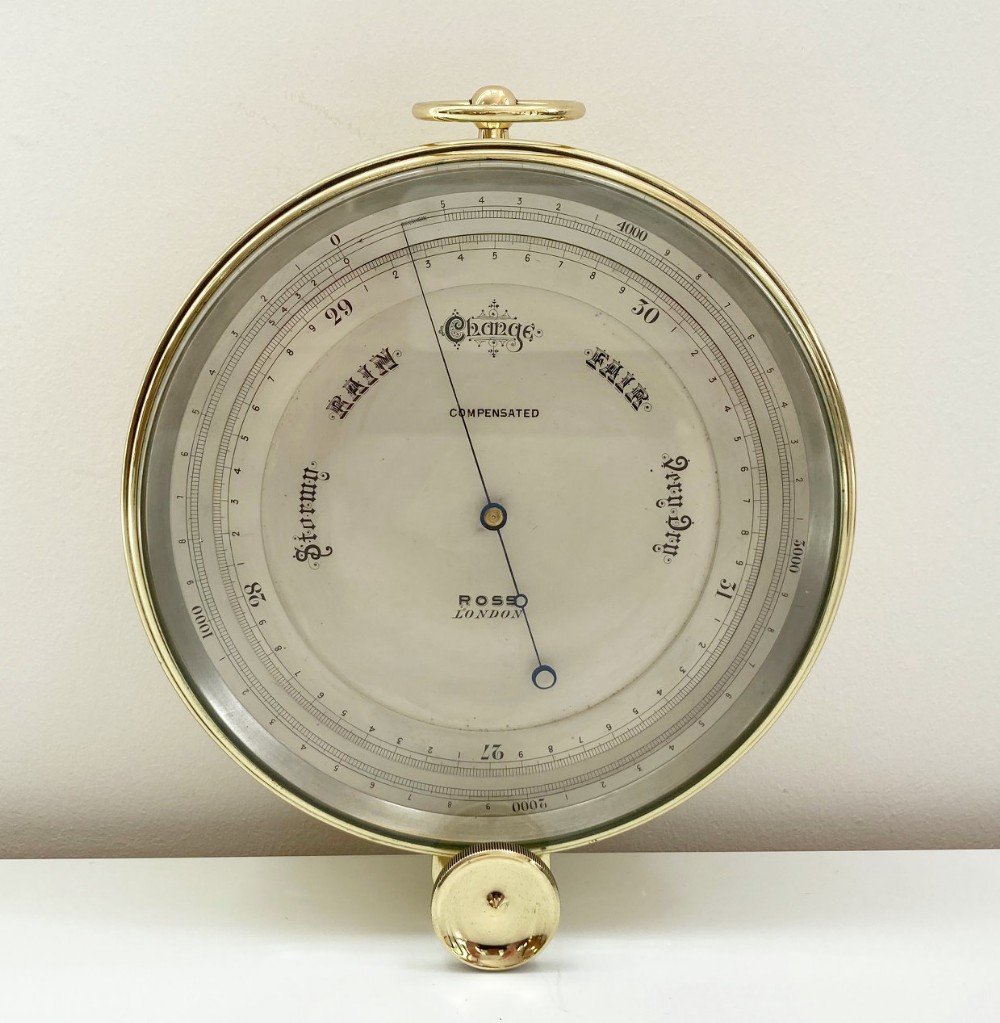
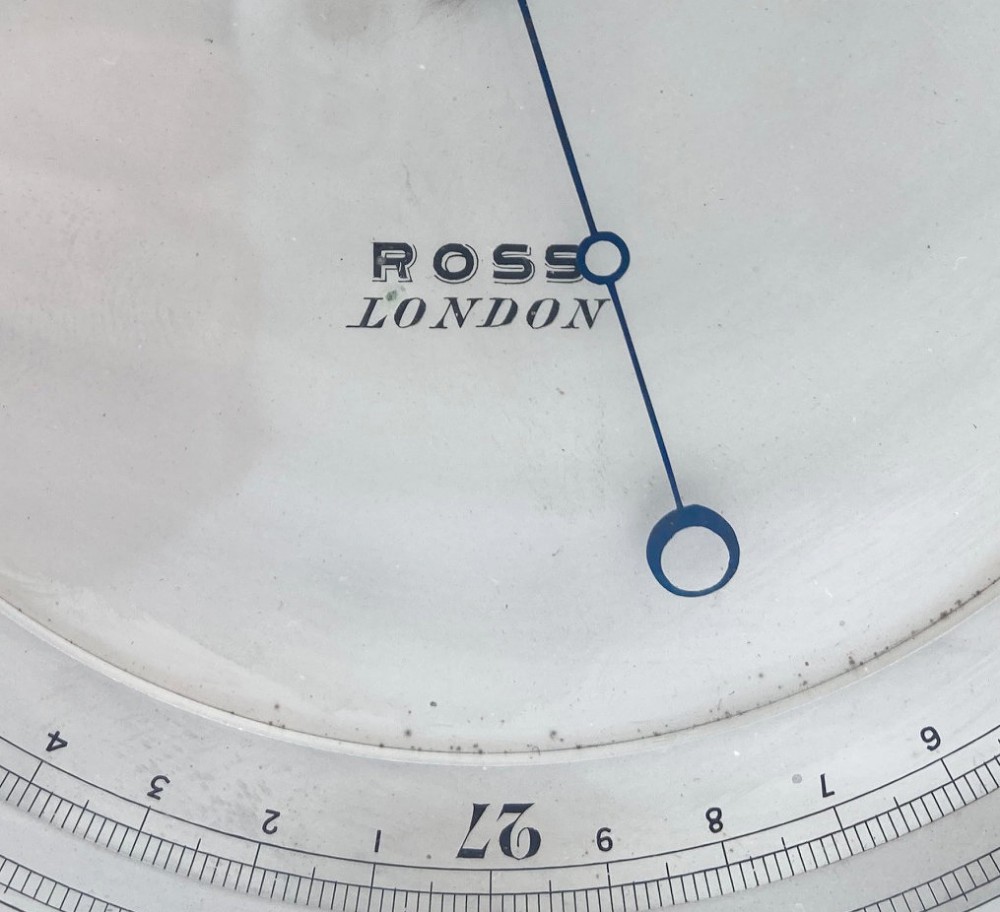
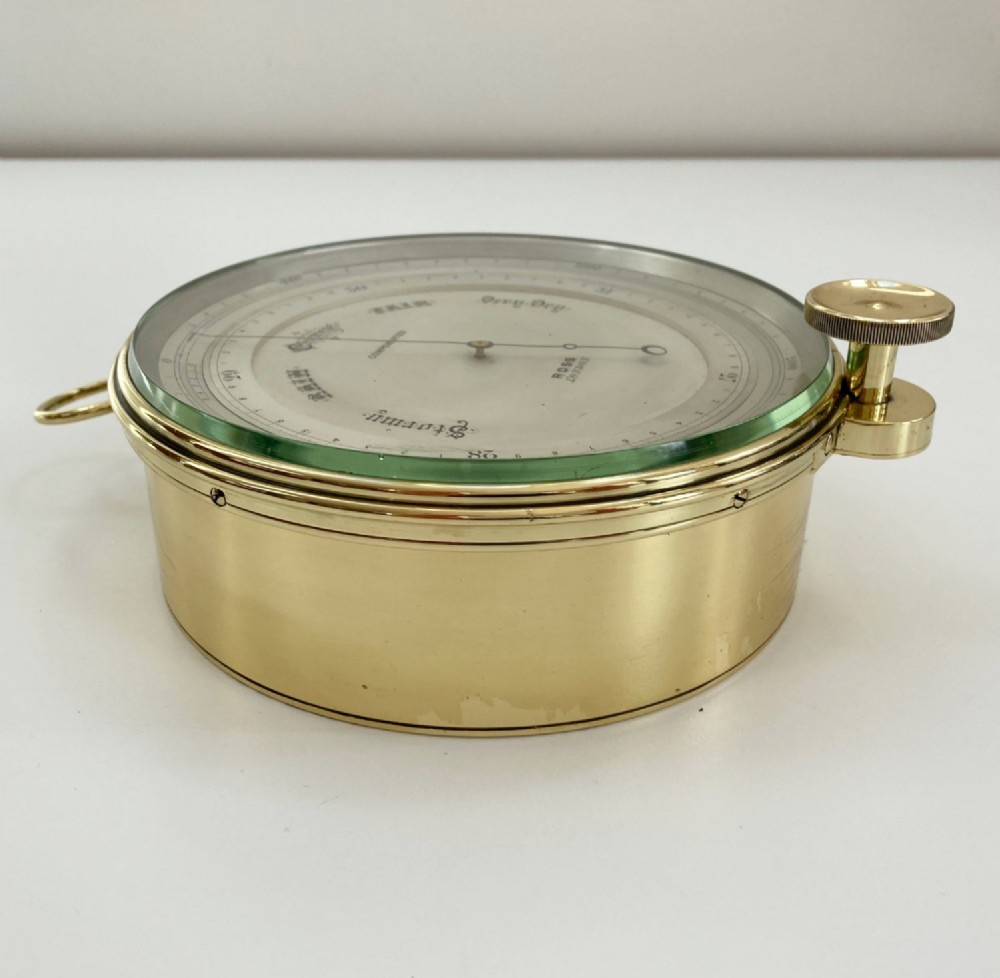
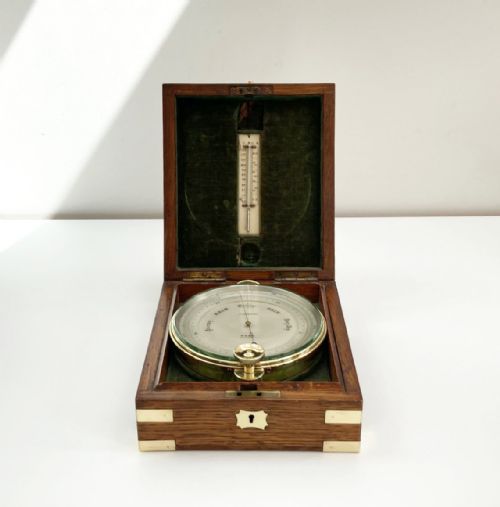
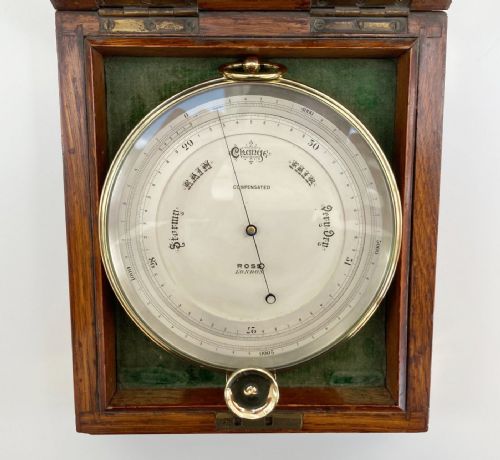
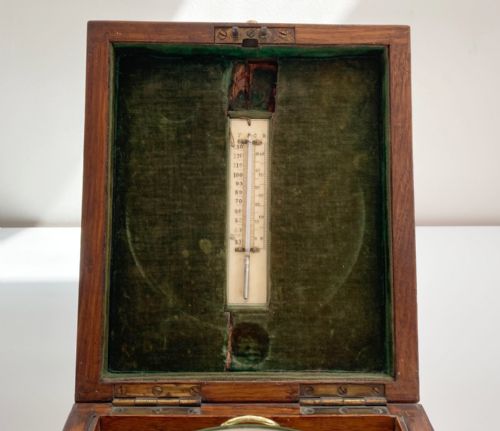
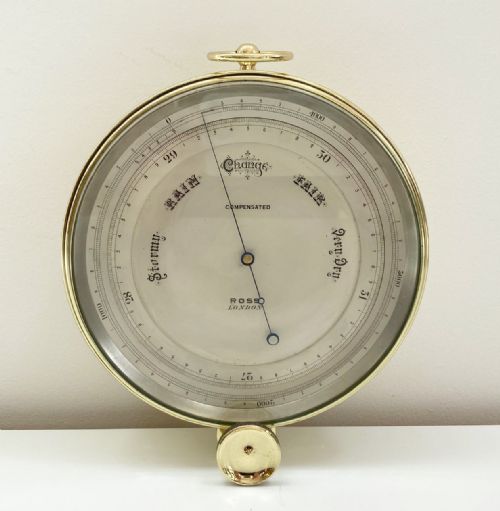
The lid is fitted with a small, removable bone scale travel thermometer skilfully engraved for Fahrenheit, Centigrade and Reaumur scales. The base is amply filled by a very robust six inch dial aneroid barometer with three tiered silvered scale measuring 27 to 31 inches of barometric pressure. The central dial is engraved with standard weather indications and is compensated for temperature changes. The famous name of Ross, London is beautifully engraved below. The outer dial is intended for use as an altimeter measuring 0 – 4000 feet which may be turned, adjusted and set by the hand dial to the base of the instrument. This feature allows measurements in relation to elevation and air pressure possible.
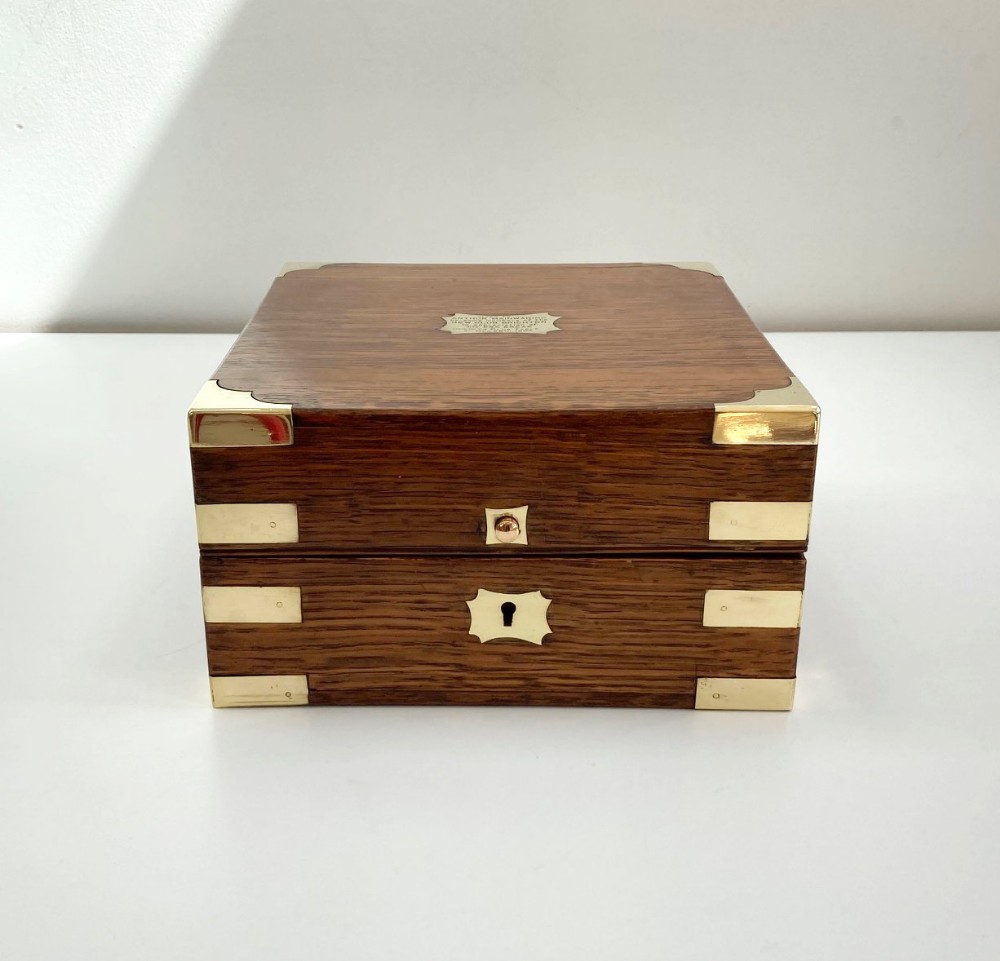
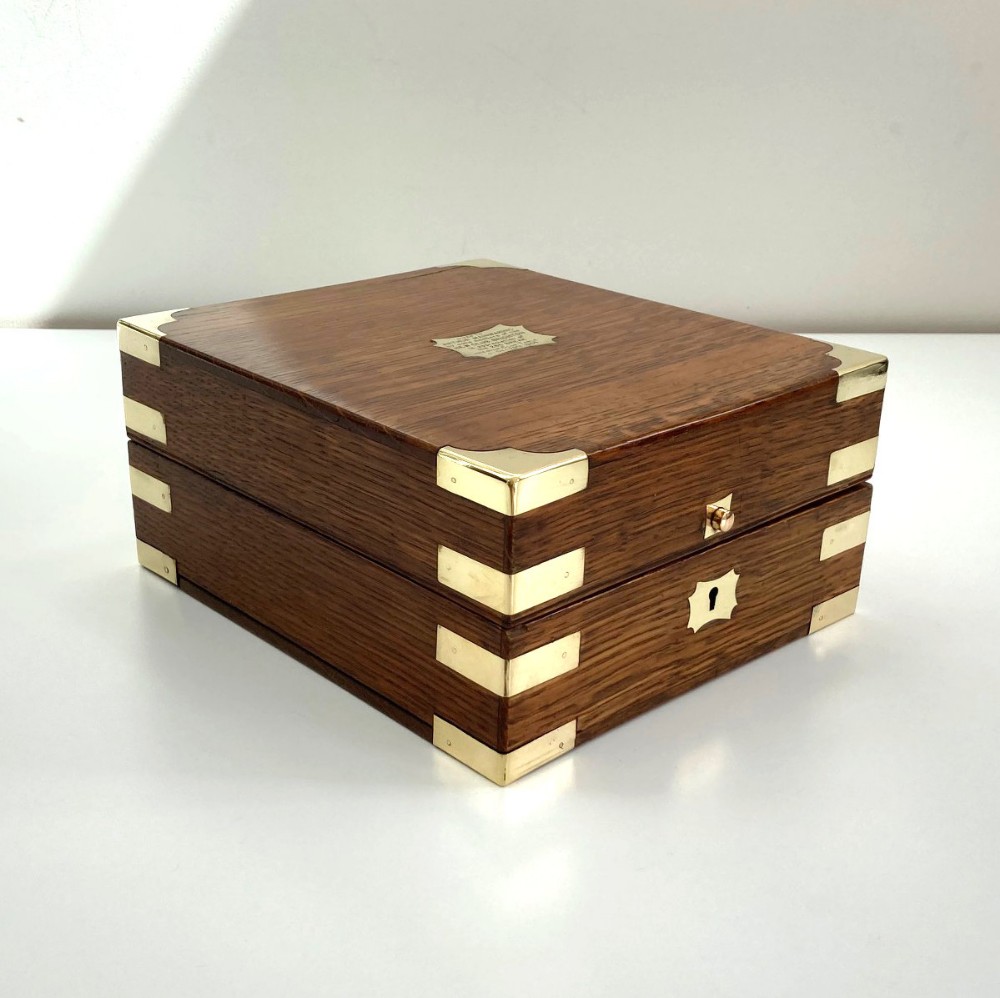
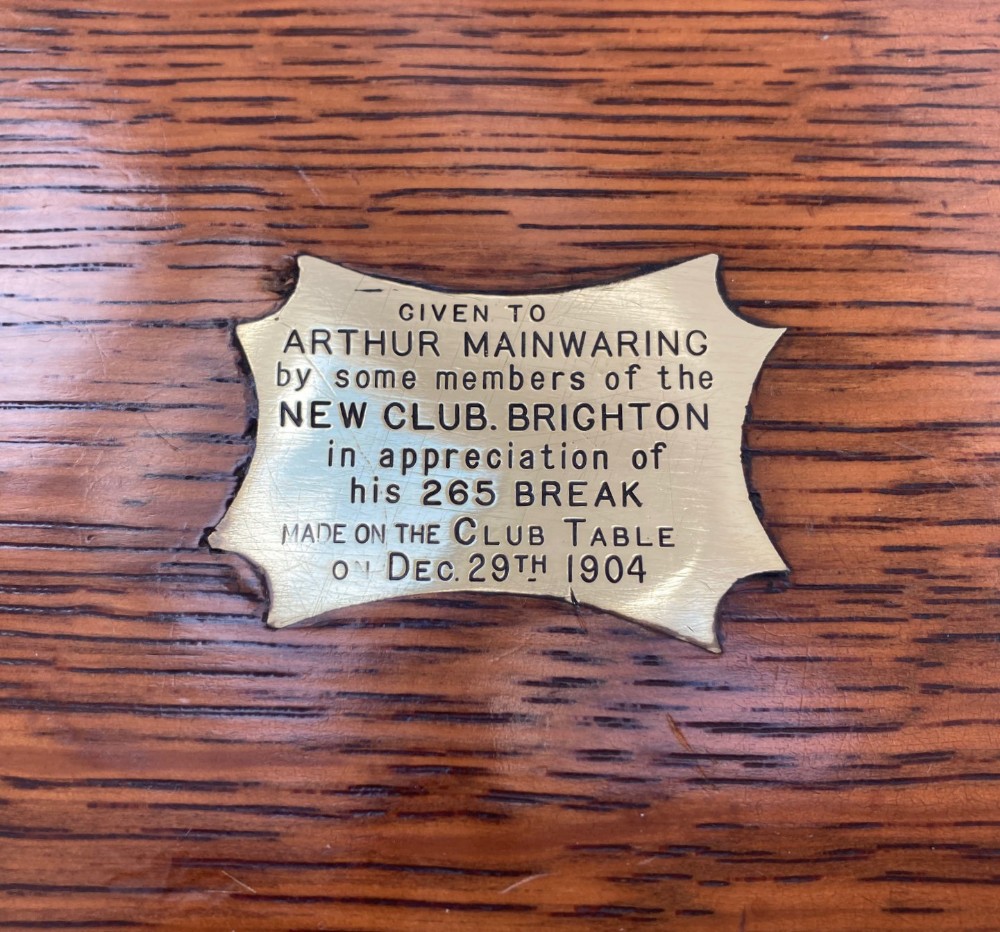
A hugely desirable set on its own account but the lid also has an engraving to the cartouche in the centre of the lid stating:
“Given to ARTHUR MAINWARING by some members of the NEW CLUB, BRIGHTON in appreciation of his 265 BREAK made on the club table on Dec 29th 1904”.
Obviously a prize for the game of snooker, this represents an extremely early example of a snooker prize, the game having been devised in India during the 1880’s by Colonel Sir Neville Chamberlain. It slowly gained notoriety in the latter part of the century and by the early Twentieth Century had governing bodies and competitions to regulate the newly endorsed sport.
Although somewhat circumstantial, the evidence would point to the recipient being an Arthur Mainwaring who after serving with the British Army during the Boer War had attained the rank of Colonel by the onset of the First World War. His inter-war years at the billiard table were perhaps a happier memory than his later experiences in the Great War. The Ireland on Sunday report below gives some perspective on his later life and treatment by the authorities.
“Lt Col Mainwaring - who, although born in India, always regarded himself as an Irishman met his downfall because he took a more compassionate attitude to the men of the Dublin tenements whom he commanded and who singularly failed to live up to their regimental nickname, 'The Old Toughs'. An officer and a gentleman of the old school, Mainwaring came from an impeccable military background. His father William was a general who had commanded the Fusiliers before him and who saw service in the Indian Mutiny and Afghanistan. Arthur had been with the Fusiliers since 1885, been decorated in the Boer War and written a history of the regiment. He also wrote on whist, croquet and billiards, in which he had been a runner up in the Irish amateur championship, and regularly played cricket for the MCC during his summer leave. But on the morning of August 25, 1914, after four nights without sleep, his ears ringing with the sound of German shells, deprived of the certainty of orders issued from above because his superiors had long since disappeared, Lt Col Mainwaring was at his wits' end. The Fusiliers were among the first British regiments despatched to France in the early days of this war which everybody believed would be 'over by Christmas'. Their mission as part of the British Expeditionary Force: to help protect France from the German troops who had already over-run Belgium. The Battle of Mons, which started on August 22, was the first engagement between German and British troops in that part of Northern France that was subsequently to become notorious as the Western Front. But in these early days of the war that was supposed to end all wars there were no trenches, no 'no man's land', no barbed wire, no fortified positions. The first clashes were between ca
Jason Clarke Antiques has dated this piece to the 1900s.
You can view the stock and full dealer information on the Jason Clarke Antiques Profile Page
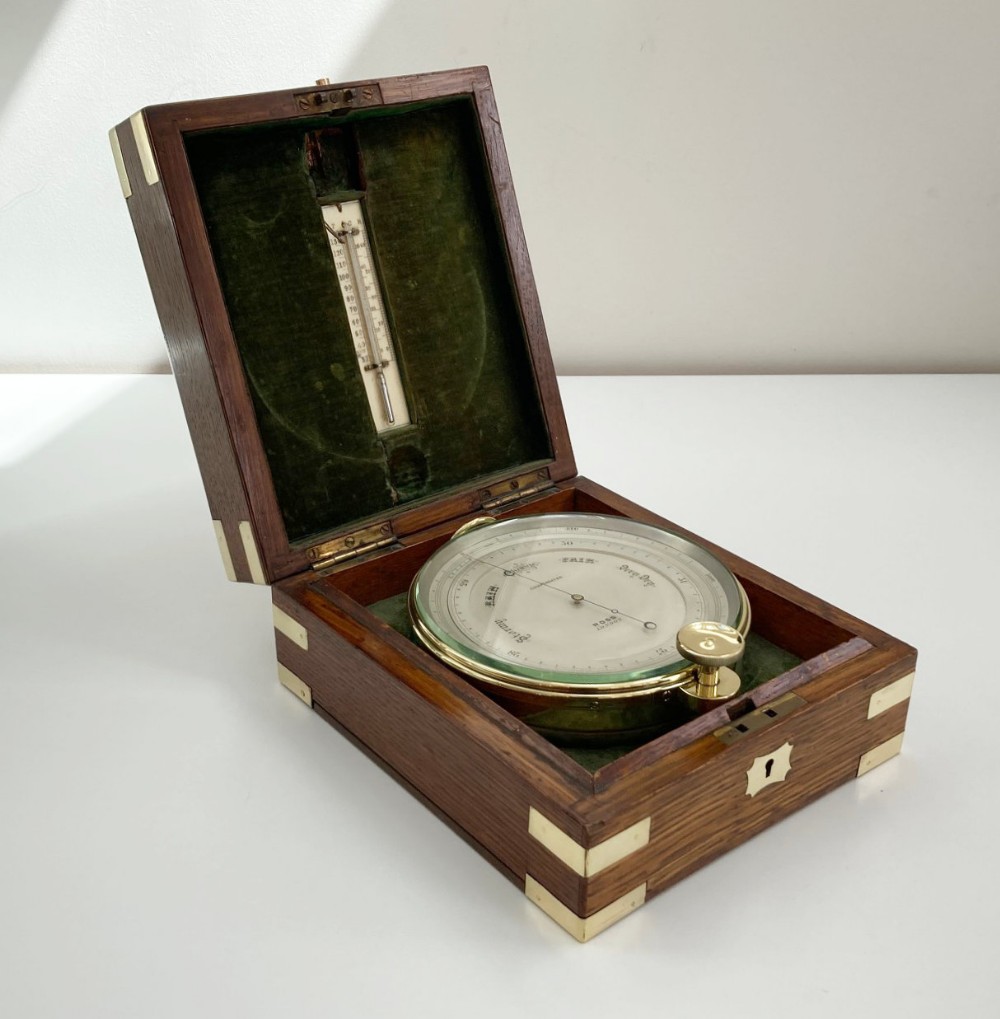
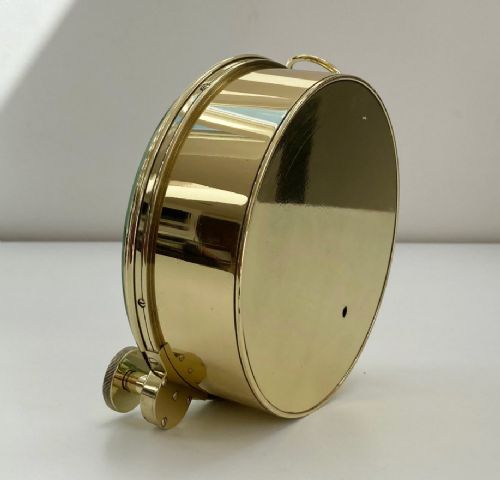
Edwardian Oak Cased Surveyors Aneroid Barometer by Ross London with Early Snooker Award