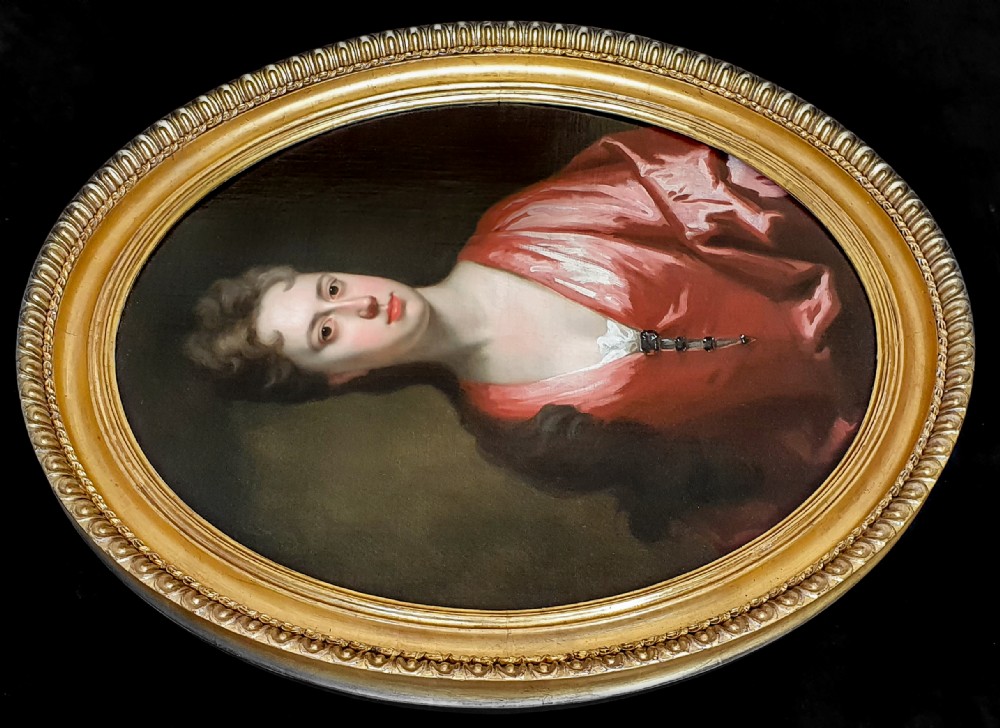
Titan Fine Art has dated this piece to the 18th Century.
He began a long and profitable career of lending money to the Government (upwards of £360,000) and subsequently amassed a huge fortune and became one of the richest businessmen in England. Upon Sir John’s death in 1699, Elizabeth, along with her sister Mary, inherited his fortune (his male children had already predeceased him), but it was Elizabeth that brought the estate to her husband Heneage Finch.
Elizabeth married the English lawyer and statesman, Heneage Finch 1st Earl of Aylesford (1649-1719) in 1678 at St. Giles-in-the-Fields Church, London, England. Heneage was a son of Heneage Finch, 1st Earl of Nottingham and Elizabeth Harvey. It is possible that this portrait was painted in 1703 to mark the event when her husband was created Baron Guernsey and a privy councillor, and Elizabeth herself created Baroness of Guernsey. Elizabeth was styled as Countess of Aylesford on 19 October 1714. The couple had three sons and six daughters. Heneage died in 1719 and twenty- four years later Elizabeth died in 1743. Upon the death of Heneage, his eldest son Heneage succeeded him as 2nd Earl of Aylesford. The 2nd Earl died in 1757, and since this date the earldom has been held by his direct descendants, six of whom in succession have borne the Christian name of Heneage.
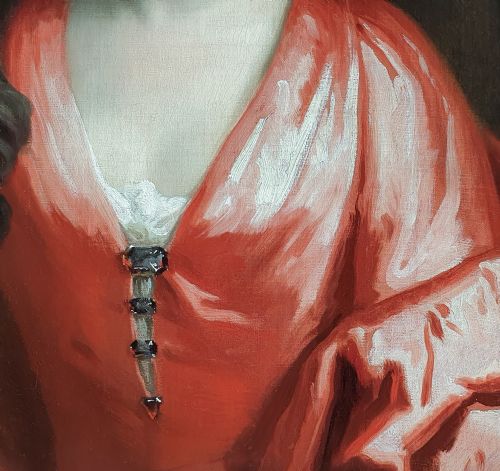
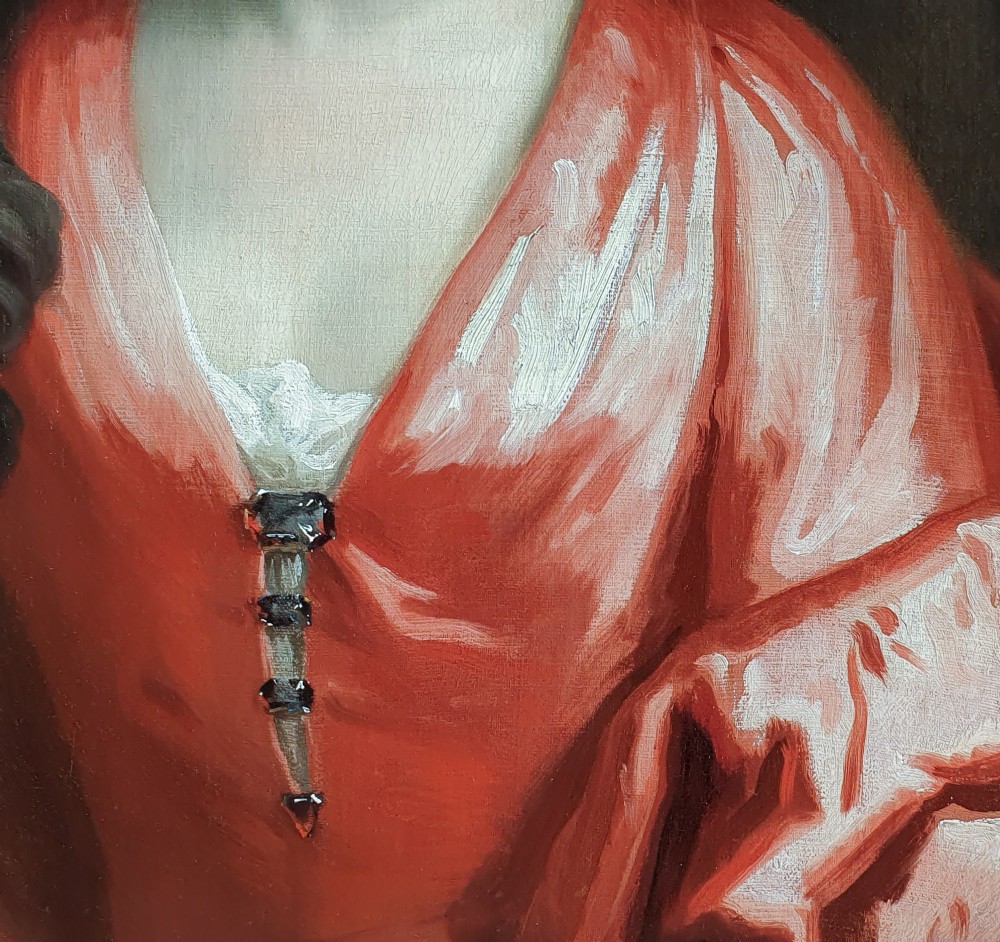
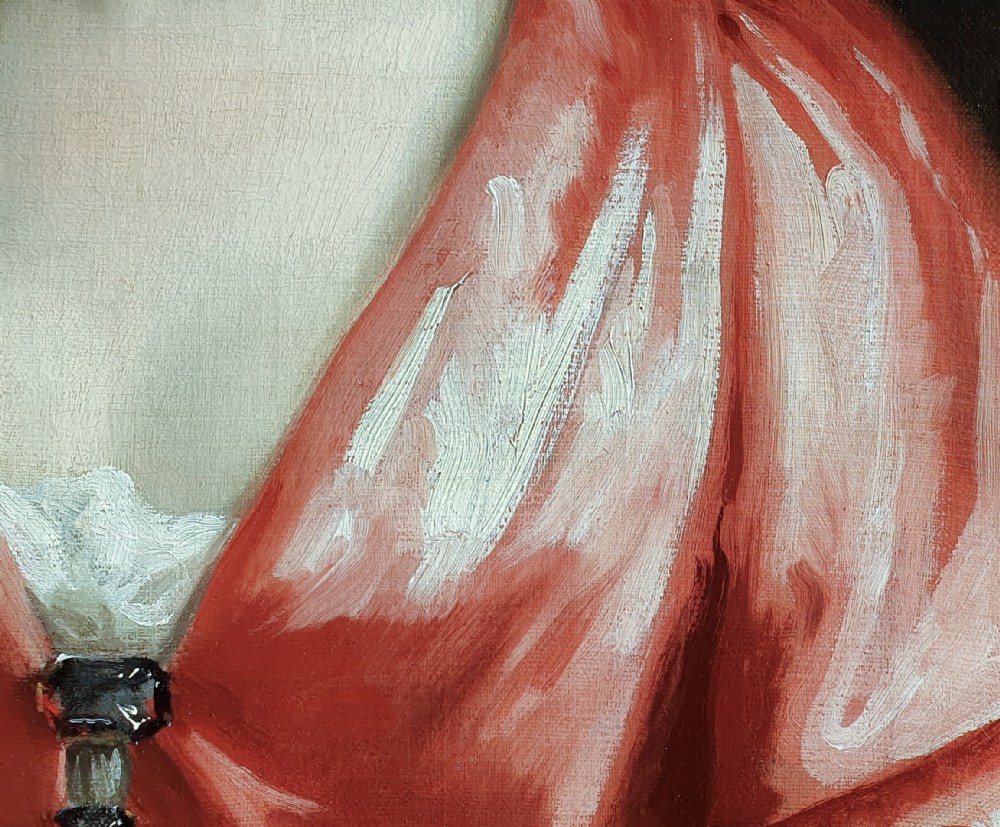
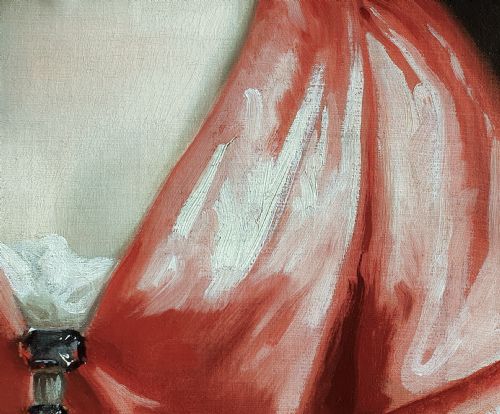
The portrait genre was valued particularly highly in English society. Neither landscapes nor allegorical pictures were ever priced so highly at exhibitions and in the trade as depictions of people, from the highest aristocracy to scholars, writers, poets and statesmen. The sitter appears amongst a plain background and without any distractions of added, and artificial, adornments - as such it concentrates solely on the sitter’s beauty and the considerable talent of the artist. With the rich colouring and lyrical characterisation, this work is representative of the archetypal English portrait and is an exceptionally appealing example of British portraiture.
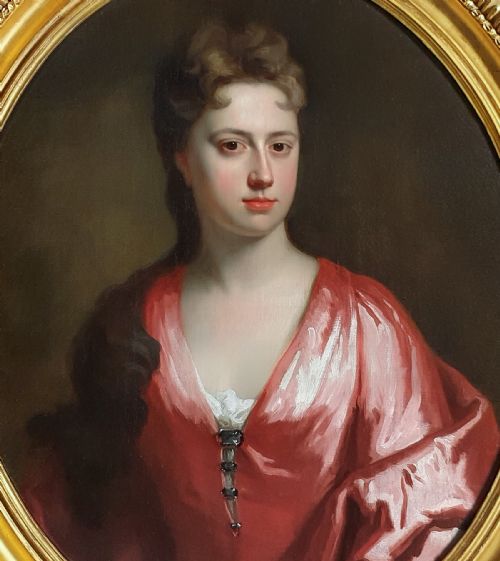
Held in its original exquisite good quality and condition carved and gilded frame.
Jonathan Richardson the Elder (1667-1745) was one of the most influential figures in the visual arts of 18th century England and also an accomplished poet. A pupil of Riley, he went on to teach both Knapton and Hudson. He amassed one of the great collections of Old Master drawings of the age and was considered by some one of the three foremost painters of his time. George Vertue placed Richardson, along with Kneller, Michael Dahl and Charles Jervas in the elite group of portraitists who led the field. He painted a wide range of aristocratic and professional sitters including members of noble English and Scottish families and he was invited to become Court Painter, although he turned the offer down.
His “An Essay on the Theory of Painting” published in 1715, inspired the young Joshua Reynolds to become an artist. This book is known to be the first significant work of artistic theory in English. Richardson also published with his son Jonathan the Younger (1694-1771) 'An Account of Some of the Statues, Bas reliefs, Drawings and Pictures in Italy' in 1722. The book was compiled by Richardson using material gathered by his son, Jonathan, whilst touring Italy and it became very popular, being used by young men as the basis of their Grand Tour and also as the basis for future purchases of art by wealthy collectors, therefore shaping English interest in foreign old Masters.
Provenance: UK private collection
Titan Fine Art has dated this piece to the 18th Century.
Specialist in 17th & 18thc portraits. Highly curated selection, museum-level research & pro conservation. Exceptional art, expertly vetted.
You can view the stock and full dealer information on the Titan Fine Art Profile Page

C.1702 Portrait of Elizabeth Finch, Later 1st Countess of Aylesford (C.1658-1743); Attributed to Jonathan Richardson (1667-1745), Oil on Canvas