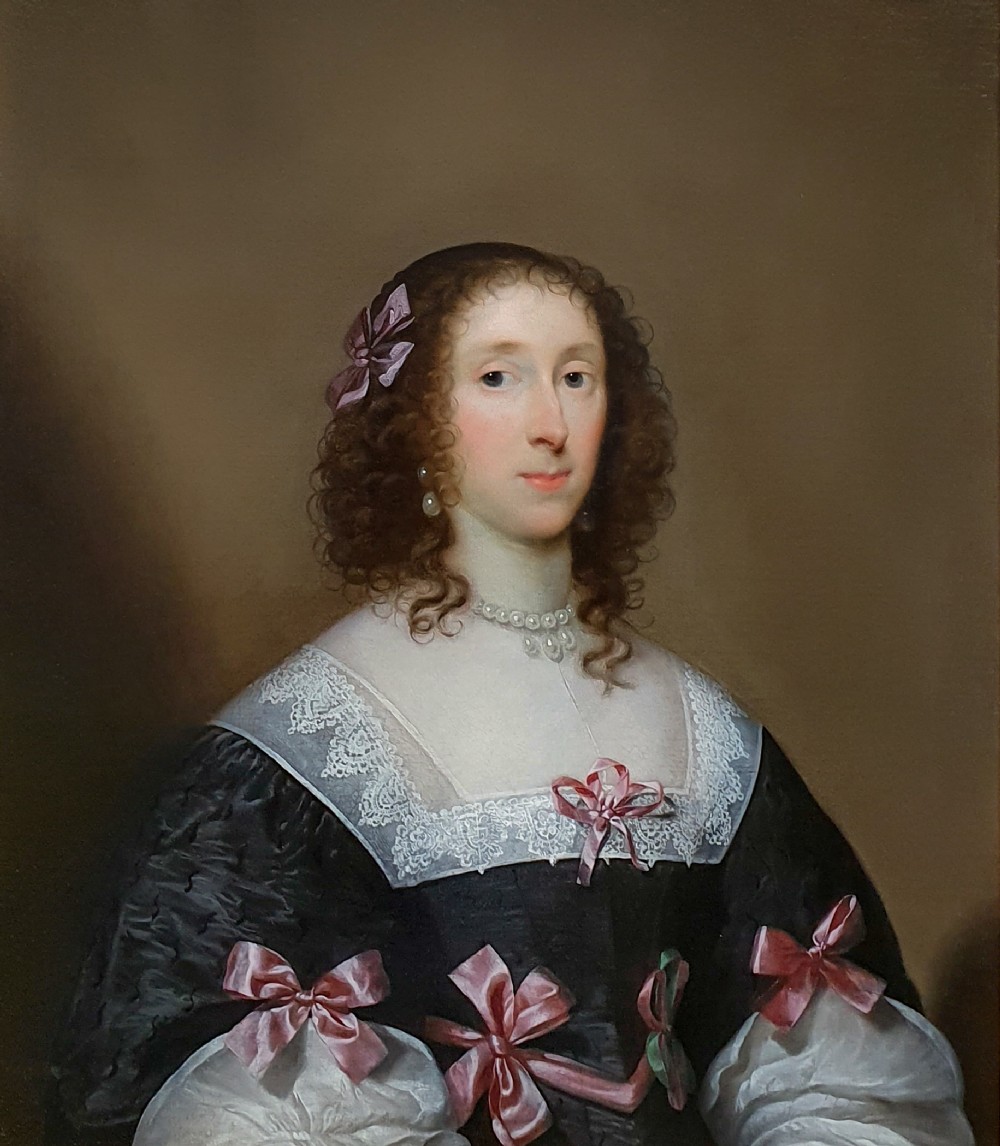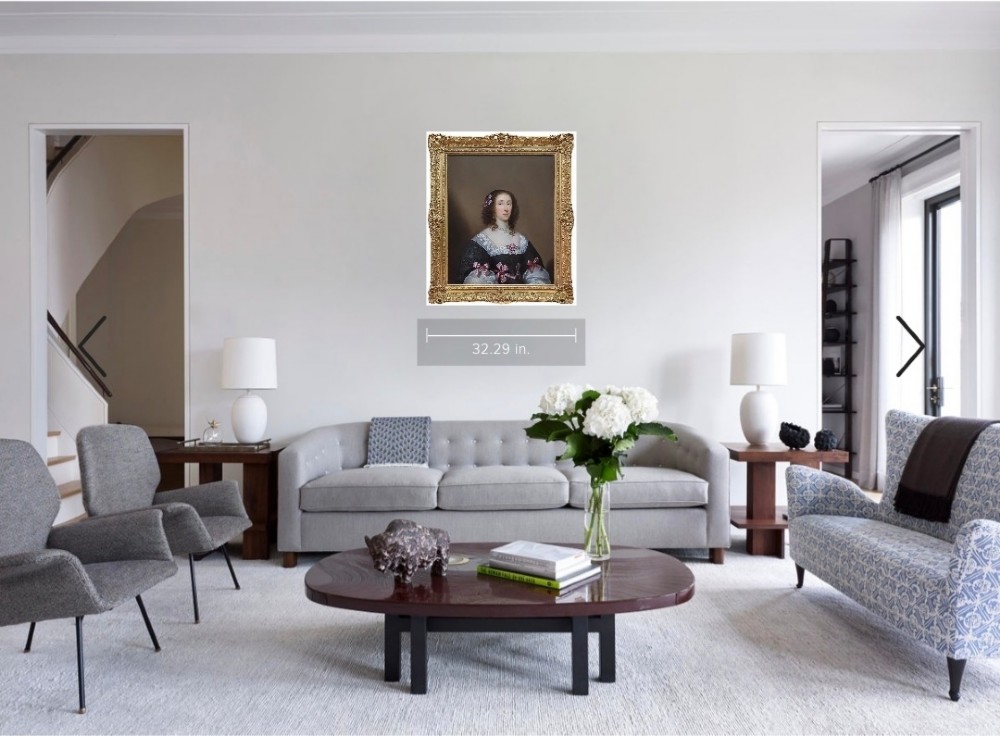
Titan Fine Art has dated this piece to the 17th Century.
So great a painter, he was sworn in as the King’s own painter in 1632. His work is found in most pubic collections in Britain and in many private collections – seen on the walls in many British country houses, in the possession of descendants of the original sitters – and the best examples of his work, such as our portrait, are not often available on the market
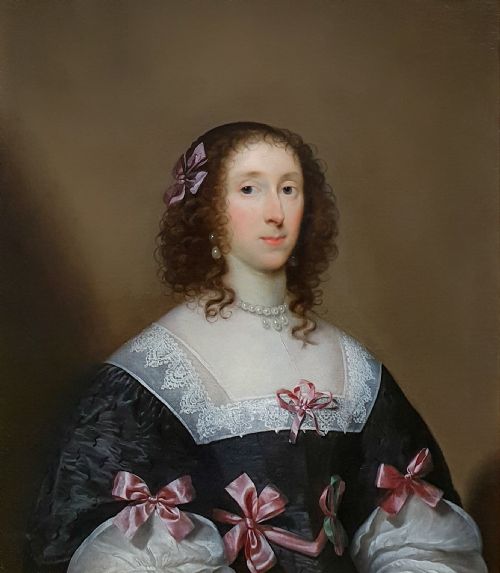
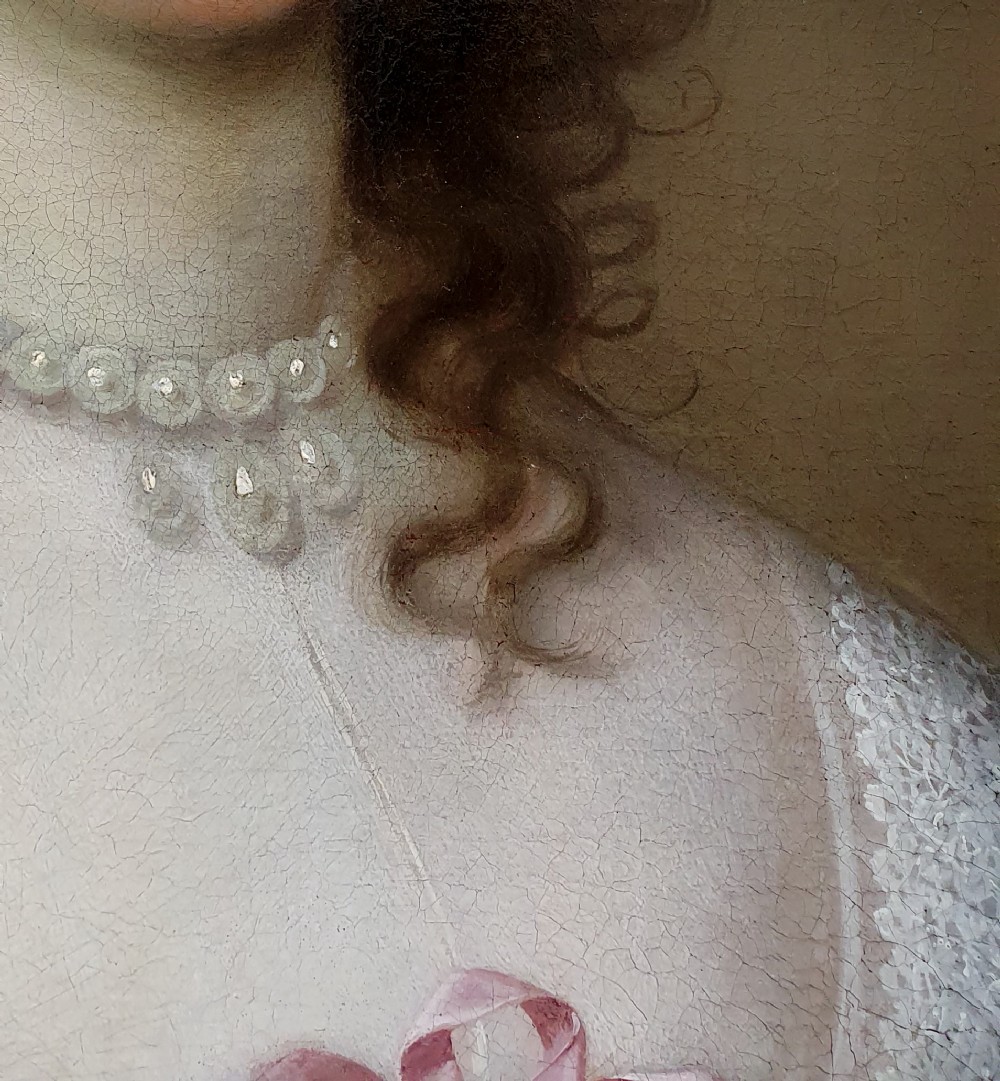
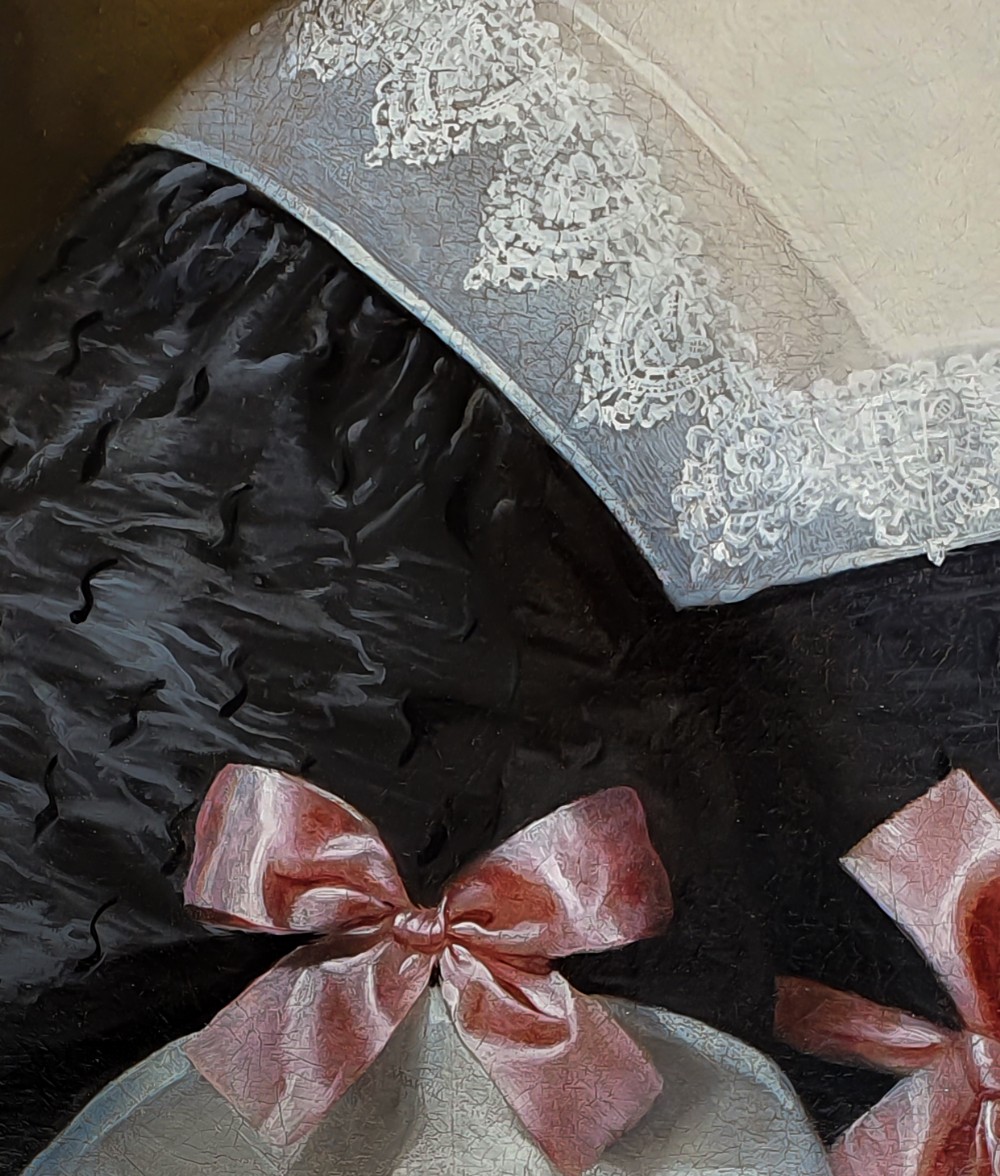
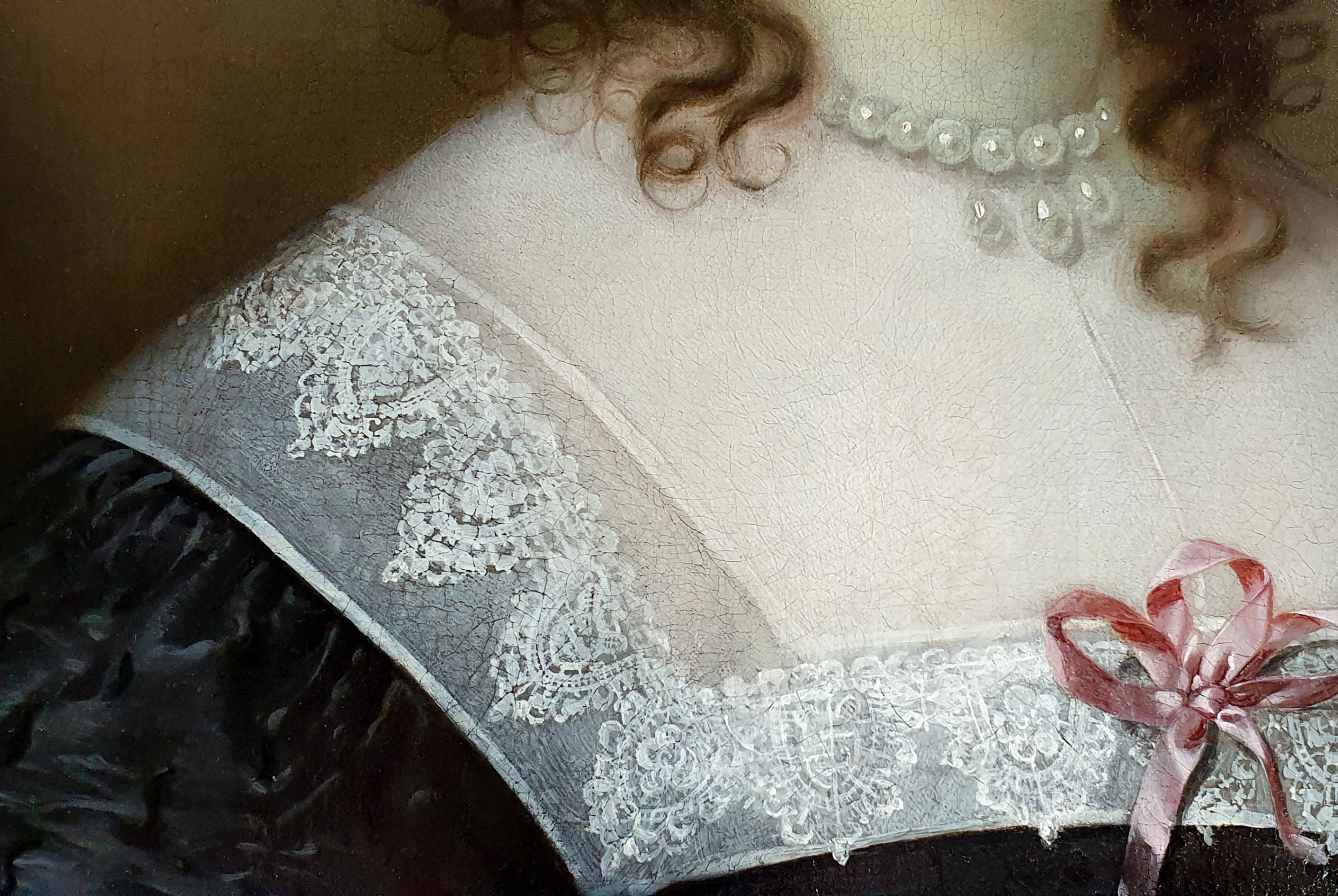
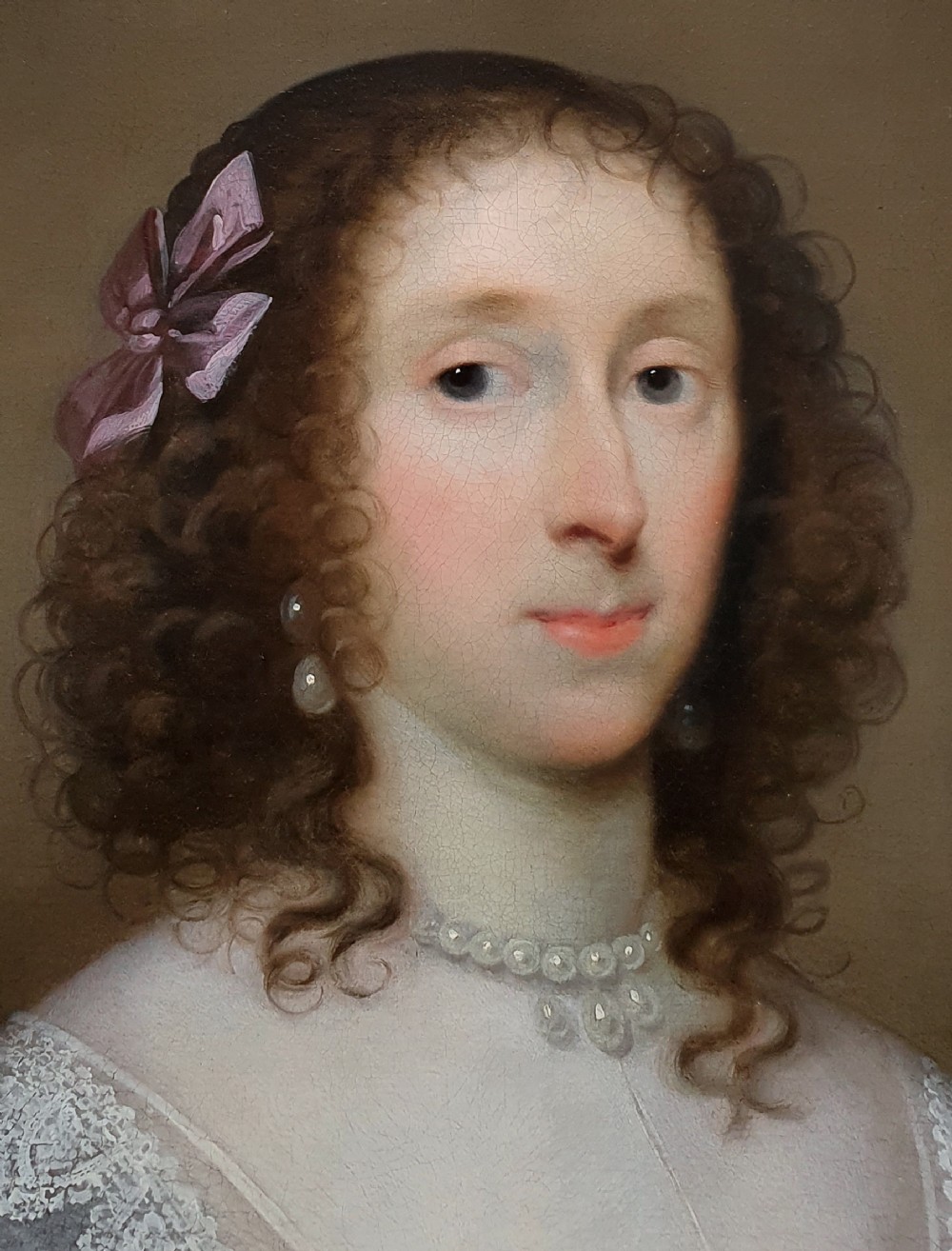
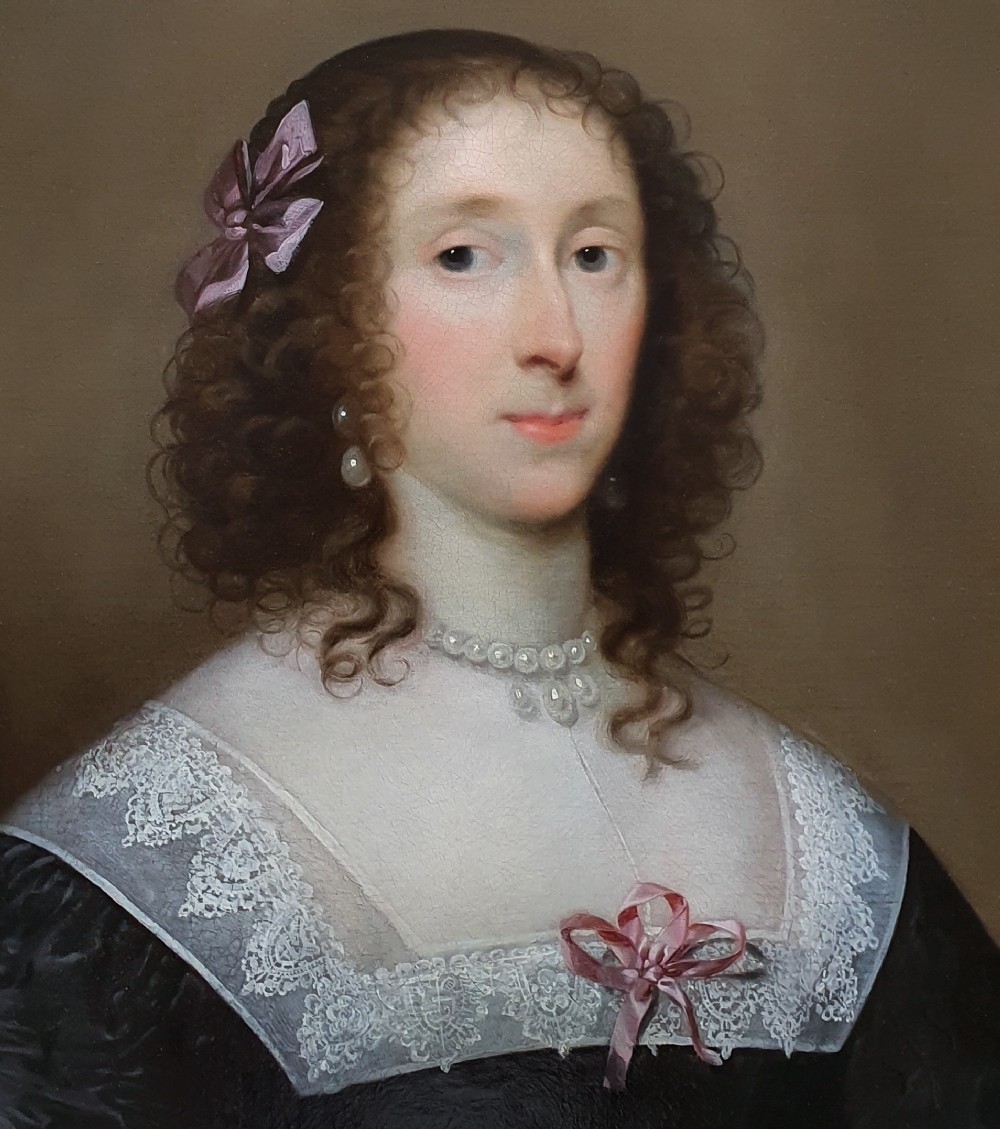
This exquisite portrait is a particularly splendid example of the sumptuous half-length female portraits that Johnson painted for members of the court and gentry during the 1630s. Painted in 1635, three years after Van Dyck’s arrival, Johnson makes no attempt to obey the rules of Baroque and instead sensitively depicts in complete honesty his sitter against a plain wall, and without distracting backdrops and flowing draperies. It depicts a lady in a striking black dress with voluminous white sleeves and lawn and lace collar – that great signifier of rank and wealth. The facial features, the pearl jewellery, and the soft curls of the hair have been delicately and sensitively rendered that there is a great degree of realism. The depiction of this portrait with such a forensic attention to detail would have taken many hours of precise painting. The result is sublime and is amongst his very best works.
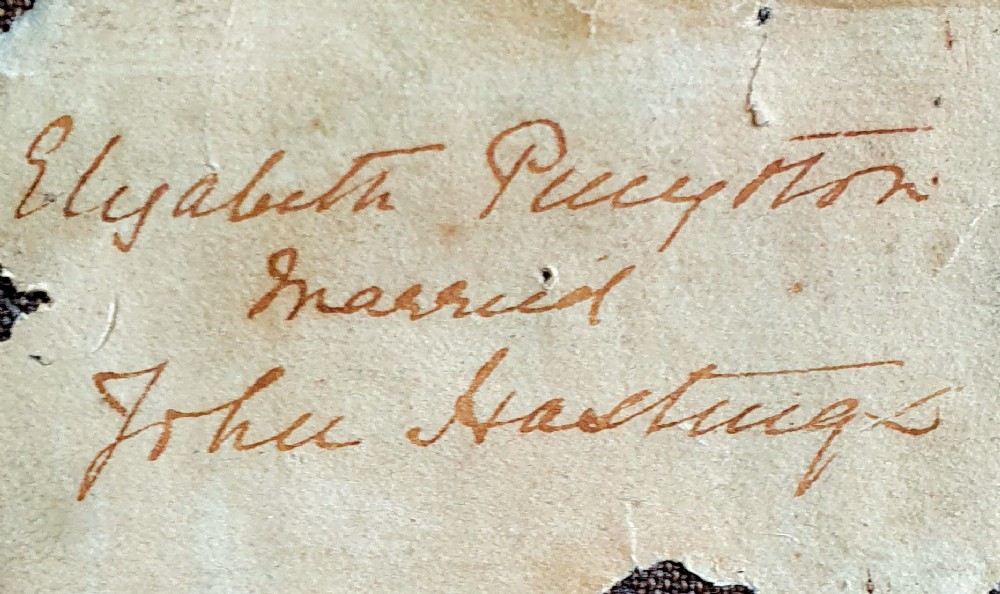
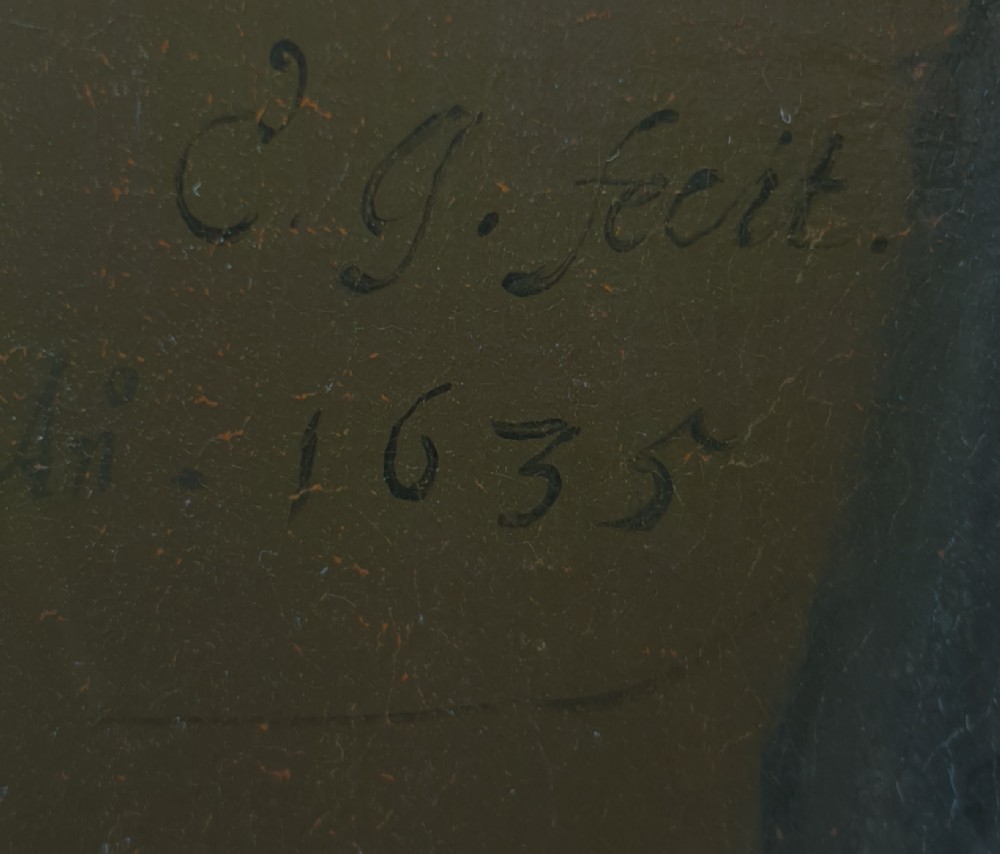
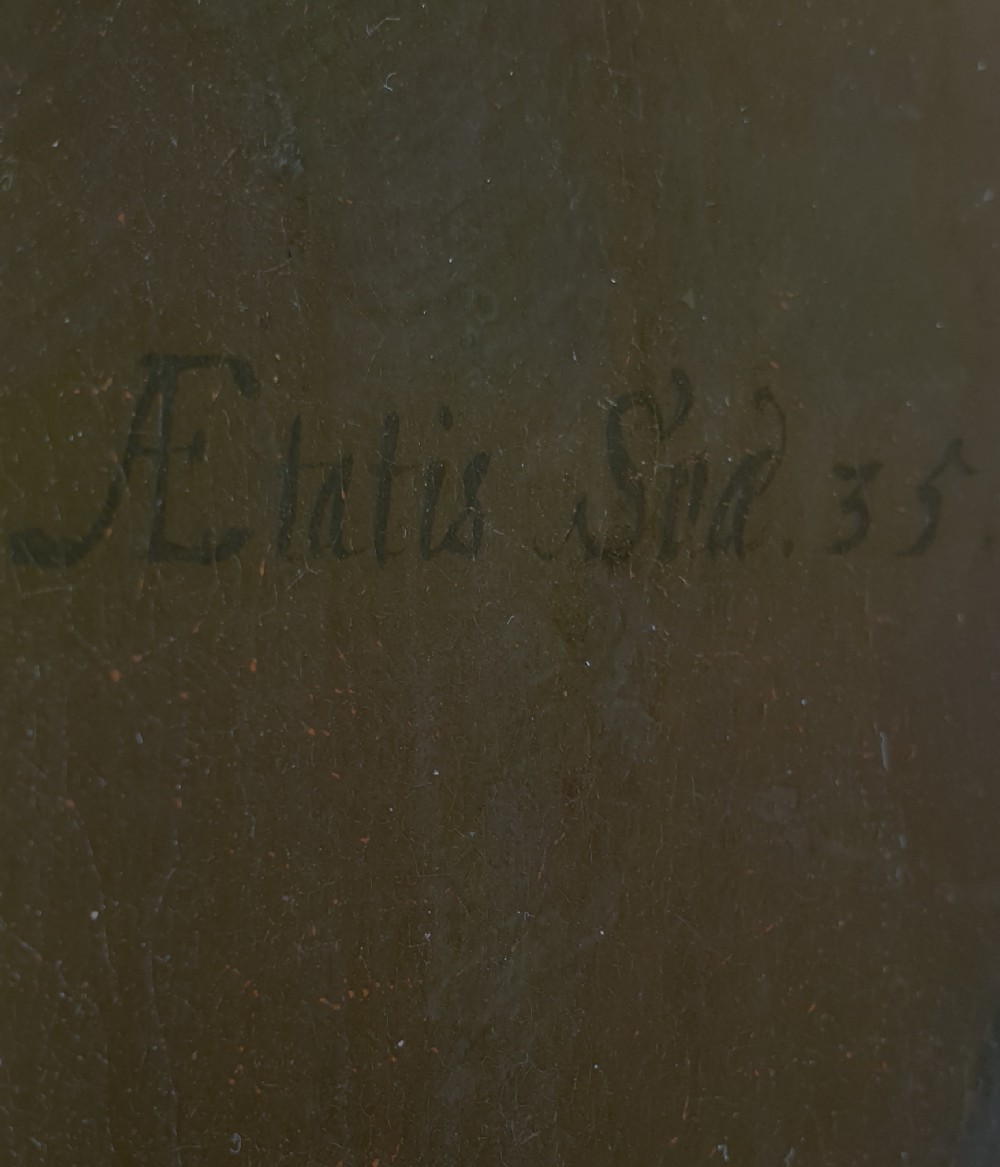
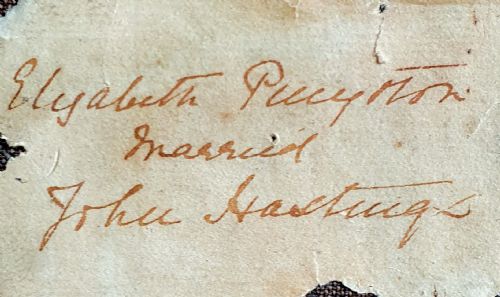
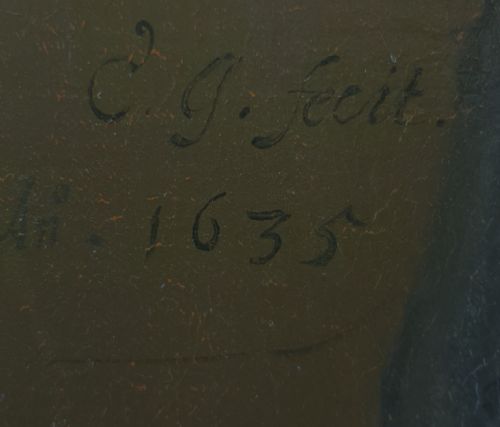
The portrait is signed with the artist’s characteristic signature of the time and dated 'C J fecit 1635' and inscribed 'aetatis sva 35' (indicating that the sitter was 35 years of age). By tradition the sitter is Elizabeth Penyston who married John Hastings, however, the birth dates for this couple are incongruous. The sitter could be Elsabeth Peniston (from Shorne, Kent, England) or Elizabeth Pennyston (from London) who were both baptised around 1600 and both resided in the locality in which the artist painted many individuals at that time.
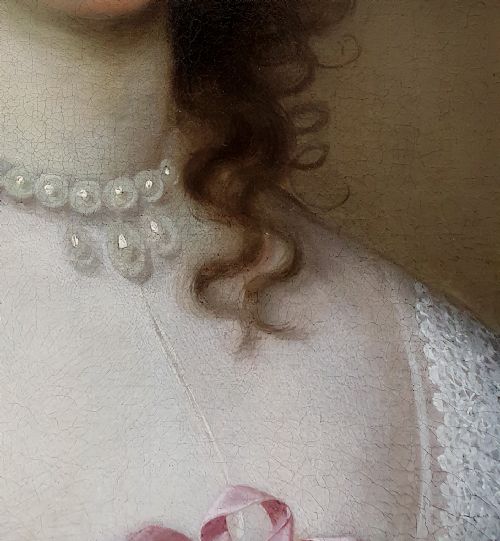
The year prior to our portrait the artist used the same purple pink and green ribbons/bows in his portrait of Lettice, Viscountess Falkland (1634), Portrait of Anne, Countess of Bedford (1634), and Portrait of a Lady (sold Christie's 26 April 1985, Lot. 83).
Johnson was born into a Flemish/German immigrant family in 1593 in London. It is thought he received some training from Marcus Gheeraerts II (1561/2-1636), the official portraitist of James I’s queen, Anne of Denmark. As a result, even Johnson’s earliest pictures display a level of continental sophistication not often seen in the works of English artists. He became extremely prolific and he painted elegant images of the King, the Queen, and the whole court, but also a regional clientele away from the court primarily in Kent. He was the firth British-born painter to sign his paintings (and often dating them as well) as a matter of course (it must be noted how rare it was for painters in Britain up to this time to sign their works).
In 1632, Johnson was appointed one of King Charles I’s painters, and by some accounts Johnson moved to Kent around 1636 but this is not known for certain. In 1643, just prior to the outbreak of the Civil Wars in Britain, Johnson and his family left for Holland and was leading portrait painter in Utrecht. His only surviving son, called Cornelius, was also a painter and assisted his father.
Provenance: Private UK collection
Titan Fine Art has dated this piece to the 17th Century.
Specialist in 17th & 18thc portraits. Highly curated selection, museum-level research & pro conservation. Exceptional art, expertly vetted.
You can view the stock and full dealer information on the Titan Fine Art Profile Page
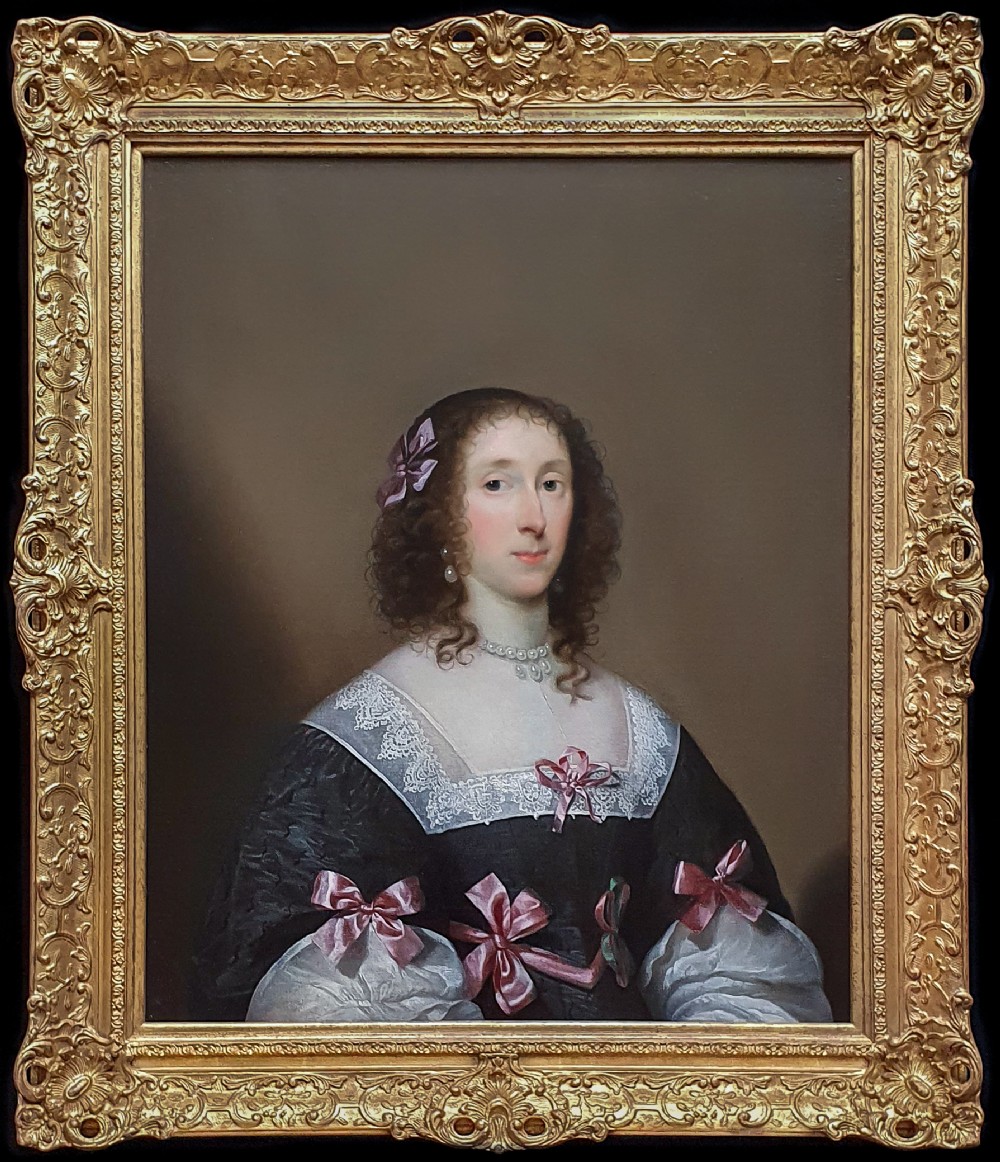
Portrait of Elizabeth Penyston Dated 1635; Signed Cornelius Johnson 1593-1664), Oil on Canvas