8,863  PAGES BROWSED TODAY PAGES TODAY 51 ANTIQUES UPLOADED TODAYNEW ARRIVALS
51 ITEMS ADDED TODAY
Sort Order
Items Per Page
Browse Categories
Sort order
Items per page
ID #SA780244
SOLD
Email
Save
Patent Compensating Portable Barometer by William Harris London
Jason Clarke Antiques
sold SA780244
Sorry, but this item has been sold.
Jason Clarke Antiques

Jason Clarke Antiques

Sellingantiques Verified Since Jul 2015
View Dealers Stock Page
Id #SA780244
PDF SHARE
SAVE

Patent Compensating Portable Barometer by William Harris London

19th century
Description

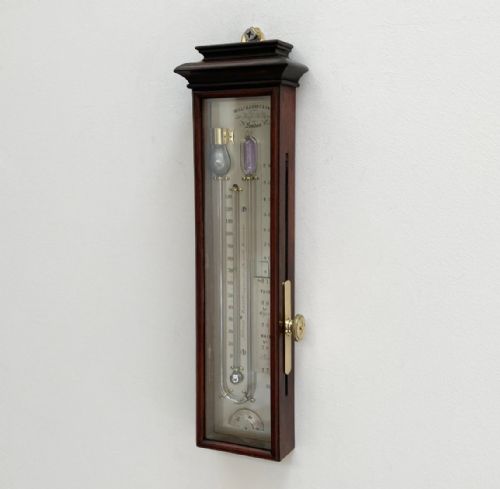
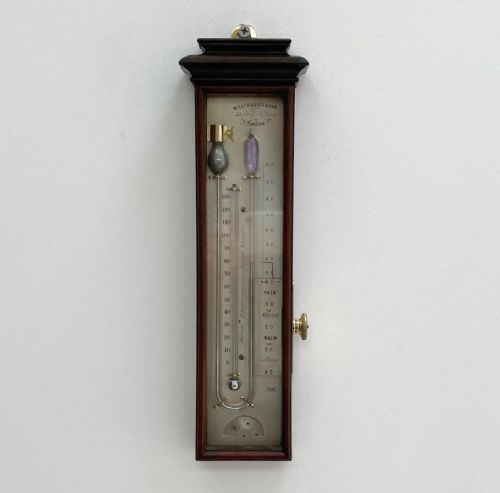
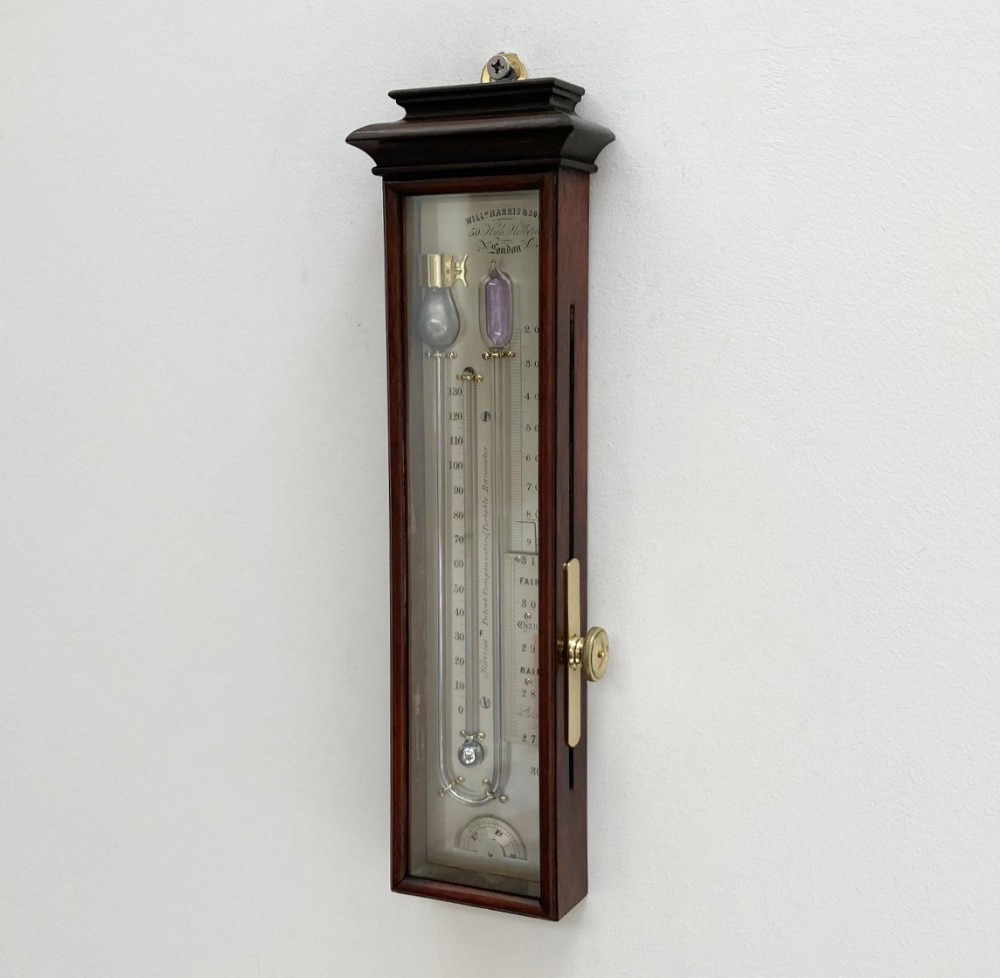
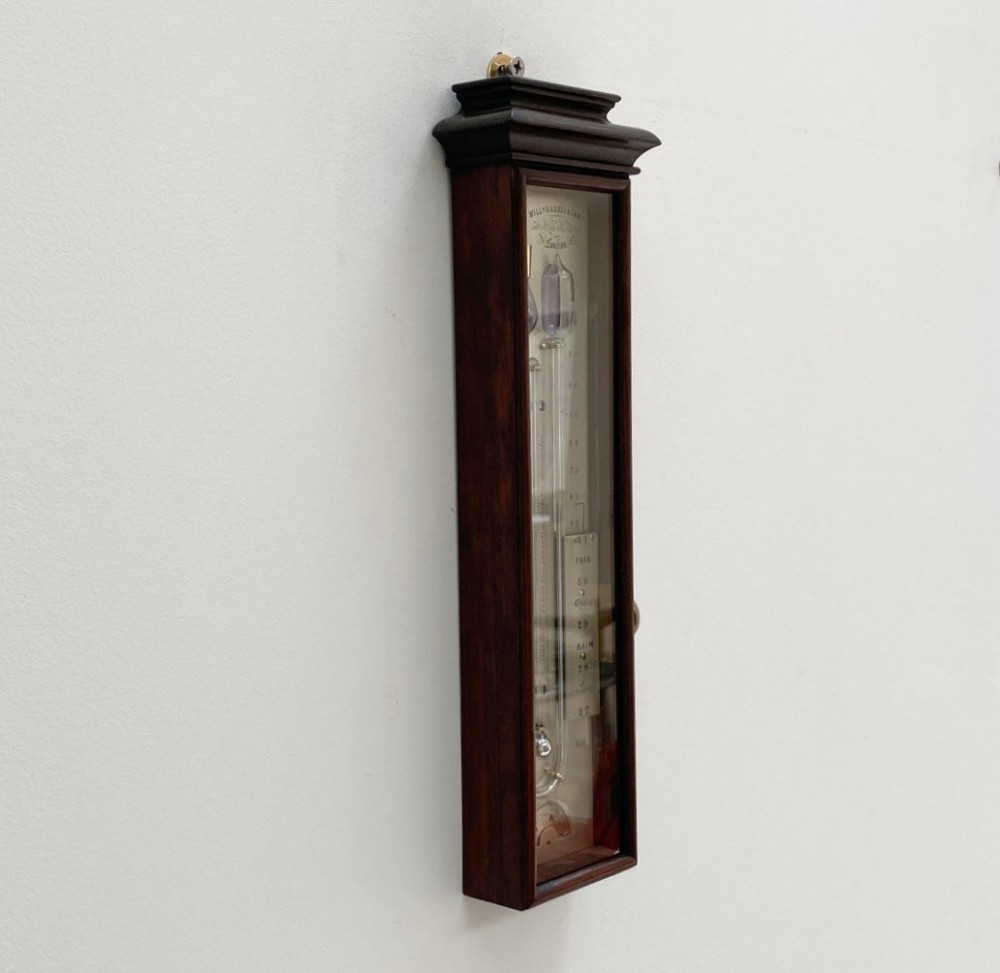
A patent compensating portable barometer by William Harris & Son, London.

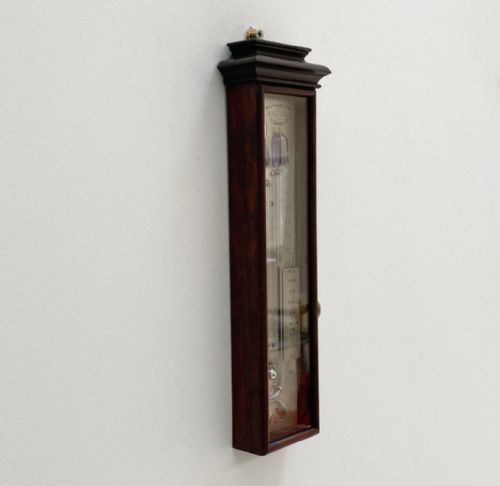
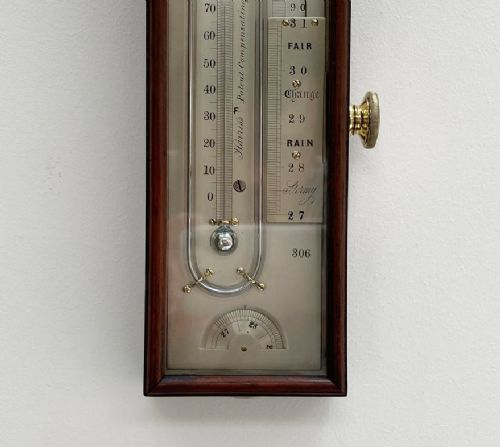
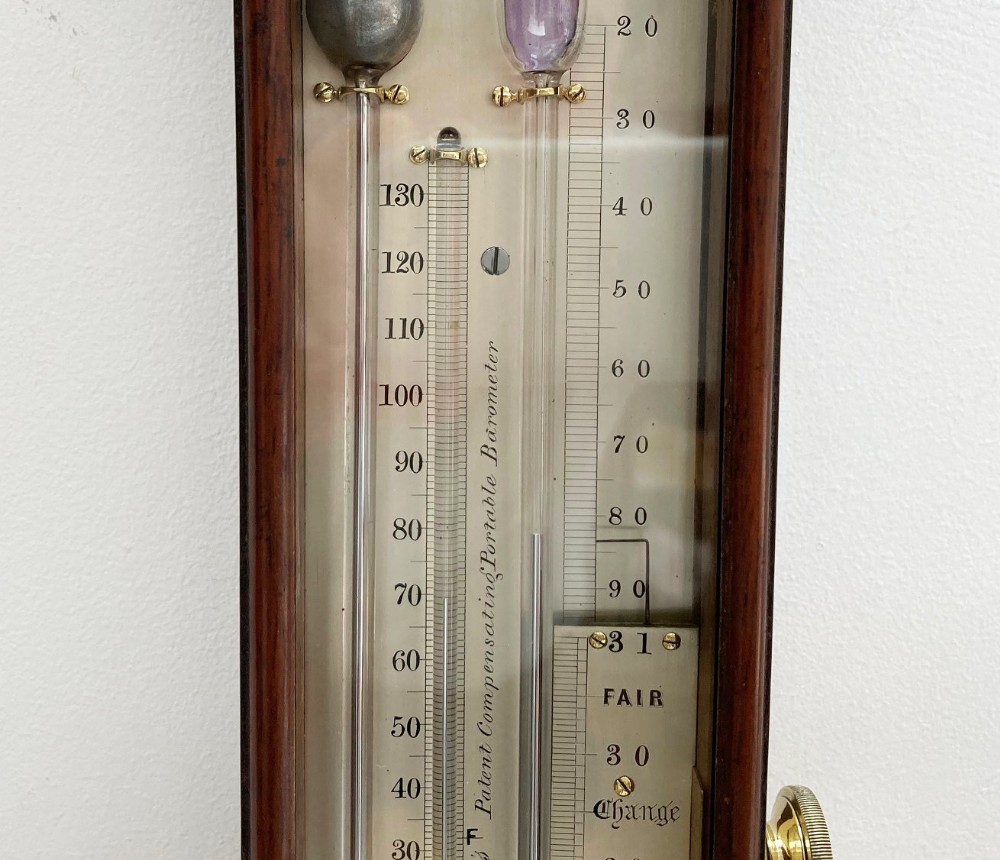
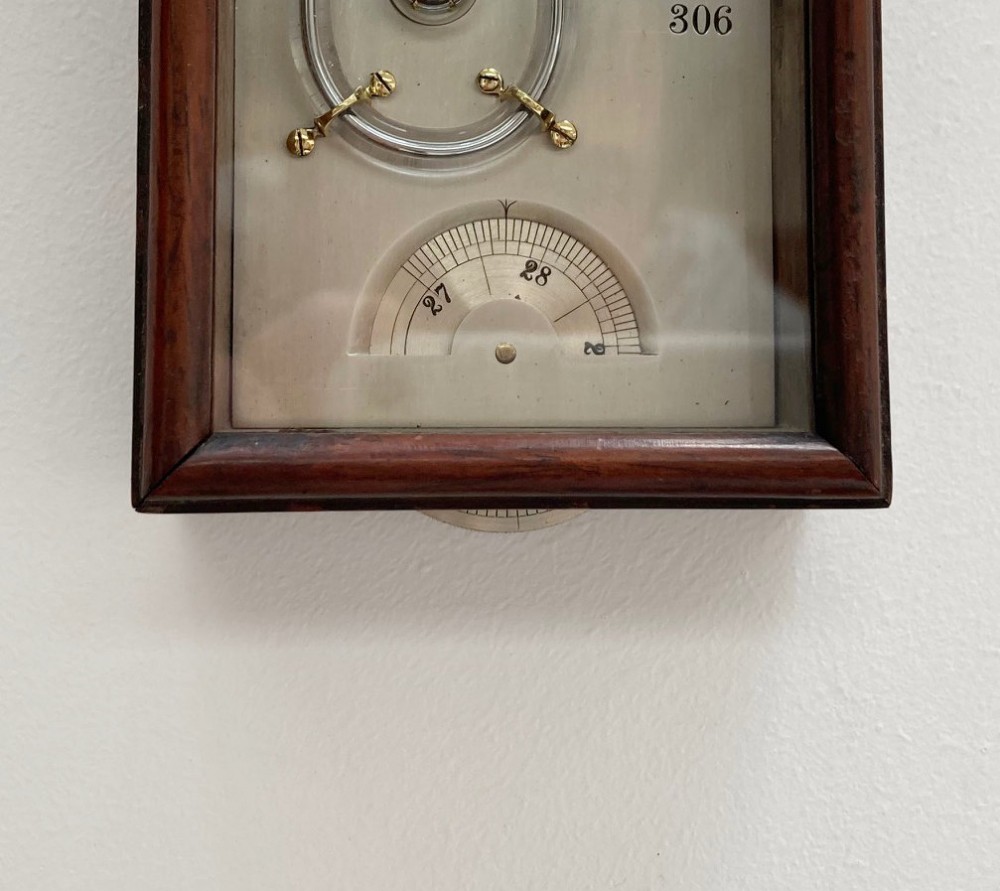
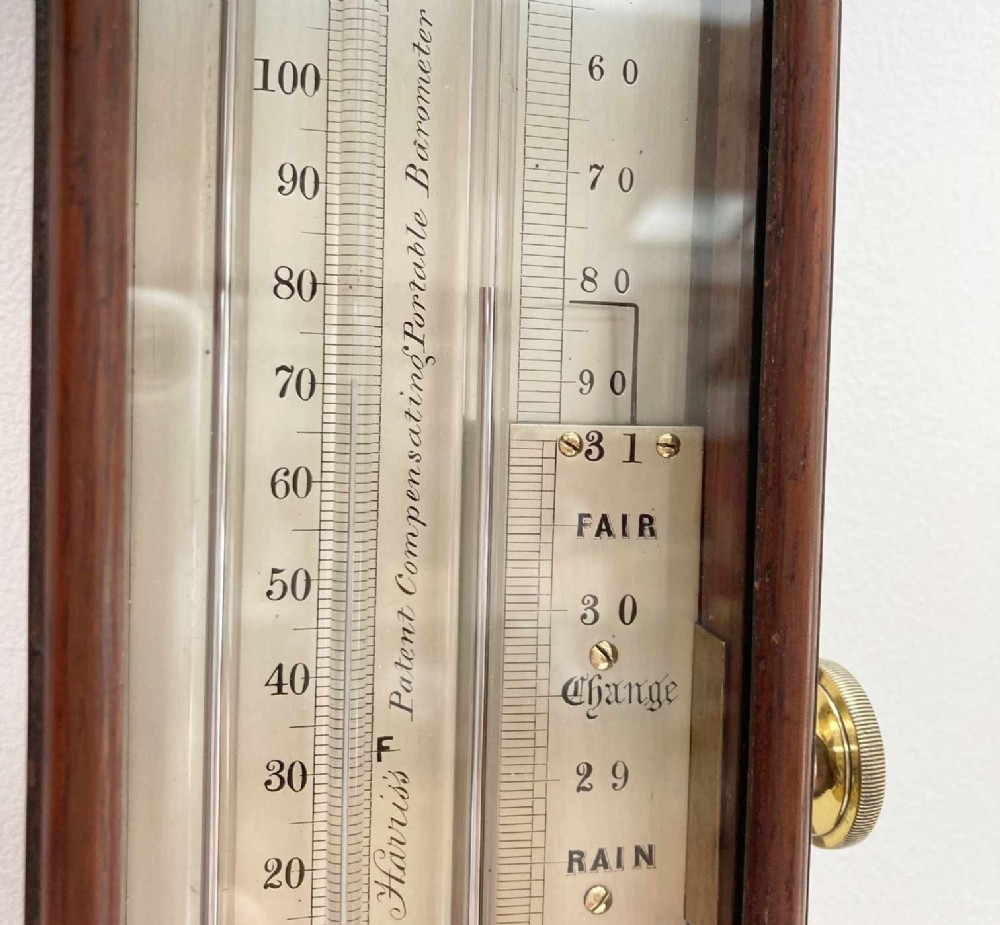
This example is comprised of a thirteen inch rosewood case containing a silvered scale plate with thermometer, glass cistern and setting dial for recording the day’s reading which is hand operated from the underside of the case. The right hand side of the case has a sprung brass knurled knob to allow for the accompanying silvered scale to be slid up and down to record the temperature and provide the associated reading from the level in the cistern.
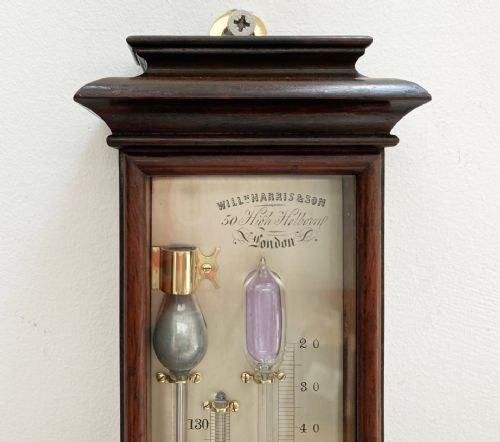
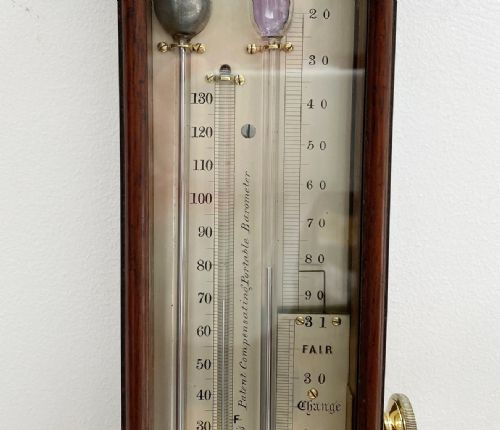
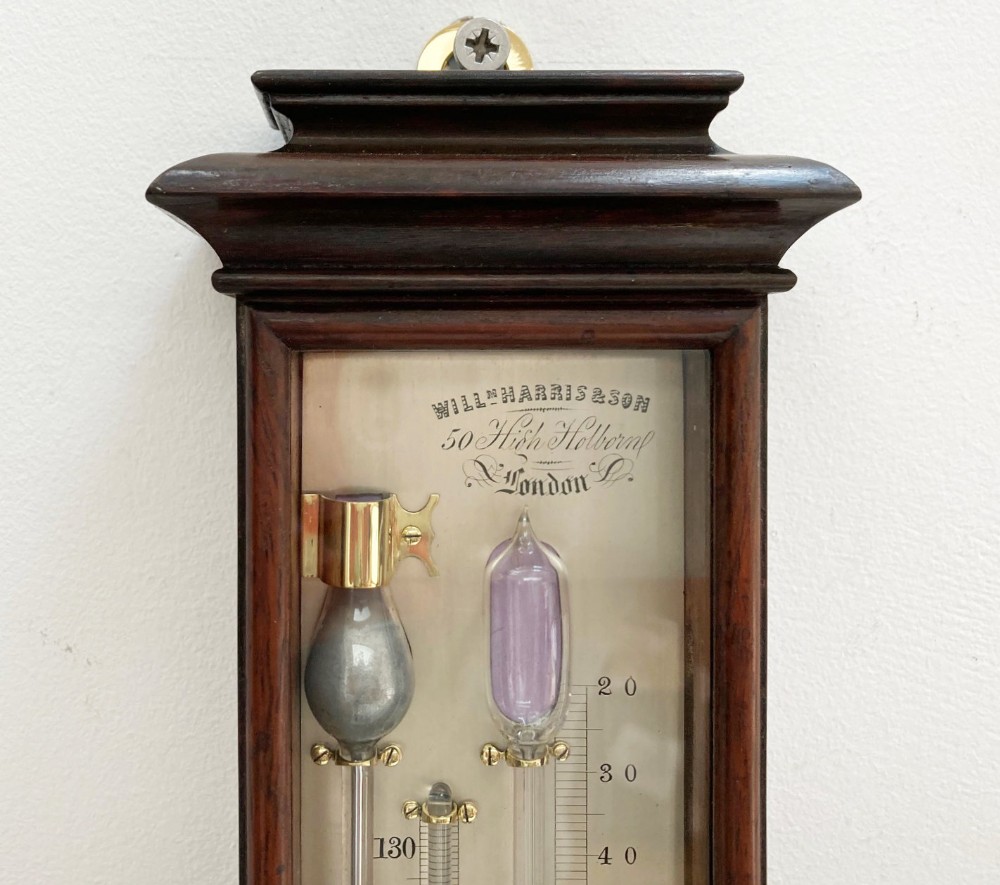
The top of the scale is engraved to “William Harris & Son, 50 High Holborn, London” and vertically engraved to the right hand side of the thermometer with, “Harris’s Patent Compensating Portable Barometer”.

William Harris was the son of the London optician Richard Harris but was apprenticed in 1788 to a Joseph Robinson who is described as a motion maker. With a seven year apprenticeship it is likely that Harris would have earnt his freedom by 1795 although he does not appear in the records until 1800 where he is listed as trading from his premises at 50 High Holborn.
His capabilities must have brought him early success, by 1809 it is known that Sir David Brewster had commissioned Harris to construct a goniometer after his designs. Brewster relates that,

“On the 3rd of February 1809, I gave direction to Mr Harris to construct for me a goniometer for measuring by reflection the angle which one line forms with another, or the angle formed by two reflecting surfaces, by observing their relative position to any straight line. I shewed this goniometer to several of my friends in London, during the months of February and March; to Dr Clarke and Mr Woodhouse at Cambridge, on the 22nd of March; and , in the beginning of April, it was exhibited to the mathematical class of this University by Professor Leslie. At this time I got an addition made to the instrument by Mr Adie”.
The relationship evidently flourished as two years later on the 21st of May 1811, a patent for, “Optical instruments for measuring angles; telescopes and other instruments” was lodged at the Patent Office by both Brewster and William Harris. That Brewster shared the patent with Harris is proof of the latter’s growing wealth as it would have consumed significant cost and time to complete the process. Brewster was never a man of great financial means according to his biographers and that William Harris was responsible for the administration is clearly stated in the patent itself. “And be it remembered that on the thirteenth day of July, in this year of our Lord 1811, the aforesaid William Harris came before our said Lord the King in his Chancery, and acknowledged the specification aforesaid”.
It is unlikely given the existing rarity of the instruments from this long patent application that many were produced and his early foray into commercialising his inventions was largely overshadowed in 1817 when Brewster’s invention of the kaleidoscope was revealed.
That Harris seems not to have been involved in either the patent application for the kaleidoscope or advertised as one of the licensed retailers alongside such famous cotemporaries as the Dollonds. Robert Brettell Bate, Matthew Berge and Thomas Jones (amongst others) suggests that their relationship had run its course. Brewster was known to have been a somewhat difficult character so we may assume that the relationship has broken down by then. It is also asserted that Harris by his exclusion from the above list may have been the responsible party for having shown the invention to other scientific manufacturers at the early stages of the instruments conception, examples of kaleidoscopes by Harris certainly exist. Brewster by virtue of its immediate popularity fell prey to numerous imitators and although he held rights under patent law, seemed never (probably for lack of funds) to

Physical Dimensions
Height
33cm (12.99")
Width
9cm (3.54")
Depth
4cm (1.57")
Declaration

Jason Clarke Antiques has dated this piece to the 1850s.

Reference Numbers
Sellingantiques Reference
SA780244
Description
A patent compensating portable barometer by William Harris & Son, London.

This example is comprised of a thirteen inch rosewood case containing a silvered scale plate with thermometer, glass cistern and setting dial for recording the day’s reading which is hand operated from the underside of the case. The right hand side of the case has a sprung brass knurled knob to allow for the accompanying silvered scale to be slid up and down to record the temperature and provide the associated reading from the level in the cistern.

fig 1. Patent Compensating Portable Barometer by William Harris London

The top of the scale is engraved to “William Harris & Son, 50 High Holborn, London” and vertically engraved to the right hand side of the thermometer with, “Harris’s Patent Compensating Portable Barometer”.

William Harris was the son of the London optician Richard Harris but was apprenticed in 1788 to a Joseph Robinson who is described as a motion maker.
Jason Clarke Antiques

With a seven year apprenticeship it is likely that Harris would have earnt his freedom by 1795 although he does not appear in the records until 1800 where he is listed as trading from his premises at 50 High Holborn.

fig 2. Patent Compensating Portable Barometer by William Harris London

His capabilities must have brought him early success, by 1809 it is known that Sir David Brewster had commissioned Harris to construct a goniometer after his designs. Brewster relates that,

“On the 3rd of February 1809, I gave direction to Mr Harris to construct for me a goniometer for measuring by reflection the angle which one line forms with another, or the angle formed by two reflecting surfaces, by observing their relative position to any straight line. I shewed this goniometer to several of my friends in London, during the months of February and March; to Dr Clarke and Mr Woodhouse at Cambridge, on the 22nd of March; and , in the beginning of April, it was exhibited to the mathematical class of this University by Professor Leslie. At this time I got an addition made to the instrument by Mr Adie”.

fig 3. Patent Compensating Portable Barometer by William Harris London

The relationship evidently flourished as two years later on the 21st of May 1811, a patent for, “Optical instruments for measuring angles; telescopes and other instruments” was lodged at the Patent Office by both Brewster and William Harris. That Brewster shared the patent with Harris is proof of the latter’s growing wealth as it would have consumed significant cost and time to complete the process. Brewster was never a man of great financial means according to his biographers and that William Harris was responsible for the administration is clearly stated in the patent itself. “And be it remembered that on the thirteenth day of July, in this year of our Lord 1811, the aforesaid William Harris came before our said Lord the King in his Chancery, and acknowledged the specification aforesaid”.

fig 4. Patent Compensating Portable Barometer by William Harris London

It is unlikely given the existing rarity of the instruments from this long patent application that many were produced and his early foray into commercialising his inventions was largely overshadowed in 1817 when Brewster’s invention of the kaleidoscope was revealed.

fig 5. Patent Compensating Portable Barometer by William Harris London

That Harris seems not to have been involved in either the patent application for the kaleidoscope or advertised as one of the licensed retailers alongside such famous cotemporaries as the Dollonds. Robert Brettell Bate, Matthew Berge and Thomas Jones (amongst others) suggests that their relationship had run its course. Brewster was known to have been a somewhat difficult character so we may assume that the relationship has broken down by then. It is also asserted that Harris by his exclusion from the above list may have been the responsible party for having shown the invention to other scientific manufacturers at the early stages of the instruments conception, examples of kaleidoscopes by Harris certainly exist. Brewster by virtue of its immediate popularity fell prey to numerous imitators and although he held rights under patent law, seemed never (probably for lack of funds) to

Height
33cm (12.99")
Width
9cm (3.54")
Depth
4cm (1.57")
Date of Manufacture

Jason Clarke Antiques has dated this piece to the 1850s.

Reference Numbers
Sellingantiques Ref
SA780244
Jason Clarke Antiques
Sellingantiques verified Since Jul 2015
Dealer Profile

You can view the stock and full dealer information on the Jason Clarke Antiques Profile Page
PDF SHARE
SAVE
Patent Compensating Portable Barometer by William Harris London
1 / 8
Archive I Patent Compensating Portable Barometer by William Harris London
Patent Compensating Portable Barometer by William Harris London
Archive II Patent Compensating Portable Barometer by William Harris London View II
Archive III Patent Compensating Portable Barometer by William Harris London View III
Archive IV Patent Compensating Portable Barometer by William Harris London View IV
Archive V Patent Compensating Portable Barometer by William Harris London View V
Archive VI Patent Compensating Portable Barometer by William Harris London View VI
Archive VII Patent Compensating Portable Barometer by William Harris London View VII
Archive VIII Patent Compensating Portable Barometer by William Harris London View VIII
Enlarged Archival View
Telephone 07815 046645
Location
Newbury
Berkshire
United Kingdom
Verified Since Jul 2015
Items For Sale 80
Items Sold 607
Jason Clarke Antiques
Verified Since Jul 2015
View Dealer Info
Location: Newbury, Berkshire, United Kingdom
Verified
Jul 2015
For Sale
80
Sold
607
Patent Compensating Portable Barometer by William Harris London
Ref: SA780244
Patent Compensating Portable Barometer by William Harris London
Detail View 1
Detail View 2
Detail View 3
Detail View 4
Detail View 5
Detail View 6
Detail View 7
Archival Detail
Every single antique dealer on our platform is individually approved by our internal team. We verify their professional trade history, ethical standards, and photographic quality to ensure a secure, high-standard buying environment. Upon joining, every dealer agrees to a strict 9-point code of conduct. While issues can occasionally arise, our dealers typically resolve them swiftly and directly with the buyer. In fact, since our founding in 2002, Sellingantiques has only had to step in to help resolve an issue on roughly five occasions—a true testament to the quality of our dealers and their dedication to your happiness.
Our dealers are highly experienced in packing and shipping fragile, high-value antiques. Because you are in direct contact with the dealer, you will be able to easily go through all available shipping and insurance options together to ensure your item arrives safely.
Antiques are the ultimate green purchase. By choosing historical pieces over newly manufactured goods, you completely eliminate the carbon footprint of modern mass production while preserving exceptional, timeless craftsmanship.
items
Add keywords to the filter
Price
£100
£250000
Era
Movements
Material
Origin
Stock Location
Freshness
Online Payments
Categories