Titan Fine Art has dated this piece to the 17th Century.
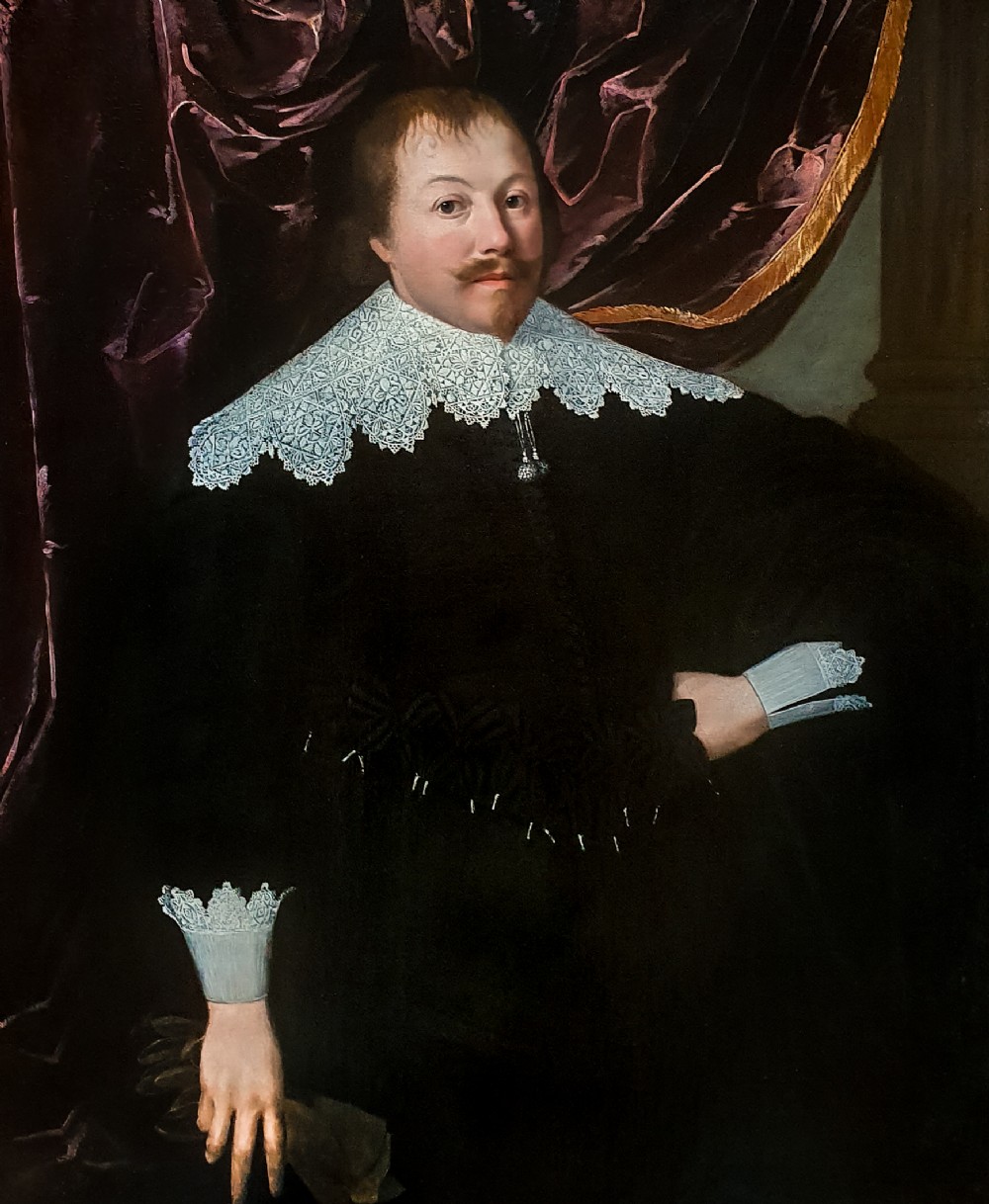
This impressive large-scale portrait is a rare example from the Dutch painter Huygh Pietersz. Voskuyl (1591-1665). Not many works It was painted during one of the most prolific periods of art history – the Dutch Golden Age. During this period the gentlefolk favoured having themselves portrayed life sized and full length. Having to look up at their faces, the viewer is forced to acknowledge their authority and prosperity. This artist has carried out their mission with bravura.
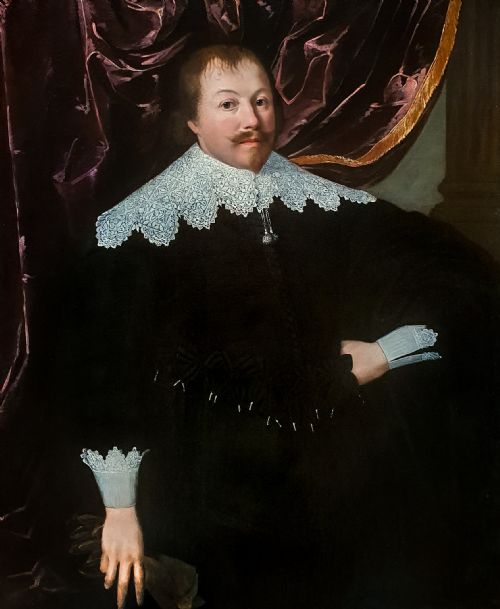
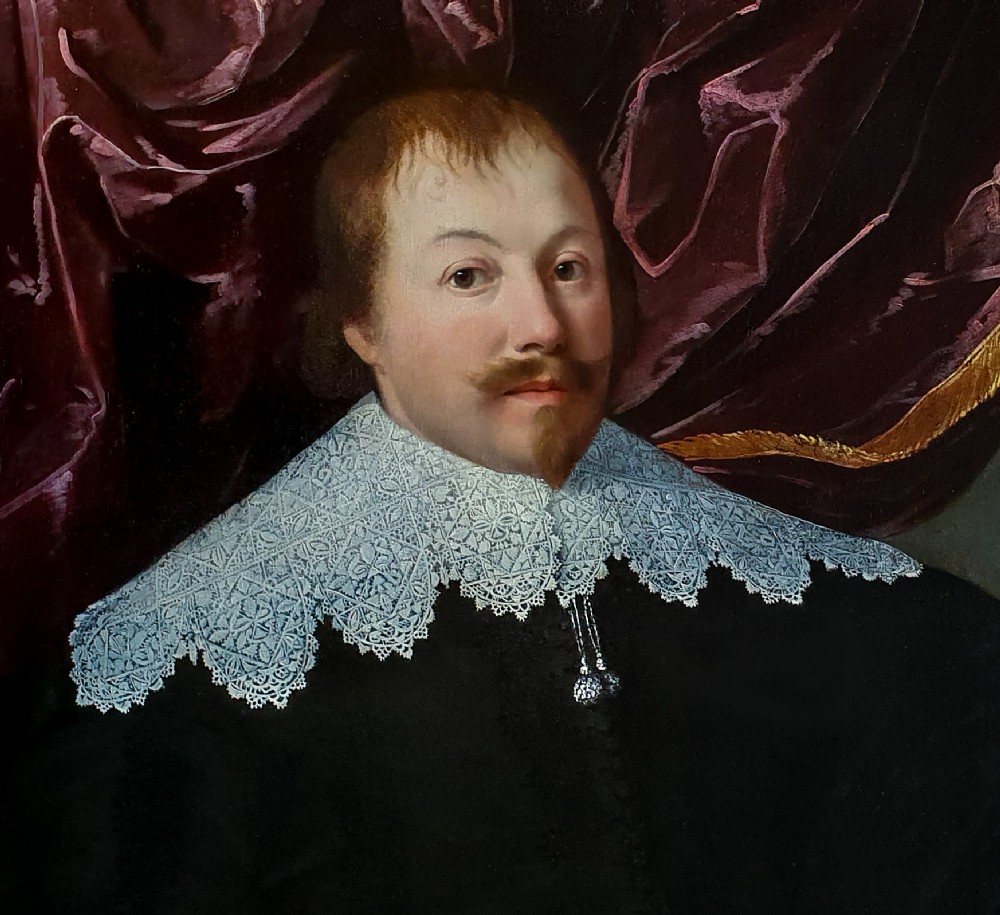
The expensive attire portrayed is that of a successful merchant or burgher. His black attire may not look ostentatious, but in fact black dye was the costliest pigment at the time. It was therefore reserved only for the most formal occasions. Black attire as seen in portraiture of this period came in many forms and clothing was often intricately detailed and had various sumptuous fabrics often contrasting with each other and with all manner of designs and patterns. Artists strove to depict the subtle nuances of the colour and how it reflected light. Black may have been low-key but the outfit is bordering on the frivolous. He was certainly wealthy and ambitious.
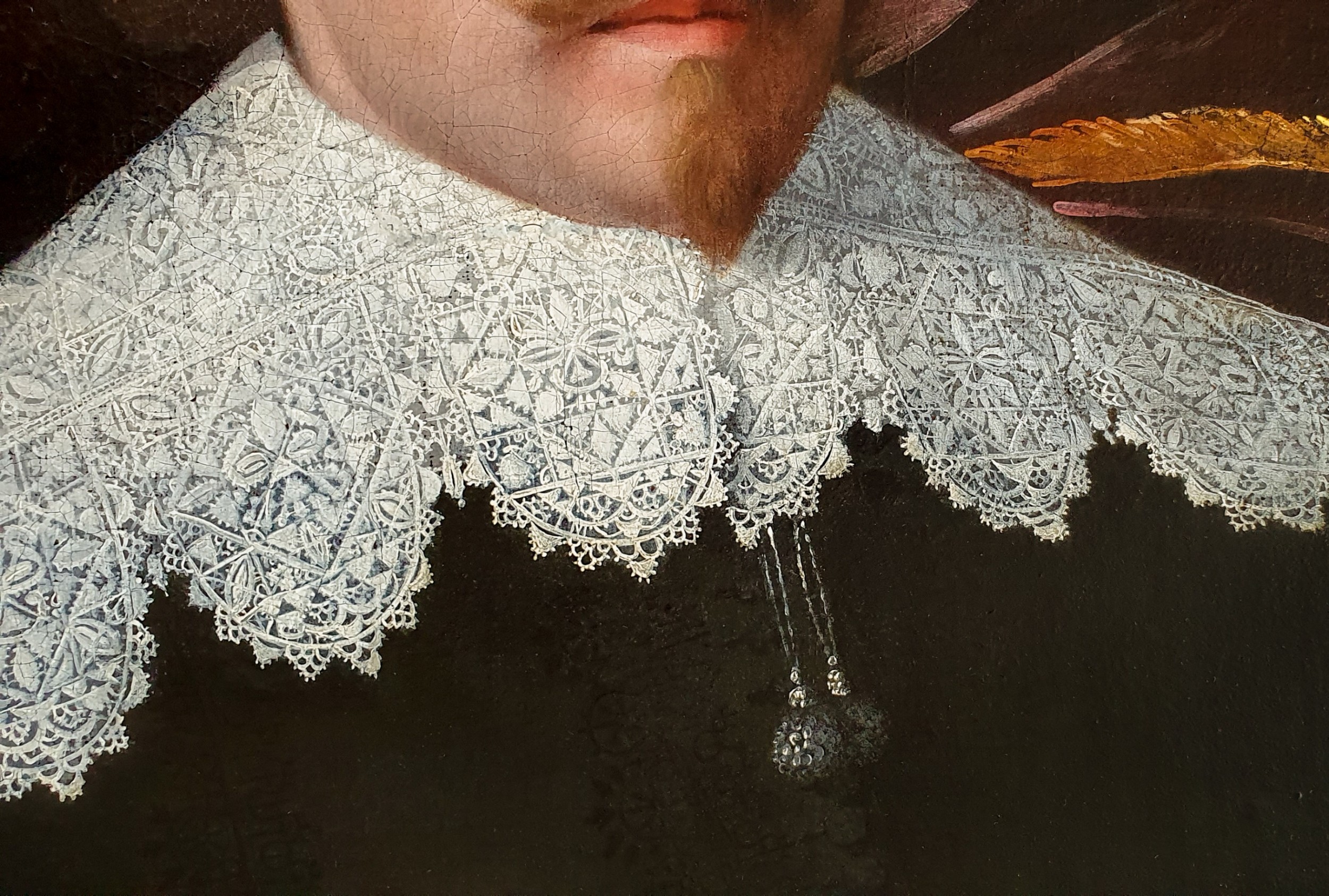
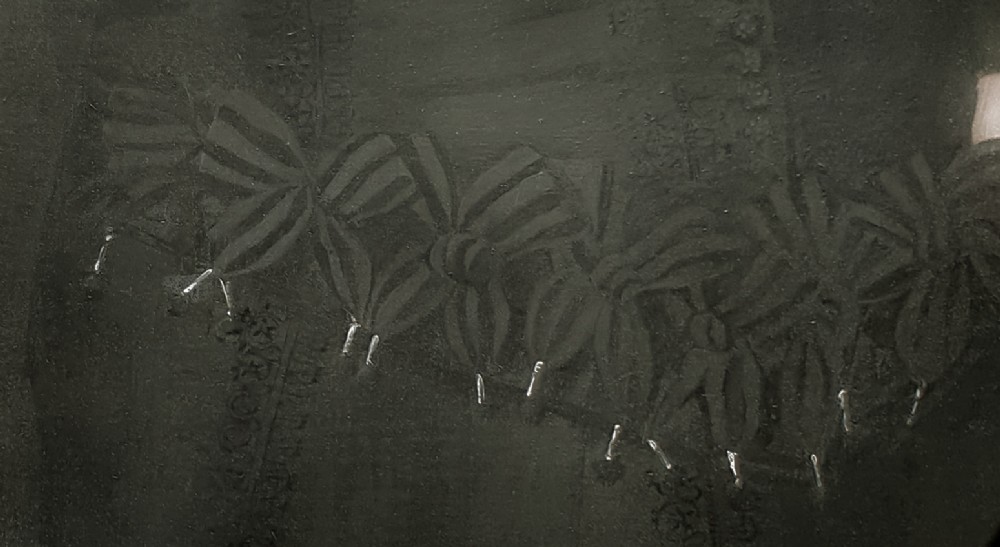
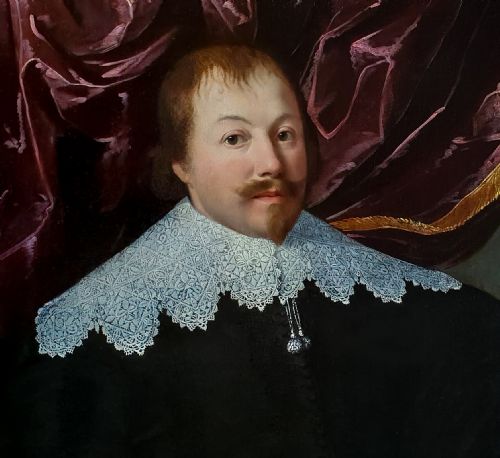
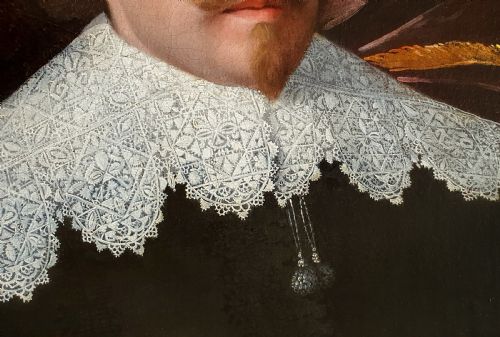
His starched white collar and lace cuffs are an expensive status symbol, executed deftly and with great attention to detail. Lace collars were prized possessions, often listed in inventories of estates, and often more expensive than jewellery. Most of the early lace was linear and geometric, however around 1630 there was an abrupt change in style when soft falling bands replaced the stiff standing collars and the lace changed to feature areas of dense cloth stitch. By this date there was much greater differentiation between male and female dress. The men still wore closely fitting doublets with the high necks that provided a base from which a wide linen band (collar) could fall, while the ladies favoured an open neckline, often edged with a similar lace to that on the men's bands. At the waistline are large silk bows with silver aglets.
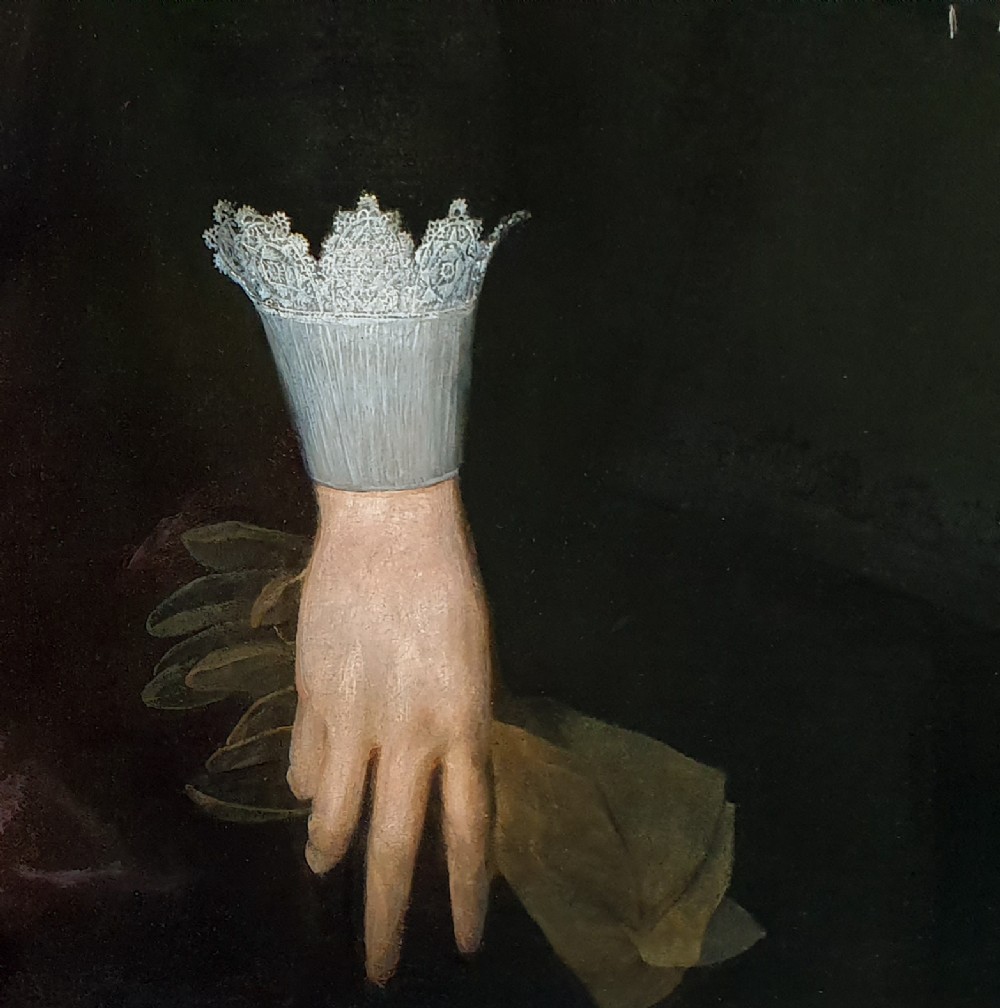
The buff coloured gloves that he holds were an absolutely vital accessory. The gloves are probably made from the most prized leather which came from Spain, in particular from Cordova. Cordovan leather was tanned with a special vegetable process that left it both highly impermeable and divinely soft. Apart from keeping hands warm the use of gloves during the 15th through the 19th centuries were full of symbolism and they were worn regardless of the season. They kept the skin unblemished - soft, smooth hands were considered highly attractive. This combination of necessity and proximity to bare skin made gloves a deeply personal gift and they took on a strong symbolic significance and were regarded as emblematic of fidelity and loyalty for hundreds of years. Such was the importance of their symbolism was that some gloves were never intended to be worn at all. Their luxury made them ideal gifts at court, and so in the 15th and 16th centuries, ambassadors often presented them as symbols of loyalty.
Until the mid-19th century, it was customary to give gloves as tokens to guests at weddings and to mourners at funerals. Gentleman often gifted their bride-to-be with a pair of gloves (the obligatory gift) and were handed over at the betrothal and put on display before the wedding took place. It was probably their direct contact with the skin that led to the eroticism of gloves. Not only were pairs often exchanged between lovers, but from the 16th to the 18th centuries, it was common practice to remove one glove and give it as a gift to a favourite. The idea of the item being presented still warm from the wearer’s hand is...
See full description at: http://titan
Titan Fine Art has dated this piece to the 17th Century.
Specialist in 17th & 18thc portraits. Highly curated selection, museum-level research & pro conservation. Exceptional art, expertly vetted.
You can view the stock and full dealer information on the Titan Fine Art Profile Page
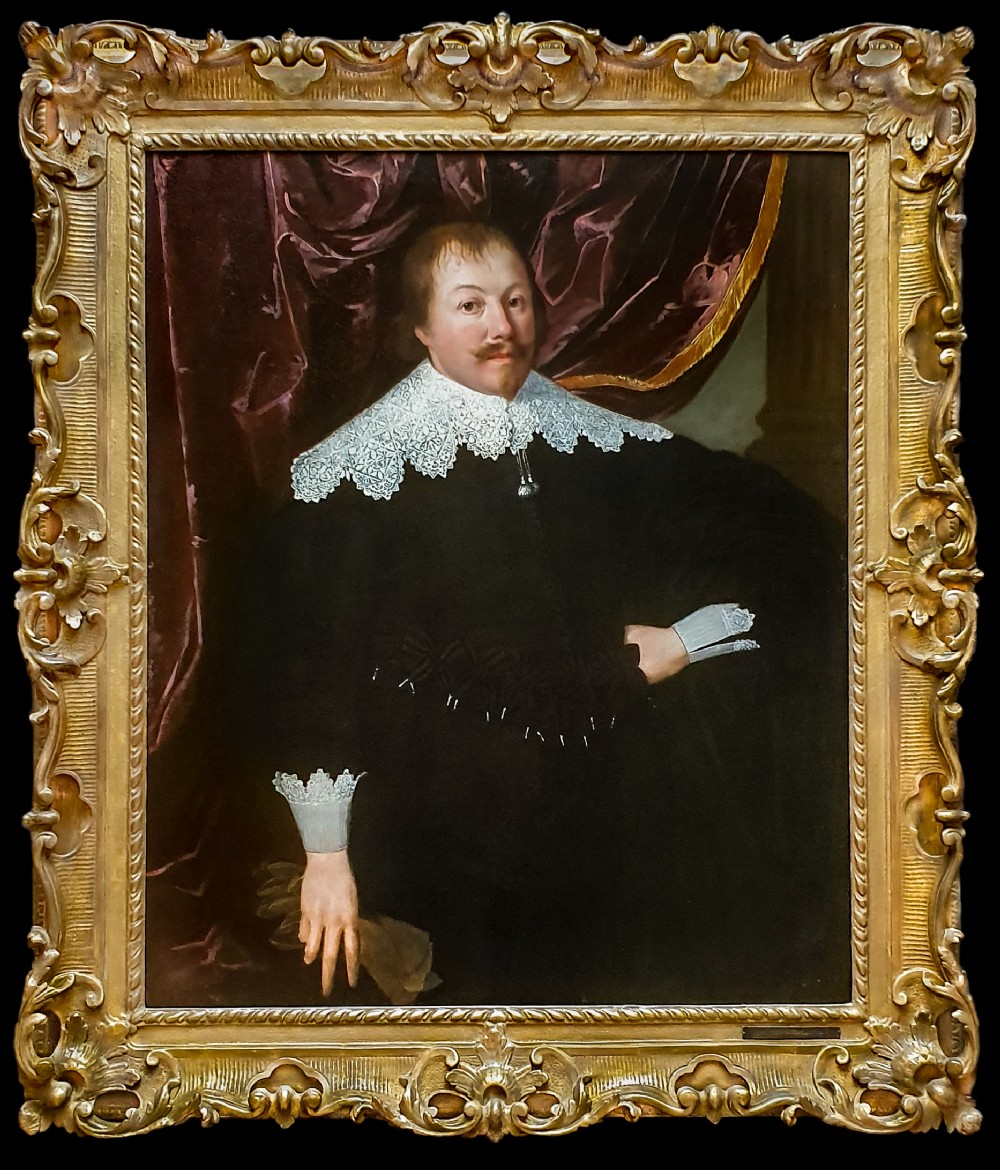
Portrait of a Gentleman Holding a Pair of Gloves C.1630-45; Attributed to Huygh Pietersz. Voskuyl (1591-1665)