It was listed by Jason Clarke Antiques. Sold pieces stay on Sellingantiques as a record of what has passed through, and the next one is rarely far away.
Jason Clarke Antiques has dated this piece to the 1800s.
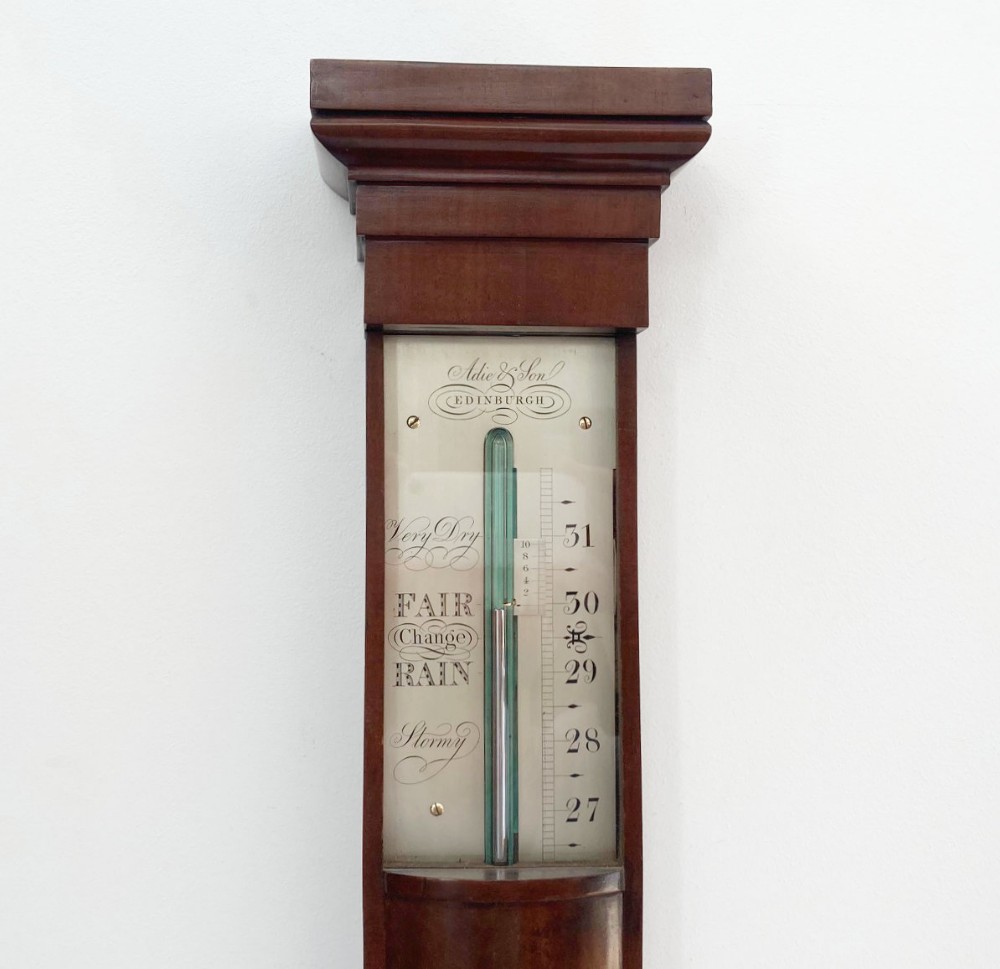
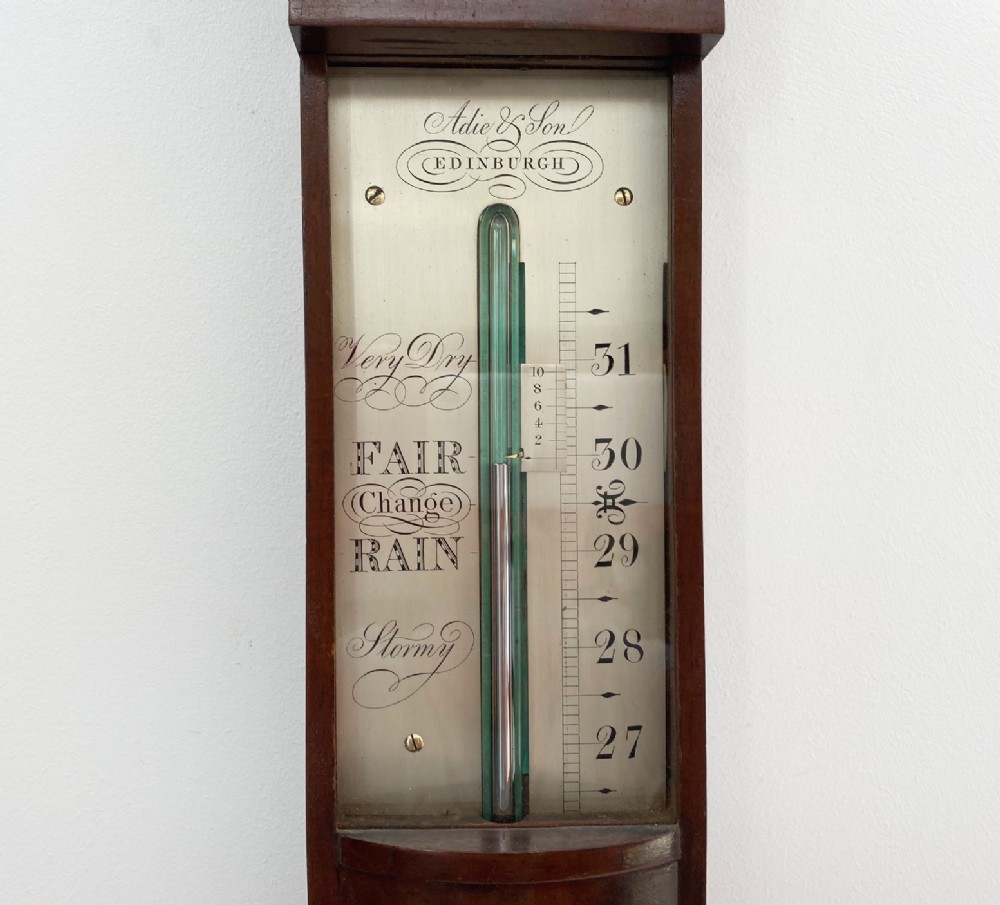
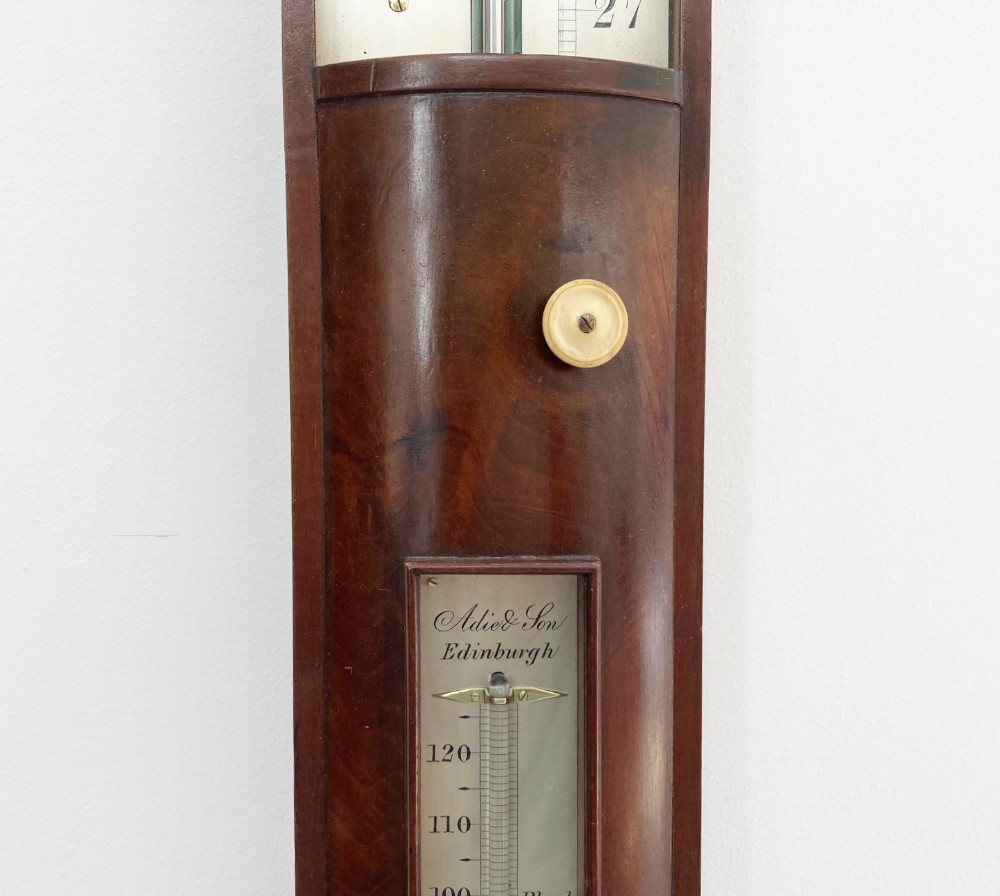
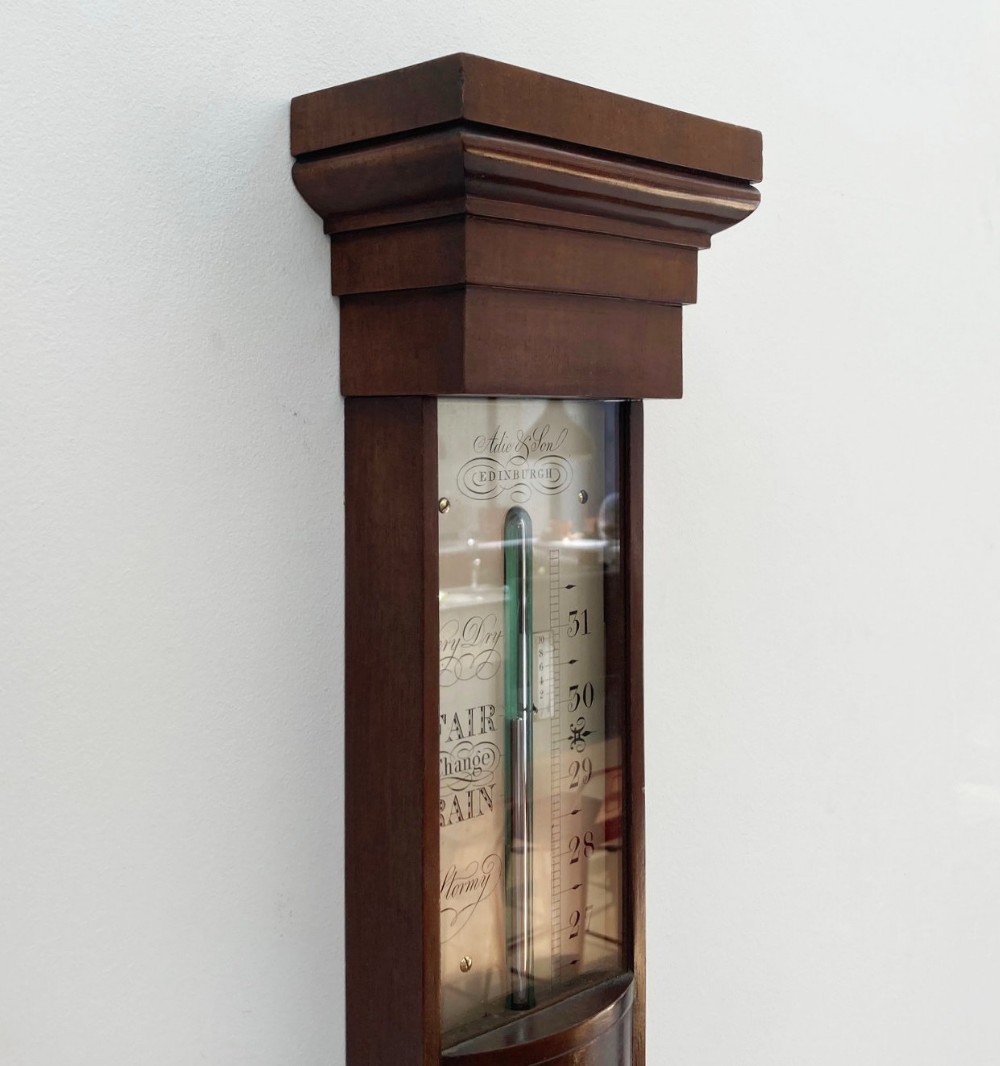
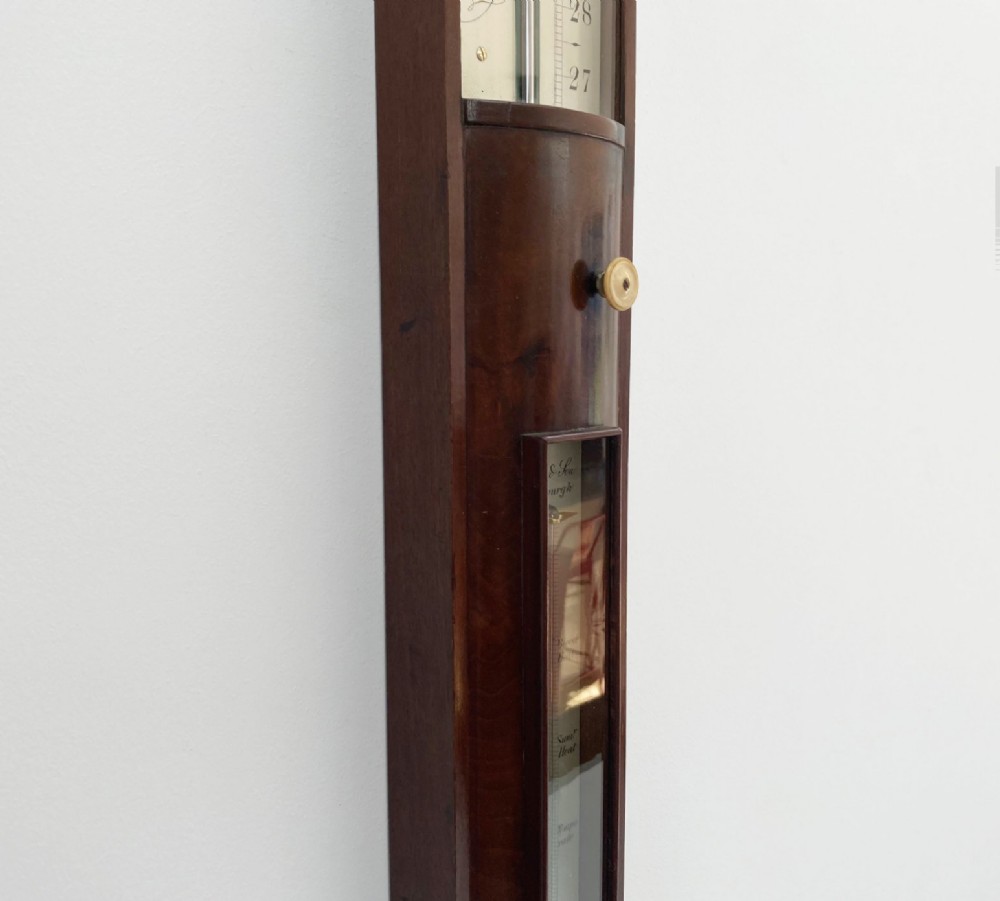
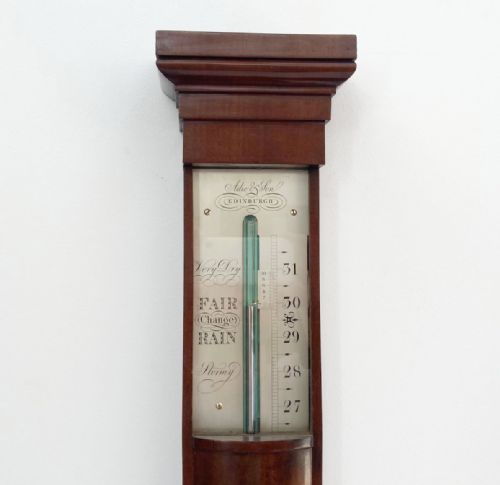
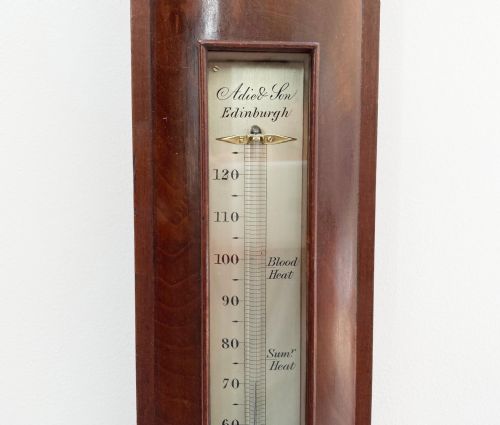
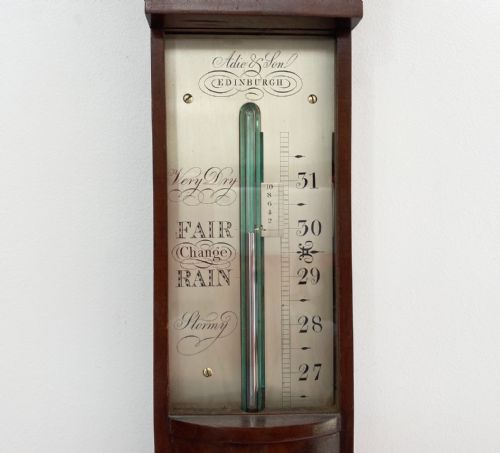
Executed throughout with the finest mahogany this robust and interestingly designed barometer has a graduated pediment leading down to a finely engraved and silvered dial with a scale measuring 27 to 31 inches of barometric pressure to the right and with corresponding weather indications to the right.
The top of the scale is further engraved to the hugely renowned Scottish firm of, “Adie & Son, Edinburgh”.
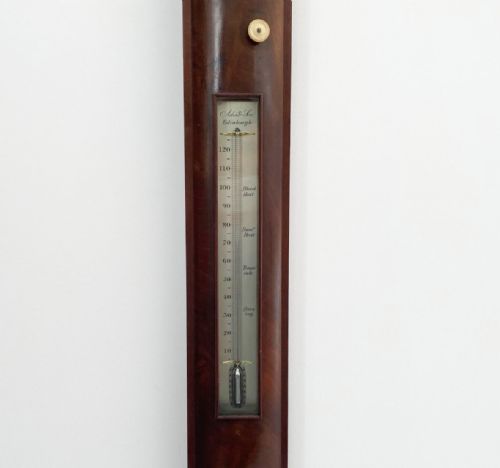
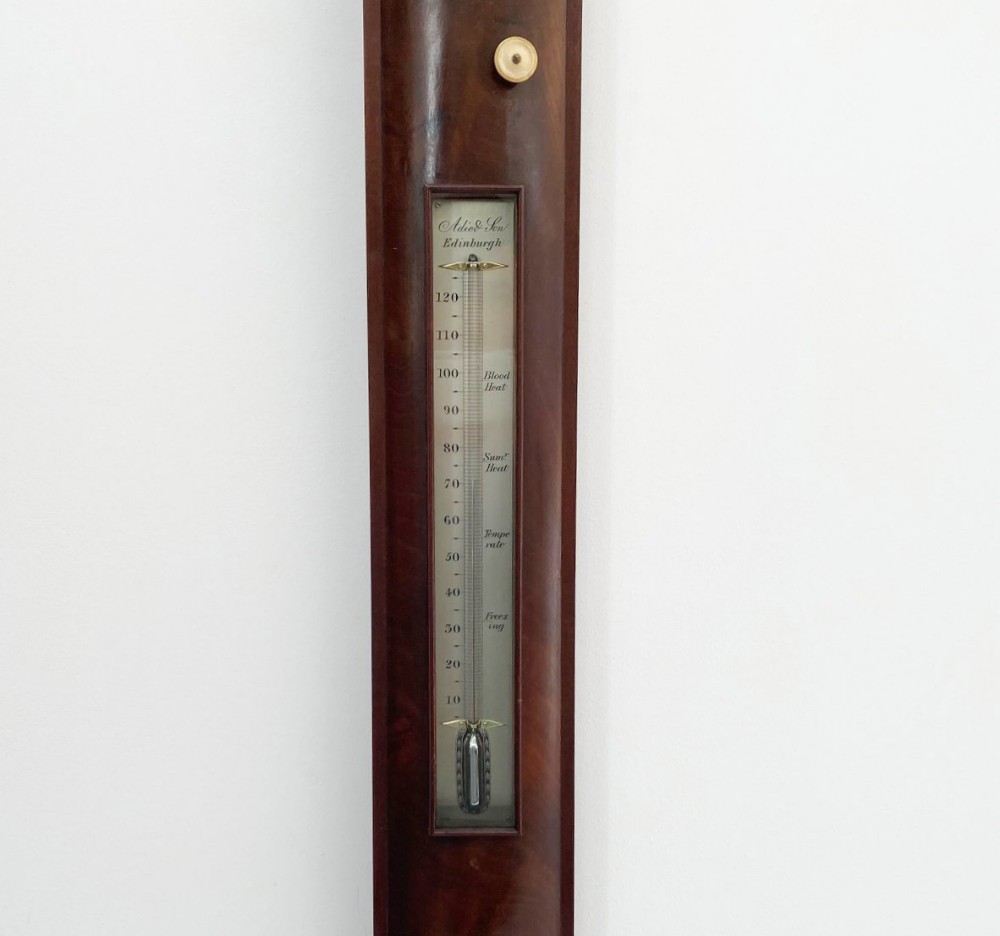
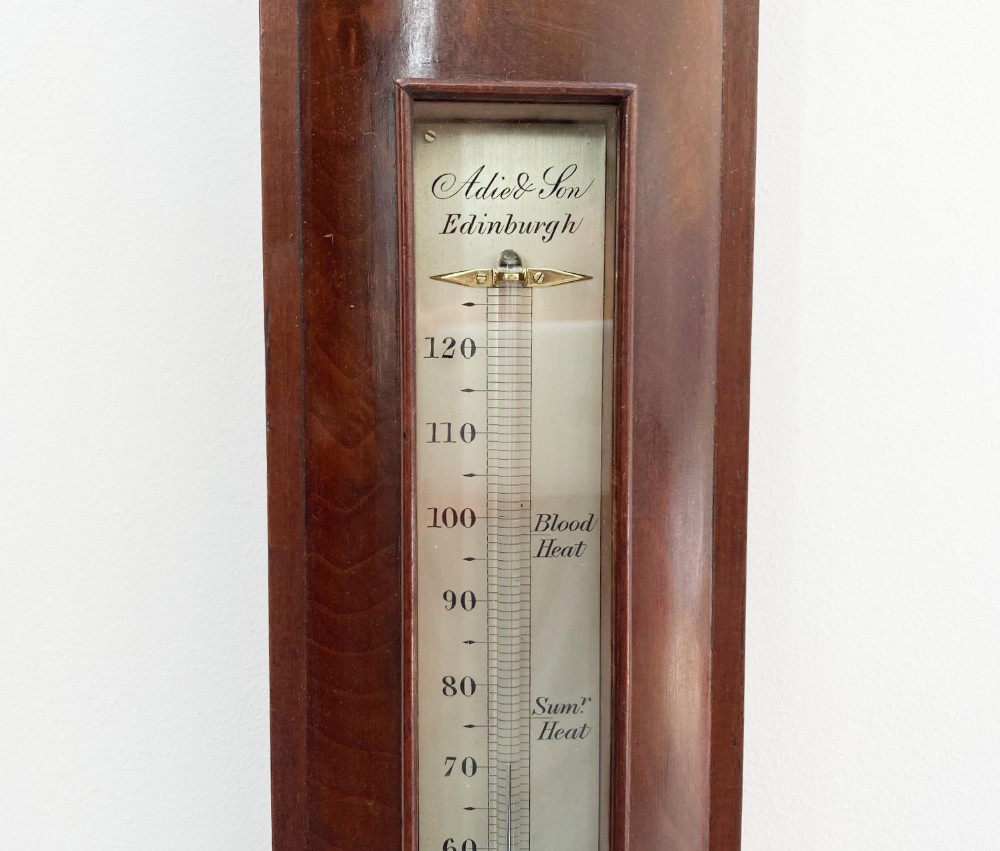
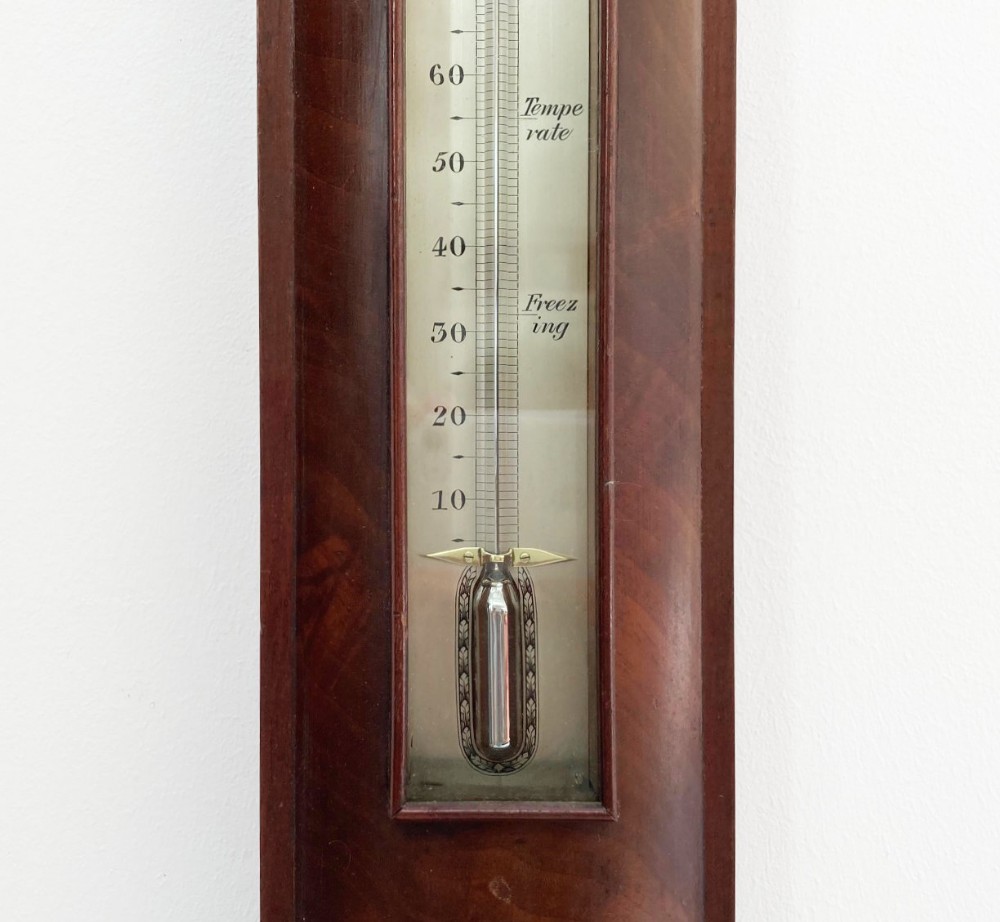
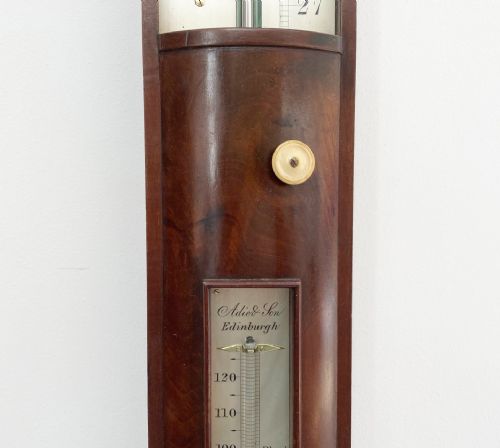
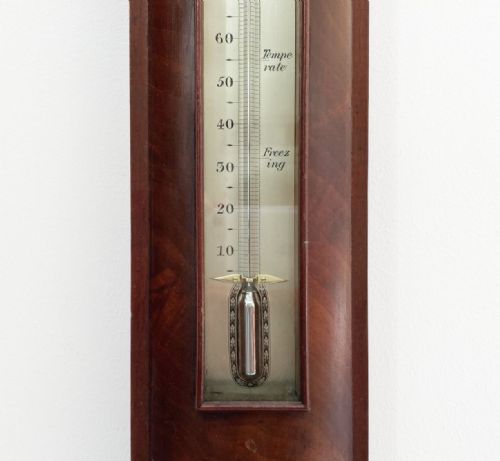
Below the flat glass dial, the body of the barometer case becomes bow fronted incorporating a case for a 12 inch silvered and engraved thermometer with Fahrenheit scale and the maker’s name repeated at the top. The thermometer bulb is further surrounded with an intricately engraved oak leaf pattern, detailing that really shows the quality of execution and attention to detail.
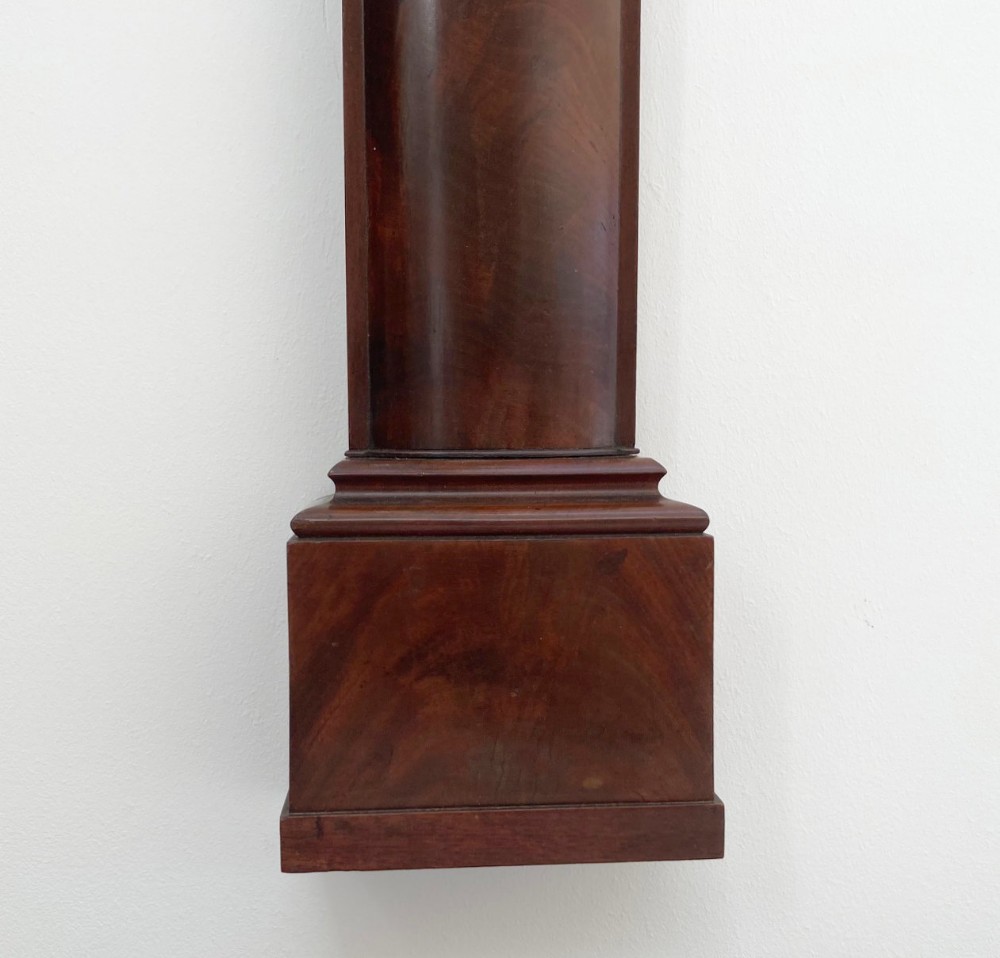
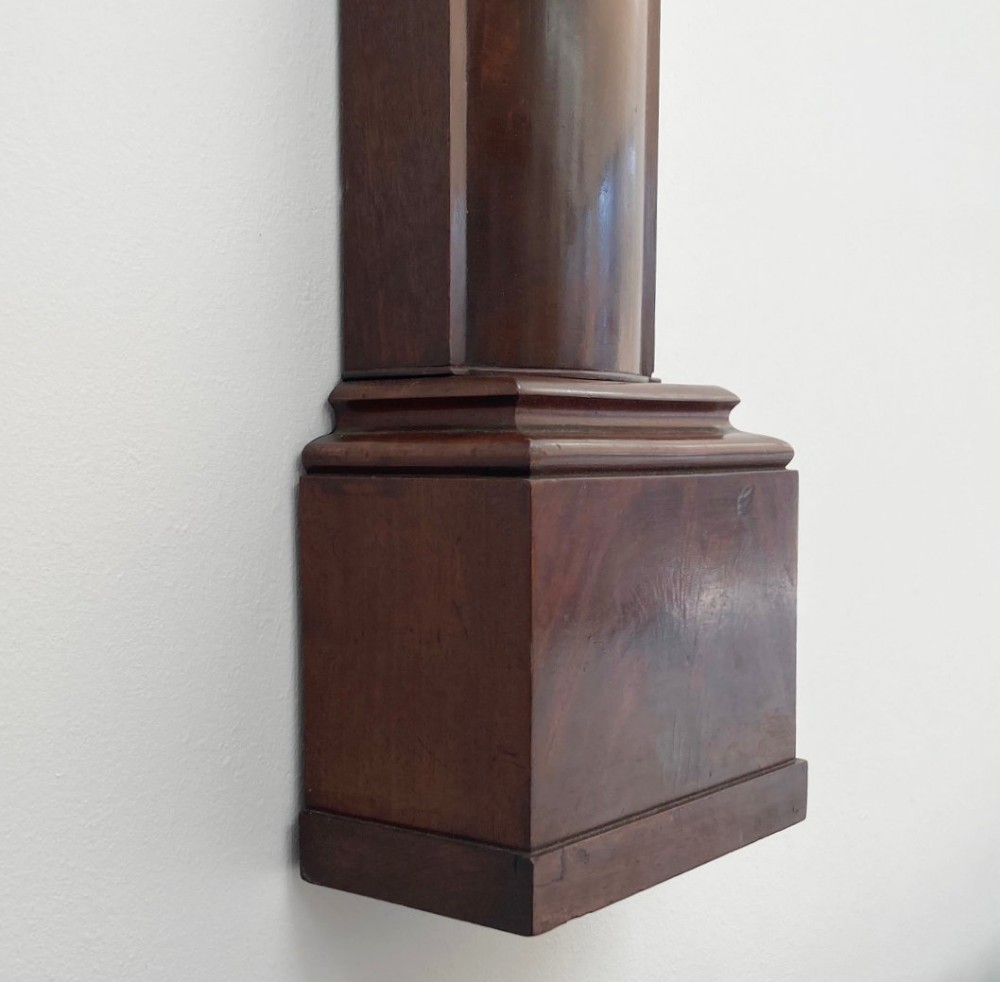
The bow front body completes at a square and graduated mahogany plinth or cistern cover designed in a similar fahion to the corresponding pediment above.
A fine and very unusual stick barometer, Scottish makers of the early Nineteenth Century were certainly more daring in their designs than their English counterparts who largely followed the Italian patterns of the age. This example reflects all of that design flare and emanated from one of the finest scientific workshop of the period.
The history of the firm, Adie & Son began in 1776 with the celebrated Edinburgh scientific instrument maker John Miller, the uncle of Alexander Adie. Miller himself had been apprenticed under the world renowned maker George Adams so Alexander was privileged to have had an uncle from such a prestigious background.
From 1789, Adie (1774 – 1858) undertook his apprenticeship with Miller and by 1804, a partnership was agreed which traded at various addresses on Nicholson Street. Miller & Adie continued to trade until 1822 (although Miller had died by 1815) whereafter the business was renamed solely to Alexander Adie. By this point, Adie was himself an accomplished maker with a focus on meteorological instruments and had by 1818 taken out a patent (No: 4323) for a sympiesometer, a type of barometer designed initially for marine use which contained hydrogen and almond oil instead of mercury. Perhaps the most well-known instrument that the Adie family are now recognised for, this invention was patented as, “An improvement on the air barometer” an instrument that had been conceived as early as 1668 by Robert Hooke but never brought into practical use until Adie’s later developments.
By 1822, Adie had a family of three sons, John (1805-1857), Richard (1810-1881) and Patrick (1821-1886) and it is sensible to presume that all undertook some kind of apprenticeship under him. The eldest, John went into business with his Father to form Adie & Son in 1835 and Richard is also known to have worked for the firm. Like many scientific instrument making firms of the period, both Richard and Patrick were to go on to set up their own successful satellite firms under their own names both in Liverpool and London respectively.
In Edinburgh, the partnership between Alexander and John continued to grow, they received Royal Appointments from both William IV and Queen Victoria and were the only two instrument makers elected as Fellows of The Royal Society of Edinburgh. The links with the Society are considered to be the reason for their commission to build William Wallace’s patent Eidograph, an improvement to the less accurate pantograph. They had trading links with Spencer, Browning & Rust (they retailed Adie’s Sympiesometer) and John completed the installation of a Troughton & Simms altazimuth circle for The Edinburgh Astrono
Jason Clarke Antiques has dated this piece to the 1800s.
You can view the stock and full dealer information on the Jason Clarke Antiques Profile Page
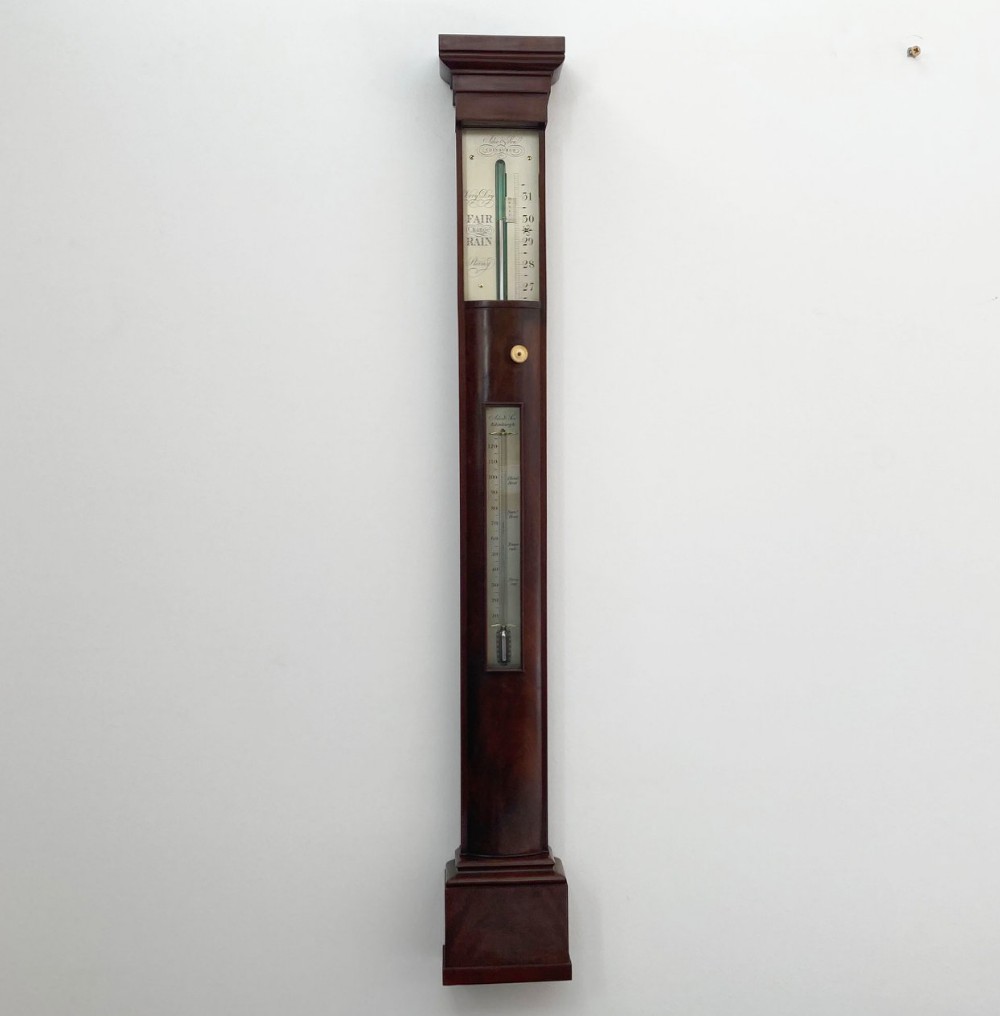
William IV Scottish Mahogany Stick Barometer by Adie & Son Edinburgh