It was listed by Jason Clarke Antiques. Sold pieces stay on Sellingantiques as a record of what has passed through, and the next one is rarely far away.
Jason Clarke Antiques has dated this piece to the 1870s.
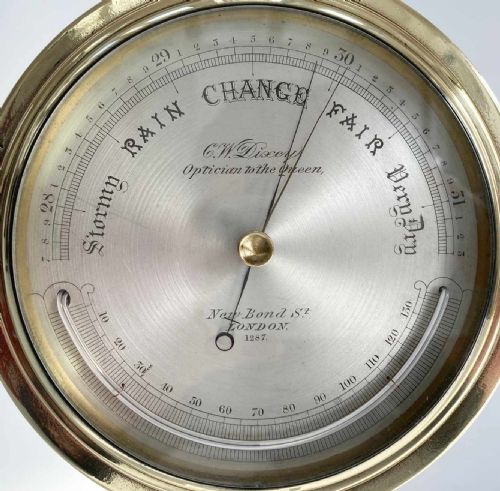
Bearing striking similarity to the Fisherman’s Aneroid barometer made by both Negretti & Zambra and Dollond for the RNLI, this Dixey example was most likely produced as a more delicate and refined version to capitalise on the growing publicity and good reception that the former examples were receiving.
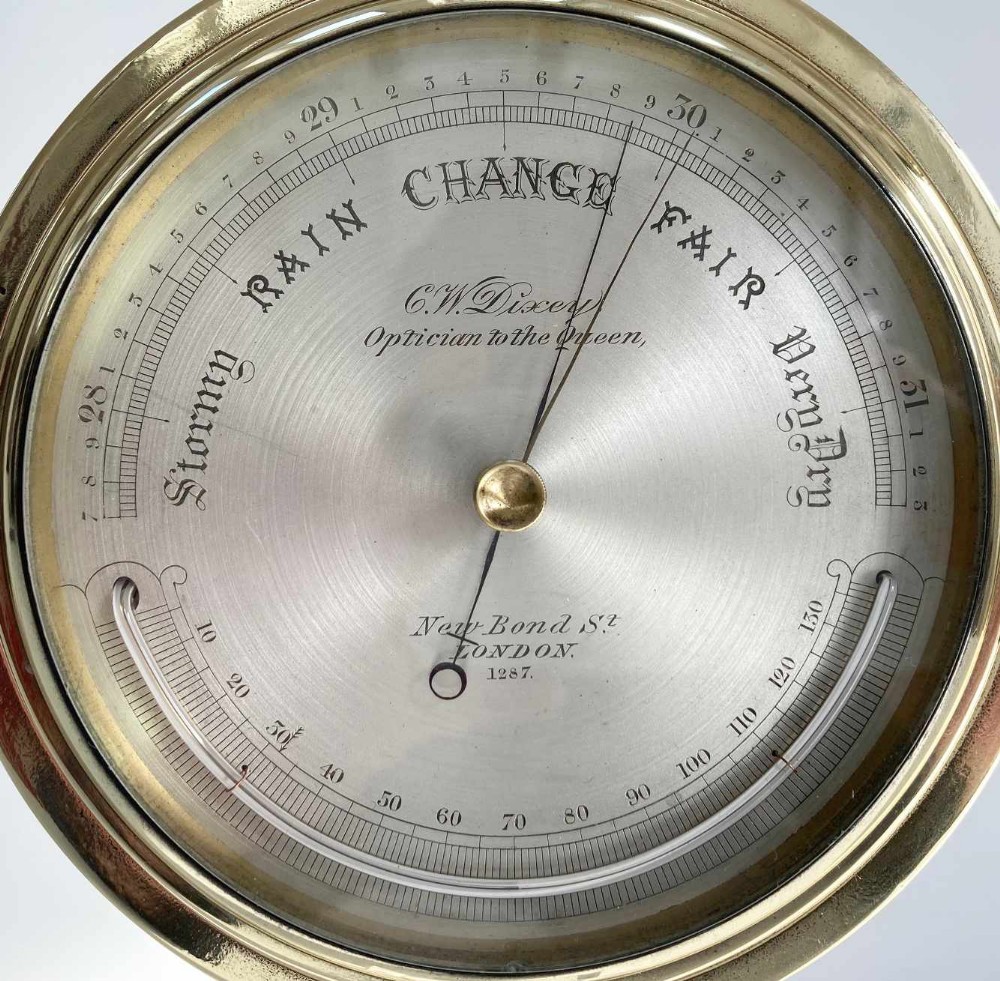
With no contractual requirements to the RNLI to make a barometer which would meet the rigours of a sea journey, Dixey produced his example with a fine silvered (rather than porcelain) four and a half inch dial, The scale around the top half of the circumference measures 28 to 31 inches of barometric pressure and with weather indications below.
New Bond St, London” and Serial no: 1287. It is completed with extremely fine point and set hands in blue steel and brass.
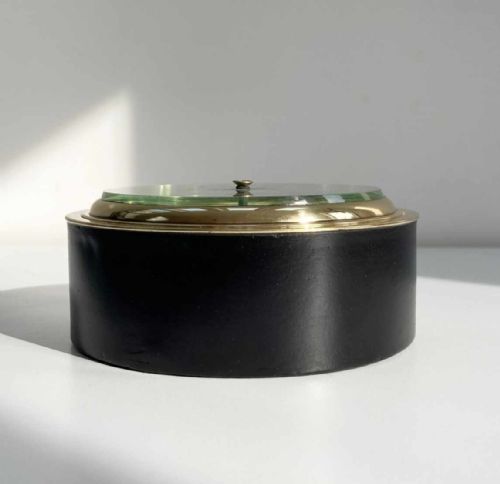
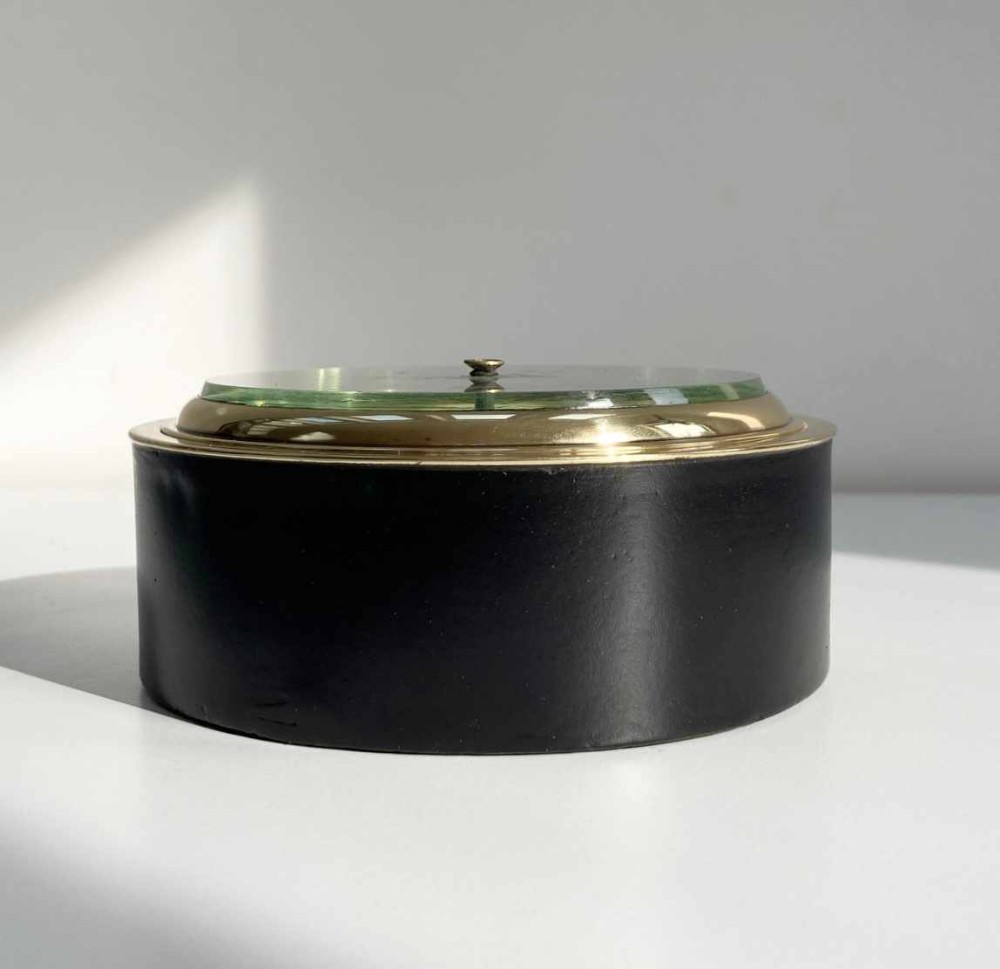
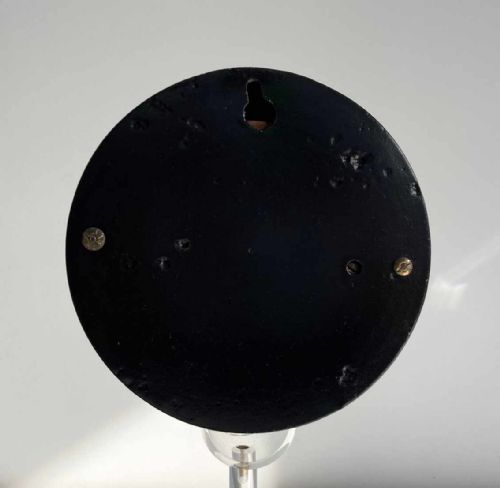
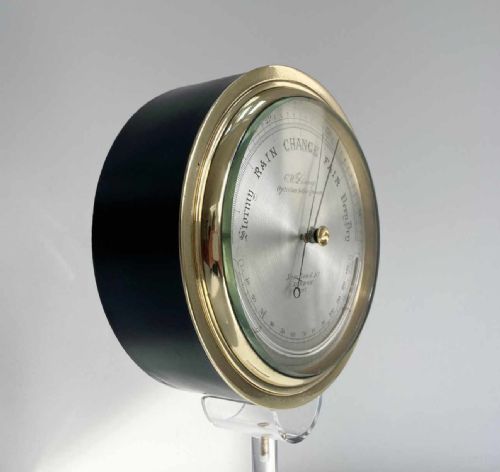
Paying homage to the RNLI style, Dixey completed the barometer with a painted zinc case with a thick graduated brass bezel and a very generous bevelled glass front. The result is altogether more refined than the RNLI version but would have been far less effective outside of the domestic setting.
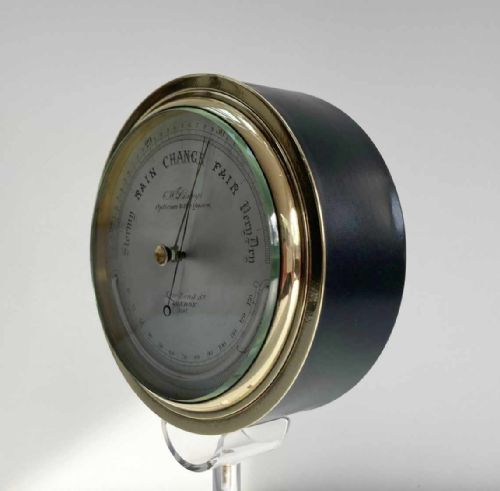
A very interesting example of its type, proving without doubt that the Fisherman’s barometer was mimicked by the competition. How widely is unclear but to have a maker such as Dixey putting his name to the instrument proves the widespread popularity of the design for both industrial and domestic use. I suspect due to the scarcity of these ‘other maker’ examples, that Negretti & Dollond retained a stranglehold on the market.
Charles Wastell Dixey or CW Dixey still trades today as a manufacturer and retailer of high end spectacles. The story of the dynasty however, is comprised of two strands of history. The present company’s history on its website is told in relation to the premises at 3 New Bond Street of which the company of G&C Dixey took over in 1825 from William Hawks Grice. Grice had traded at that address from 1818 to 1823. He in turn had taken over the business of the Fraser family in 1818.
The Fraser family had been in business as instrument makers from the 1770’s and are listed at 3 New Bond Street from about 1780. Started by William Fraser, his son Alexander joined the business as William Fraser & Son in 1805 and upon William’s death in 1812, the company was finally listed as just Alexander Fraser. William was a renowned maker and had received a Royal Appointment from George III, an accolade that Alexander kept after his father’s death. The reasons for the Fraser family selling to Grice is unclear but Grice himself seems to have continued the association with the Royal Family according to his, “description of the new improved self-registering thermometer” published in 1818 and from drawing instruments still contained within the Royal Collection. He is also described as a member of the City Philosophical Society and is listed as a contributing member of The Society of Arts in 1820 and 1823. According to the CW Dixey website, Grice is described as an assistant of the Fraser business and some records show him to have been apprenticed to the family business before he bought it. It also makes some reference to Grice having brought the business into ill-repute for having used it as a gambling den but I can find no record of this story. If true, it would explain his short tenure at the property but his membership of notable societies and his continued relationship with the Royal Family would suggest that he was a reputable instrument maker before this time.
Whether it was for reasons of criminal activity or not, the business was eventually sold in 1825 to George & Charles Wastell Dixey. George Dixey is known to have been apprenticed to George Wilson and Charles W
Jason Clarke Antiques has dated this piece to the 1870s.
You can view the stock and full dealer information on the Jason Clarke Antiques Profile Page

Victorian Aneroid Barometer by Cw Dixey of Bond Street London