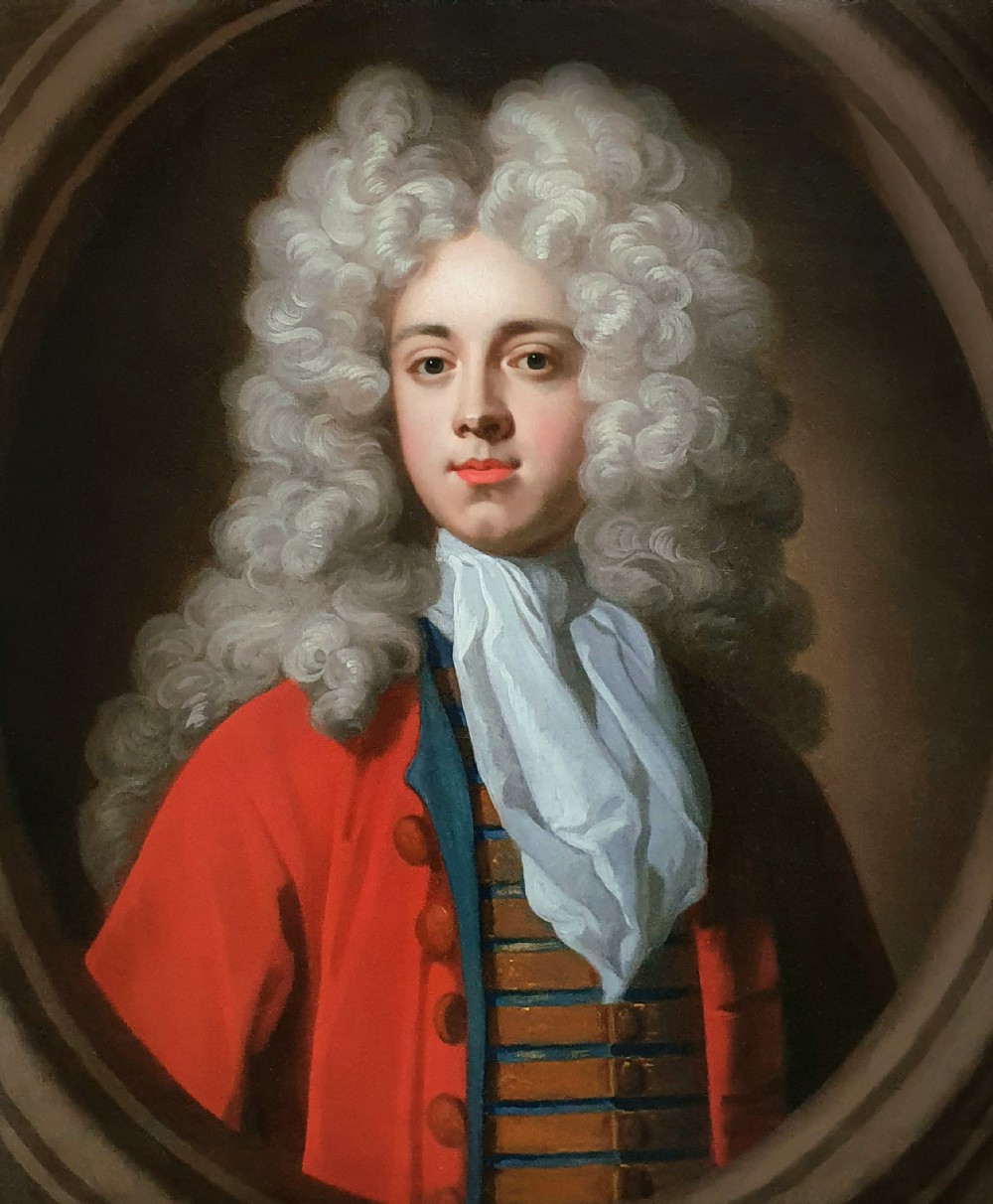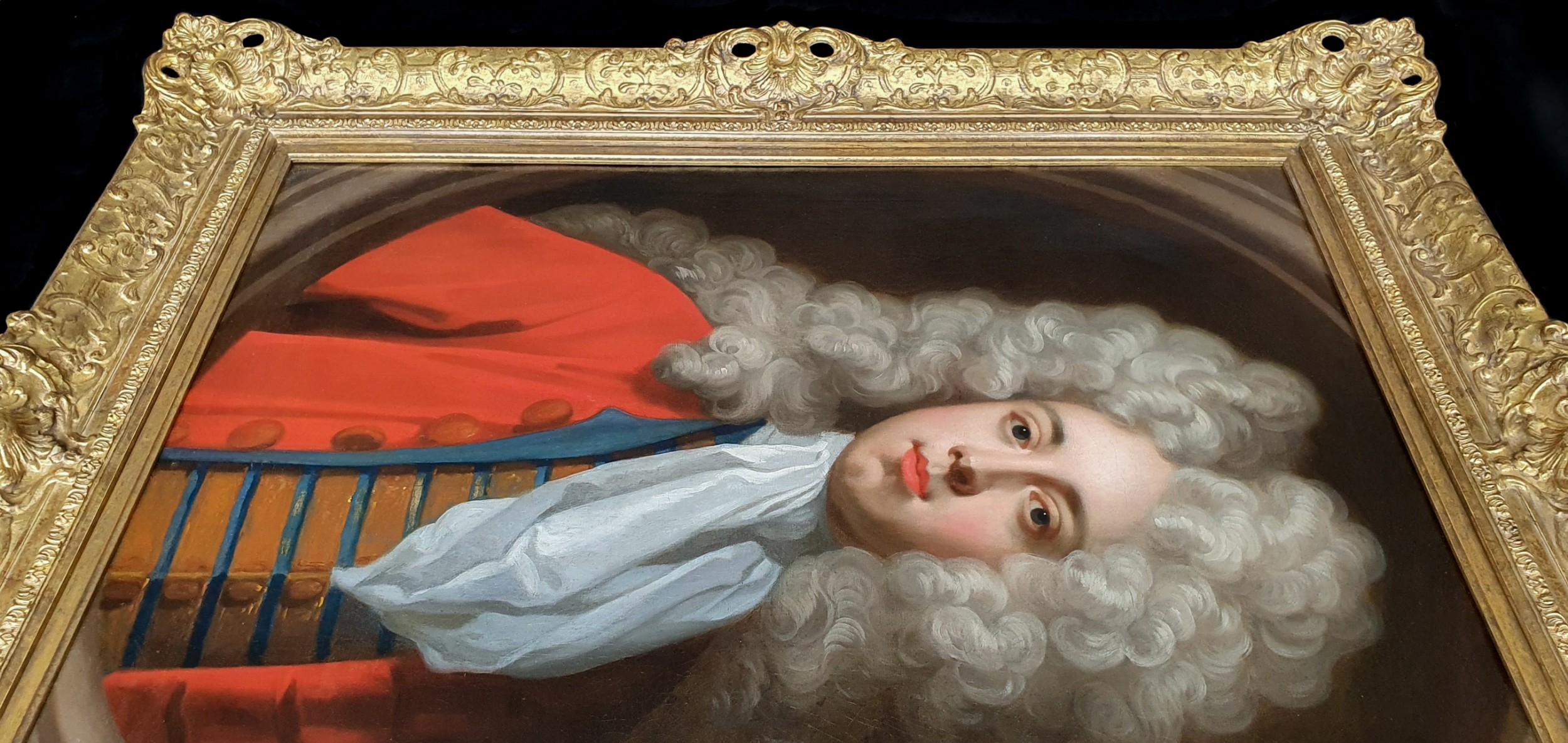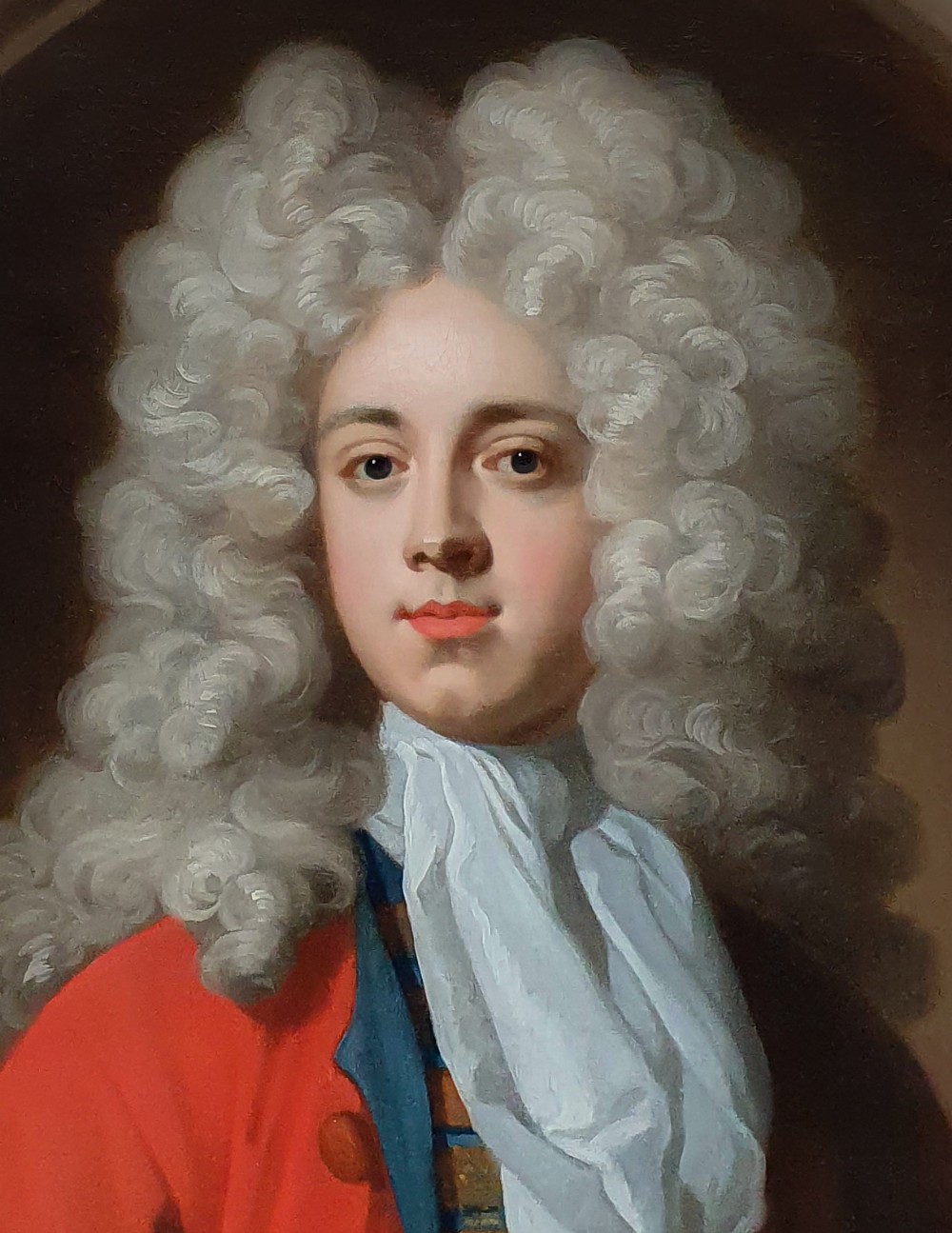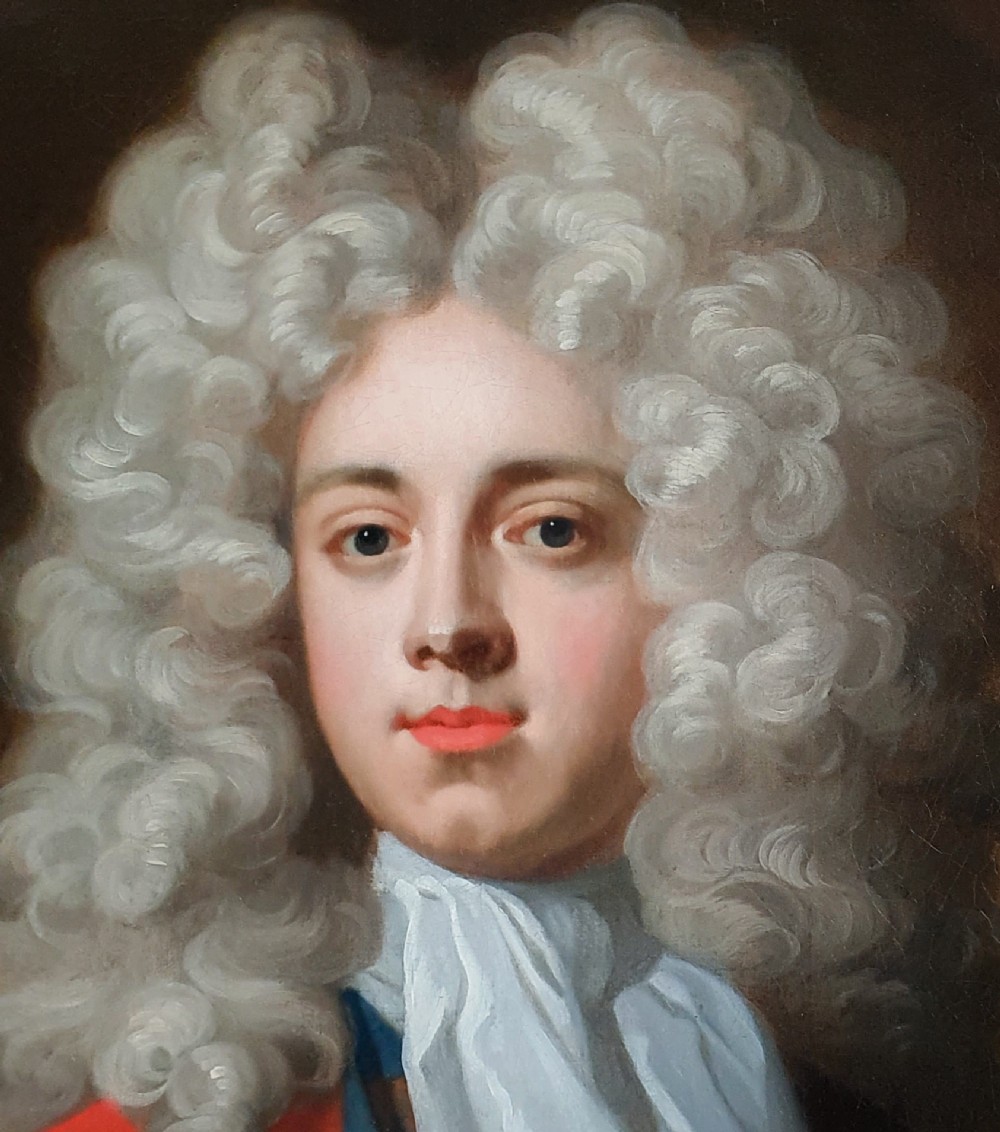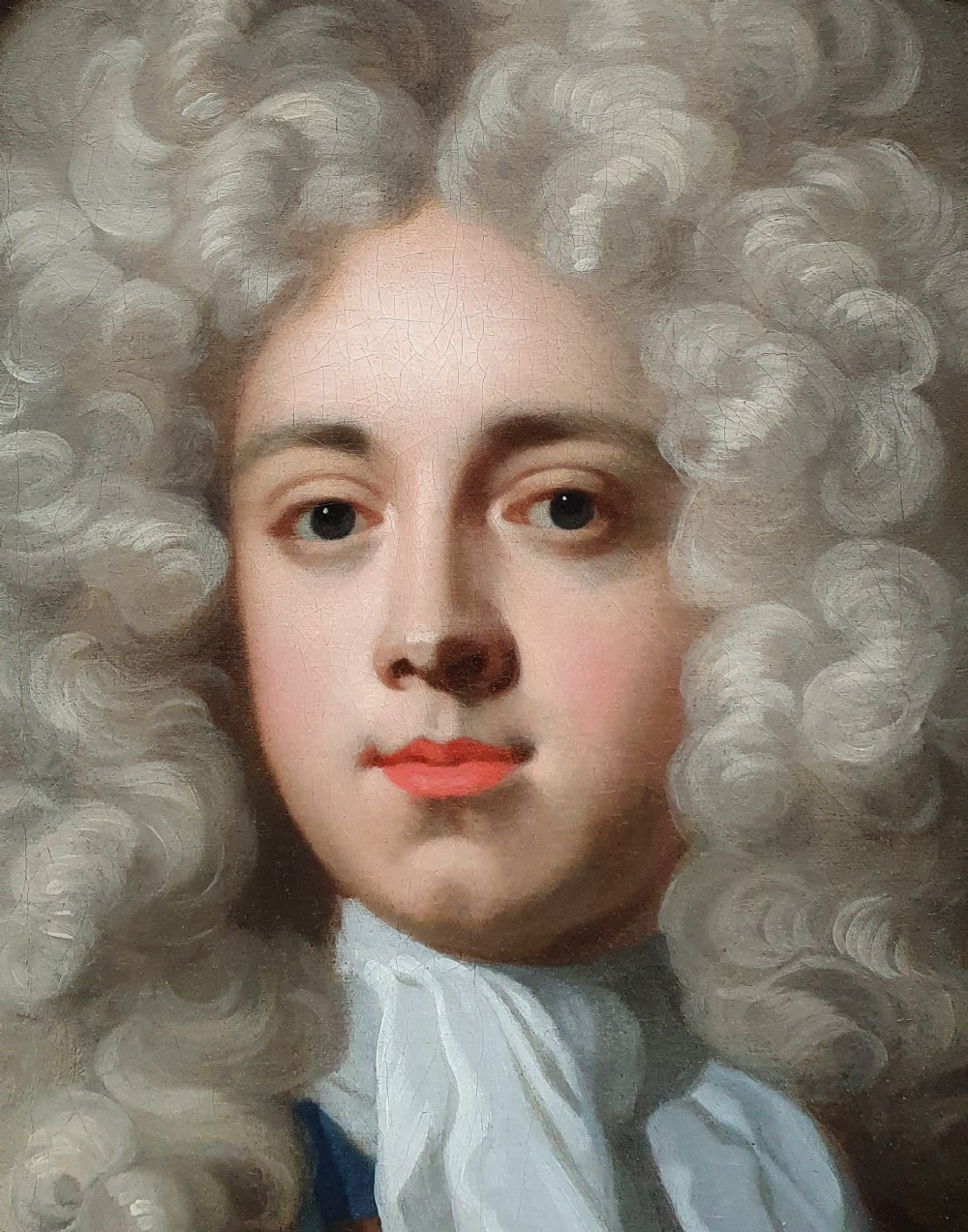
Titan Fine Art has dated this piece to the 18th Century.
In the late 17th century England’s upper classes entered a new era of prosperity. No longer the preserve of royalty, commissioned portraits - of oneself or one’s ancestors - became a coveted symbol of wealth and status and portraiture in England developed a distinctive ‘Englishness’. The portrait genre was valued particularly highly in English society.
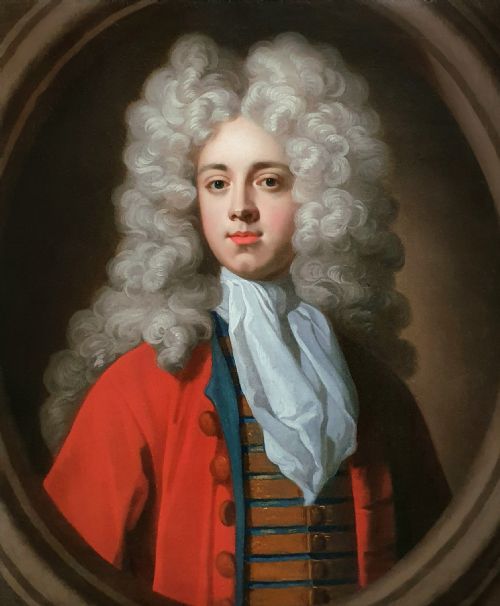
The present portrait is a striking and sumptuous example and represents a high-water mark for the painter.
This Kersebooms, uncle and nephew, were originally from the Rhineland, and came to England in the early 1680s. Frederick, the elder of the two, had been a pupil of Charles le Brun in Paris, and then, reputedly, of Poussin during a fourteen year stay in Rome. He had intended to make his career as a history painter but, typically of the experience of foreign painters arriving in England, he was to discover little encouragement in that direction, and adapted himself to the predominant fashion for portraiture. His nephew, Johann pursued the same career and had a thriving commercial practise. The work of the two painters is very similar but many consider Johann to be the superior painter whose work often achieves a profound and insightful characterisation. John is said to have been buried in London in 1708.
Provenance: Possibly the diplomat Sir Philip Adams (as per inscription verso) who was ambassador to Jordan 1966-70 and ambassador to Egypt 1973-75. He was born in Wellington, New Zealand 17 December 1915 and died in London 14 October 2001
Measurements: Height 96cm, Width 83cm, Depth 9cm framed (Height 37.75”, Width 32.5”, Depth 3.5” framed)
Titan Fine Art has dated this piece to the 18th Century.
Specialist in 17th & 18thc portraits. Highly curated selection, museum-level research & pro conservation. Exceptional art, expertly vetted.
You can view the stock and full dealer information on the Titan Fine Art Profile Page
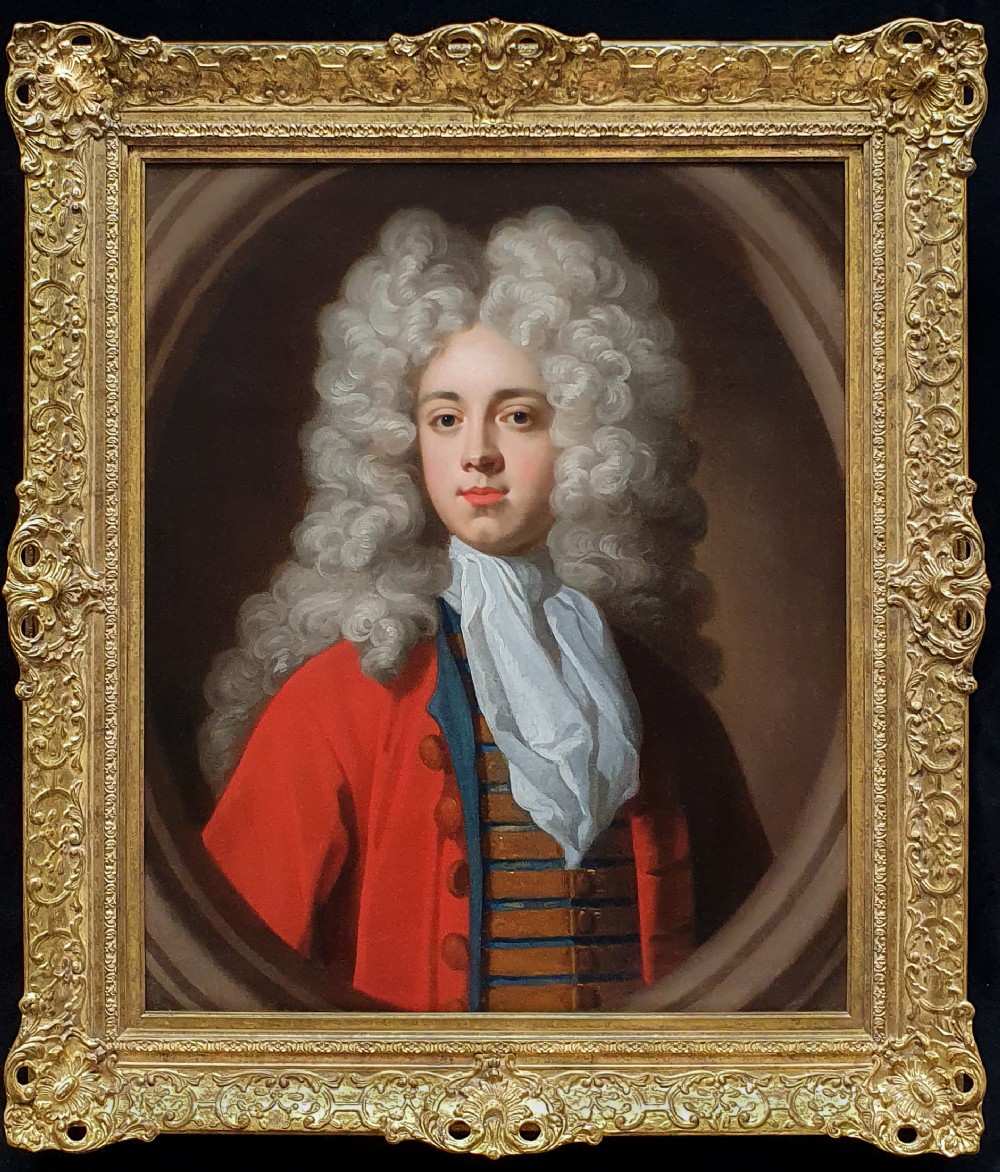
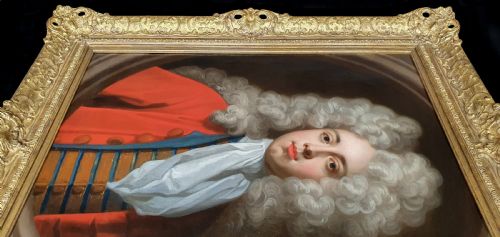
Portrait of a Gentleman in a Red Coat C.1700; Attributed to John Kerseboom (Fl.1680-1708)