Jason Clarke Antiques has dated this piece to the 1930s.
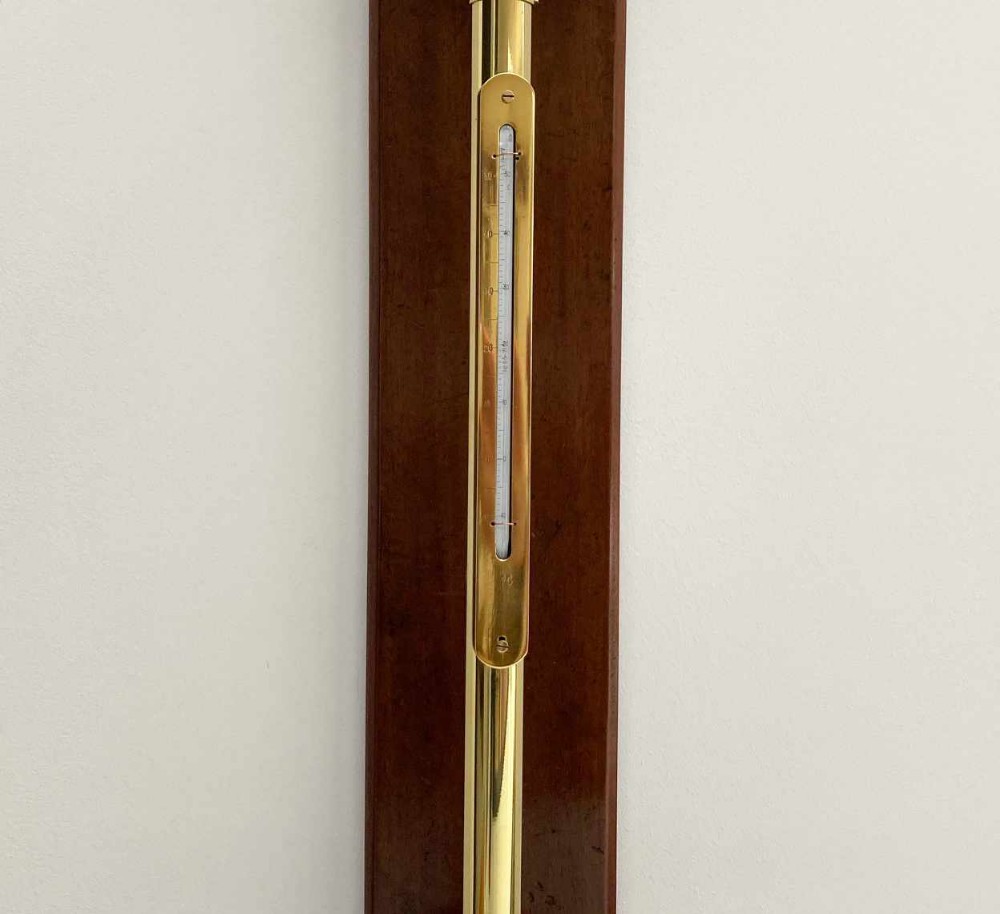
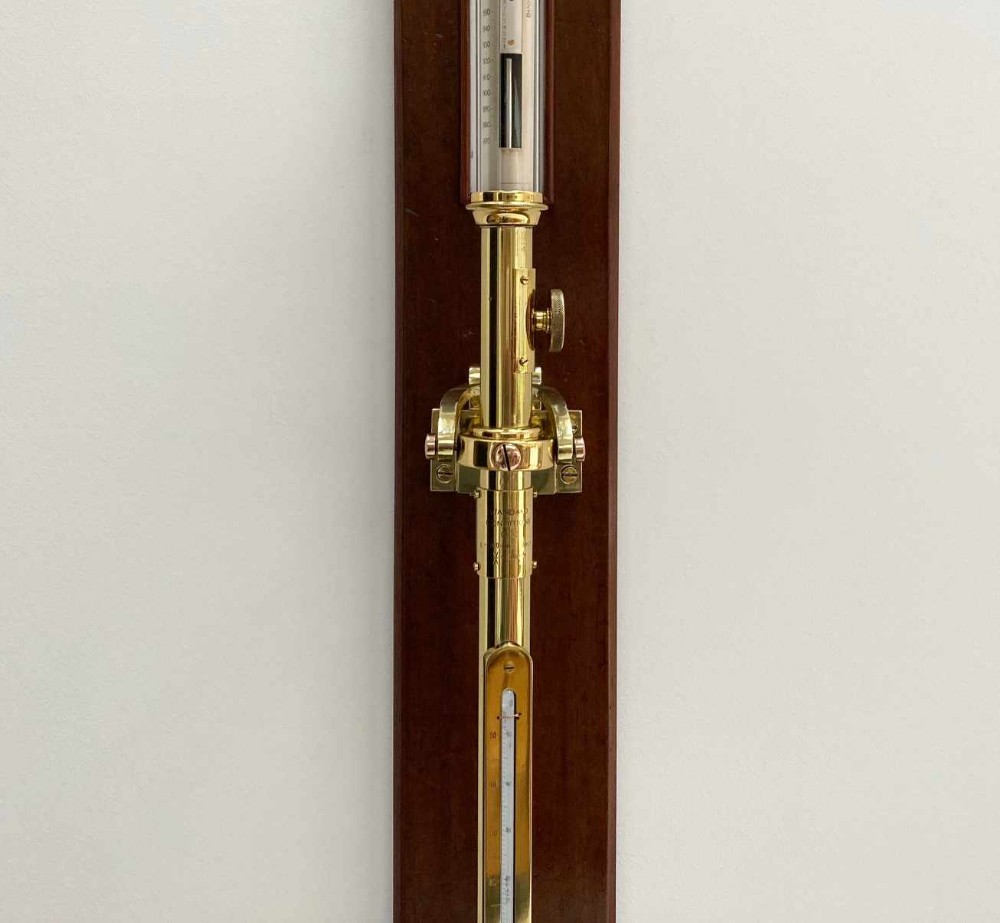
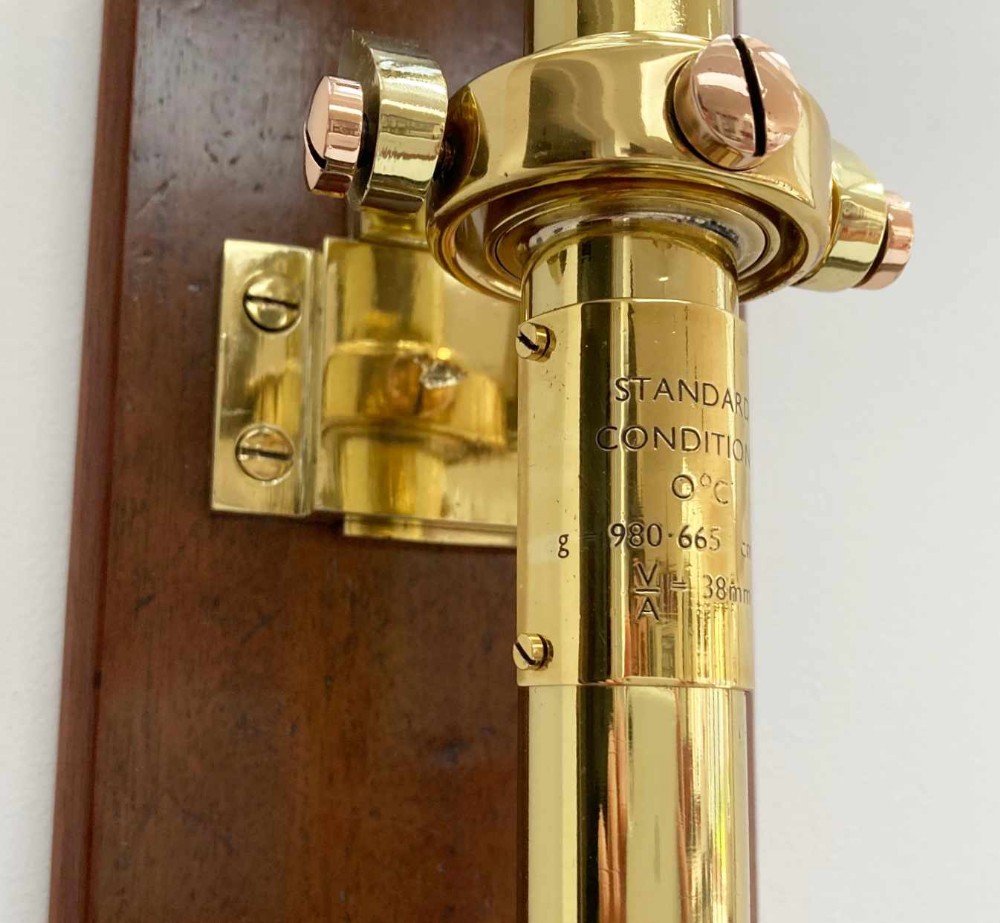
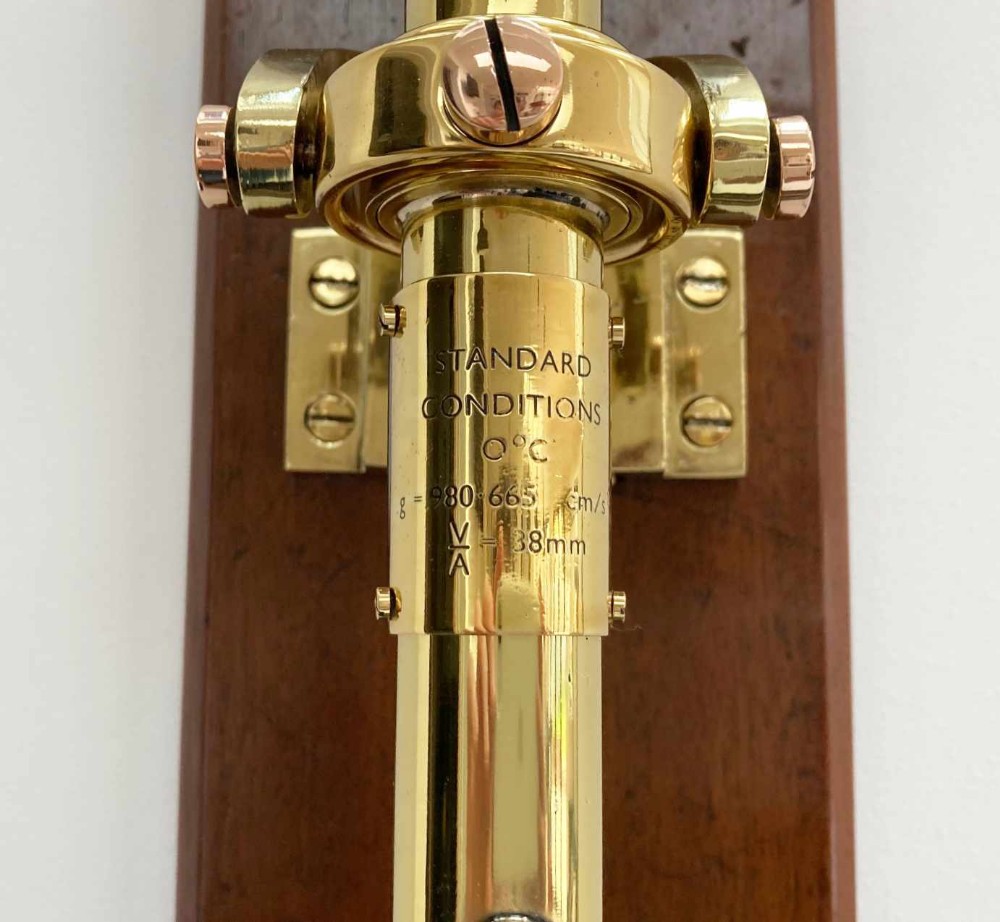
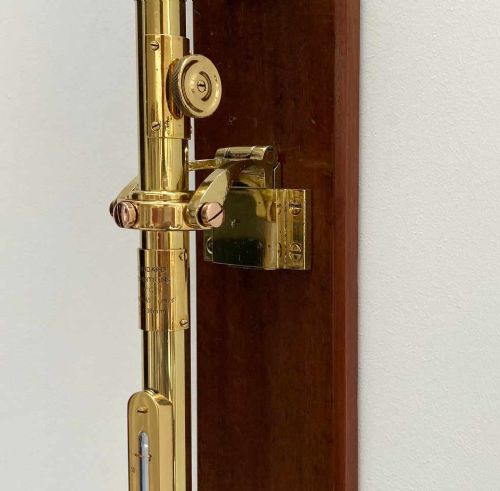
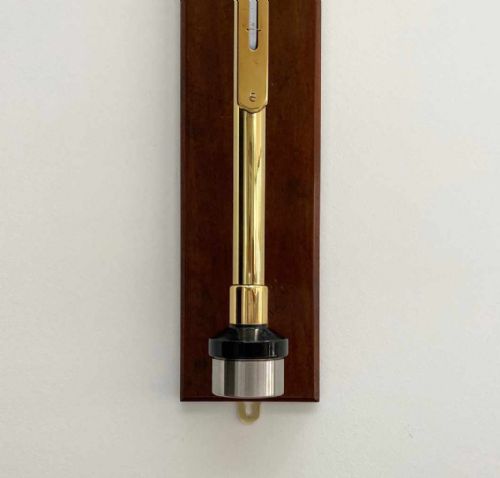
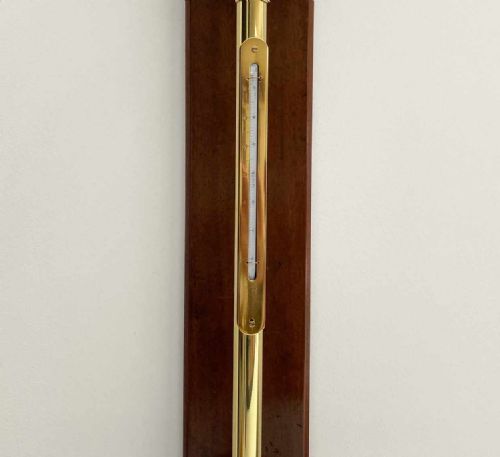
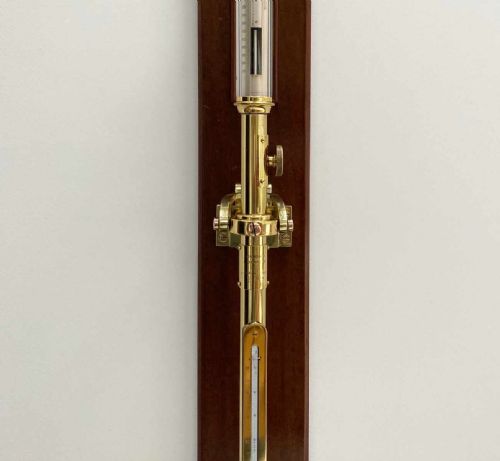
Comprised of a brass tubular body with a steel cistern to the base, the lower length carries a centigrade thermometer in its own specially designed protective case with brass scale measuring -10 to 50 degrees.
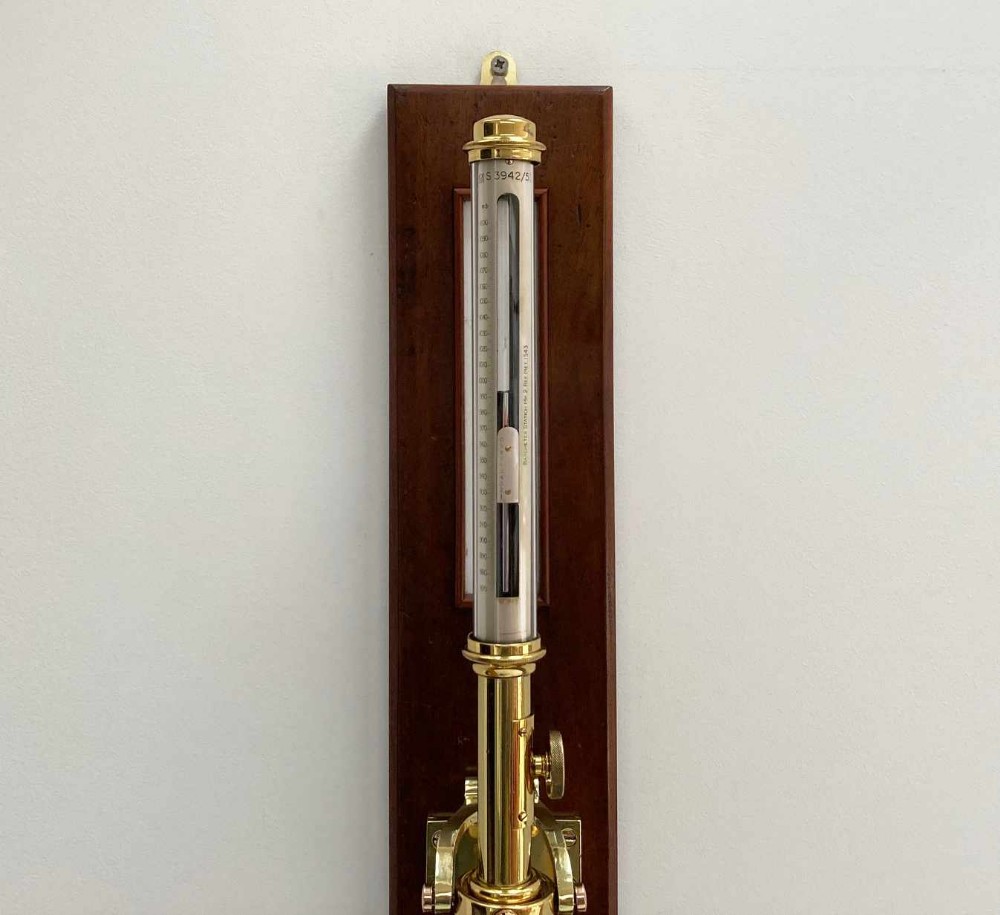
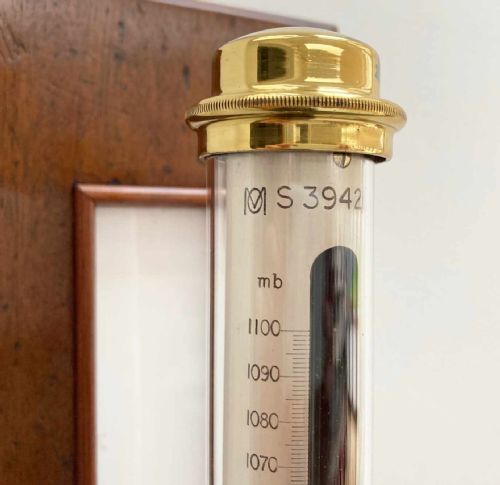
The silvered scale is enclosed behind a glass tube with central reading aperture and Vernier which is operated by a brass dial to the right hand side.

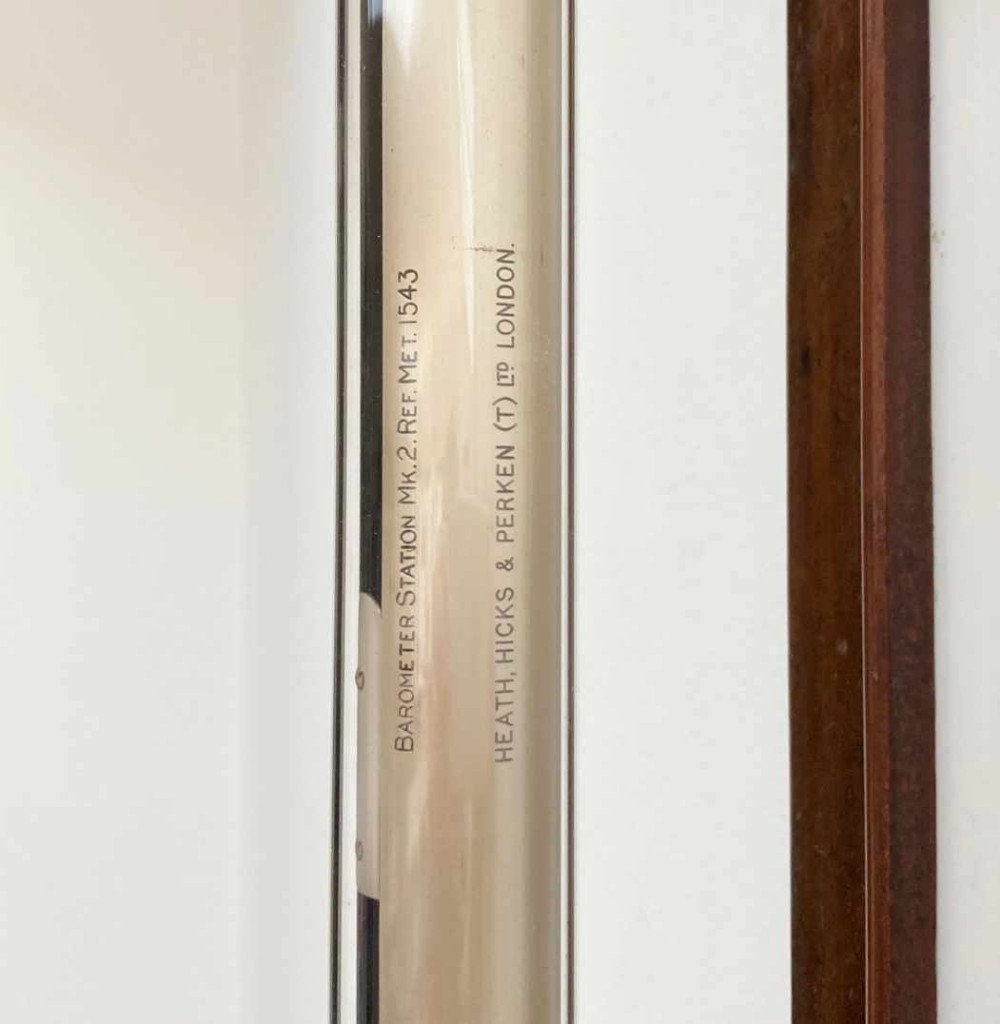
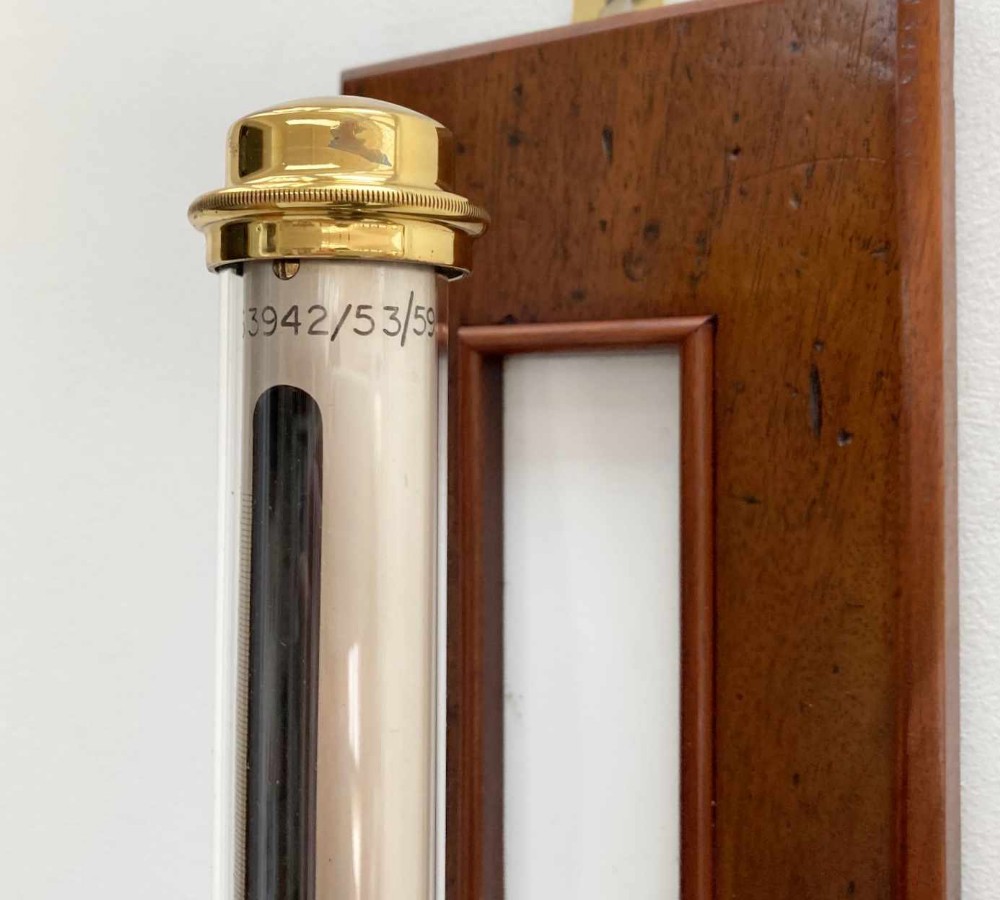
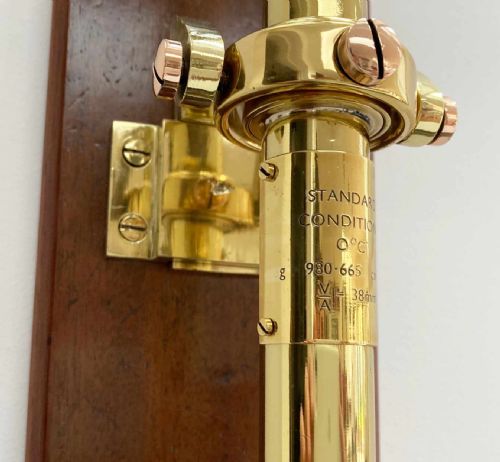
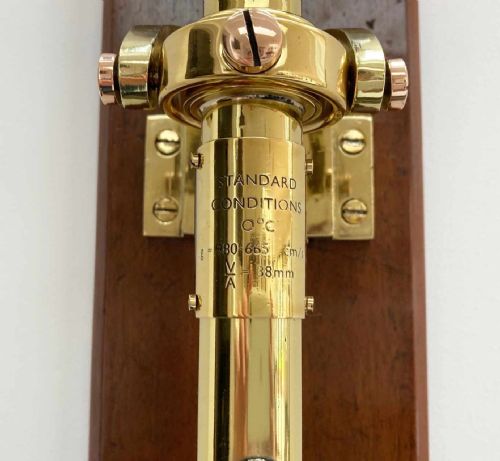
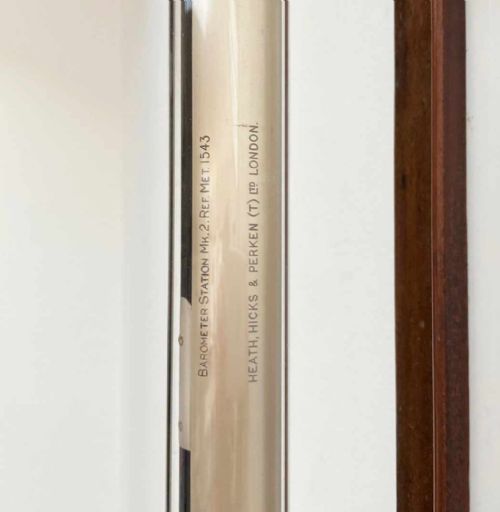
The scale measures 870 to 1100 millibars and is signed to the makers Heath, Hicks & Perken Limited, London. It has the additional Met Office engraving, “Barometer Station Mk2 Ref Met 1543”. The top of the scale bears the MO (Met Office) trademark with the barometer’s number: 3942. The numbers following denote the years in which the barometer was subsequently calibrated and which provide accurate evidence for its date of manufacture to the mid 1940’s.
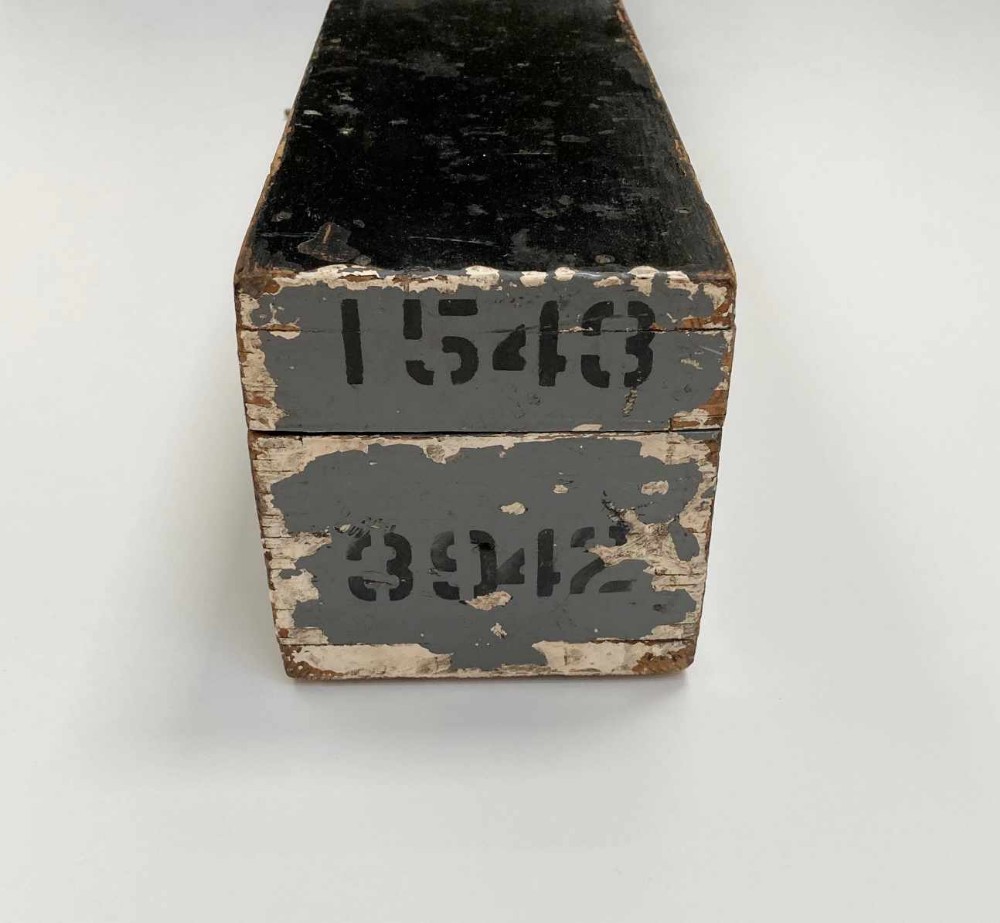
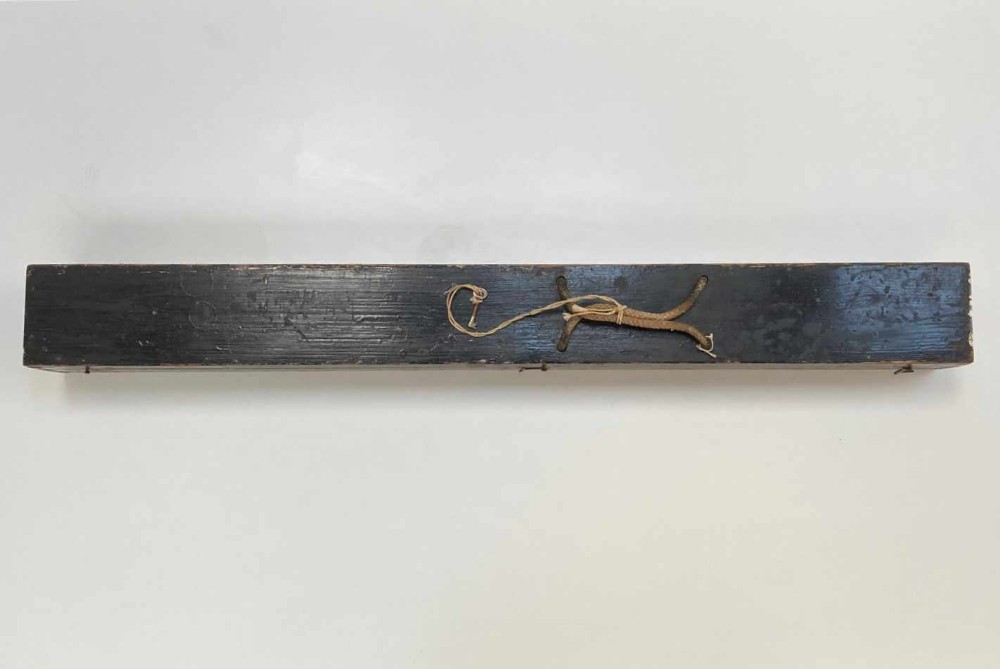
This working barometer comes complete with its original pine case which is stencilled to one end with the barometer’s serial number and also retains its paper label relating its last test at the National Physical Laboratory in February 1971. This date complies with the engraving to the silvered dial. The case also includes rubber protection cushions to either end of the case and along its length and offset rope carry handles to the lid.
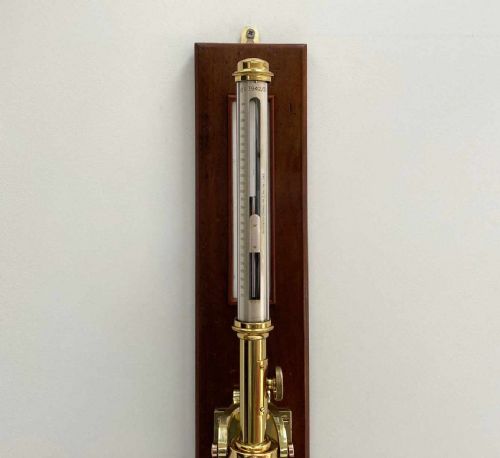
To allow for the display of the barometer, a mahogany backboard has been produced using old timber and has been replicated using the same dimensions as an earlier example by Patrick Adie who also famously supplied the Met Office with the similar instruments.
The company of Heath, Hicks & Perken are perhaps less well known at first glance, but are essentially a later amalgamation of three hugely influential Nineteenth Century instrument making firms notably, Heath & Co, JJ Hicks and Perken, Son & Co.
James Joseph Hicks was perhaps the most famous of the three, born in Cork, Ireland in 1837, he was apprenticed to the famous Louis P Casella where he remained until 1861. In that short time he had already risen to become Casella’s foreman. He began to trade in his own right in around 1861-1862 at 8 Hatton Gardens, London and was respected enough by 1864 to have been granted membership to The British Meteorological Society.
Highly skilled in the development and the improvement of scientific instruments, Hick’s business was large enough by 1880 to have over 300 employees on the books. A shrewd marketer, he was present at eight Royal Society Exhibitions during the period, 1876 – 1913 and extended his reach overseas by attending numerous world trade fairs. He won a gold medal at the 1900 Paris exhibition.
In 1910 at the age of 73, he successfully negotiated a merger between his company and the equally famous WF Stanley and remained a director of the company that retained his name until his death in 1916. During his life he established a near monopoly on clinical thermometers leading to Hick’s being dubbed, “King of the Clinicals”.
Heath & Co was founded by George Heath in 1845 and later taken over by the son George Wilson Heath in the 1870’s. It became widely famed for its “Hezznith” brand of scientific and marine instruments and numerous sextants can still be found with their brand name to this day. The company was eventually incorporated into WF Stanley & Co in 1936 as was the Hicks business before it.
The Perken business started in 1852 as Lejeune & Perken opticians and in 1887 became Perken, Son & Rayment. By 1890, the company had transferred wholly to the Perken family and was renamed Perken, Son & Co based in Hatton Garden. In this guise they became f
Jason Clarke Antiques has dated this piece to the 1930s.
You can view the stock and full dealer information on the Jason Clarke Antiques Profile Page

Met Office Kew Pattern Marine Barometer by Heath Hicks & Perken