Titan Fine Art has dated this piece to the 17th Century.
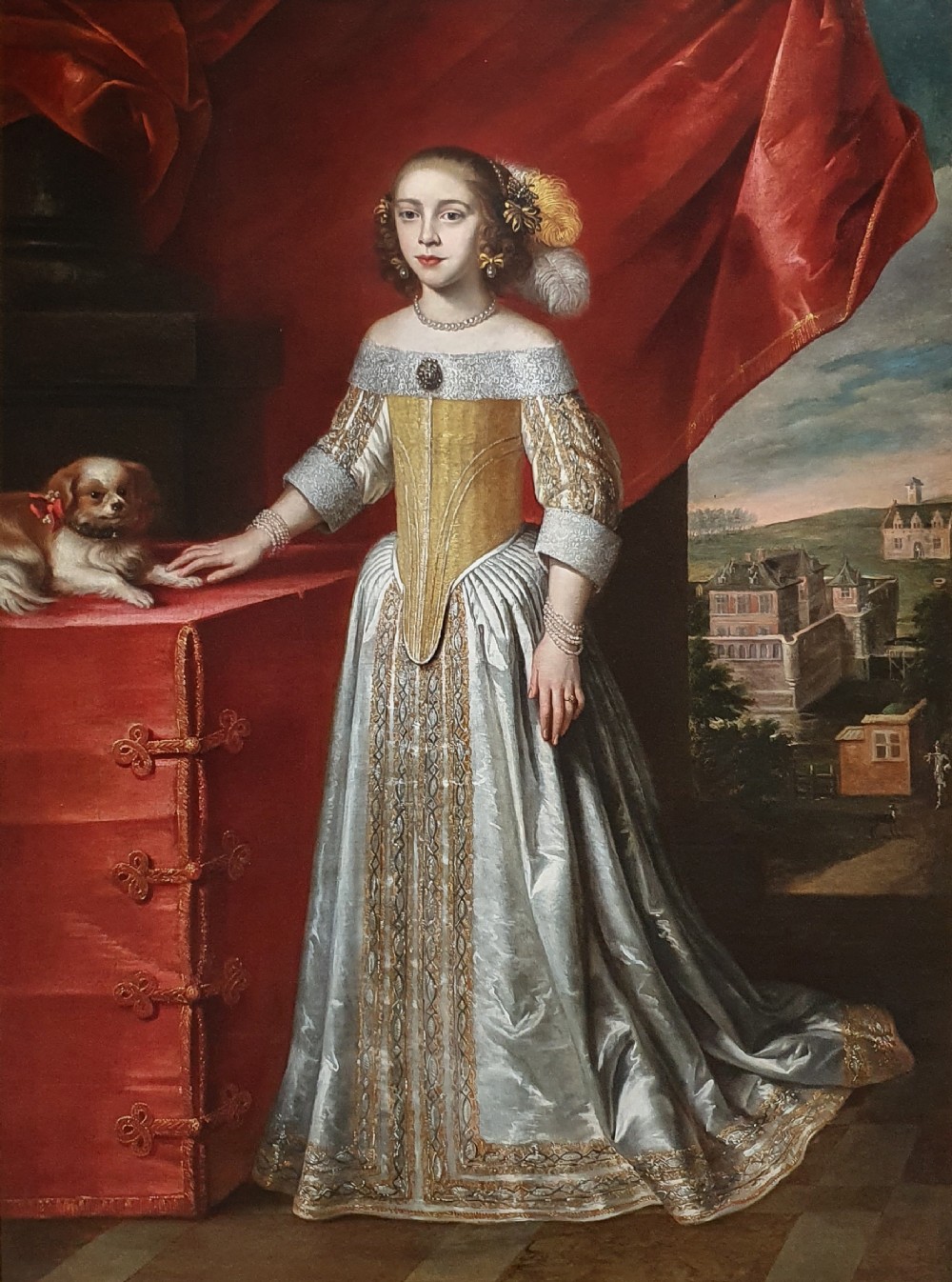
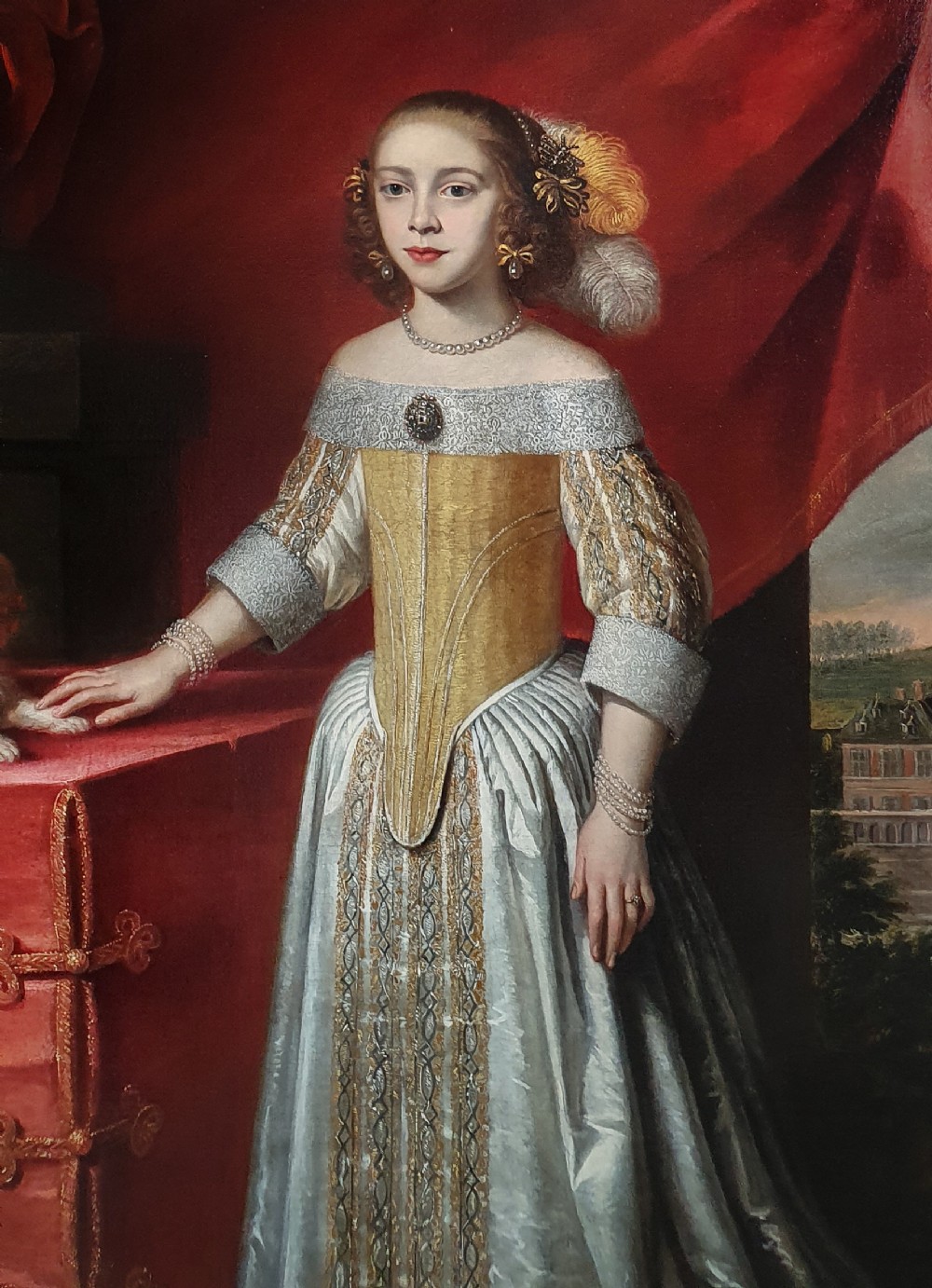
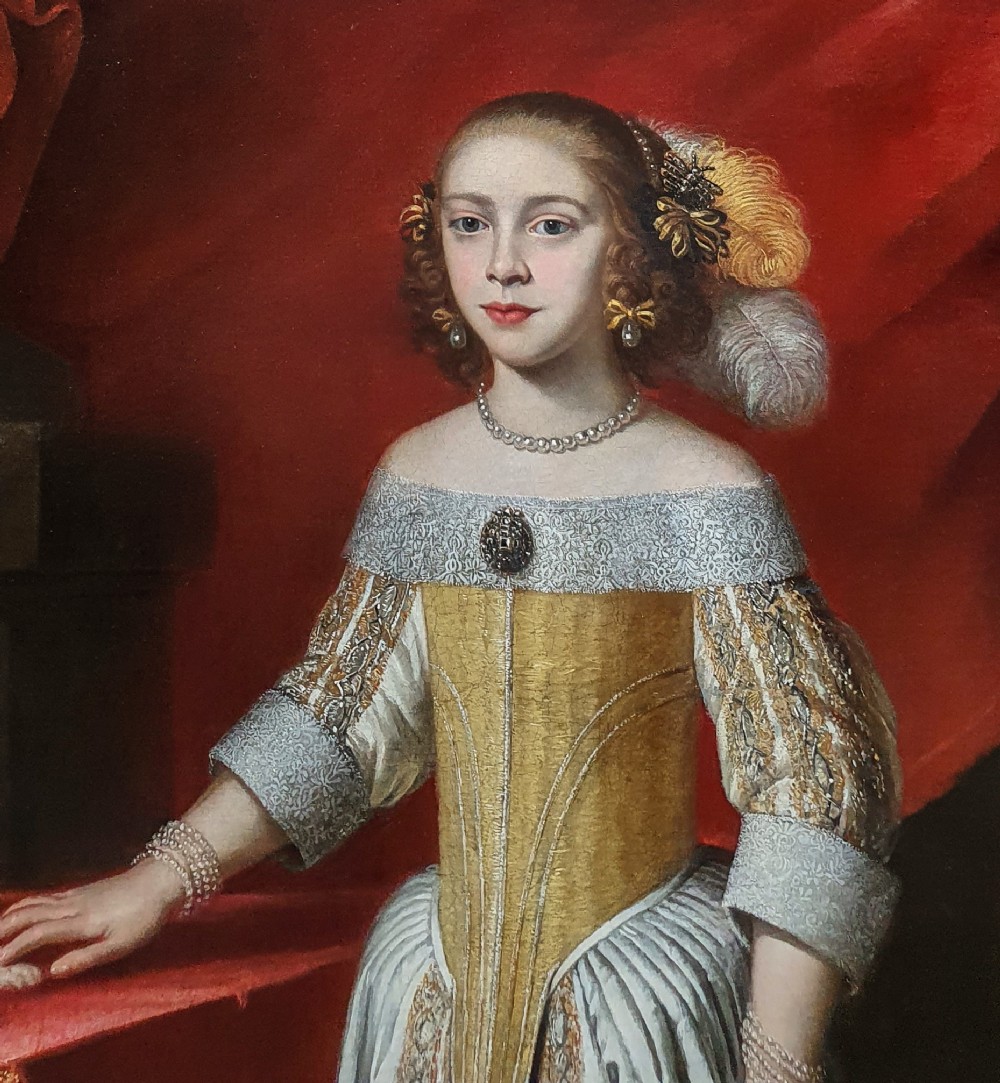
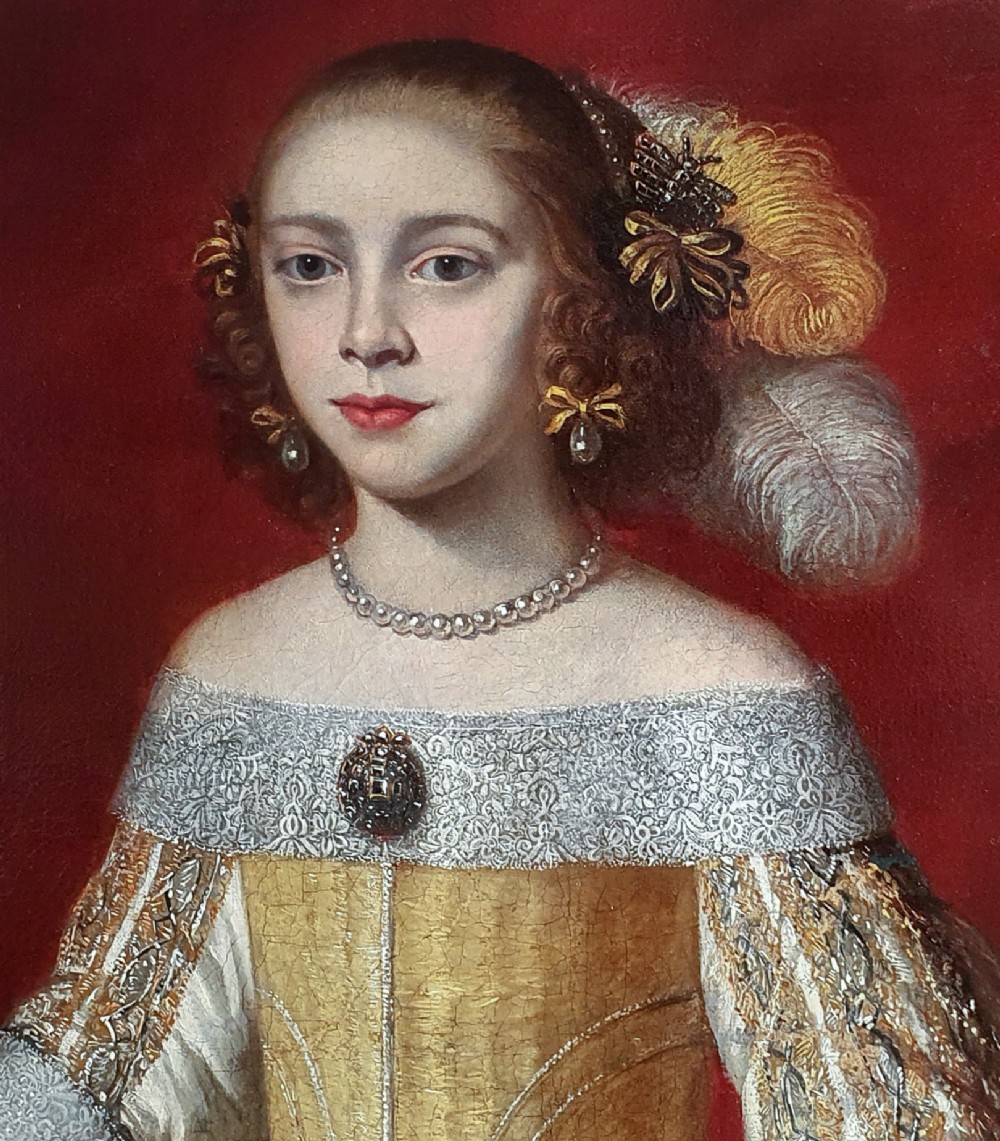
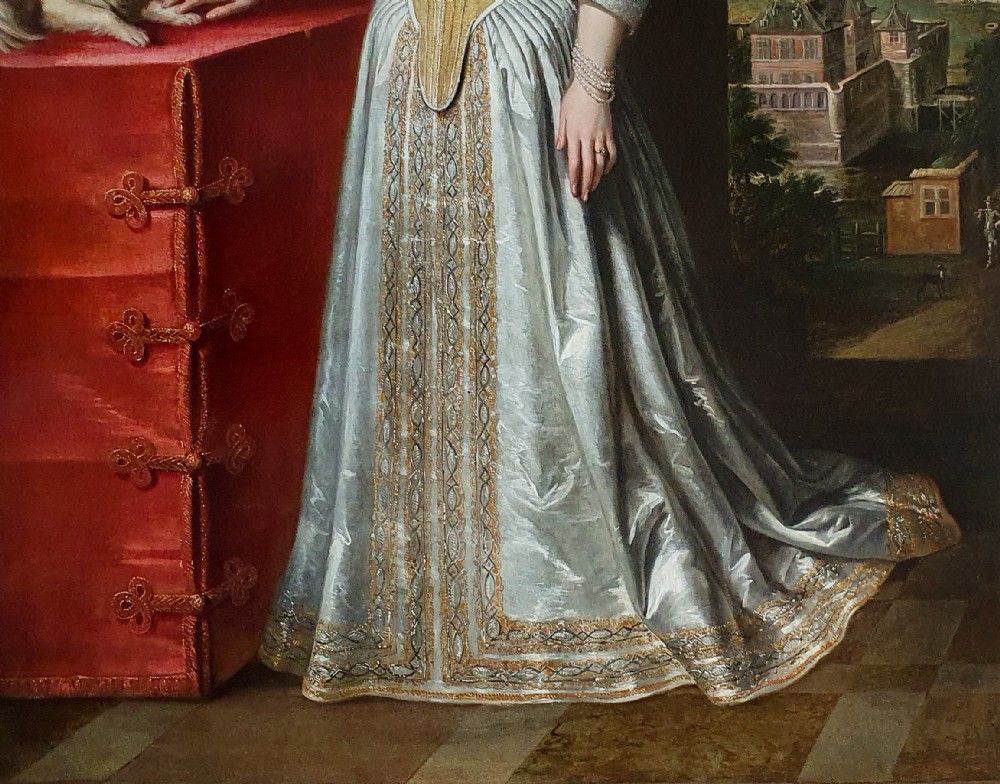
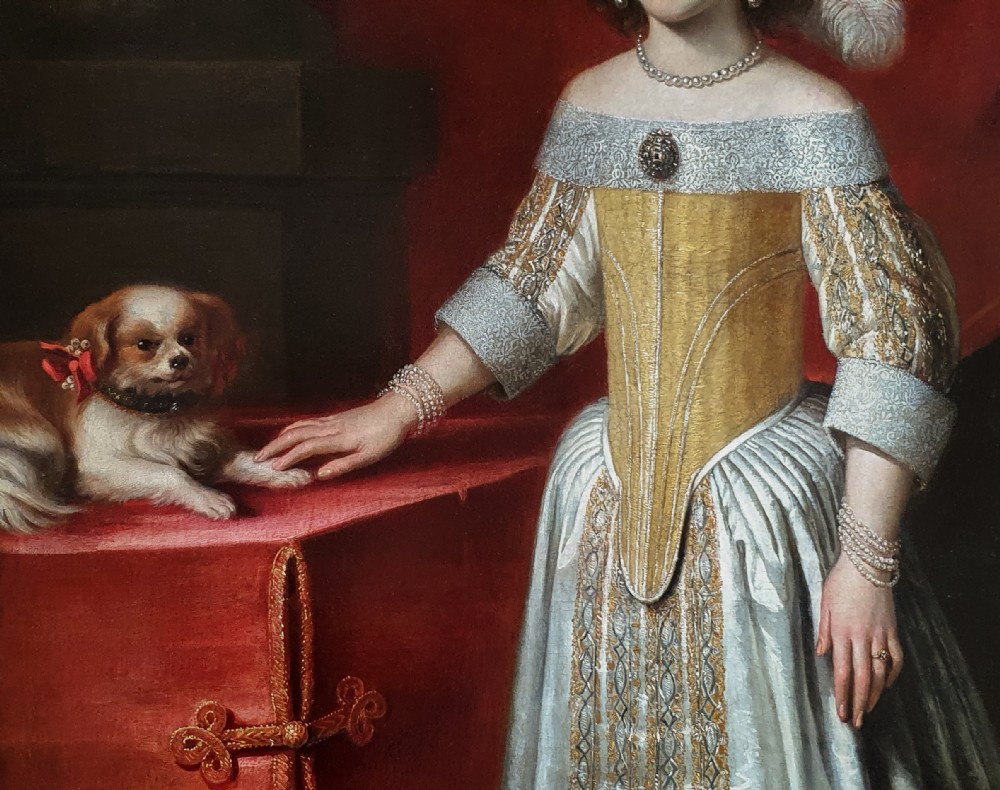
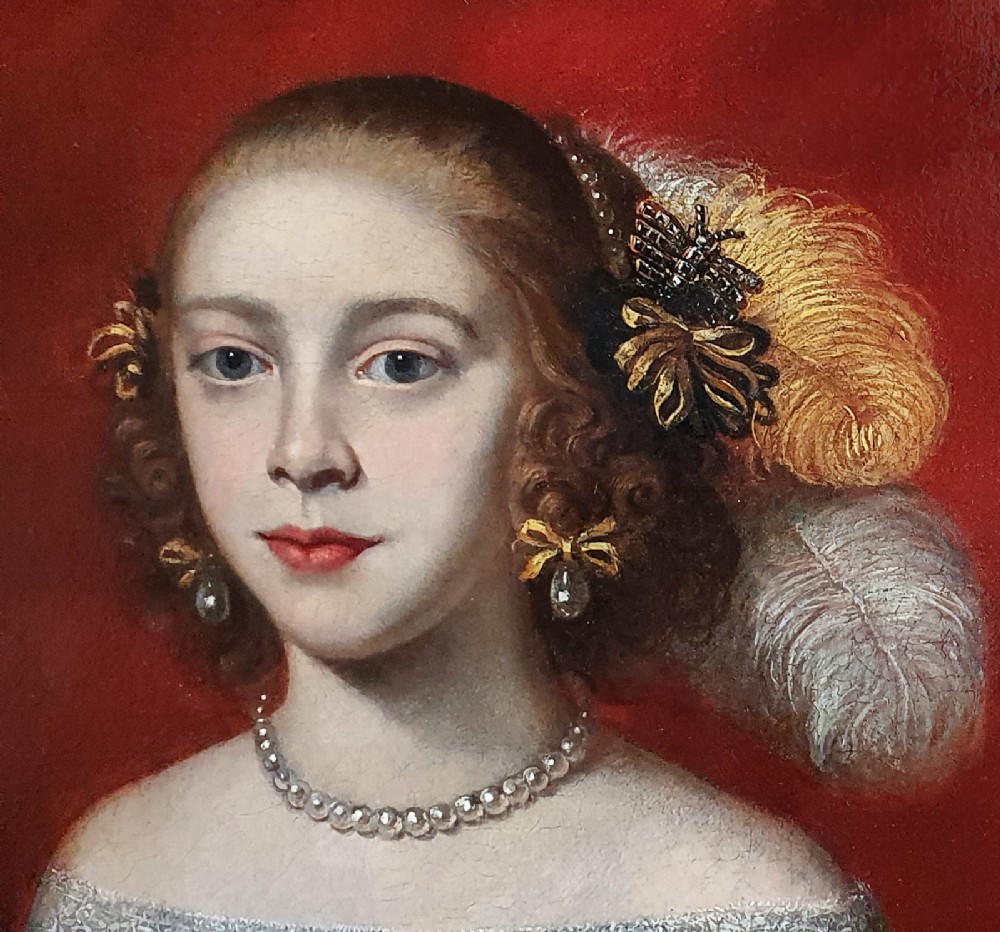
Her social background and status in society is further underlined by the whiteness of her skin, the inclusion of the fortified mansion visible through the window, which is perhaps her family estate, and the abundance of jewelery - the expensive pearls around her neck and wrists as matching bracelets, earrings, and her hair was also considered the perfect accompaniment to any outfit. The largest jewel is the diamond brooch and it was almost always pinned on the front of bodice, as we see in our portrait.
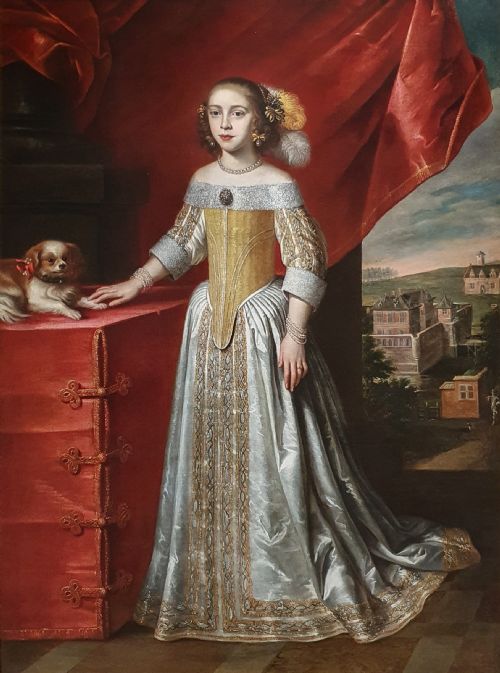
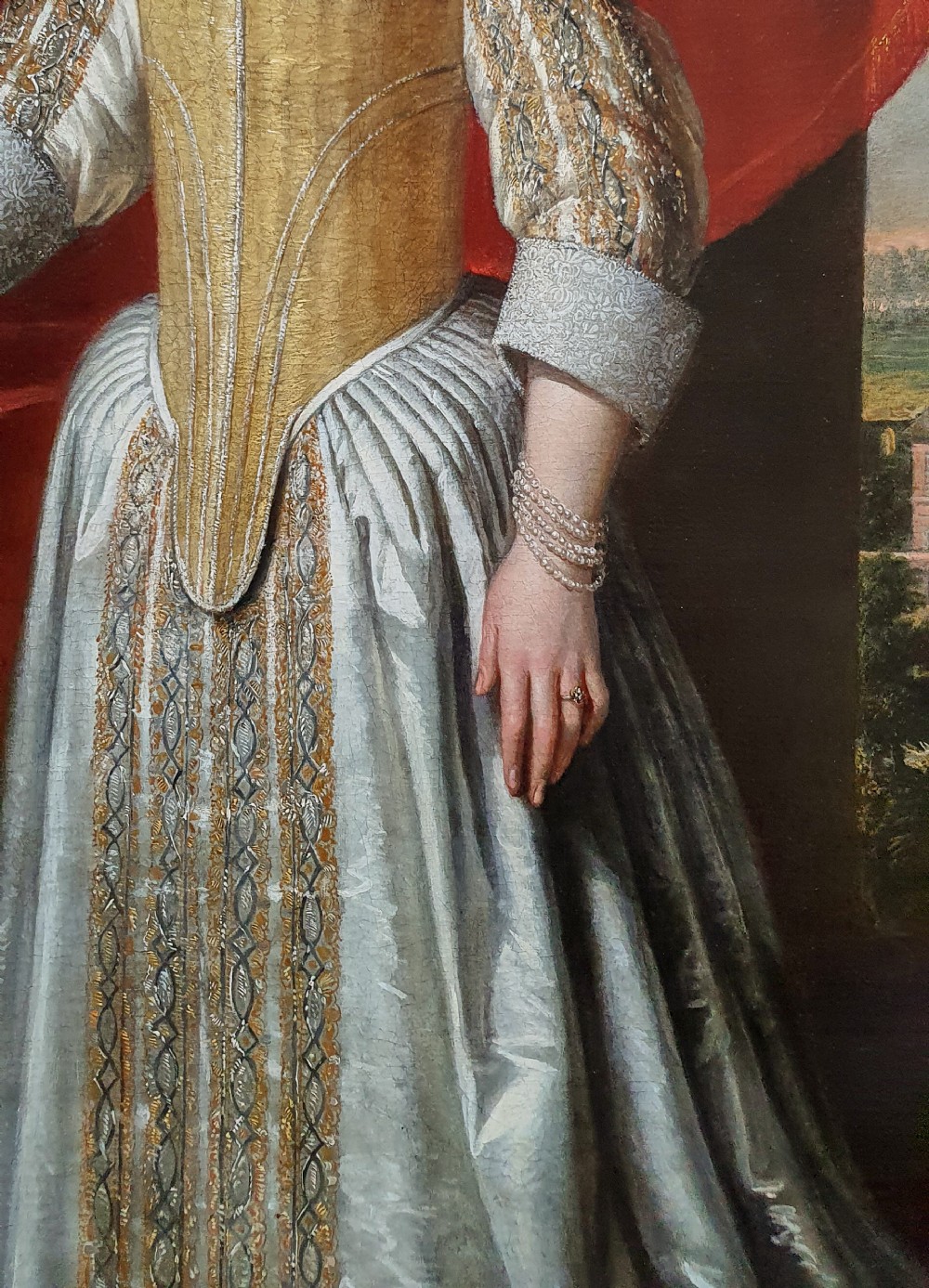
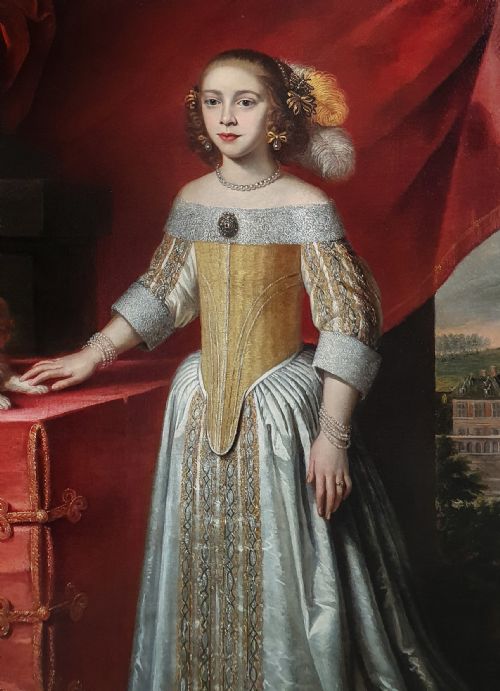
The diamond ring on her left finger signifies her engagement; even at the tender age of twelve, during this period a girl is always a potential bride. The left facing stance, suggests that the portrait probably served as a pendant to a portrait of her husband-to-be, in which case he would be inclined towards our right according to the traditional rules of marriage portraiture.
Symbolism is so important in portraiture and it provides a pointed and aspirational narrative that would not have been lost on contemporary viewers of the work. For example, the presence of the family dog, apart from being a charming pictorial device, is a clear allusion to fidelity and to breeding. The rich crimson canopy and table dressing exude sophistication and the plethora of jewels and fine textiles, of course allude to her wealth.
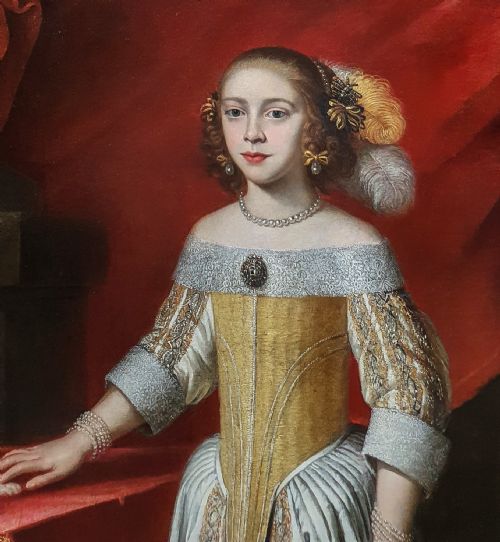
The long-pointed bodice with short bodice sleeves and lace cuffs, off-the-shoulder neckline, shimmering satins, lace collar and cuffs, ribbons, and decorative metallic lace trim were highly fashionable in the 1650’s. As in the decade before, a pearl necklace, often with a matching pair of pearl bracelets Also popular was the long dress with the cartridge pleats at the waist. These skirts were separate from the bodice and hung naturally from the waist without rigid under structures like the farthingales seen in the 16th century, though a bum roll would often be tied on to create a bit of fullness and attractively set off the narrow waist. The exotic plumage of ostrich feathers was another status symbol.
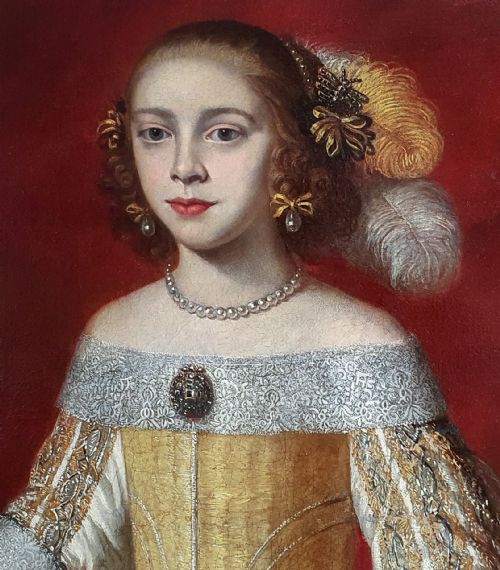
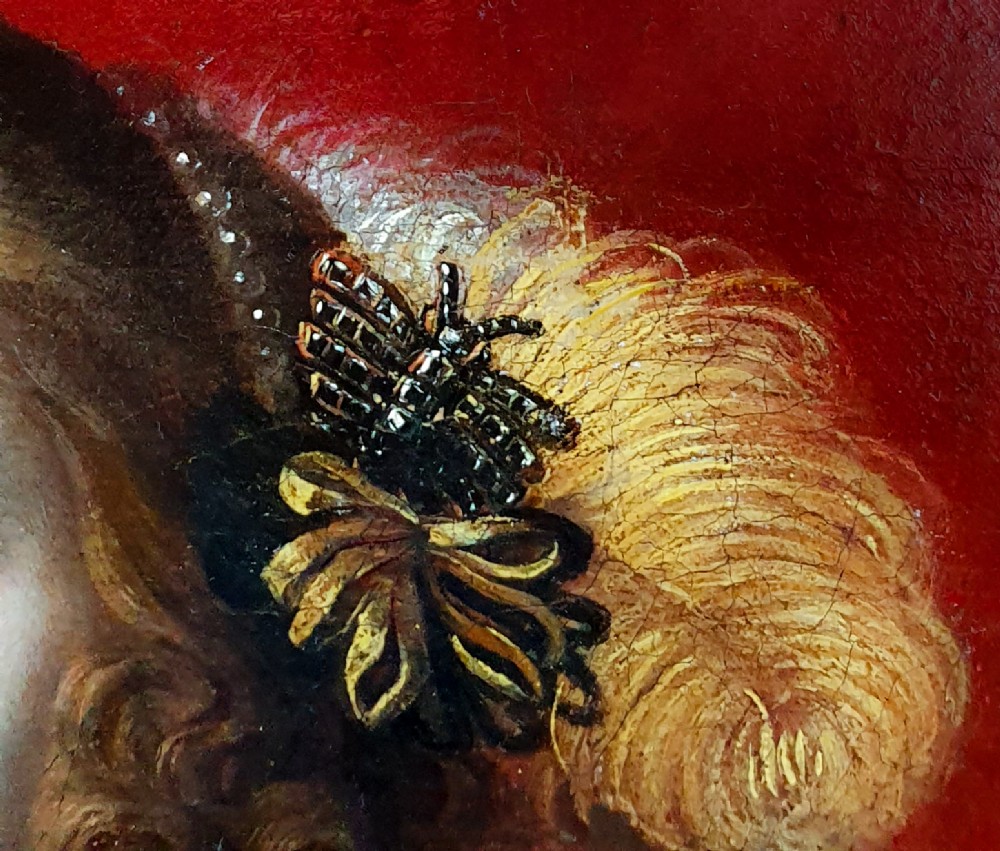
The artist took great effect in rendering surface effects of the fine materials and has embellished the portrait with many fine details such as the 8-winged snapdragon diamond brooch in her hair. The artist was also a supreme colourist – the gold and silver detail on the dress is outstanding.
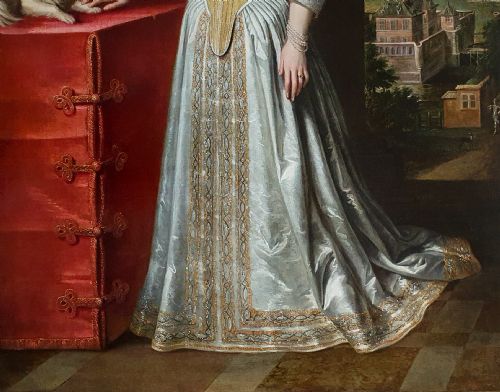
The work is truly a notable and very beautiful example of mid-17th century portraiture. It is striking for its grand scale and also its quality and age. Held in an antique frame.
Jan Weesop was a portrait painter working in London up to 1653 and was presumed to be of Flemish descent. His career and oeuvre have only recently received the attention that they deserve. Weesop's royalist sympathies may not have been exaggerated, however. The small body of work attributable to Weesop is associated exclusively with staunchly royalist patrons. Looked at collectively, the works attributed to him are of a quite recognisable style, particularly in the frequent use of gold decoration on his sitters’ outfits. Had Weesop lived longer he may have presented a challenge to the main portrait painter of the time in England, Sir Peter Lely.
Provenance: UK private collection (Kensington, London)
Measurements: Height 190cm, Width 146cm framed (Height 74.75”, Width 57.5” framed)
Titan Fine Art has dated this piece to the 17th Century.
Specialist in 17th & 18thc portraits. Highly curated selection, museum-level research & pro conservation. Exceptional art, expertly vetted.
You can view the stock and full dealer information on the Titan Fine Art Profile Page
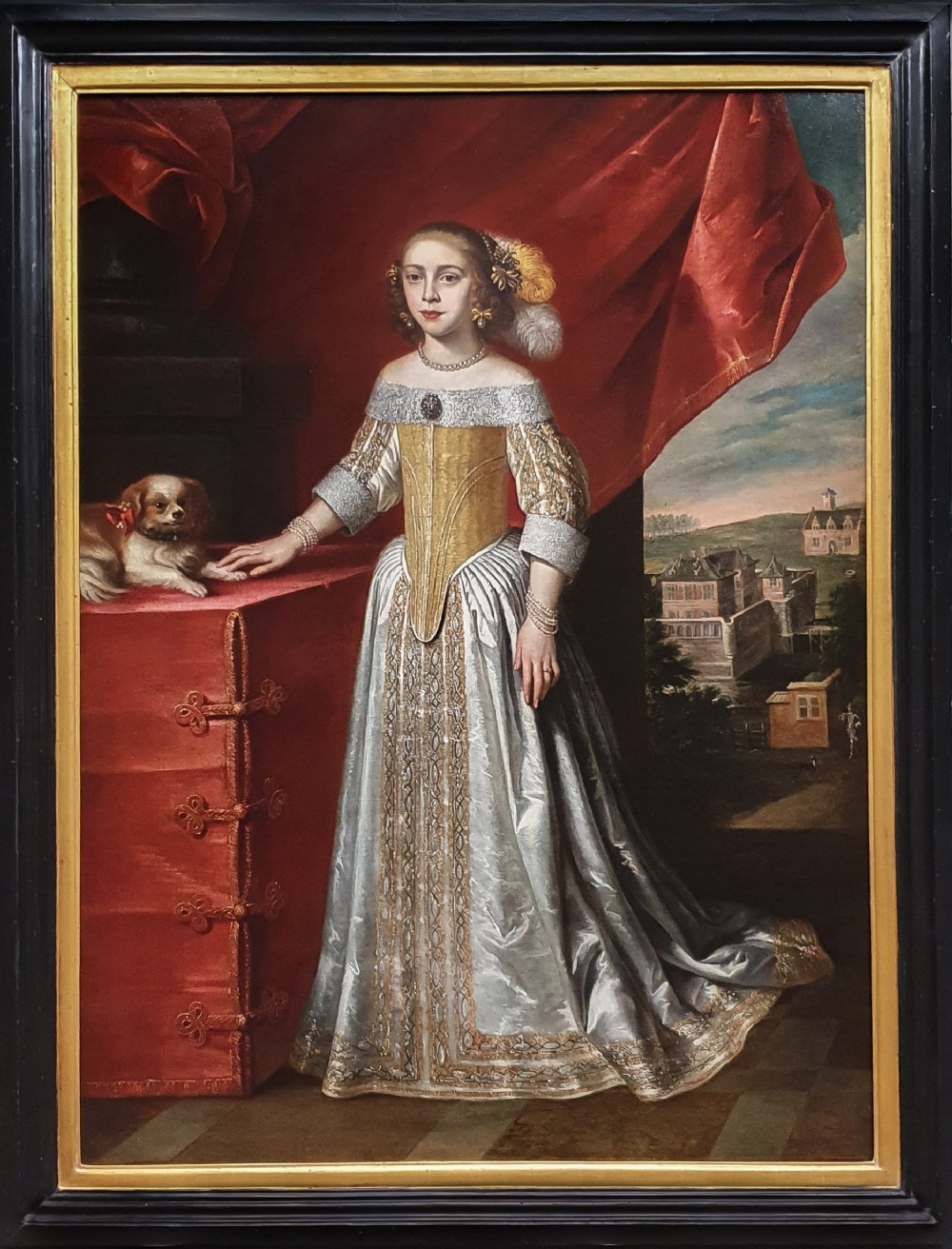
Portrait of a Young Lady in an Interior with a Pet Dog C.1650-60; Circle of Jan Weesop (Fl 1640–1653)