Titan Fine Art has dated this piece to the 17th Century.
Our painting was acquired by Thomas Macpherson, 1st Baron Macpherson of Drumochter (1888-1965)
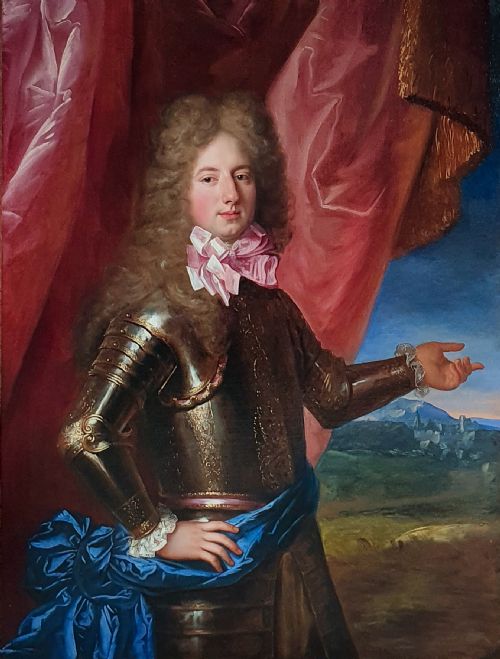
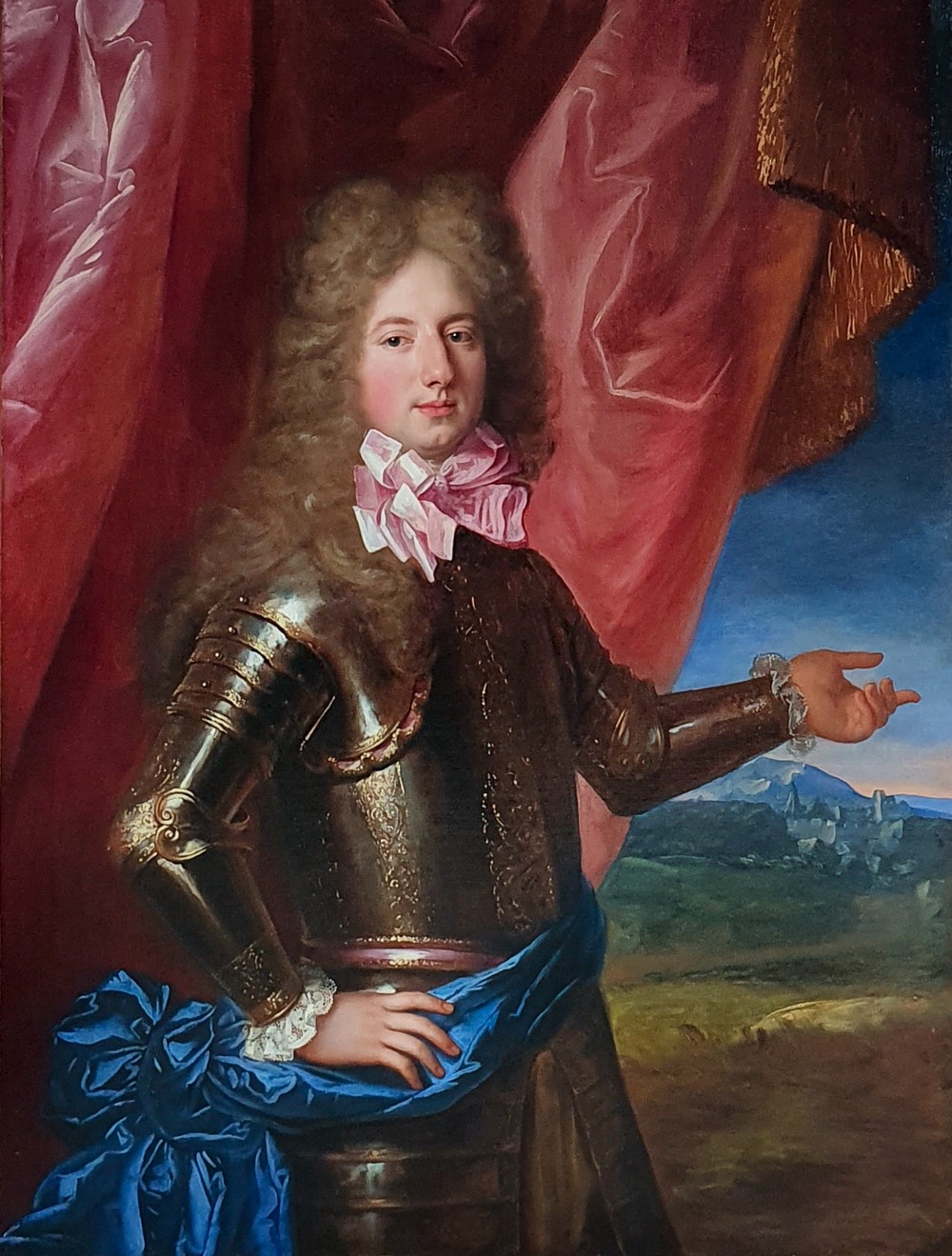
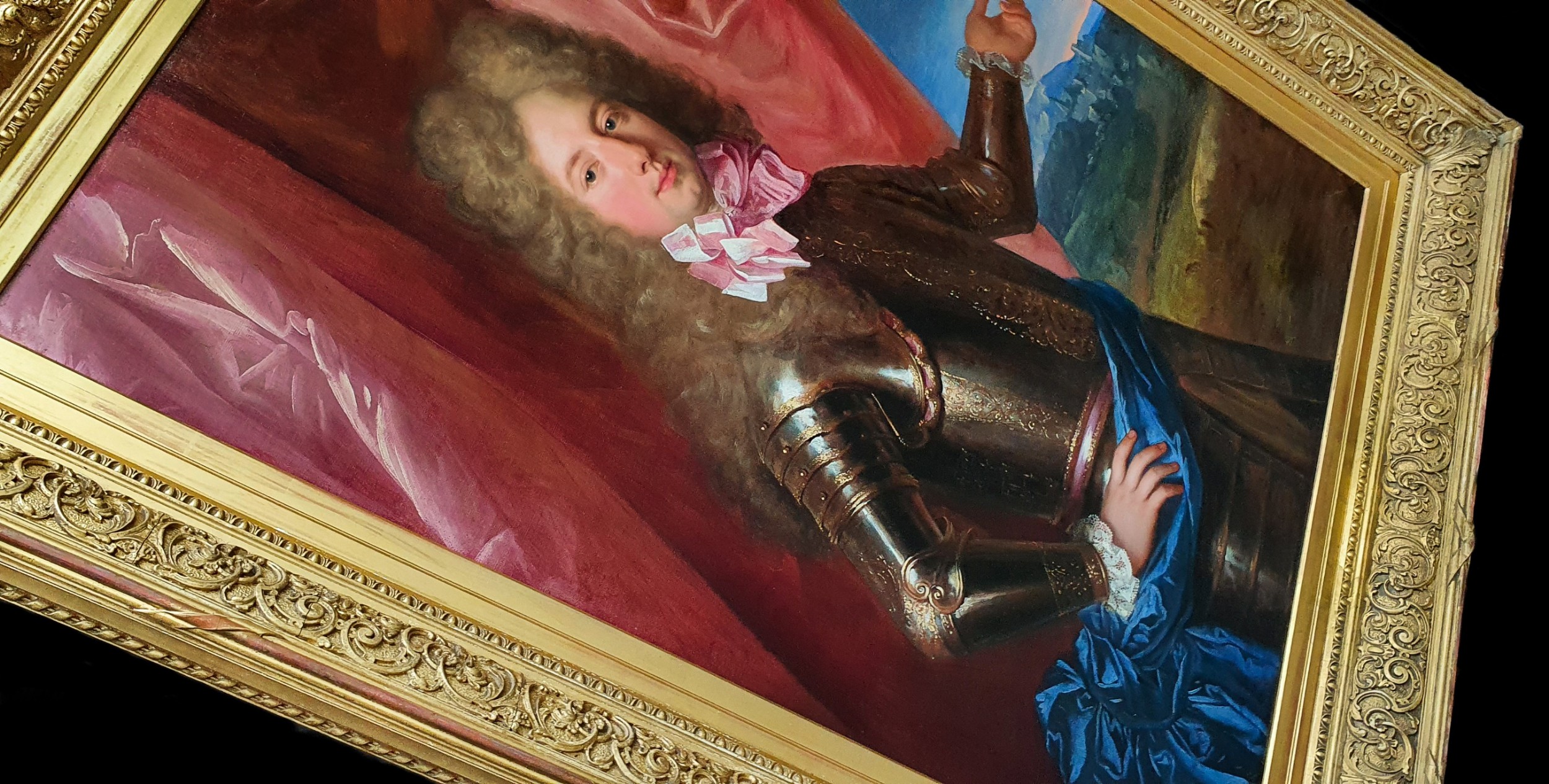
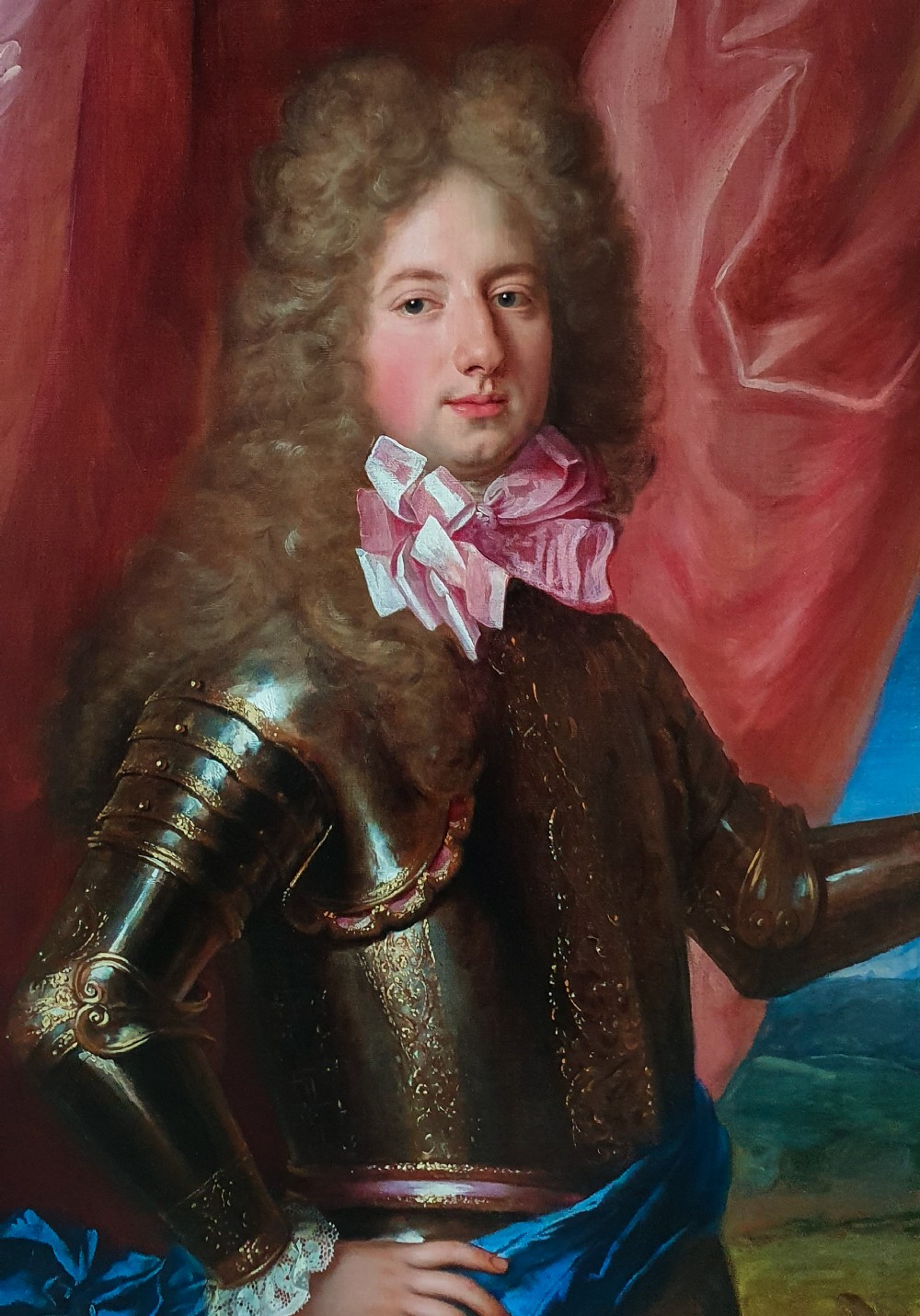
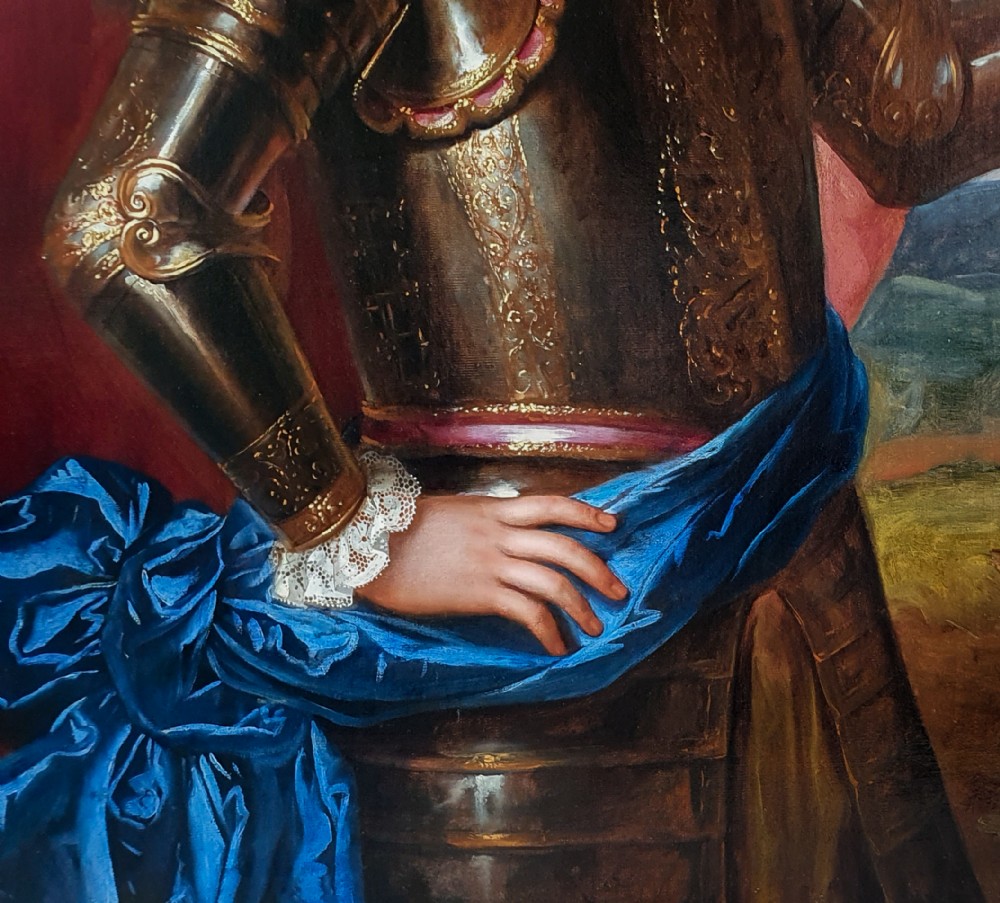
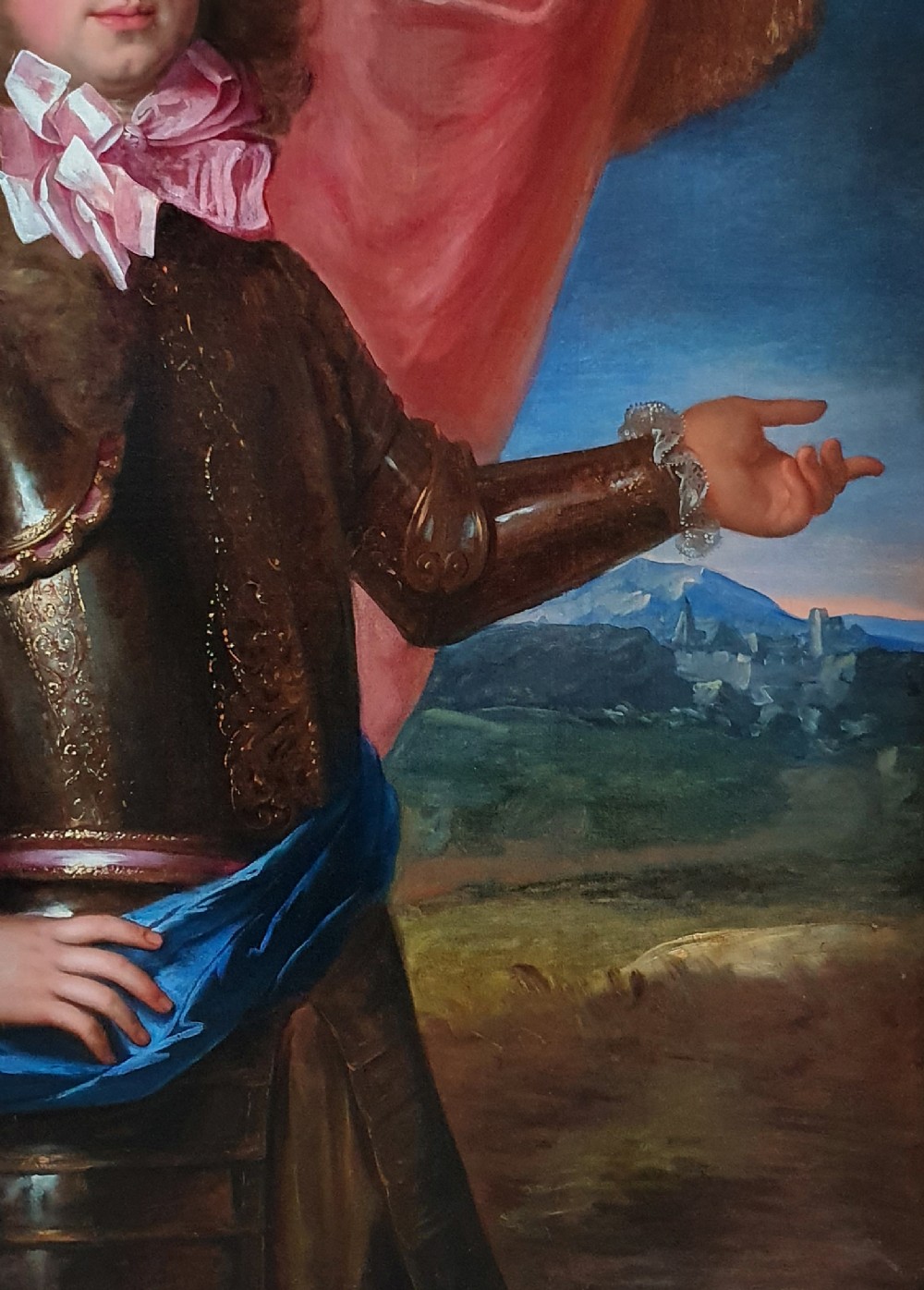
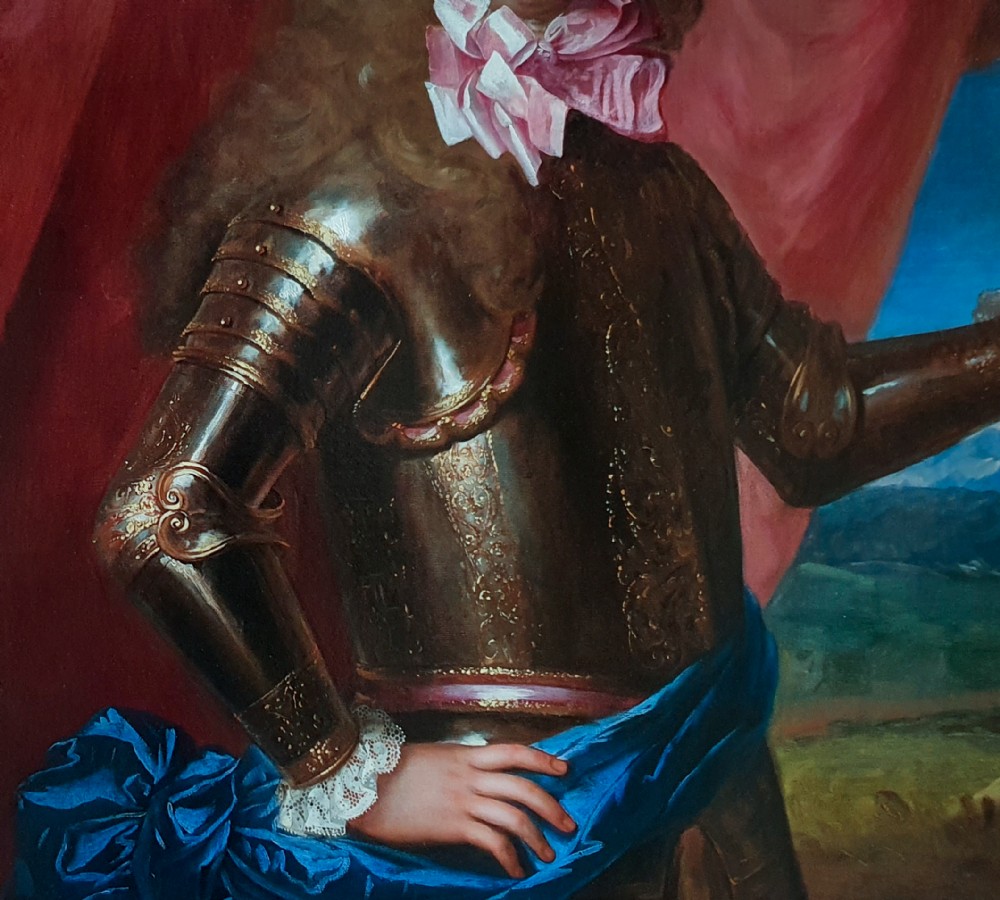
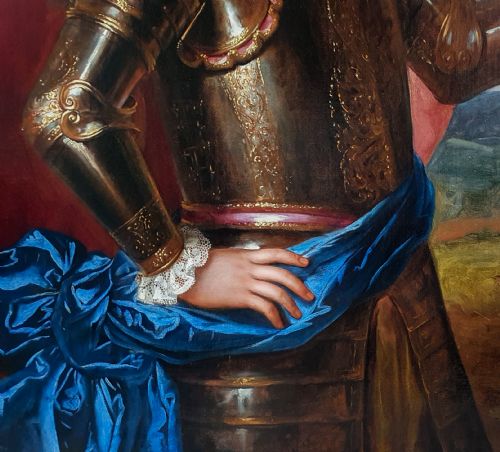
The young sitter in this sumptuous large-scale portrait is featured wearing a fashionable long wig and donning a large taffeta bow, fashionable in the late seventeenth century, above an ingeniously embellished ceremonial armour. The prestigious character of this portrait is accentuated by the gold fringed curtain, which directs the viewer to a town with castellated architecture, perhaps the sitter’s possessions. The sitter is displayed as a brave and chivalrous character, and was likely of some distinction, and certainly of wealth, for such fine and ornate armour would have been very expensive. By the time the portrait was painted, apart from helmets and breastplates, full suit armour became increasingly rare on the battlefield, and thus its portrayal is largely symbolic of wealth and status. By tradition the sitter was thought to be Prince Charles Edward Stuart (Bonnie Prince Charlie) however our portrait was painted much earlier, and the distinct idiosyncrasies and facial physiognomy differ from that of Bonnie Prince Charlie and his iconography.
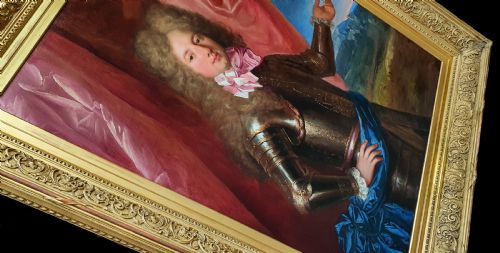
This is a particularly fine example; the degree of realism in the face and attire is outstanding and there is a very pleasing treatment of the architecture, with blocks of varying shades of blue rendered in a painterly style. Perhaps the greatest virtuosity is found in the brilliantly detailed suit of armour. The artist went to great lengths to extensively render the highlights on the metal and the etched and gilt ornamentation. The features of the sitter’s face have been captured with great sensitivity.
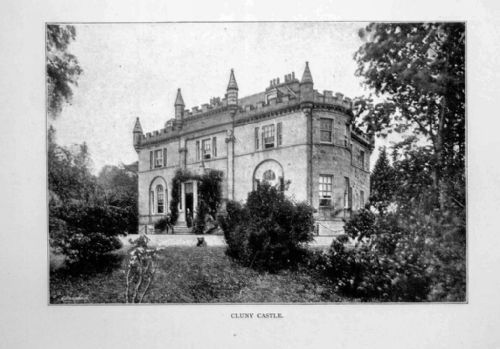
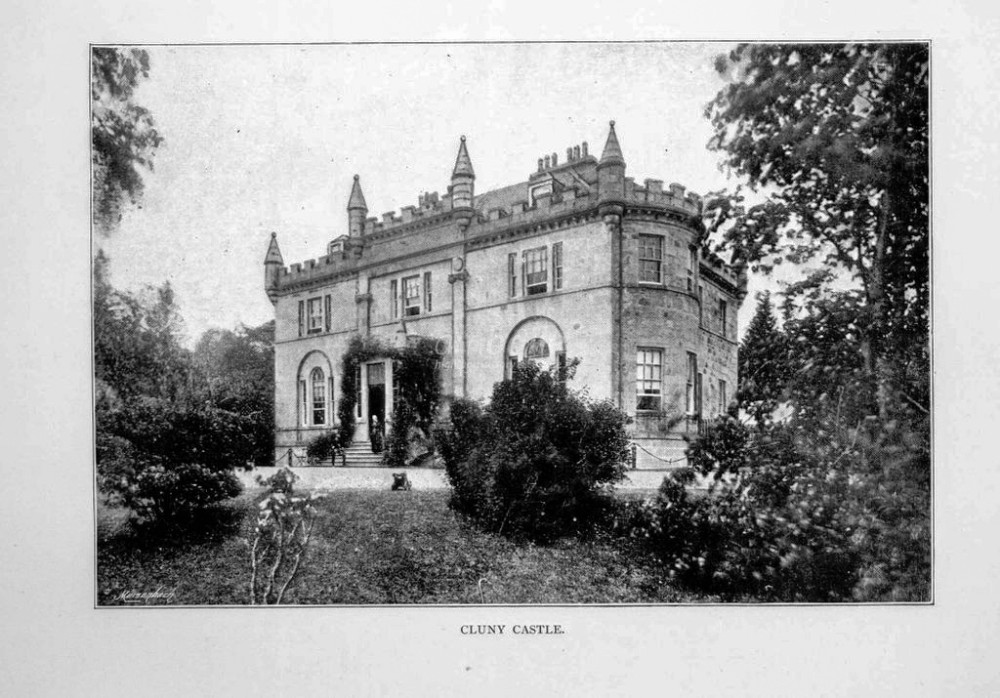
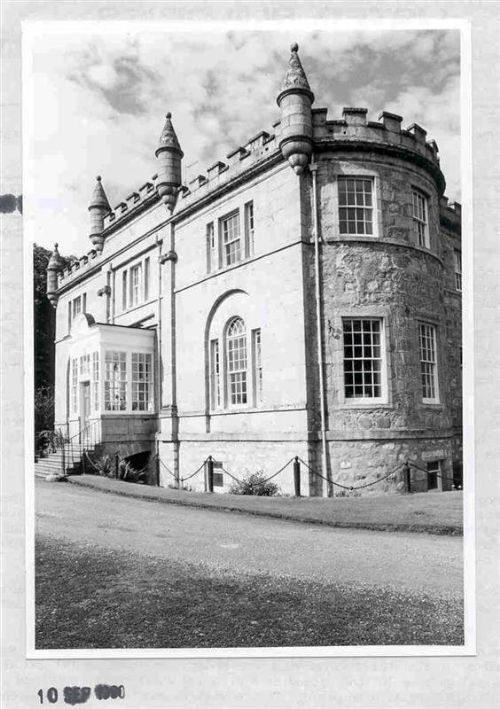
The Macpherson clan took their name in the 15th century. They are part of a confederation of smaller clans, which came together in the middle-ages for mutual protection. Together, they formed a super clan called Clan Chattan. During the Jacobite rebellion of 1745, the clan supported Charles Edward Stuart’s doomed attempt to restore the Stuart dynasty to the British throne. The direct line of the MacPhersons of Cluny died out on the death in 1943 of Albert Macpherson, 17th chief (1854-1932) – at this time our portrait was sold.
François de Troy (Toulouse c.1645–1730) was a French painter. He was taught the rudiments of painting by his artist father, Antoine Troy (c.1608-1684). By 1662 he was in Paris studying under Claude Lefèbvre and Nicolas-Pierre Loir. In 1674 he was received into the Academy. In 1680 he painted the wife of Louis of France, Dauphin of France, Maria Anna Victoria of Bavaria and thus began almost 50 years of painting members of the French court and the upper classes.
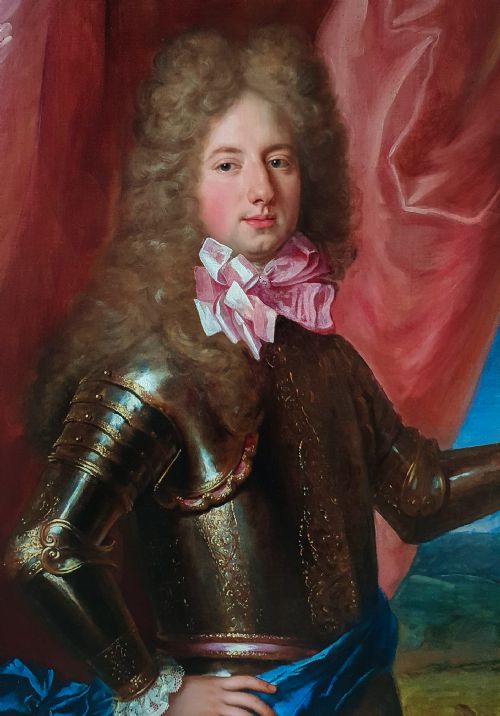
In the 1690s, Troy became the principal painter to the court of King James II at Saint-Germain-en-Layea and received many commissions to promote the Jacobite cause. He employed the talented artist Alexis Simon Belle; many characteristics of Belle’s work are visible in our painting, notably the pattern, the gesturing hand, the landscape, and the remarkable rendering of textures and materials.
In 1698, Troy was appointed a Professor of the Académie Royale, and its Director in 1708. He died in Paris at the age of 85.
Provenance:
Albert Macpherson of Cluny Macpherson, 17th chief (1854-1932), his sale, Glasgow, 3 May 1943;
Sold Christies London 24 July 1959, Thomas Macpherson, 1st Baron Macpherson of Drumochter (1888-1965)
Titan Fine Art has dated this piece to the 17th Century.
Specialist in 17th & 18thc portraits. Highly curated selection, museum-level research & pro conservation. Exceptional art, expertly vetted.
You can view the stock and full dealer information on the Titan Fine Art Profile Page
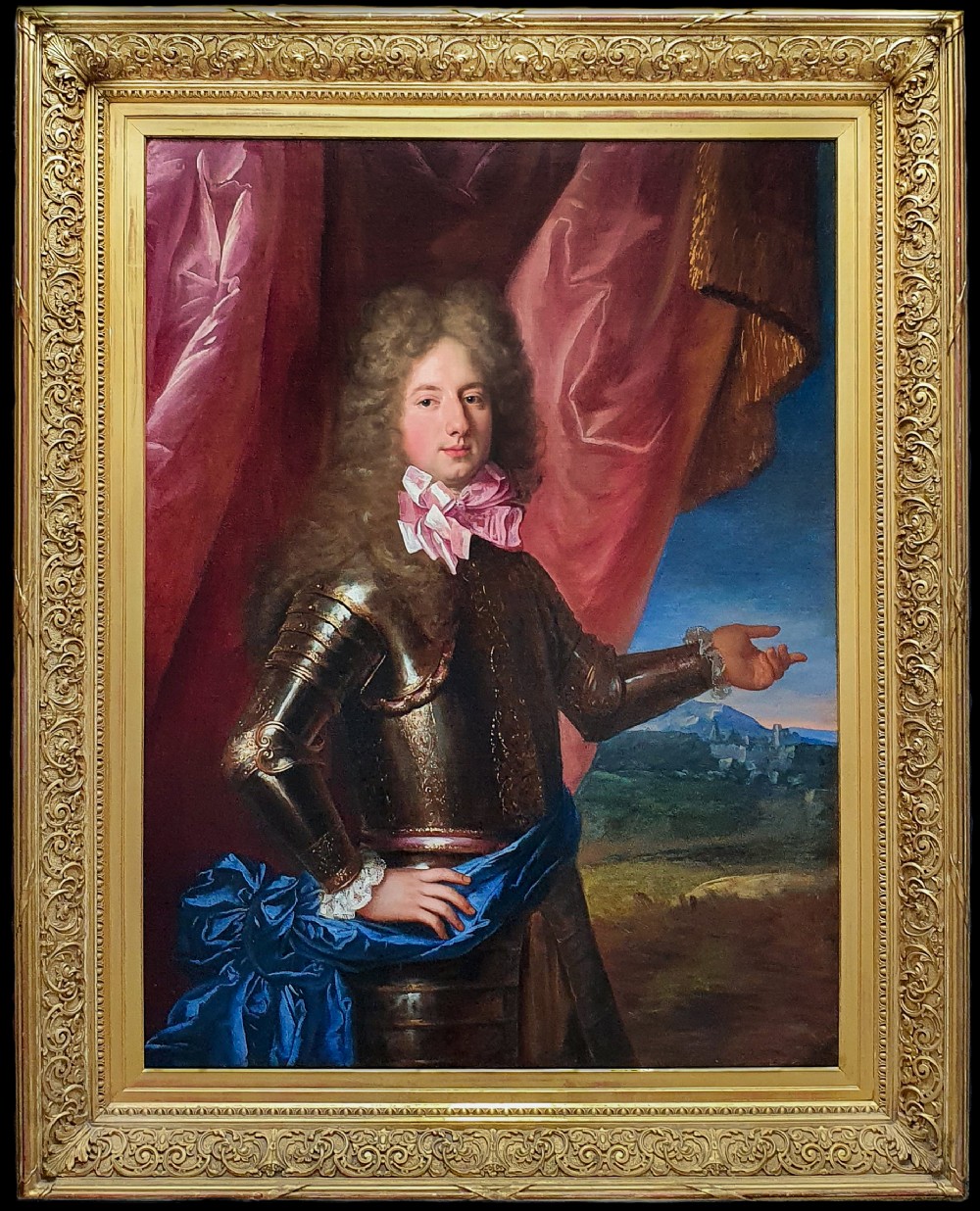
Portrait of a Young Nobleman in Armour C.1690’s; Studio of Francois De Troy (1645-1730)