10,750  PAGES BROWSED TODAY PAGES TODAY 51 ANTIQUES UPLOADED TODAYNEW ARRIVALS
51 ITEMS ADDED TODAY
Sort Order
Items Per Page
Browse Categories
Sort order
Items per page
ID #SA770274
SOLD
Email
Save
Victorian Carved Walnut Wall Thermometer by William Dixey of 241 Oxford Street London
Jason Clarke Antiques
sold SA770274
Sorry, but this item has been sold.
Jason Clarke Antiques

Jason Clarke Antiques

Sellingantiques Verified Since Jul 2015
View Dealers Stock Page
Id #SA770274
PDF SHARE
SAVE

Victorian Carved Walnut Wall Thermometer by William Dixey of 241 Oxford Street London

19th century
Description

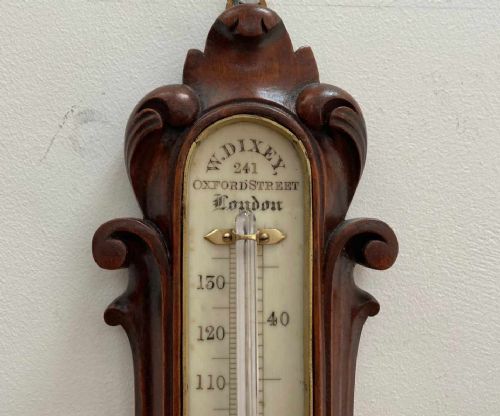
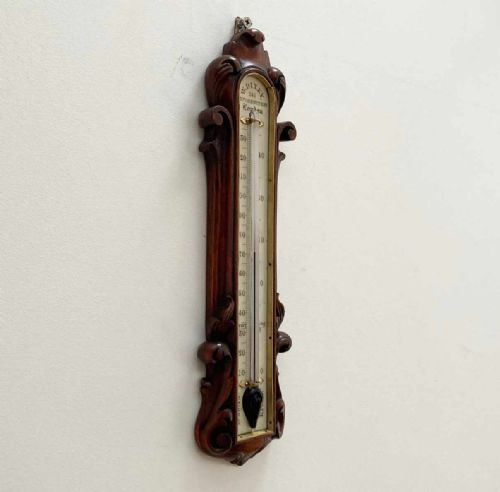
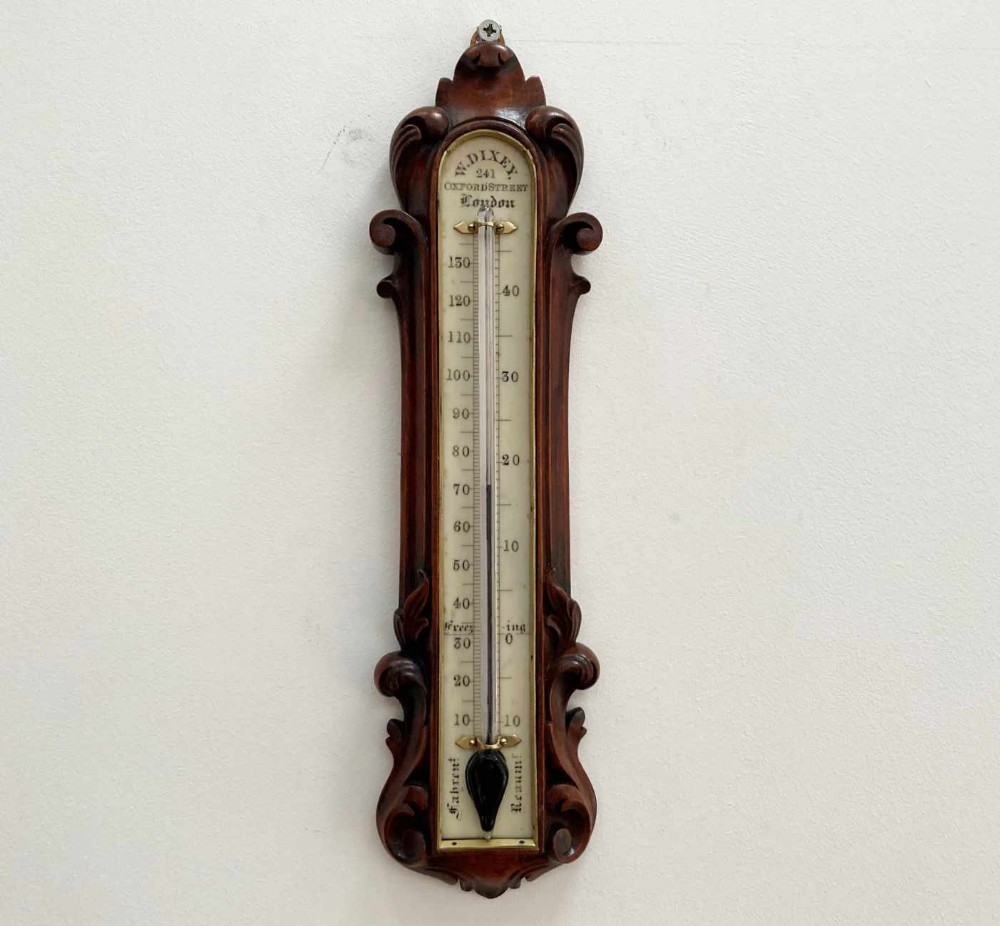
For sale, a Victorian carved walnut wall thermometer by William Dixey of 241 Oxford Street, London.

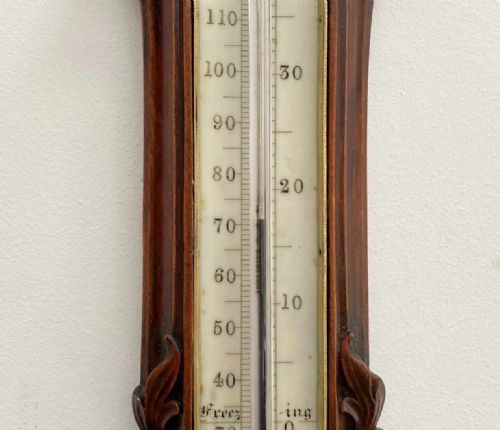
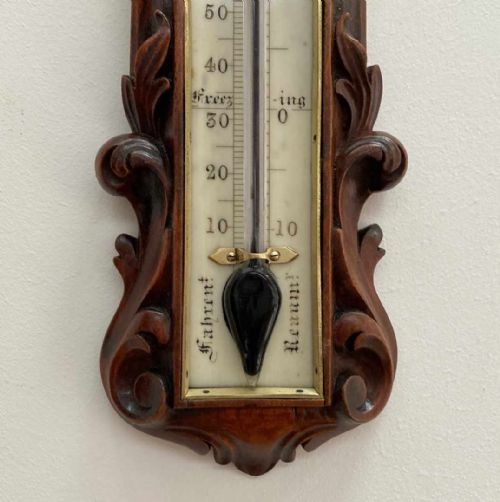
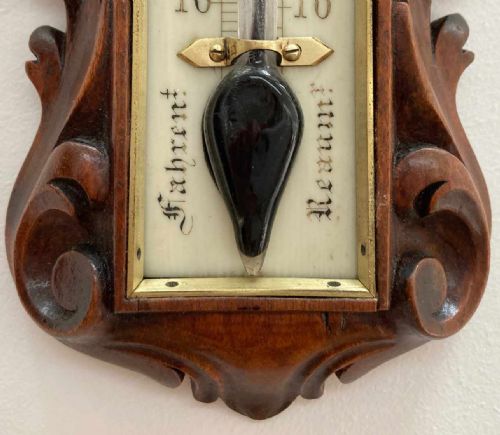
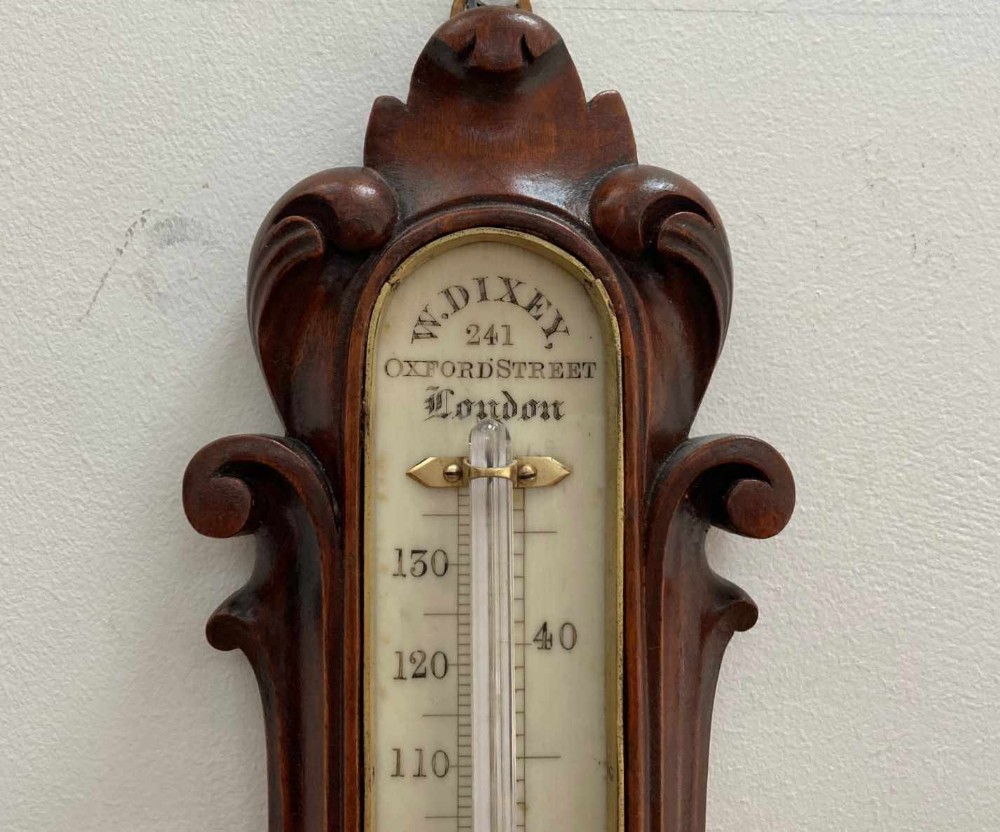
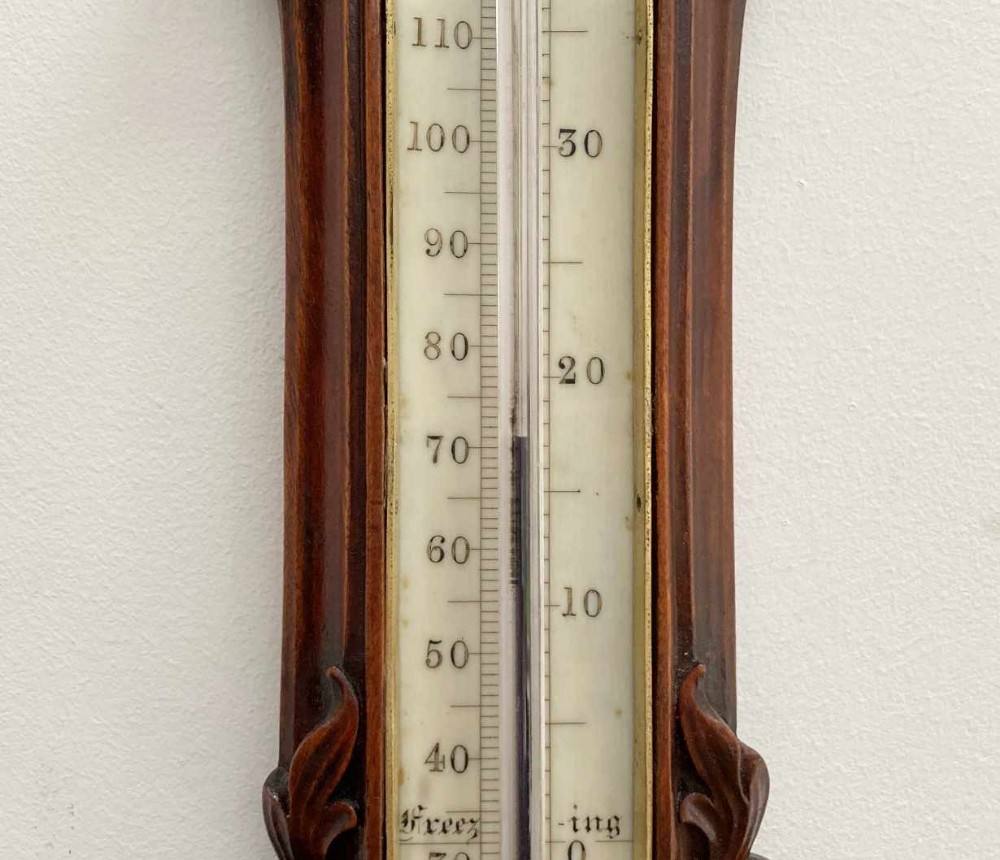
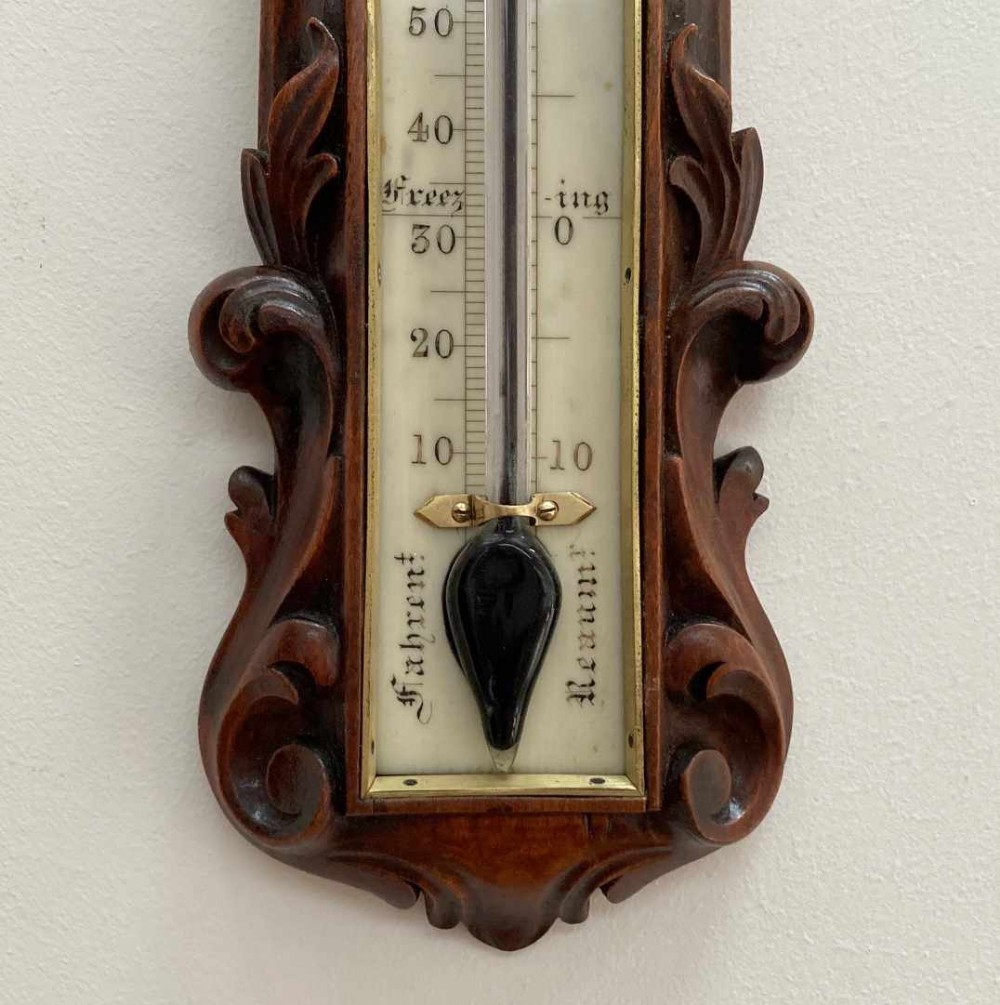
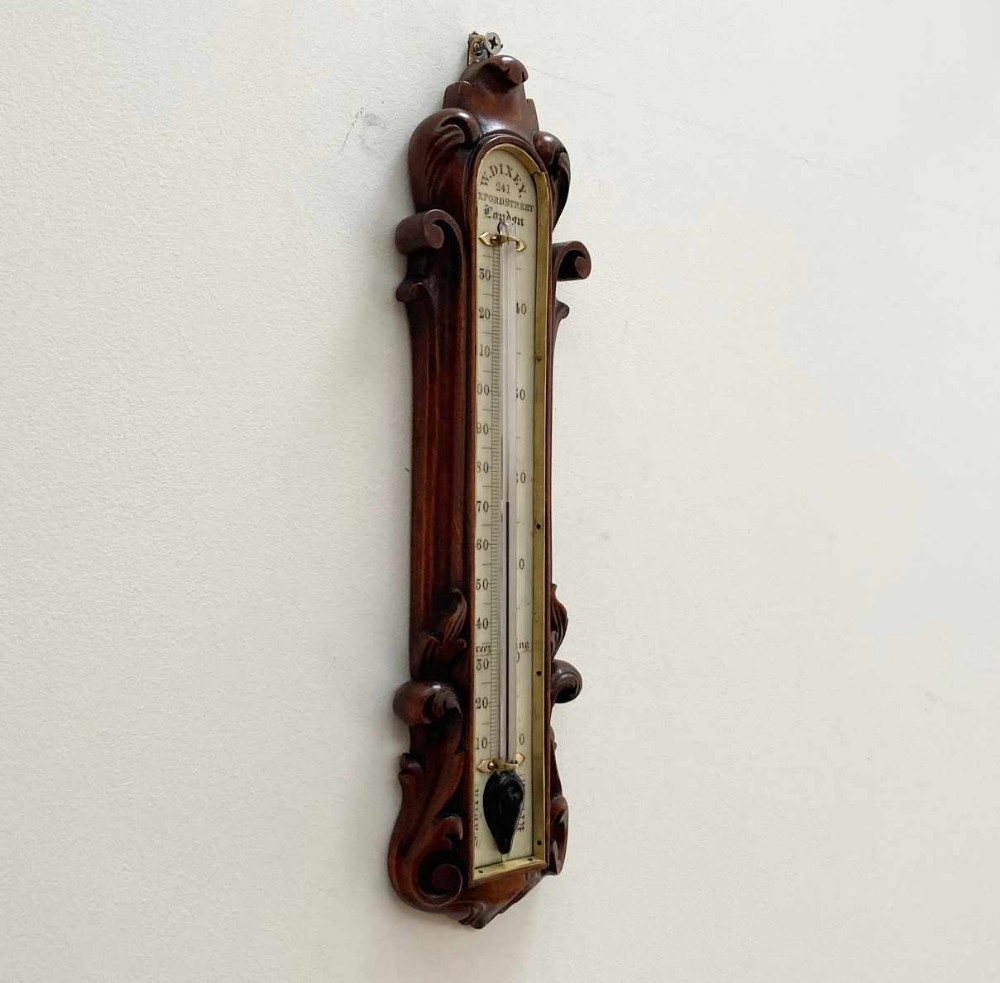
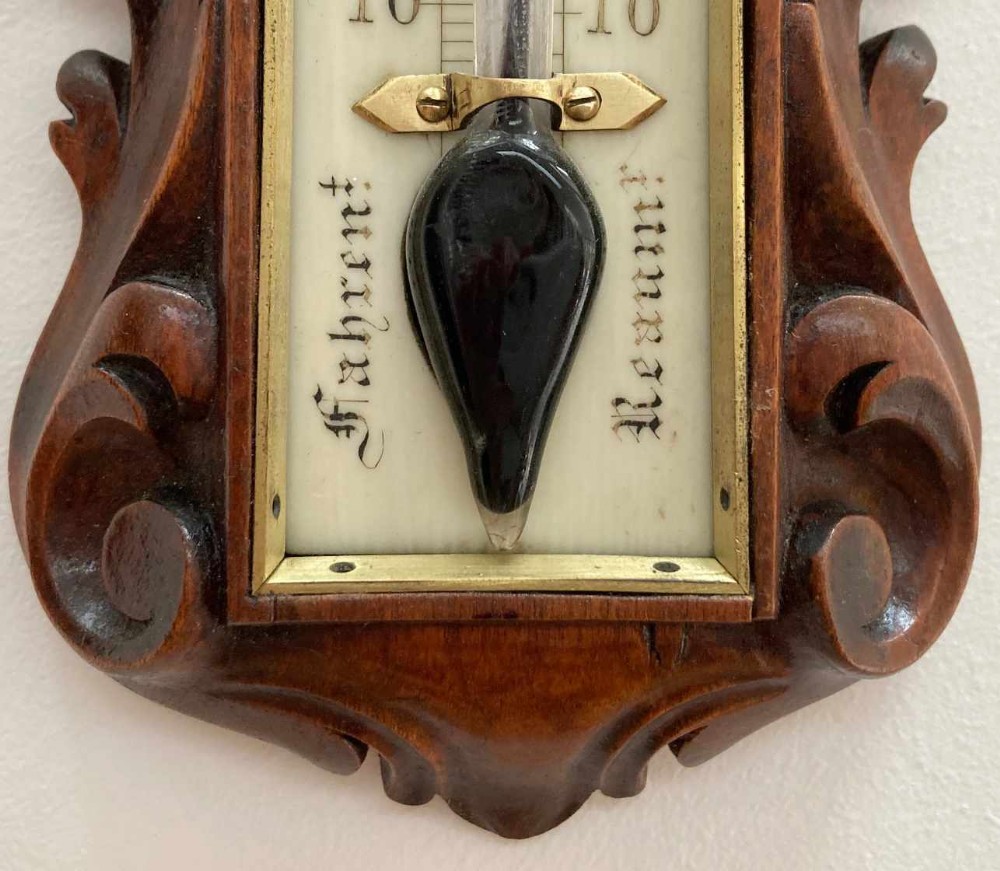
This super example is ornately carved with floral motifs throughout with brass lined engraved scale with both Fahrenheit and Reamur readings. The blue alcohol thermometer is superbly conceived with a rare and very large tear drop bulb. It is engraved to the top with the maker’s name William Dixey 241 Oxford Street, London.
The maker William Dixey was the son of Edward Dixey who was born in 1772, the son of John Dixey a victualler or publican in Vine Street, Piccadilly and Catherine Dixey (nee Harris). According to most records, Edward is considered to have been apprenticed to George Linnell or George Black but more recent research by Anita McConnell shows Edward Dixey to have been apprenticed on the 4th September 1787 for seven years to the top instrument maker Jesse Ramsden at a cost of £21. A Christie’s sale record for a Wilson & Dixey telescope is also marked, “late apprentice to Jesse Ramsden” so the corroboration of these two facts seems to prove undeniably that his training was of the highest quality.
By the 1790’s (presumably after his apprenticeship in 1794) Edward is listed as working independently at Vine Street in Piccadilly and at the start of the 1800’s business addresses on Oxford Street and at Wardrobe Place are also listed. It is again unclear when, but a partnership was agreed during this period between George Wilson (also spelt Willson) and Edward Dixey to form the company of Wilson & Dixey.
Perhaps due to the numerous premises listed across London during the same period, this short-lived partnership seems to have failed quite rapidly and in 1803 both of the partners are listed under bankruptcy proceedings records with a dividend of £10 associated to the business. Despite their issues with debt, the company was able to maintain trading until 1809 but their increasing debt continues to be recorded throughout.
After 1809, Edward Dixey held various addresses at 335 Oxford Street, Air Street, Piccadilly and at Southwood Lane in Highgate according to a petition of insolvent debtors dated to February of 1824. These are probably his home addresses and records indicate that his trading address was at Oxford Street. There is a tantalising record for an 1817 legal case, Wilson vs Dixey (C13/2509/33) which may bring further light to the history of these ongoing financial difficulties, however, in 1812, his son, William Dixey was born and in the same year his eldest son, Charles Wastell (CW Dixey) was apprenticed to him. It is likely that George (Edward’s brother) was also working at the firm as the addresses for George in the records match closely to Edward’s known premises.
Whilst William’s elder Brother Charles Wastell went on to form G&C Dixey (George & Charles) and then later, the supremely famous CW Dixey, William must have begun his own training around 1826. It is not clear whether he trained under his Father or whether he was apprecticed to Owen Jones who had himself been earlier trained under Edward Dixey at the same time as Charles Wastell.

Jones worked from 11 Duke Street, Grosvenor Square until 1828 but subsequently moved to 241 Oxford Street a year before his untimely demise. With Jones’s death in 1828, his widow Mary Jones maintained the business at Oxford Street successfully until 1841 whereafter William Dixey became the new proprietor. The twenty nine year old Dixey would have most likely been working with Mary Owen prior to the transfer and the occasion meant that during the early 1840’s, the Dixey dynasty had three London premises at 241 (William) and 335 (Edward) Oxford Street and CW Dixey at New Bond Street.

Edward is considered to have retired from his trading address in 1843 whilst his sons continued to trade from their Oxford Street & Bond Street addresses.

Edward Dixey died

Physical Dimensions
Height
36cm (14.17")
Width
10cm (3.94")
Depth
2.5cm (0.98")
Declaration

Jason Clarke Antiques has dated this piece to the 1850s.

Reference Numbers
Sellingantiques Reference
SA770274
Description
For sale, a Victorian carved walnut wall thermometer by William Dixey of 241 Oxford Street, London.
This super example is ornately carved with floral motifs throughout with brass lined engraved scale with both Fahrenheit and Reamur readings.
Jason Clarke Antiques

The blue alcohol thermometer is superbly conceived with a rare and very large tear drop bulb. It is engraved to the top with the maker’s name William Dixey 241 Oxford Street, London.

fig 1. Victorian Carved Walnut Wall Thermometer by William Dixey of 241 Oxford Street London

The maker William Dixey was the son of Edward Dixey who was born in 1772, the son of John Dixey a victualler or publican in Vine Street, Piccadilly and Catherine Dixey (nee Harris). According to most records, Edward is considered to have been apprenticed to George Linnell or George Black but more recent research by Anita McConnell shows Edward Dixey to have been apprenticed on the 4th September 1787 for seven years to the top instrument maker Jesse Ramsden at a cost of £21. A Christie’s sale record for a Wilson & Dixey telescope is also marked, “late apprentice to Jesse Ramsden” so the corroboration of these two facts seems to prove undeniably that his training was of the highest quality.

fig 2. Victorian Carved Walnut Wall Thermometer by William Dixey of 241 Oxford Street London

By the 1790’s (presumably after his apprenticeship in 1794) Edward is listed as working independently at Vine Street in Piccadilly and at the start of the 1800’s business addresses on Oxford Street and at Wardrobe Place are also listed. It is again unclear when, but a partnership was agreed during this period between George Wilson (also spelt Willson) and Edward Dixey to form the company of Wilson & Dixey.

fig 3. Victorian Carved Walnut Wall Thermometer by William Dixey of 241 Oxford Street London

Perhaps due to the numerous premises listed across London during the same period, this short-lived partnership seems to have failed quite rapidly and in 1803 both of the partners are listed under bankruptcy proceedings records with a dividend of £10 associated to the business. Despite their issues with debt, the company was able to maintain trading until 1809 but their increasing debt continues to be recorded throughout.

fig 4. Victorian Carved Walnut Wall Thermometer by William Dixey of 241 Oxford Street London

After 1809, Edward Dixey held various addresses at 335 Oxford Street, Air Street, Piccadilly and at Southwood Lane in Highgate according to a petition of insolvent debtors dated to February of 1824. These are probably his home addresses and records indicate that his trading address was at Oxford Street. There is a tantalising record for an 1817 legal case, Wilson vs Dixey (C13/2509/33) which may bring further light to the history of these ongoing financial difficulties, however, in 1812, his son, William Dixey was born and in the same year his eldest son, Charles Wastell (CW Dixey) was apprenticed to him. It is likely that George (Edward’s brother) was also working at the firm as the addresses for George in the records match closely to Edward’s known premises.

fig 5. Victorian Carved Walnut Wall Thermometer by William Dixey of 241 Oxford Street London

Whilst William’s elder Brother Charles Wastell went on to form G&C Dixey (George & Charles) and then later, the supremely famous CW Dixey, William must have begun his own training around 1826. It is not clear whether he trained under his Father or whether he was apprecticed to Owen Jones who had himself been earlier trained under Edward Dixey at the same time as Charles Wastell.

Jones worked from 11 Duke Street, Grosvenor Square until 1828 but subsequently moved to 241 Oxford Street a year before his untimely demise. With Jones’s death in 1828, his widow Mary Jones maintained the business at Oxford Street successfully until 1841 whereafter William Dixey became the new proprietor. The twenty nine year old Dixey would have most likely been working with Mary Owen prior to the transfer and the occasion meant that during the early 1840’s, the Dixey dynasty had three London premises at 241 (William) and 335 (Edward) Oxford Street and CW Dixey at New Bond Street.

Edward is considered to have retired from his trading address in 1843 whilst his sons continued to trade from their Oxford Street & Bond Street addresses.

Edward Dixey died

Height
36cm (14.17")
Width
10cm (3.94")
Depth
2.5cm (0.98")
Date of Manufacture

Jason Clarke Antiques has dated this piece to the 1850s.

Reference Numbers
Sellingantiques Ref
SA770274
Jason Clarke Antiques
Sellingantiques verified Since Jul 2015
Dealer Profile

You can view the stock and full dealer information on the Jason Clarke Antiques Profile Page
PDF SHARE
SAVE
Victorian Carved Walnut Wall Thermometer by William Dixey of 241 Oxford Street London
1 / 6
Archive I Victorian Carved Walnut Wall Thermometer by William Dixey of 241 Oxford Street London
Victorian Carved Walnut Wall Thermometer by William Dixey of 241 Oxford Street London
Archive II Victorian Carved Walnut Wall Thermometer by William Dixey of 241 Oxford Street London View II
Archive III Victorian Carved Walnut Wall Thermometer by William Dixey of 241 Oxford Street London View III
Archive IV Victorian Carved Walnut Wall Thermometer by William Dixey of 241 Oxford Street London View IV
Archive V Victorian Carved Walnut Wall Thermometer by William Dixey of 241 Oxford Street London View V
Archive VI Victorian Carved Walnut Wall Thermometer by William Dixey of 241 Oxford Street London View VI
Enlarged Archival View
Telephone 07815 046645
Location
Newbury
Berkshire
United Kingdom
Verified Since Jul 2015
Items For Sale 80
Items Sold 607
Jason Clarke Antiques
Verified Since Jul 2015
View Dealer Info
Location: Newbury, Berkshire, United Kingdom
Verified
Jul 2015
For Sale
80
Sold
607
Victorian Carved Walnut Wall Thermometer by William Dixey of 241 Oxford Street London
Ref: SA770274
Victorian Carved Walnut Wall Thermometer by William Dixey of 241 Oxford Street London
Detail View 1
Detail View 2
Detail View 3
Detail View 4
Detail View 5
Archival Detail
Every single antique dealer on our platform is individually approved by our internal team. We verify their professional trade history, ethical standards, and photographic quality to ensure a secure, high-standard buying environment. Upon joining, every dealer agrees to a strict 9-point code of conduct. While issues can occasionally arise, our dealers typically resolve them swiftly and directly with the buyer. In fact, since our founding in 2002, Sellingantiques has only had to step in to help resolve an issue on roughly five occasions—a true testament to the quality of our dealers and their dedication to your happiness.
Our dealers are highly experienced in packing and shipping fragile, high-value antiques. Because you are in direct contact with the dealer, you will be able to easily go through all available shipping and insurance options together to ensure your item arrives safely.
Antiques are the ultimate green purchase. By choosing historical pieces over newly manufactured goods, you completely eliminate the carbon footprint of modern mass production while preserving exceptional, timeless craftsmanship.
items
Add keywords to the filter
Price
£100
£250000
Era
Movements
Material
Origin
Stock Location
Freshness
Online Payments
Categories