It was listed by Jason Clarke Antiques. Sold pieces stay on Sellingantiques as a record of what has passed through, and the next one is rarely far away.
Jason Clarke Antiques has dated this piece to the 1880s.
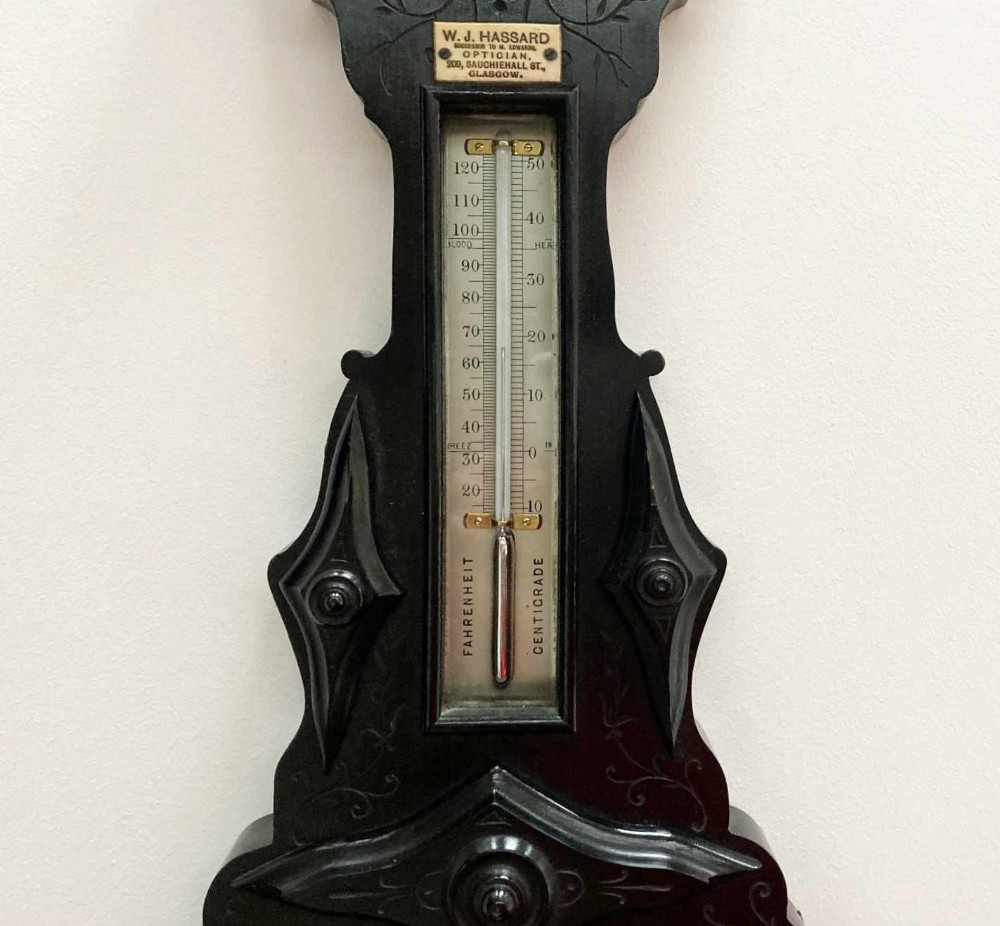
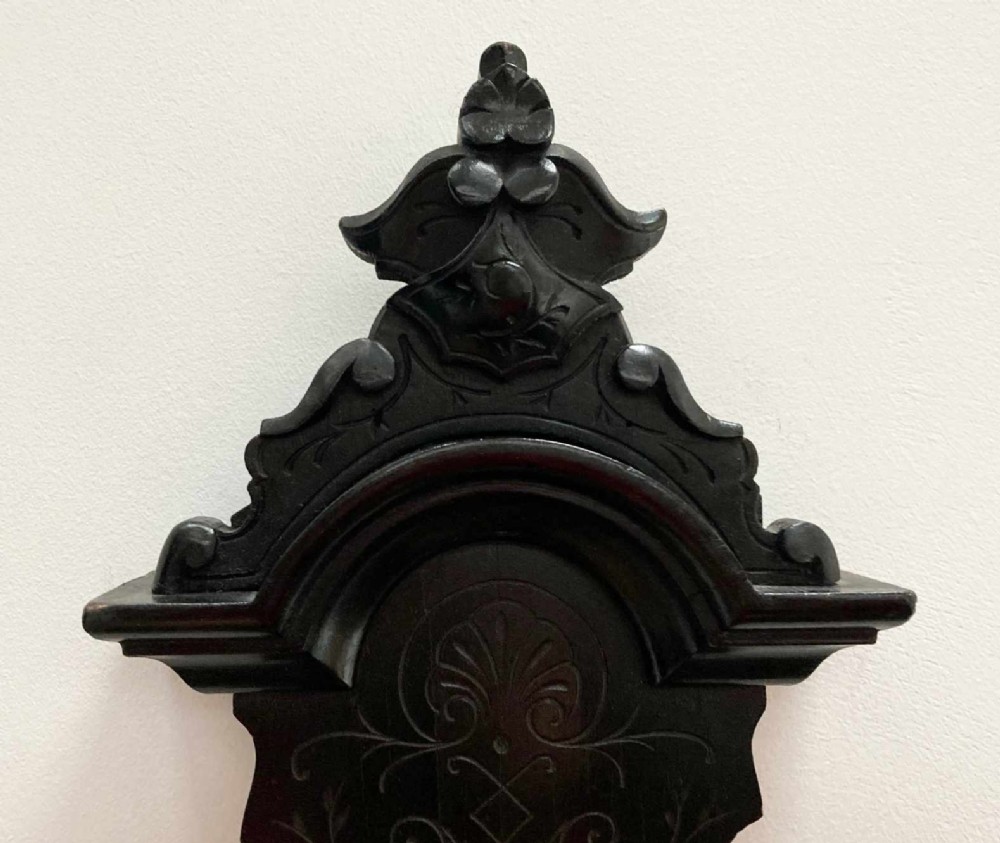
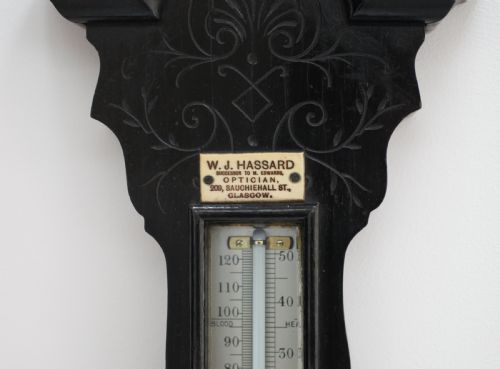
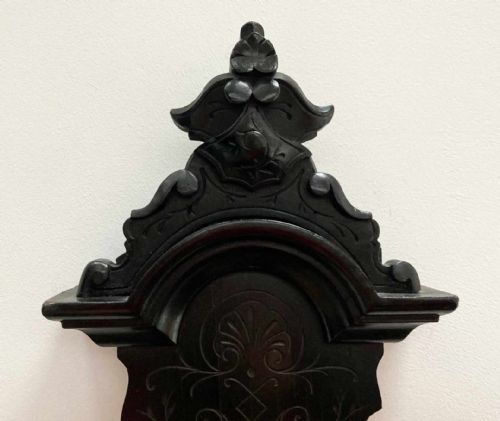
The neck of the barometer holds a Fahrenheit and Centigrade thermometer with silvered scale and is completed at the top with a domed and carved pediment.
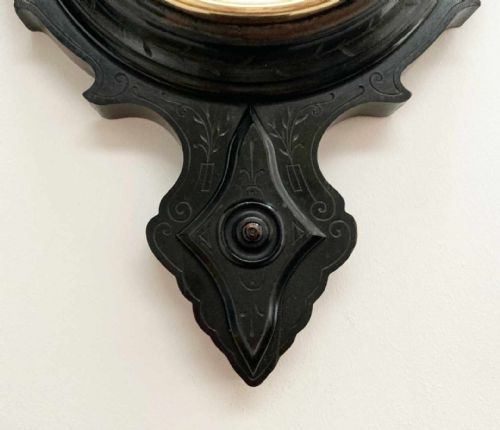
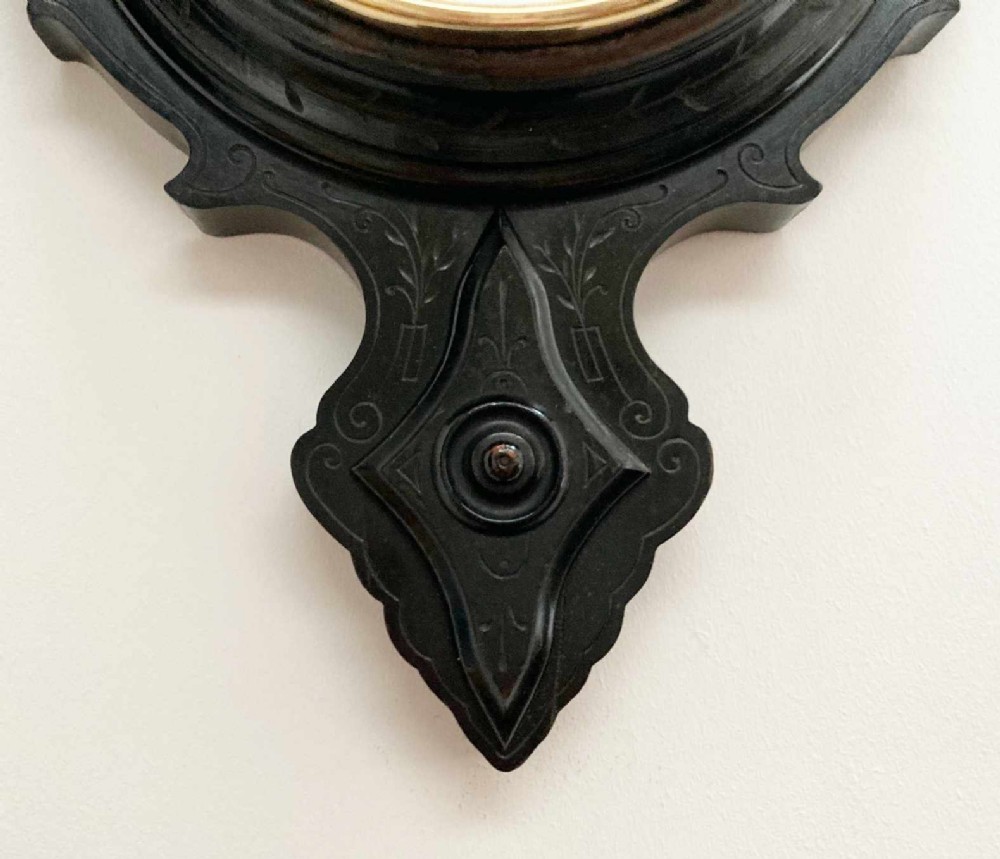
Besides its unusual aesthetic period design, this barometer is highly unsual in that it has three separate resellers and a manufacturer’s mark evident, all of which tell an interesting story.
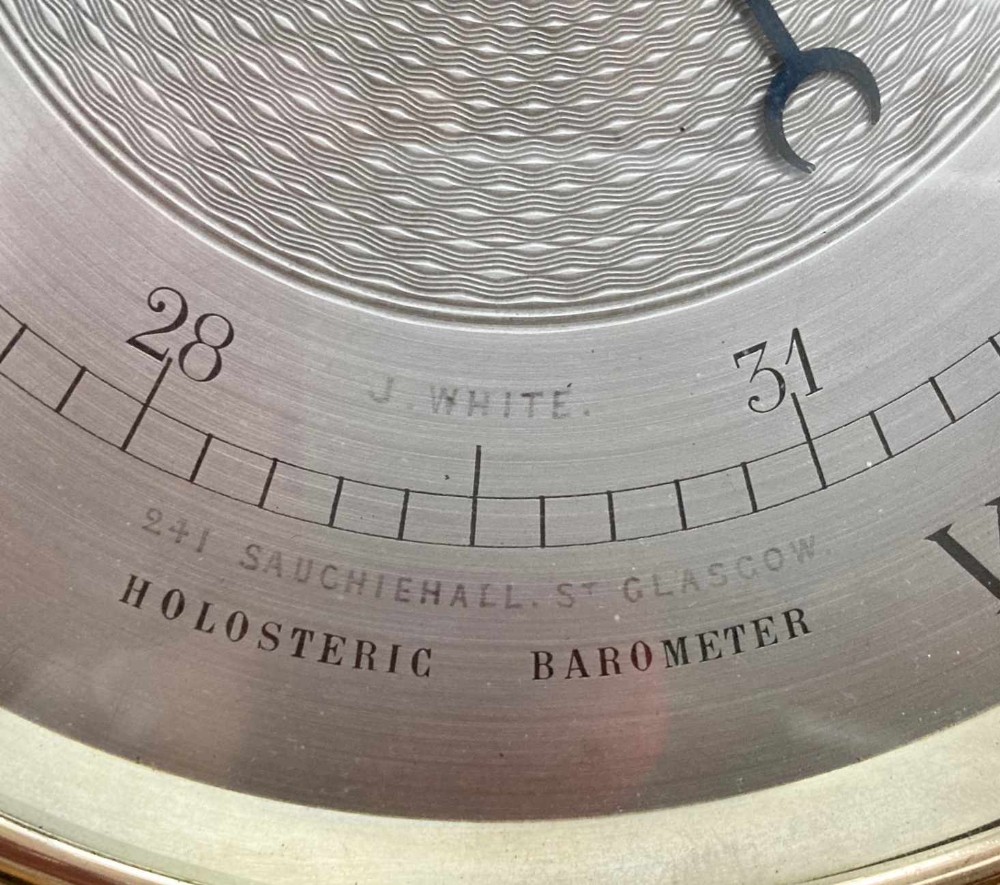
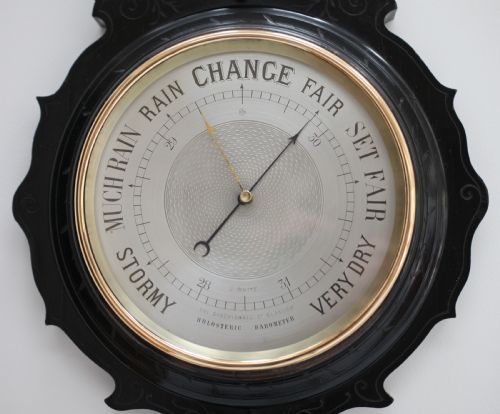
A huge proportion of British sold aneroid barometers during the second half of the Nineteenth Century were actually manufactured in France, and the Parisian firm, Pertuis, Naudet, Hulot & Bourgeois (PNHB) were one of the largest exporters to the UK. The French company’s trademark can be seen on both the silvered dial face and the reverse of the barometer casing.
The company was formed in 1860 and their British success may be related to their exhibiting at the 1862 London Exhibition. The original Vidi patent for the aneroid mechanism had expired in 1855 and they had by this time mastered the production methods and specialist techniques required to fulfil the European market. Aneroid barometers were in high demand in the late Nineteenth Century so it was simpler and quicker for most British retailers to simply buy them in for resale. Naudet is perhaps the only remaining company that exists today that continue to produce them.
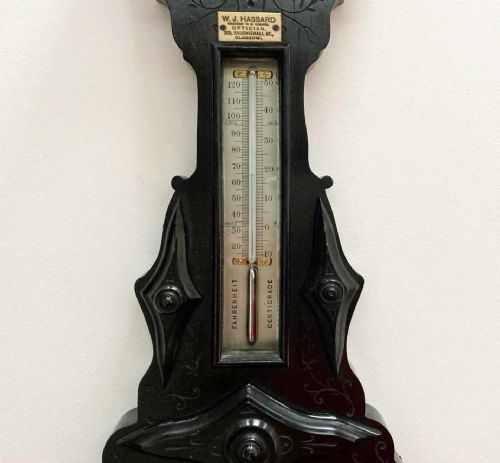
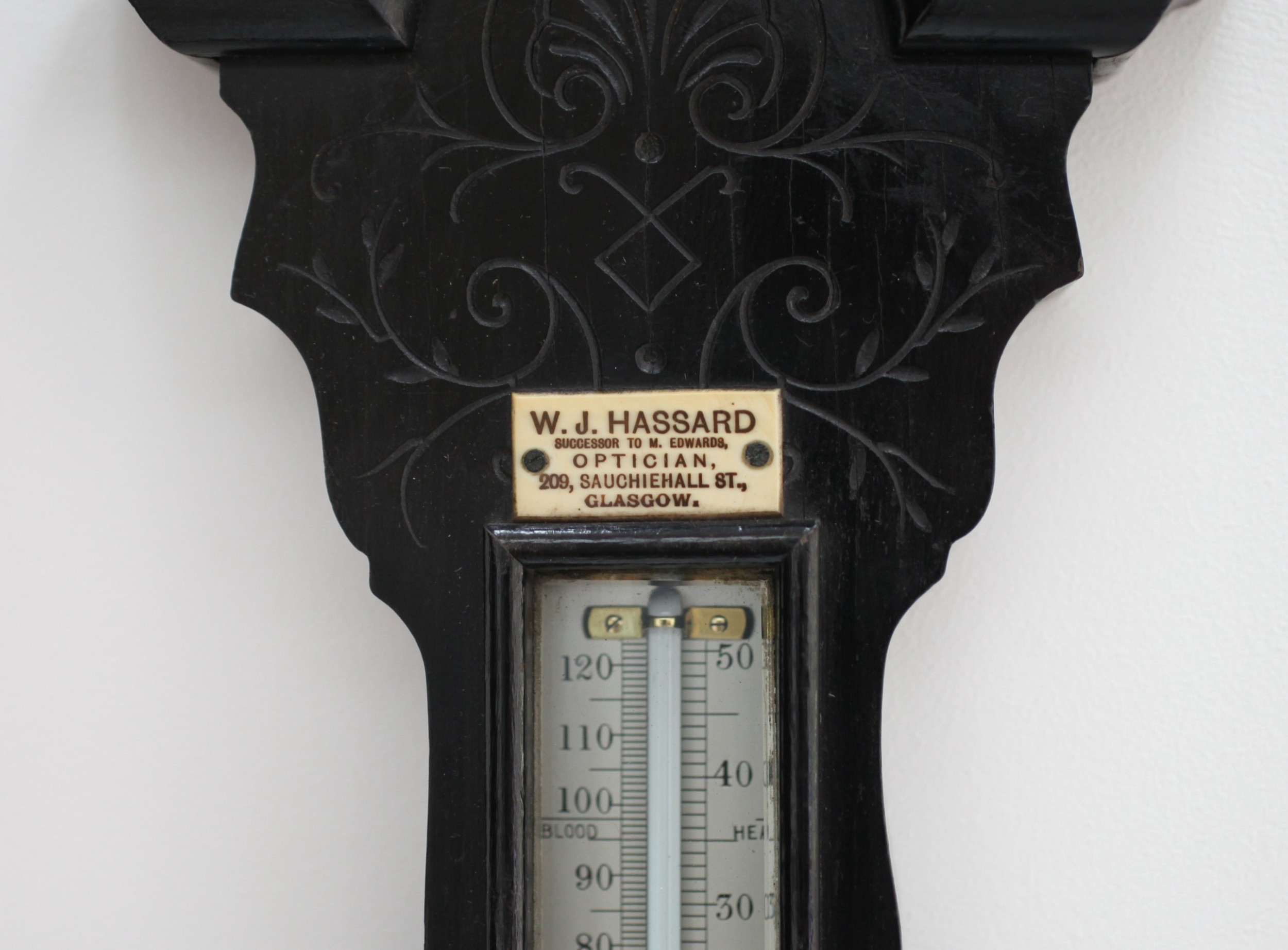
To the face of the barometer dial, you may also see the name J White, 241 Sauciehall Street, Glasgow which is somewhat blurred due to “intentional” contemporary over-silvering which has since worn back. Above the thermometer is also attached an ivorine plaque which states, “WJ Hassard successor to M.Edwards, Optician, 209 Sauchiehall Street Glasgow”.
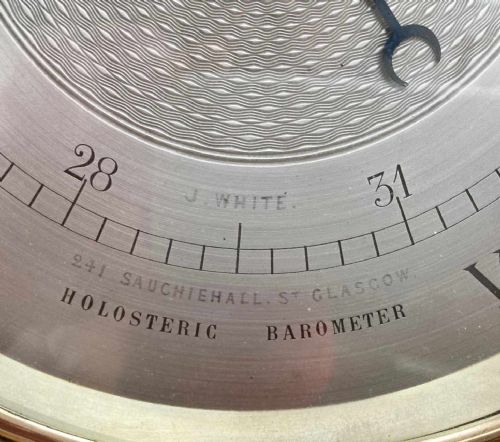
In unravelling the mystery of names it is firstly obvious that the barometer was originally commissioned for the company of James White due to the engraving on the dial.
James White was a highly respected Glaswegian instrument maker who gained fame for his close working relationship with Professor William Thomson (later Lord Kelvin) of Glasgow University. Under Thomson’s direction, White produced nearly all of the equipment for Thomson’s laboratory at the University. The following twenty five years saw White form a short-lived partnership with John Barr (1857 – 1860) with a declaration of bankruptcy shortly after in 1861 but by the 1870’s his long partnership with Thomson was maintained and he continued to produce instruments of Thomson’s design which included the production of accurate compasses for metal ships and sounding machinery associated with the laying of the first trans-Atlantic cables. Thomson was himself a director of the Atlantic Telegraph Company and took an active part in the attempts, he was knighted in 1866 by Queen Victoria for his work in engineering and physics, becoming Baron Kelvin of Largs
James White died in 1884 but the company continued under the stewardship of Matthew Edwards and David Reid and new workshops were constructed in Cambridge Street to support the manufacture of Thomson’s compasses and supply to the Admiralty. It continued under White’s name until 1900 when the company was finally bought out by Thomson (Lord Kelvin) to become Kelvin and James White Ltd. Laterly it became Kelvin & Hughes and then Kelvin Bottomley & Baird.
Matthew Edwards was an Irishman by birth and although little is known of his early career, he was certainly working for White by 1881 at 241 Sauchiehall Street through mention in the Glasgow street directory. From White’s death in 1884, Matthew Edwards continued to run the business with David Reid but the partnership was finally dissolved in 189
Jason Clarke Antiques has dated this piece to the 1880s.
You can view the stock and full dealer information on the Jason Clarke Antiques Profile Page

Scottish Aesthetic Movement Aneroid Wheel Barometer by James White of Glasgow