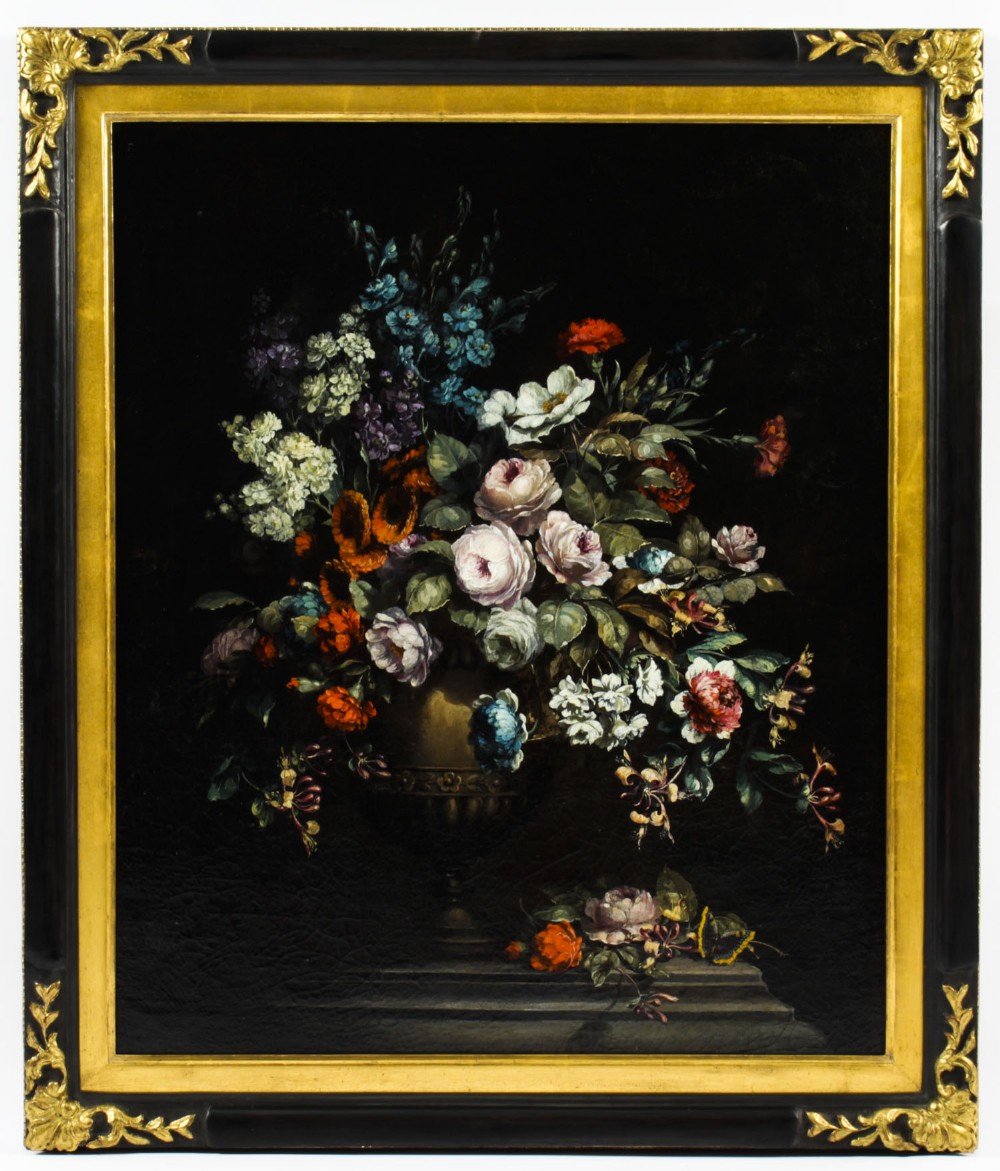
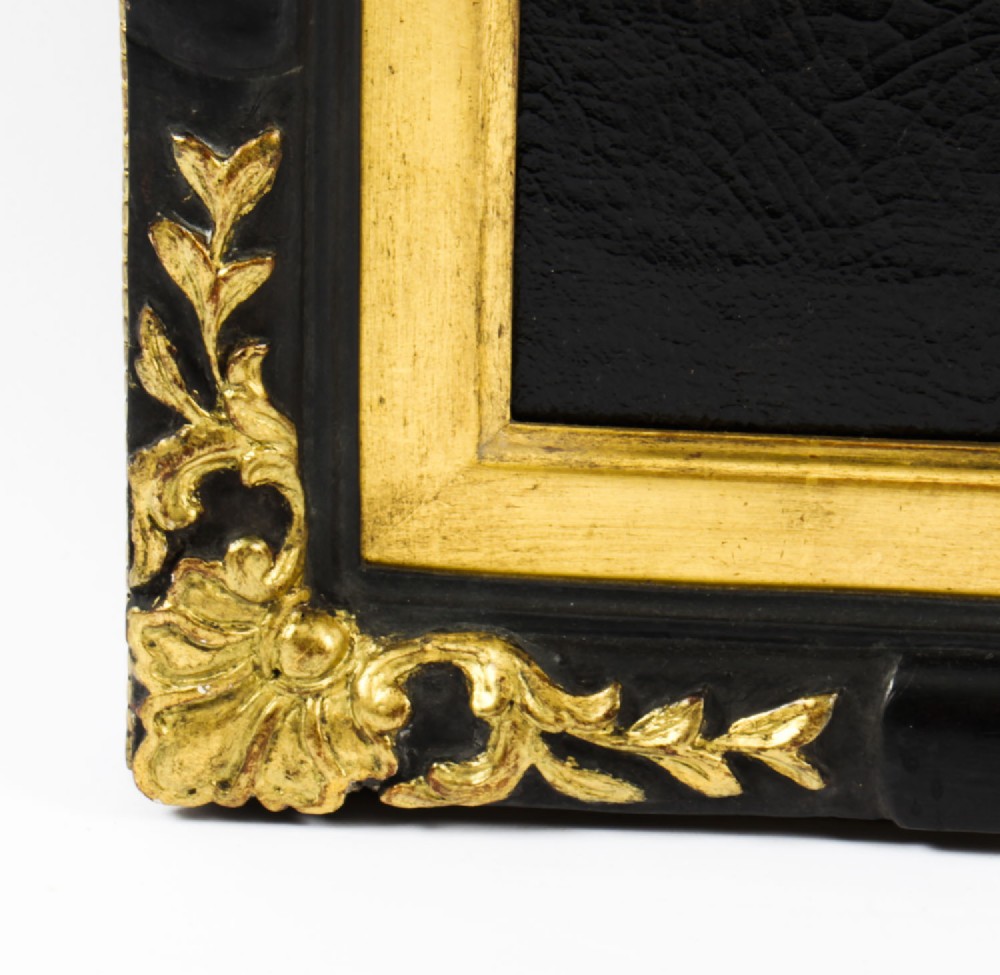
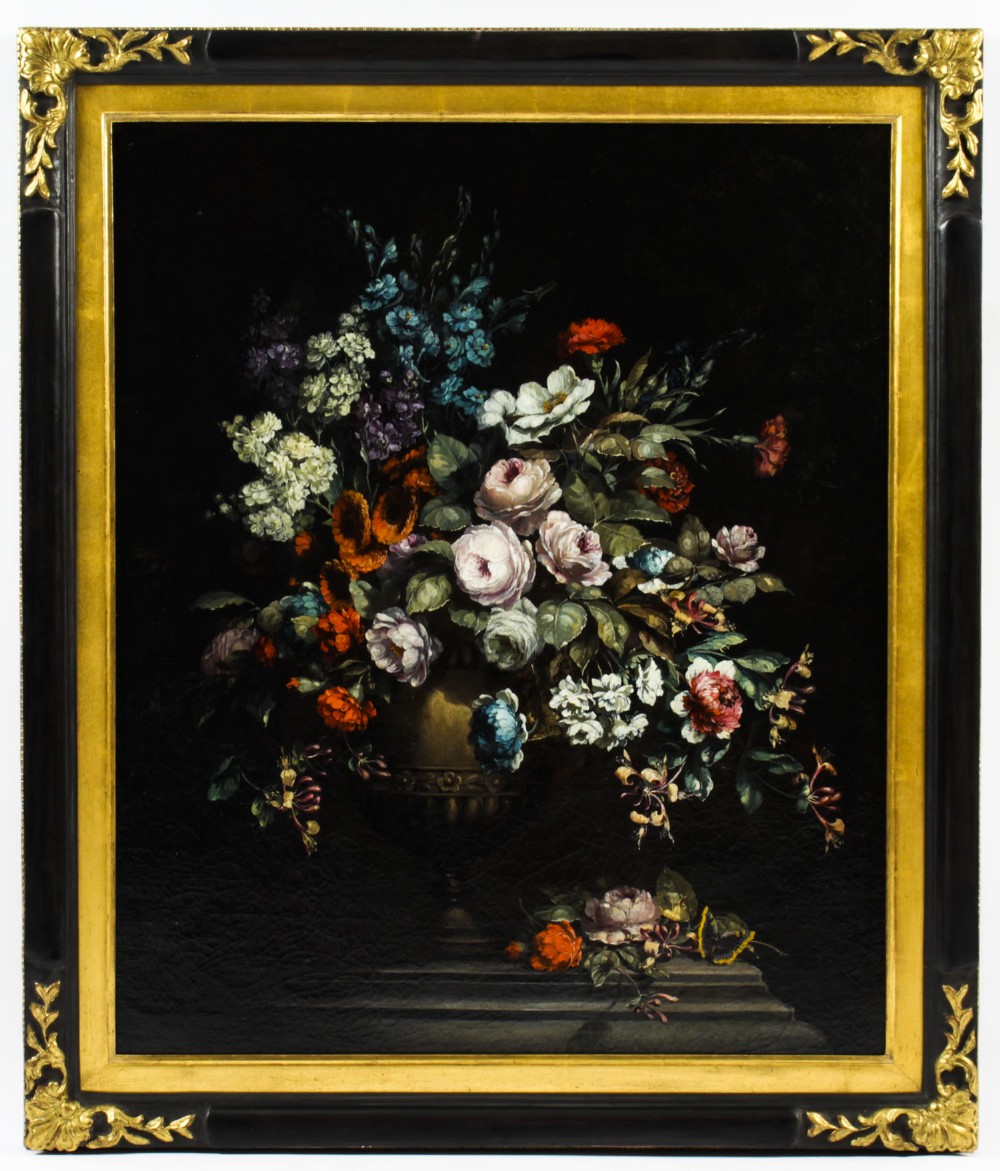
This is a magnificent antique Dutch School floral still life oil on canvas painting with a stunning gilt gesso frame, late 19th century in date.
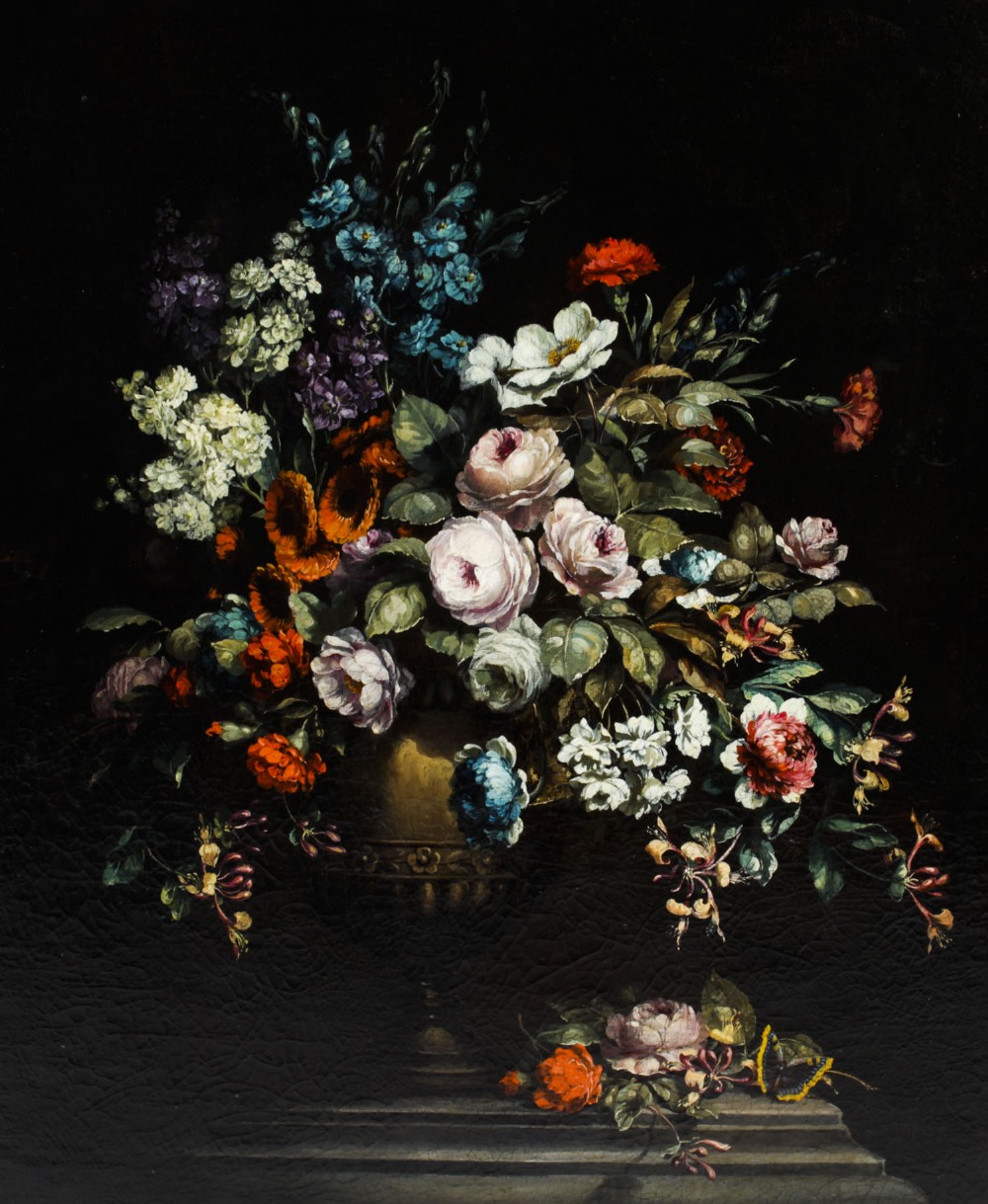
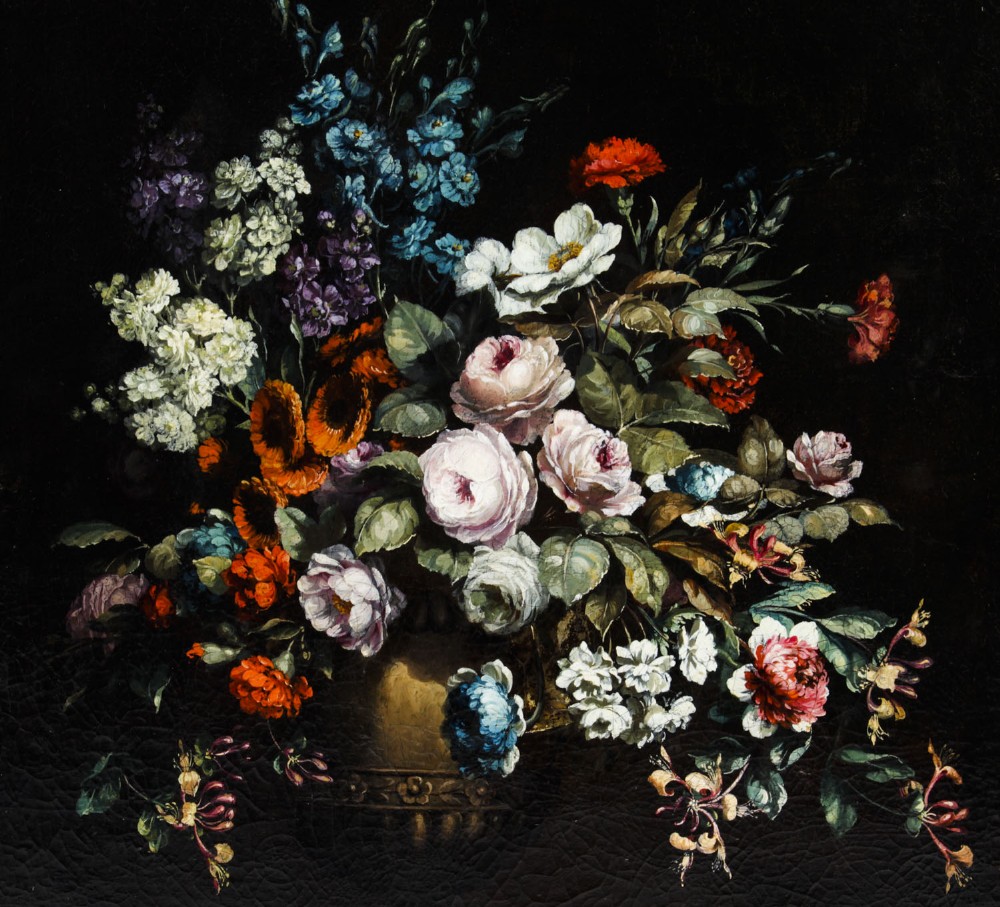
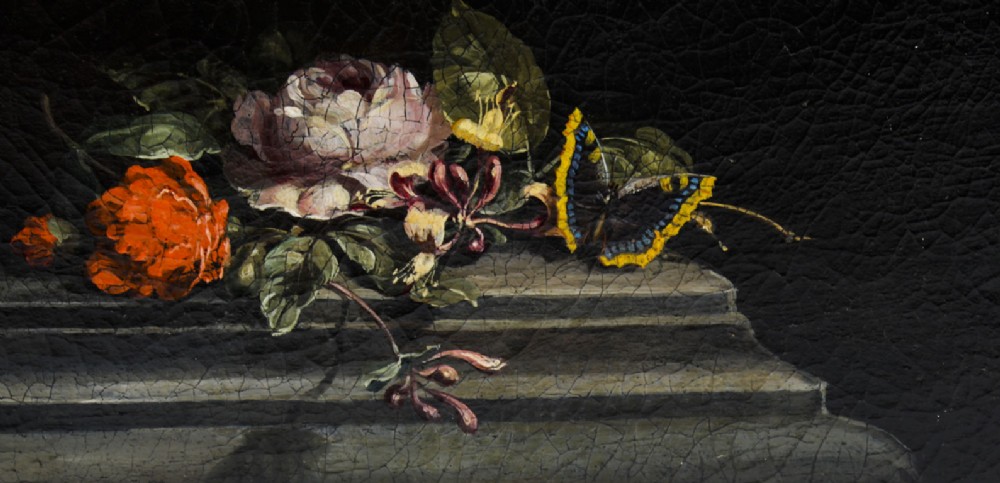
This splendid painting is rectangular in shape and features brightly illuminated pastel-tinted roses and bi-coloured Carnations and Honeysuckle arranged in a gadrooned classical vase on a stone ledge against a dark background. Indistinctly signed to the lower right.
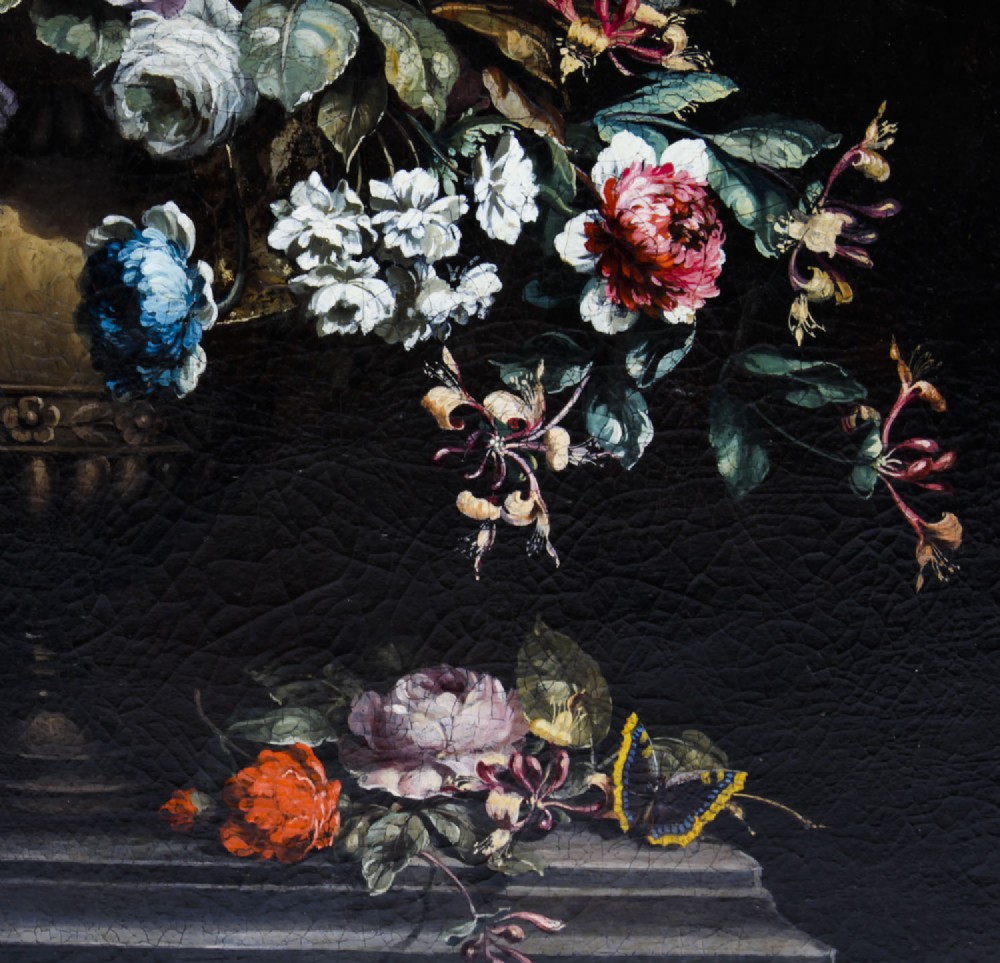
Great attention has been paid to individual elements in the bouquet. Indeed each petal has been painted with diligent conscientious precision. Around the bouquet, there are also three distinctive butterflies of different size and palette colours.
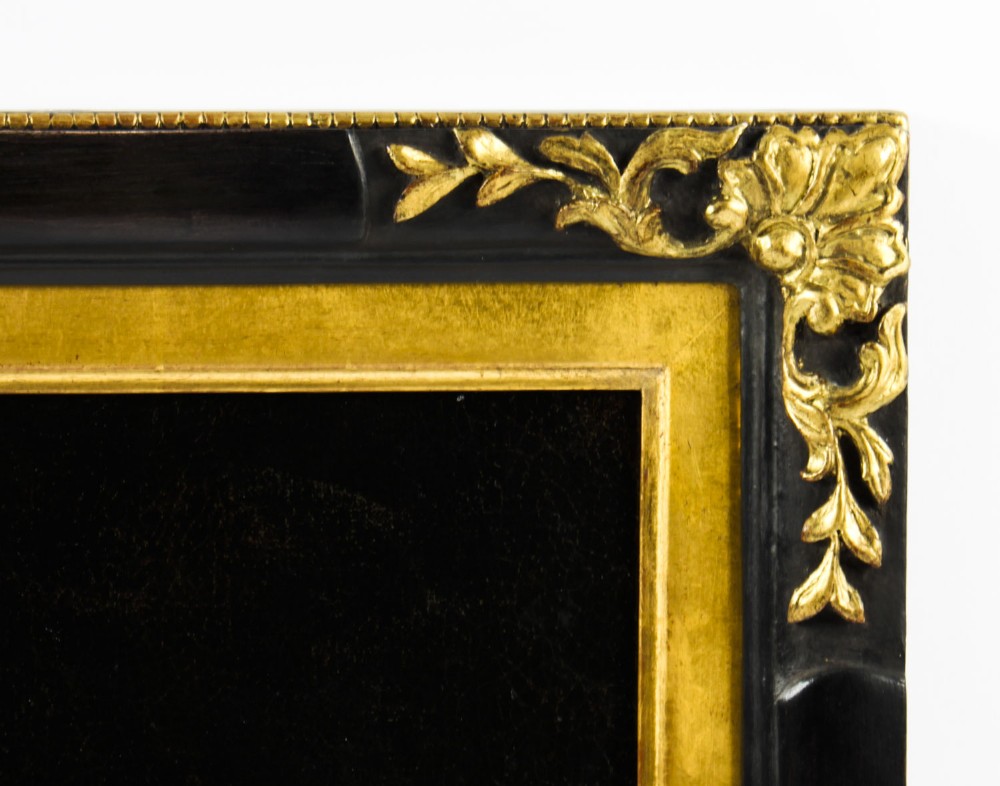
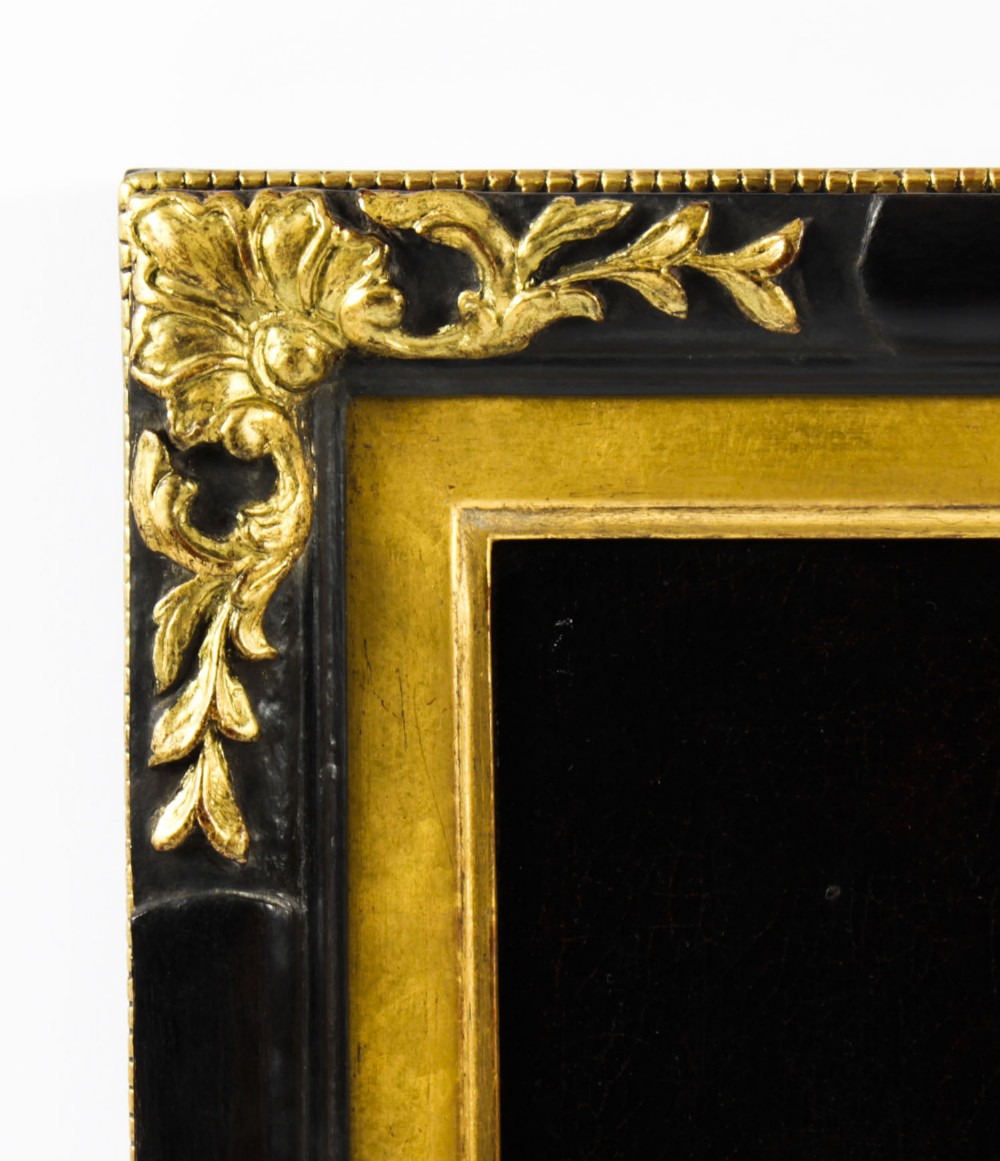
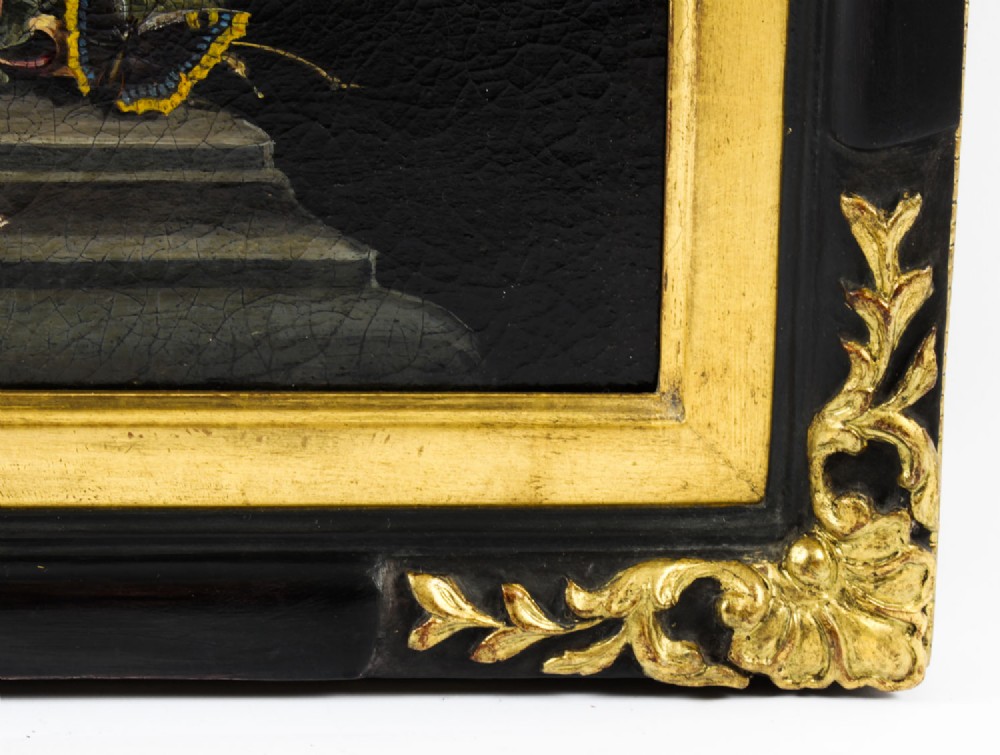
It is housed in its magnificent ebonised and gilt frame.
Add this splendid antique Dutch painting to a very special wall in your home.
Condition:
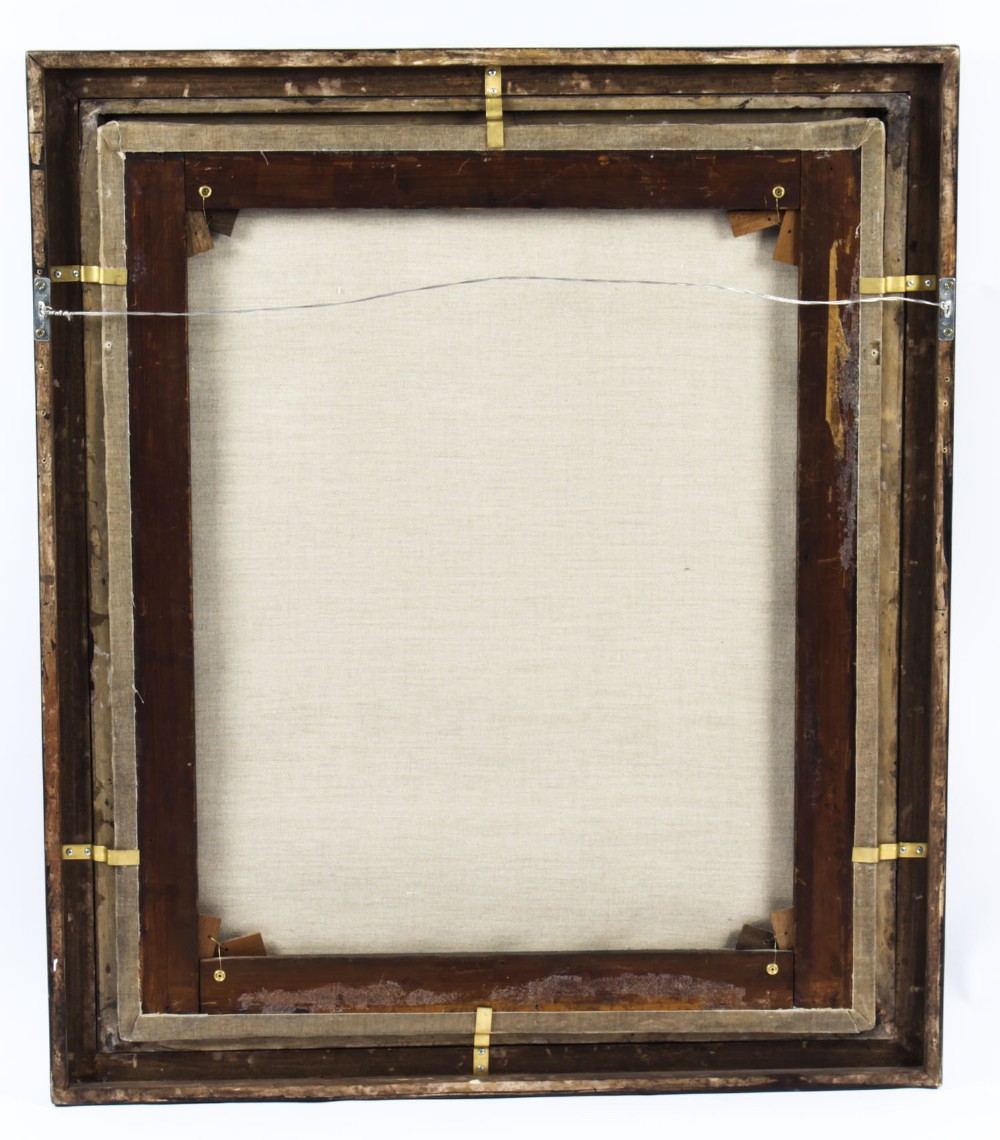
In excellent condition the painting and frame having been beautifully cleaned in our workshops, please see photos for confirmation.
Dimensions in cm:
Height 87 x Width 74 x Depth 5
Height 73 x Width 60
Dimensions in inches:
Height 34.3 x Width 29.1 x Depth 2.0
Height 28.7 x Width 23.6
A still life is a work of art depicting mostly inanimate subject matter, typically commonplace objects which may be either natural food, flowers, dead animals, plants, or man-made drinking glasses, books, vases, jewelry.
With origins in the Middle Ages and Ancient Graeco-Roman art, still-life painting emerged as a distinct genre and professional specialisation in Western painting by the late 16th century, and has remained significant since then. A still life form gives the artist more freedom in the arrangement of elements within a composition than do paintings of other types of subjects such as landscape or portraiture.
Still life, as a particular genre, began with Netherlandish painting of the 16th and 17th centuries. Early still-life paintings, particularly before 1700, often contained religious and allegorical symbolism relating to the objects depicted. Some modern still life work breaks the two dimensional barrier and employs three dimensional mixed media, and uses found objects, photography, computer graphics, as well as video and sound.
The term includes the painting of dead animals, especially game. Live ones are considered animal art, although in practice they were often painted from dead models. The still life category also shares commonalities with zoological and especially botanical illustration, where there has been considerable overlap among artists.
Generally a still life includes a fully depicted background, and puts aesthetic rather than illustrative concerns as primary.
Our reference: A1633