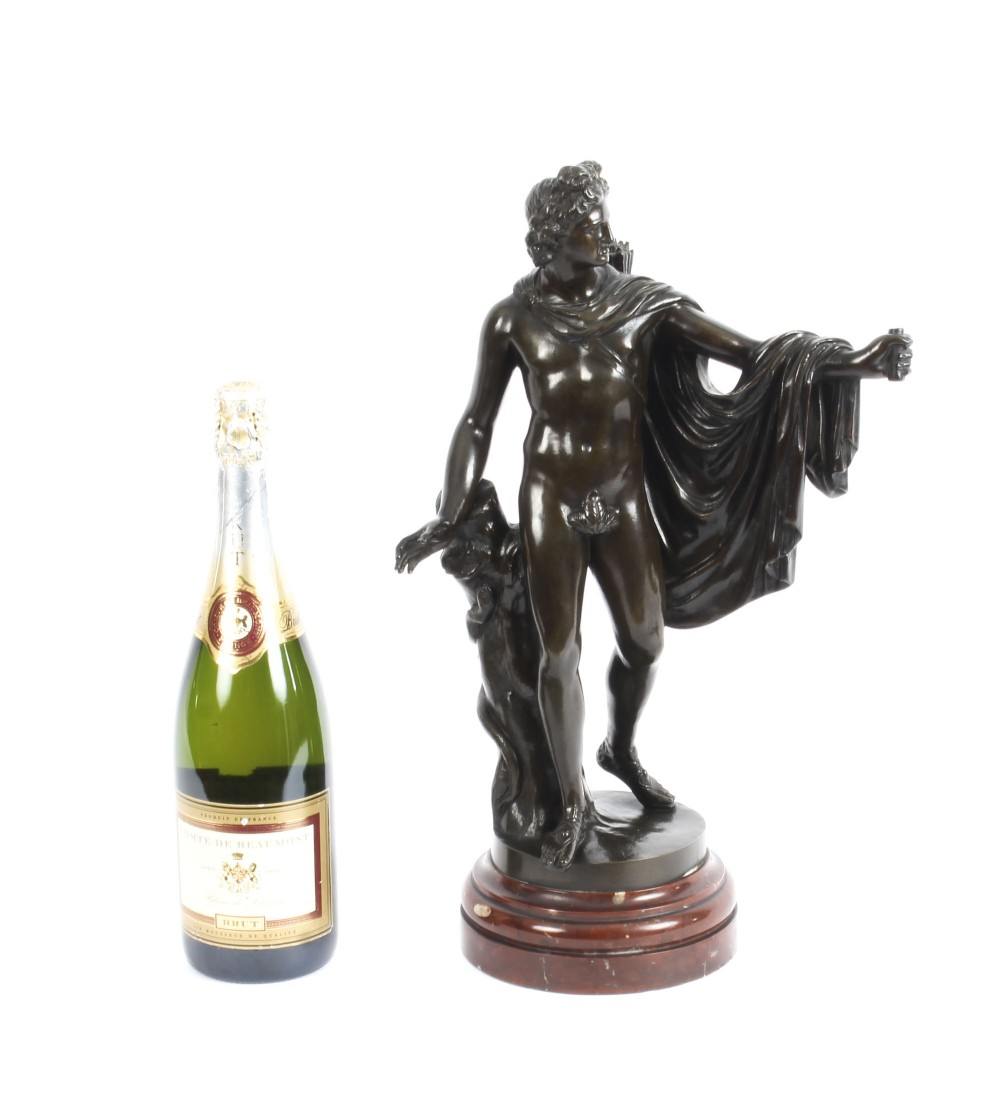
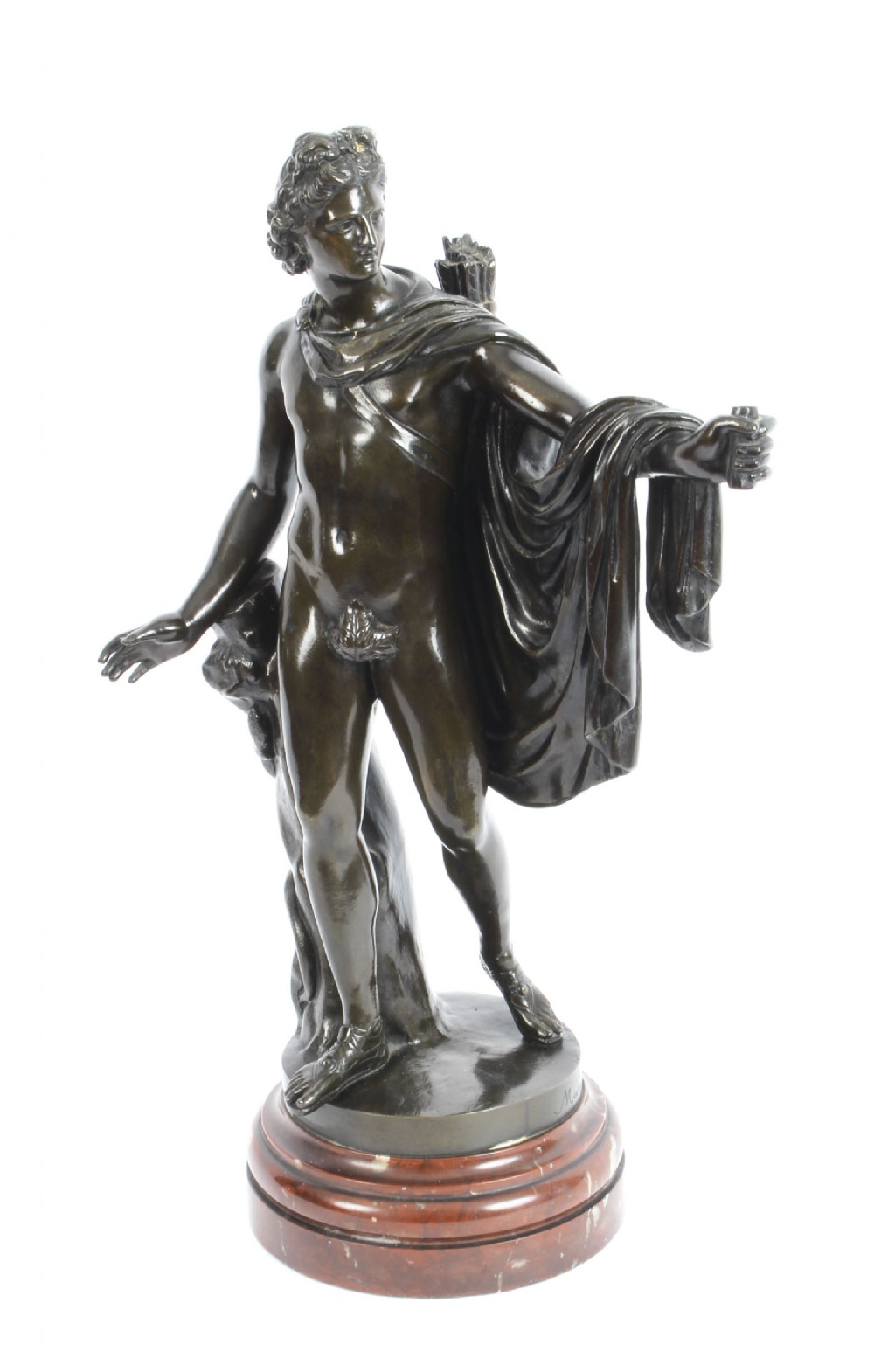
Regent Antiques has dated this piece to the 19th Century.
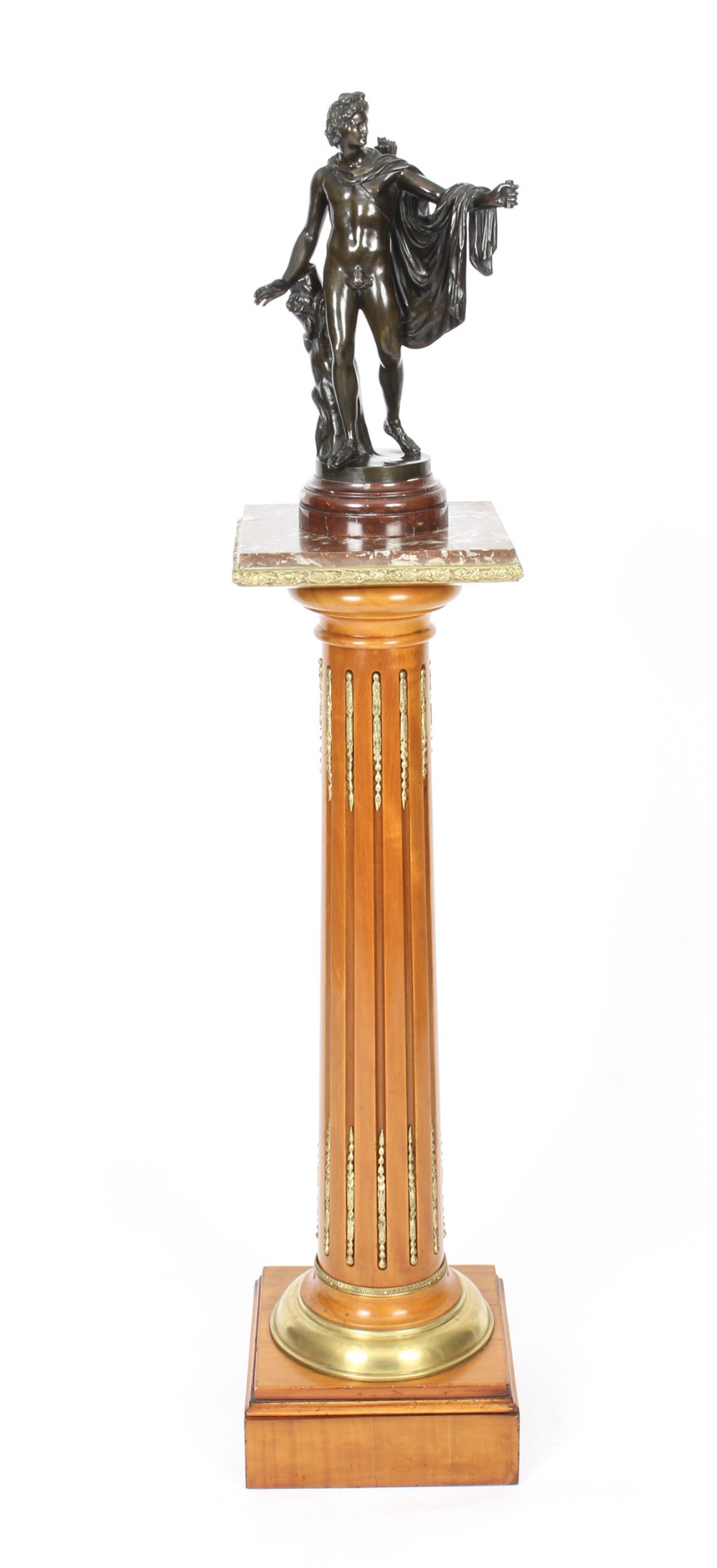
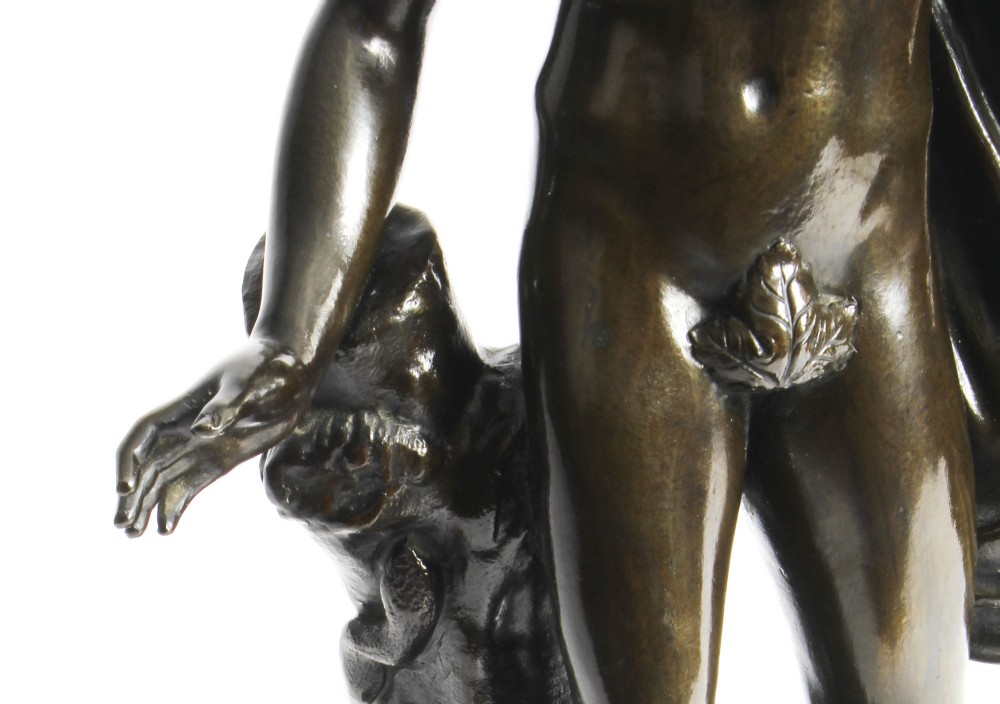
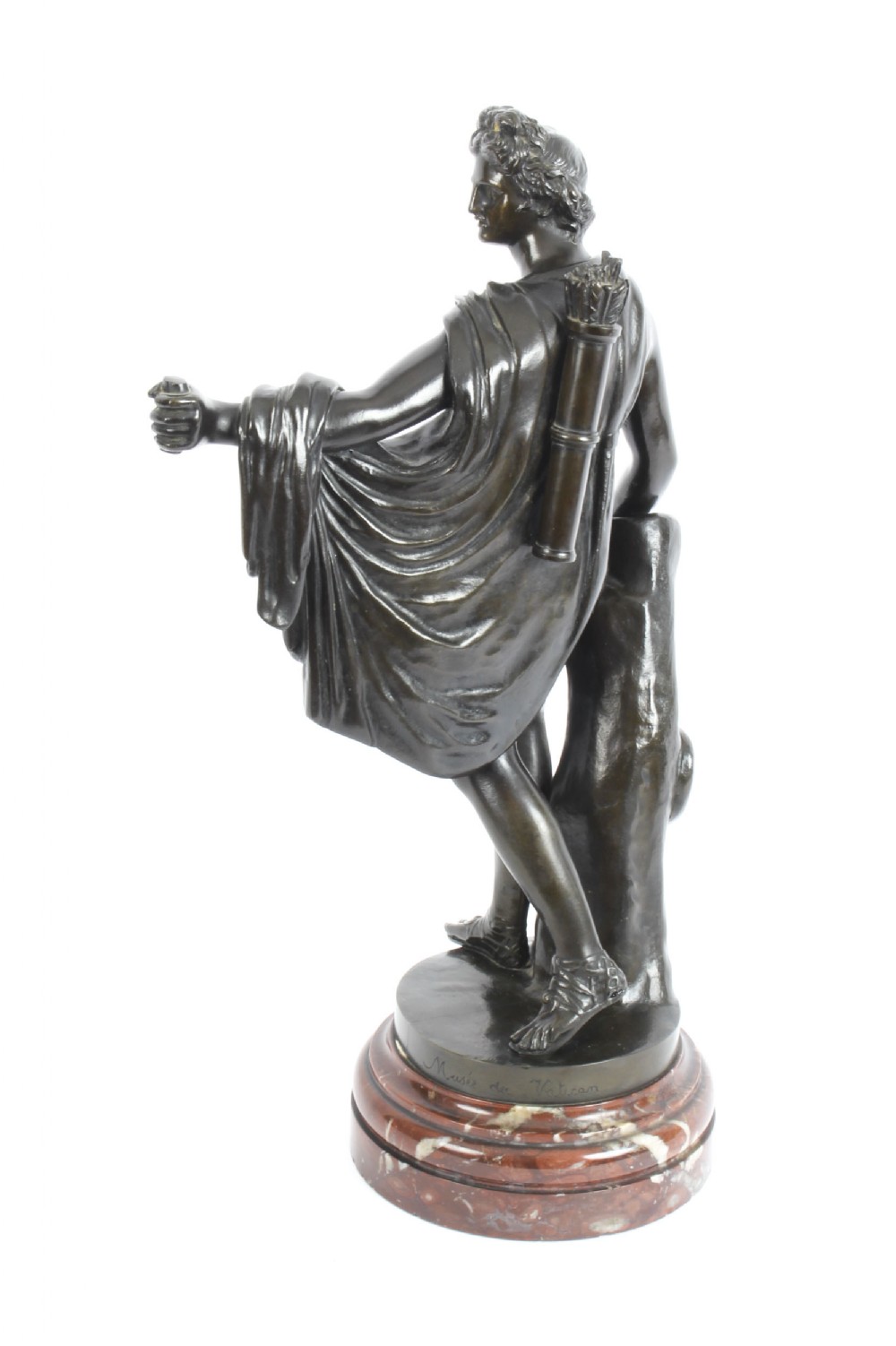
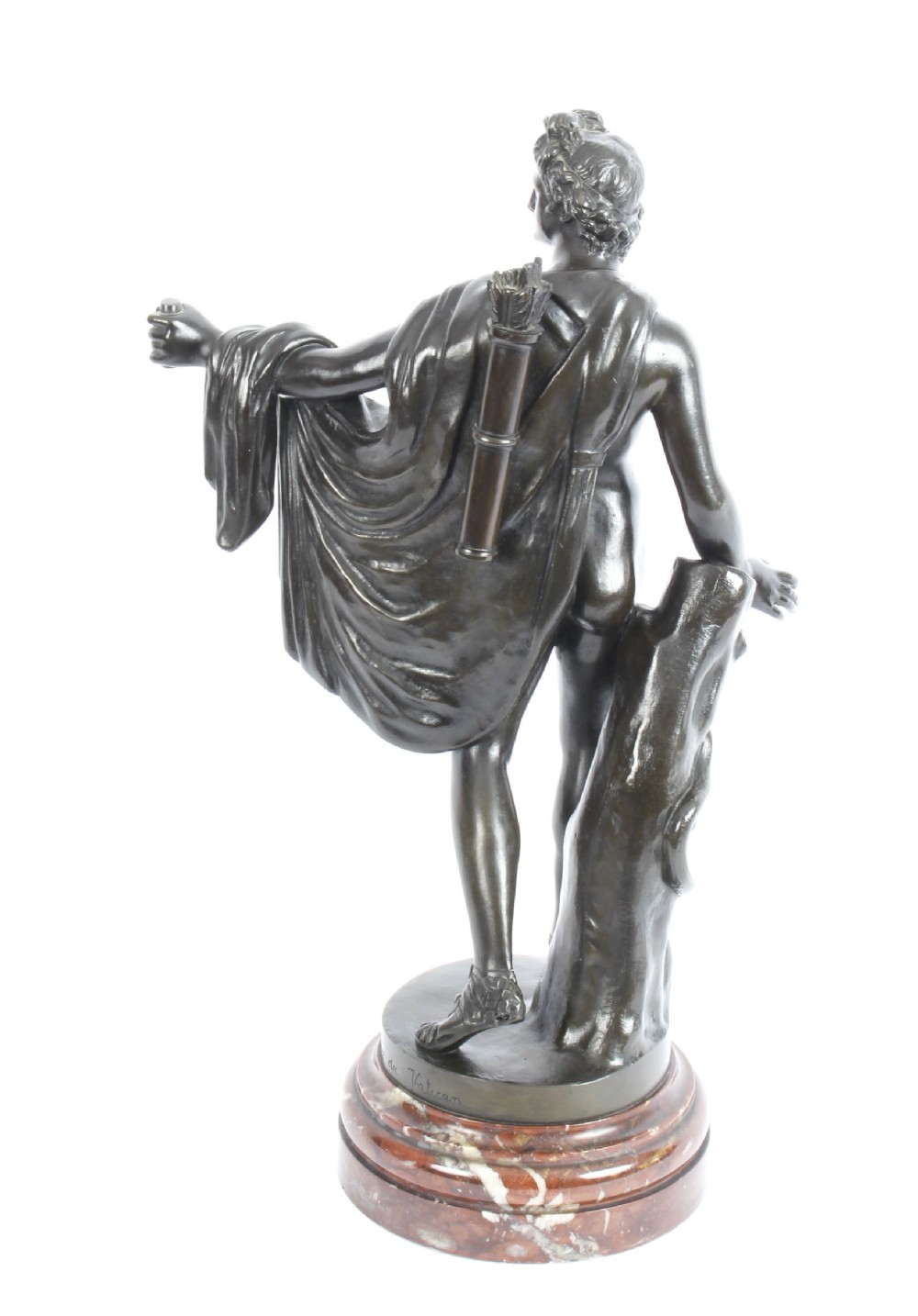
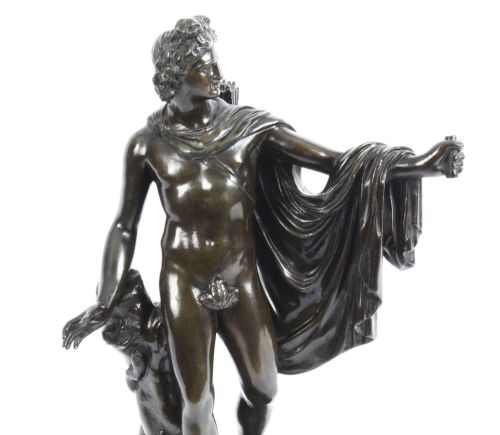
The nude figure is standing tall with his right arm resting on a tree and his left arm is outstretched.
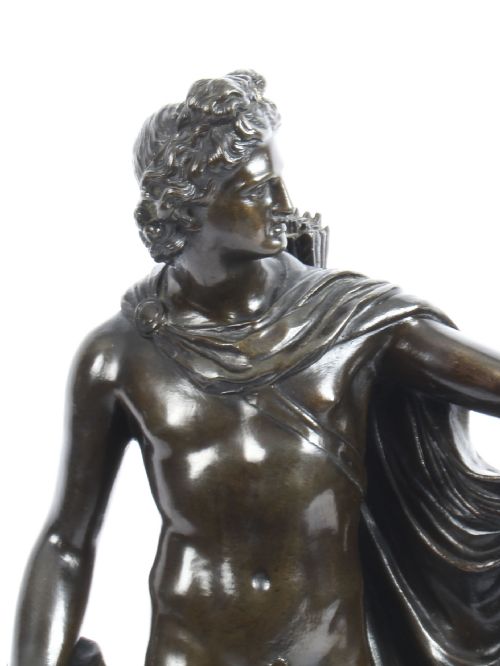
Slung over Apollo’s shoulders is his quiver held in place by a strap. As exactly in the original Apollo Belvedere, the God here appears in magnificent form and physique, and he is shown just moments after releasing his arrow. Apollo stands “contrapposto”, with one leg remaining rigid while the other is relaxed.
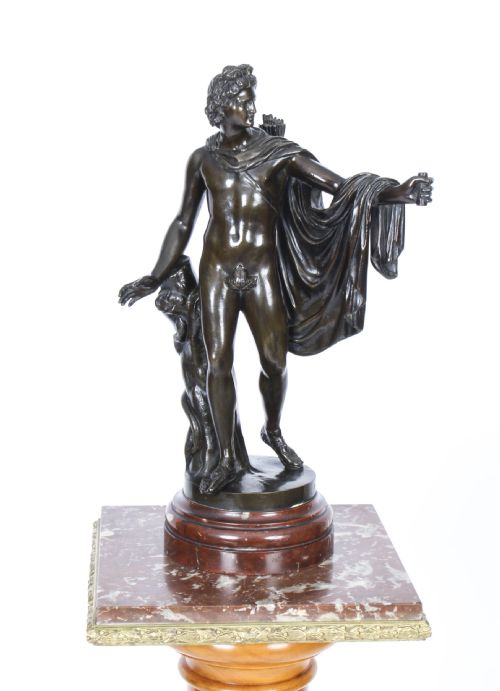
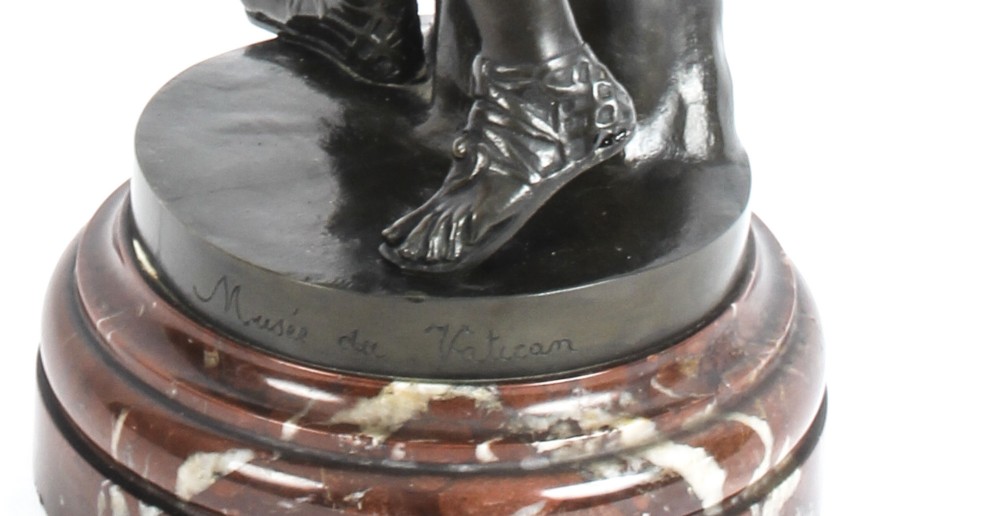
It stands on a beautiful rouge marble plinth and the base is engraved 'Musee Du Vatican'.
This high-quality hot cast solid bronze was produced using the traditional "lost wax" process, otherwise known as the "cire perdue" method.
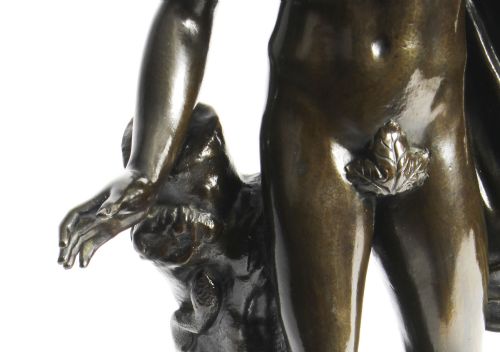
This is a splendid antique bronze sculpture and it will no doubt become the centrepiece of your collection.
The attention to detail here is remarkable and this bronze is sure to receive the maximum amount of attention wherever it is placed.
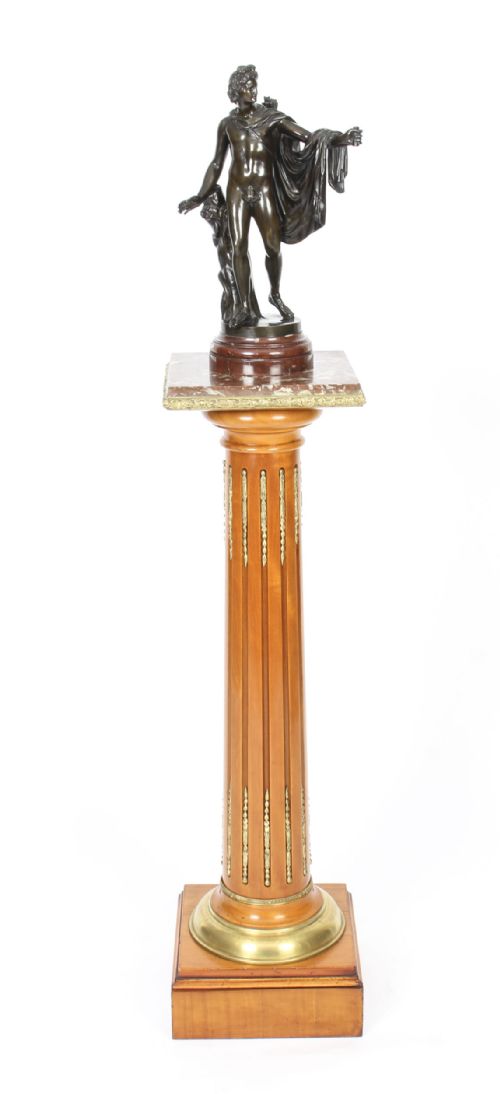
The pedestal shown in the photographs is not included in the price but can be purchased if required.
Condition:
In excellent condition, please see photos for confirmation.
Dimensions in cm:
Height 43 x Width 27 x Depth 15
Weight 8.55 kg
Dimensions in inches:
Height 16.9 x Width 10.6 x Depth 5.9
Weight 18.8 lbs
Apollo has been variously recognised as a god of light and the sun, truth prophecy, healing, music, poetry, and more. Apollo is the son of Zeus and Leto and has a twin sister, the huntress - Artemis. Apart from his heroic courage dashingly handsome Apollo was also known for number of love affairs with both nymphs and mortal women.
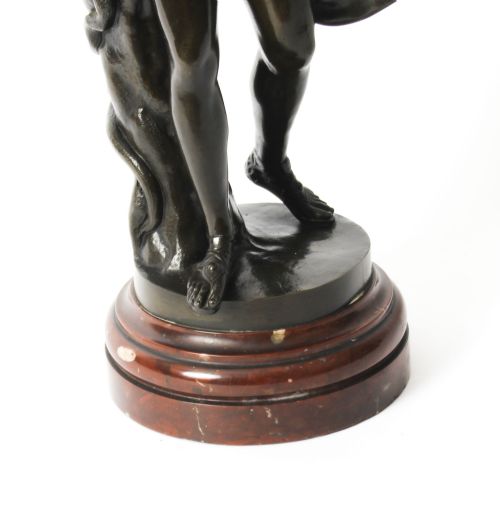
The Apollo Belvedere (also called the Pythian Apollo or Apollo of the Belvedere) is a celebrated marble sculpture from Classical Antiquity.
The Apollo is now thought to be an original Roman re-creation of Hadrianic date (ca. 120–140). The distinctively Roman foot-wear is one reason scholars believe it is not a copy of an original Greek statue. It was rediscovered in central Italy in the late 15th century during the Italian Renaissance and was placed on semi-public display in the Vatican Palace in 1511, where it remains. It is now in the Cortile del Belvedere of the Pio-Clementine Museum of the Vatican Museums complex.
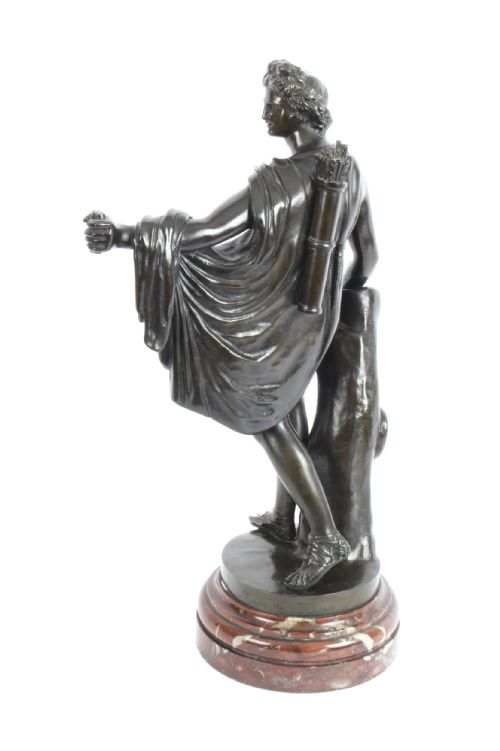
From the mid-18th century, it was considered the greatest ancient sculpture by ardent neoclassicists, and for centuries it epitomized the ideals of aesthetic perfection for Europeans and westernized parts of the world.
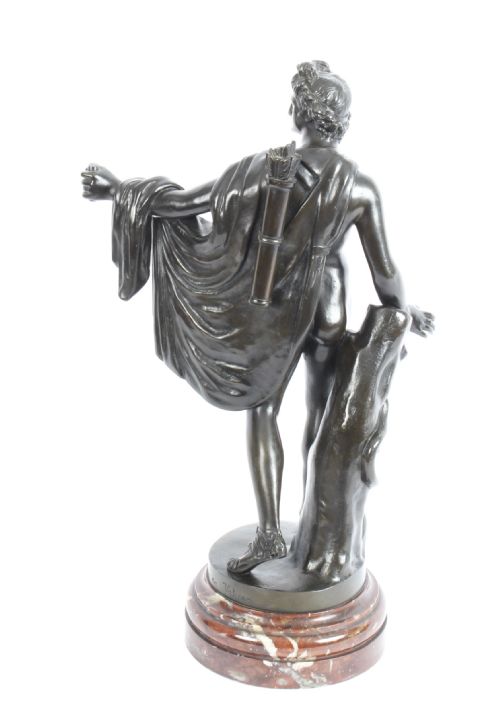
Lost Wax Method
sometimes called by the French name of cire perdue or the Latin, cera perduta is the process by which a bronze or brass is cast from an artists sculpture.
In industrial uses, the modern process is called investment casting. An ancient practice, the process today varies from foundry to foundry, but the steps which are usually used in casting small bronze sculptures in a modern bronze foundry are generally quite standardised.
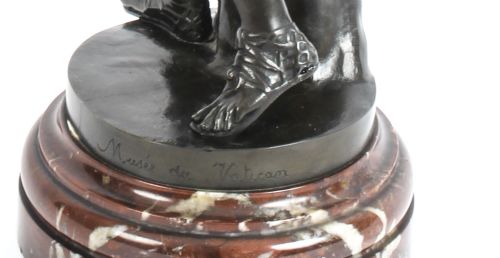
Contrapposto is an Italian term that means counterpoise. It is used in the visual arts to describe a human figure standing with most of its weight on one foot so that its shoulders and arms twist off-axis from the hips and legs in the axial plane.
Our reference: 09810
Regent Antiques has dated this piece to the 19th Century.
We specialise in english and continental furniture, silver, porcelain and decorative items.
You can view the stock and full dealer information on the Regent Antiques Profile Page
Regent Antiques is a registered member of LAPADA CINOA
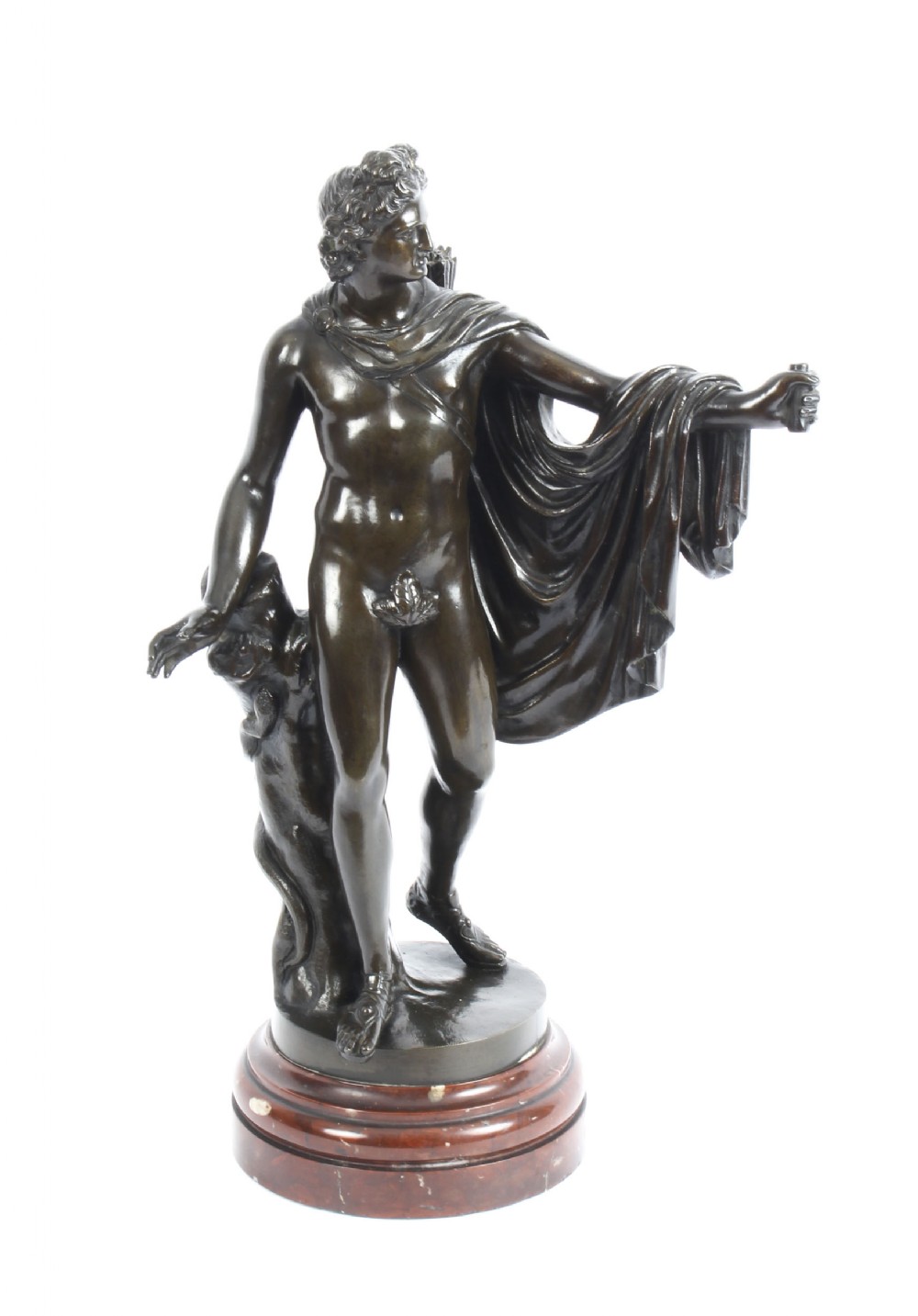
Antique Victorian Bronze Sculpture of Greek God Apollo 19th Century