Skippings Fine Arts has dated this piece to the 1960s.
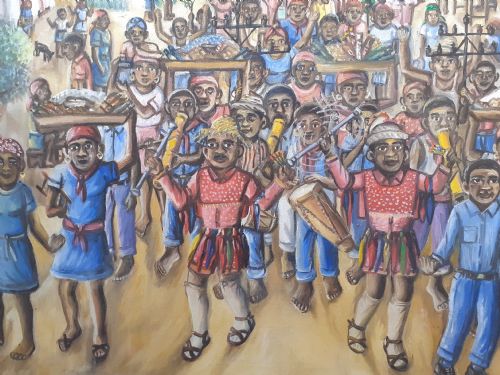
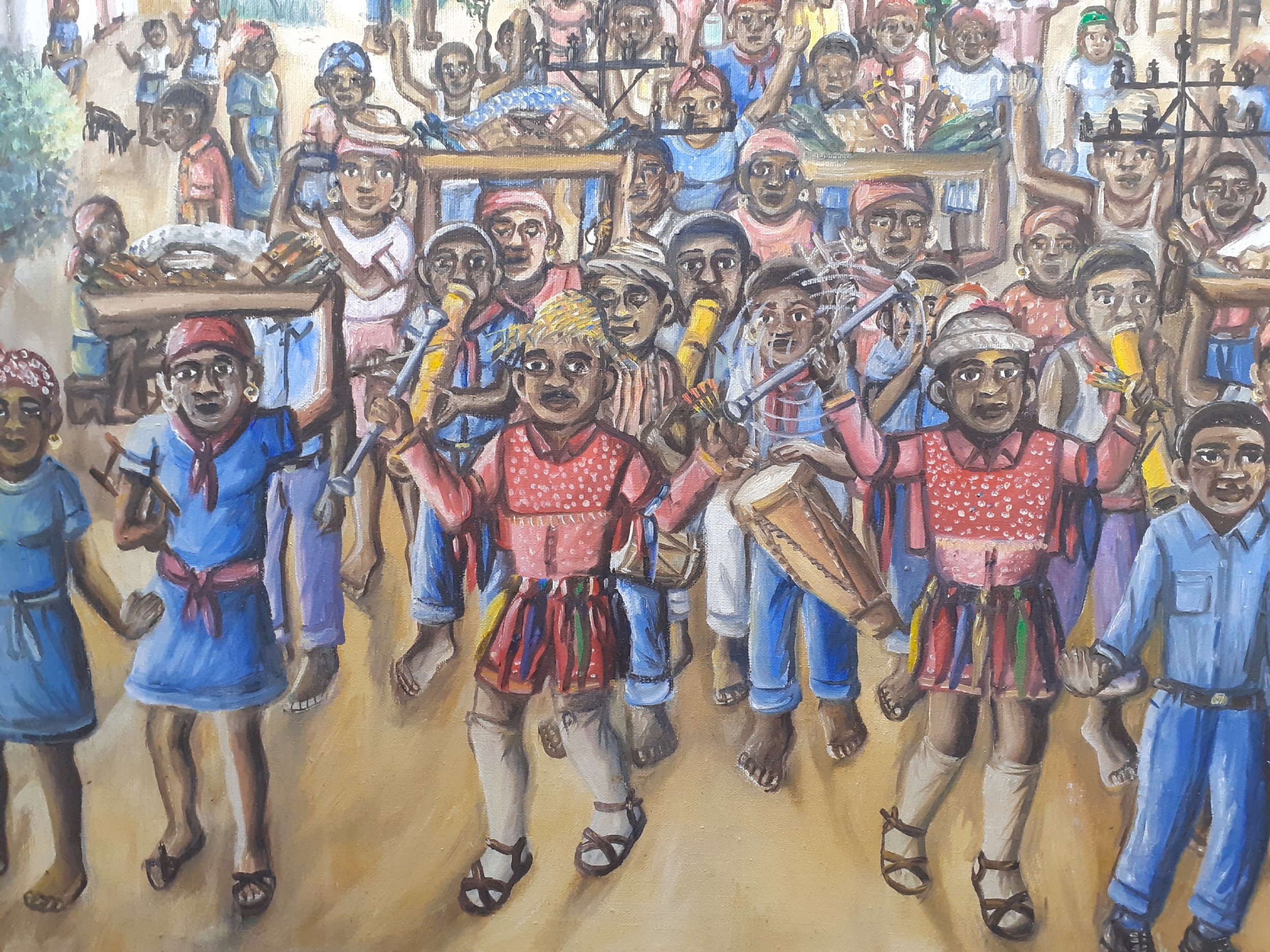
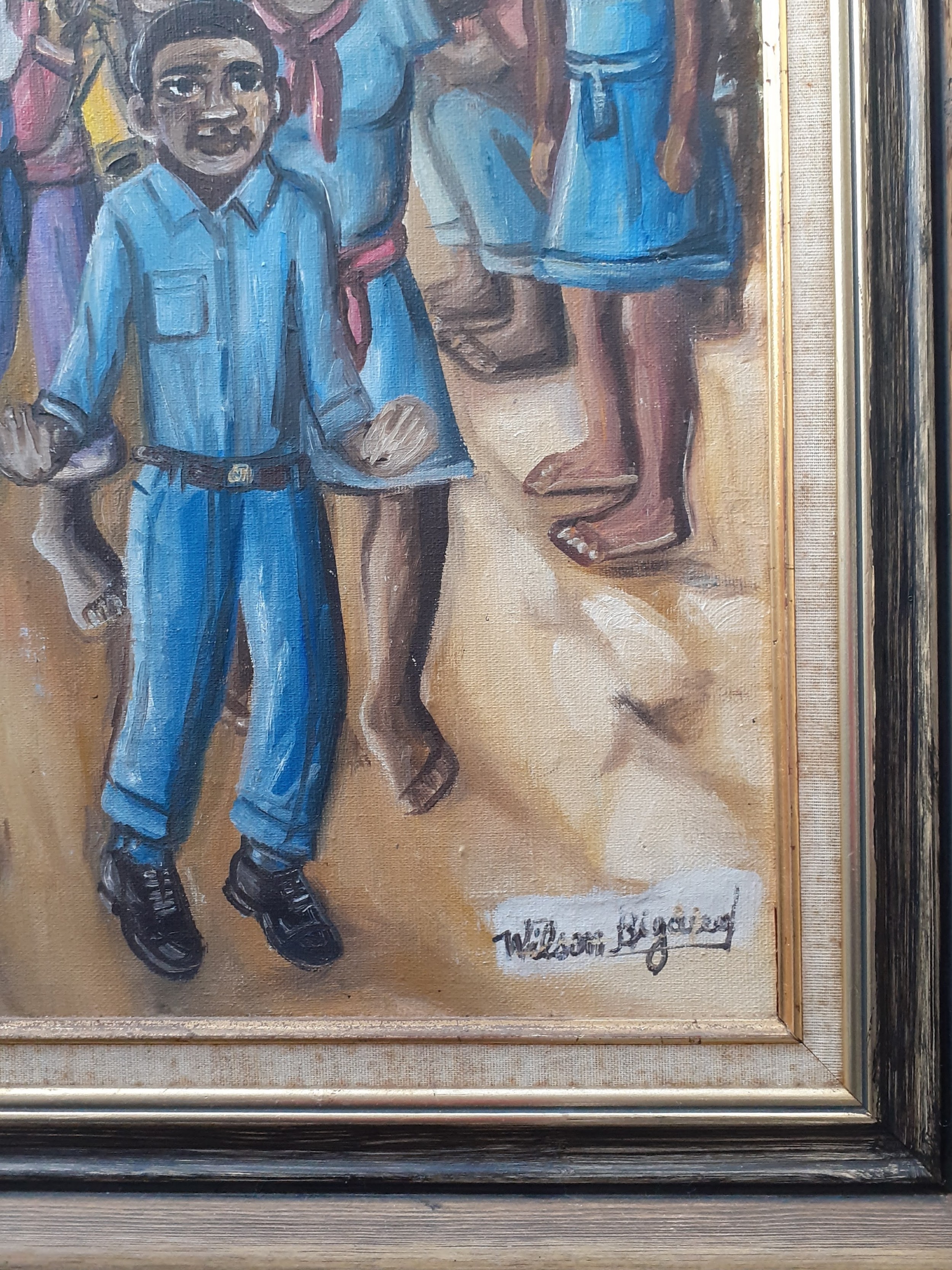
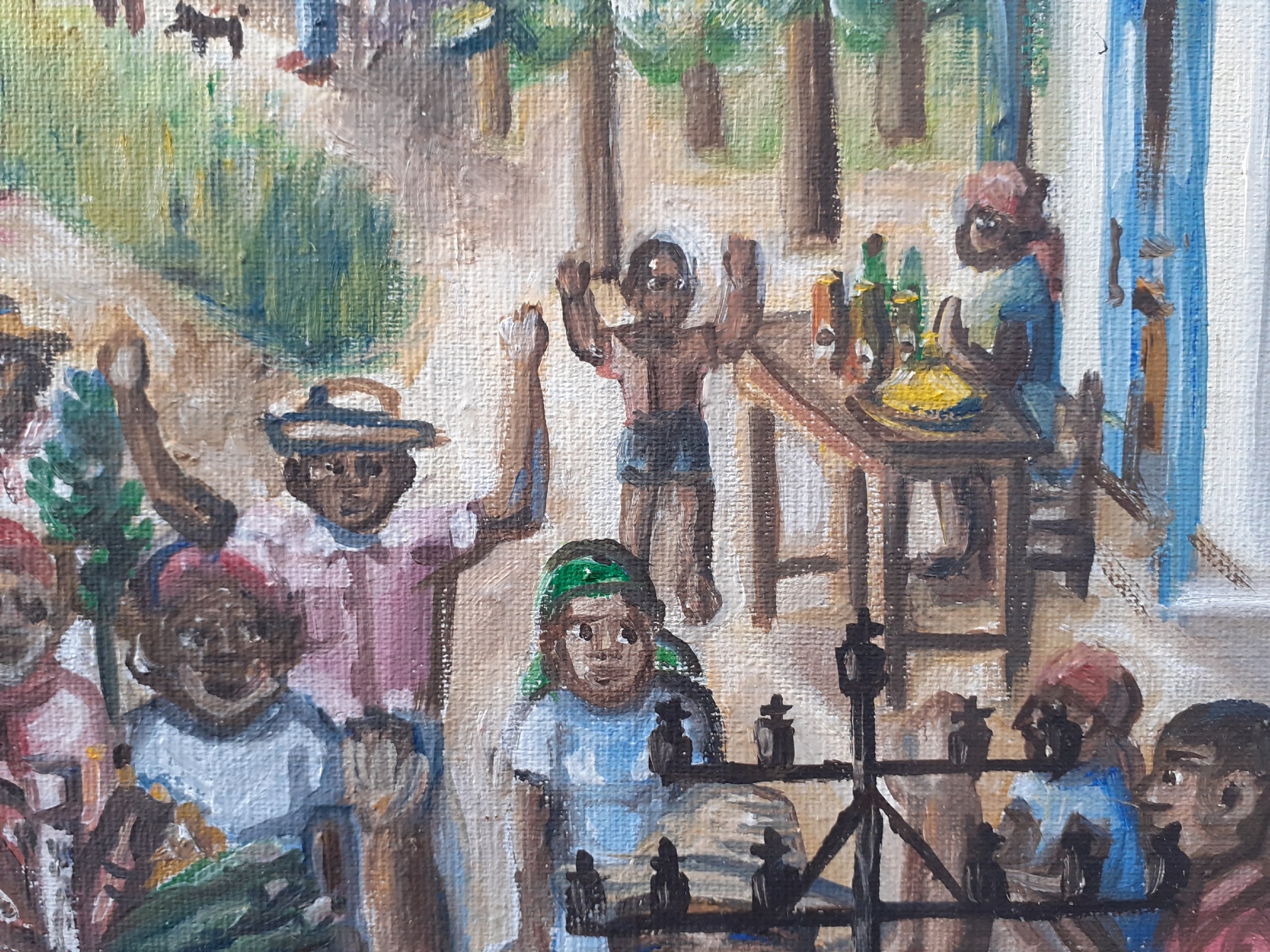
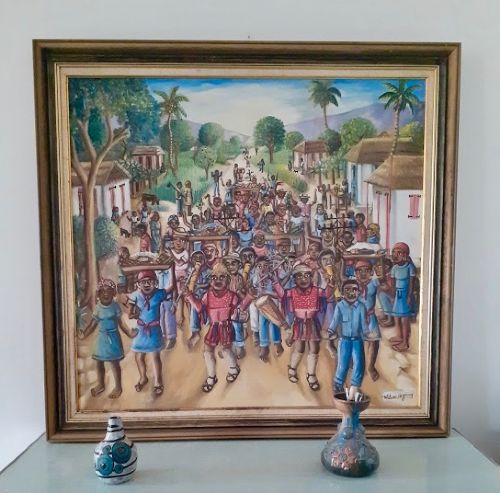
As explains historian Elizabeth McAlister, Rara is both carnival and religion. Rara musicians form parading bands that walk for miles through local territory, attracting fans with old and new songs. Bands stop at solemn spots—cemeteries, for example, where they salute the ancestors. Musicians play drums, sing, and sound bamboo horns and tin trumpets. Sometimes called a popular realist, Wilson Bigaud delighted in depicting the festivals of carnival and Rara, representing them in full action and colourful detail.
Born into a poor family, Bigaud was part of the first generation of young men to
study at the Centre d’Art, established in 1944 in Port-au-Prince, Haiti's capital, by American teacher Dewitt Peters.
He rapidly established a reputation as an artist of outstanding talent, hailed as the
‘Raphael’ of Haitian painting because of the limpid beauty of his work, in which he
combined lush detail with clarity of design. When he was only 21, Bigaud became the first
Haitian to have a picture accepted for the Carnegie International Exhibition, and won the
second prize for his Earthly Paradise (1952, Musée d'Art Haitien, Port-au-Prince).
His painting “Murder in the Jungle” was subsequently purchased for the permanent
collection of the Museum of Modern Art in New York. Bigaud was one of the handful of
artists chosen to execute the landmark murals in the Episcopal Cathedral of Sainte Trinité,
which were destroyed in the January 12 earthquake.
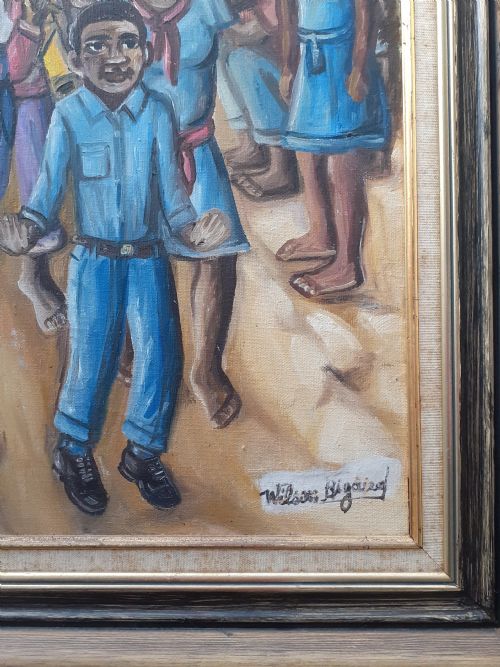
Dating from the 1960s, when it was acquired in Haiti by the past owners, the oil on canvas measures 76 x 81cm. Presented in a more recent European frame, the overall framed size is 88 x 93cm.
Skippings Fine Arts has dated this piece to the 1960s.
Modern french & continental pictures selected by a former french auction house expert
You can view the stock and full dealer information on the Skippings Fine Arts Profile Page
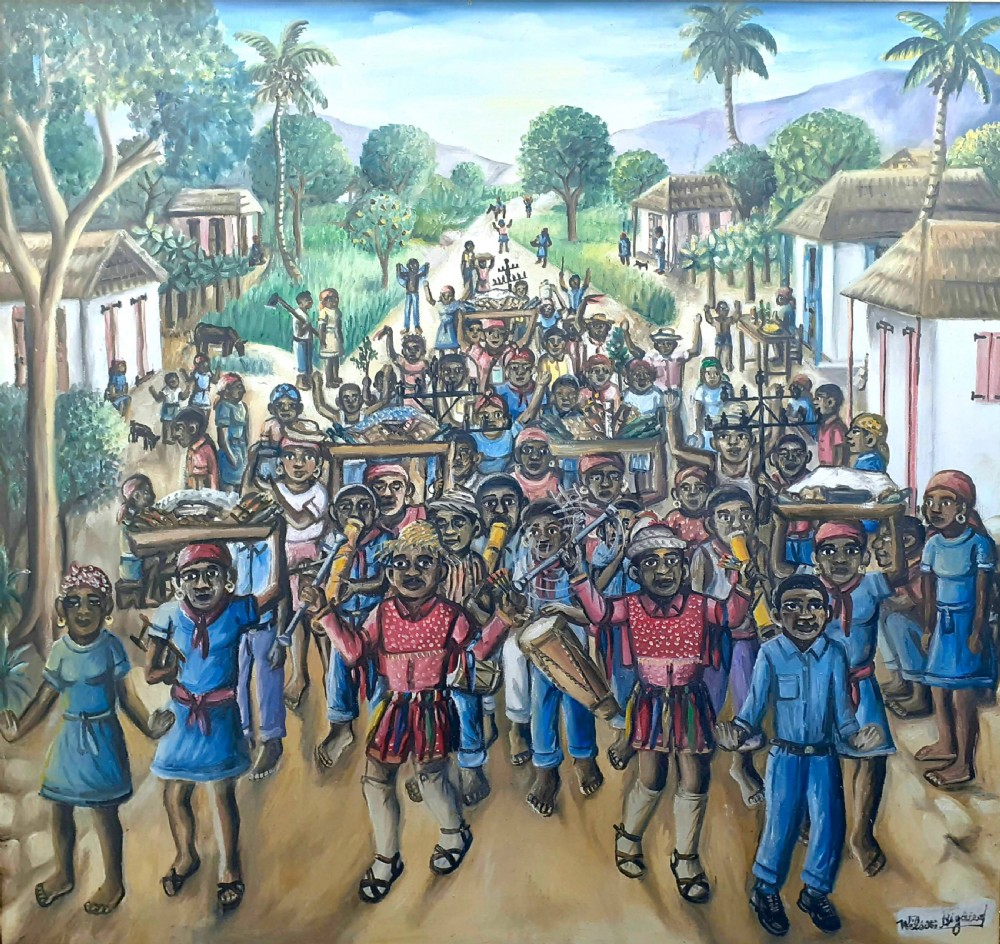

Music! Large Important Colourful Voodou Easter Celebration by Haitian Master Wilson Bigaud Oil on Canvas