Titan Fine Art has dated this piece to the 18th Century.
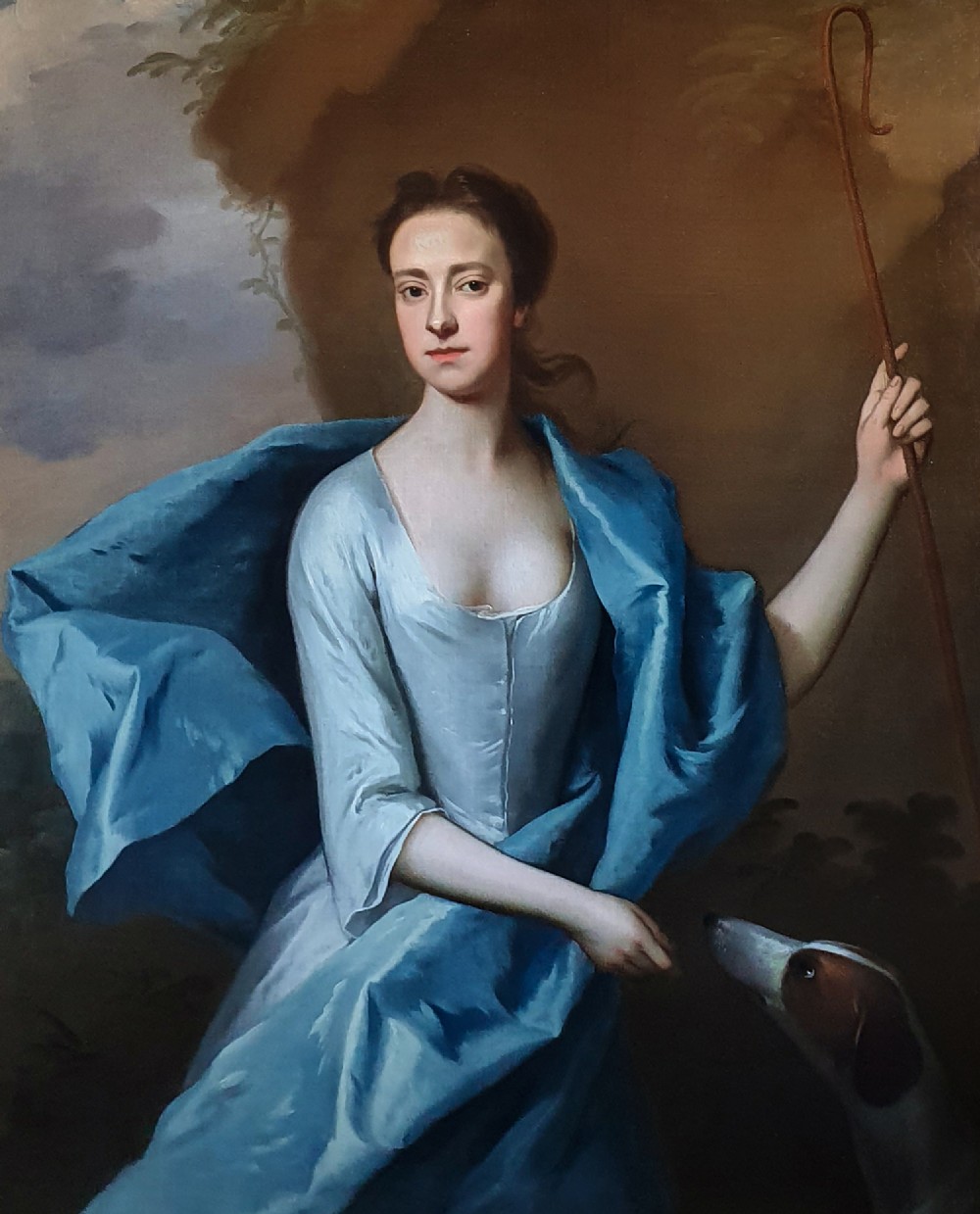
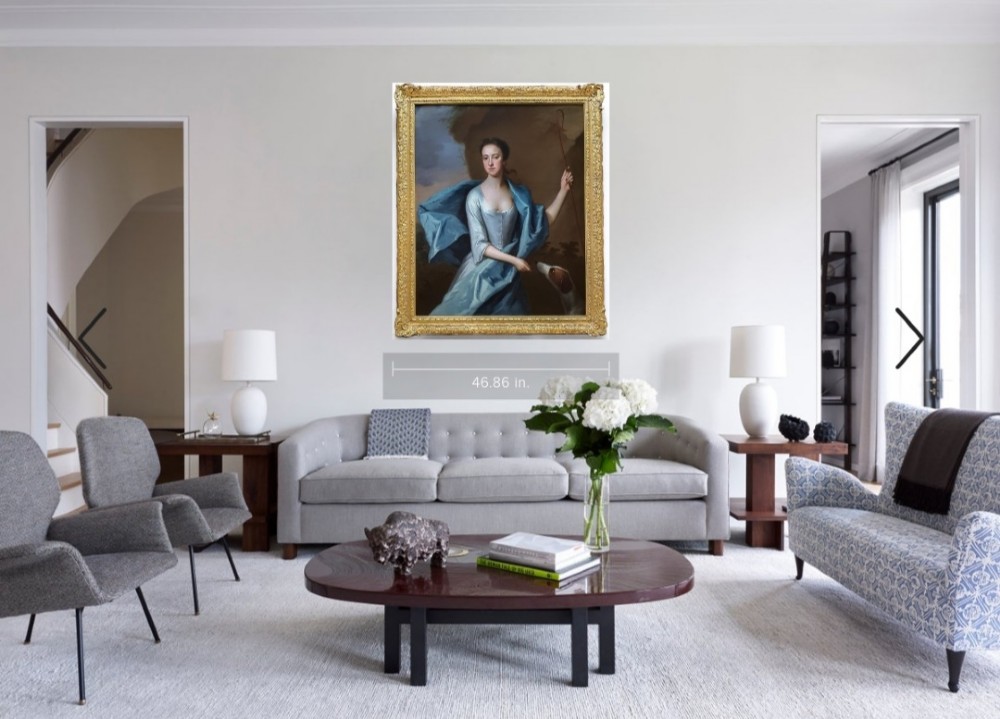
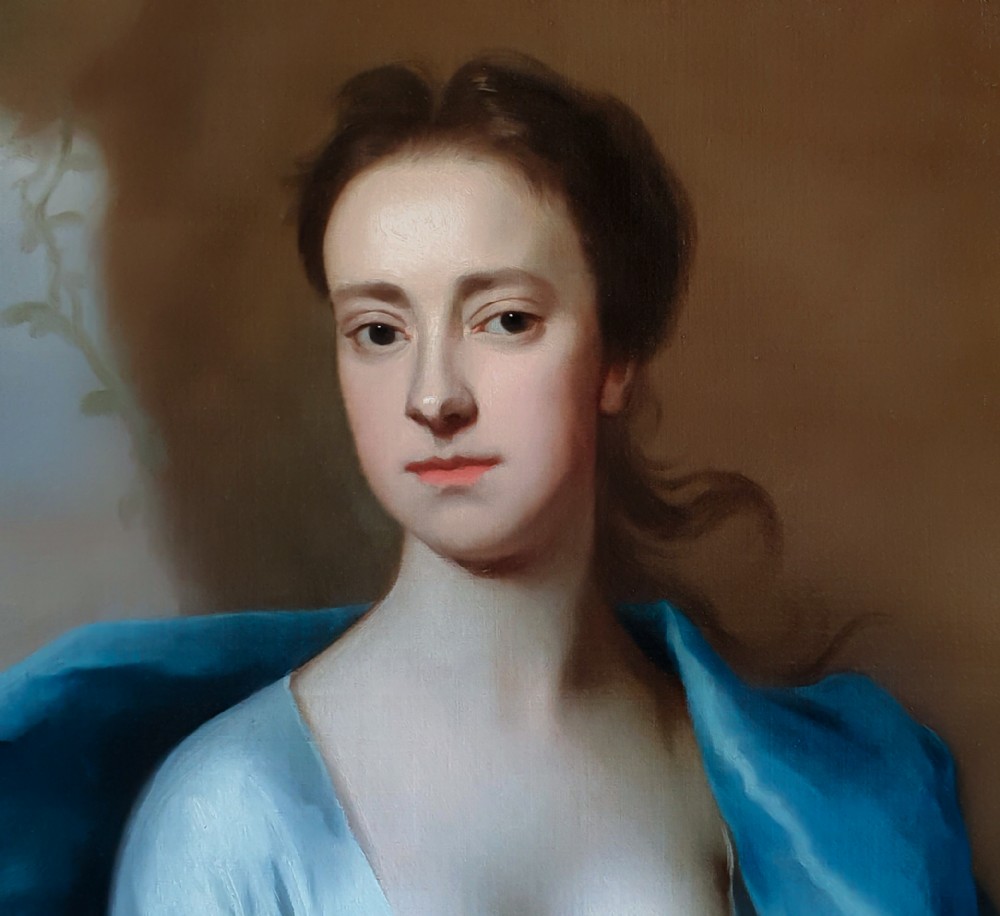
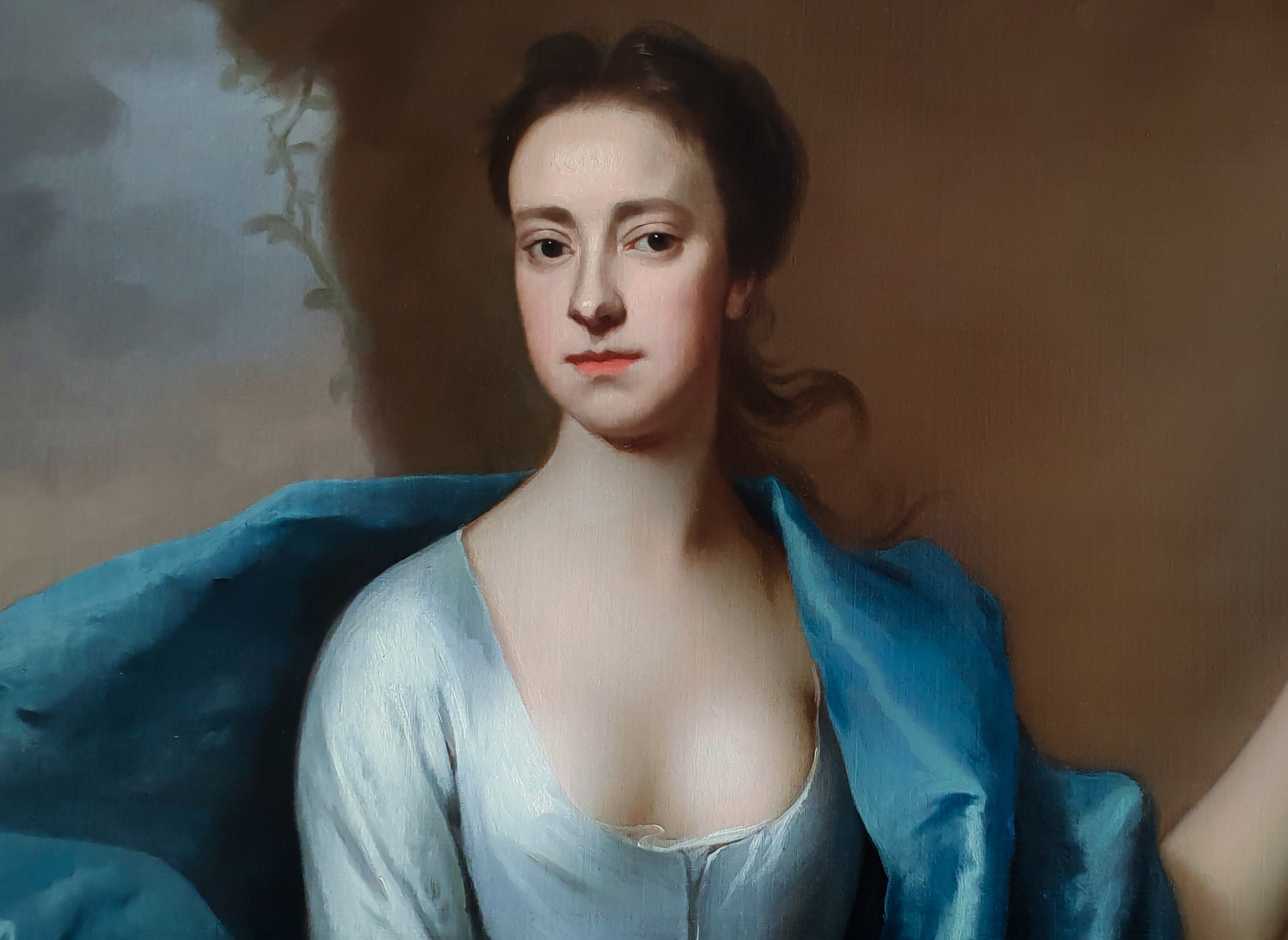
It is noteworthy in its state of preservation and its remarkable quality; it is amongst one of Dahl’s finest works of aristocratic women. Presented in an outstanding carved and gilded antique frame which is a fine work of art in itself.
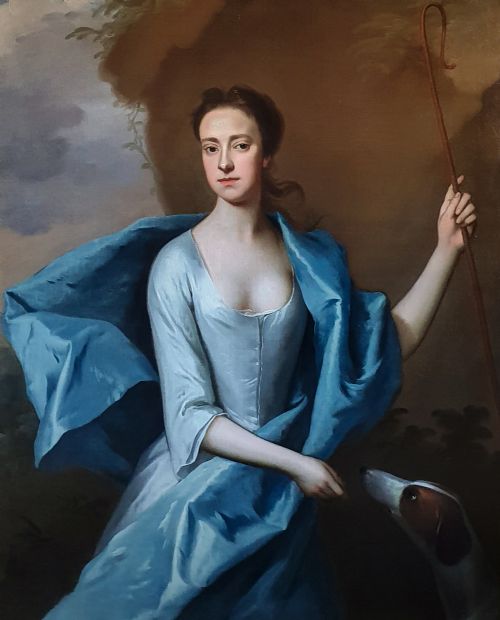
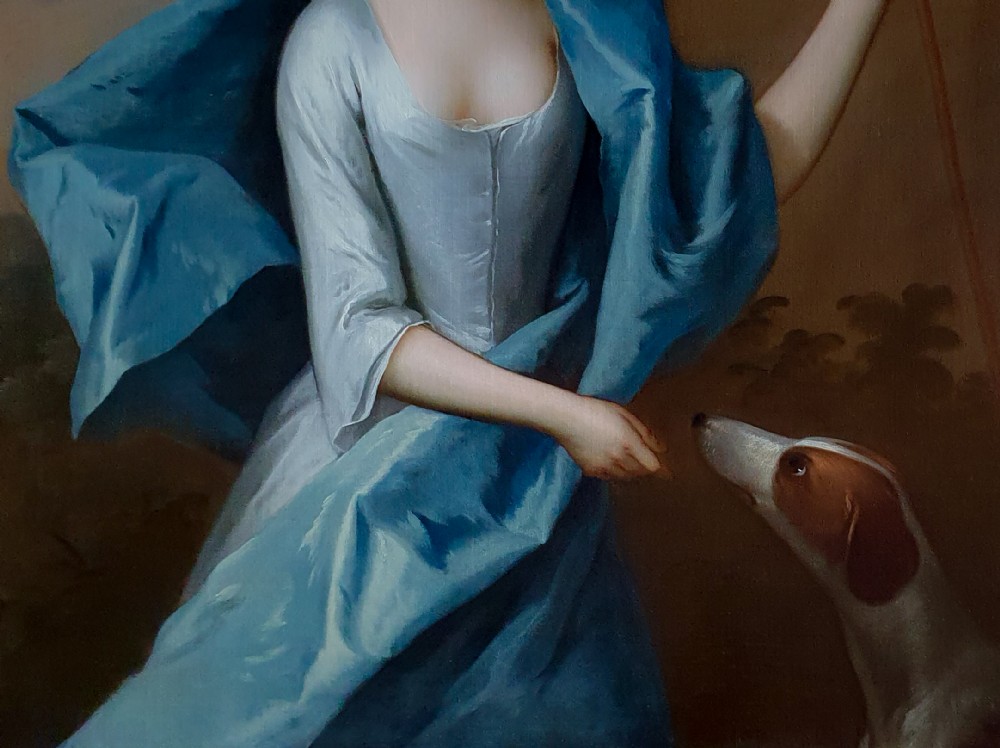
The portrait genre was valued particularly highly in English society. Neither landscapes nor allegorical pictures were ever priced so highly at exhibitions and in the trade as depictions of people, from the highest aristocracy to scholars, writers, poets and statesmen. This portrait can be dated to circa 1725 and the occasion for commissioning the picture may have been a birthday or engagement. The curve of the neck and the elegant turn of the head are features typical of the formula used by Dahl. The sitter is fashionably attired in a silver silk dress and is placed in a landscape with a rocky outcrop and a hound. This type of informal setting with its romantic appearance was only beginning to take shape in this period as an alternative to the French Baroque regular park. The shimmering blue azure wrap dramatically whirls through the air providing a sense of movement – this was a feature that the artist often used. Dahl used this pattern on more than one occasion – a common practise at the time.
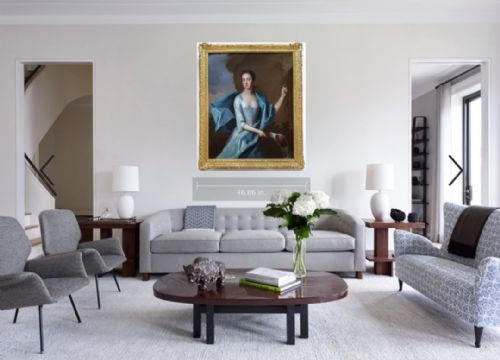
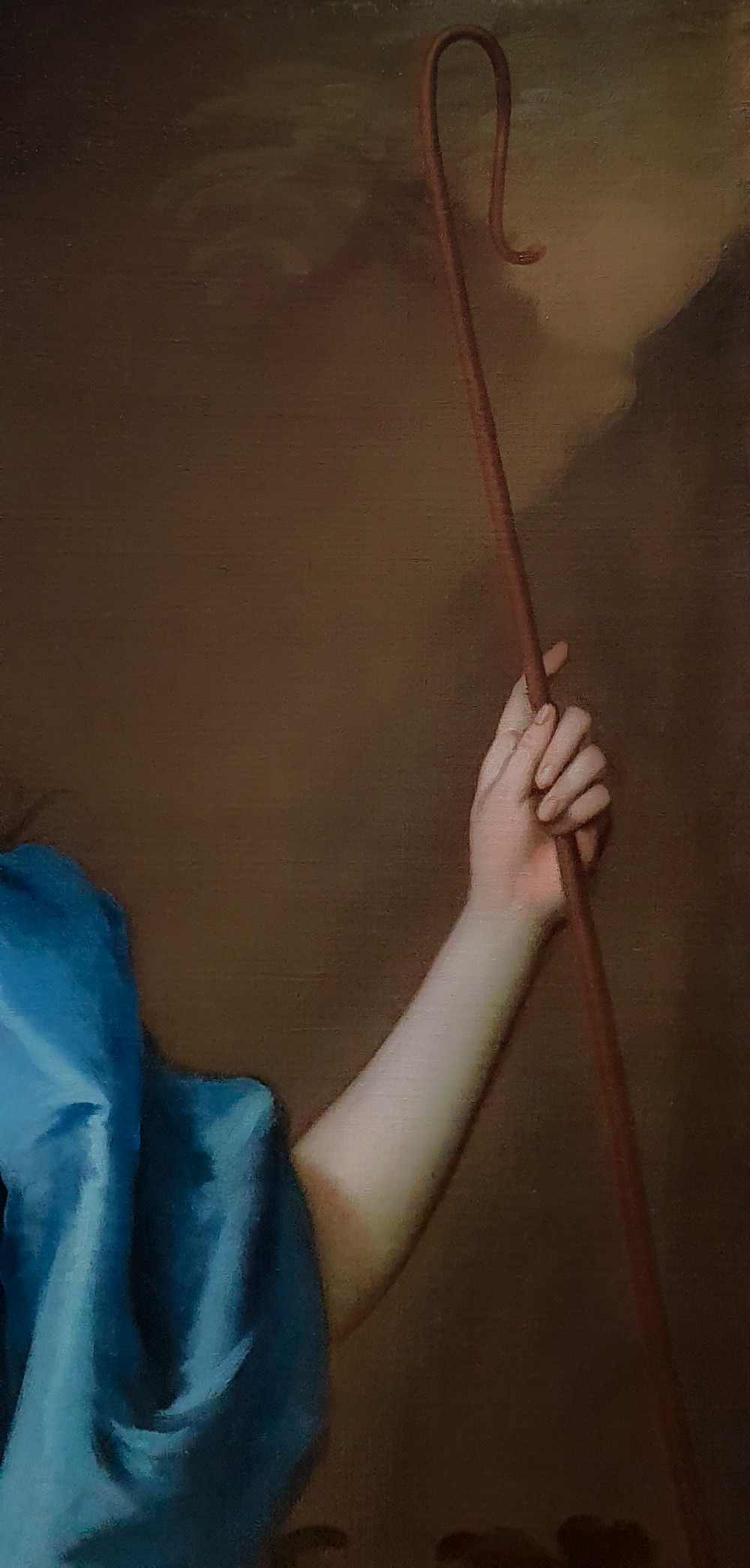
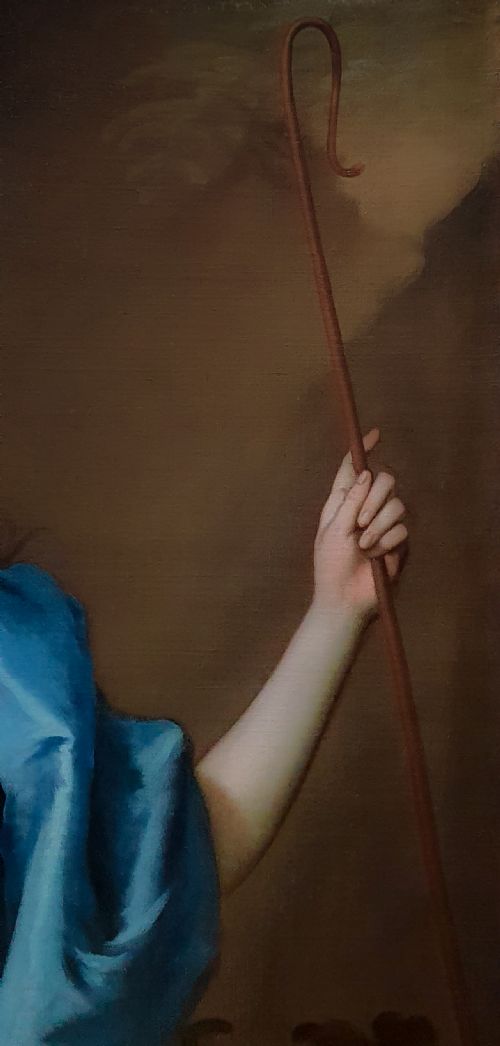
The landscape setting and the shepherd's crook imbues the portrait with a sense of Arcadian simplicity. This draws from the tradition of pastoral literature and by the early 17th century was already popular in art; all educated individuals were familiar with Latin and Greek pastoral poetry. The pastoral tradition in literature and plays had been embraced by an aristocratic class since classical times. Life in the country was perceived as peaceful, contemplative and free of worry of hardships, a time to pursue pleasure. To be painted in such a manner created a tangible expression of power and wealth.
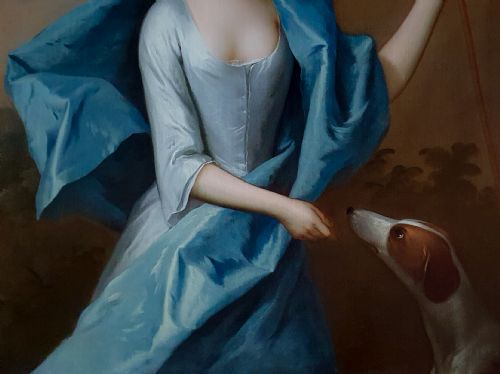
An outstanding example. Held in an exquisite carved and gilded antique frame – again, of exceptional quality and condition.
Michael Dahl (1659-1743) was born in Stockholm and was a painter of exceptional talent. He studied with David Ehrenstrahl, the leading Swedish portrait painter of his day, before embarking on a tour of Europe in 1682 that included London, Paris and Rome. He first visited London and it is thought that he spent some time in Kneller's studio which was an influence on his work. Dahl’s female portraits are distinctly different with better drawing for the heads and a more elegant and straightforward portrait without the excessive use of props and other distracting elements that is often seen in the work of Sir Godfrey Kneller.
In 1698 Dahl he was offered the position of painter to the court of the Swedish King, Charles XII, but preferred to stay and settle permanently in London. A number of Dahl’s compatriots saw England as being relatively stable and prosperous compared to many European countries, and more welcoming than France, for example, of the Lutheran faith then prevalent in Sweden. There, he established an independent studio and by 1700 became the most successful painter in England, second only to Godfrey Kneller. His Scandinavian origins ensured patronage from Prince George of Denmark, and Queen Anne and members of the English court and he worked for the Duke of Somerset painting the Petworth 'Beauties' in the late 1690s. in 1712 he charged £50 for a full length. He died in London in 1743 leaving two daughters (his only son, also a painter, died about three years earlier).
Titan Fine Art has dated this piece to the 18th Century.
Specialist in 17th & 18thc portraits. Highly curated selection, museum-level research & pro conservation. Exceptional art, expertly vetted.
You can view the stock and full dealer information on the Titan Fine Art Profile Page
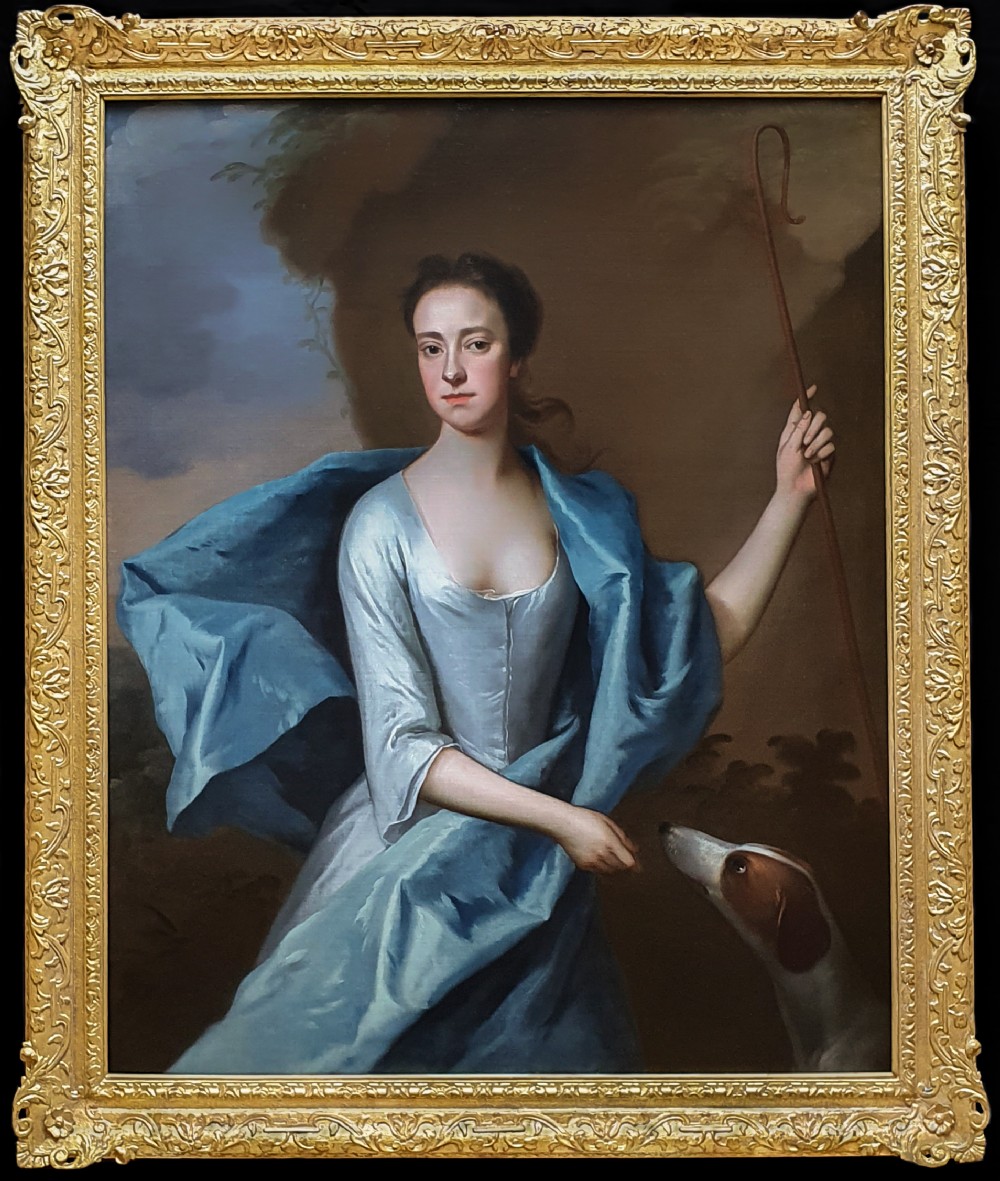
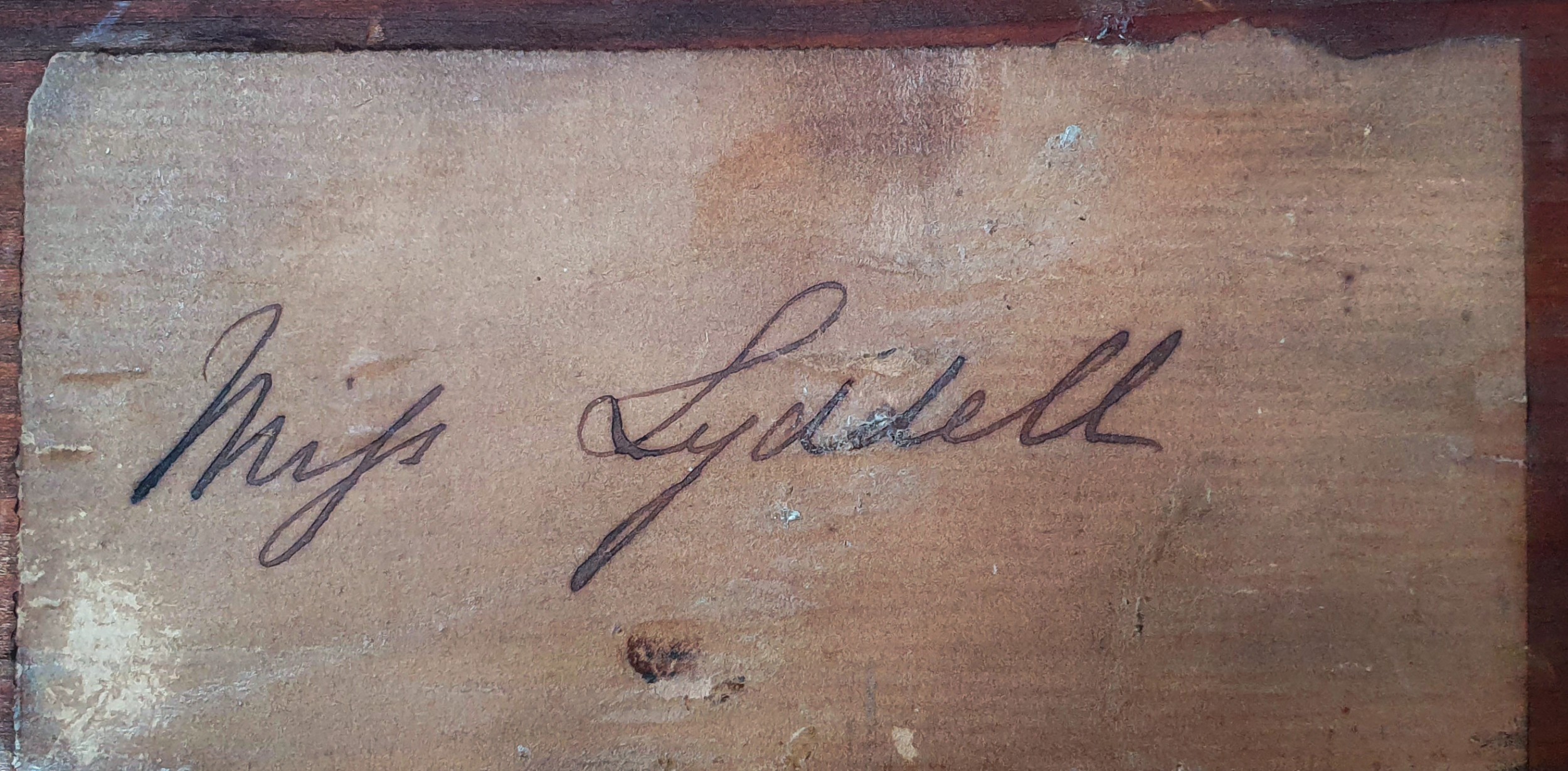
Portrait of Miss Lyddell as a Shepherdess C.1710; by Michael Dahl (1659-1743)