17,714  PAGES BROWSED TODAY PAGES TODAY 109 ANTIQUES UPLOADED TODAYNEW ARRIVALS
109 ITEMS ADDED TODAY
Sort Order
Items Per Page
Browse Categories
Sort order
Items per page
ID #SA75247
SOLD
Email Phone WhatsApp
Save
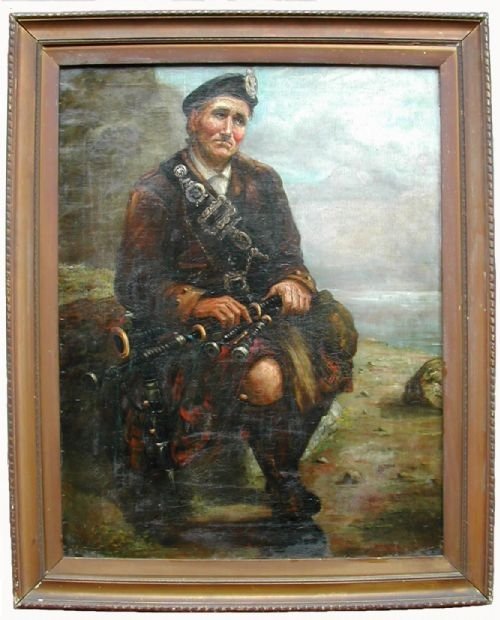
A Seated Piper on the Scottish Coast, Scottish School 19th Century
Sold by Artware Fineart
sold SA75247
Sorry, but this item has been sold.

Artware Fineart

Sellingantiques Verified Since Sep 2008
Id #SA75247
PDF SHARE
SAVE

A Seated Piper on the Scottish Coast, Scottish School 19th Century

19th century
Description

Oil on Canvas

88.90 x 68.58 cm; 35.00 x 27.00 ins

The bagpipes are one of the oldest musical instruments in the world, so much so that their actual origin and age remain unknown. Emperor Nero apparently played the pipes and not the fiddle whilst Rome burned. Even today, variations of the Scottish pipes are used in France, Spain, Italy, India, Ireland, Russia and Greece. However, no country has integrated the 'pipes' more into their culture than Scotland.
The 'Great Pipes' or 'Highland Pipes' have ancestral Scottish origins. The Scottish Pipes are believed to date back to around 100 a.d. However, it wasn't until the 15th century that their use became widespread. Their actual origin is uncertain, but what we do know is that the Scottish pipes are now the most famous pipes in the world. Nowadays pipers play the pipes - the term 'bagpipers' is seldom used. Indeed, even amongst Scots, the bagpipes are now affectionately known by just one word, 'the pipes'.

Traditionally, the bagpipes were viewed as a solo instrument that galvanised Scottish warriors and terrorised their opponents. The English banned the use of the bagpipes upon pain of incarceration and death following their defeats at Bannockburn and Killicrankie in the 18th century. It was the soul-stirring effects of the pipes on the Scottish army and local population that the English army feared most of all.
It was not until the 16th century that music began to be written for the Scottish bagpipes - the strathspeys, reels and pibroch - that now familiarly comprise a piper's repertoire. Before this date, the roaming lone bagpipe player had to make do with playing variations of traditional tunes and folk songs. It was the famed MacCrimmons, pipers to the MacLeods of Skye, who wrote most of the music for the Highland pipes. The MacCrimmons had a piping school near Dunvegan on Skye and firmly believed in the principle that it took 7 generations of pipers and 7 years study to produce a great player.

In more modern times, the leading bagpipe school in Scotland has been and is still based at Edinburgh Castle. It is renowned for teaching the pibroach, the true classical music of the Scottish pipes. The pibroach makes significant demands on a pipers technique and it's repertoire consists mostly of tunes that were composed by the MacCrimmons and more recently, regimental pipers.

Until the 1830's every piper used their own musical symbols to record piping music. After that date, pipers began to write their music in standard musical notation.

Every Highland regiment in the British Army has always had it's own pipers and pipe bands. Each regiment has it's individual repertoire of marches, retreats, strathpeys and reels. There is immense pride and competition amongst such regiments in terms of the music played by their pipers and certain tunes are jealously safeguarded as their own. Likewise, history indicates that the ancient Scottish clans had a similar attitude towards their pipers and piping music. In the era of the great and the small clans, for example, the Cameron's wouldn't allow their men to play the 'Campbells are Coming'. Likewise, the Seaforth Clan banned their pipers from playing the 'March of the Cameron Men'.

Declaration

Artware Fineart has dated this piece to the 19th Century.

Reference Numbers
Sellingantiques Reference
SA75247
Dealers Internal Reference
3342
Description
Oil on Canvas

88.90 x 68.58 cm; 35.00 x 27.00 ins

The bagpipes are one of the oldest musical instruments in the world, so much so that their actual origin and age remain unknown.
Artware Fineart

Emperor Nero apparently played the pipes and not the fiddle whilst Rome burned. Even today, variations of the Scottish pipes are used in France, Spain, Italy, India, Ireland, Russia and Greece. However, no country has integrated the 'pipes' more into their culture than Scotland.

fig 1. A seated Piper on the Scottish coast, Scottish School 19th Century
fig 1. A Seated Piper on the Scottish Coast, Scottish School 19th Century

The 'Great Pipes' or 'Highland Pipes' have ancestral Scottish origins. The Scottish Pipes are believed to date back to around 100 a.d. However, it wasn't until the 15th century that their use became widespread. Their actual origin is uncertain, but what we do know is that the Scottish pipes are now the most famous pipes in the world. Nowadays pipers play the pipes - the term 'bagpipers' is seldom used. Indeed, even amongst Scots, the bagpipes are now affectionately known by just one word, 'the pipes'.

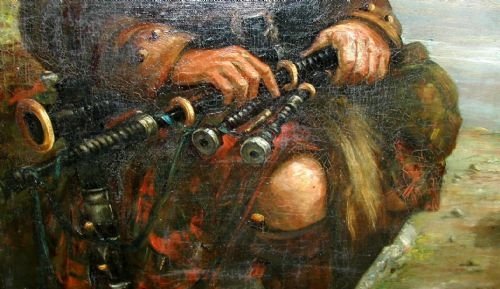
fig 2. A seated Piper on the Scottish coast, Scottish School 19th Century
fig 2. A Seated Piper on the Scottish Coast, Scottish School 19th Century

Traditionally, the bagpipes were viewed as a solo instrument that galvanised Scottish warriors and terrorised their opponents. The English banned the use of the bagpipes upon pain of incarceration and death following their defeats at Bannockburn and Killicrankie in the 18th century. It was the soul-stirring effects of the pipes on the Scottish army and local population that the English army feared most of all.

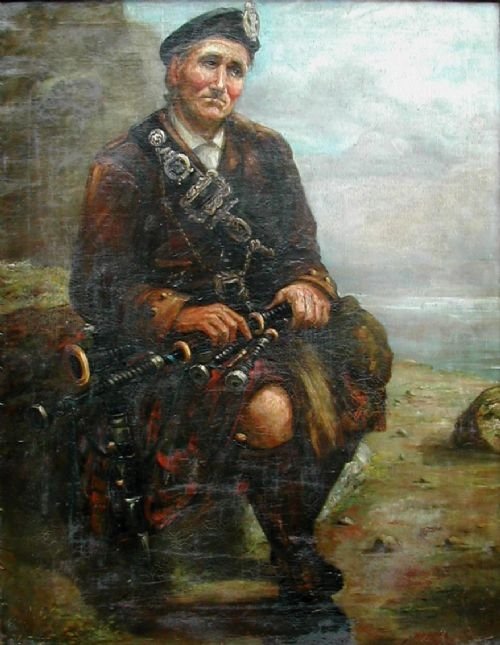
fig 3. A seated Piper on the Scottish coast, Scottish School 19th Century
fig 3. A Seated Piper on the Scottish Coast, Scottish School 19th Century

It was not until the 16th century that music began to be written for the Scottish bagpipes - the strathspeys, reels and pibroch - that now familiarly comprise a piper's repertoire. Before this date, the roaming lone bagpipe player had to make do with playing variations of traditional tunes and folk songs. It was the famed MacCrimmons, pipers to the MacLeods of Skye, who wrote most of the music for the Highland pipes. The MacCrimmons had a piping school near Dunvegan on Skye and firmly believed in the principle that it took 7 generations of pipers and 7 years study to produce a great player.

In more modern times, the leading bagpipe school in Scotland has been and is still based at Edinburgh Castle. It is renowned for teaching the pibroach, the true classical music of the Scottish pipes. The pibroach makes significant demands on a pipers technique and it's repertoire consists mostly of tunes that were composed by the MacCrimmons and more recently, regimental pipers.

Until the 1830's every piper used their own musical symbols to record piping music. After that date, pipers began to write their music in standard musical notation.

Every Highland regiment in the British Army has always had it's own pipers and pipe bands. Each regiment has it's individual repertoire of marches, retreats, strathpeys and reels. There is immense pride and competition amongst such regiments in terms of the music played by their pipers and certain tunes are jealously safeguarded as their own. Likewise, history indicates that the ancient Scottish clans had a similar attitude towards their pipers and piping music. In the era of the great and the small clans, for example, the Cameron's wouldn't allow their men to play the 'Campbells are Coming'. Likewise, the Seaforth Clan banned their pipers from playing the 'March of the Cameron Men'.

Date of Manufacture

Artware Fineart has dated this piece to the 19th Century.

Reference Numbers
Sellingantiques Ref
SA75247
Dealers Internal Ref
3342
Artware Fineart
Sellingantiques verified Since Sep 2008
Dealer Profile

You can view the stock and full dealer information on the Artware Fineart Profile Page
PDF SHARE
SAVE
A seated Piper on the Scottish coast, Scottish School 19th Century
1 / 4
Archive I A seated Piper on the Scottish coast, Scottish School 19th Century

A Seated Piper on the Scottish Coast, Scottish School 19th Century

Archive II A seated Piper on the Scottish coast, Scottish School 19th Century View II
Archive III A seated Piper on the Scottish coast, Scottish School 19th Century View III
Archive IV A seated Piper on the Scottish coast, Scottish School 19th Century View IV
Enlarged Archival View
Telephone 07958 699 645
Location
18 La Gare
51 Surrey Row
London
SE1 0BZ
United Kingdom
Verified Since Sep 2008
Items For Sale 243
Items Sold 223
Artware Fineart
Verified Since Sep 2008
View Dealer Info
Location: 18 La Gare , 51 Surrey Row , London , SE1 0BZ , United Kingdom
Verified
Sep 2008
For Sale
243
Sold
223
A seated Piper on the Scottish coast, Scottish School 19th Century
Ref: SA75247
A seated Piper on the Scottish coast, Scottish School 19th Century
Detail View 1
Detail View 2
Detail View 3
Archival Detail
Every single antique dealer on our platform is individually approved by our internal team. We verify their professional trade history, ethical standards, and photographic quality to ensure a secure, high-standard buying environment. Upon joining, every dealer agrees to a strict 9-point code of conduct. While issues can occasionally arise, our dealers typically resolve them swiftly and directly with the buyer. In fact, since our founding in 2002, Sellingantiques has only had to step in to help resolve an issue on roughly five occasions—a true testament to the quality of our dealers and their dedication to your happiness.
Our dealers are highly experienced in packing and shipping fragile, high-value antiques. Because you are in direct contact with the dealer, you will be able to easily go through all available shipping and insurance options together to ensure your item arrives safely.
Antiques are the ultimate green purchase. By choosing historical pieces over newly manufactured goods, you completely eliminate the carbon footprint of modern mass production while preserving exceptional, timeless craftsmanship.
items
Add keywords to the filter
Price
£100
£250000
Era
Movements
Material
Origin
Stock Location
Freshness
Online Payments
Categories