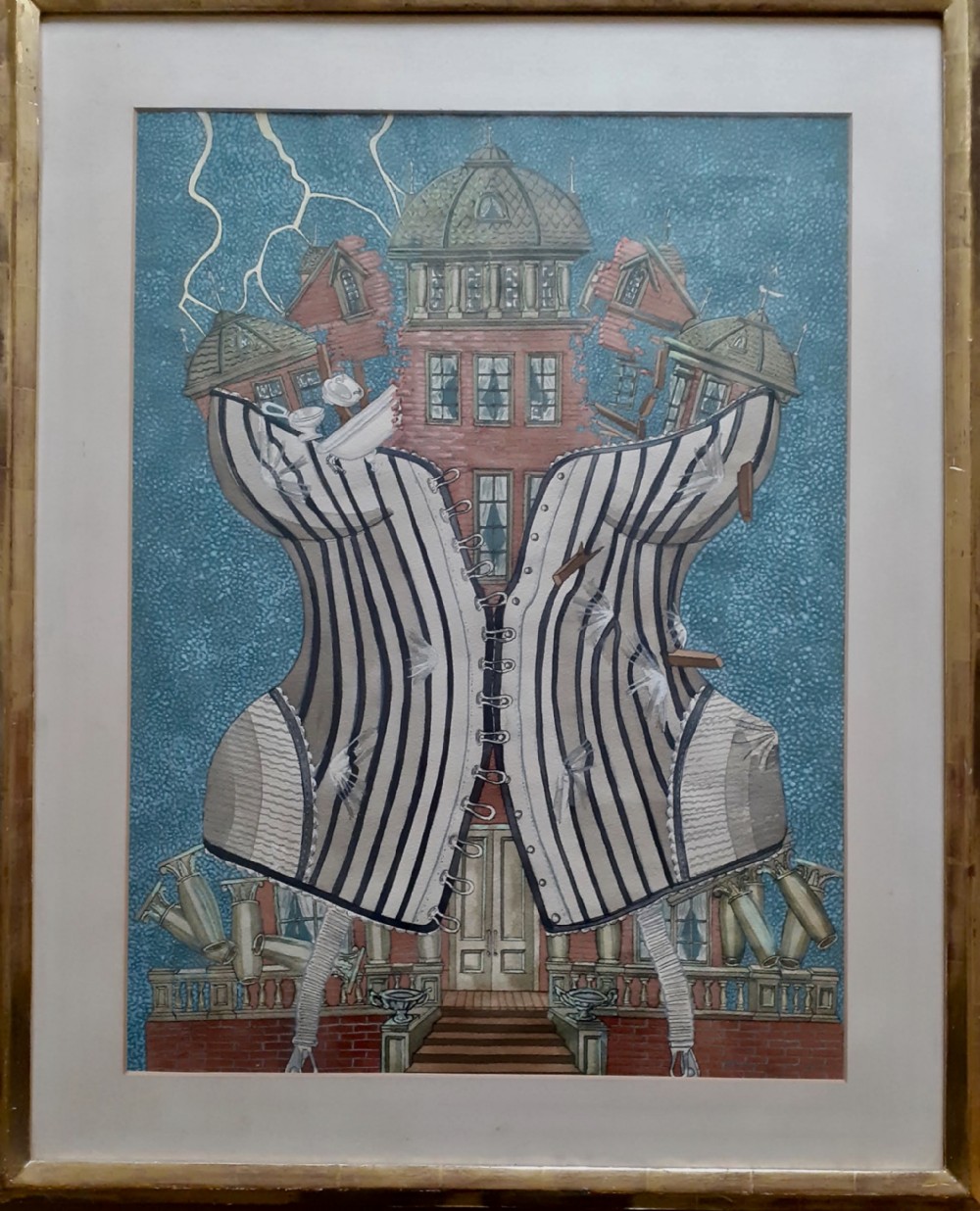
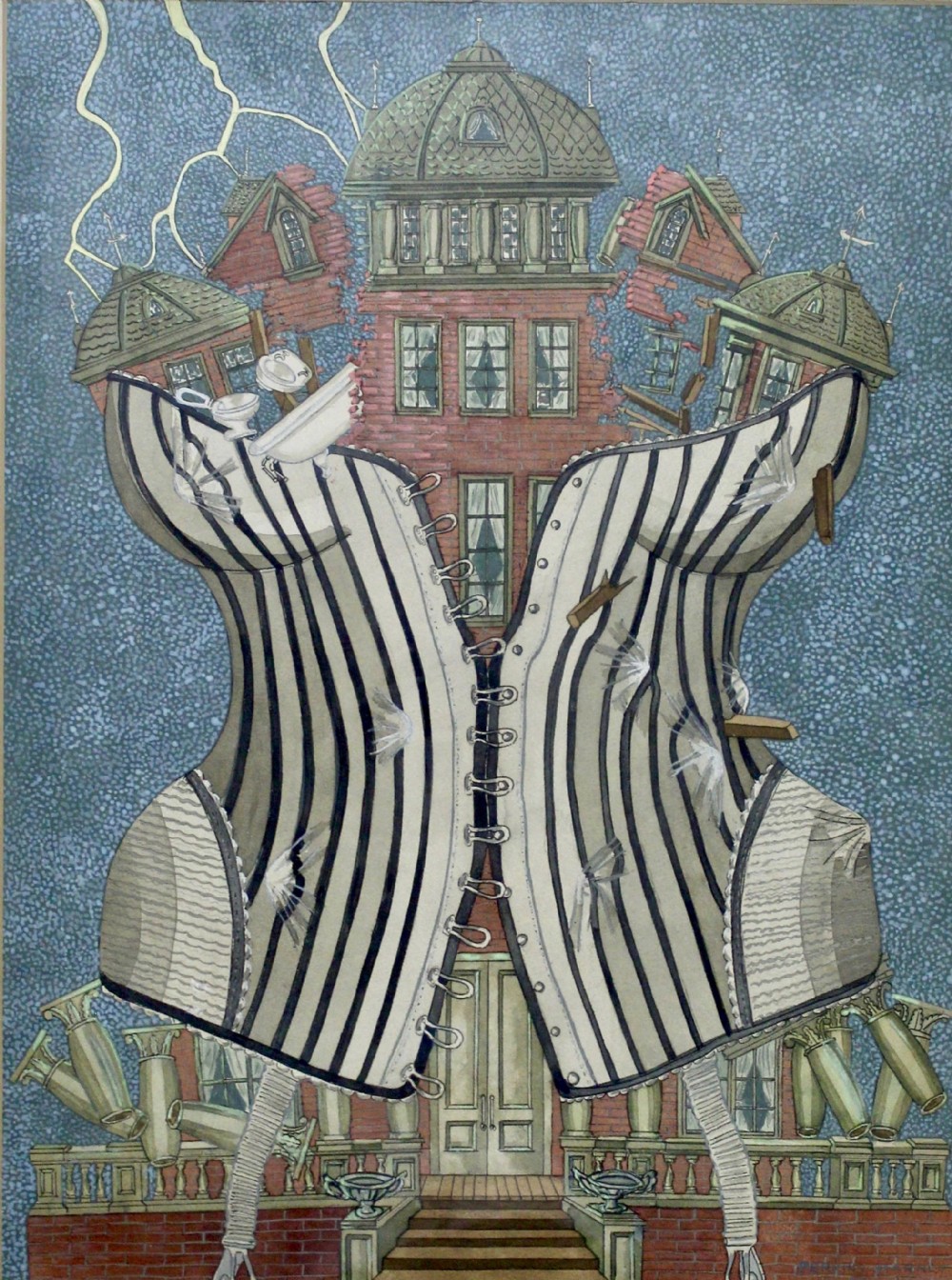
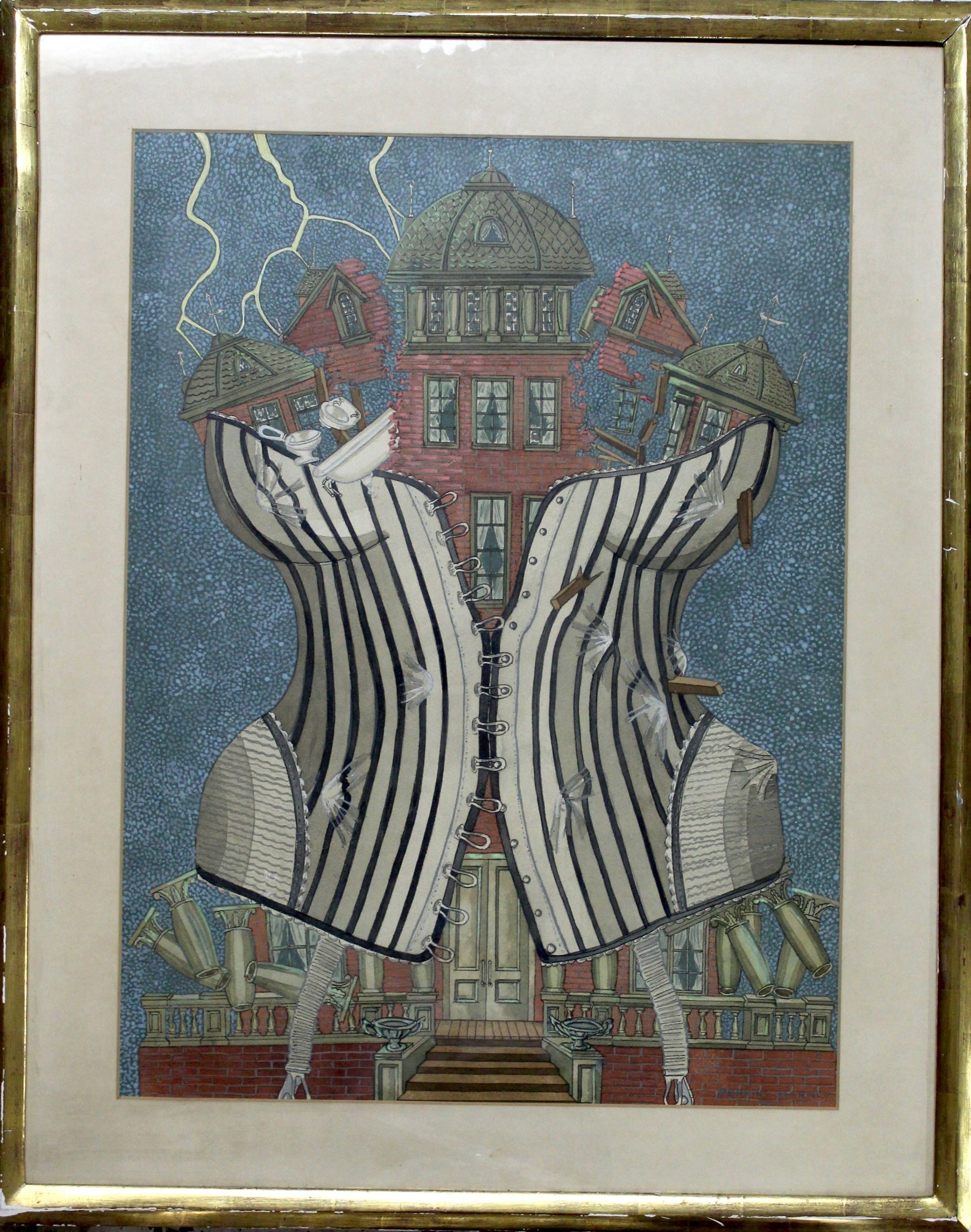
Skippings Fine Arts has dated this piece to the 1950s.
Born in a pauper's farmhouse (his words) in Nebraska, Perkins was nonetheless a wealthy architect's grandson. The grandfather revelled in Victorian ornamentation—”copious gingerbread and endless gewgaws.” All that “heavenly architecture” left a strong impression on Perkins, and was ideal preparation for painting the jumbled, stuffed spaces of Victorian life he would begin to paint.
Born in the same year that marked the death of Queen Victoria, the Victorian era had ended by the time Harnly became an artist, it remained a source of inspiration for much of his work. His work was first exhibited in New York in 1933 at the Julian Levy Gallery and subsequently was represented in the annuals of the Whitney Museum of American Art. During the 1930s he worked for a division of the WPA Federal Art Project, documenting Victorian interiors with a satirical edge that captured the era’s overblown décor.
It is interesting to read the eccentric artist's own words:
"So, we lived next to the Lyric Theater in Lincoln, Nebraska (...) I was four or five years old then (...) back in the 1900s to the first world war, if the vaudeville act was very dull and people were bored to death, the stage hands would let down a drop curtain, a background curtain. And now, these were painted by local sign painters, but they were done in the spirit of Piranesi.... with great Italian Renaissance grandeur, great terraces, you know, and peacocks, and all that architecture which is so associated with ballet and opera. So, I saw these things, I adored them. I fell in love with them. They became part of my subconscious mind. So, in my work today, upstairs, you will see these drop curtains, the influence of these drop curtains, the derivative of these drop curtains, and this childlike love for the extravagance and grandeur of sort of a bastard Renaissance point of view."
In 1942, The Metropolitan Museum of Art mounted an exhibition called "I Remember That", composed of works from the Index of American Design which included several paintings by Harnly. After seeing his works in this exhibit, the film producer Albert Lewin invited Harnly to Hollywood and gave him various assignments, which included set designs for the film The Picture of Dorian Gray.
The National Museum of American Art (now the Smithsonian American Art Museum) presented a solo exhibition of Harnly's work in1981/2.
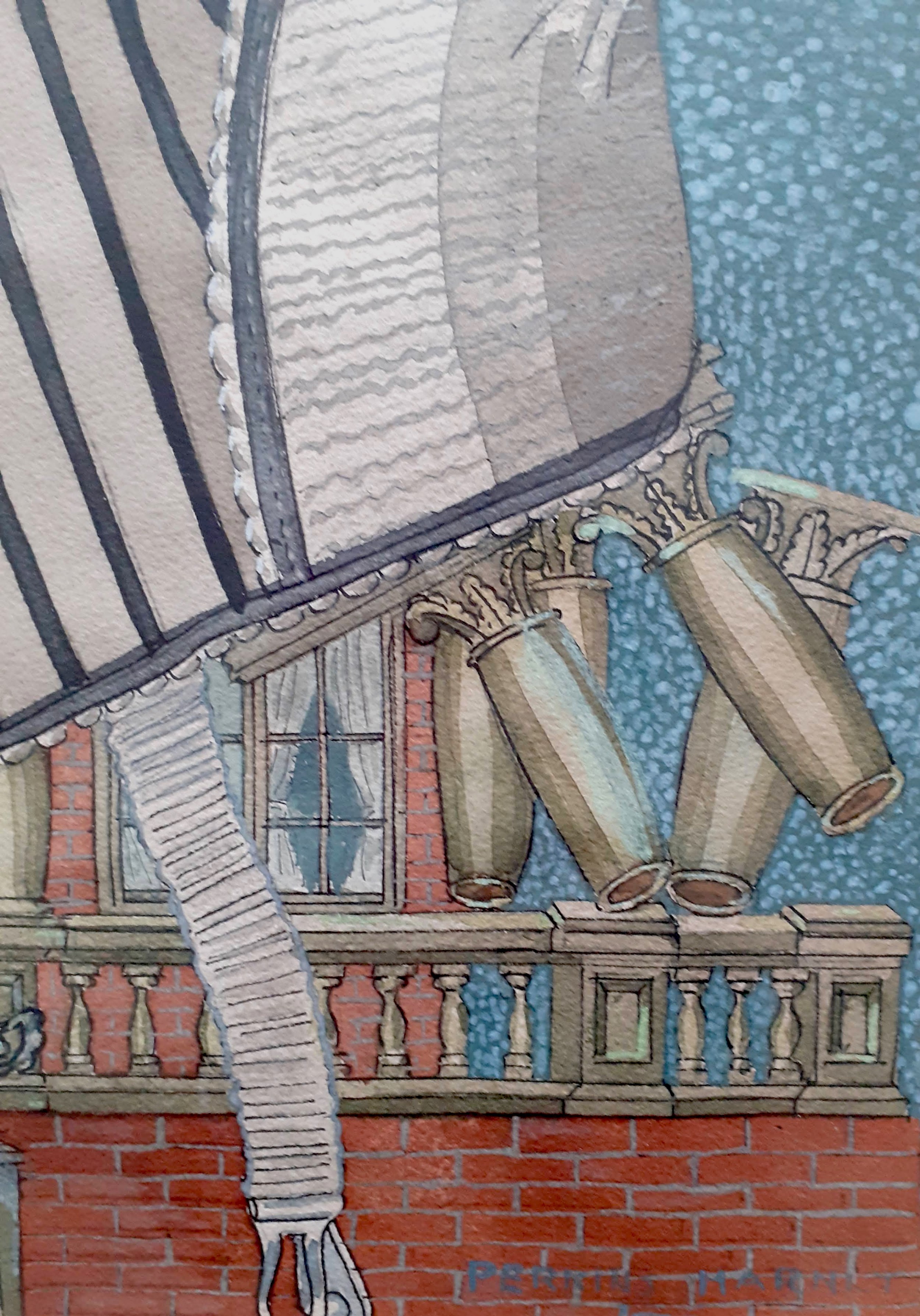
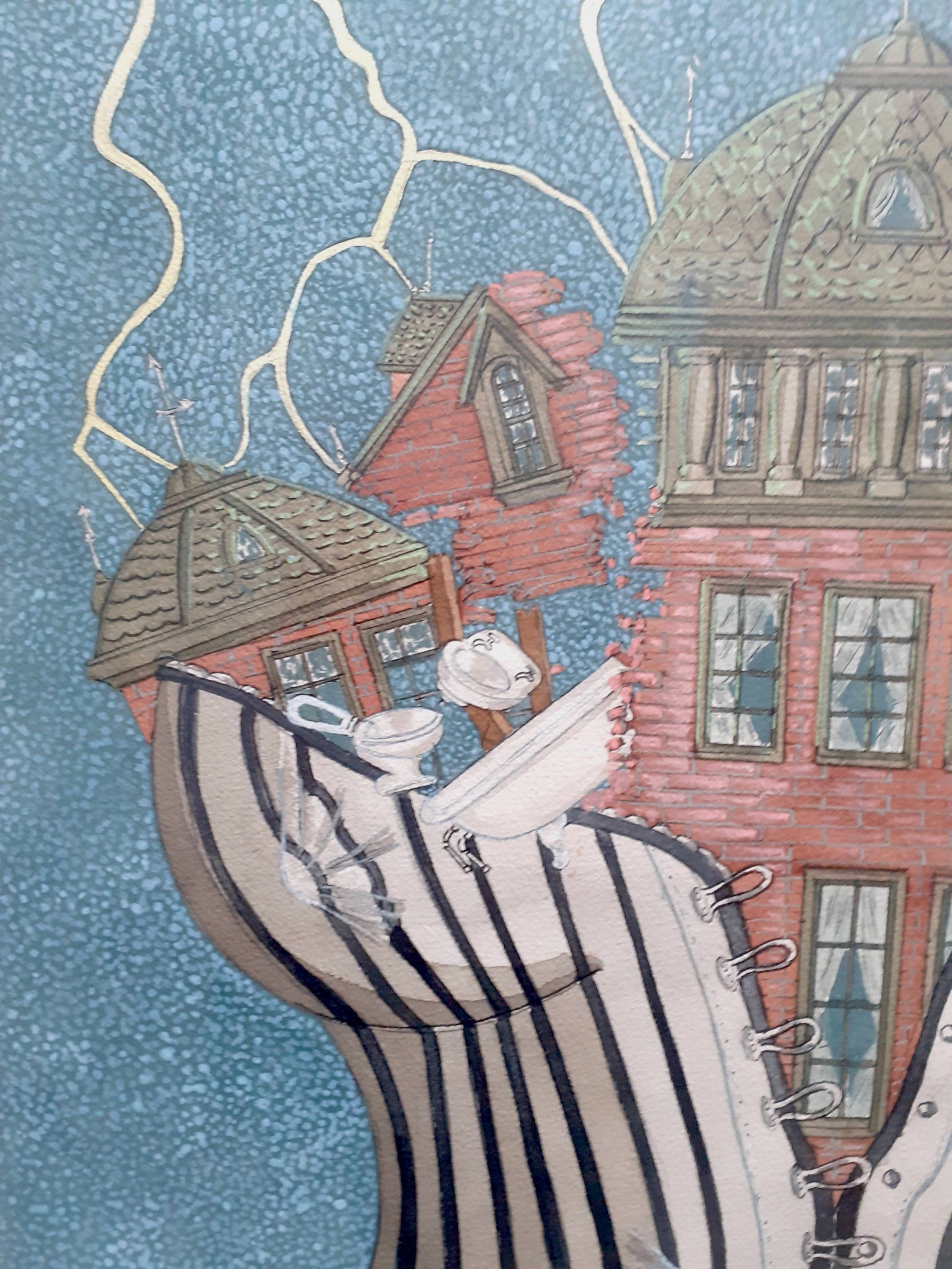
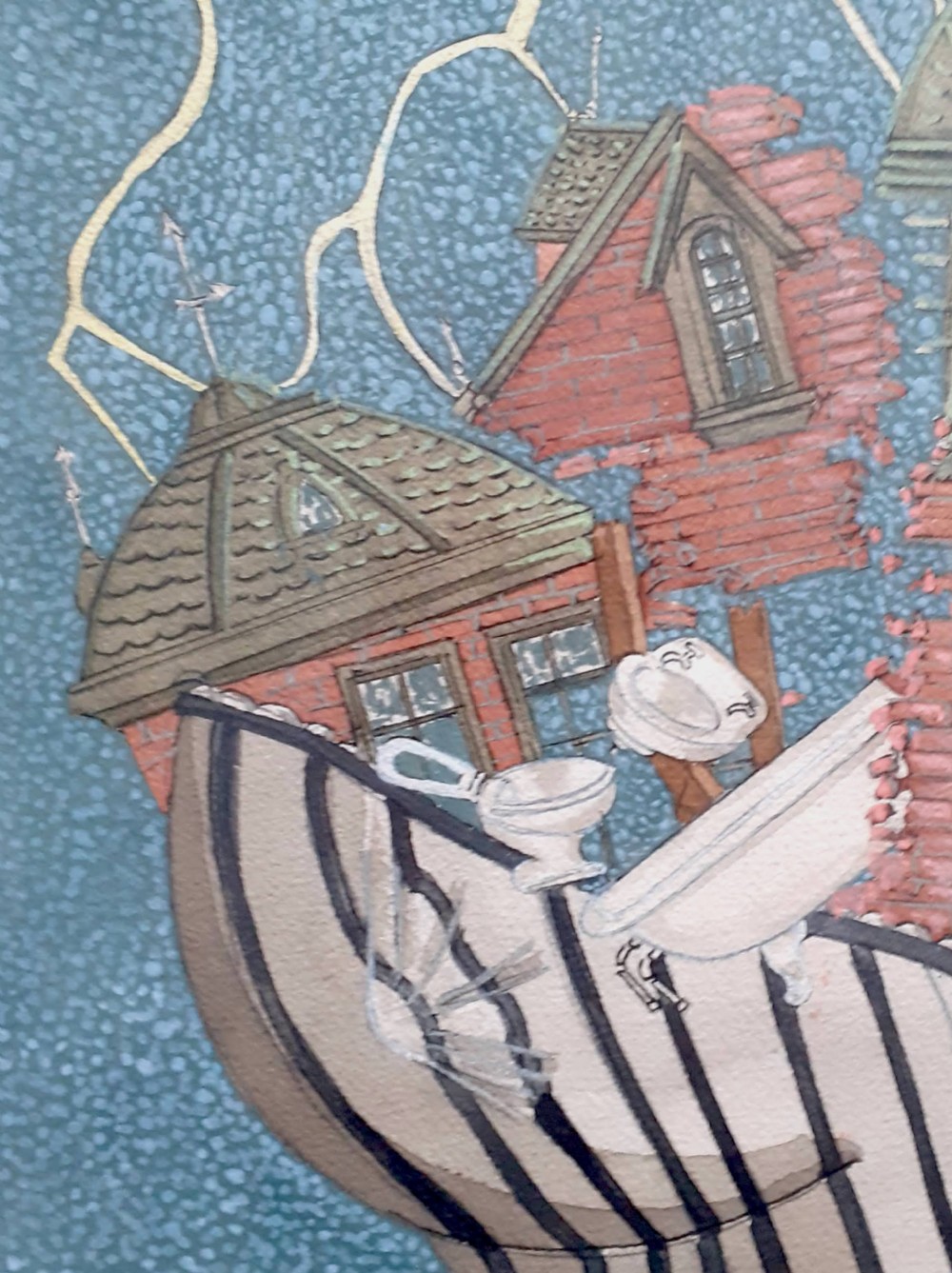
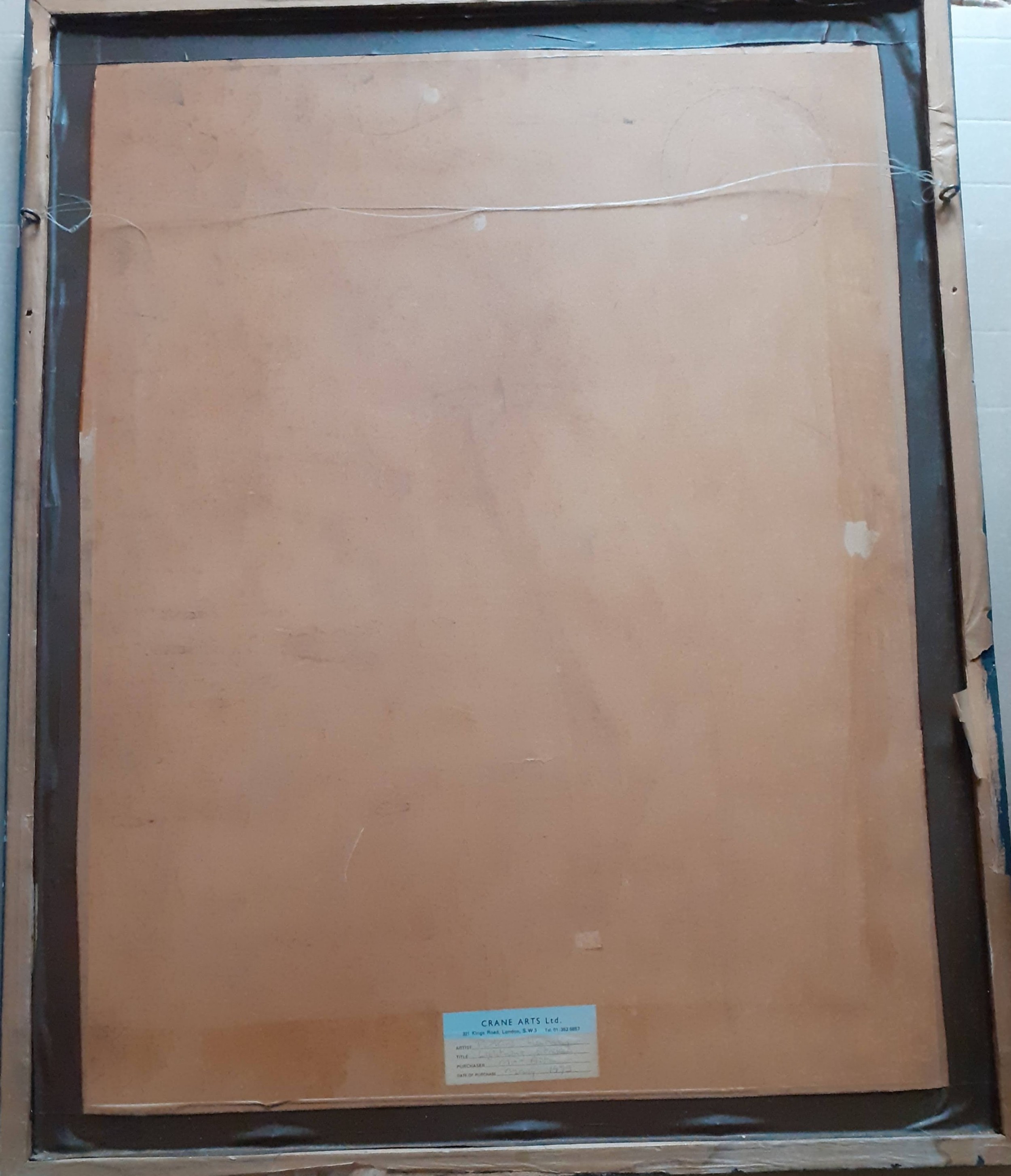
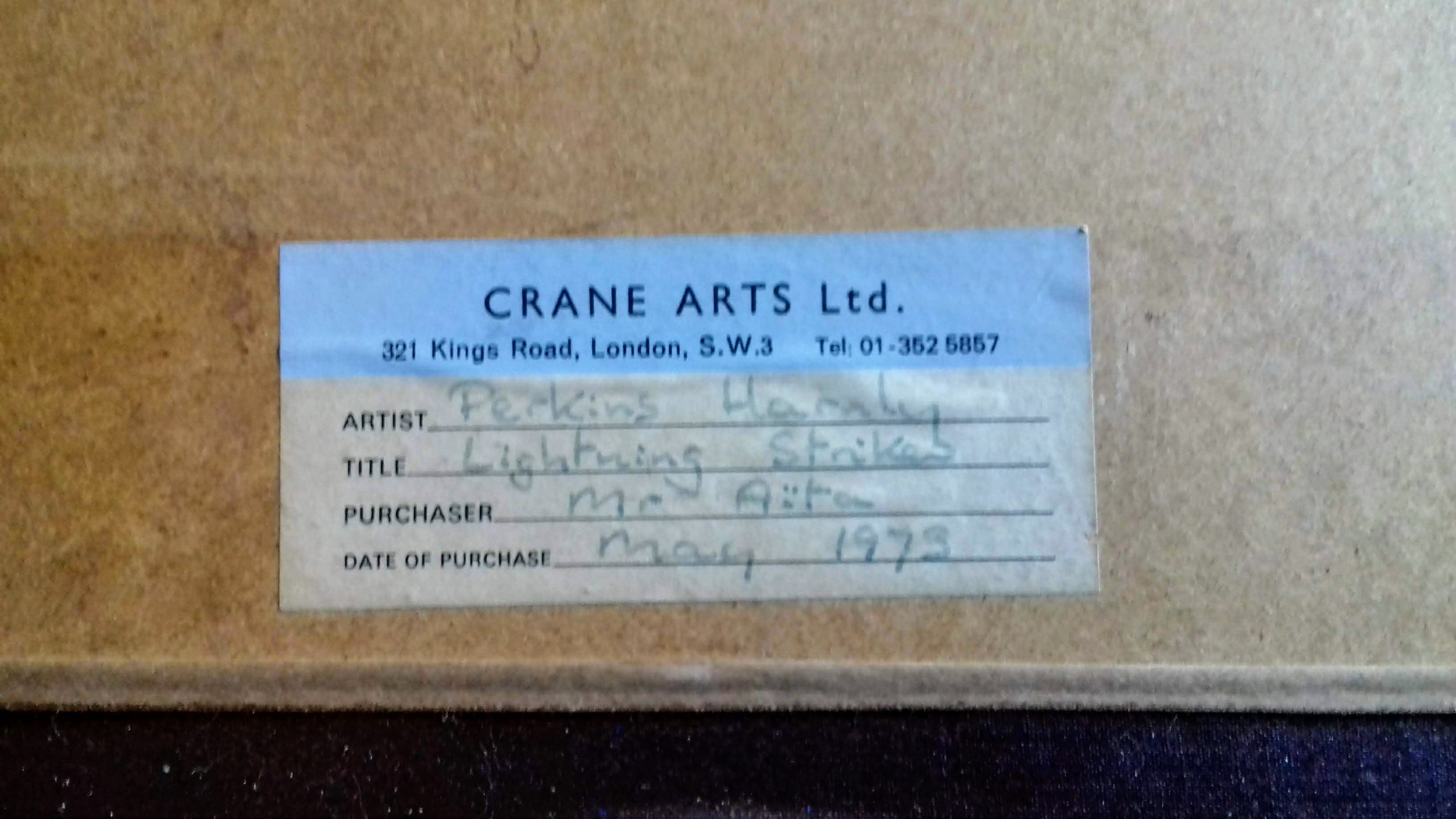
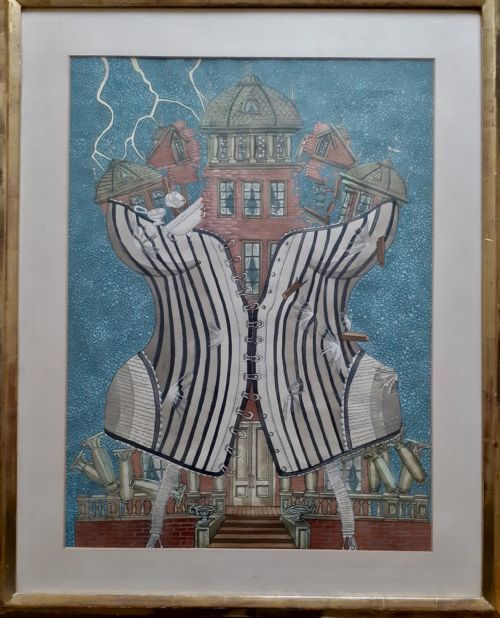
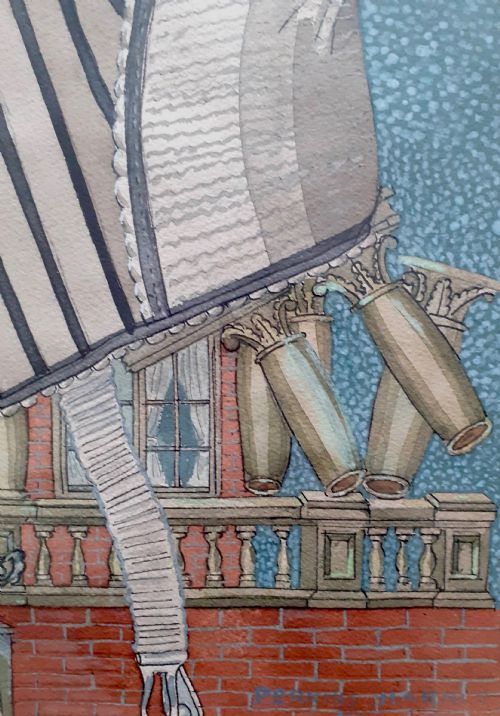
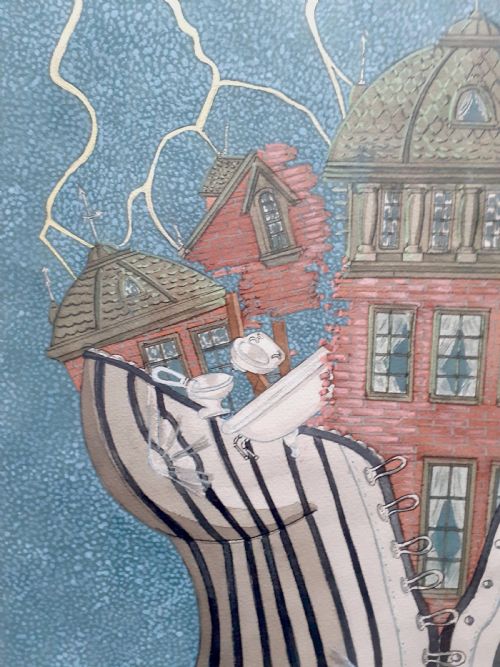
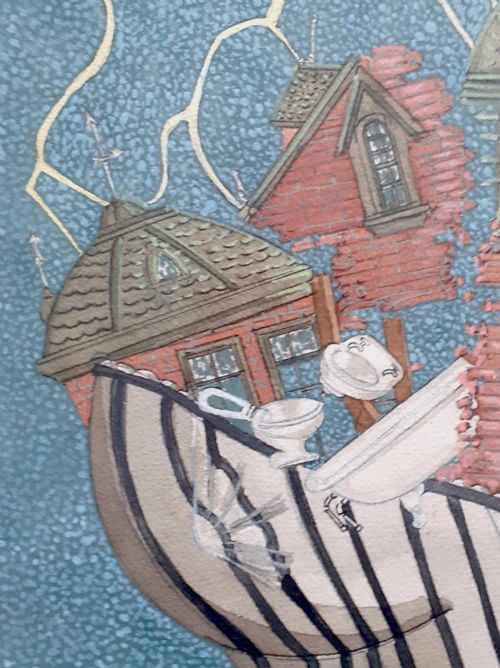
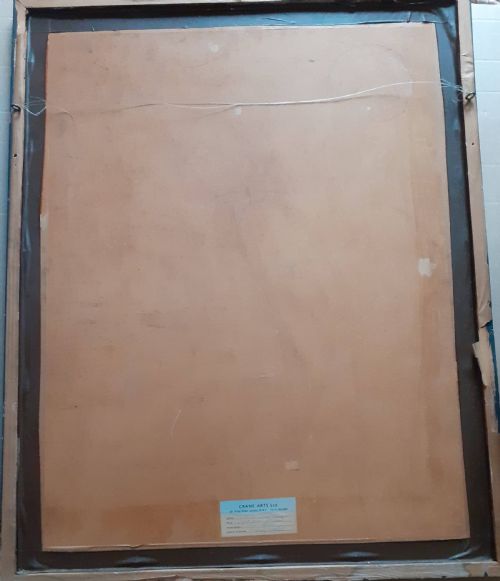
All this allows to situate the important watercolour - Harnly's medium of choice - in its art historical context. Measuring 74 x 65 cm and signed at the lower right the work has prestigious provenance: it was acquired by the past owner at Chelsea's Crane Kalman Galleries in the early 1970s (back then trading as Crane Arts Limited), with the Gallery's label on the verso. The overall framed size is 95.5 x 77 cm (original frame with some wear and repair).
Skippings Fine Arts has dated this piece to the 1950s.
Modern french & continental pictures selected by a former french auction house expert
You can view the stock and full dealer information on the Skippings Fine Arts Profile Page
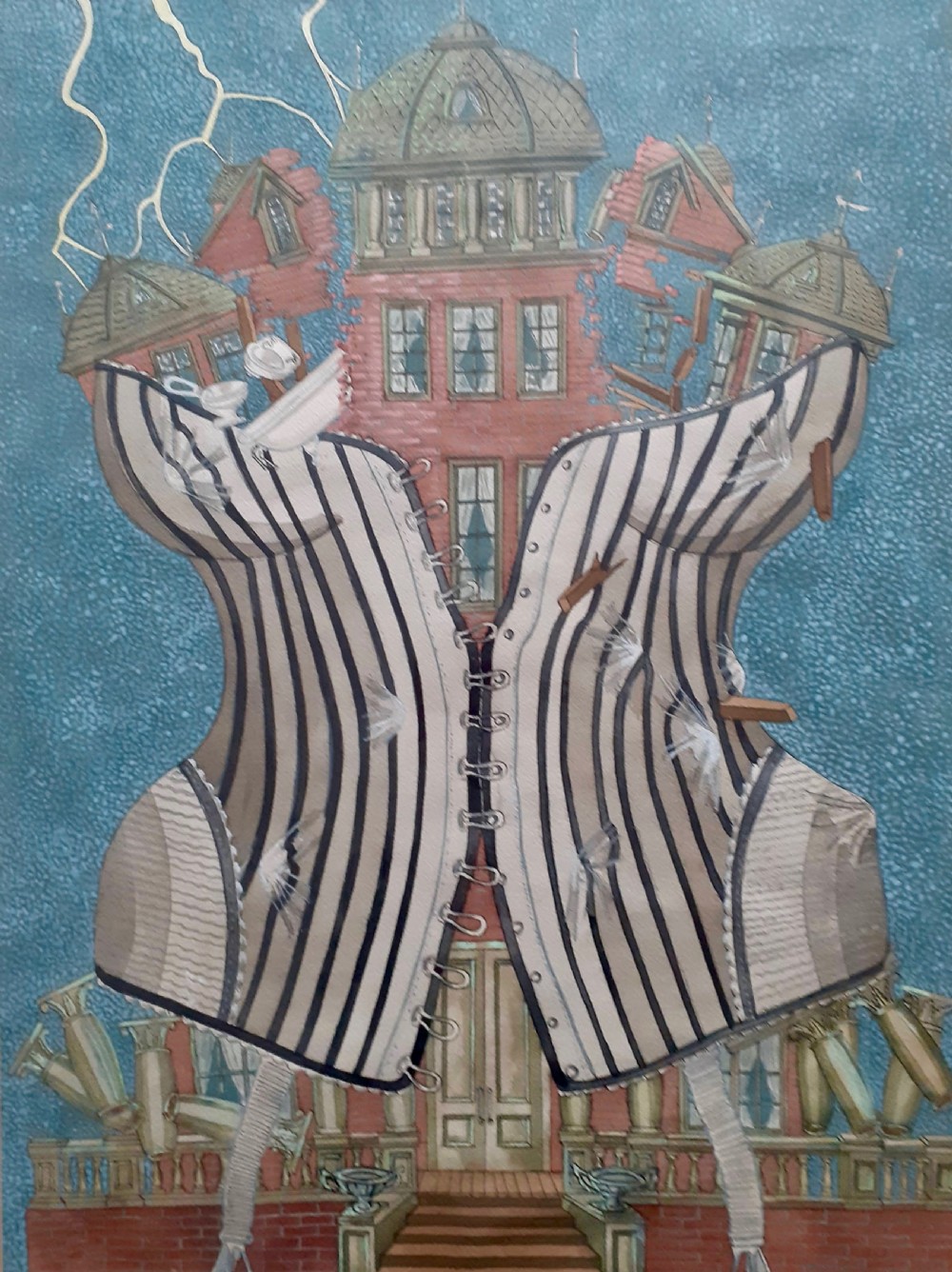
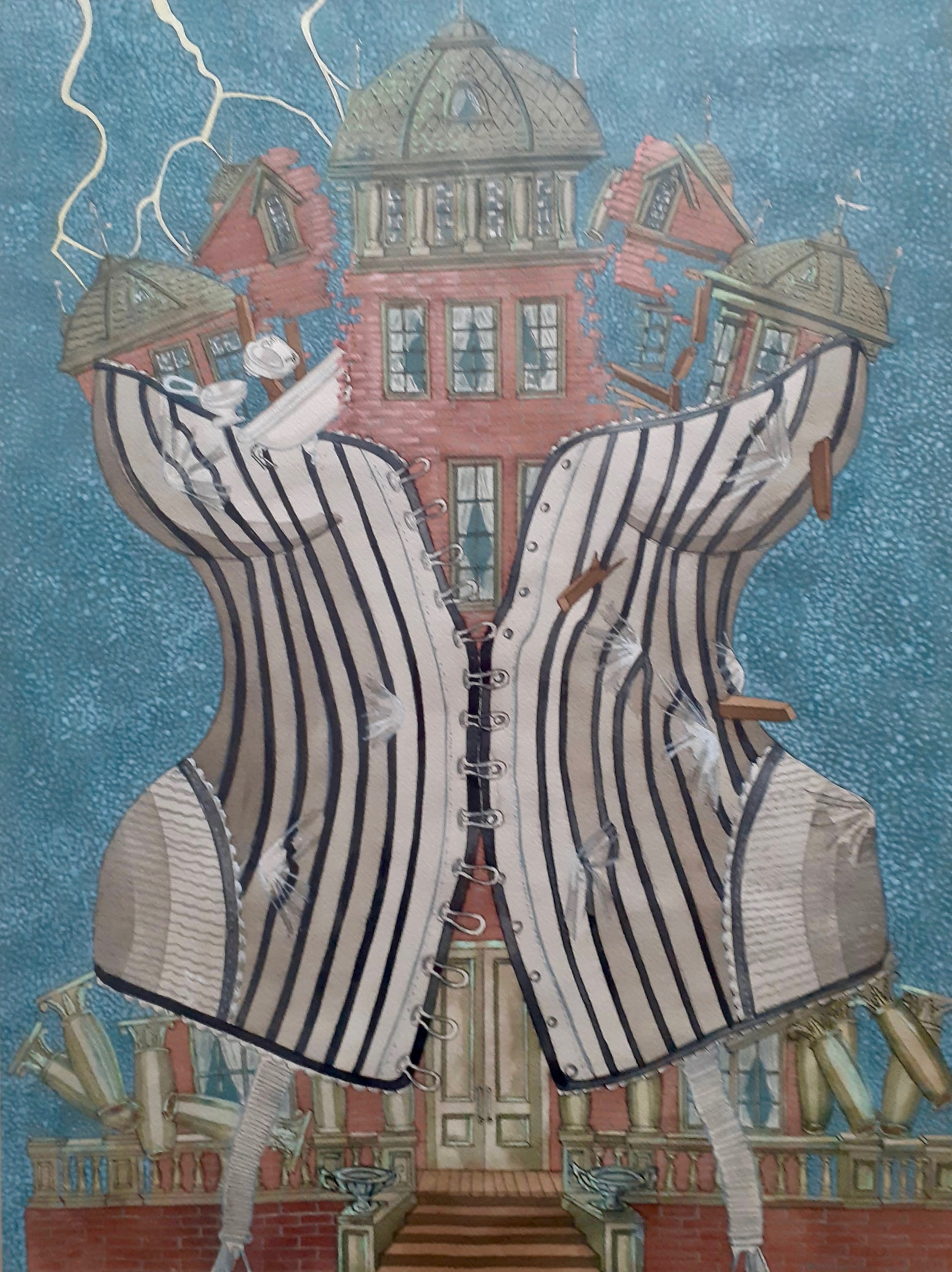
Masterpiece: Huge Surrealist the Victorian House - Prestigious Provenance American Mid Century Modernist, with Crane Kalman London Lightening Strikes Painting