Jason Clarke Antiques has dated this piece to the 1890s.
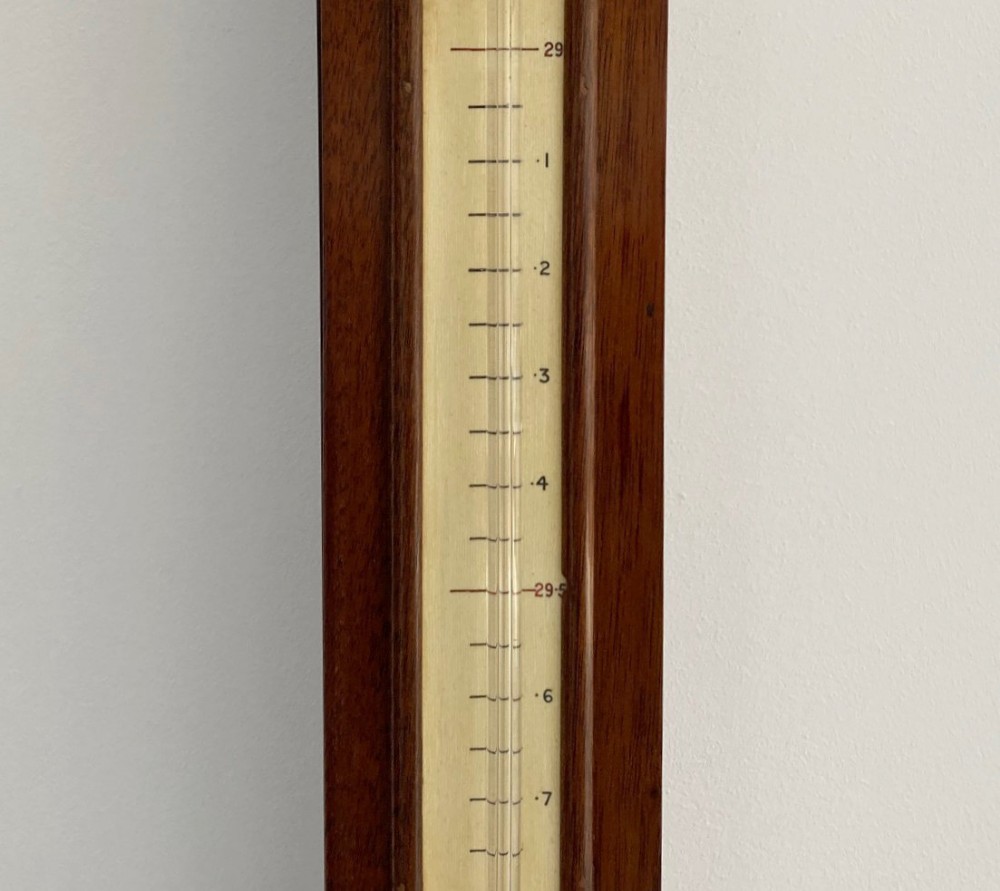
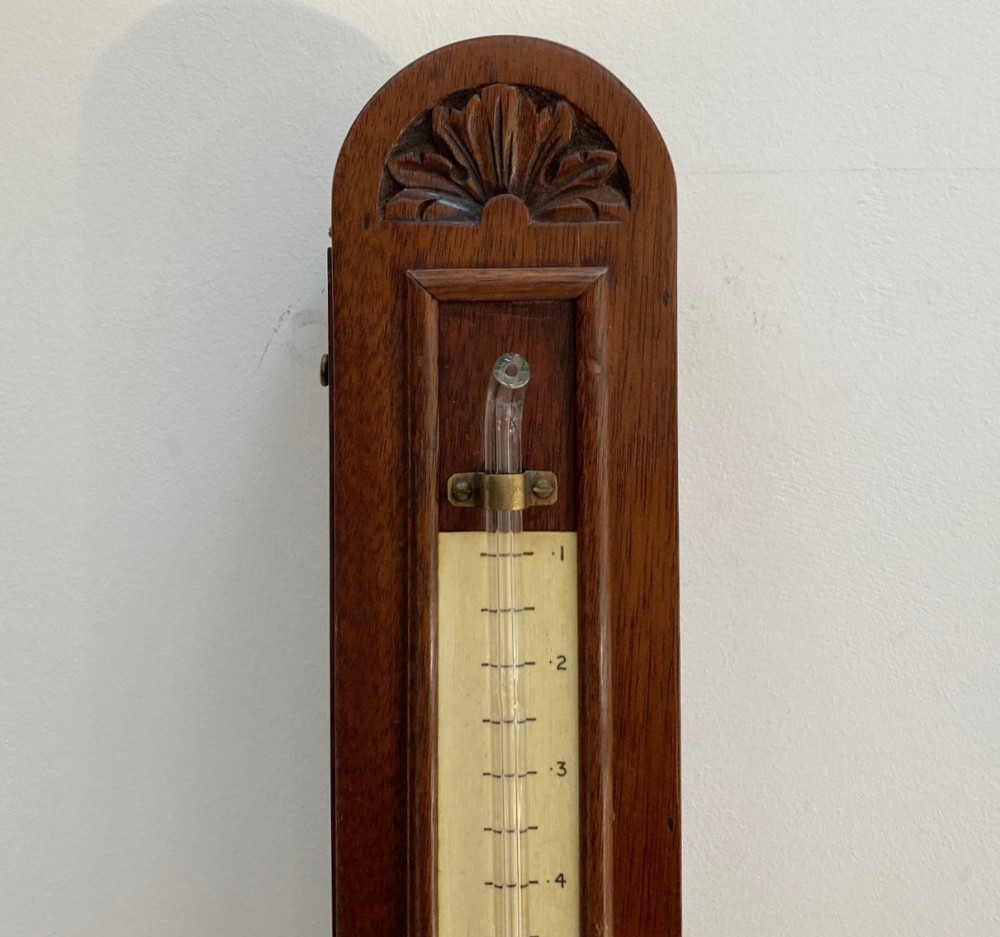
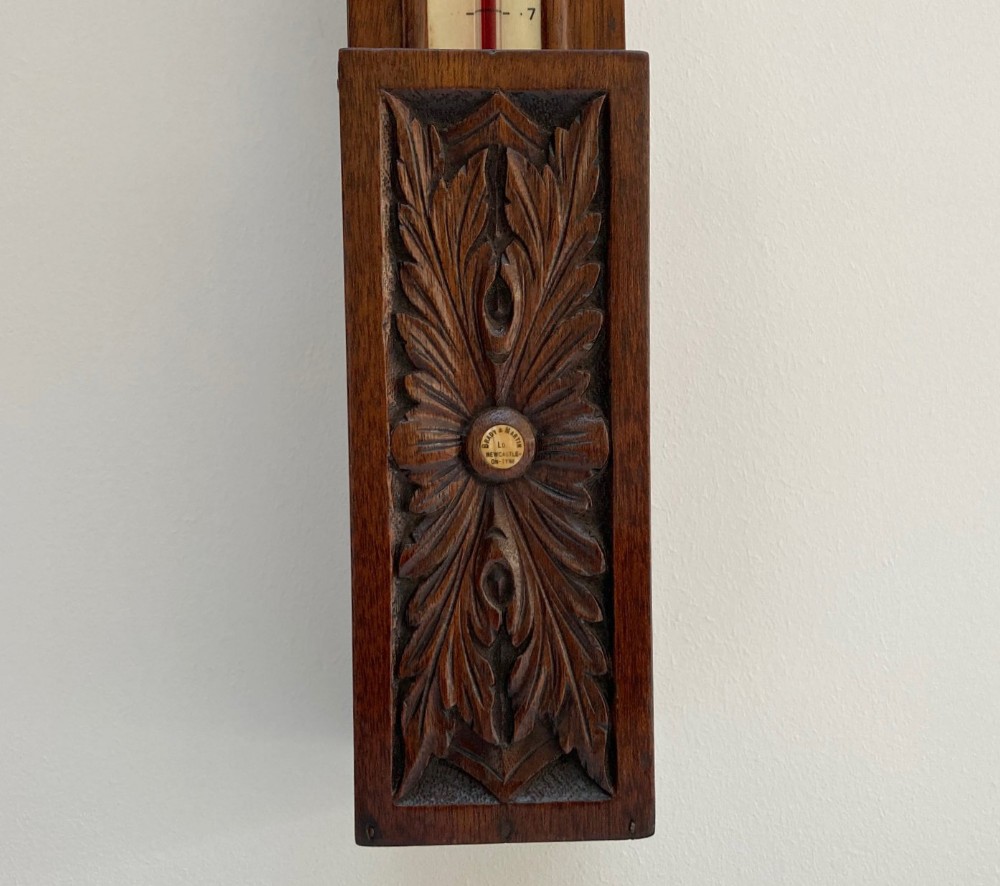
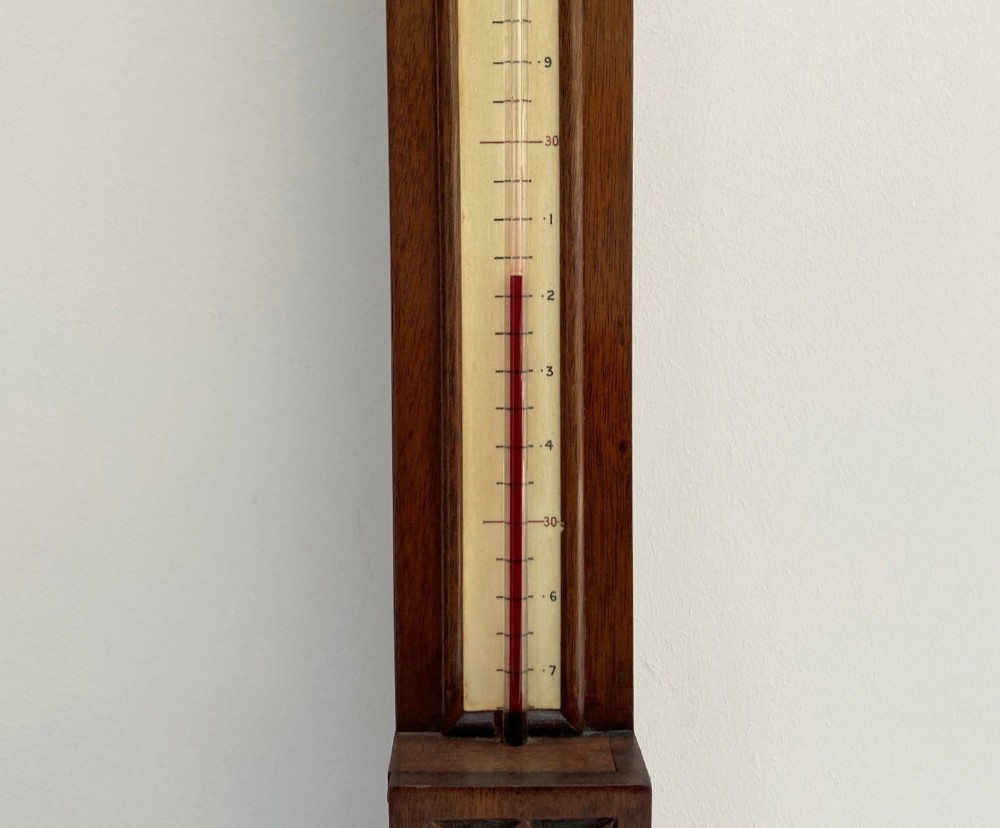
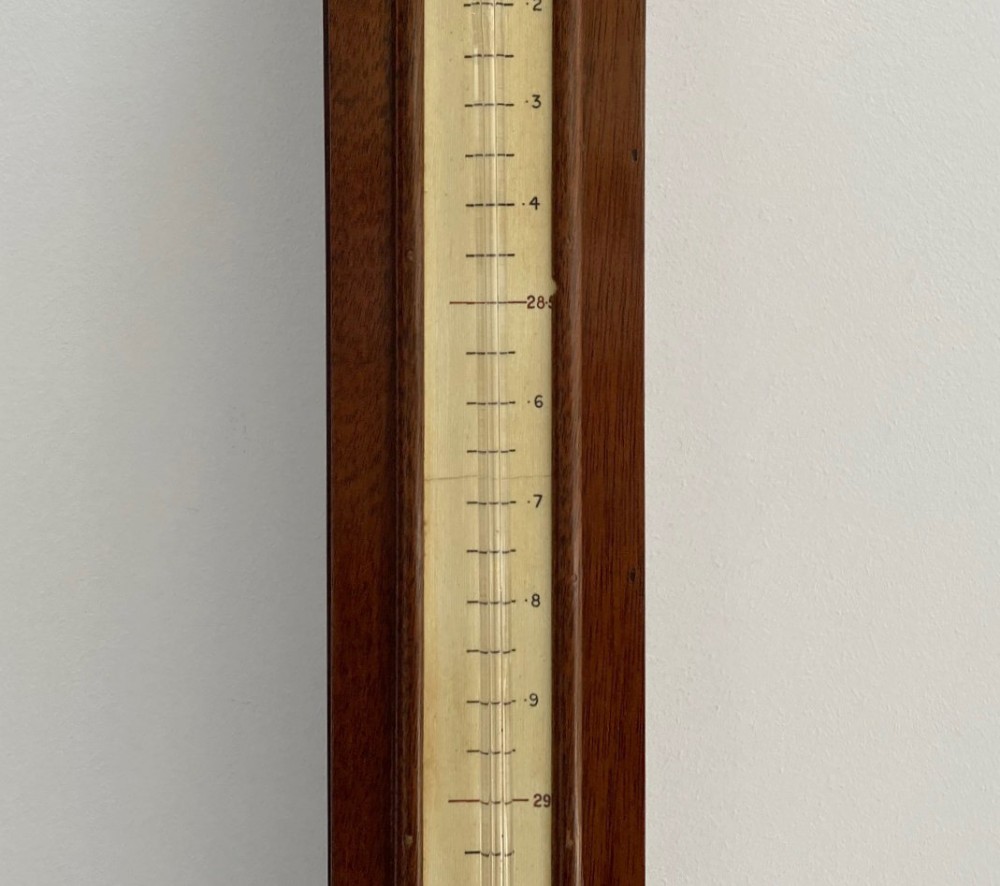
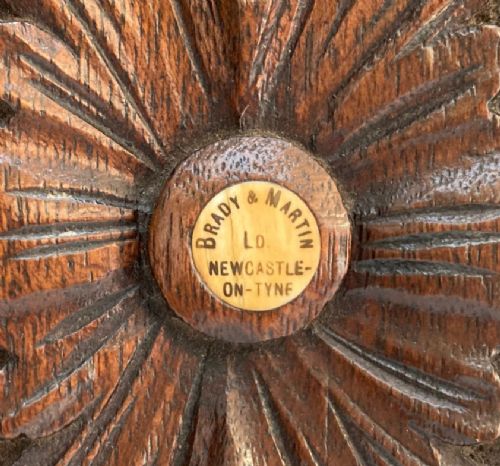
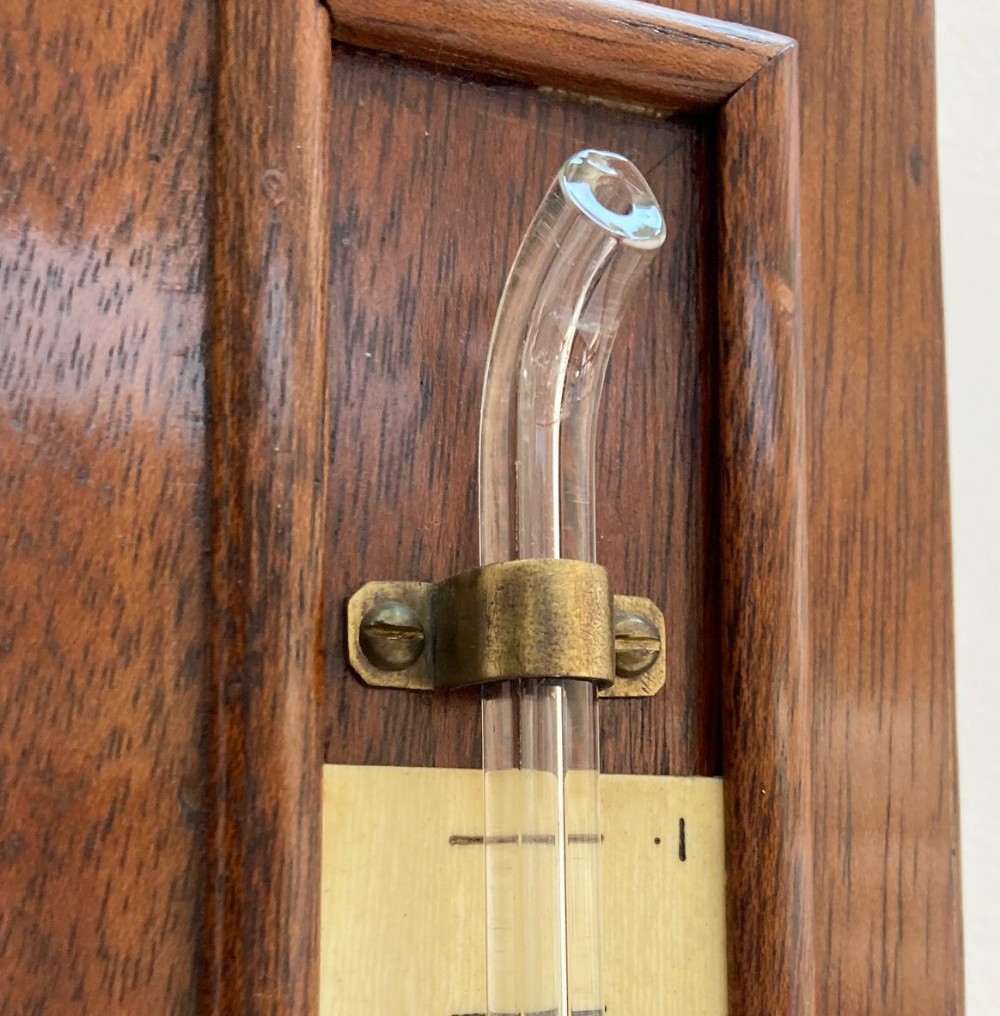
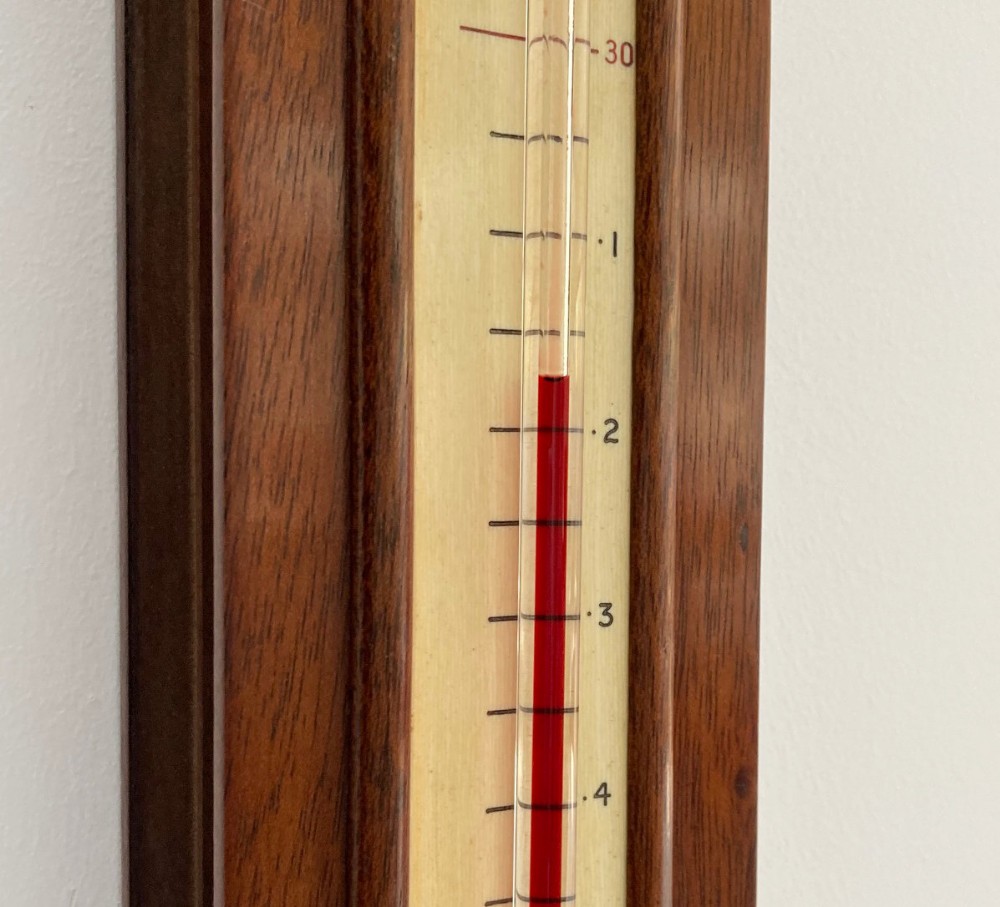
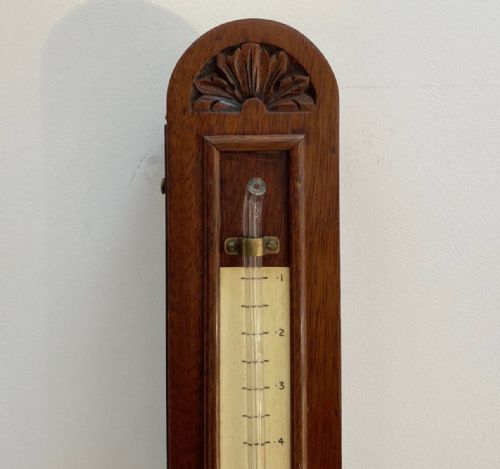
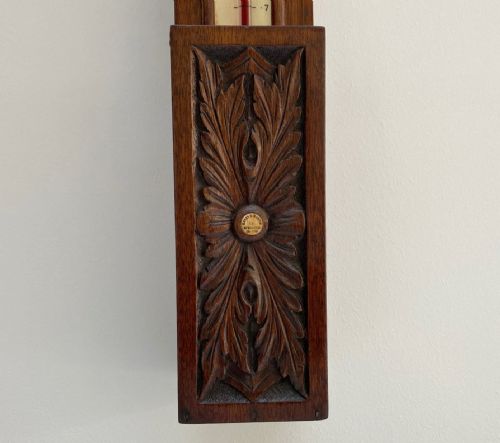
1 to 30.7 inches of barometric pressure. An exposed, open topped tube filled with red dyed liquid (glycerine) is fixed to the front and runs the length of the scale down into the carved oak cistern cover, the front of which has a circular ivorine maker’s plaque to “Brady & Martin Ltd, Newcastle on Tyne”.
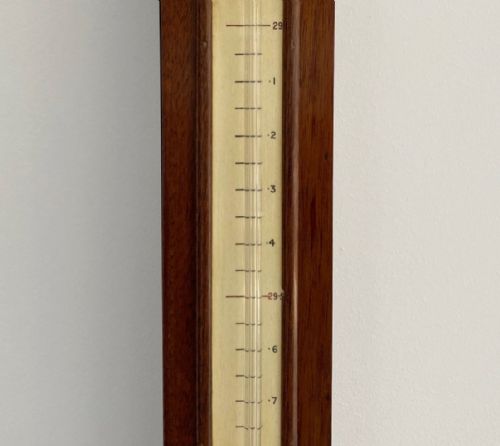
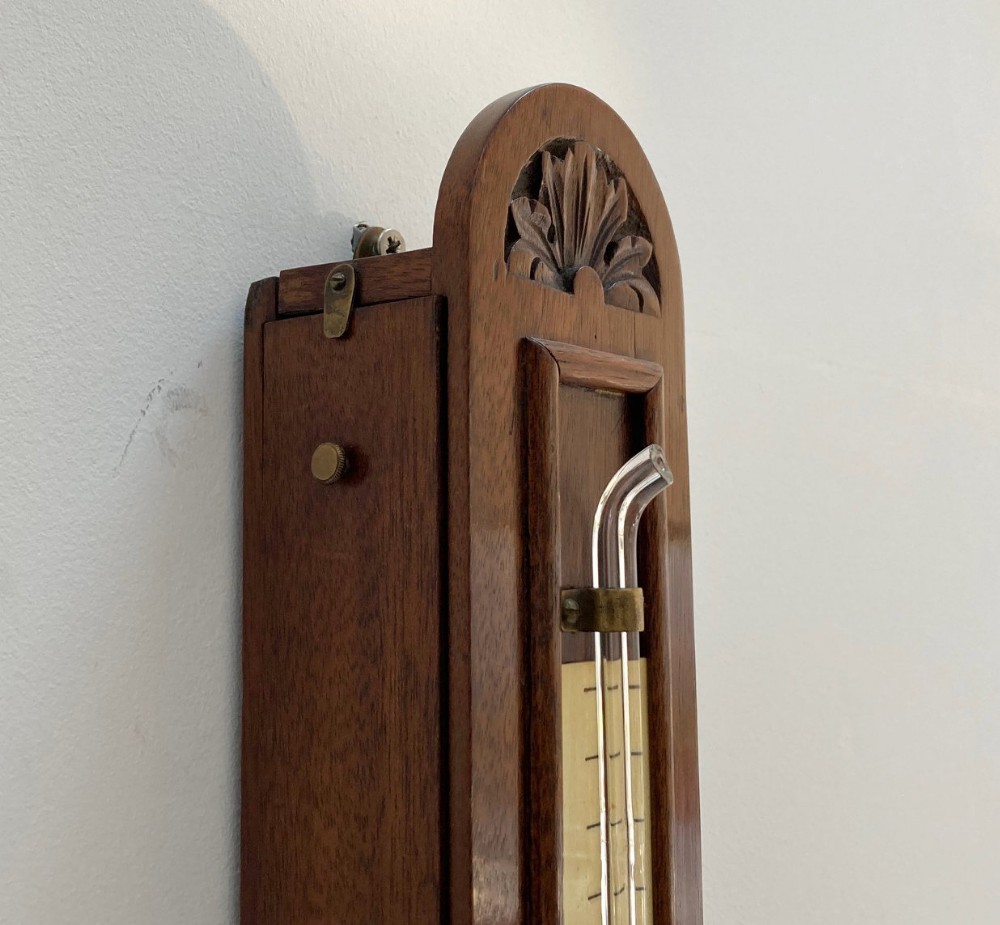
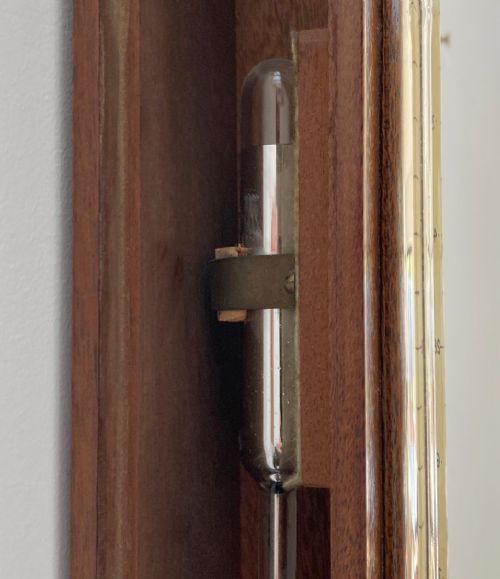
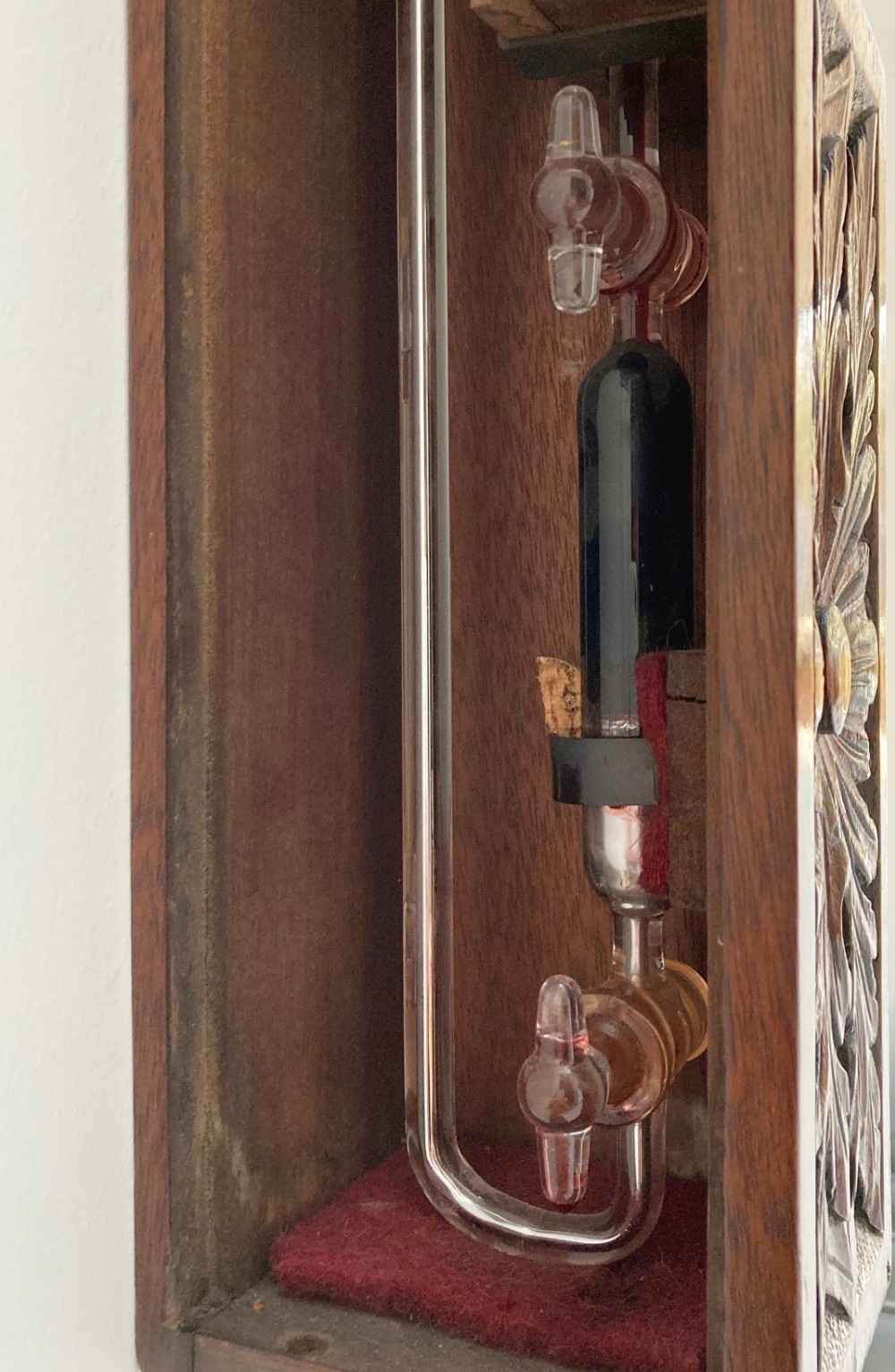
The inside of the instrument is accessed by means of a removable side panel which exposes a rather unusual tube system. The top of the tube has a large bulb containing mercury which is completely filled until it curved up and terminates at a secondary bulb at the base. This bulb is filled with mercury a third of the way up and the red glycerine is then filled on top of it. This glycerine then follows up through the cistern cover and is the means from which the barometer reading is taken from the scale.
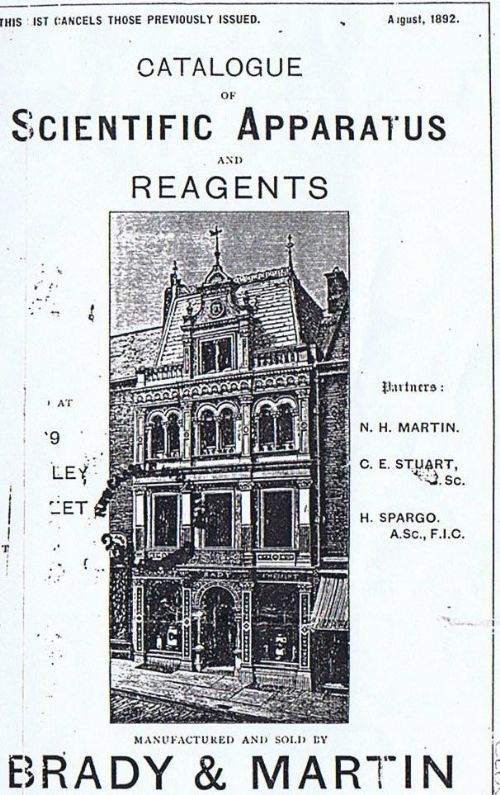
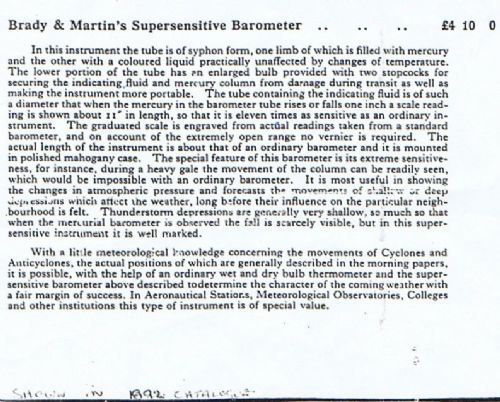
The two liquids do not mix due to the weight differentials of both. It is explained by Brady & Martin in their 1892 catalogue as follows:
“Brady & Martin’s Supersensitive Barometer - £4 10 0
In this instrument the tube is of syphon form, one limb of which is filled with mercury and the other with a coloured liquid practically unaffected by changes of temperature. The lower portion of the tube has an enlarged bulb provided with two stopcocks for securing the indicating fluid and mercury column from damage during transit as well as making the instrument more portable. The tube containing the indicating fluid is of such a diameter that when the mercury in the barometer tube rises or falls one inch a scale reading is shown about 11” in length, so that it is eleven times as sensitive as an ordinary instrument. The graduated scale is engraved from actual readings taken from a standard barometer, and on account of the extremely open range no Vernier is required. The actual length of the instrument is about that of an ordinary barometer and it is mounted in a polished mahogany case. The special feature of this barometer is its extreme sensitiveness, for instance, during a heavy gale the movement of the column can be readily seen, which would be impossible with an ordinary barometer. It is most useful in showing the changes in atmospheric pressure and forecasts the movements of shallow or deep depressions which affect the weather, long before their influence on the particular neighbourhood is felt. Thunderstorm depressions are generally very shallow, so much so that when the mercurial barometer is observed the fall is scarcely visible, but in this supersensitive instrument it is well marked.
With a little meteorological knowledge concerning the movements of cyclones and anticyclones, the actual positions of which are generally described in the morning papers, it is possible, with the help of an ordinary wet and dry bulb thermometer and the supersensitive barometer above described to determine the character of the coming weather with a fair margin of success. In aeronautical stations, meteorological observatories, colleges and other institutions this type of instrument is of special value.”
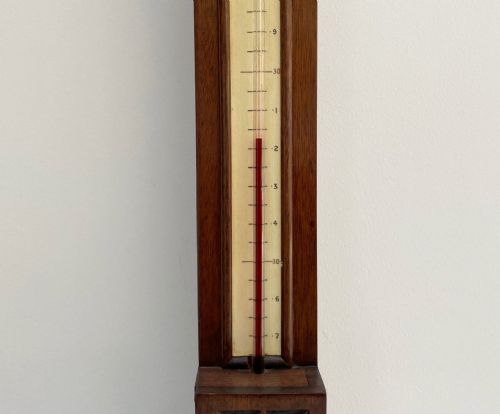
This barometer bears huge similarities to the Negretti & Zambra “Long Range Glycerine Barometer” which can be found in their catalogues of the period (slightly earlier) although this one has the interesting addition of two stopcocks as explained above and as can be seen in the images provided. We may therefore assume that although not unique as an invention, it did go some way in attempting to resolve the age old issue of the portability of mercury type barometer.
Brady & Martin was founded in 1855 by the scientist and pharmceutcal chemist, Henry Bowman Brady FRS (1835 – 1891) at the age of twenty one after se
Jason Clarke Antiques has dated this piece to the 1890s.
You can view the stock and full dealer information on the Jason Clarke Antiques Profile Page
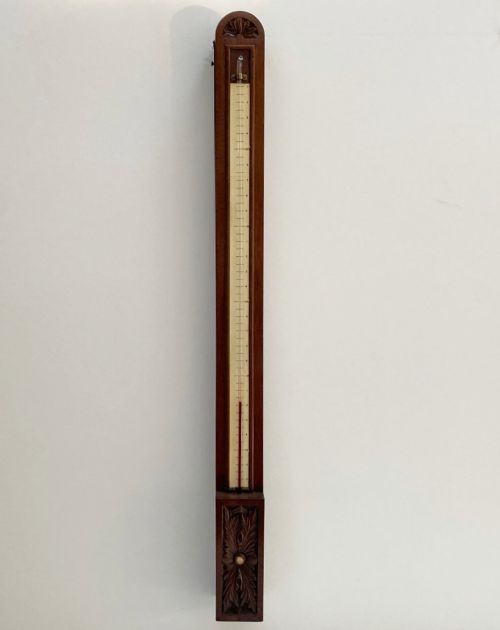
Late Victorian Supersensitive Barometer by Brady & Martin Limited Newcastle