Titan Fine Art has dated this piece to the 17th Century.
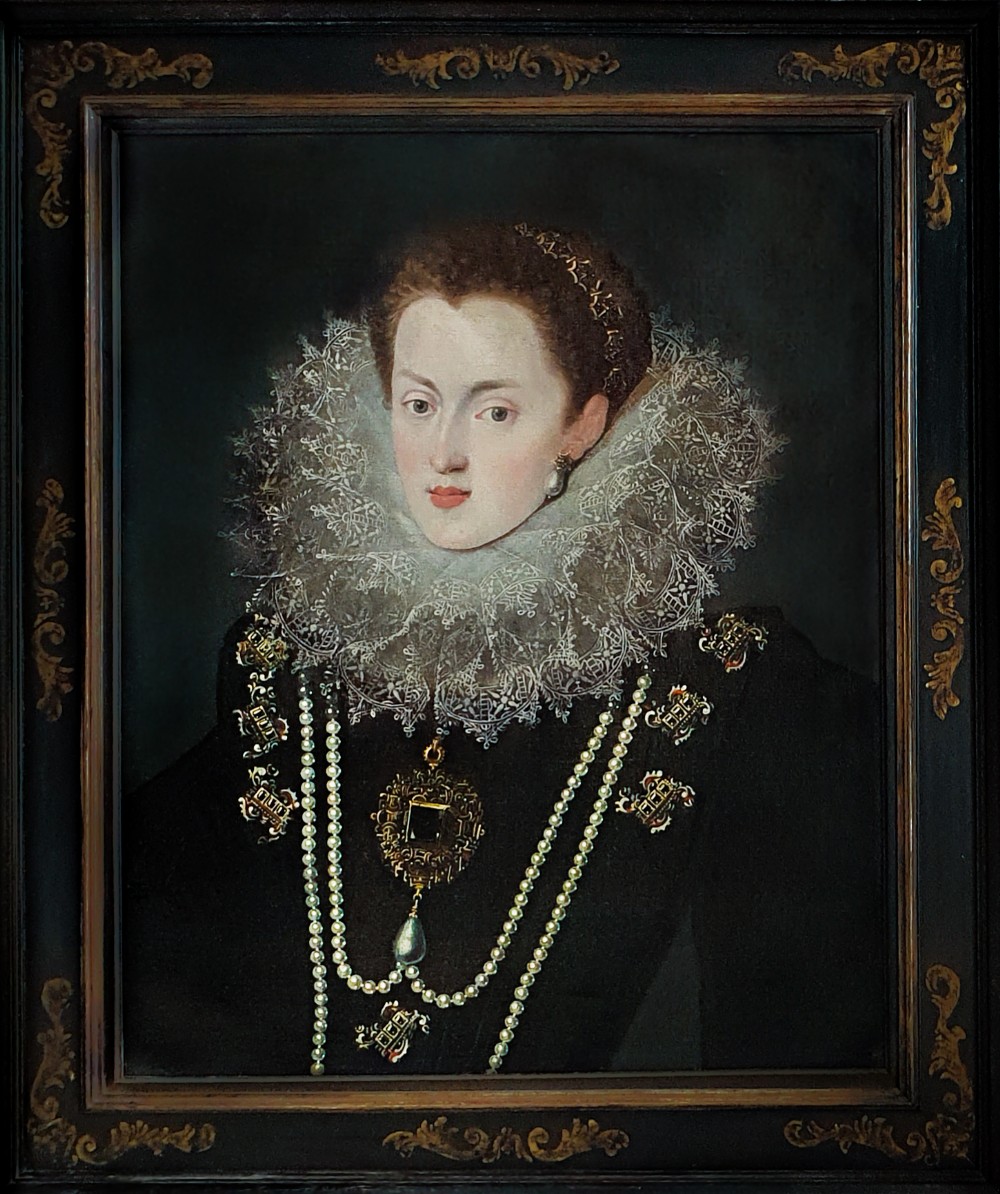
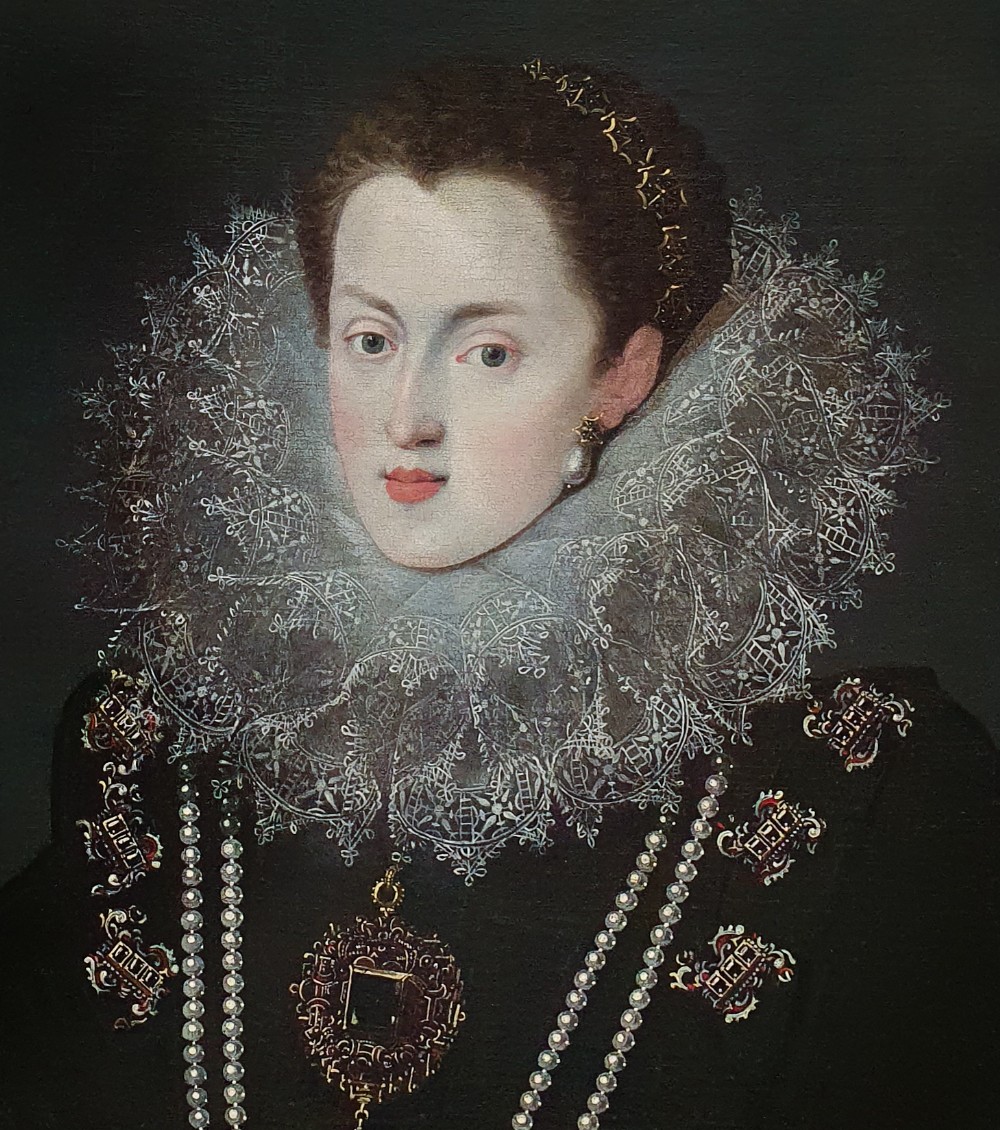
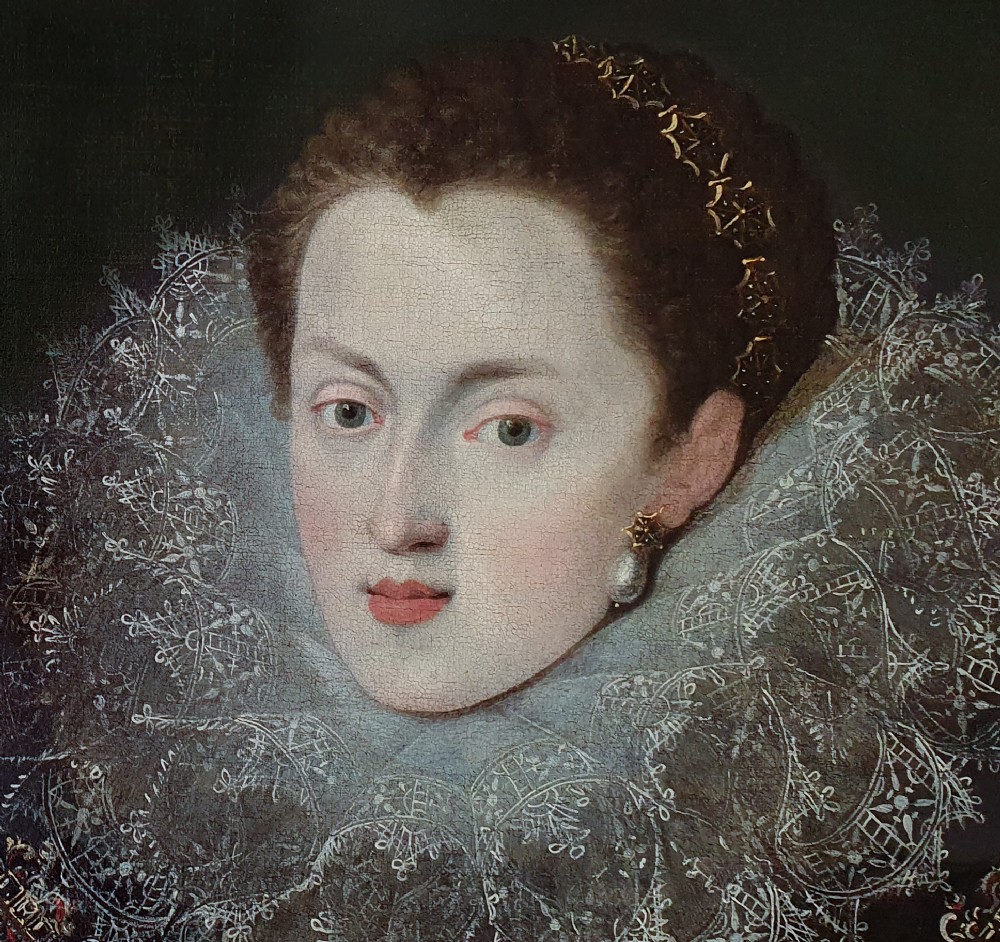
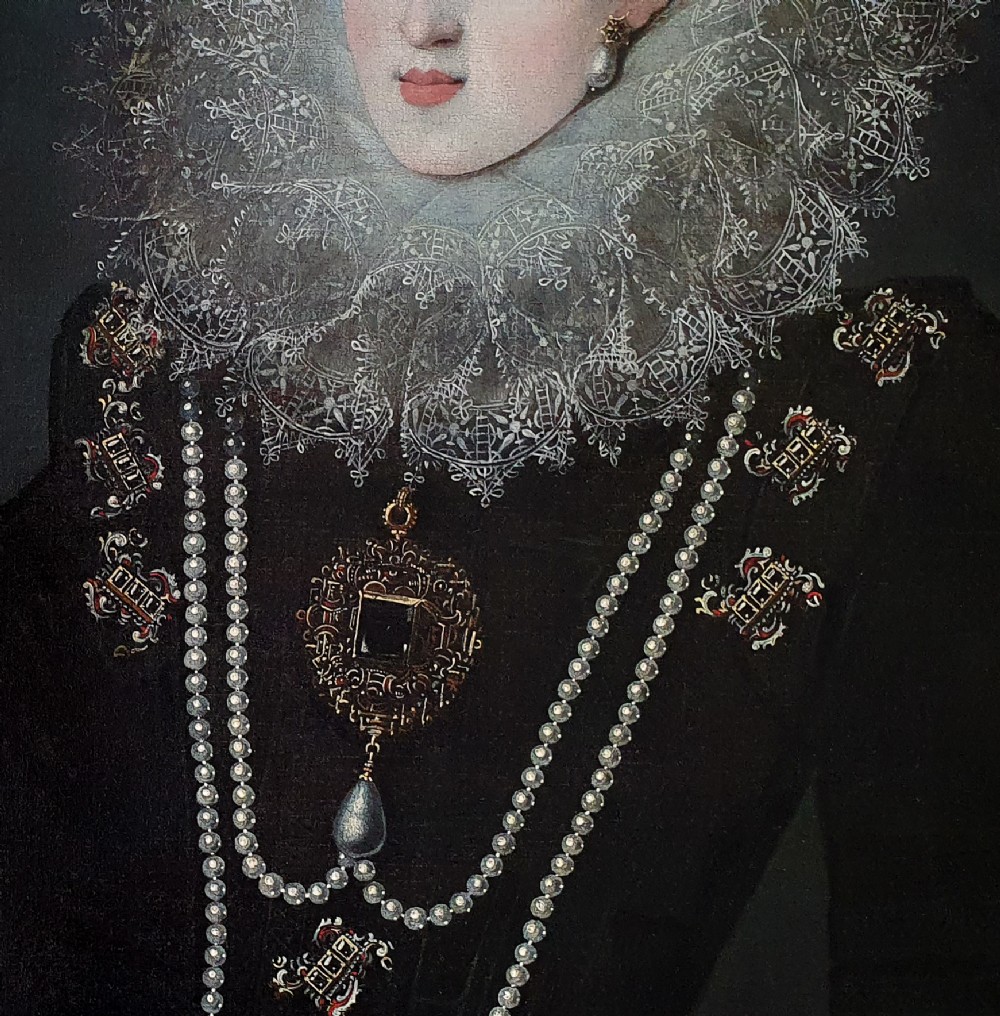
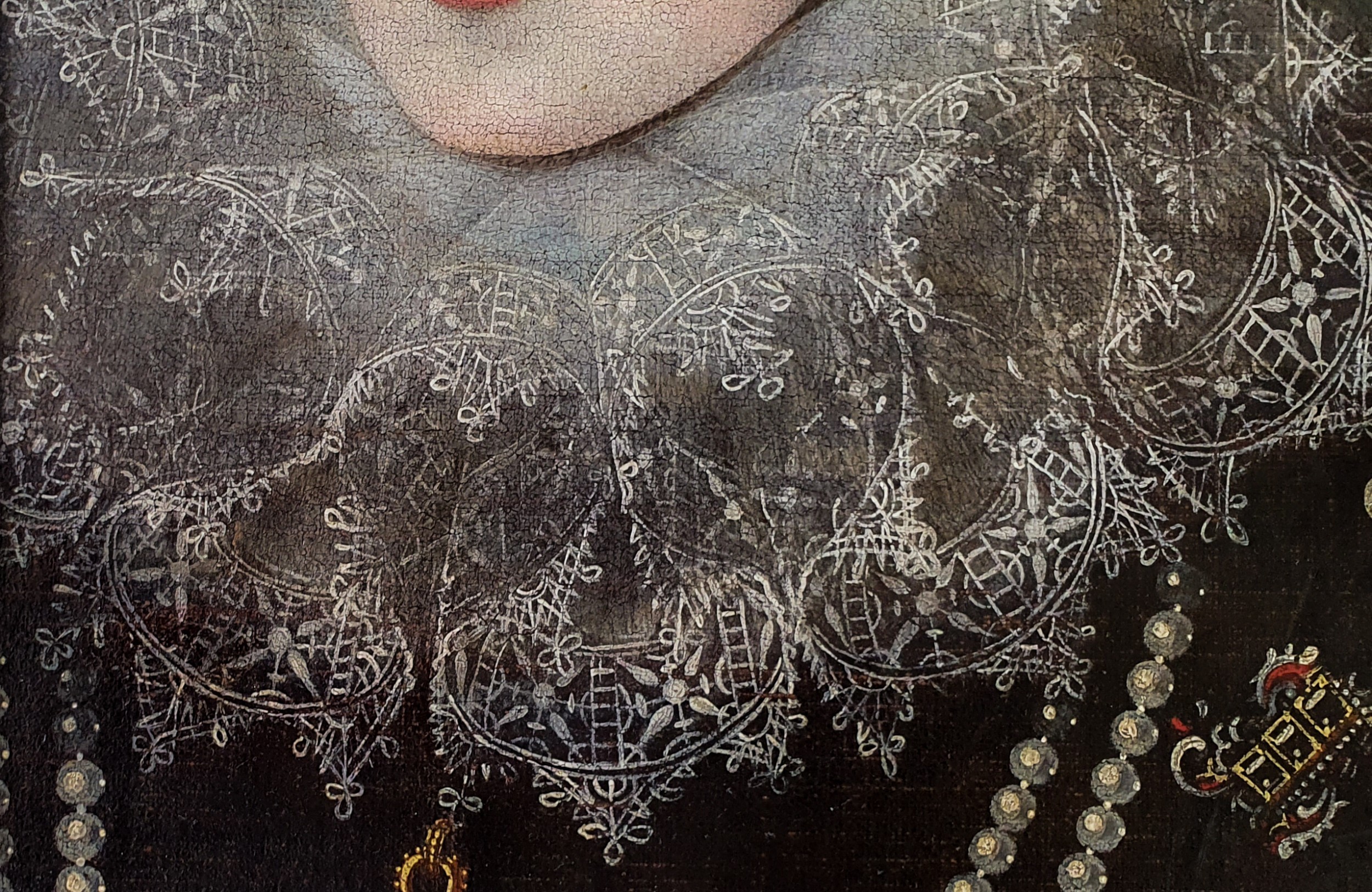
The portrait, by the workshop of the leading court portraitist Pantoja de la Cruz (1553-1608), depicts Margaret of Austria (1584-1611), Queen consort of Spain and Portugal by her marriage to King Philip III. The queen is depicted as immutable and inscrutable, somehow hidden behind her extraordinary dress and the enormous ruff collar that isolates and highlights her illuminated visage. She wears the spectacular ‘Joyel Rico’ which is one of the most famous jewels in history. With origins from the 16th century it consists of the El Estanque table-cut diamond and from it hangs the La Peregrina pearl given to Mary I of England (1516-1558) by Phillip II as an engagement gift but returned to the Spanish crown on her death.
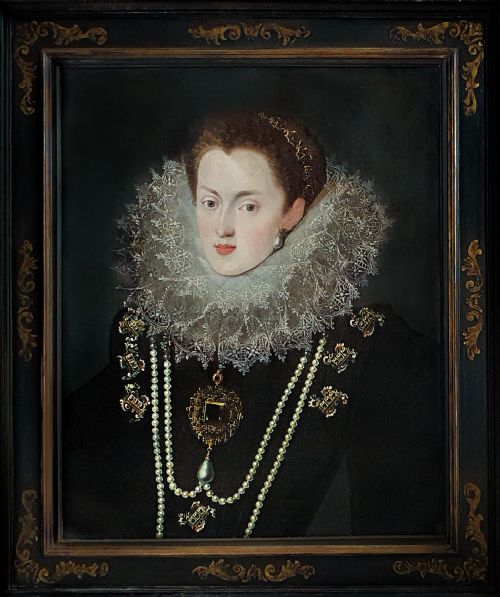
Margaret married Philip III in 1599 after Philip II chose her from among the women of the Austria-Styria family. The marriage was planned to coincide with that of infanta Isabel Clara Eugenia and archduke Albert. Margaret was born in 1584 and when she arrived in Spain in April 1599, she had already been married by power of attorney in Ferrara. She was known for her discretion and virtue - traits almost systematically attributed to the Habsburg women, whose service to the Crown and the family consisted of insuring their biological continuity and the maintenance of religious practices that consisted, in Margaret´s case, of directing the patronage of three religious foundations: the Descalzas Reales in Madrid, the Jesuits in Salamanca, and La Encarnación in Madrid, a convent of Augustinian Recollect nuns very close to the Royal Alcázar. She is also said to have participated in the conspiracy against Philip III´s all-powerful favourite, the Duke of Lerma, who was at one point suspected of killing the queen. But like so many queens of Spain, Margaret died in childbirth at the early age of twenty-seven. She was the mother of Philip IV, of Ana, future queen of France; Maria, who later became empress of Austria; and of Carlos Fernando, cardinal and archbishop of Toledo.
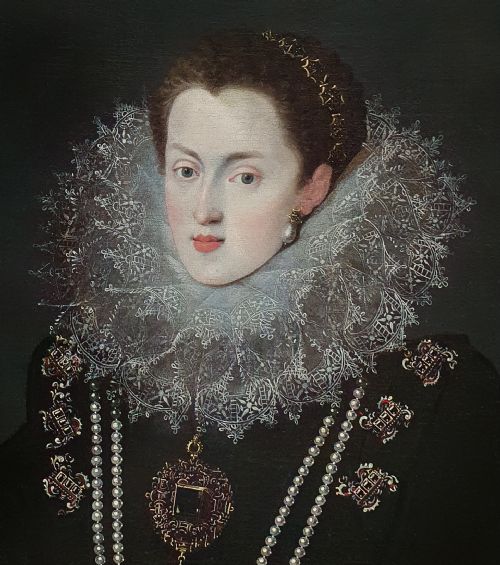
The present work appears to be a bust-length workshop variant of the artist's three-quarter length portrait in the Museo del Prado, Madrid (Inv. no. P01032).
Juan Pantoja de La Cruz was the foremost Spanish portrait painter of the late sixteenth and early seventeenth century and was court painter to both Phillip II and Phillip III of Spain. Juan Pantoja de La Cruz received his training in the Madrid workshop of court painter Alonso Sánchez Coello (1532-1588), who was a follower of Titian, and had pioneered the Spanish manner of portraiture with the additional influence of his Netherlandish master Anthonis Mor van Dashorst. There are relatively few signed works by Pantoja prior to the death of Sánchez Coello in 1588, though he was by then an independent artist. Concerned more with the portrayal of solemn and imposing majesty than with reproducing an individual likeness, Pantoja's style of portraiture perpetuated that of Sánchez Coello, reflecting the influences of both the Venetian and Flemish traditions. His portraits are characterised by a precise handling of elaborate textures and a Netherlandish precision in the rendering of detail, particularly as regards the ornate attire and jewels worn by the court. However, in his treatment of faces he clearly references the Venetian school, in particular Titian.
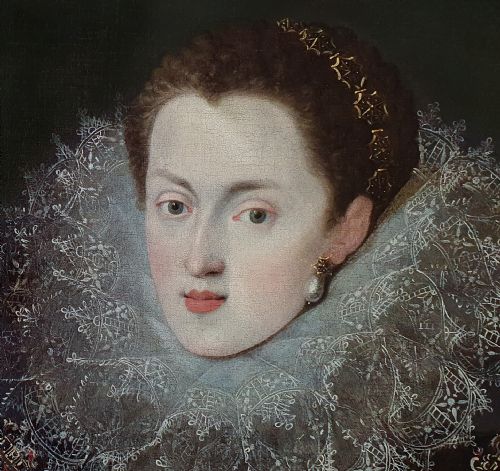
Portraits of Spanish Habsburg Queens were designed to be complementary to those of Kings and have a distinct iconography. Depicted formally without humour or seductive charm, portraits of Habsburg Queens traditionally subordinate the individual to the body politic responsible for sustaining the legitimacy and succession of the dynasty.
Titan Fine Art has dated this piece to the 17th Century.
Specialist in 17th & 18thc portraits. Highly curated selection, museum-level research & pro conservation. Exceptional art, expertly vetted.
You can view the stock and full dealer information on the Titan Fine Art Profile Page
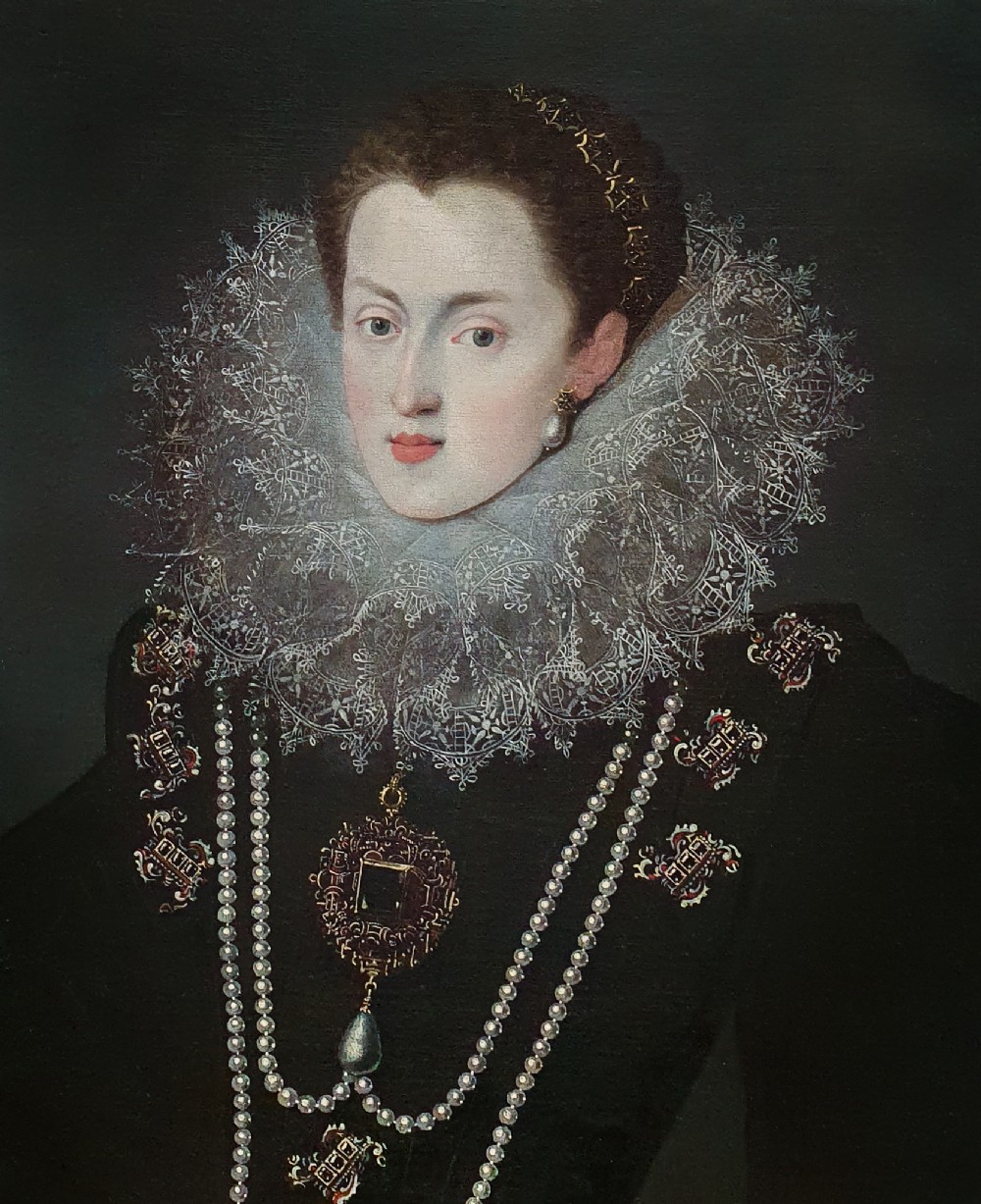
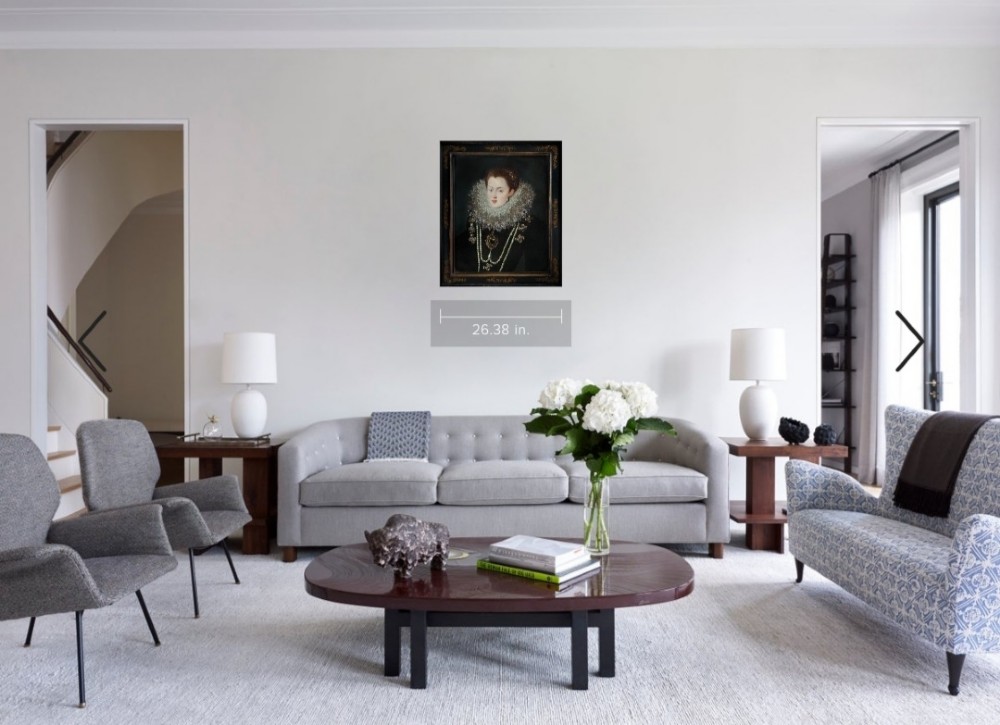
Portrait of Margaret of Austria, Queen of Spain & Portugal C.1607; Workshop of Juan Pantoja De La Cruz (1553-1608)