6,119  PAGES BROWSED TODAY PAGES TODAY 12 ANTIQUES UPLOADED TODAYNEW ARRIVALS
12 ITEMS ADDED TODAY
Sort Order
Items Per Page
Browse Categories
Sort order
Items per page
ID #SA715496
SOLD
Email Phone
Save
Oil Painting by John Linnell Royal Academy "Feeding Sheep"
Sold by Walton House Antiques
sold SA715496
Sorry, but this item has been sold.
Walton House Antiques

Walton House Antiques

Sellingantiques Verified Since Oct 2011
Browse dealers 247 items
  • About Us
    Specialists in 18th and early 19th century antique furniture 19th century oils and 19th french ormolu clocks
  • Trade Associations
    Walton House Antiques is a registered member of LAPADA  CINOA
Id #SA715496
PDF SHARE
SAVE

Oil Painting by John Linnell Royal Academy "Feeding Sheep"

19th century
Description

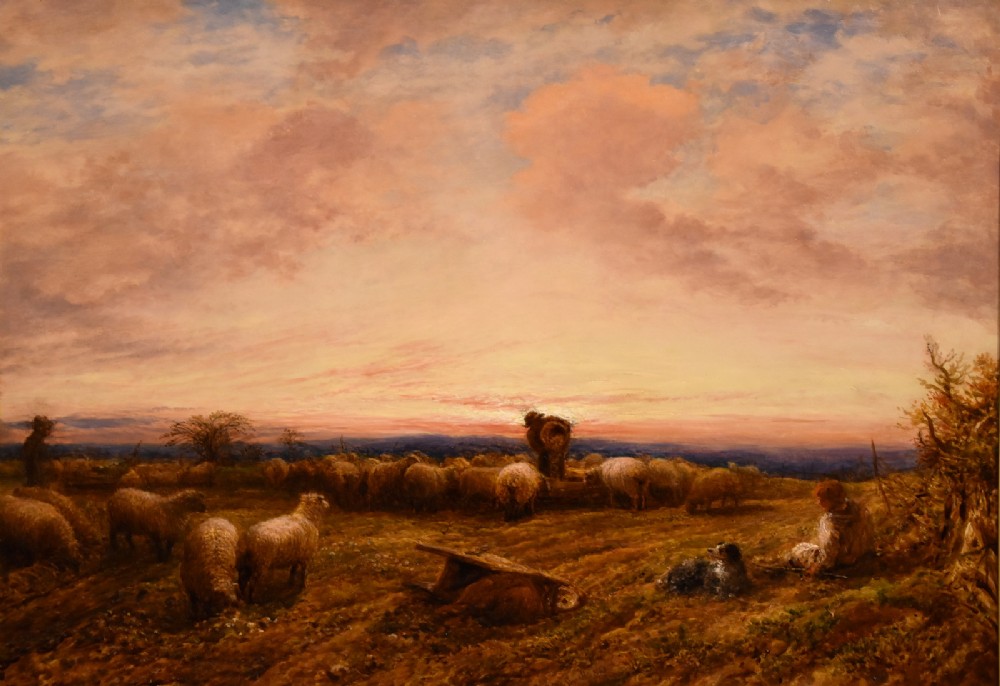
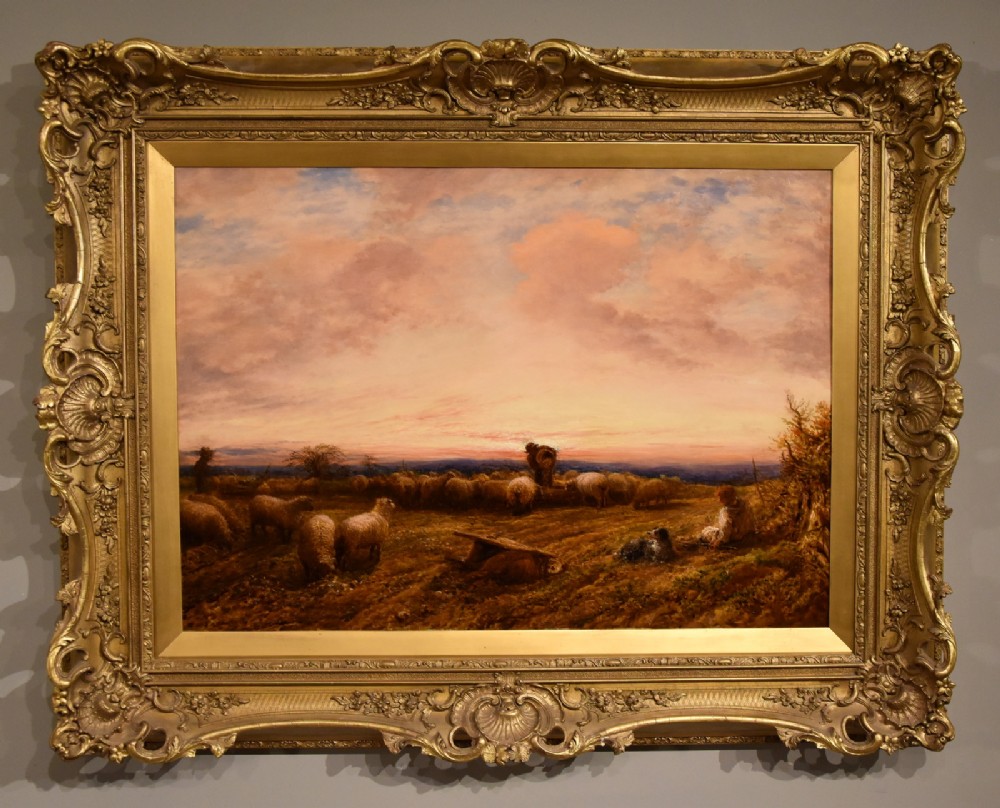
"Feeding Sheep" by JOHN LINNELL,R.A. John Linnell 1792-1882 an outstanding work by a leading member of the Royal Academy, ranking alongside William Blake and Samuel Palmer (his son-in-law). His work is found in most prominent collections, and he was a regular exhibitor at the Academy, where this painting was shown three times: 1863, no. 671, then in the Modern Masters Exhibition 1883, no. 83, and finally in the Winter Exhibition of 1901, no. 9. Provenance: H.J.Turner, Stockleigh House, Regent's Park
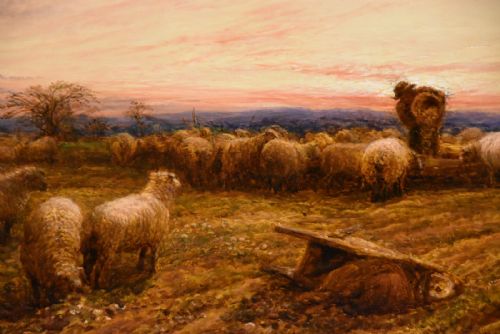
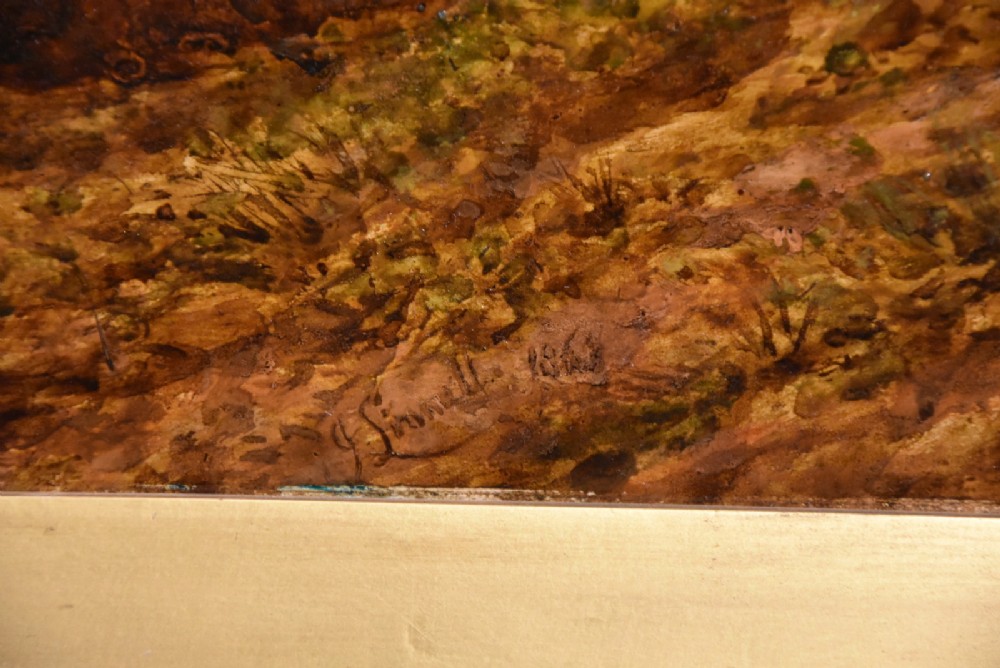
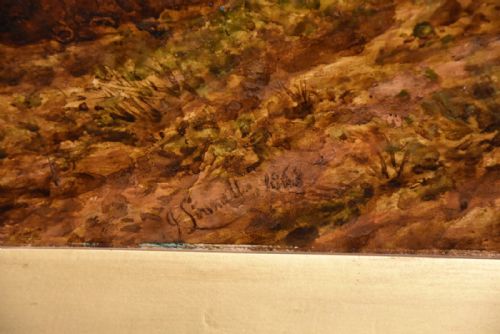
Oil on Panel, signed and dated 1863

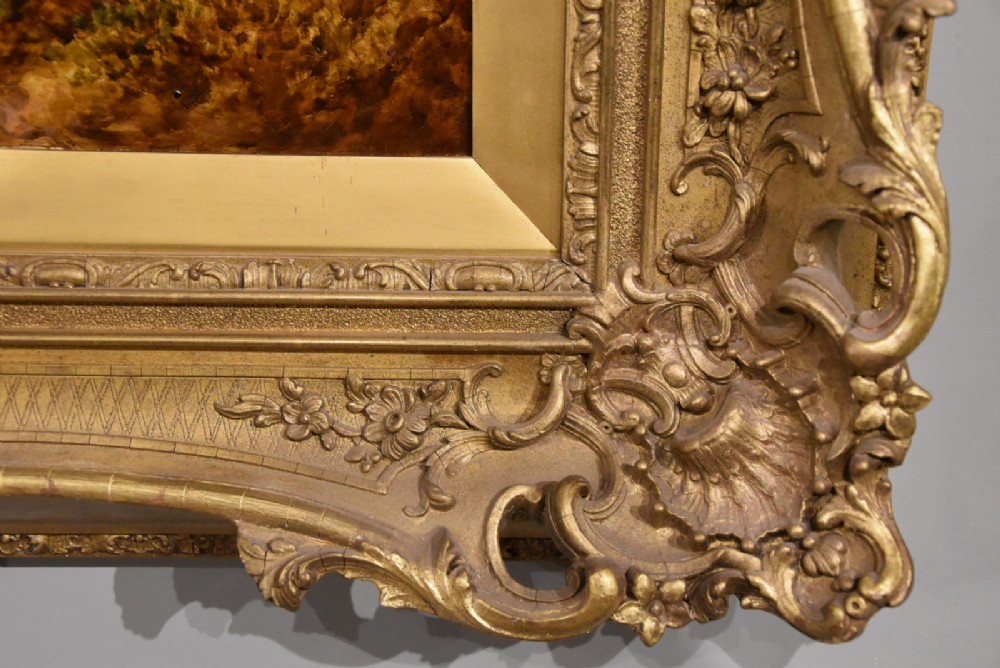
Fine Original Frame

Exhibited: Royal Academy 1863 no.671

Royal Academy Exhibition of Old and Modern Masters 1883 no. 83

Royal Academy Winter Exhibition 1901 no.9

Provenance: H.J.Turner Esq.
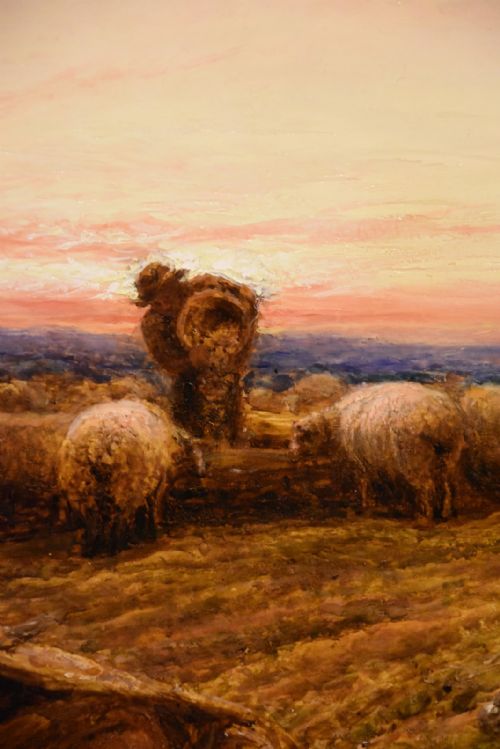
Stockleigh House, Regents Park, Inverness House, Porchester Square

John Linnell, not just a great painter but a true artist. A man for whom life and art were inextricably linked, one serving the other. John Linnell was born into an ordinary working family, his father was a frame maker and his uncle a furniture maker. He rose to become one of the outstanding landscape painters of the 19th century, ranking alongside William Blake and Samuel Palmer.
As a youngster he was noticed and assisted by the great Sir Benjamin West, and trained with John Varley. William Mulready then became his mentor and ‘champion’. As with many artists, the initial years were hard, and Linnell had to take up portraiture to support his large family. However, the whole purport of his being was directed to the ‘realism’ of landscape. He believed firmly that landscape was more than the sum of its parts, and recorded it faithfully in order to show that in landscape there was a reflection of something spiritual, a Divine Hand. He held passionate and unorthodox religious views, rejecting formalised church religion and espousing a brand of low Protestantism, developing his landscape painting as a carriage for religious expression. To a large extent the sheep, harvesters and storms of his landscapes are pastoral metaphors. Occasionally he devised an actual Biblical scene such as ‘Noah, the Eve of the Deluge’, but he preferred to see the hand of God manifest itself in nature.
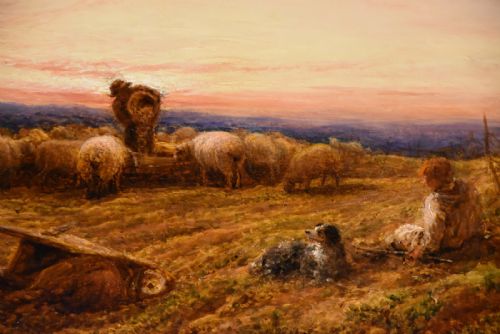
Like Blake, he drew on the work of the Northern Renaissance artists – Durer, van Eyck, Lucas van Leyden and his collaboration with his son in law, Samuel Palmer, was beneficial to both painters. Linnell’s early work is highly descriptive and throughout his life he made use of the camera obscura, and then the camera as it developed. His later ‘mature’ landscapes, from 1850 onwards, look for a distillation of landscape into ‘an aspect of nature’. His technique evolved alongside into light flickering brushstrokes, slightly impressionistic, building forms in layers of fine glazes over a white ground. This use of white ground was borrowed from Blake and was to become one of the major precepts of the Pre-Raphaelites, who much admired John Linnell.
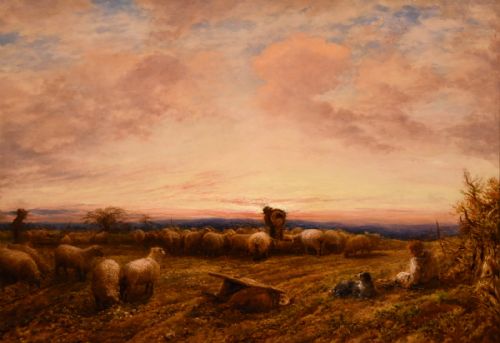
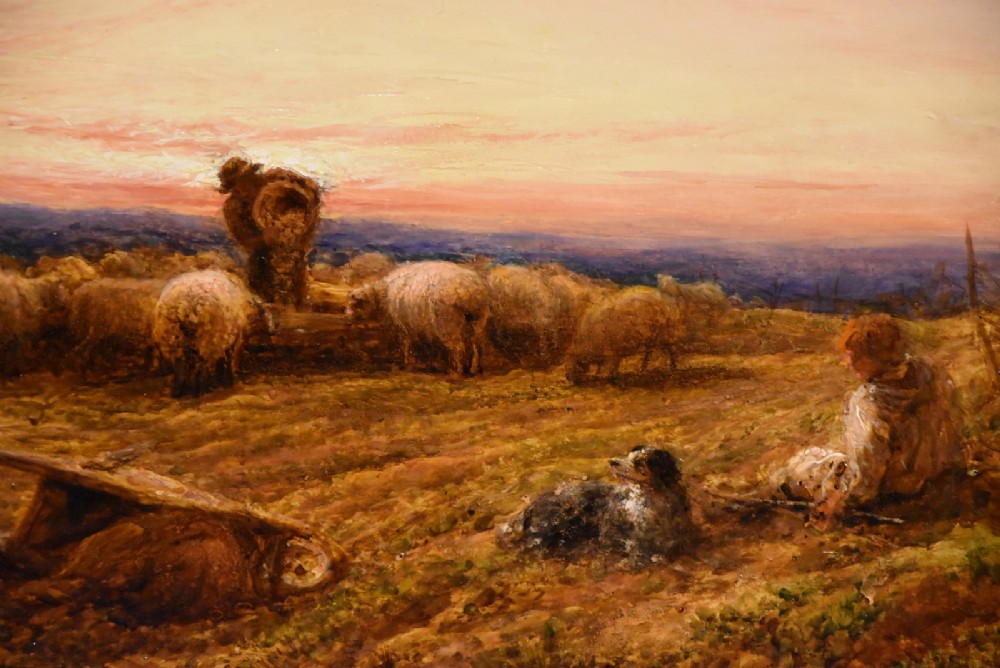
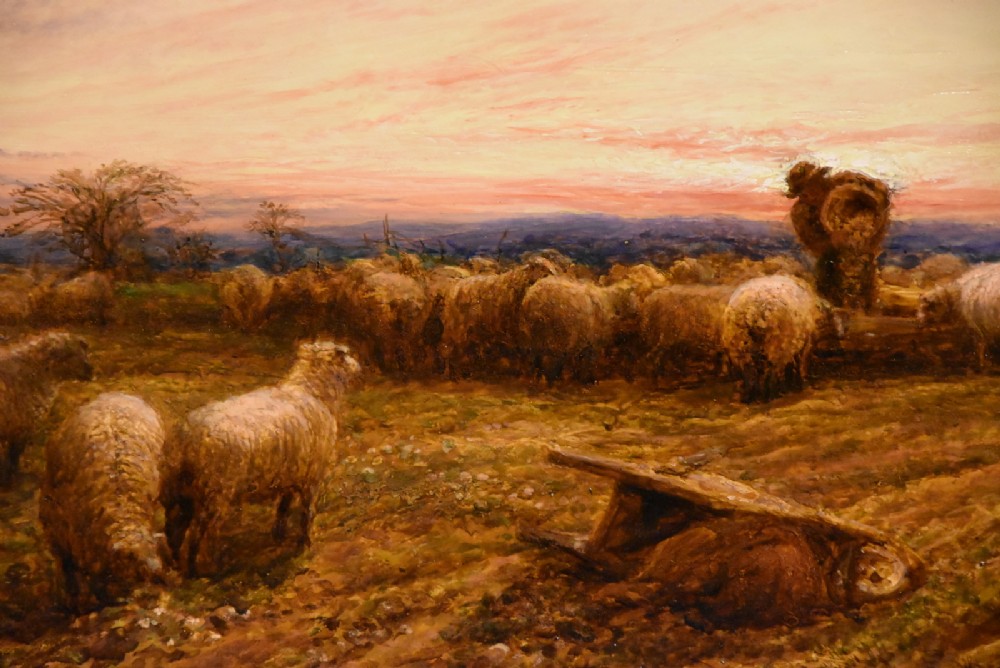
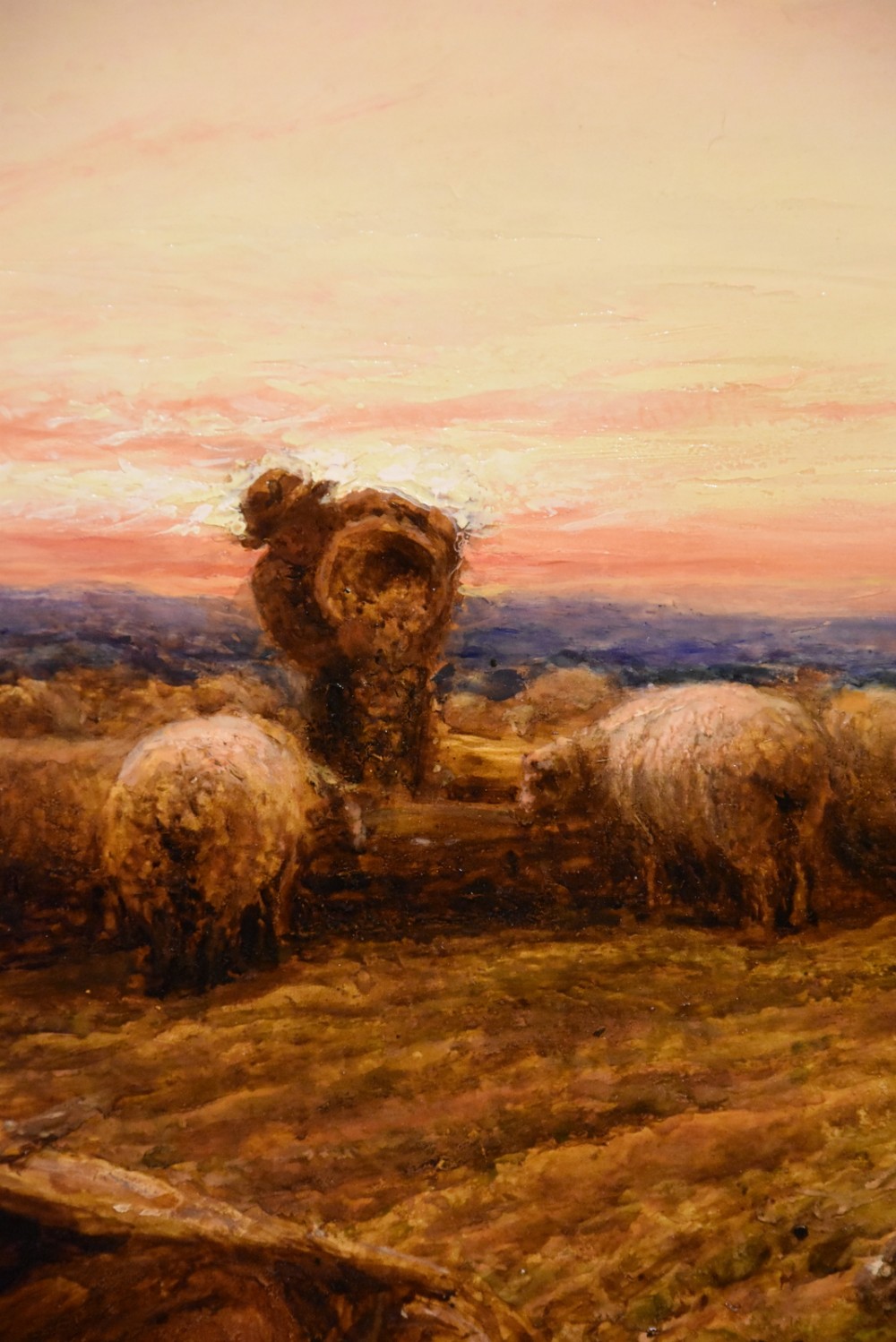
“Feeding Sheep” belongs to this period of mature work, the shepherd tending his sheep is a strong symbol for Linnell. Note the Luminescent quality of the colour due to the fine overlay of glazes.

Linnell was a man of great stature and uncompromising views although a regular enough exhibitor at the Academy, his application for Associateship as a young man had been spurned by the Academy board. It became a matter of embarrassment to the Academy that they had not sooner recognised such a master. However, after his death, Linnell’s work was honoured in an exhibition of Old and Modern Masters held in 1883, which highlighted his work. His paintings were frequently recalled for the Winter Exhibitions thereafter (this one being shown for the third time in 1901).

John Linnell spans a great age, his work begins with Sir Benjamin West and Sir Thomas Lawrence.

Physical Dimensions
Height
106cm (41.73")
Width
134cm (52.76")
Depth
9cm (3.54")
Declaration

Walton House Antiques has dated this piece to the 19th Century.

Reference Numbers
Sellingantiques Reference
SA715496
Dealers Internal Reference
NL411
Dealers Notes

All of the items that we advertise for sale have been as accurately described as possible and are in excellent condition, unless otherwise stated. Please note that we are also able to arrange a full shipping service for our customers. We look forward to being of service.

Description
"Feeding Sheep" by JOHN LINNELL,R.A.
John Linnell 1792-1882 an outstanding work by a leading member of the Royal Academy, ranking alongside William Blake and Samuel Palmer (his son-in-law).
Walton House Antiques

His work is found in most prominent collections, and he was a regular exhibitor at the Academy, where this painting was shown three times: 1863, no. 671, then in the Modern Masters Exhibition 1883, no. 83, and finally in the Winter Exhibition of 1901, no. 9. Provenance: H.J.Turner, Stockleigh House, Regent's Park

fig 1. Oil Painting by John Linnell Royal Academy
fig 1. Oil Painting by John Linnell Royal Academy "Feeding Sheep"

Oil on Panel, signed and dated 1863

Fine Original Frame

Exhibited: Royal Academy 1863 no.671

Royal Academy Exhibition of Old and Modern Masters 1883 no. 83

Royal Academy Winter Exhibition 1901 no.9

Provenance: H.J.Turner Esq.

fig 2. Oil Painting by John Linnell Royal Academy
fig 2. Oil Painting by John Linnell Royal Academy "Feeding Sheep"

Stockleigh House, Regents Park, Inverness House, Porchester Square

John Linnell, not just a great painter but a true artist. A man for whom life and art were inextricably linked, one serving the other. John Linnell was born into an ordinary working family, his father was a frame maker and his uncle a furniture maker. He rose to become one of the outstanding landscape painters of the 19th century, ranking alongside William Blake and Samuel Palmer.

fig 3. Oil Painting by John Linnell Royal Academy
fig 3. Oil Painting by John Linnell Royal Academy "Feeding Sheep"

As a youngster he was noticed and assisted by the great Sir Benjamin West, and trained with John Varley. William Mulready then became his mentor and ‘champion’. As with many artists, the initial years were hard, and Linnell had to take up portraiture to support his large family. However, the whole purport of his being was directed to the ‘realism’ of landscape. He believed firmly that landscape was more than the sum of its parts, and recorded it faithfully in order to show that in landscape there was a reflection of something spiritual, a Divine Hand. He held passionate and unorthodox religious views, rejecting formalised church religion and espousing a brand of low Protestantism, developing his landscape painting as a carriage for religious expression. To a large extent the sheep, harvesters and storms of his landscapes are pastoral metaphors. Occasionally he devised an actual Biblical scene such as ‘Noah, the Eve of the Deluge’, but he preferred to see the hand of God manifest itself in nature.

fig 4. Oil Painting by John Linnell Royal Academy
fig 4. Oil Painting by John Linnell Royal Academy "Feeding Sheep"

Like Blake, he drew on the work of the Northern Renaissance artists – Durer, van Eyck, Lucas van Leyden and his collaboration with his son in law, Samuel Palmer, was beneficial to both painters. Linnell’s early work is highly descriptive and throughout his life he made use of the camera obscura, and then the camera as it developed. His later ‘mature’ landscapes, from 1850 onwards, look for a distillation of landscape into ‘an aspect of nature’. His technique evolved alongside into light flickering brushstrokes, slightly impressionistic, building forms in layers of fine glazes over a white ground. This use of white ground was borrowed from Blake and was to become one of the major precepts of the Pre-Raphaelites, who much admired John Linnell.

fig 5. Oil Painting by John Linnell Royal Academy
fig 5. Oil Painting by John Linnell Royal Academy "Feeding Sheep"

“Feeding Sheep” belongs to this period of mature work, the shepherd tending his sheep is a strong symbol for Linnell. Note the Luminescent quality of the colour due to the fine overlay of glazes.

Linnell was a man of great stature and uncompromising views although a regular enough exhibitor at the Academy, his application for Associateship as a young man had been spurned by the Academy board. It became a matter of embarrassment to the Academy that they had not sooner recognised such a master. However, after his death, Linnell’s work was honoured in an exhibition of Old and Modern Masters held in 1883, which highlighted his work. His paintings were frequently recalled for the Winter Exhibitions thereafter (this one being shown for the third time in 1901).

John Linnell spans a great age, his work begins with Sir Benjamin West and Sir Thomas Lawrence.

Height
106cm (41.73")
Width
134cm (52.76")
Depth
9cm (3.54")
Date of Manufacture

Walton House Antiques has dated this piece to the 19th Century.

Reference Numbers
Sellingantiques Ref
SA715496
Dealers Internal Ref
NL411
Walton House Antiques
Sellingantiques verified Since Oct 2011

Specialists in 18th and early 19th century antique furniture 19th century oils and 19th french ormolu clocks

Dealer Profile

You can view the stock and full dealer information on the Walton House Antiques Profile Page

Trade Associations

Walton House Antiques is a registered member of LAPADA  CINOA
PDF SHARE
SAVE
Oil Painting by John Linnell Royal Academy SOLD6+ MONTHS AGO
1 / 7
Archive I Oil Painting by John Linnell Royal Academy SOLD6+ MONTHS AGO

Oil Painting by John Linnell Royal Academy "Feeding Sheep"
Archive II Oil Painting by John Linnell Royal Academy
Archive III Oil Painting by John Linnell Royal Academy
Archive IV Oil Painting by John Linnell Royal Academy
Archive V Oil Painting by John Linnell Royal Academy
Archive VI Oil Painting by John Linnell Royal Academy
Archive VII Oil Painting by John Linnell Royal Academy
Enlarged Archival View
Telephone 01747 860050
Location
Walton House Antiques
Walton Buildings
The Square
Mere
BA12 6DL
United Kingdom
Verified Since Oct 2011
Items For Sale 247
Items Sold 3,095
Walton House Antiques
Verified Since Oct 2011
View Dealer Info
Location: Walton House Antiques, Walton Buildings, The Square, Mere, BA12 6DL, United Kingdom
Verified
Oct 2011
For Sale
247
Sold
3,095
Oil Painting by John Linnell Royal Academy
Oil Painting by John Linnell Royal Academy "Feeding Sheep"
Ref: SA715496
Oil Painting by John Linnell Royal Academy
Detail View 1
Detail View 2
Detail View 3
Detail View 4
Detail View 5
Detail View 6
Archival Detail
Every single antique dealer on our platform is individually approved by our internal team. We verify their professional trade history, ethical standards, and photographic quality to ensure a secure, high-standard buying environment. Upon joining, every dealer agrees to a strict 9-point code of conduct. While issues can occasionally arise, our dealers typically resolve them swiftly and directly with the buyer. In fact, since our founding in 2002, Sellingantiques has only had to step in to help resolve an issue on roughly five occasions—a true testament to the quality of our dealers and their dedication to your happiness.
Our dealers are highly experienced in packing and shipping fragile, high-value antiques. Because you are in direct contact with the dealer, you will be able to easily go through all available shipping and insurance options together to ensure your item arrives safely.
Antiques are the ultimate green purchase. By choosing historical pieces over newly manufactured goods, you completely eliminate the carbon footprint of modern mass production while preserving exceptional, timeless craftsmanship.
Written by Sellingantiques from the dealer’s photographs and listing
  • Period19th century
  • SizeH 106 cm (42 in) x W 134 cm (53 in) x D 9 cm (4 in)
items
Add keywords to the filter
Price
£100
£250000
Era
Movements
Material
Origin
Stock Location
Freshness
Online Payments
Categories