Titan Fine Art has dated this piece to the 17th Century.
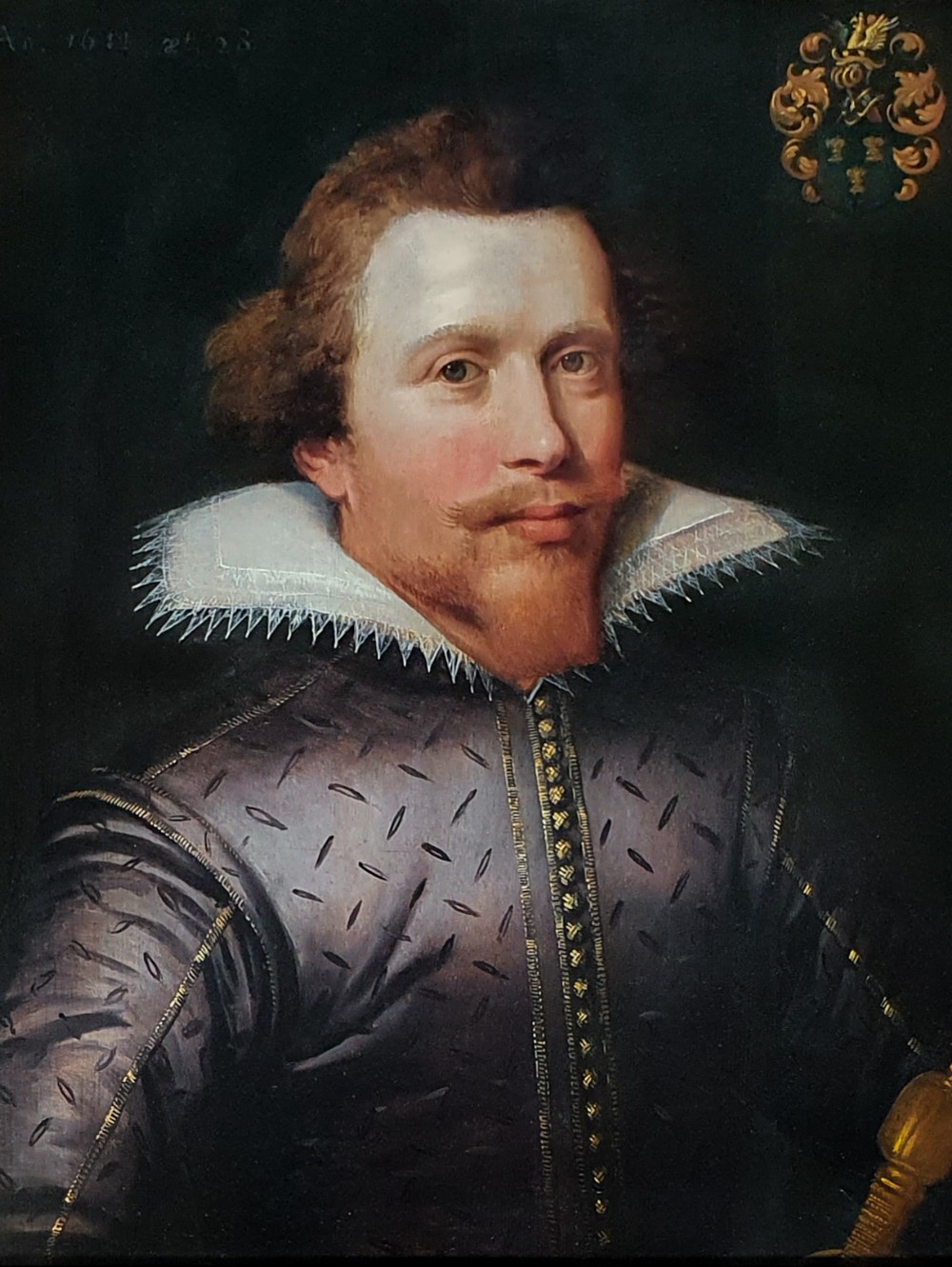
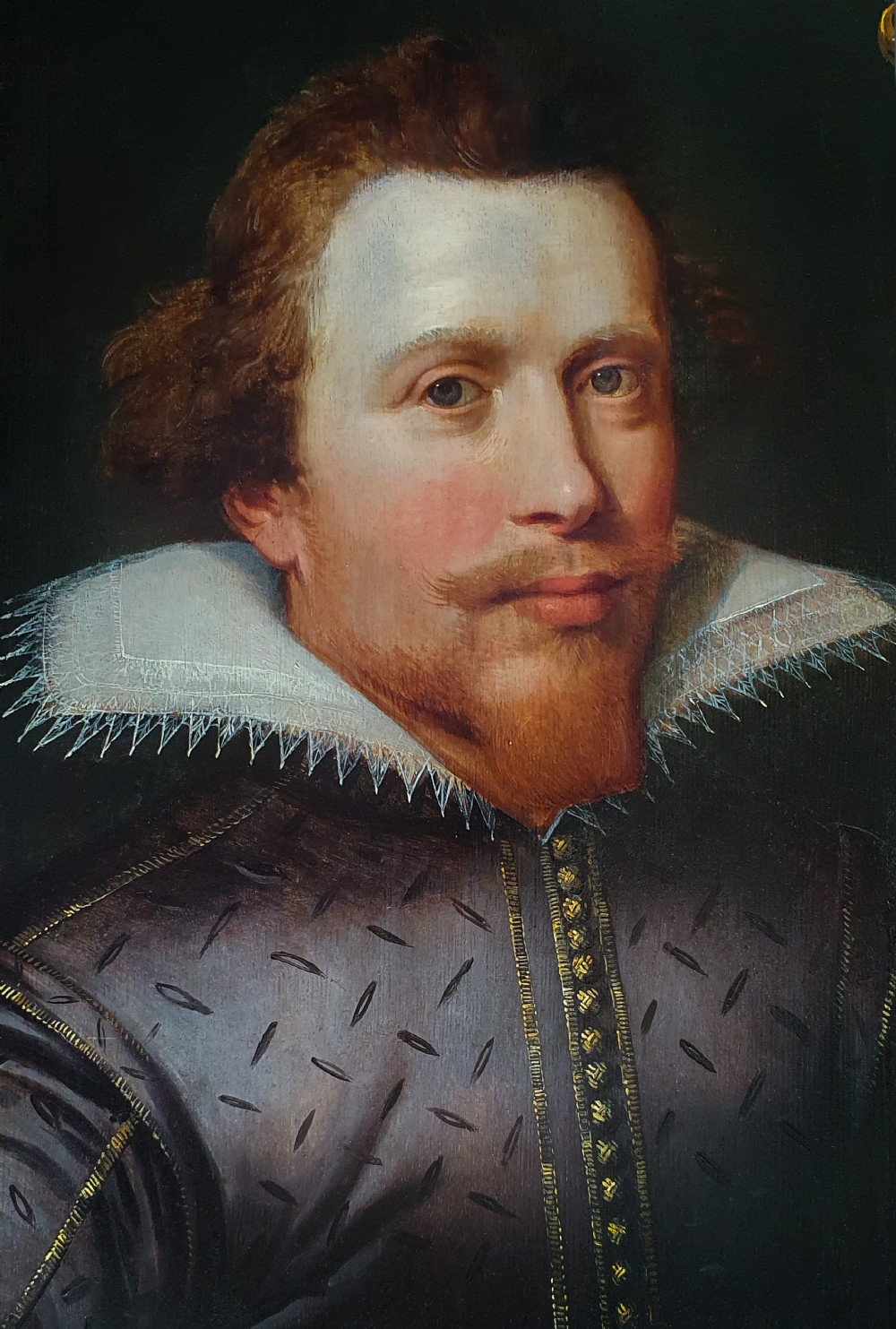
Details of dress in Dutch formal portraits are usually faithful reflections of the sitter's own clothing and artists portrayed their clients in the manner set out by the terms of the commission. They were almost always intended to convey the sitter’s social status and rank in society. The expensive fabrics, the attire, and the grand coat-of-arms as seen in the present portrait proclaim to every onlooker that this is a superior being.
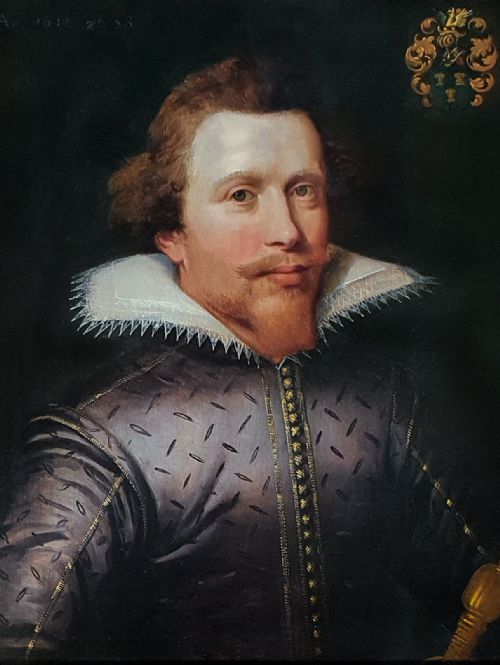
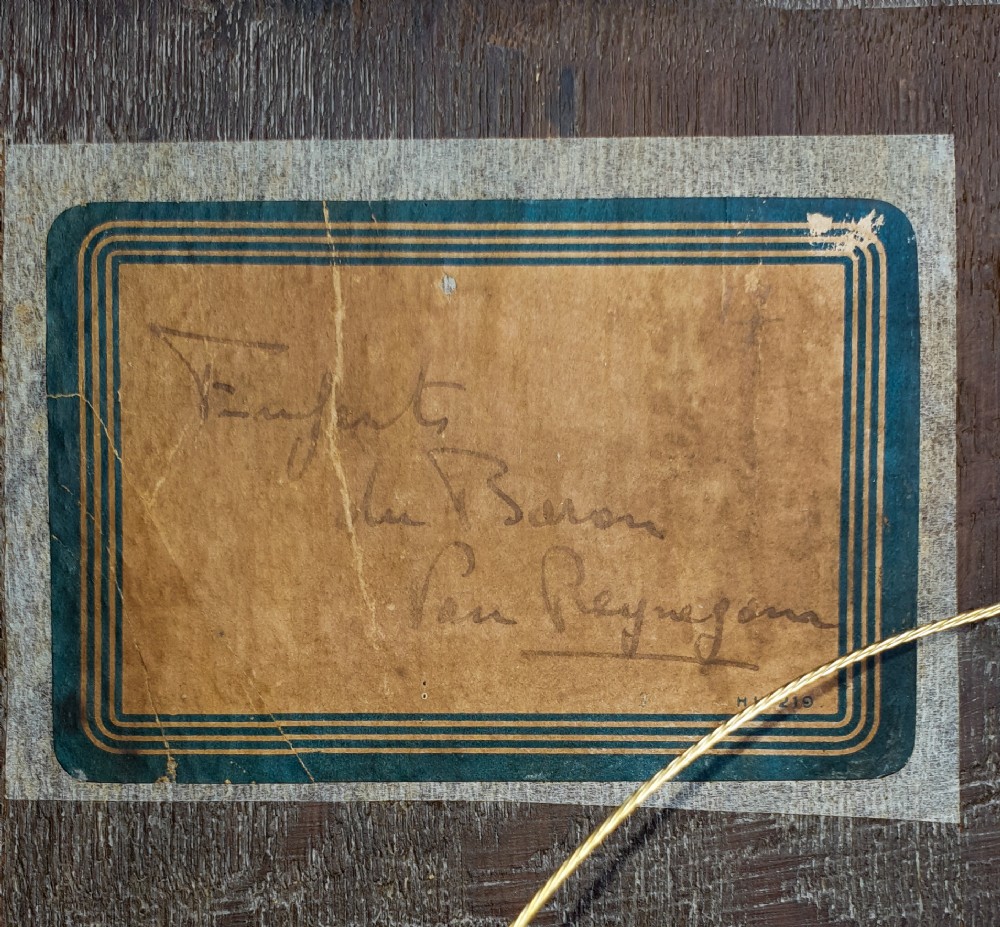
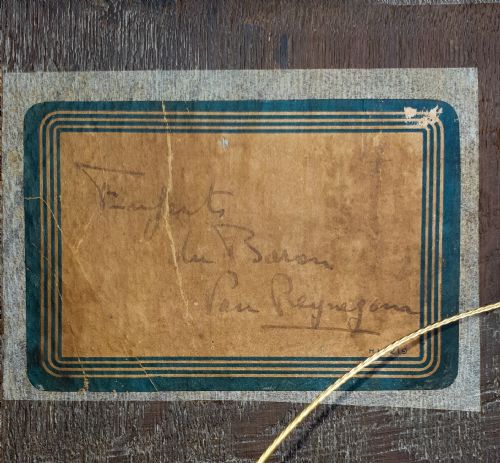
The portrait depicts Jan van Reynegom (or in French, Jean de Reynegom), an ancestor of current Belgium nobility. The Van Reynegom family were a very rich family of brewers known from the fourteenth century in Gouda, Zuid-Holland. Later the family played an important role as the hereditary owners of the stewardship of Naaldwijk. The manor of Naaldwijk was owned by several noble families.
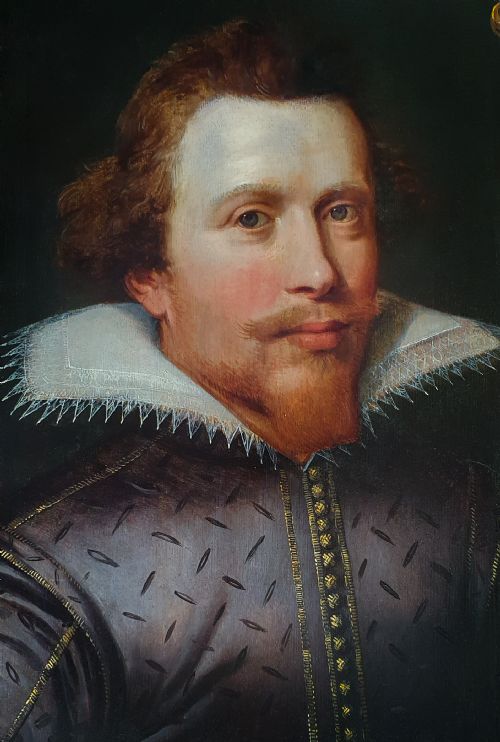
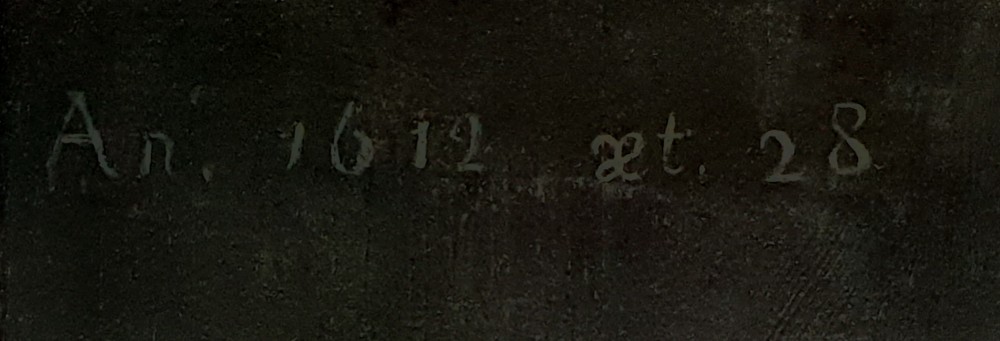
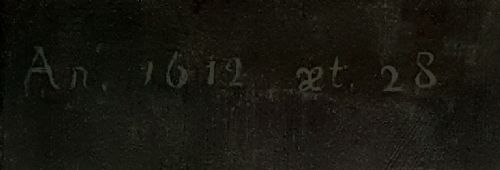
According to the inscription the sitter was in his twenty-eighth year when the portrait was painted in 1612. This would imply that the man in the painting was born in 1584. Jan was born on 18th January 1584 and was the sixth child of Cornelis van Reynegom (1538-1616) and Josina van Hoof (1548-1618). He had ten siblings, all born between 1577 and 1592.
Jan was intended to succeed his father as the steward of Naaldwijk however, because of his Catholic faith, he was not allowed to perform this function and was deprived of this office on grounds of religion by sentence on May 8, 1608. Later, he became Bailiff and President of the water board of Sint Anna Polder, near Hulst. He never married and died on 2 June 1640. He was buried in the church of Kallo, near Antwerp. A portrait like this certainly suits a person of his considerable origin and position. A painting exists of the Gouda militia in 1599 and in it is the Lead of the militia, Colonel Jan Dircksz van Reynegom (buried in Gouda in 1606), who is the sitter’s uncle.
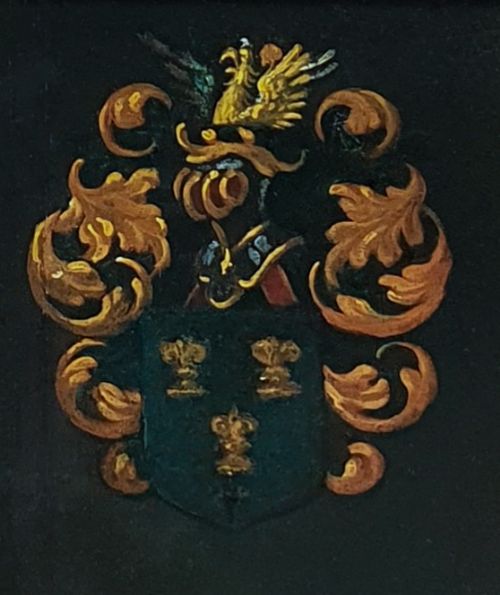
The portrait is charged with the van Reynegom Coat of Arms, which is described in genealogical documents from Brussels as: ‘Azure with three rooks, set in gold' and has as its motto: 'Rien sans émuer - Nothing without a heart' (rooks are the towers in the game of chess). The noble family of Reynegom still exists, now in Belgium, and are members of Belgium nobility. They exist in two branches: van Reynegom de Buzet and van Reynegom d'Hectvelde and carries the title of baron.
The century between 1609 to about 1713 is known in Dutch history as the “Golden Age.” It was a unique era of political, economic, and cultural greatness during which the little nation on the North Sea ranked among the most powerful and influential in Europe and the world. During this time, The Dutch Old Masters began to prevail in the art world. The new wealthy class were keen to have their portraits commissioned and the burgeoning middle classes, with their disposable income, meant that almost everyone was an art collector. Most of the Dutch elite were wealthy townsmen whose fortunes were made as merchants and financiers.
Jan Anthonisz. van Ravesteyn was a very successful portraitists to the Dutch court in the Hague - the city which was both the seat of government and home to the Stadholder’s court, these were drawn from the ranks of wealthy courtiers, and senior government and military officials, as well as from foreign visiting diplomats and delegates from all over the Dutch Republic. The fact that the marriage was conducted in the Town Hall suggests that the painter was a Roman Catholic, as was the sitter in our portrait.
Provenance: Private collection Belgium
The full description is at: www.titanfineart.com
Titan Fine Art has dated this piece to the 17th Century.
Specialist in 17th & 18thc portraits. Highly curated selection, museum-level research & pro conservation. Exceptional art, expertly vetted.
You can view the stock and full dealer information on the Titan Fine Art Profile Page
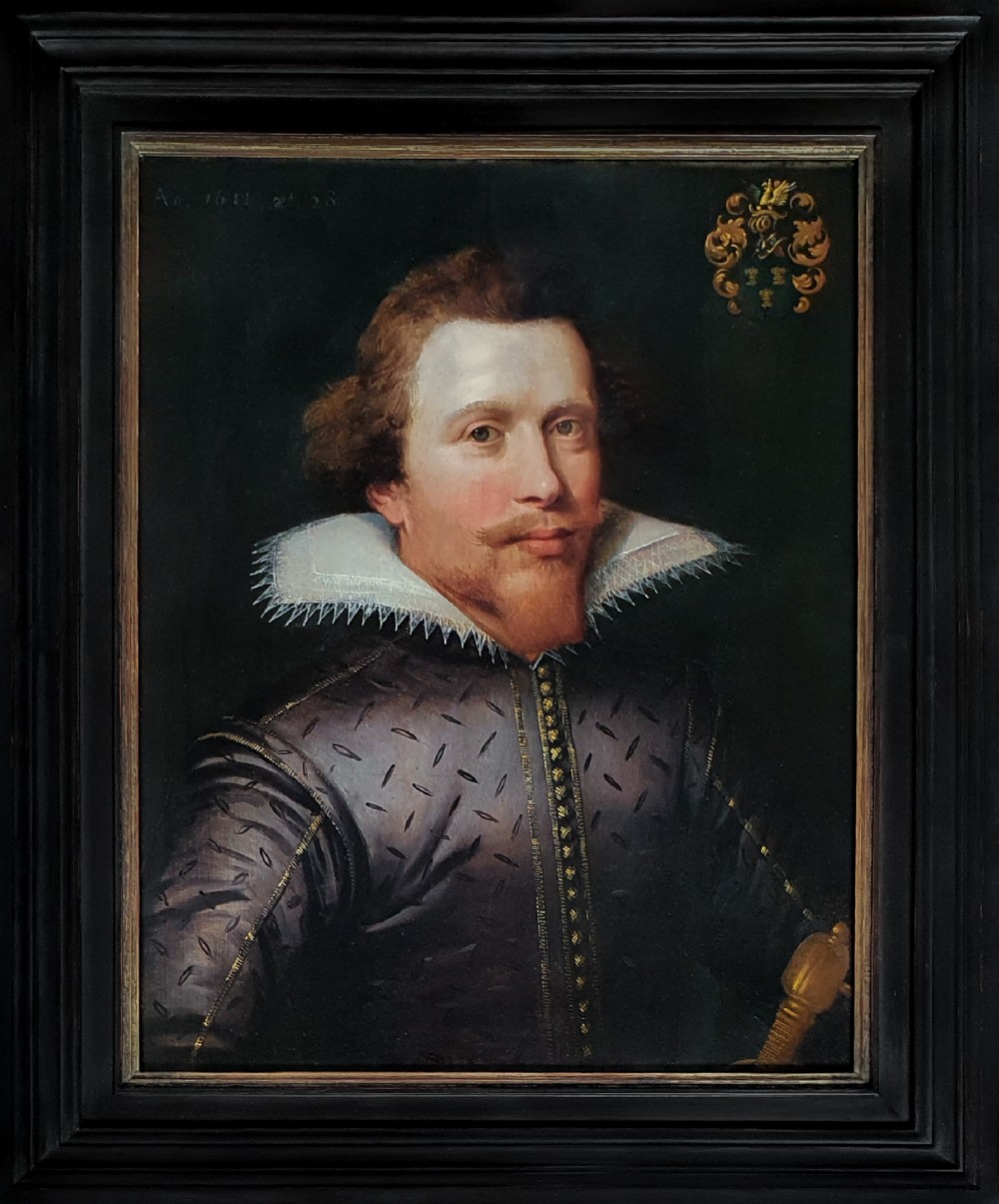
Portrait of Jan Van Reynegom (1584-1640) Dated 1612; Circle of Jan Anthonisz. Van Ravesteyn (C.1572-1657)