23,327  PAGES BROWSED TODAY PAGES TODAY 96 ANTIQUES UPLOADED TODAYNEW ARRIVALS
96 ITEMS ADDED TODAY
Sort Order
Items Per Page
Browse Categories
Sort order
Items per page
ID #SA713769
SOLD
Email
Save
Portrait of Jan Van Reynegom (1584-1640) Dated 1612; Circle of Jan Anthonisz. Van Ravesteyn (C.1572-1657)
Titan Fine Art
sold SA713769
Sorry, but this item has been sold.
Titan Fine Art

Titan Fine Art

Sellingantiques Verified Since Jul 2016
View Dealers Stock Page
  • About Us
    Specialist in 17th & 18thc portraits. Highly curated selection, museum-level research & pro conservation. Exceptional art, expertly vetted.
Id #SA713769
PDF SHARE
SAVE

Portrait of Jan Van Reynegom (1584-1640) Dated 1612; Circle of Jan Anthonisz. Van Ravesteyn (C.1572-1657)

17th century
Description

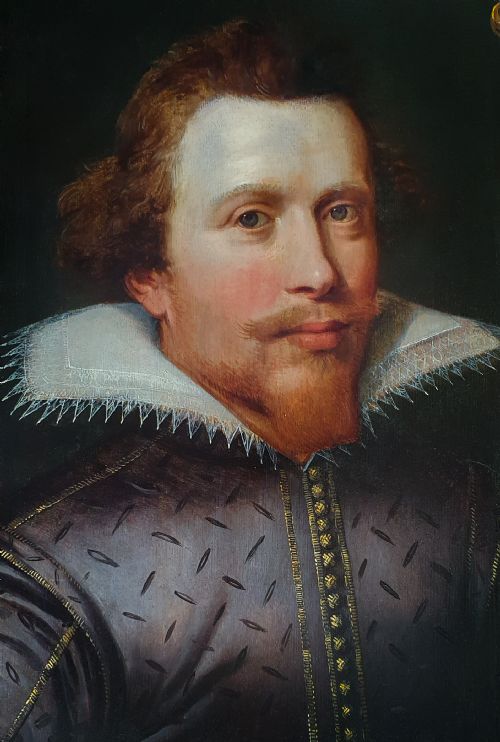
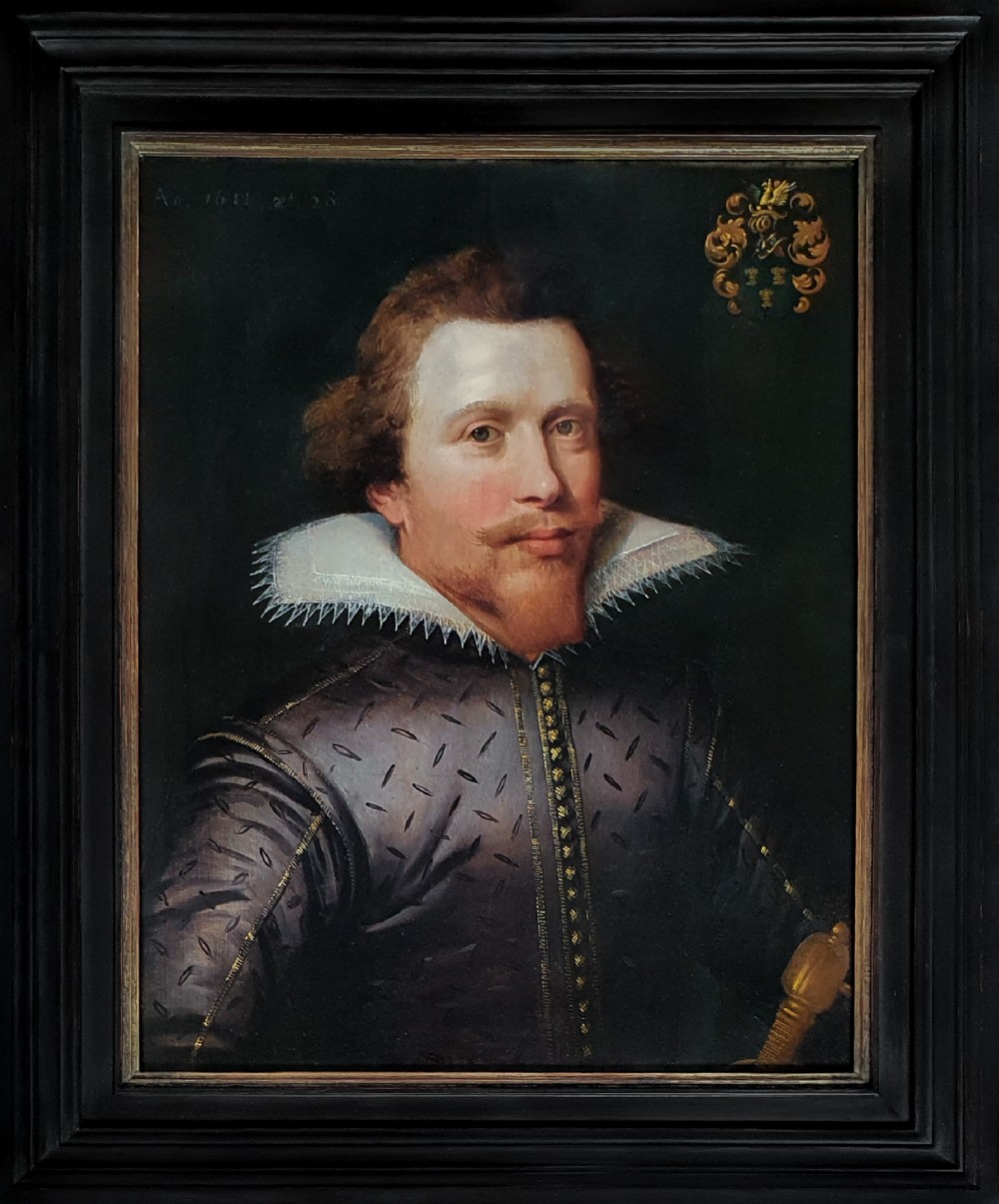
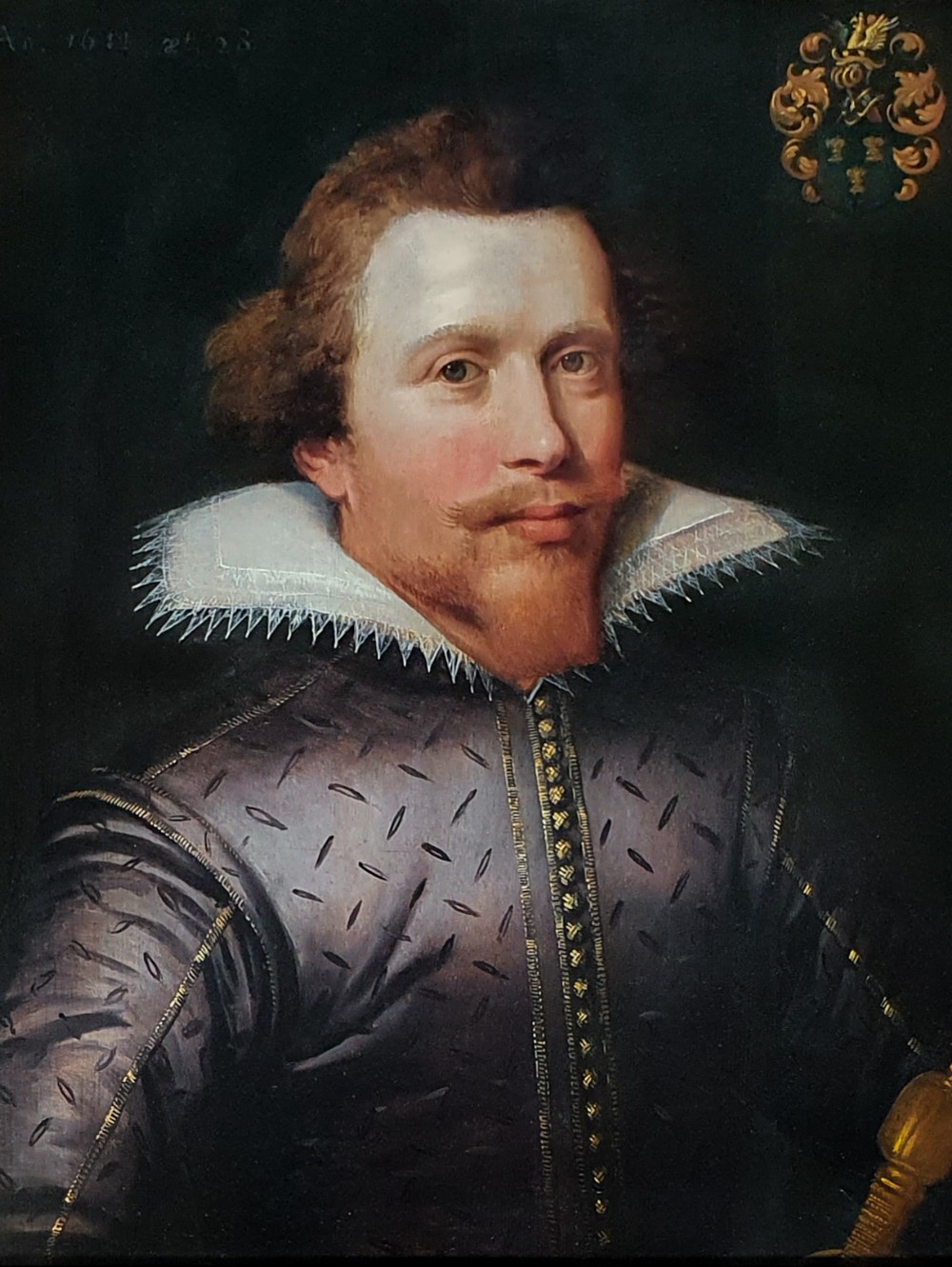
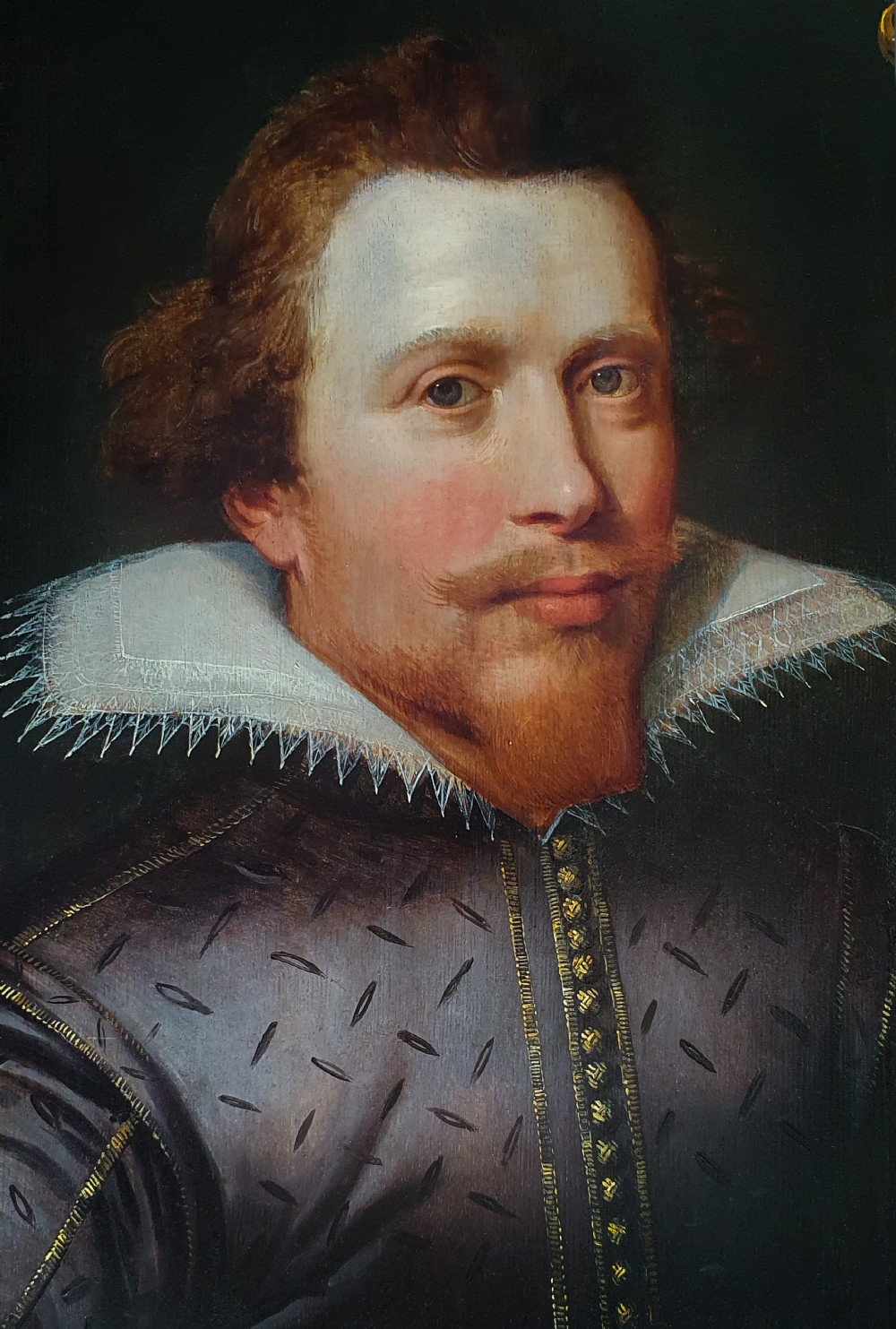
This striking panel portrait depicts a handsome gentleman wearing a white collar and elaborate satin coat with gold trim down the front. The extraordinary costume with its shimmering quality and costly fabrics and lace was an important marker of the wealth and status of the wearer and speaks of the status of the sitter in Dutch society. Details of dress in Dutch formal portraits are usually faithful reflections of the sitter's own clothing and artists portrayed their clients in the manner set out by the terms of the commission. They were almost always intended to convey the sitter’s social status and rank in society. The expensive fabrics, the attire, and the grand coat-of-arms as seen in the present portrait proclaim to every onlooker that this is a superior being.
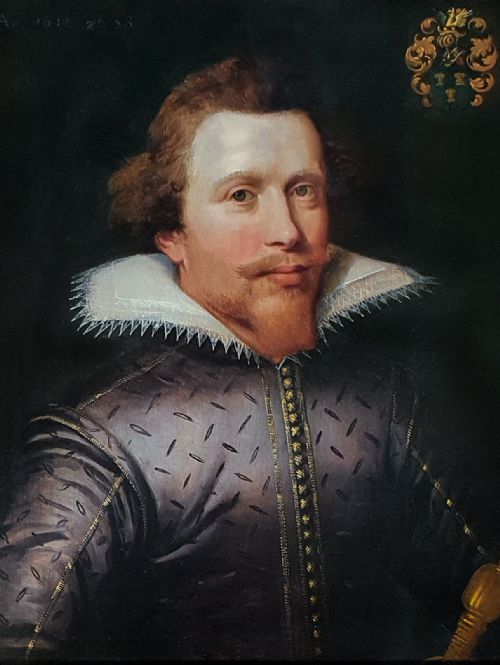
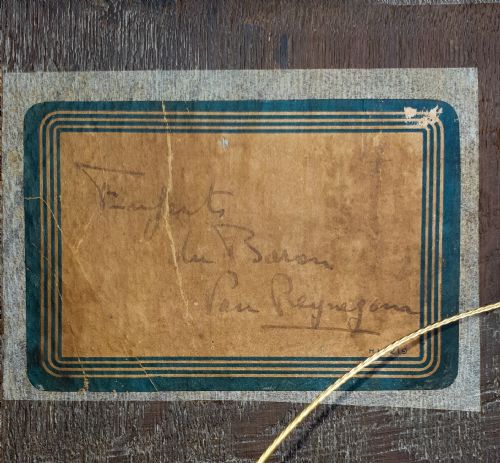
The portrait depicts Jan van Reynegom (or in French, Jean de Reynegom), an ancestor of current Belgium nobility. The Van Reynegom family were a very rich family of brewers known from the fourteenth century in Gouda, Zuid-Holland. Later the family played an important role as the hereditary owners of the stewardship of Naaldwijk. The manor of Naaldwijk was owned by several noble families.
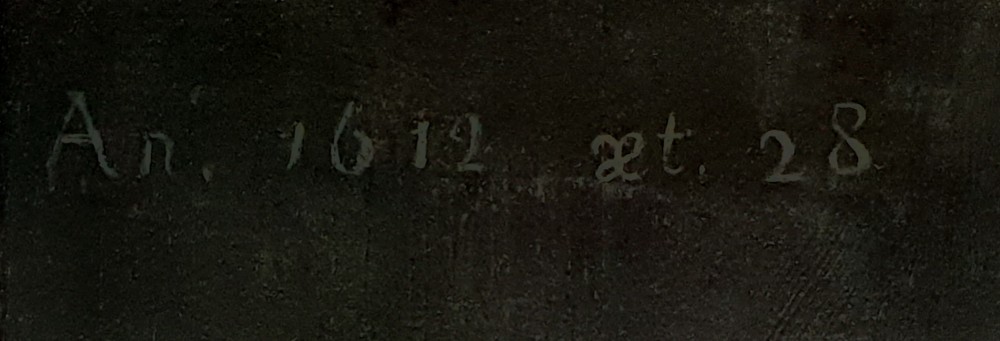
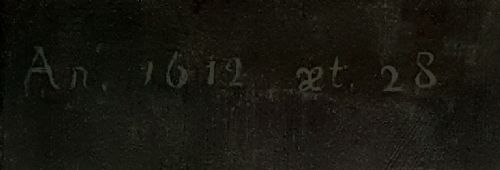
According to the inscription the sitter was in his twenty-eighth year when the portrait was painted in 1612. This would imply that the man in the painting was born in 1584. Jan was born on 18th January 1584 and was the sixth child of Cornelis van Reynegom (1538-1616) and Josina van Hoof (1548-1618). He had ten siblings, all born between 1577 and 1592.
Jan was intended to succeed his father as the steward of Naaldwijk however, because of his Catholic faith, he was not allowed to perform this function and was deprived of this office on grounds of religion by sentence on May 8, 1608. Later, he became Bailiff and President of the water board of Sint Anna Polder, near Hulst. He never married and died on 2 June 1640. He was buried in the church of Kallo, near Antwerp. A portrait like this certainly suits a person of his considerable origin and position. A painting exists of the Gouda militia in 1599 and in it is the Lead of the militia, Colonel Jan Dircksz van Reynegom (buried in Gouda in 1606), who is the sitter’s uncle.
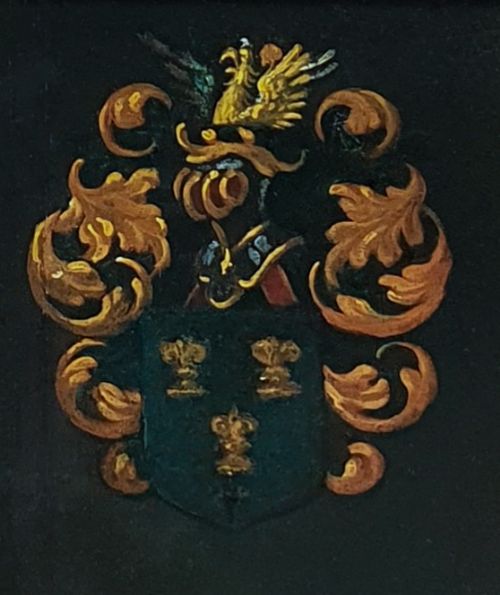
The portrait is charged with the van Reynegom Coat of Arms, which is described in genealogical documents from Brussels as: ‘Azure with three rooks, set in gold' and has as its motto: 'Rien sans émuer - Nothing without a heart' (rooks are the towers in the game of chess). The noble family of Reynegom still exists, now in Belgium, and are members of Belgium nobility. They exist in two branches: van Reynegom de Buzet and van Reynegom d'Hectvelde and carries the title of baron.
The century between 1609 to about 1713 is known in Dutch history as the “Golden Age.” It was a unique era of political, economic, and cultural greatness during which the little nation on the North Sea ranked among the most powerful and influential in Europe and the world. During this time, The Dutch Old Masters began to prevail in the art world. The new wealthy class were keen to have their portraits commissioned and the burgeoning middle classes, with their disposable income, meant that almost everyone was an art collector. Most of the Dutch elite were wealthy townsmen whose fortunes were made as merchants and financiers.

Jan Anthonisz. van Ravesteyn was a very successful portraitists to the Dutch court in the Hague - the city which was both the seat of government and home to the Stadholder’s court, these were drawn from the ranks of wealthy courtiers, and senior government and military officials, as well as from foreign visiting diplomats and delegates from all over the Dutch Republic. The fact that the marriage was conducted in the Town Hall suggests that the painter was a Roman Catholic, as was the sitter in our portrait.

Provenance: Private collection Belgium

The full description is at: www.titanfineart.com

Physical Dimensions
Height
78cm (30.71")
Width
65cm (25.59")
Depth
5cm (1.97")
Declaration

Titan Fine Art has dated this piece to the 17th Century.

Reference Numbers
Sellingantiques Reference
SA713769
Dealers Notes

Much more info about this item at: www.titanfineart.com

In a market saturated with available paintings, Titan Fine Art offers a distinct advantage: we sift through thousands of works to provide a specially curated selection. Each piece is meticulously chosen based on technical merit, provenance, and decorative appeal, ensuring our clients view only the finest examples of British and European art.

With over 20 years of expertise and 1,000+ works placed with collectors and institutions, we are one of the most prolific specialists in 17th and 18th-century portraiture. We combine a scholarly approach with museum-level rigor to replace the uncertainty of the open market with absolute confidence.

Why Buy From Titan Fine Art?

• Expertly Curated Selection

We act as your expert eye, selecting only high-quality works that offer genuine historical and artistic value.

• Museum-Level Research

Each portrait is supported by extensive academic research, often exceeding 40 hours, to establish attribution, sitter identity, and historical context.

• Professional Conservation

All paintings are carefully cleaned and stabilised by professional conservators, and are presented ready to hang.

• Transparent Pricing

No buyer’s premium or hidden fees—unlike auction houses, where additional costs can add 25–35%.

• Export Pricing Advantage

Reduced pricing is available for works exported outside the UK.

• Specialist Global Shipping

We manage the entire process, including custom crating, export documentation, and fully tracked delivery worldwide.

• Buy with Confidence

A 7-day return policy and the option to pay in GBP, USD, or EUR for convenience and transparency.

• Original Period Frames

Many works retain their original carved and gilded frames, which are works of art in their own right and enhance both historical authenticity and decorative impact.

• Personal Advisory Service

We work directly with collectors and interior designers, offering guidance on selection, scale, and placement—including bespoke room mock-ups on request.

Subscribe to our monthly 'new item alert' to be the first to hear about new works

Description
This striking panel portrait depicts a handsome gentleman wearing a white collar and elaborate satin coat with gold trim down the front.
The extraordinary costume with its shimmering quality and costly fabrics and lace was an important marker of the wealth and status of the wearer and speaks of the status of the sitter in Dutch society.
Titan Fine Art

Details of dress in Dutch formal portraits are usually faithful reflections of the sitter's own clothing and artists portrayed their clients in the manner set out by the terms of the commission. They were almost always intended to convey the sitter’s social status and rank in society. The expensive fabrics, the attire, and the grand coat-of-arms as seen in the present portrait proclaim to every onlooker that this is a superior being.

fig 1. Portrait of Jan van Reynegom (1584-1640) dated 1612; Circle of Jan Anthonisz. van Ravesteyn (c.1572-1657)
fig 1. Portrait of Jan Van Reynegom (1584-1640) Dated 1612; Circle of Jan Anthonisz. Van Ravesteyn (C.1572-1657)

The portrait depicts Jan van Reynegom (or in French, Jean de Reynegom), an ancestor of current Belgium nobility. The Van Reynegom family were a very rich family of brewers known from the fourteenth century in Gouda, Zuid-Holland. Later the family played an important role as the hereditary owners of the stewardship of Naaldwijk. The manor of Naaldwijk was owned by several noble families.

fig 2. Portrait of Jan van Reynegom (1584-1640) dated 1612; Circle of Jan Anthonisz. van Ravesteyn (c.1572-1657)
fig 2. Portrait of Jan Van Reynegom (1584-1640) Dated 1612; Circle of Jan Anthonisz. Van Ravesteyn (C.1572-1657)

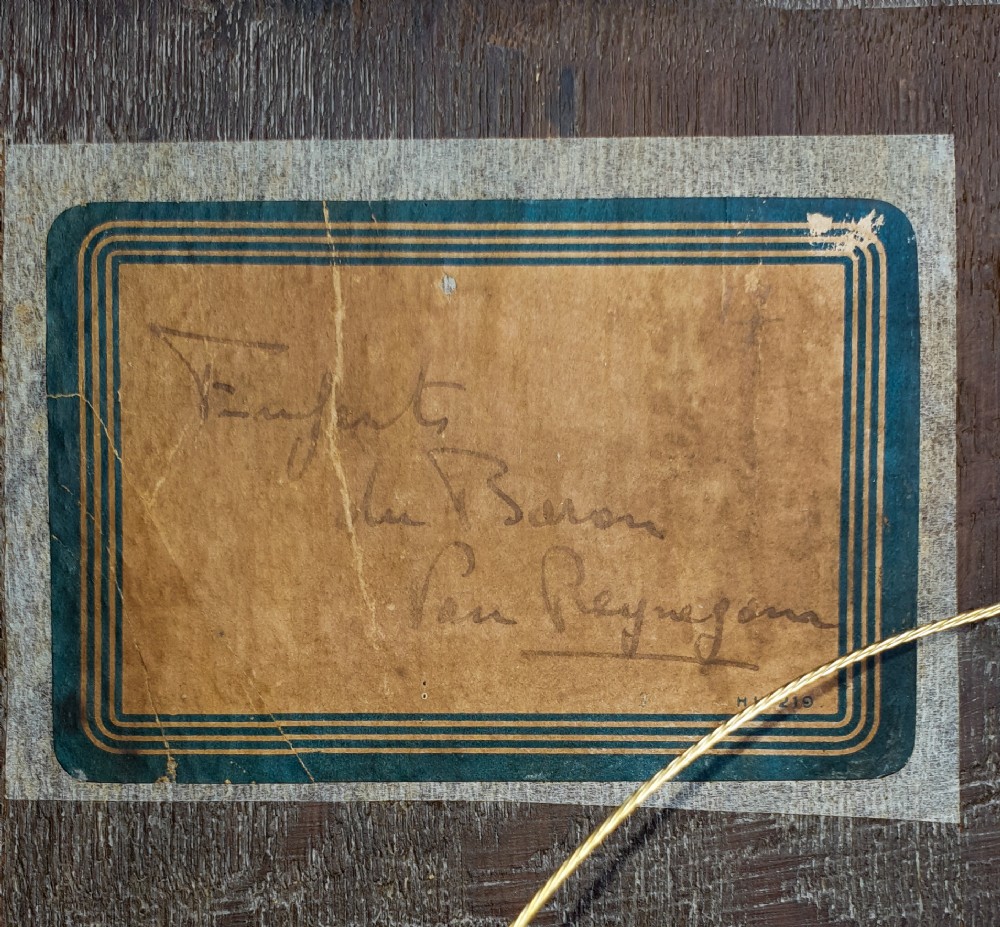
According to the inscription the sitter was in his twenty-eighth year when the portrait was painted in 1612. This would imply that the man in the painting was born in 1584. Jan was born on 18th January 1584 and was the sixth child of Cornelis van Reynegom (1538-1616) and Josina van Hoof (1548-1618). He had ten siblings, all born between 1577 and 1592.

fig 3. Portrait of Jan van Reynegom (1584-1640) dated 1612; Circle of Jan Anthonisz. van Ravesteyn (c.1572-1657)
fig 3. Portrait of Jan Van Reynegom (1584-1640) Dated 1612; Circle of Jan Anthonisz. Van Ravesteyn (C.1572-1657)

Jan was intended to succeed his father as the steward of Naaldwijk however, because of his Catholic faith, he was not allowed to perform this function and was deprived of this office on grounds of religion by sentence on May 8, 1608. Later, he became Bailiff and President of the water board of Sint Anna Polder, near Hulst. He never married and died on 2 June 1640. He was buried in the church of Kallo, near Antwerp. A portrait like this certainly suits a person of his considerable origin and position. A painting exists of the Gouda militia in 1599 and in it is the Lead of the militia, Colonel Jan Dircksz van Reynegom (buried in Gouda in 1606), who is the sitter’s uncle.

fig 4. Portrait of Jan van Reynegom (1584-1640) dated 1612; Circle of Jan Anthonisz. van Ravesteyn (c.1572-1657)
fig 4. Portrait of Jan Van Reynegom (1584-1640) Dated 1612; Circle of Jan Anthonisz. Van Ravesteyn (C.1572-1657)

The portrait is charged with the van Reynegom Coat of Arms, which is described in genealogical documents from Brussels as: ‘Azure with three rooks, set in gold' and has as its motto: 'Rien sans émuer - Nothing without a heart' (rooks are the towers in the game of chess). The noble family of Reynegom still exists, now in Belgium, and are members of Belgium nobility. They exist in two branches: van Reynegom de Buzet and van Reynegom d'Hectvelde and carries the title of baron.

fig 5. Portrait of Jan van Reynegom (1584-1640) dated 1612; Circle of Jan Anthonisz. van Ravesteyn (c.1572-1657)
fig 5. Portrait of Jan Van Reynegom (1584-1640) Dated 1612; Circle of Jan Anthonisz. Van Ravesteyn (C.1572-1657)

The century between 1609 to about 1713 is known in Dutch history as the “Golden Age.” It was a unique era of political, economic, and cultural greatness during which the little nation on the North Sea ranked among the most powerful and influential in Europe and the world. During this time, The Dutch Old Masters began to prevail in the art world. The new wealthy class were keen to have their portraits commissioned and the burgeoning middle classes, with their disposable income, meant that almost everyone was an art collector. Most of the Dutch elite were wealthy townsmen whose fortunes were made as merchants and financiers.

Jan Anthonisz. van Ravesteyn was a very successful portraitists to the Dutch court in the Hague - the city which was both the seat of government and home to the Stadholder’s court, these were drawn from the ranks of wealthy courtiers, and senior government and military officials, as well as from foreign visiting diplomats and delegates from all over the Dutch Republic. The fact that the marriage was conducted in the Town Hall suggests that the painter was a Roman Catholic, as was the sitter in our portrait.

Provenance: Private collection Belgium

The full description is at: www.titanfineart.com

Height
78cm (30.71")
Width
65cm (25.59")
Depth
5cm (1.97")
Date of Manufacture

Titan Fine Art has dated this piece to the 17th Century.

Reference Numbers
Sellingantiques Ref
SA713769
Titan Fine Art
Titan Fine Art
Sellingantiques verified Since Jul 2016

Specialist in 17th & 18thc portraits. Highly curated selection, museum-level research & pro conservation. Exceptional art, expertly vetted.

Dealer Profile

You can view the stock and full dealer information on the Titan Fine Art Profile Page
PDF SHARE
SAVE
Portrait of Jan van Reynegom (1584-1640) dated 1612; Circle of Jan Anthonisz. van Ravesteyn (c.1572-1657)
1 / 6
Archive I Portrait of Jan van Reynegom (1584-1640) dated 1612; Circle of Jan Anthonisz. van Ravesteyn (c.1572-1657)

Portrait of Jan Van Reynegom (1584-1640) Dated 1612; Circle of Jan Anthonisz. Van Ravesteyn (C.1572-1657)
Archive II Portrait of Jan van Reynegom (1584-1640) dated 1612; Circle of Jan Anthonisz. van Ravesteyn (c.1572-1657) View II
Archive III Portrait of Jan van Reynegom (1584-1640) dated 1612; Circle of Jan Anthonisz. van Ravesteyn (c.1572-1657) View III
Archive IV Portrait of Jan van Reynegom (1584-1640) dated 1612; Circle of Jan Anthonisz. van Ravesteyn (c.1572-1657) View IV
Archive V Portrait of Jan van Reynegom (1584-1640) dated 1612; Circle of Jan Anthonisz. van Ravesteyn (c.1572-1657) View V
Archive VI Portrait of Jan van Reynegom (1584-1640) dated 1612; Circle of Jan Anthonisz. van Ravesteyn (c.1572-1657) View VI
Enlarged Archival View
Telephone 07875 412 111
Location
London
United Kingdom
Dealer Profile Page sellingantiques.co.uk/titan
Verified Since Jul 2016
Items For Sale 16
Items Sold 401
Titan Fine Art
Titan Fine Art
Verified Since Jul 2016
View Dealer Info
Location: London, United Kingdom
Verified
Jul 2016
For Sale
16
Sold
401
Portrait of Jan van Reynegom (1584-1640) dated 1612; Circle of Jan Anthonisz. van Ravesteyn (c.1572-1657)
Ref: SA713769
Portrait of Jan van Reynegom (1584-1640) dated 1612; Circle of Jan Anthonisz. van Ravesteyn (c.1572-1657)
Detail View 1
Detail View 2
Detail View 3
Detail View 4
Detail View 5
Archival Detail
Every single antique dealer on our platform is individually approved by our internal team. We verify their professional trade history, ethical standards, and photographic quality to ensure a secure, high-standard buying environment. Upon joining, every dealer agrees to a strict 9-point code of conduct. While issues can occasionally arise, our dealers typically resolve them swiftly and directly with the buyer. In fact, since our founding in 2002, Sellingantiques has only had to step in to help resolve an issue on roughly five occasions—a true testament to the quality of our dealers and their dedication to your happiness.
Our dealers are highly experienced in packing and shipping fragile, high-value antiques. Because you are in direct contact with the dealer, you will be able to easily go through all available shipping and insurance options together to ensure your item arrives safely.
Antiques are the ultimate green purchase. By choosing historical pieces over newly manufactured goods, you completely eliminate the carbon footprint of modern mass production while preserving exceptional, timeless craftsmanship.
items
Add keywords to the filter
Price
£100
£250000
Era
Movements
Material
Origin
Stock Location
Freshness
Online Payments
Categories