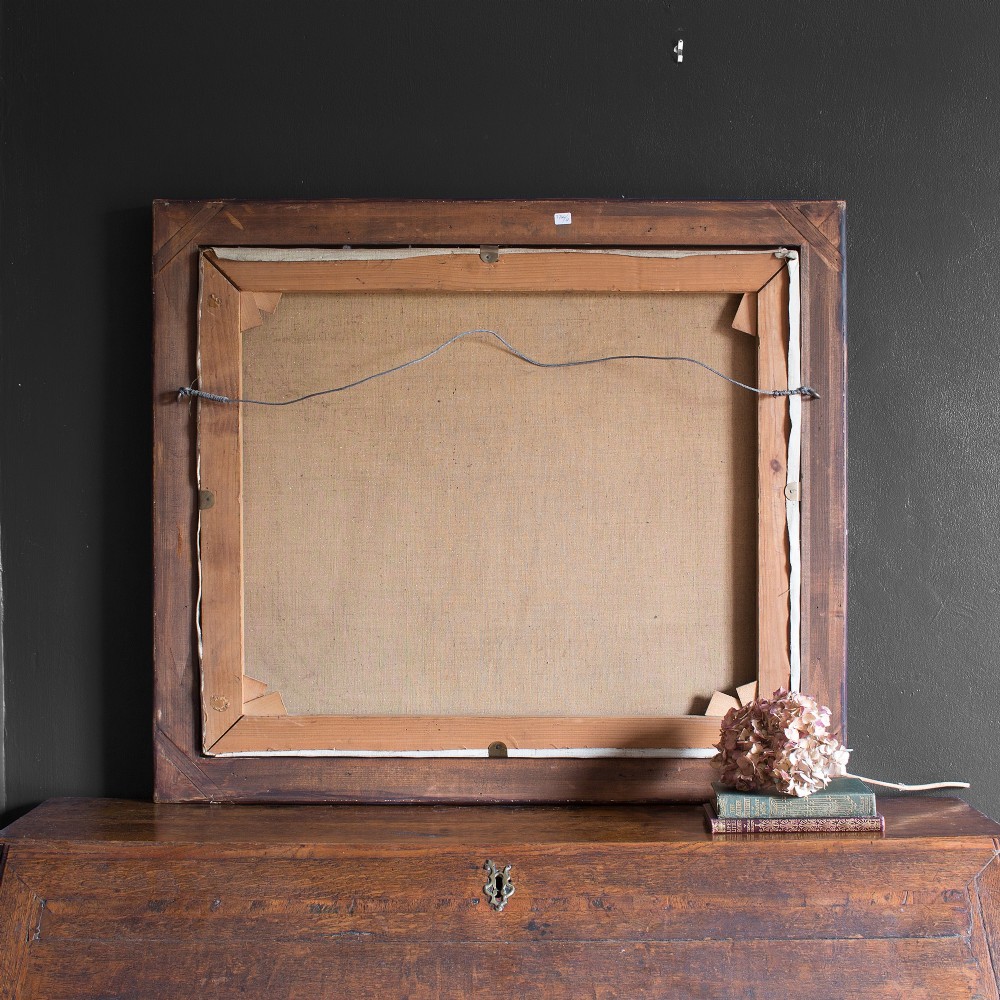
Brave Fine Art has dated this piece to the 1950s.
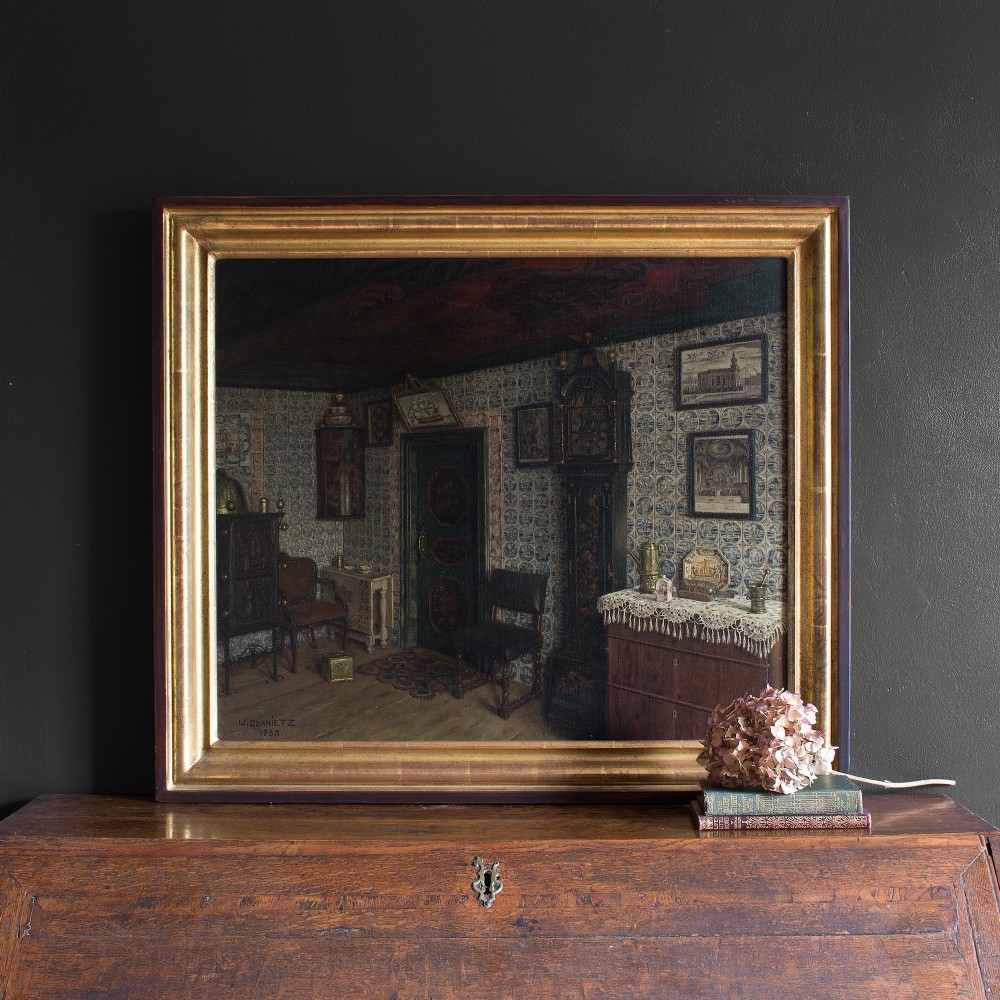
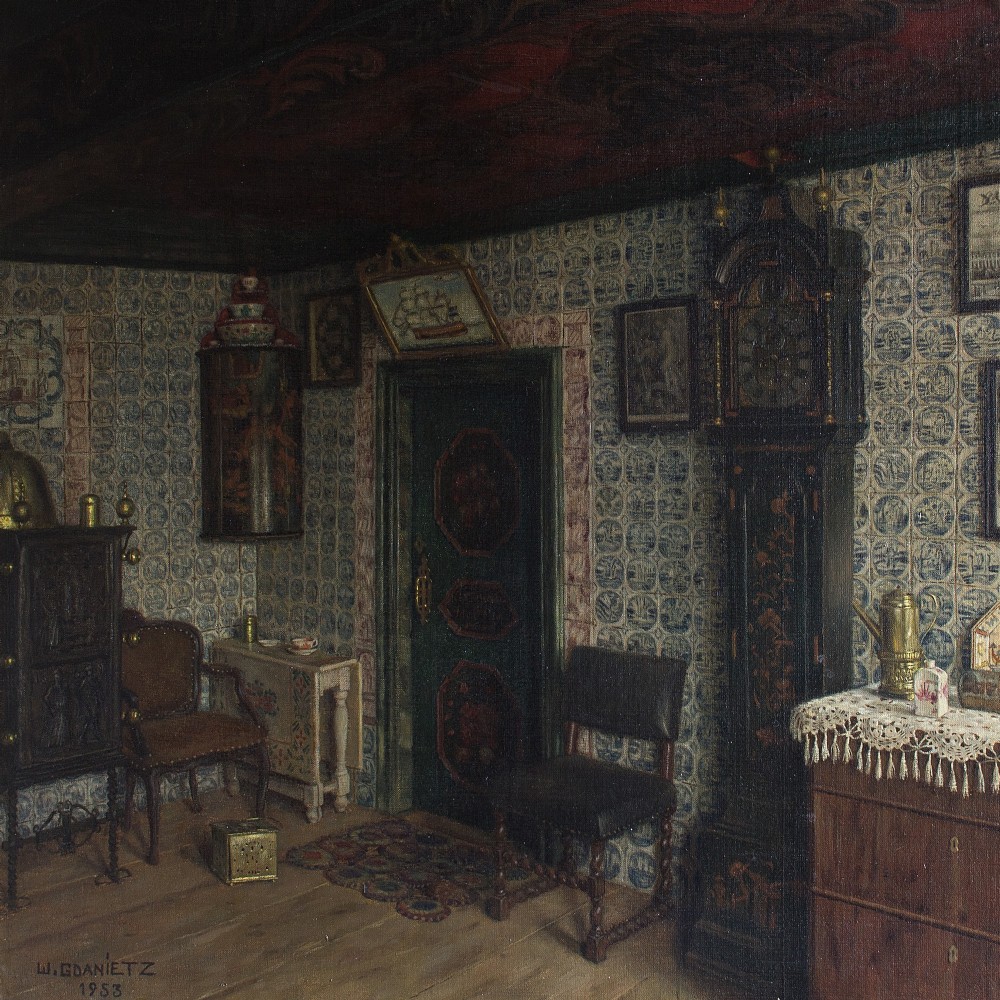
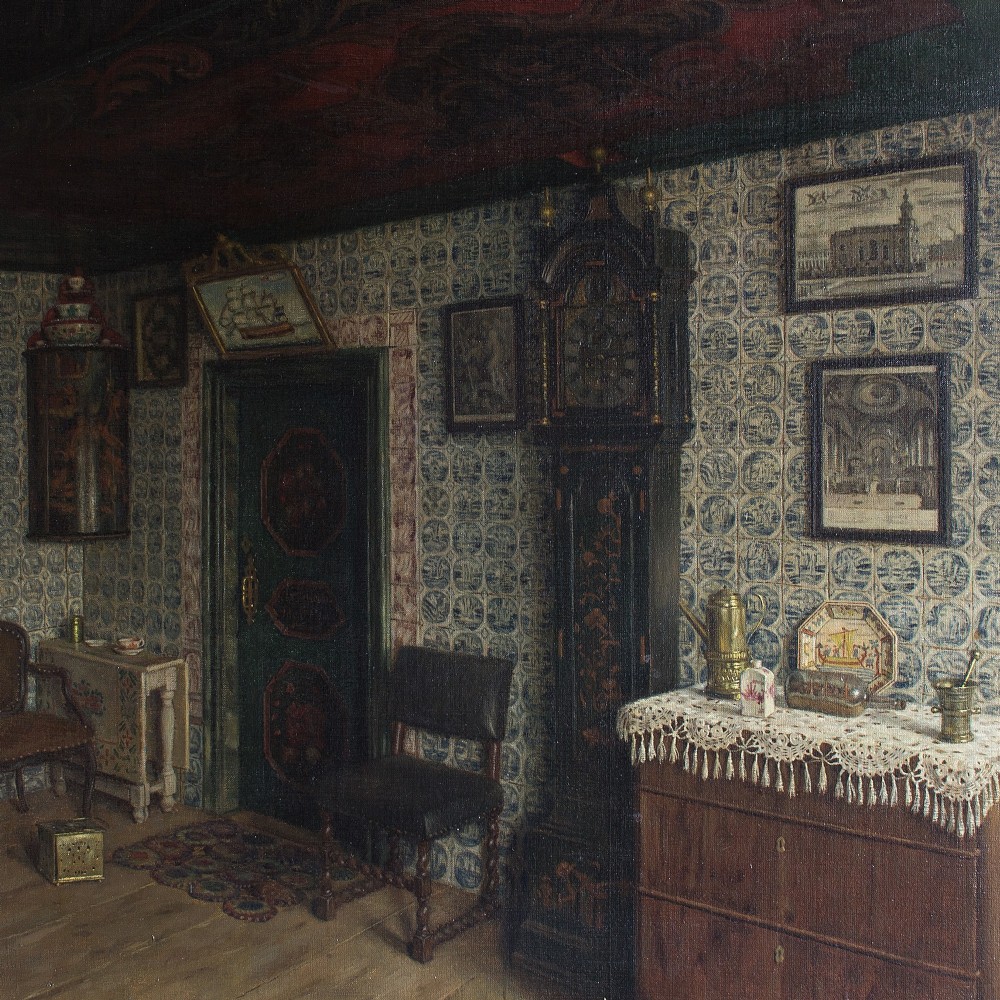
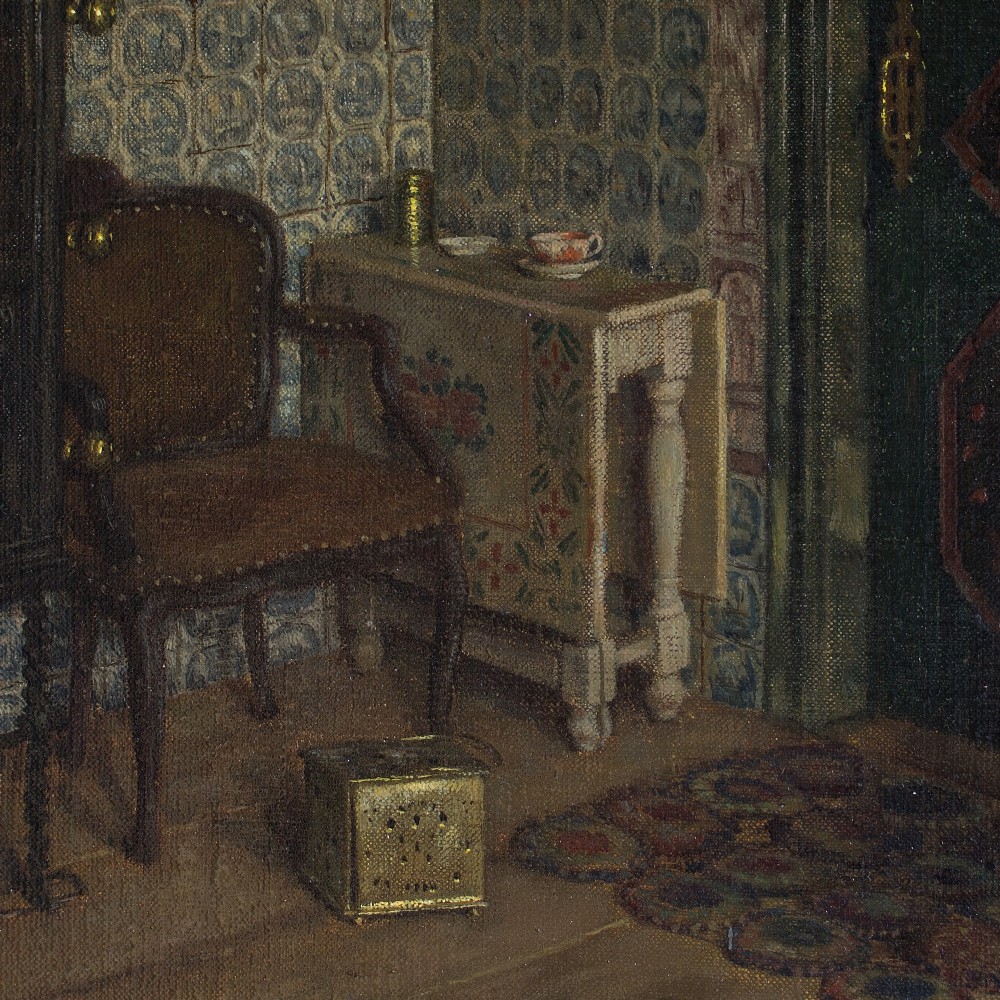
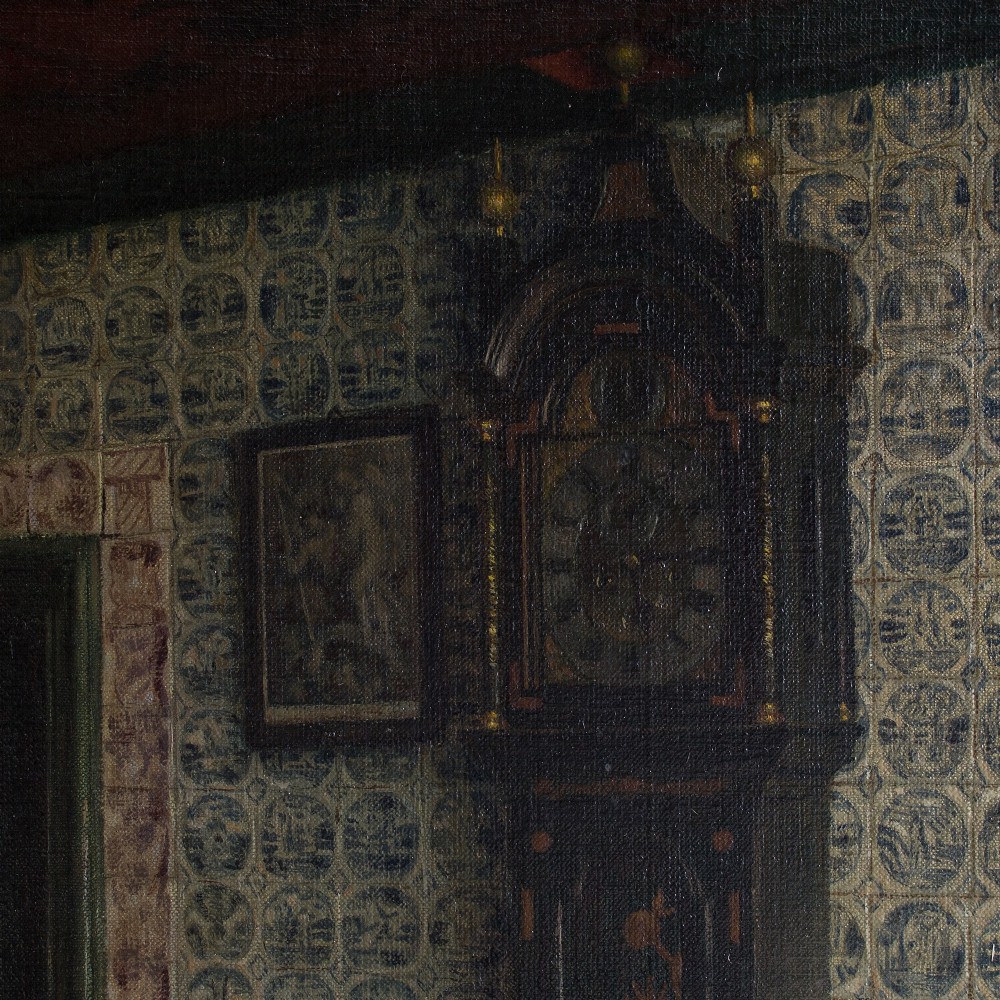
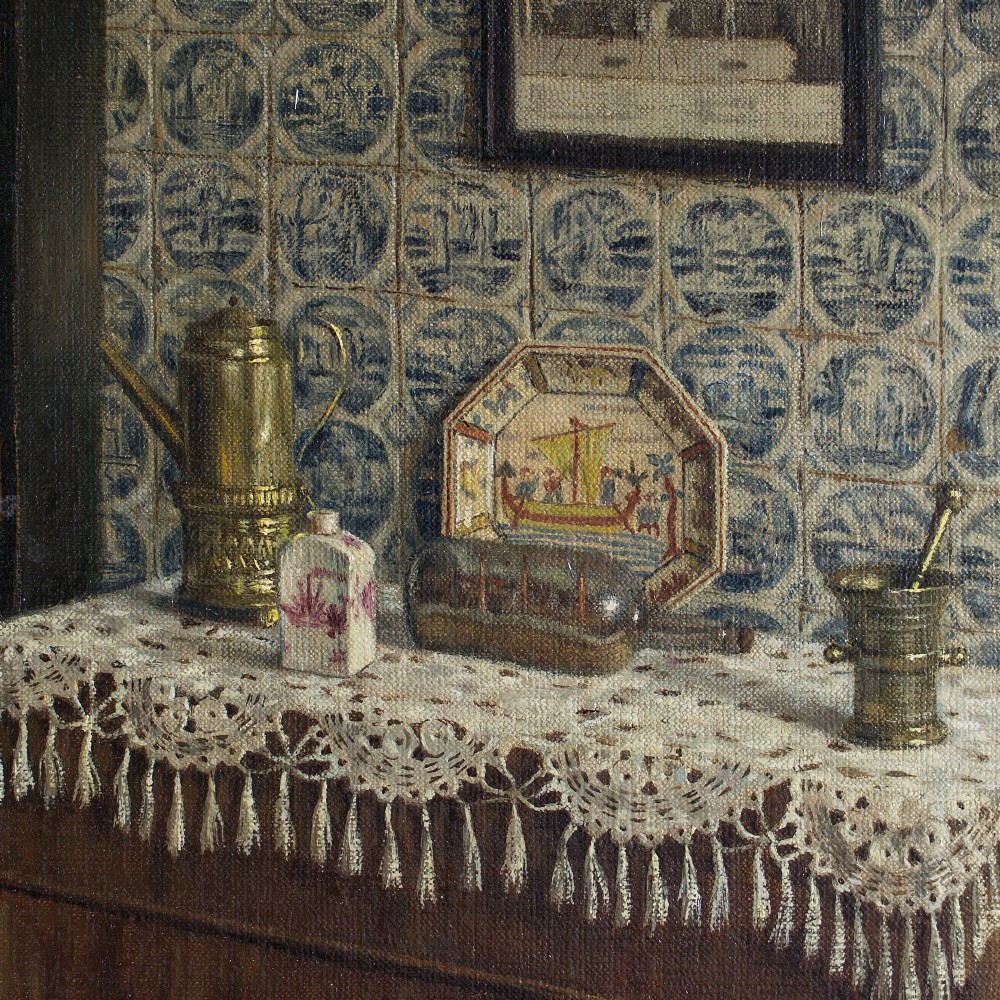
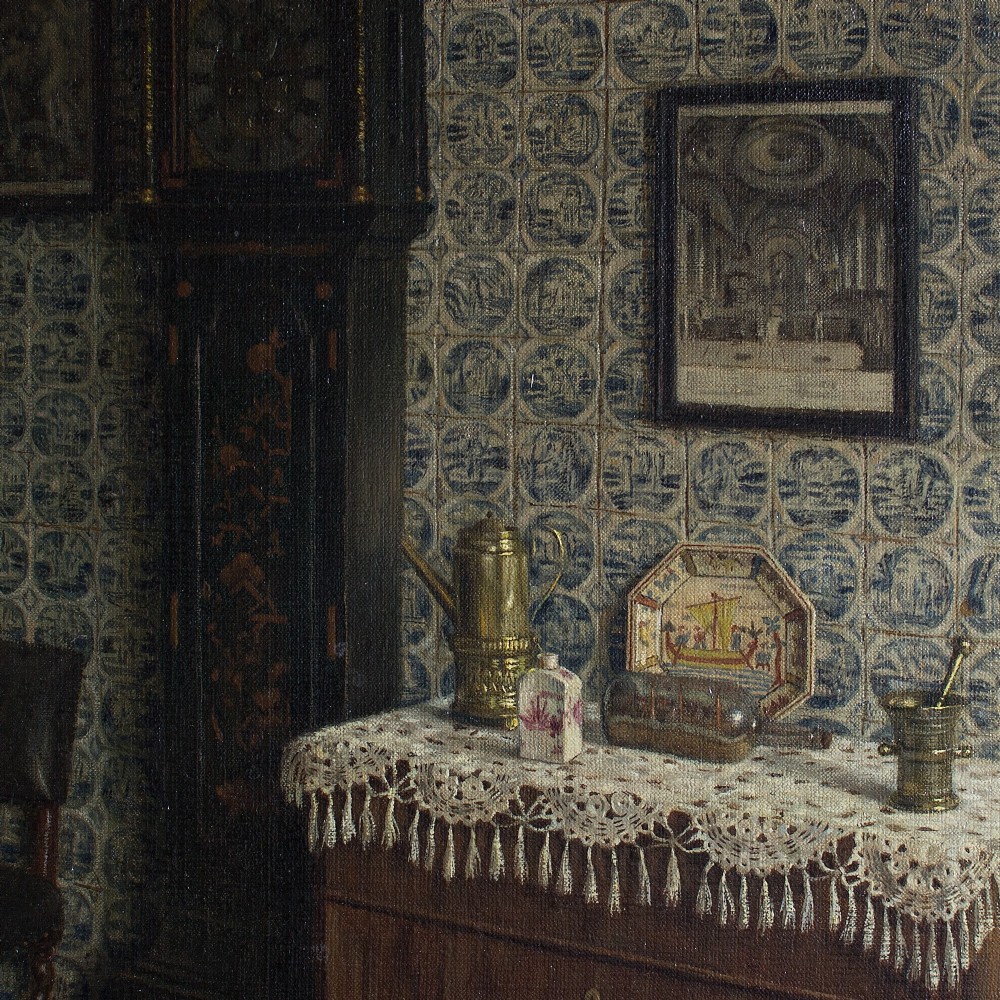
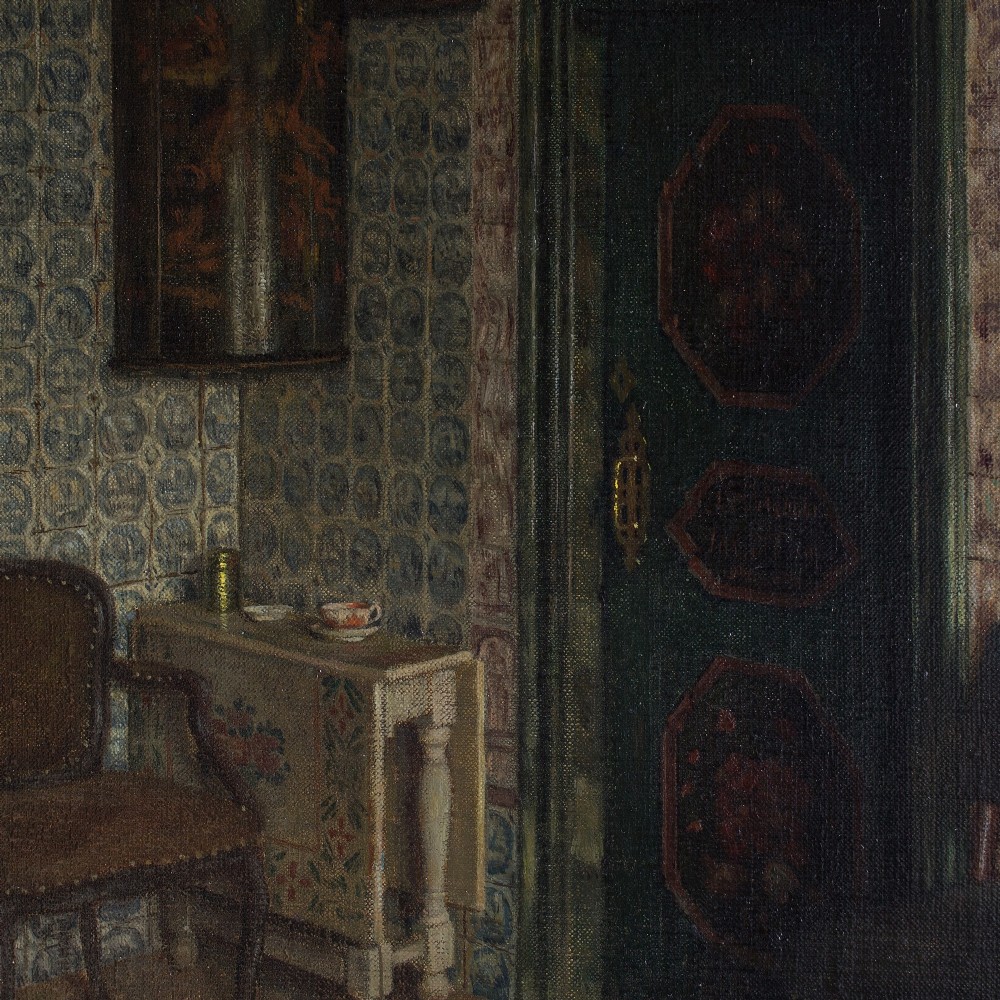
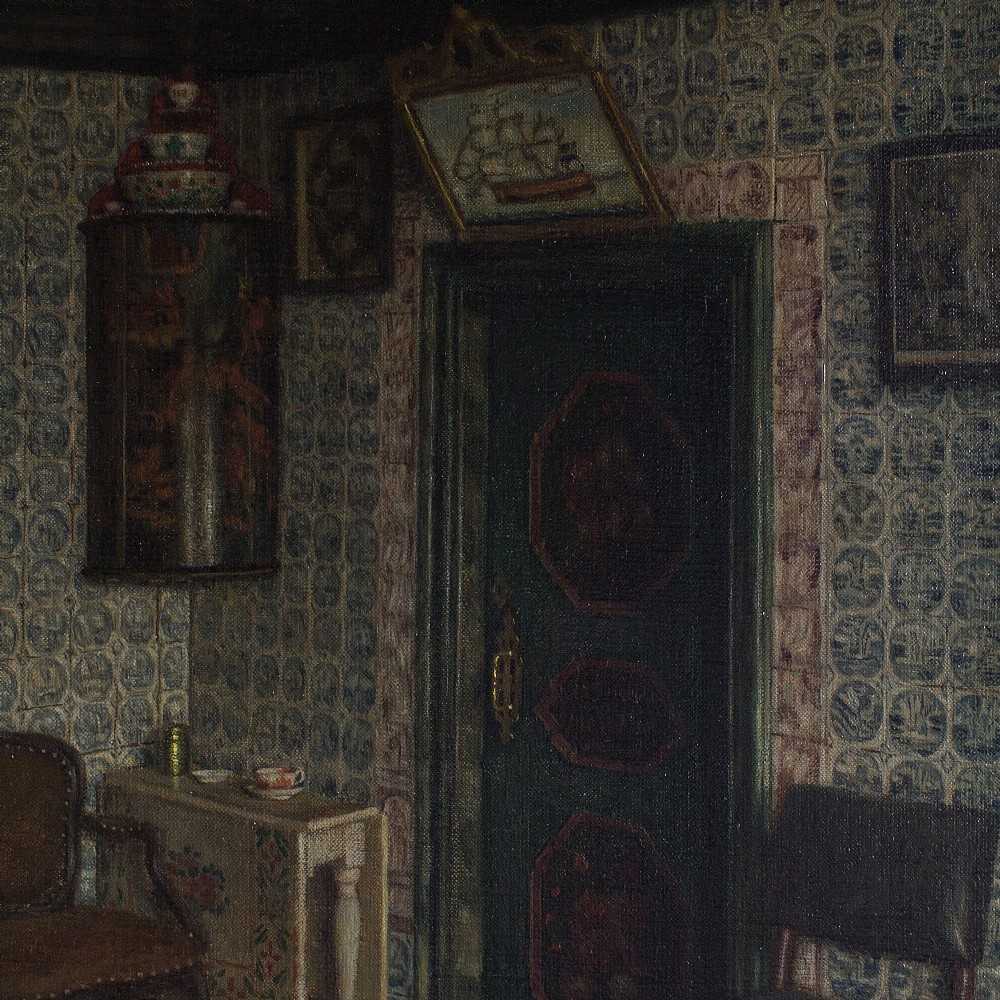
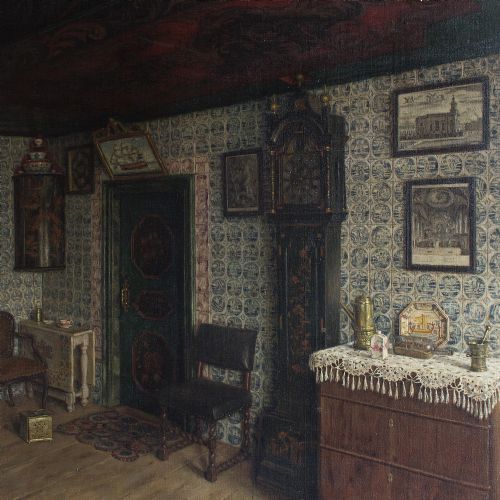
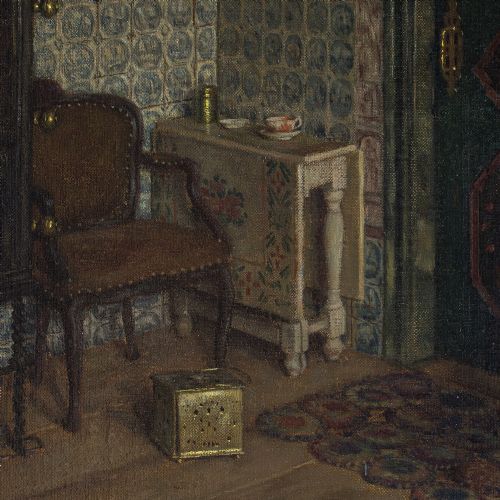
It’s said that King Frederick VI of Denmark slept here during a stay in 1825, which is why it’s known as the Königspesel (King’s Parlour). In this particular room, the ‘Pesel’, the walls are decorated with intricate Delft tiles and fine antique artworks.
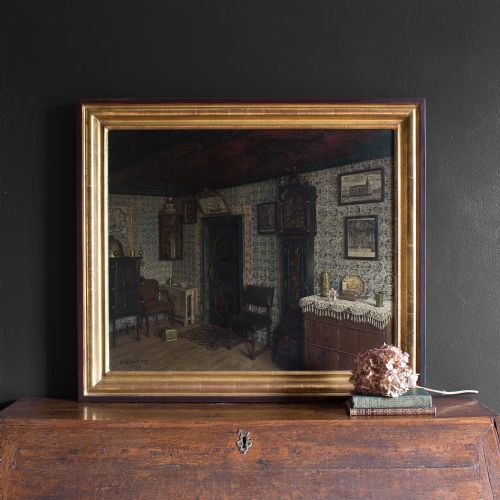
In 1953, the artist Wilhelm Gdanietz (1893-1969) painted the Pesel as it was at that point in time. It remains almost identical to this day and open to the public.
Wilhelm Gdanietz led a difficult life but overcame the odds to become a very successful painter. At the age of two, he became deaf following a bout of scarlet fever, which led to him spending much of his childhood at a ‘deaf and dumb’ institution. During this time, he must’ve found great solace in his art as by the age of 19 he gained access to the Academy in Düsseldorf.
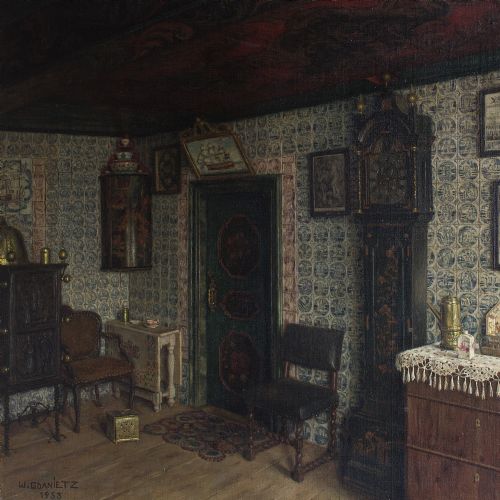
His style was firmly rooted in the past and he was particularly inspired by the Dutch old masters. For a while, he moved to Holland where he ran a studio in Volendam. During this period he produced many interior scenes and his works gained popularity following museum exhibitions.
In 1930, he retired to Düsseldorf where he lived in a cottage decorated with Delft tiles and Dutch antiques. It seems that Holland remained close to his heart throughout his life.
The painting is signed/dated in the lower left and housed within a gilded wooden frame. Certainly a museum quality piece.
Medium: Oil on canvas
Overall size: 30” x 27” / 77cm x 68cm
Year of creation: 1953
Provenance: Germany
Condition: Artwork in very good condition with no issues. Frame with some light age-related wear.
Artist’s auction highlight: £1,486 achieved for ‘Great Achievement, a Volendam Fisherman completing a ship Model’ in 2004 at Christie's.
Brave Fine Art has dated this piece to the 1950s.
Exquisite antique paintings that capture the imagination.
You can view the stock and full dealer information on the Brave Fine Art Profile Page
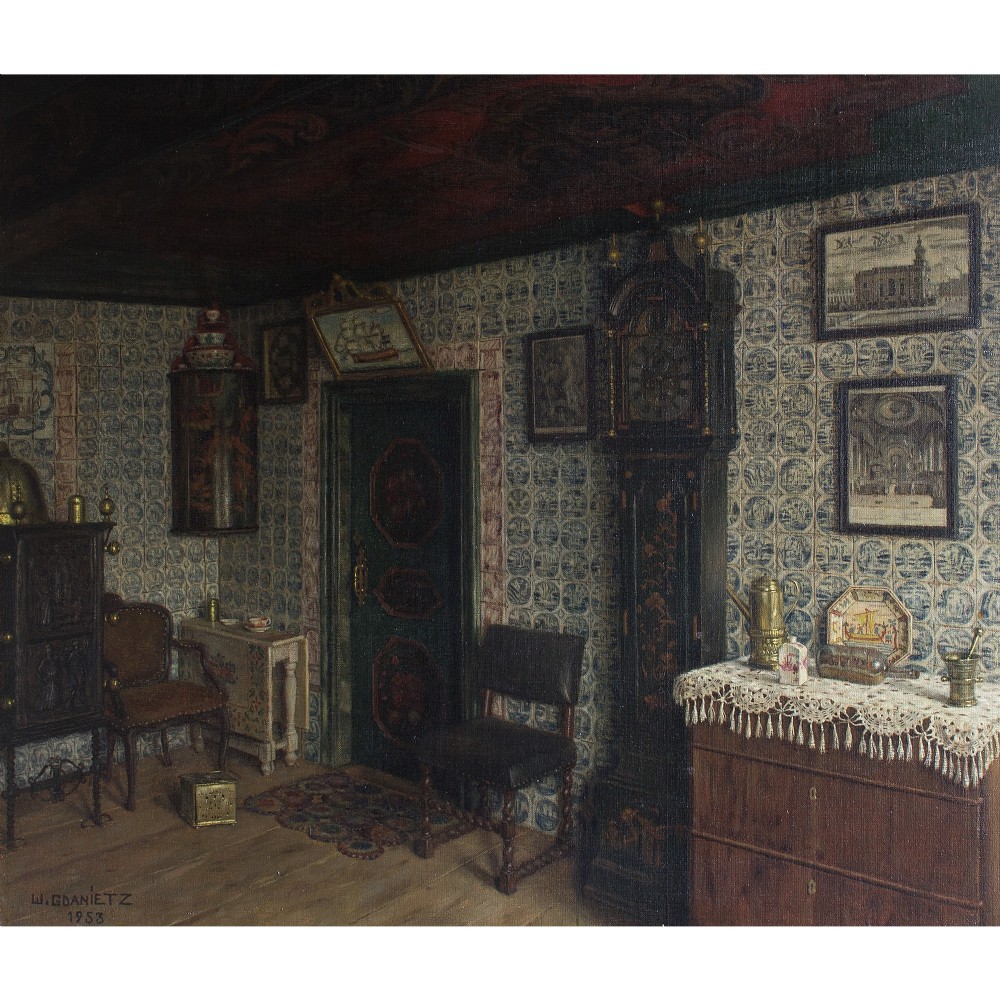
Wilhelm Gdanietz, Interior Scene, Oil Painting