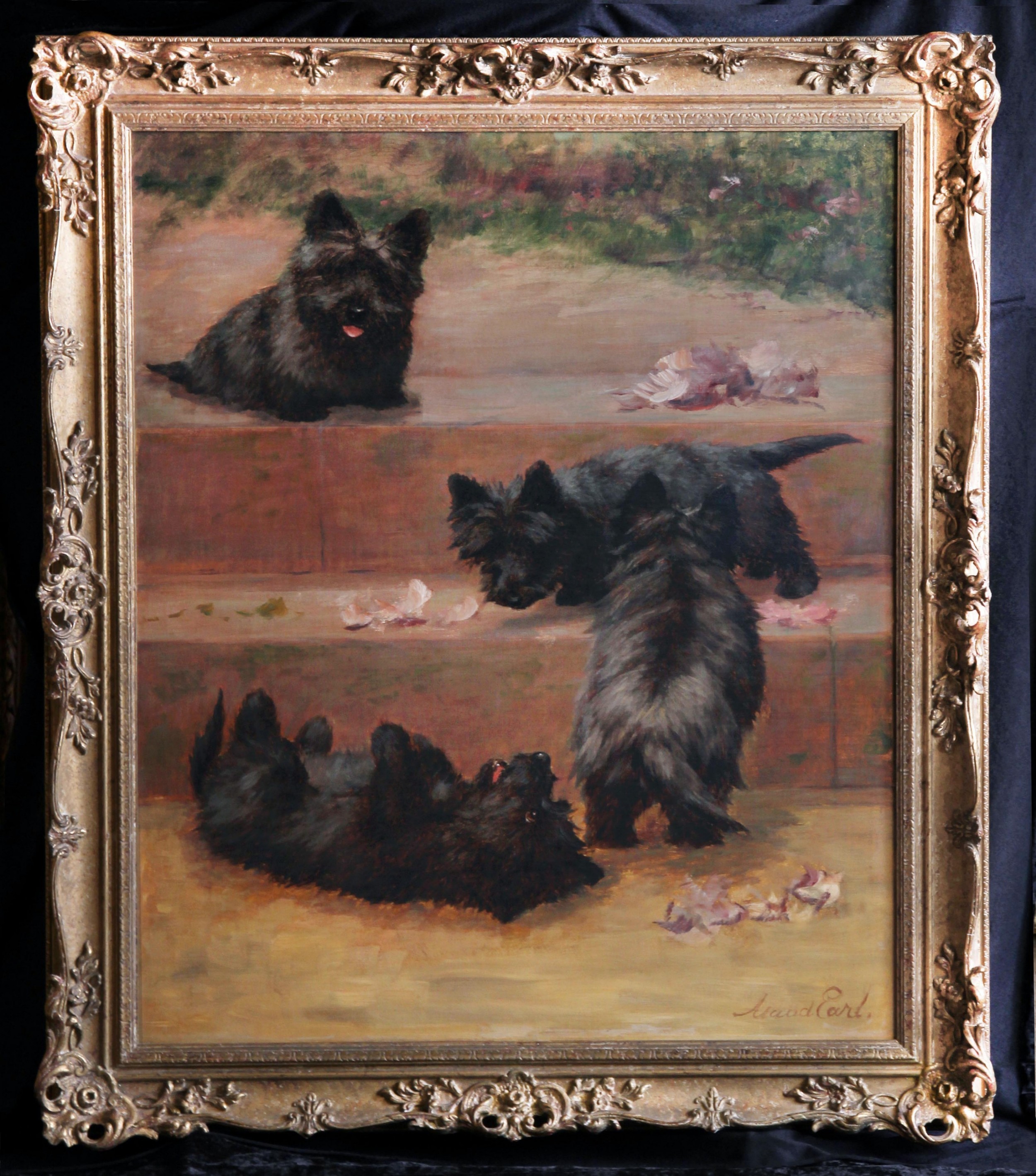
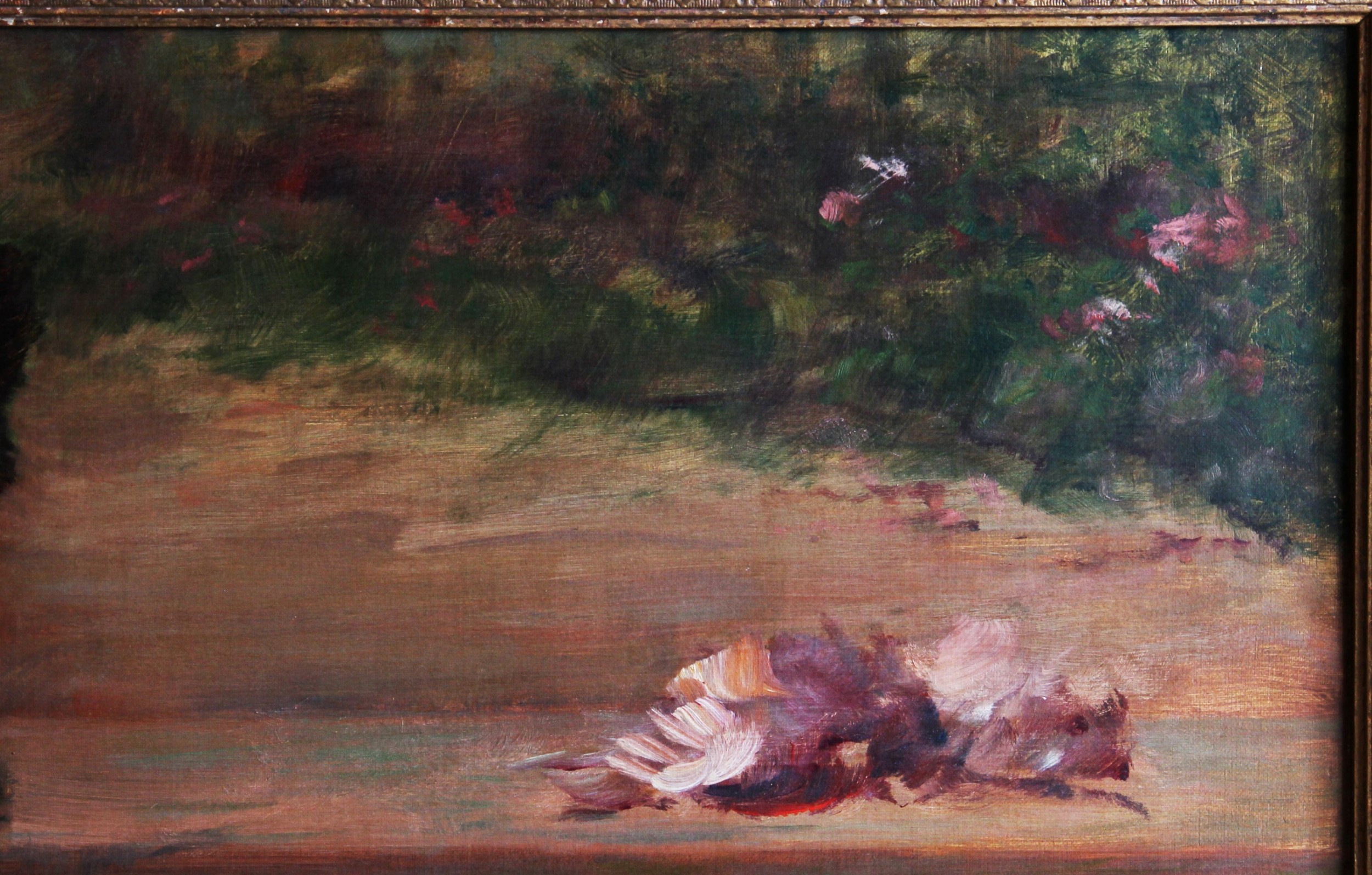
William Greenwood Fine Art has dated this piece to the 1900s.
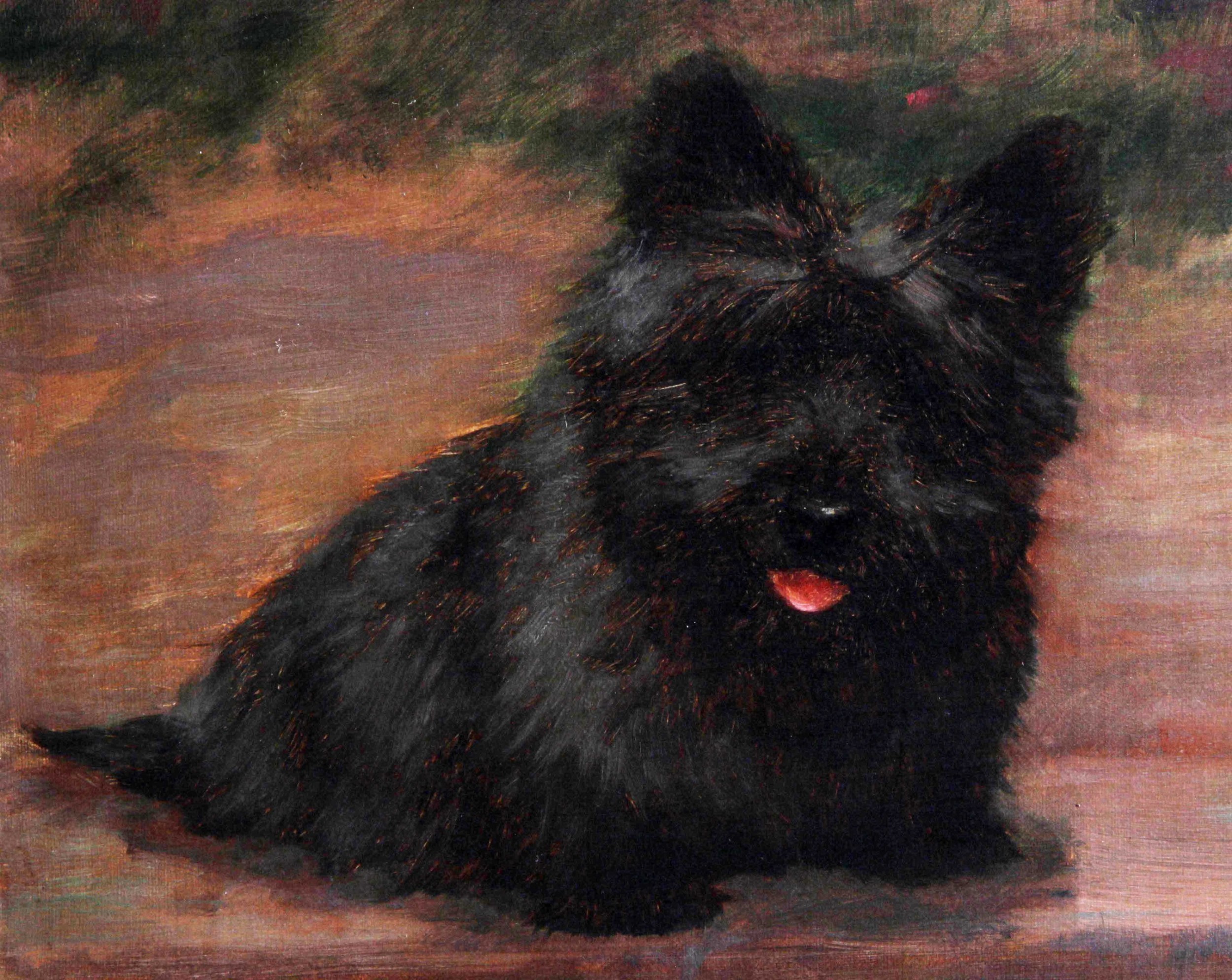
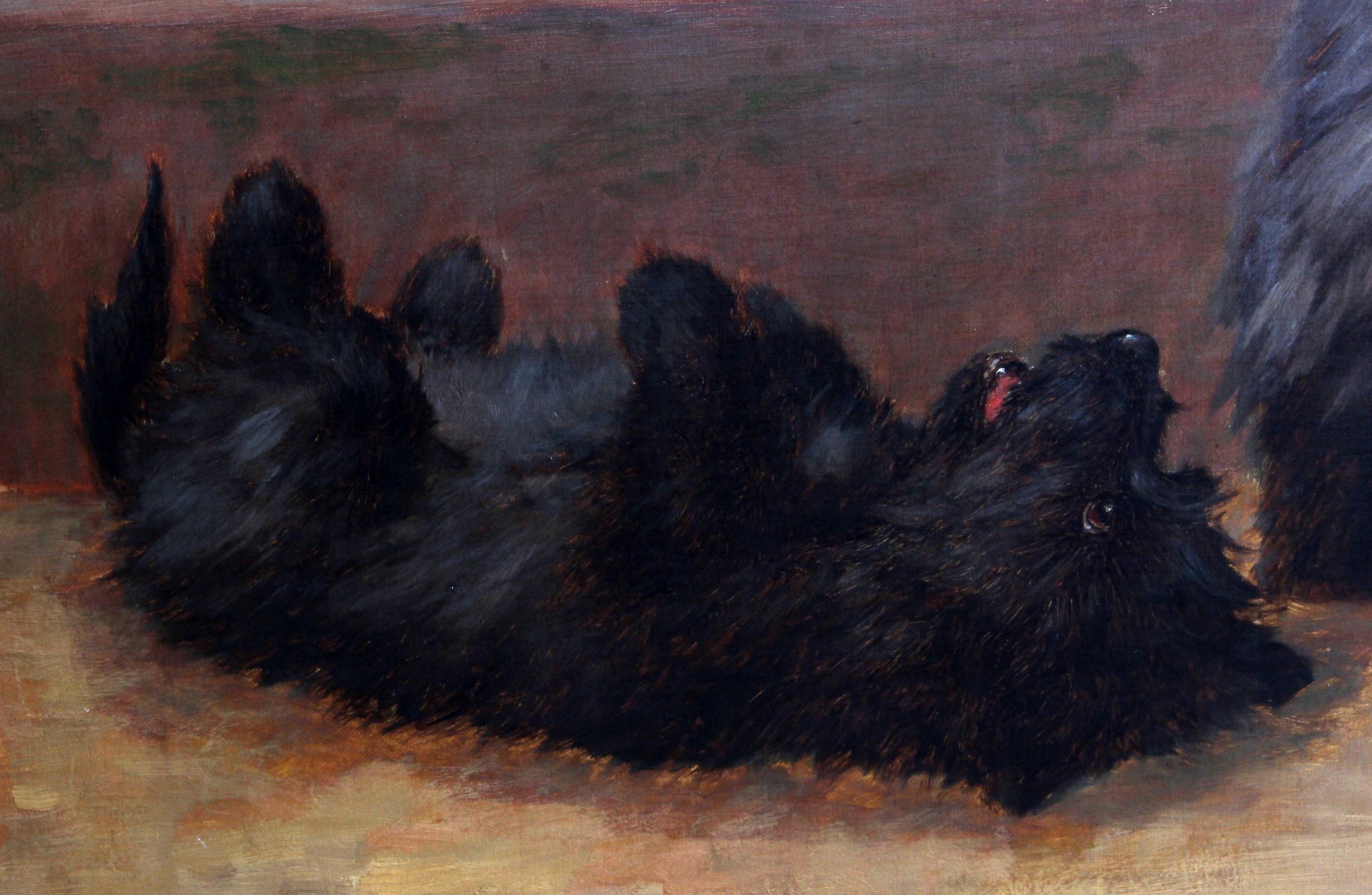
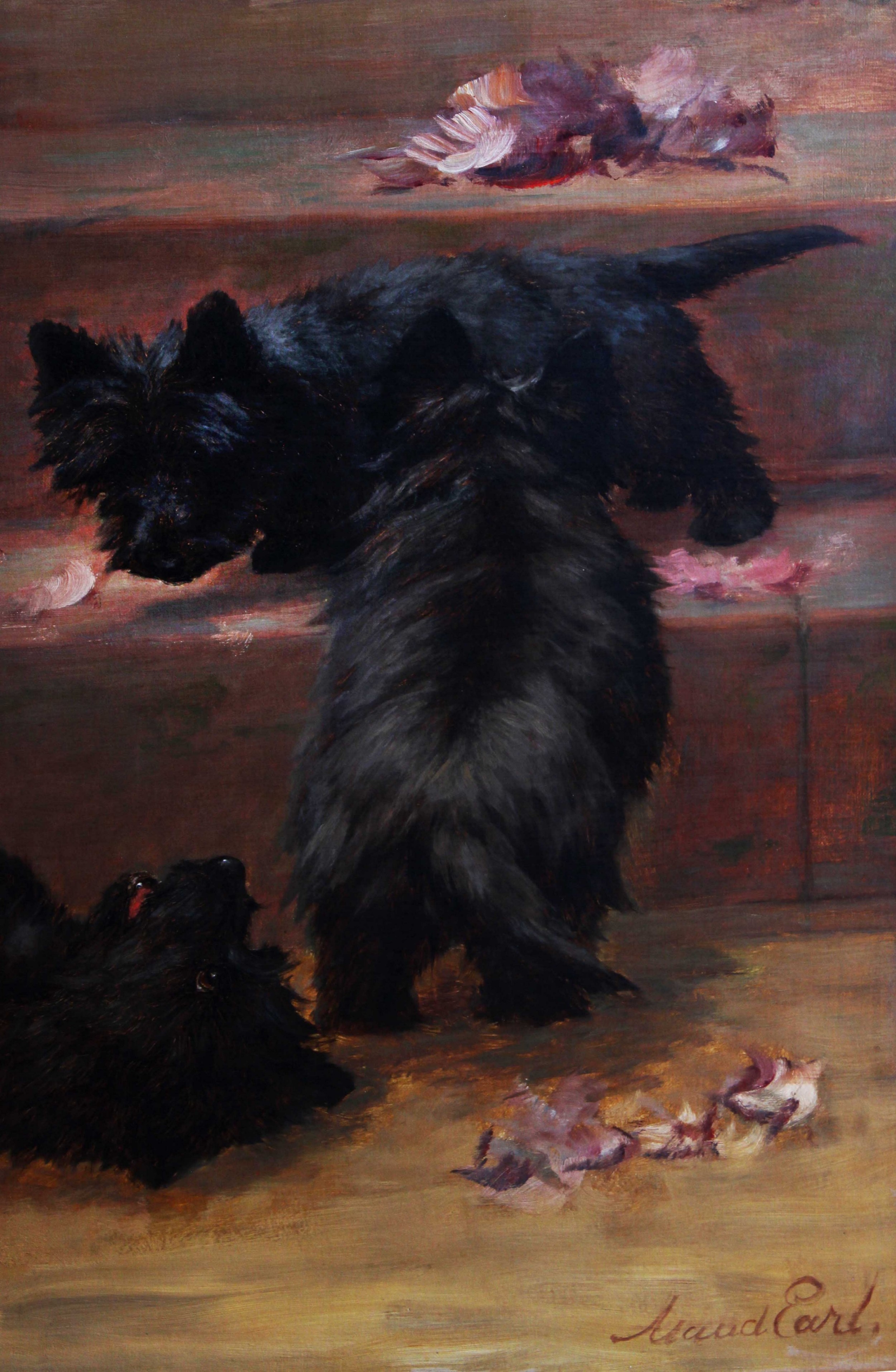
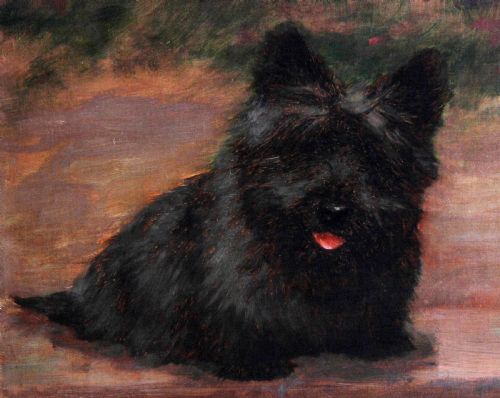
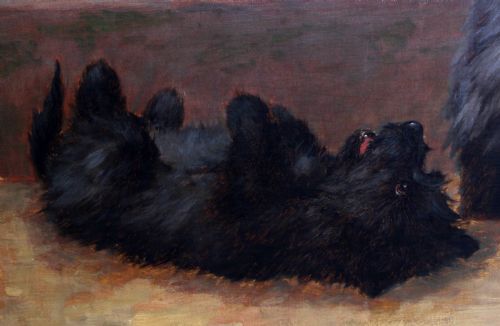
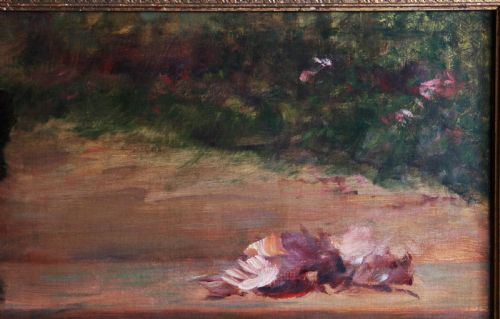
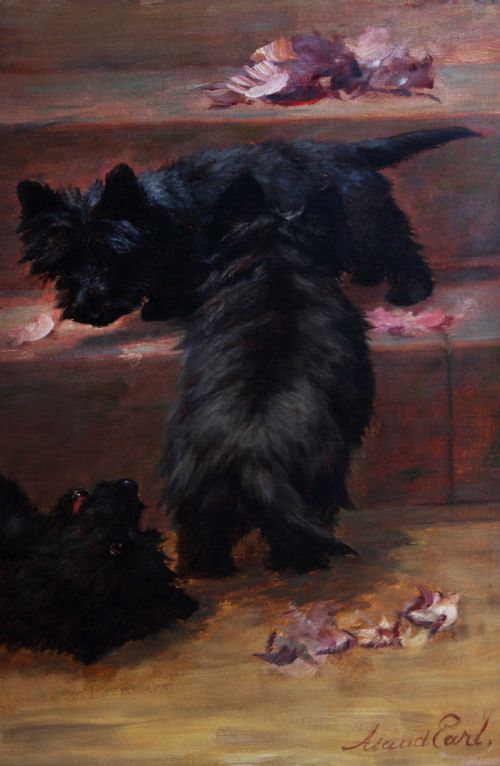
Title: "Cairn Terriers".
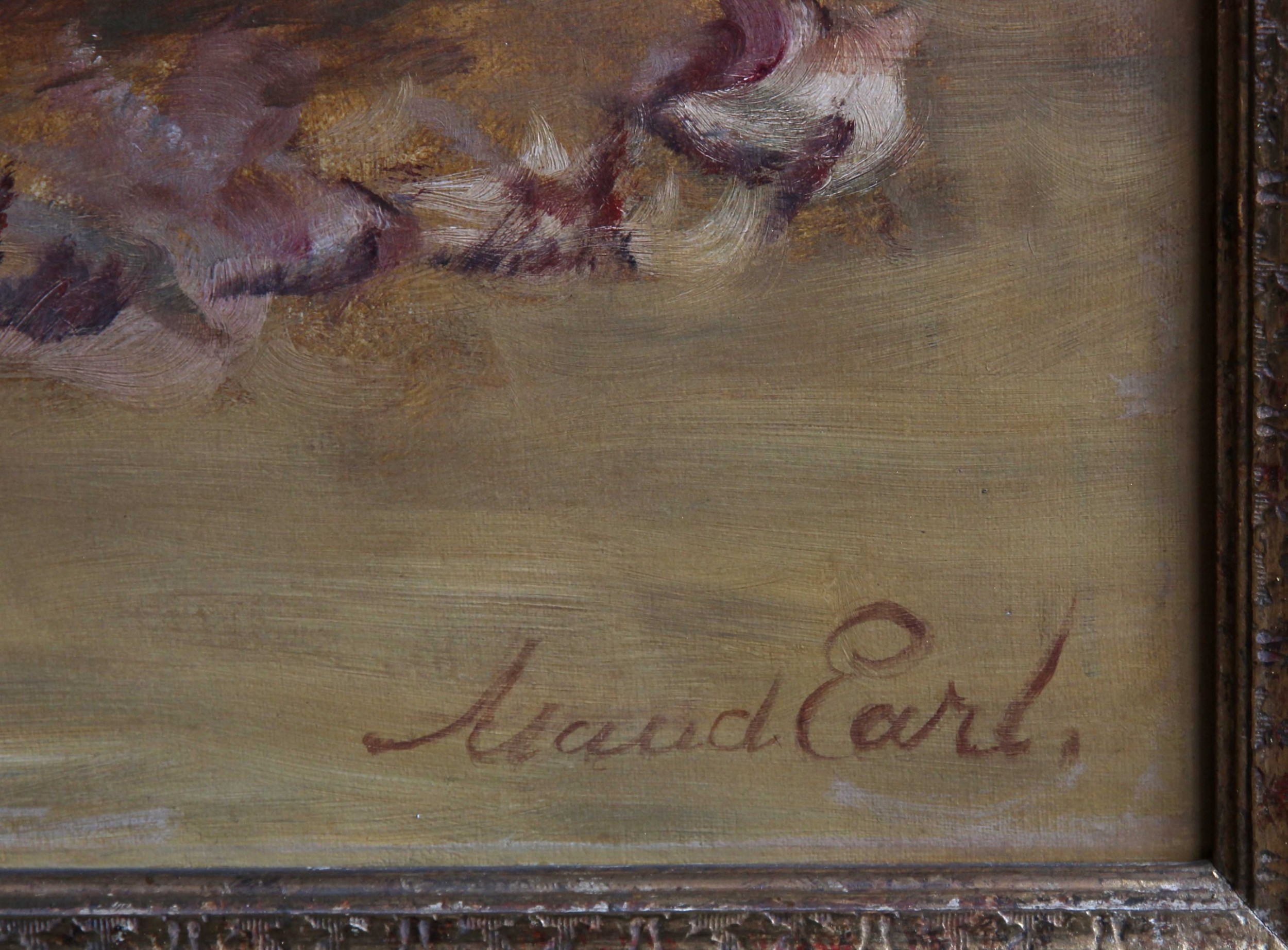
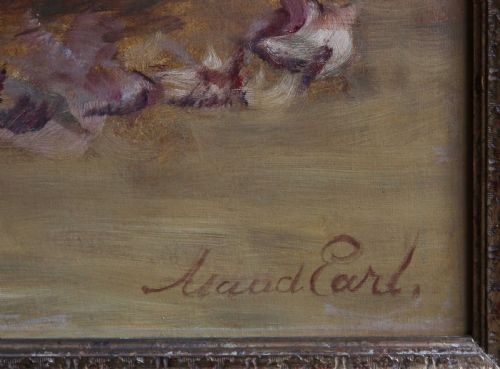
Signed. Circa 1900.
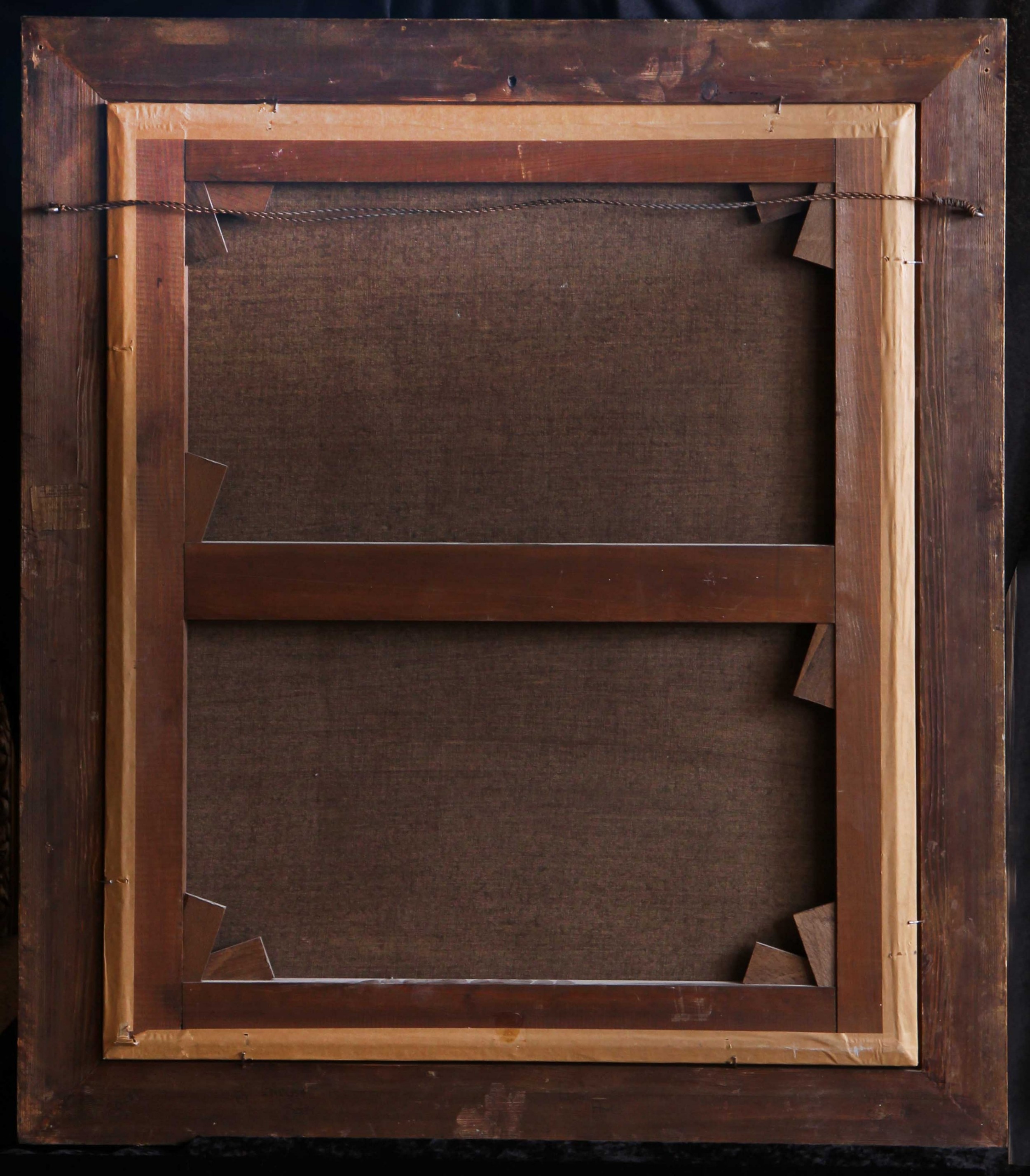
Oil on canvas. Framed.
Size: 30"x 25". Overall size: 36"x 31".
A very fine example of her dog portraiture.
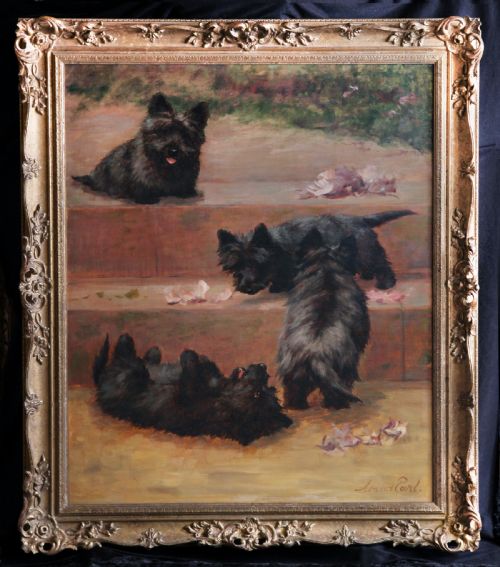
Now in very good ready to hang condition. Free UK delivery.
Maud Earl (Alice).
(English, 1863 -1943 ).
She painted in England at a time when many of our present day breeds were being recognized by The Kennel Club, and dog shows were growing rapidly in popularity.
As an artist, Earl painted many of the most important breed specimens of the day, and she is represented in the collections by fifteen original paintings and forty-nine photogravures. Among the prominent fanciers who owned these paintings were Mr. Francis Redmond of Totteridge Kennel Fame, Her Grace, Kathleen, The Duchess of Newcastle, who lived at Clumber Park, and in America, people such as Hayes Blake Hoyt of the famous Blakeen Kennels.
Maud Earl was born in the West End of London, a locale which belies her family's interest in the sporting world. The Earls came from a long line of Worcestershire and Gloucestershire sporting families. Both her father George and her less well-known uncle Thomas Earl were noted sporting artists. Her half-brother, Percy, was also an artist who completed many commissions of horses and pure bred dogs.
As a child, Maud was more interested in becoming a musician than in pursuing the visual arts, but under her father's tutelage, she rapidly became a talented pupil. Working first in only black and white, she drew animals over and over again, and was instructed in anatomy, first drawing the skeleton of a man, then a horse and a dog.
Maud Earl soon came to specialize in animals, and in dogs in particular, for she had a particular affinity for them. As the artist pointed out in an interview in the November, 1898 issue of The Young Woman, "You can't paint dogs unless you understand them; I don't mean merely from the fancier's point of view. You must know whether they are happy and comfortable, and if not, why not. You must know how to quiet them when they become excited and nervous. You must know all their little likes and dislikes, and this knowledge comes from long experience."
Describing how she went about painting her canine subjects, Miss Earl explained that she never used photographs, for she preferred to paint what she saw, rather than what the camera saw. Rather, she posed the canine subject on a sort of portable stool on castors, which made it easy to move about. An attendant usually accompanied the dog, but more often than not, Miss Earl was the one to settle the dog so that he might pose quietly. First she sketched in the general anatomy of the dog with chalks, then set about to capture the animal in oils. A single portrait sitting would typically take two days, with the artist working from 10 a.m. to 4 p.m. The painting would then be completed at her leisure.
Maud Earl's early commissions came from the world of dogs shows and pure bred dogs, but as her reputation continued to grow during the nineteenth century, she came to the notice of Queen Victoria and the royal family.
The Queen was a great lover of dogs and dog paintings. At any one time she had as many as 70 dogs at her kennels at Windsor, and the Queen's favorite artists such as Sir Edwin Landseer and Gourlay Steele depicted many of her dogs. Her patronage was not limited to her court artist, however, and indeed Maud Earl was summoned to Windsor to paint her favorite Collie, a breed which Queen Victoria had been instrumental in popularizing.
Queen Victoria was not the only of Miss Earl's royal patrons. She had often painted dogs belonging to the Prince and Princess of Wales, Albert and Alexand
William Greenwood Fine Art has dated this piece to the 1900s.
You can view the stock and full dealer information on the William Greenwood Fine Art Profile Page
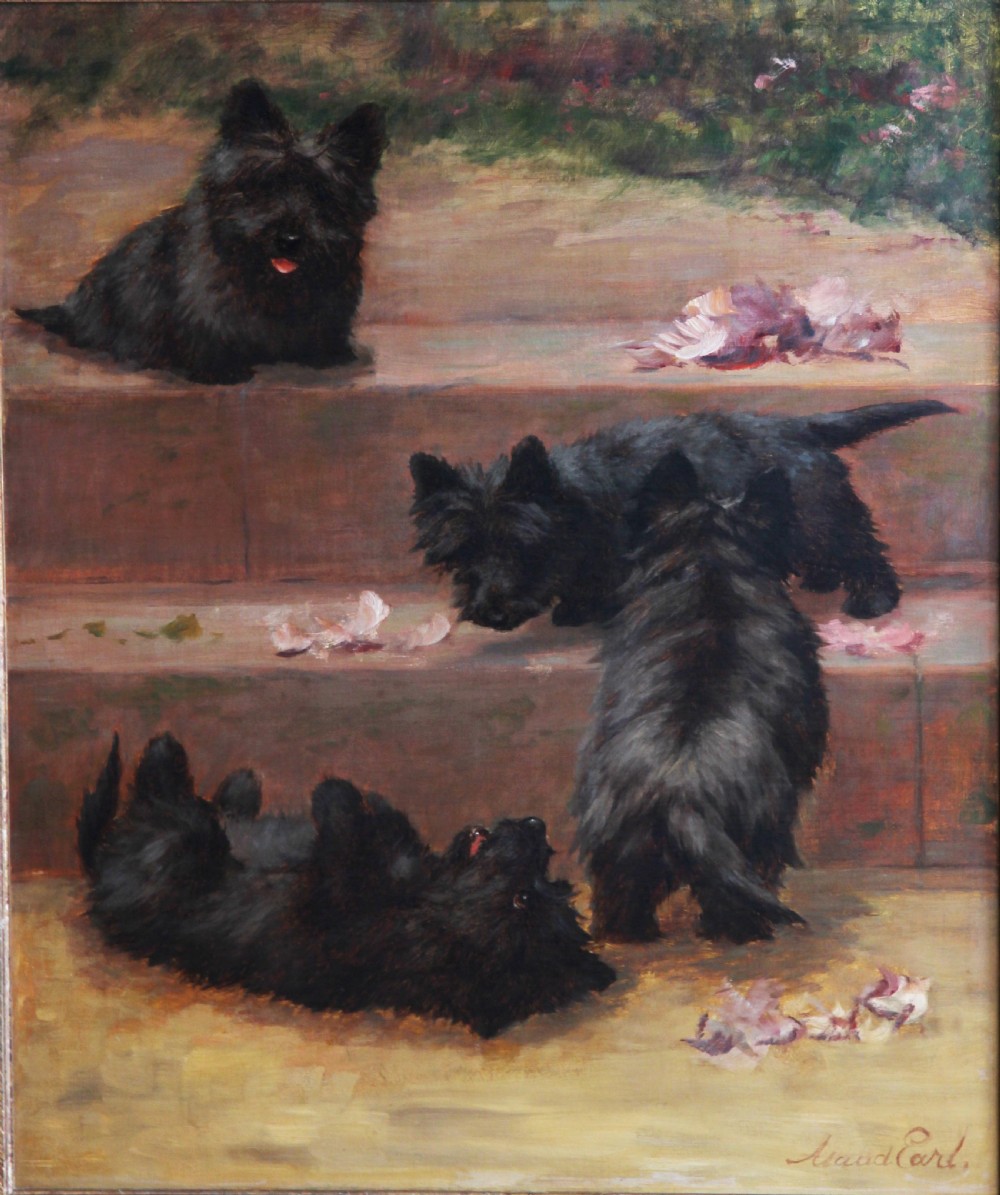
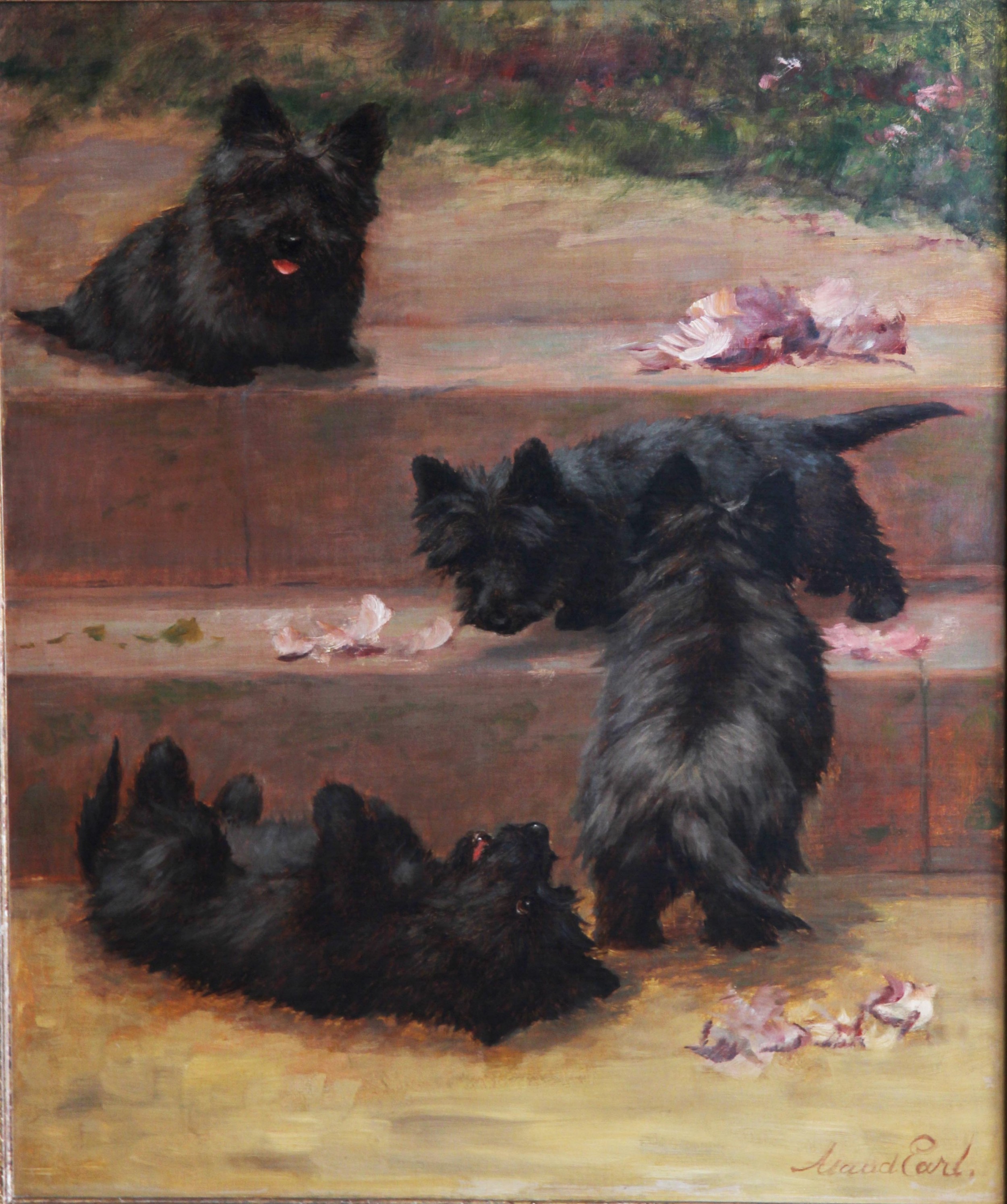
Maud Earl. "Cairn Terriers". Very Good Dog Oil Painting.