66,037  PAGES BROWSED TODAY PAGES TODAY • 27 ANTIQUES UPLOADED TODAYNEW ARRIVALS
GIFTS
27 ITEMS ADDED TODAY
Sort Order
Items Per Page
Browse Categories
Sort order
Items per page
ID #SA678099
SOLD
Email Phone
Save
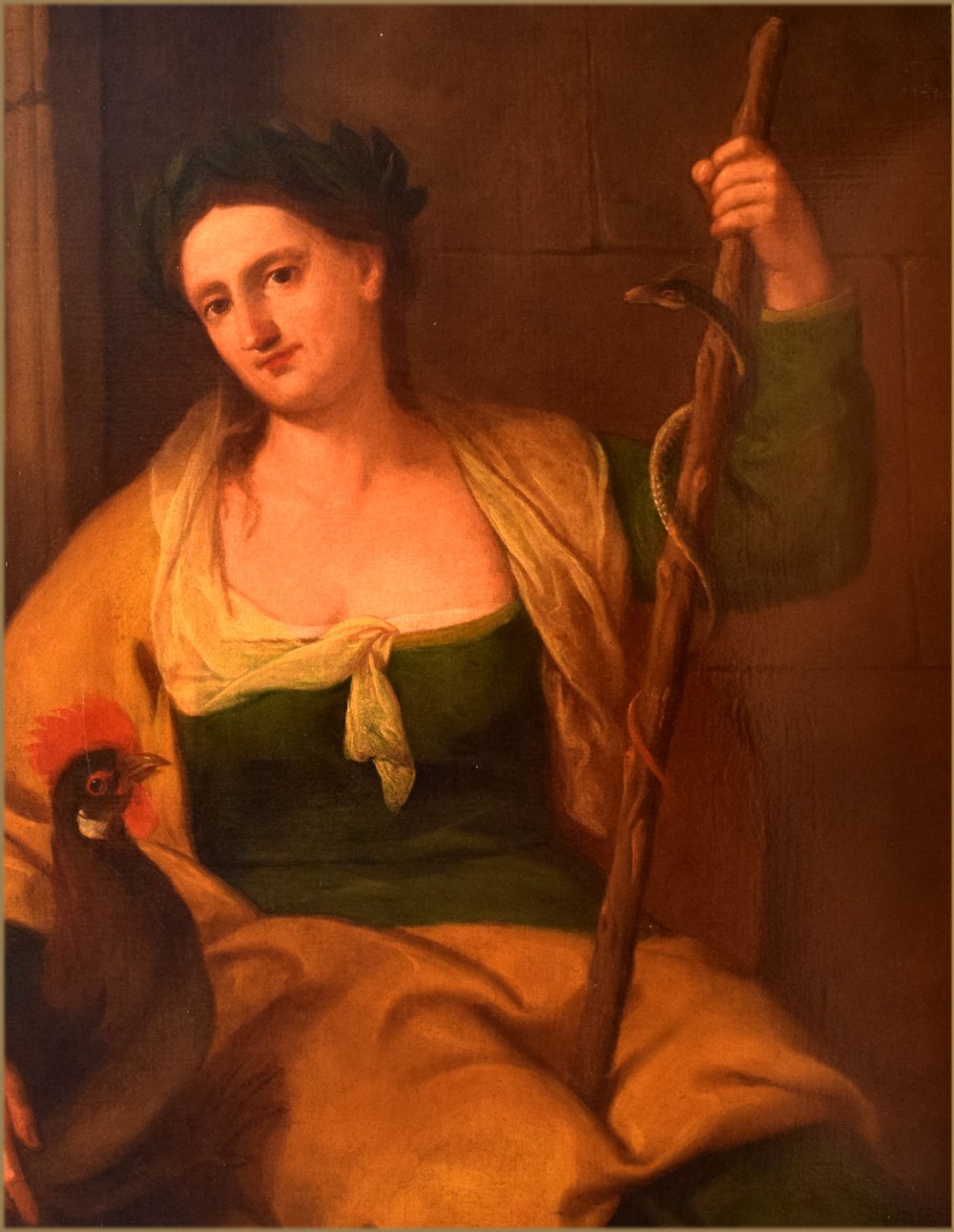
Attributed to Angelica Kauffman, 1741 - 1807 Portrait of a Lady as the Greek Goddess Hygieia, Accompanied with Her Symbols, a Rod, Serpent & Cockerel
Sold by Artware Fineart
sold SA678099
Sorry, but this item has been sold.

Artware Fineart

Sellingantiques Verified Since Sep 2008
Browse dealers 243 items
Id #SA678099
PDF SHARE
SAVE

Attributed to Angelica Kauffman, 1741 - 1807 Portrait of a Lady as the Greek Goddess Hygieia, Accompanied with Her Symbols, a Rod, Serpent & Cockerel

18th century
Sold 12 November 2020 · Artware Fineart
This “Attributed to Angelica Kauffman, 1741 - 1807 Portrait of a Lady as the Greek Goddess Hygieia, Accompanied with Her Symbols, a Rod, Serpent & Cockerel” found a buyer.

It was listed by Artware Fineart. Sold pieces stay on Sellingantiques as a record of what has passed through, and the next one is rarely far away.

Description

Attributed to Angelica Kauffman, 1741 - 1807

Portrait of a Lady as the Greek Goddess Hygieia, accompanied with her Symbols, A Rod, Serpent & Cockerel

oil on canvas

99 x 79 cm. (39 x 31 in.)

Hygieia Goddess of good health, cleanliness, and sanitation. In Greek mythology, Hygeia was the daughter and assistant of Aesculapius (sometimes spelled Asklepios), the God of Medicine and Healing. Hygeia's classical symbol was a bowl containing a medicinal potion with the serpent of Wisdom (or guardianship) partaking it. This is the same serpent of Wisdom, which appears on the caduceus, the staff of Aesculapius, which is the symbol of medicine. Hygieia as well as her four sisters each performed a facet of Apollo's art: Hygieia ("Hygiene" the goddess/personification of health, cleanliness, and sanitation); Panacea (the goddess of Universal remedy); Iaso (the goddess of recuperation from illness); Aceso (the goddess of the healing process); and Aglaïa (the goddess of beauty, splendor, glory, magnificence, and adornment). The Rod of Aesculapius, and a snake aswell as the Cockerel are all symbols which further allude to Aesculapius her father and her important role as his assistant . The cockerel or rooster was also sacred to the god and was the bird they sacrificed as his altar. The laurel wreath was a symbol of Apollo and the leaf itself was believed to have spiritual and physical cleansing abilities.
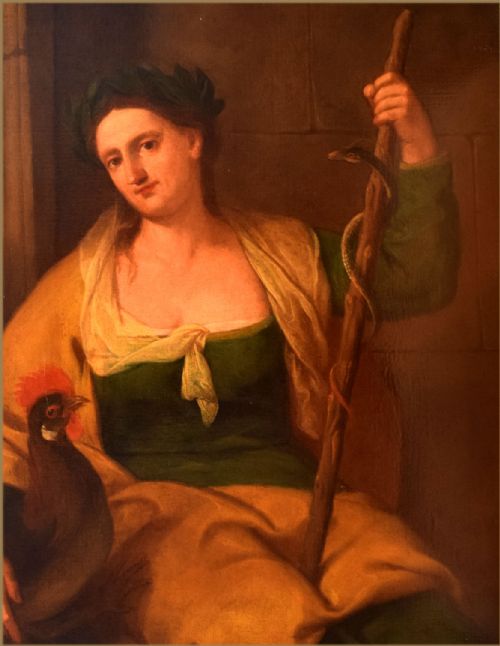
Hygieia also played an important part in her father's cult. While her father was more directly associated with healing, she was associated with the prevention of sickness and the continuation of good health. Her name is the source of the word "hygiene". Hygieia was imported by the Romans as the goddess Valetudo, the goddess of personal health, but in time she started to be increasingly identified with the ancient Italian goddess of social welfare, Salus. At Athens, Hygieia was the subject of a local cult since at least the 7th century BC.[citation needed] "Athena Hygieia" was one of the cult titles given to Athena, as Plutarch recounts of the building of the Parthenon (447-432 BC):
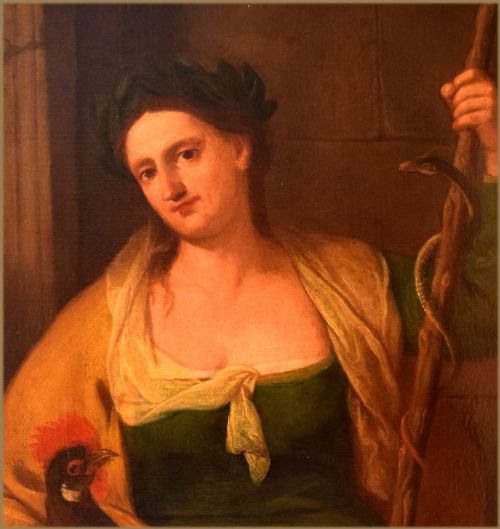
A strange accident happened in the course of building, which showed that the goddess was not averse to the work, but was aiding and co-operating to bring it to perfection. One of the artificers, the quickest and the handiest workman among them all, with a slip of his foot fell down from a great height, and lay in a miserable condition, the physicians having no hope of his recovery. When Pericles was in distress about this, the goddess [Athena] appeared to him at night in a dream, and ordered a course of treatment, which he applied, and in a short time and with great ease cured the man. And upon this occasion it was that he set up a brass statue of Athena Hygieia, in the citadel near the altar, which they say was there before. But it was Phidias who wrought the goddess's image in gold, and he has his name inscribed on the pedestal as the workman of it. However, the cult of Hygieia as an independent goddess did not begin to spread out until the Delphic oracle recognized her, and after the devastating Plague of Athens (430-427 BC) and in Rome in 293 BC. In the 2nd century AD, Pausanias noted the statues both of Hygieia and of Athena Hygieia near the entrance to the Acropolis of Athens.
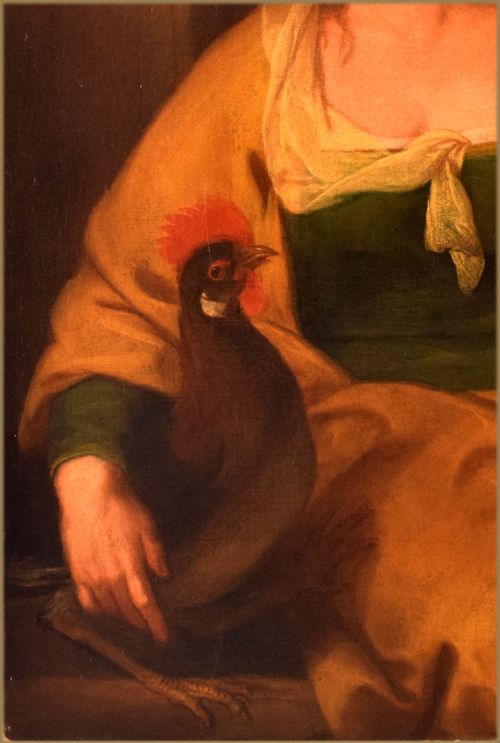
Hygieia's primary temples were in Epidaurus, Corinth, Cos and Pergamon. Pausanias remarked that, at the Asclepieion of Titane in Sicyon (founded by Alexanor, Asclepius' grandson), statues of Hygieia were covered by women's hair and pieces of Babylonian clothes. According to inscriptions, the same sacrifices were offered at Paros.

Ariphron, a Sicyonian artist from the 4th century BC wrote a well-known hymn celebrating her. Statues of Hygieia were created by Scopas, Bryaxis and Timotheus, among others, but there is no clear description of what they looked like.

Date of Manufacture

Artware Fineart has dated this piece to the 18th Century.

Physical Dimensions
Height
99cm (38.98")
Width
79cm (31.10")
Depth
2cm (0.79")
Reference Numbers
Sellingantiques Reference
SA678099
Dealers Internal Reference
4032
Description
Attributed to Angelica Kauffman, 1741 - 1807
“
Portrait of a Lady as the Greek Goddess Hygieia, accompanied with her Symbols, A Rod, Serpent & Cockerel.
Artware Fineart

oil on canvas

99 x 79 cm. (39 x 31 in.)

Hygieia Goddess of good health, cleanliness, and sanitation. In Greek mythology, Hygeia was the daughter and assistant of Aesculapius (sometimes spelled Asklepios), the God of Medicine and Healing. Hygeia's classical symbol was a bowl containing a medicinal potion with the serpent of Wisdom (or guardianship) partaking it. This is the same serpent of Wisdom, which appears on the caduceus, the staff of Aesculapius, which is the symbol of medicine. Hygieia as well as her four sisters each performed a facet of Apollo's art: Hygieia ("Hygiene" the goddess/personification of health, cleanliness, and sanitation); Panacea (the goddess of Universal remedy); Iaso (the goddess of recuperation from illness); Aceso (the goddess of the healing process); and Aglaïa (the goddess of beauty, splendor, glory, magnificence, and adornment). The Rod of Aesculapius, and a snake aswell as the Cockerel are all symbols which further allude to Aesculapius her father and her important role as his assistant . The cockerel or rooster was also sacred to the god and was the bird they sacrificed as his altar. The laurel wreath was a symbol of Apollo and the leaf itself was believed to have spiritual and physical cleansing abilities.

fig 1. Attributed to Angelica Kauffman, 1741 - 1807
Portrait of a Lady as the Greek Goddess Hygieia, accompanied with her Symbols, A Rod, Serpent & Cockerel
fig 1. Attributed to Angelica Kauffman, 1741 - 1807 Portrait of a Lady as the Greek Goddess Hygieia, Accompanied with Her Symbols, a Rod, Serpent & Cockerel

Hygieia also played an important part in her father's cult. While her father was more directly associated with healing, she was associated with the prevention of sickness and the continuation of good health. Her name is the source of the word "hygiene". Hygieia was imported by the Romans as the goddess Valetudo, the goddess of personal health, but in time she started to be increasingly identified with the ancient Italian goddess of social welfare, Salus. At Athens, Hygieia was the subject of a local cult since at least the 7th century BC.[citation needed] "Athena Hygieia" was one of the cult titles given to Athena, as Plutarch recounts of the building of the Parthenon (447-432 BC):

fig 2. Attributed to Angelica Kauffman, 1741 - 1807
Portrait of a Lady as the Greek Goddess Hygieia, accompanied with her Symbols, A Rod, Serpent & Cockerel
fig 2. Attributed to Angelica Kauffman, 1741 - 1807 Portrait of a Lady as the Greek Goddess Hygieia, Accompanied with Her Symbols, a Rod, Serpent & Cockerel

A strange accident happened in the course of building, which showed that the goddess was not averse to the work, but was aiding and co-operating to bring it to perfection. One of the artificers, the quickest and the handiest workman among them all, with a slip of his foot fell down from a great height, and lay in a miserable condition, the physicians having no hope of his recovery. When Pericles was in distress about this, the goddess [Athena] appeared to him at night in a dream, and ordered a course of treatment, which he applied, and in a short time and with great ease cured the man. And upon this occasion it was that he set up a brass statue of Athena Hygieia, in the citadel near the altar, which they say was there before. But it was Phidias who wrought the goddess's image in gold, and he has his name inscribed on the pedestal as the workman of it. However, the cult of Hygieia as an independent goddess did not begin to spread out until the Delphic oracle recognized her, and after the devastating Plague of Athens (430-427 BC) and in Rome in 293 BC. In the 2nd century AD, Pausanias noted the statues both of Hygieia and of Athena Hygieia near the entrance to the Acropolis of Athens.

fig 3. Attributed to Angelica Kauffman, 1741 - 1807
Portrait of a Lady as the Greek Goddess Hygieia, accompanied with her Symbols, A Rod, Serpent & Cockerel
fig 3. Attributed to Angelica Kauffman, 1741 - 1807 Portrait of a Lady as the Greek Goddess Hygieia, Accompanied with Her Symbols, a Rod, Serpent & Cockerel

Hygieia's primary temples were in Epidaurus, Corinth, Cos and Pergamon. Pausanias remarked that, at the Asclepieion of Titane in Sicyon (founded by Alexanor, Asclepius' grandson), statues of Hygieia were covered by women's hair and pieces of Babylonian clothes. According to inscriptions, the same sacrifices were offered at Paros.

Ariphron, a Sicyonian artist from the 4th century BC wrote a well-known hymn celebrating her. Statues of Hygieia were created by Scopas, Bryaxis and Timotheus, among others, but there is no clear description of what they looked like.

Date of Manufacture

Artware Fineart has dated this piece to the 18th Century.

Height
99cm (38.98")
Width
79cm (31.10")
Depth
2cm (0.79")
Reference Numbers
Sellingantiques Ref
SA678099
Dealers Internal Ref
4032
Artware Fineart
Sellingantiques verified Since Sep 2008
Dealer Profile

You can view the stock and full dealer information on the Artware Fineart Profile Page
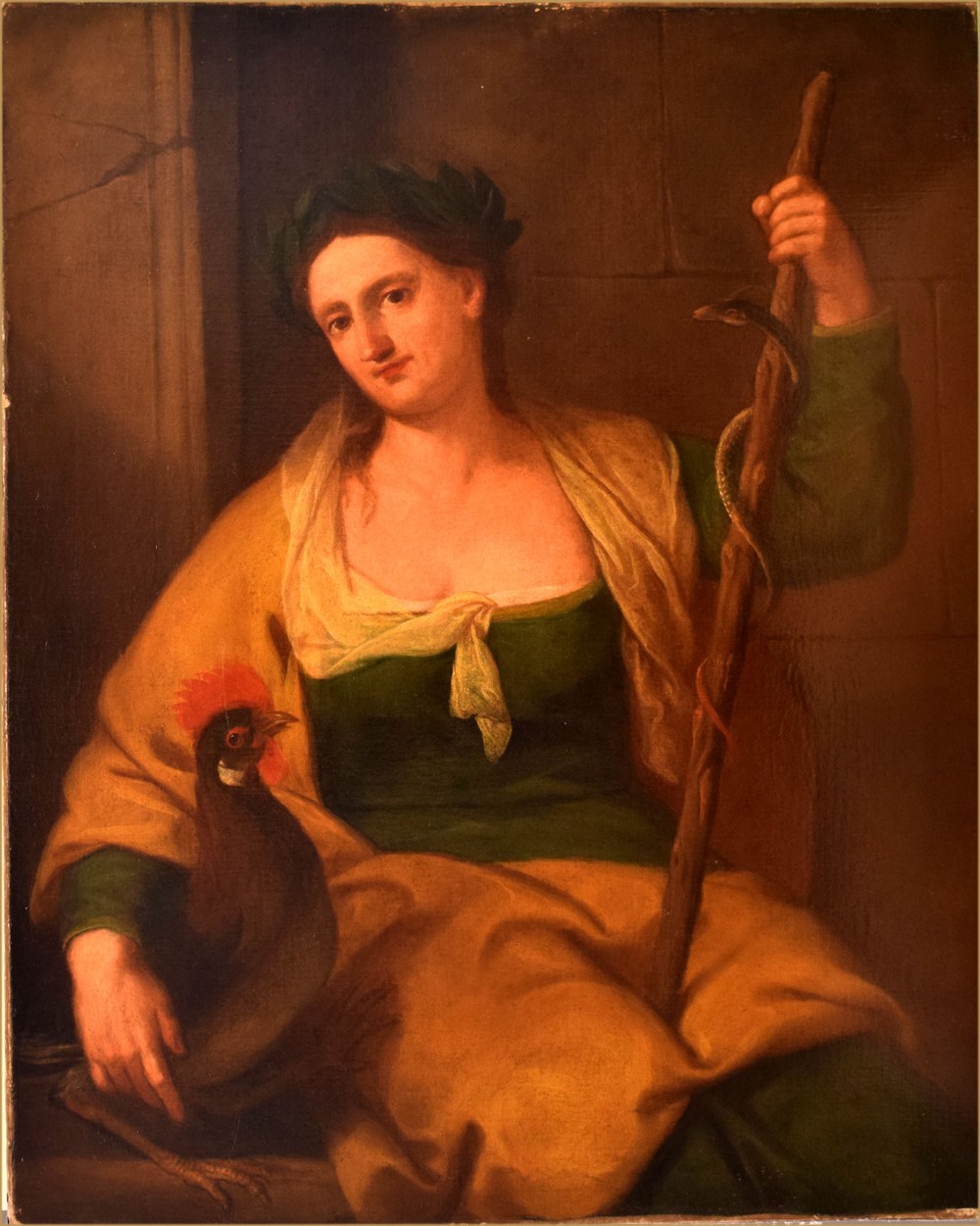
PDF SHARE
SAVE
Attributed to Angelica Kauffman, 1741 - 1807
Portrait of a Lady as the Greek Goddess Hygieia, accompanied with her Symbols, A Rod, Serpent & Cockerel SOLD6+ MONTHS AGO
1 / 4
Archive I Attributed to Angelica Kauffman, 1741 - 1807
Portrait of a Lady as the Greek Goddess Hygieia, accompanied with her Symbols, A Rod, Serpent & Cockerel SOLD6+ MONTHS AGO

Attributed to Angelica Kauffman, 1741 - 1807 Portrait of a Lady as the Greek Goddess Hygieia, Accompanied with Her Symbols, a Rod, Serpent & Cockerel
Archive II Attributed to Angelica Kauffman, 1741 - 1807
Portrait of a Lady as the Greek Goddess Hygieia, accompanied with her Symbols, A Rod, Serpent & Cockerel View II
Archive III Attributed to Angelica Kauffman, 1741 - 1807
Portrait of a Lady as the Greek Goddess Hygieia, accompanied with her Symbols, A Rod, Serpent & Cockerel View III
Archive IV Attributed to Angelica Kauffman, 1741 - 1807
Portrait of a Lady as the Greek Goddess Hygieia, accompanied with her Symbols, A Rod, Serpent & Cockerel View IV
Enlarged Archival View
Telephone 07958 699 645
Location
18 La Gare
51 Surrey Row
London
SE1 0BZ
United Kingdom
Verified Since Sep 2008
Items For Sale 243
Items Sold 223
Artware Fineart
Verified Since Sep 2008
View Dealer Info
Location: 18 La Gare , 51 Surrey Row , London , SE1 0BZ , United Kingdom
Verified
Sep 2008
For Sale
243
Sold
223
Attributed to Angelica Kauffman, 1741 - 1807
Portrait of a Lady as the Greek Goddess Hygieia, accompanied with her Symbols, A Rod, Serpent & Cockerel
Attributed to Angelica Kauffman, 1741 - 1807 Portrait of a Lady as the Greek Goddess Hygieia, accompanied with her Symbols, A Rod, Serpent & Cockerel
Ref: SA678099
Attributed to Angelica Kauffman, 1741 - 1807
Portrait of a Lady as the Greek Goddess Hygieia, accompanied with her Symbols, A Rod, Serpent & Cockerel
Detail View 1
Detail View 2
Detail View 3
Archival Detail
Every single antique dealer on our platform is individually approved by our internal team. We verify their professional trade history, ethical standards, and photographic quality to ensure a secure, high-standard buying environment. Upon joining, every dealer agrees to a strict 9-point code of conduct. While issues can occasionally arise, our dealers typically resolve them swiftly and directly with the buyer. In fact, since our founding in 2002, Sellingantiques has only had to step in to help resolve an issue on roughly five occasions—a true testament to the quality of our dealers and their dedication to your happiness.
Our dealers are highly experienced in packing and shipping fragile, high-value antiques. Because you are in direct contact with the dealer, you will be able to easily go through all available shipping and insurance options together to ensure your item arrives safely.
Antiques are the ultimate green purchase. By choosing historical pieces over newly manufactured goods, you completely eliminate the carbon footprint of modern mass production while preserving exceptional, timeless craftsmanship.
Written by Sellingantiques from the dealer’s photographs and listing
  • Period18th century
  • SizeH 99 cm (39 in) x W 79 cm (31 in) x D 2 cm (1 in)
items
Add keywords to the filter
Price
£100
£250000
Era
Period
Style
Material
Origin
Stock Location
Recently Added
Online Payments
Categories