Titan Fine Art has dated this piece to the 19th Century.
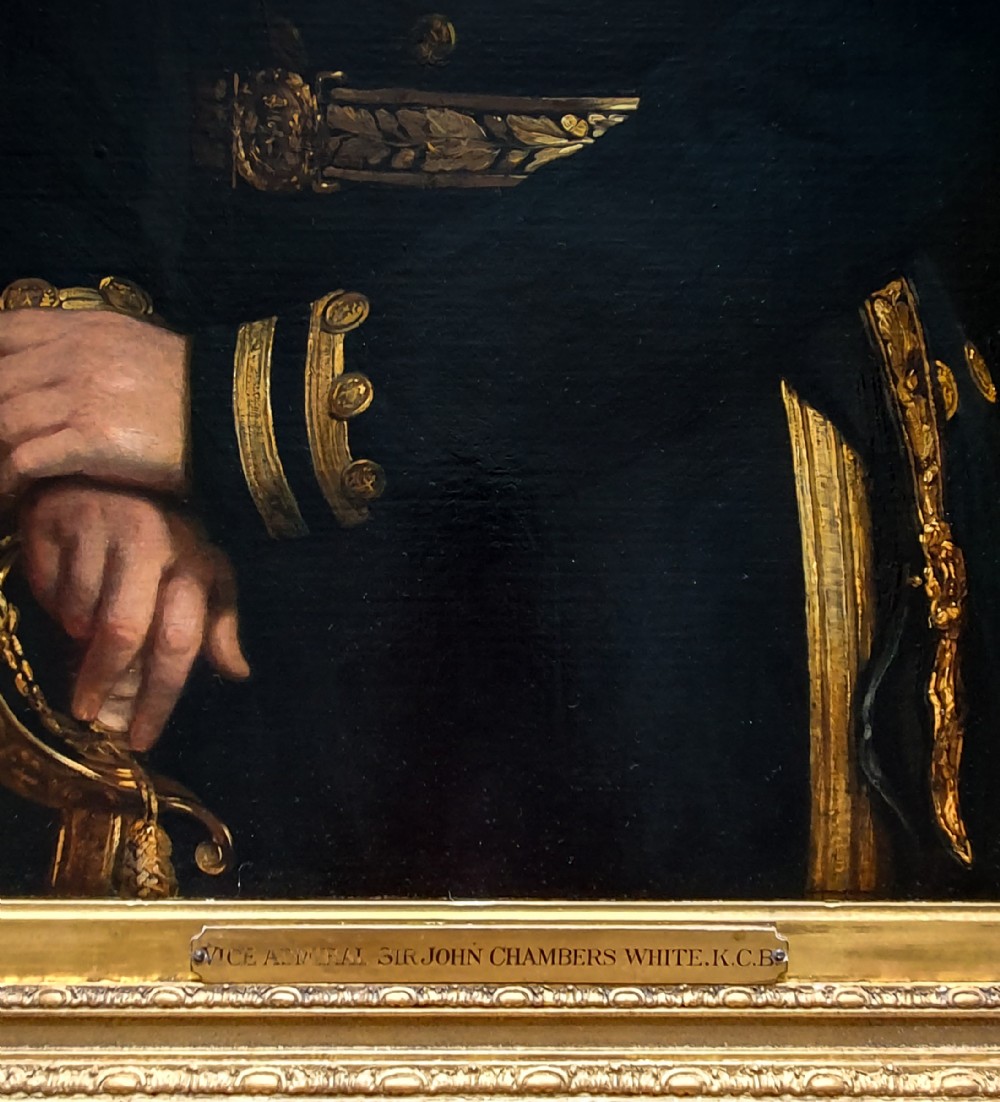
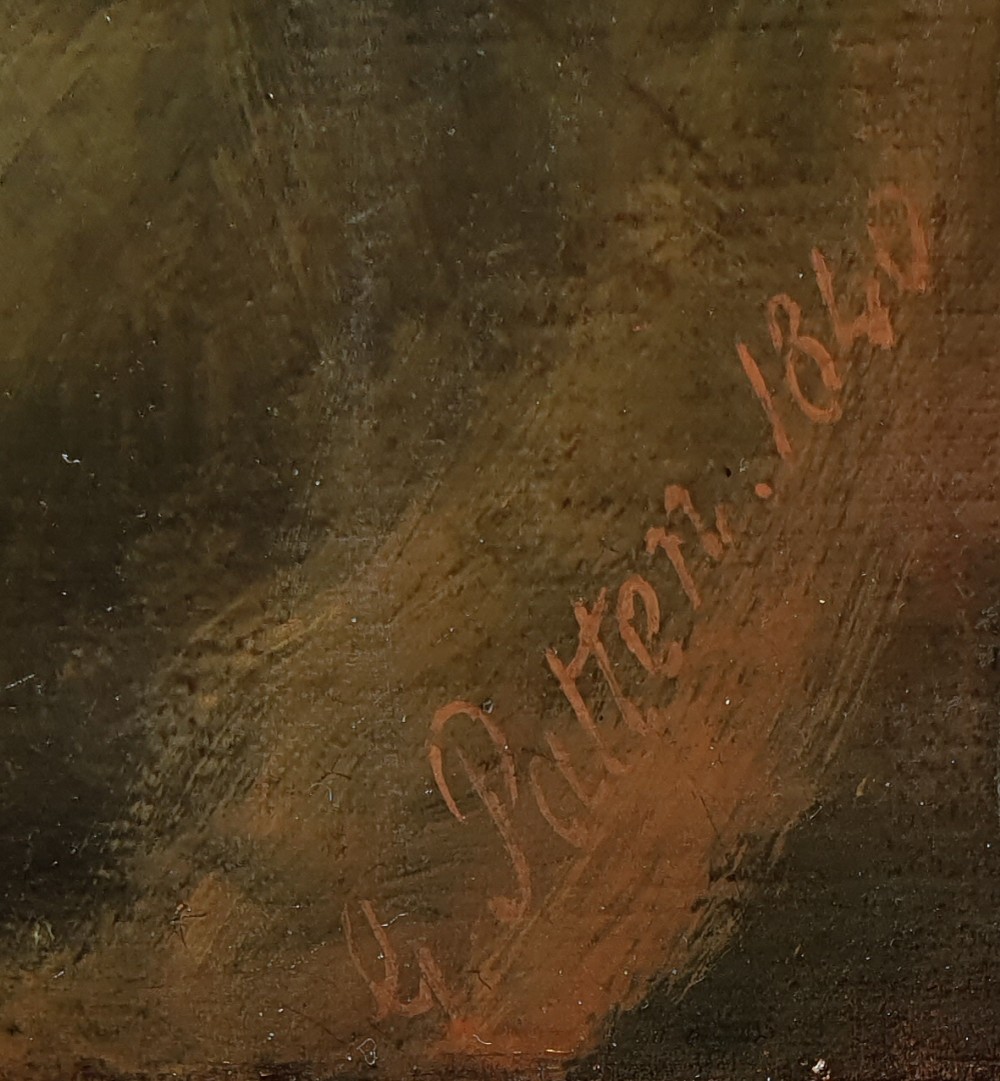
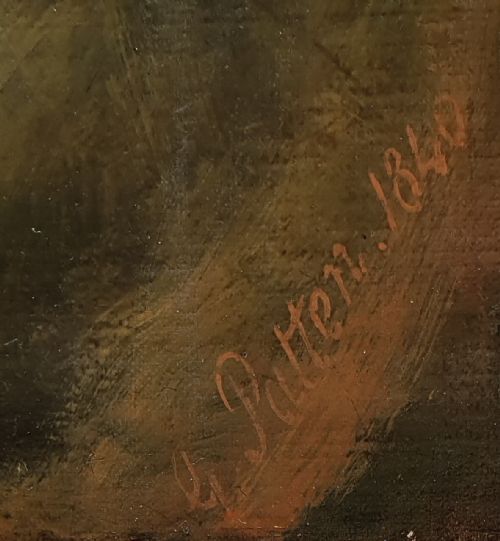
Signed G Patten and dated 1840.
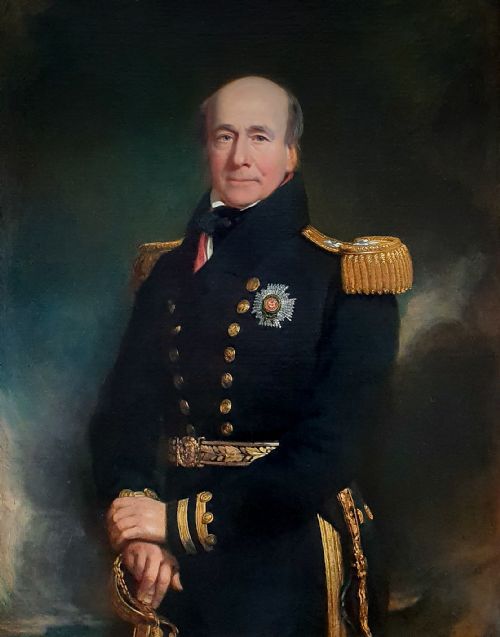
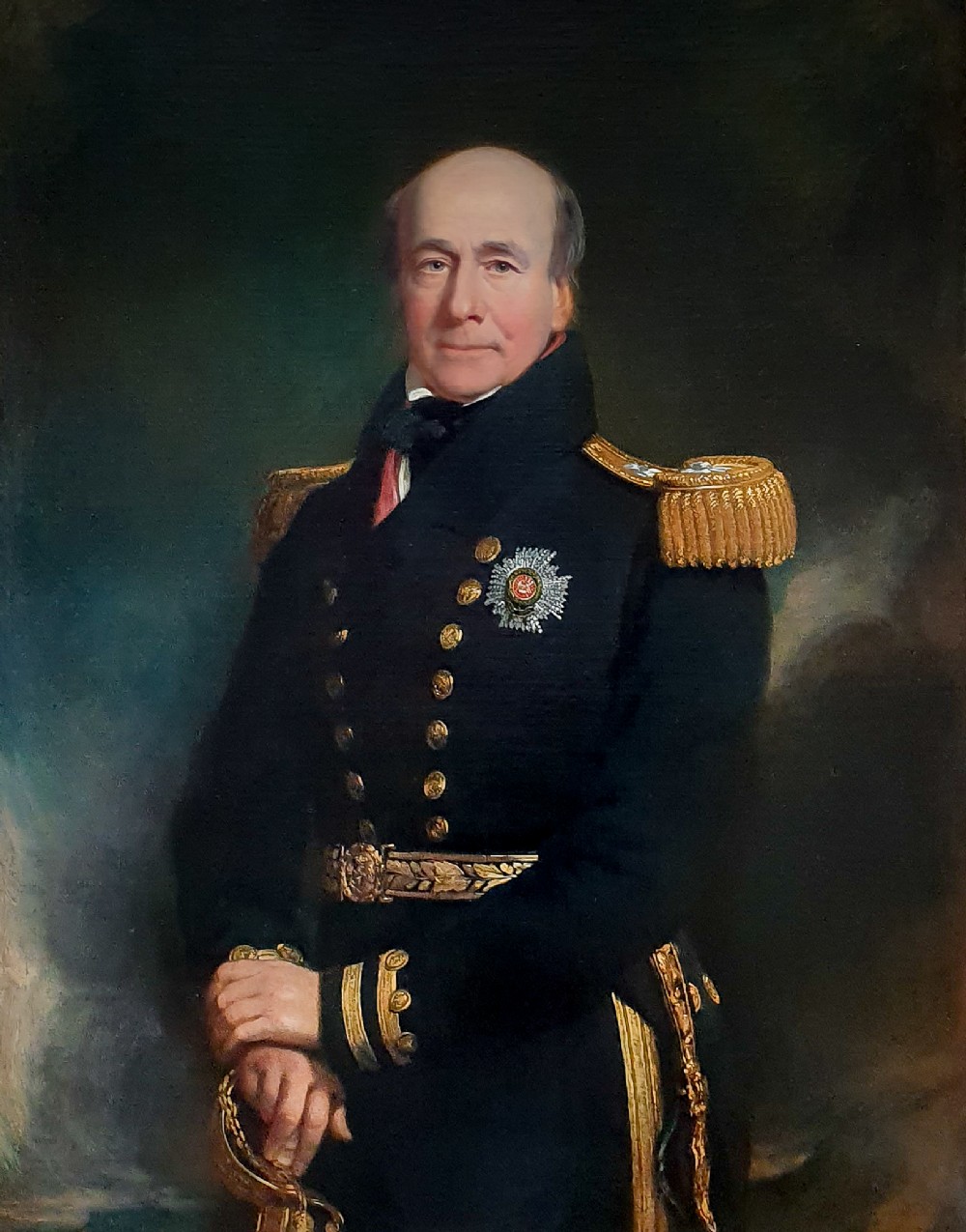
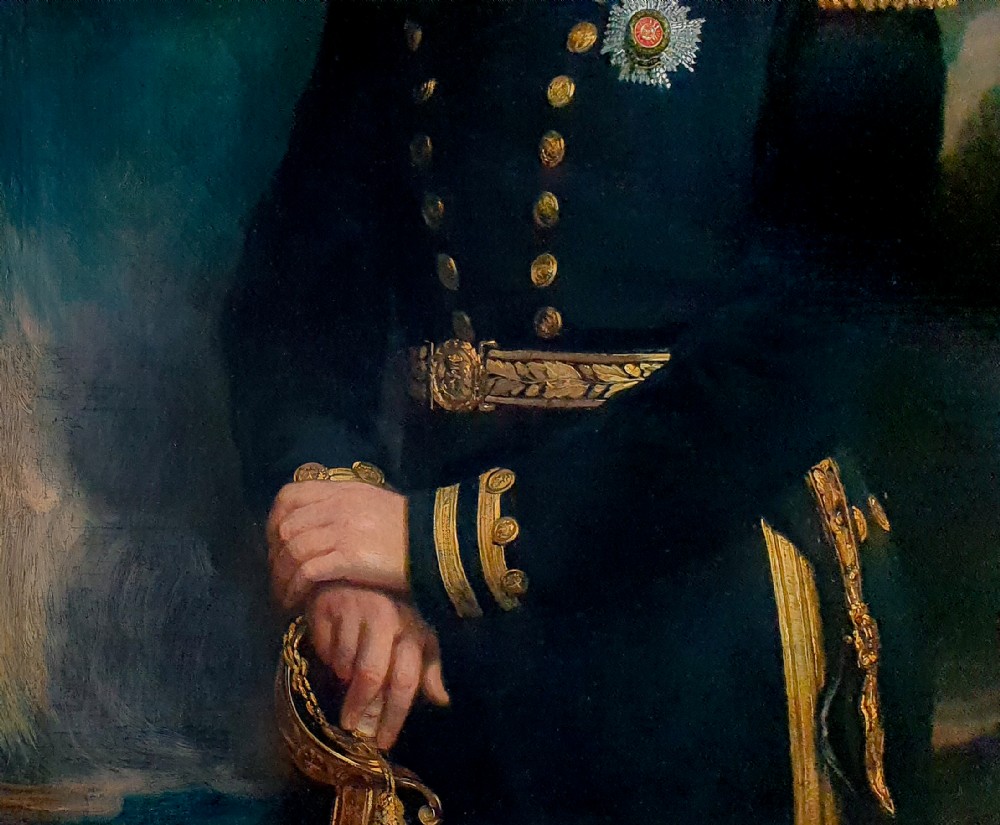
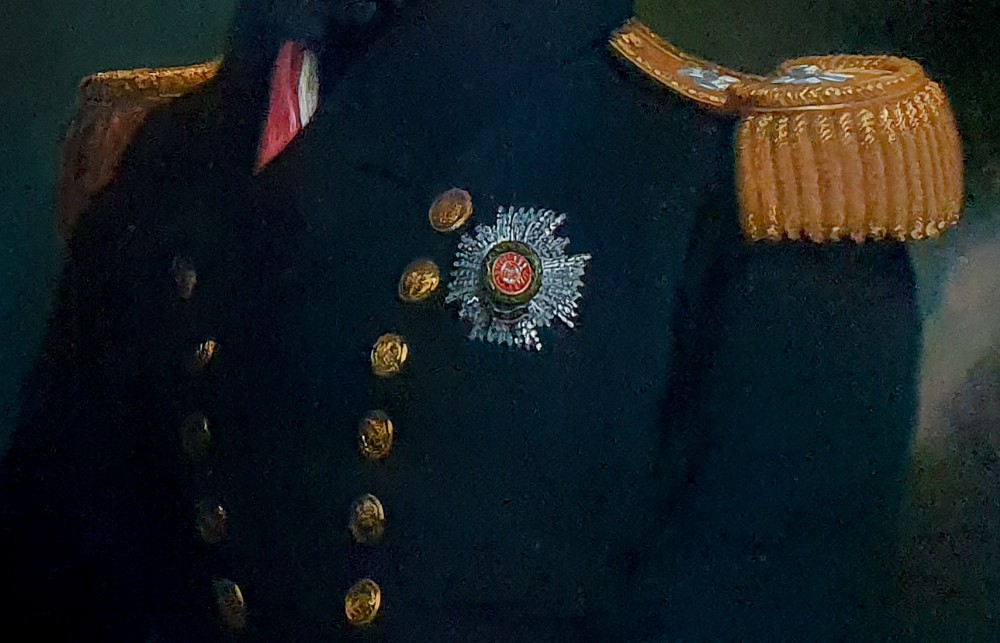
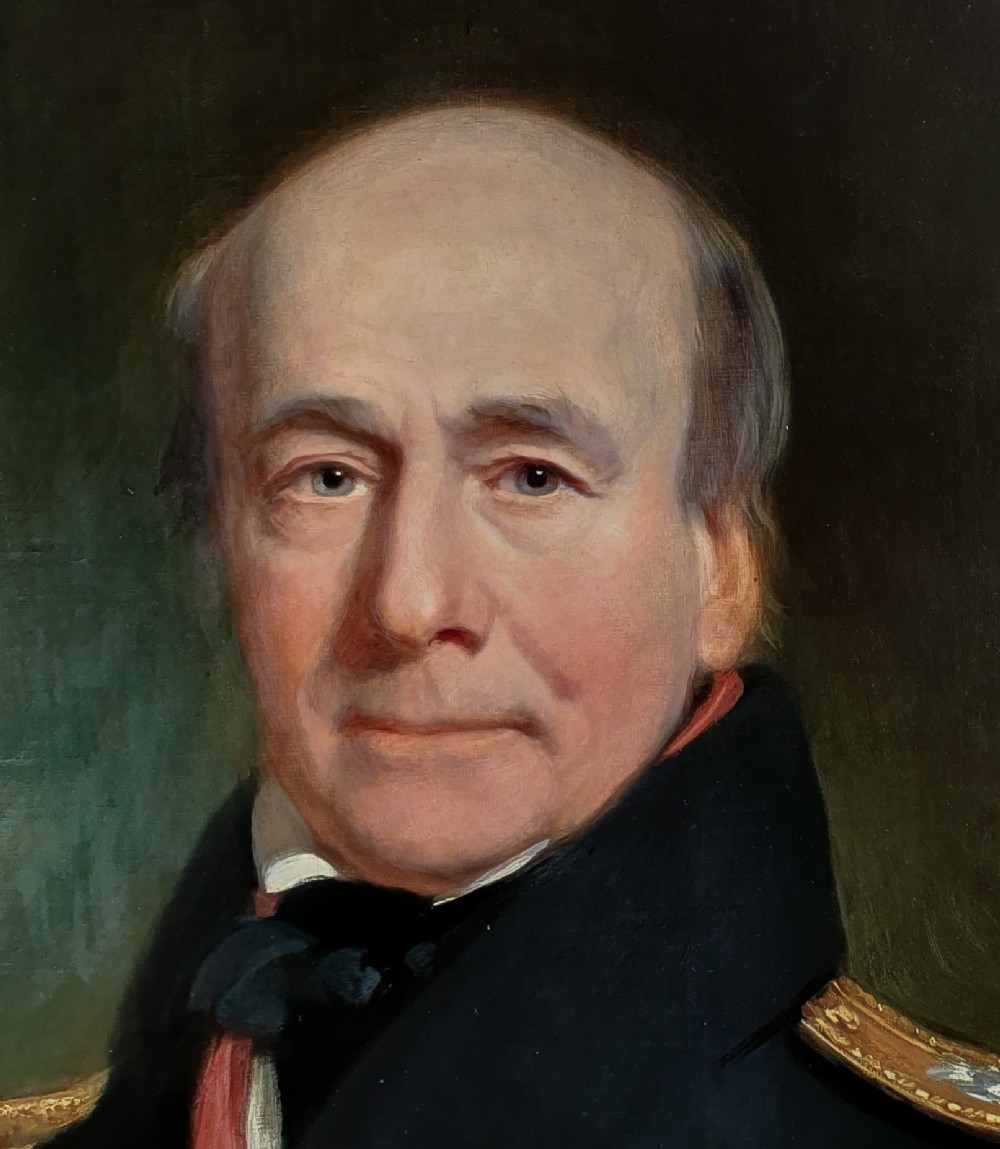
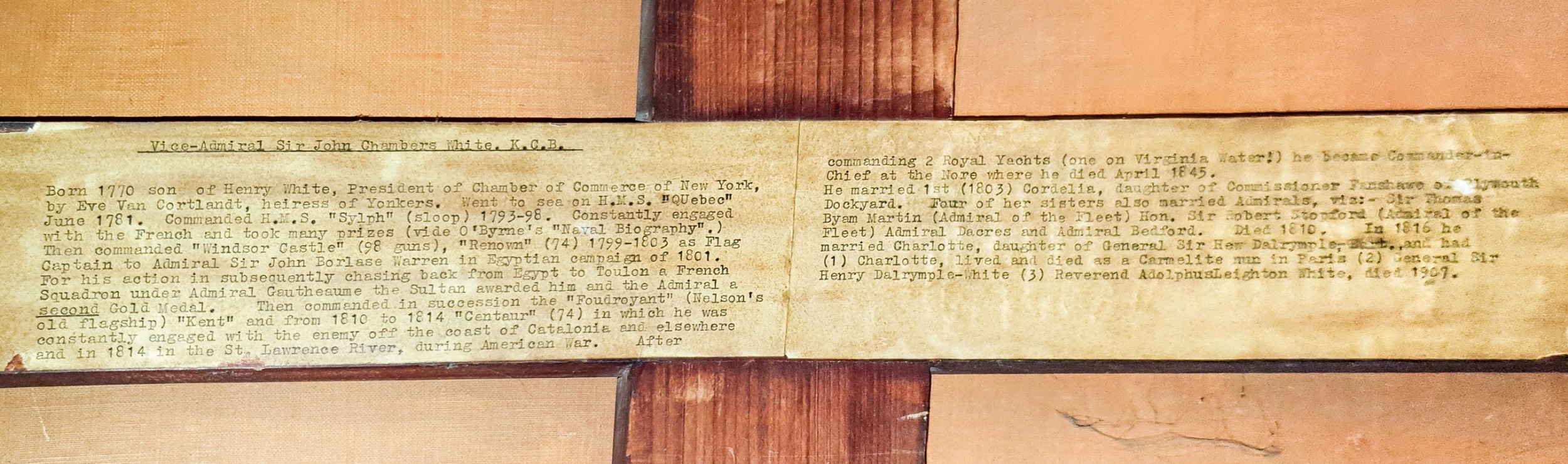
The portrait depicts Vice Admiral Sir John Chambers White, KCB (c.1770-1845) who was a prominent British Royal Navy officer of the early nineteenth century, who participated in a number of engagements during the Napoleonic Wars. The badge depicted on the sitter’s left breast represents The Most Honourable Order of the Bath, K.C.B., Military Division, Knight Commander (formerly the Most Honourable Military Order of the Bath), an honour founded by King George in 1725. The name of the honour derives from the elaborate medieval ceremony for creating a knight, which involved bathing (as a symbol of purification) as one of its elements. The knights so created were known as "Knights of the Bath". The portrait is signed and dated 1840 and it was most likely painted to mark the event of receiving this highly regarded honour.
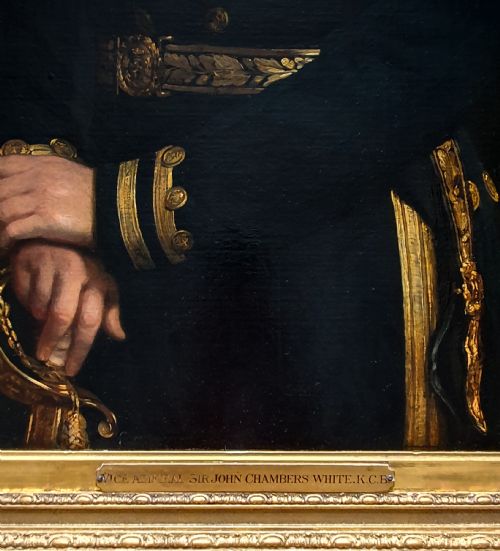
The sitter achieved most of his fame in the late 1790s as the commander of HMS Sylph, a small brig operating in Northern European waters. White was able to capture a number of equivalent French, Spanish and Dutch vessels. In 1798 he was with the squadron that discovered the French invasion attempt on Ireland and acted as a messenger in the campaign to destroy the invasion force that ended at the Battle of Tory Island. After the war, White largely retired, but retained several shore appointments and rose to the rank of vice-admiral.
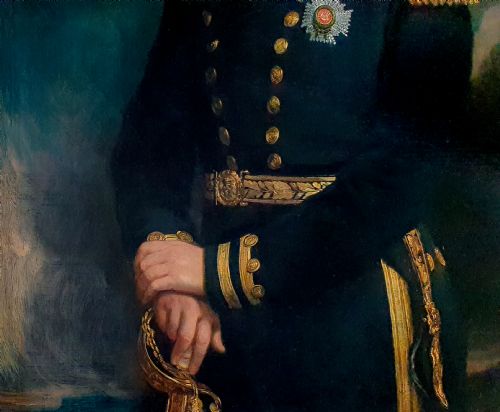
White was born the son of wealthy New York City merchant, Henry White, who was a member of the New York City Council and President of the New York Chamber of Commerce in 1772-73. The Whites were ardent Loyalists during the American Revolutionary War, and in 1783 the family abandoned their home in New York and move to London. John White joined the Royal Navy soon afterwards. In 1790 he was promoted to lieutenant and served in the French Revolutionary Wars, becoming commander of the brig Sylph, which was a highly successfully cruiser, in 1795.
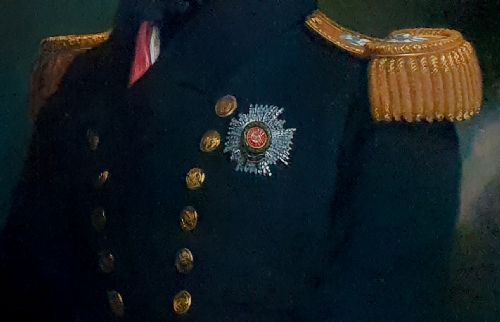
After the war, White left active service but continued to advance in rank becoming a rear-admiral and then a Knight Commander of the Order of the Bath, by which time he was a vice-admiral. He first married Cordelia Fanshawe (1780-1809) in 1800. He married his second wife Charlotte Elizabeth Dalrymple (1787-1830) in 1816 and this marriage produced two sons, General Sir Henry Dalrymple White (1820-1886) and Rev. Adolphus White (1823-1910), and one daughter, Charlotte White (1817-1892), who lived and died as a Carmelite nun in Paris. Sir John died on 4 April 1845 at Sheerness in Kent (England).
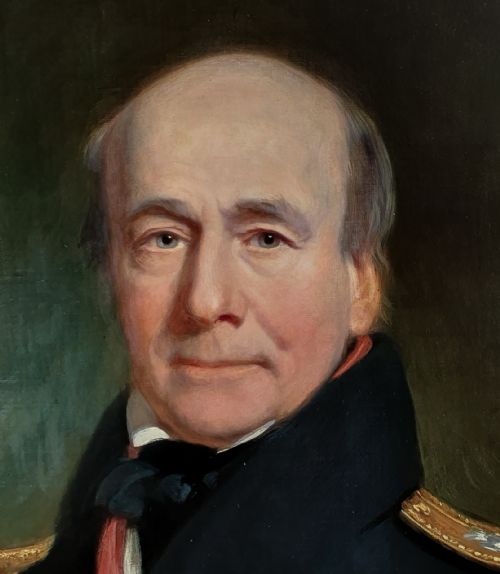
George Patten was born in 1801 the son of William Patten, a miniature-painter, whose works were exhibited at the Royal Academy between 1791 and 1844. He received his early training in art from his father, and in 1816 became a student in the Royal Academy Schools, where he first exhibited a miniature of his father in 1819. In 1828 he again entered the schools of the academy, and took up oil painting. In 1837 he went to Italy and on his return he was elected an associate of the Royal Academy. H was appointed portrait painter in ordinary to Prince Albert. He died at Hill House, his residence there, on 11 March 1865, aged sixty-three.
Provenance:
Sir John Chambers White (c.1770-1845); to his son,
General Sir Henry Dalrymple White (1820-1886); to his son,
Sir Godfrey Dalrymple Dalrymple-White, 1st Baronet (1866–1954); to his son,
Sir Henry Arthur Dalrymple-White, 2nd Baronet (1917–2006),
Sir H Dalrymple White
Titan Fine Art has dated this piece to the 19th Century.
Specialist in 17th & 18thc portraits. Highly curated selection, museum-level research & pro conservation. Exceptional art, expertly vetted.
You can view the stock and full dealer information on the Titan Fine Art Profile Page
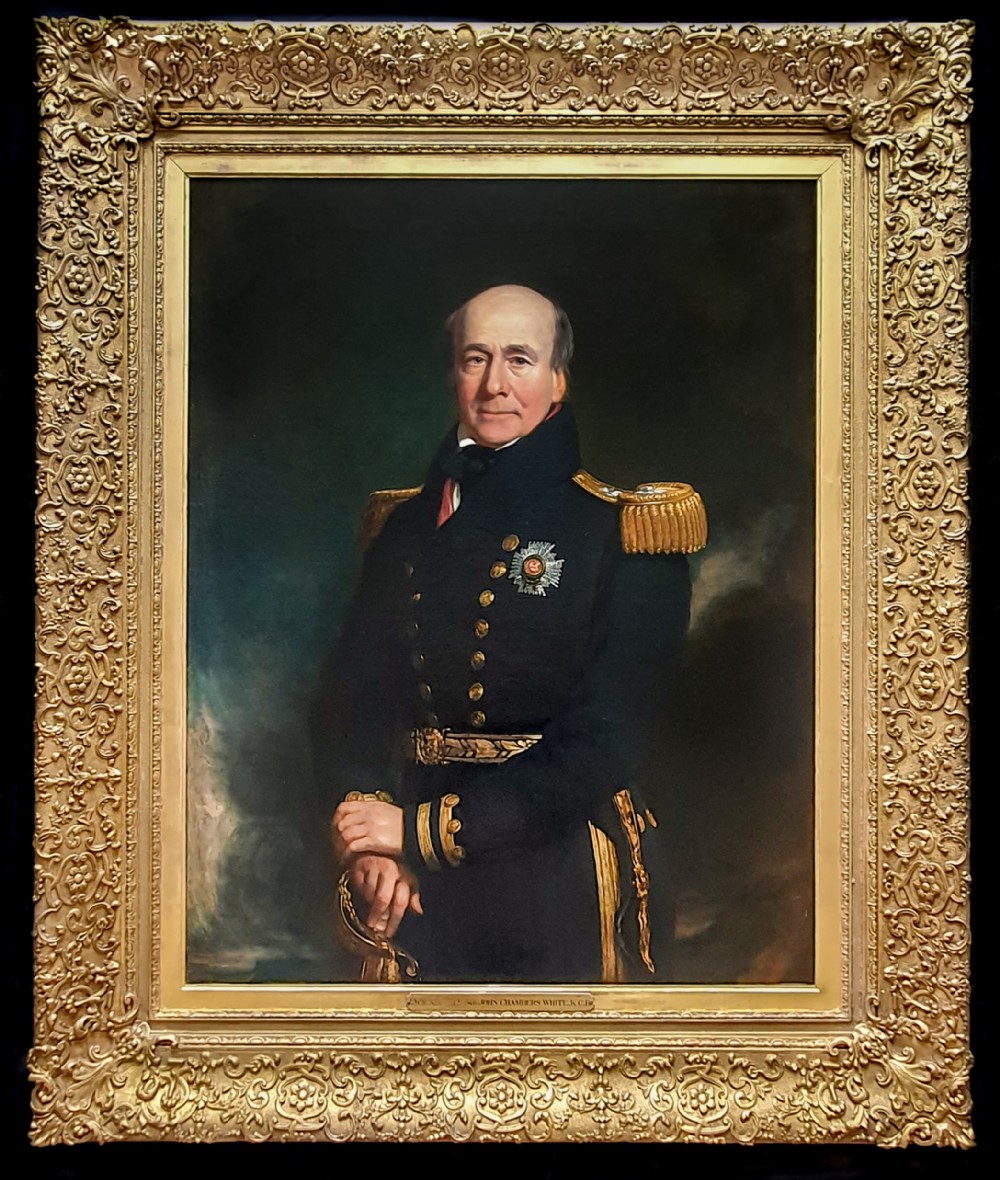
Portrait of Vice Admiral Sir John Chambers White (C.1770-1845) Dated 1840; Signed George Patten (1801-1865)