
30,996  PAGES BROWSED TODAY PAGES TODAY 202 ANTIQUES UPLOADED TODAYNEW ARRIVALS
202 ITEMS ADDED TODAY
Sort Order
Items Per Page
Browse Categories
Sort order
Items per page
ID #SA657106
SOLD
Email
Save
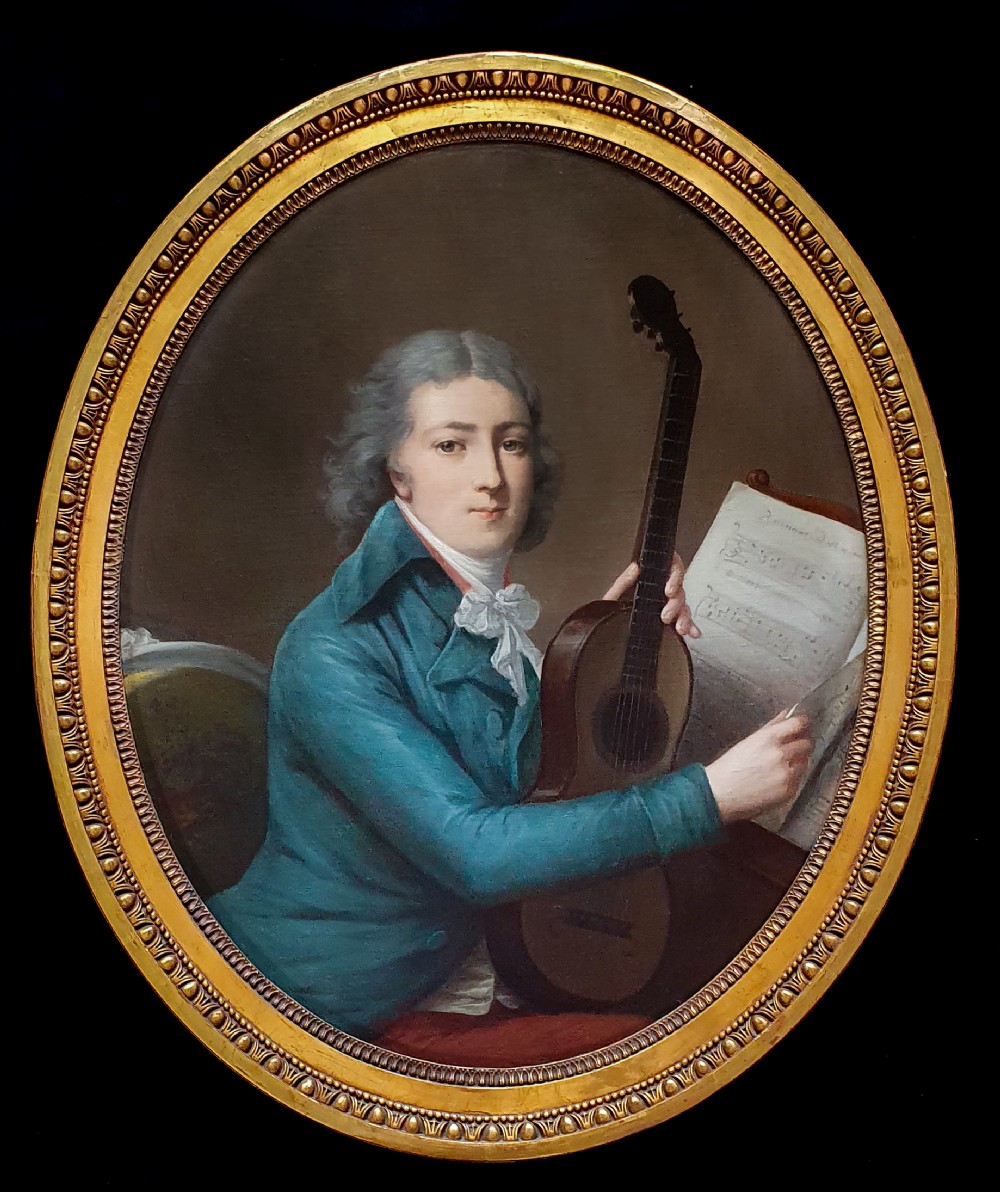
Portrait of a Gentleman with an Early Guitar C.1795; Circle of Antoine Vestier (1740–1824)
Titan Fine Art
sold SA657106
Sorry, but this item has been sold.
Titan Fine Art

Titan Fine Art

Sellingantiques Verified Since Jul 2016
View Dealers Stock Page
  • About Us
    Specialist in 17th & 18thc portraits. Highly curated selection, museum-level research & pro conservation. Exceptional art, expertly vetted.
Id #SA657106
PDF SHARE
SAVE

Portrait of a Gentleman with an Early Guitar C.1795; Circle of Antoine Vestier (1740–1824)

18th century
Description

This painting is possibly one of the earliest paintings to represent a six single-string guitar.

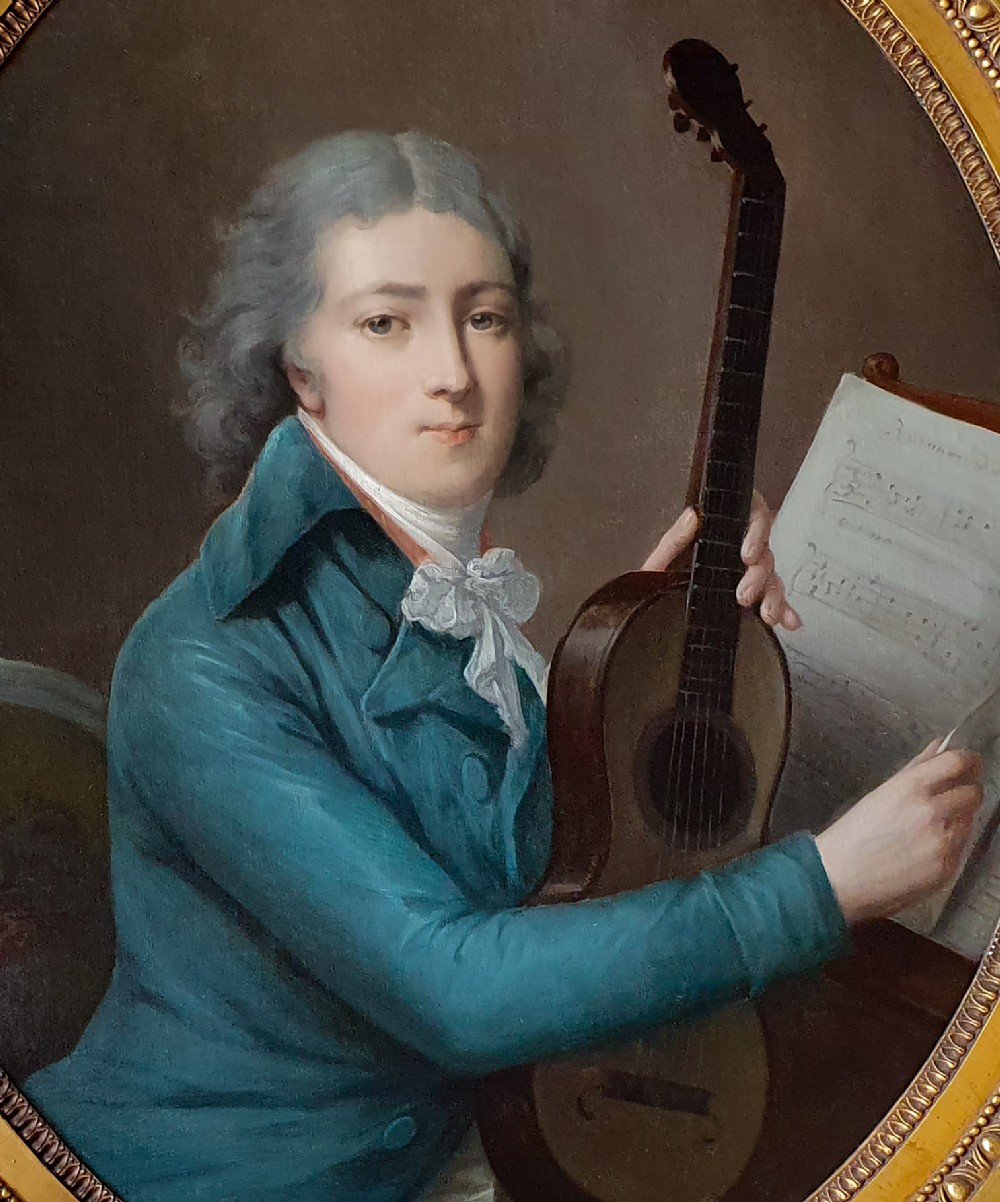
This exquisitely rendered large portrait depicts a charismatic young gentleman with a guitar. His fashionable clothing speaks visually to his social status and the fine characterisation provides a sense of the sitter’s amiable character. It is as if the portrait has captured a snapshot in time, whilst the young musician has broken off from playing to turn the pages of his music, and any immediately outpouring of feeling or creation of music is paused, and momentarily glance across at the sitter. The portrait is French, in style and colouring, and the fashions of the sitter. It is worth noting that France greatly excelled in the arts during the 18th century and were pre-eminent in Europe, producing some of the highest quality and most sought after works.
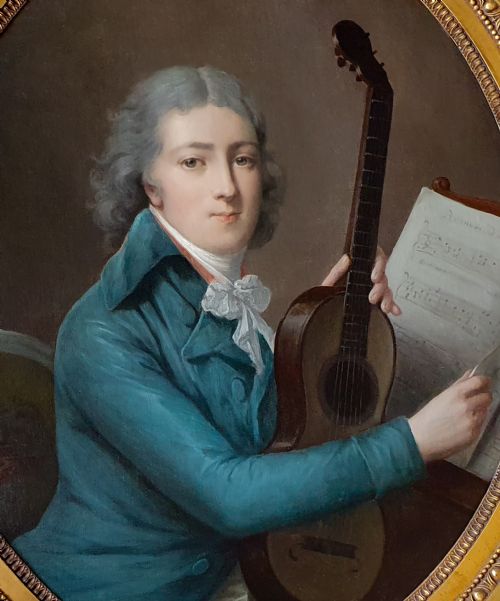
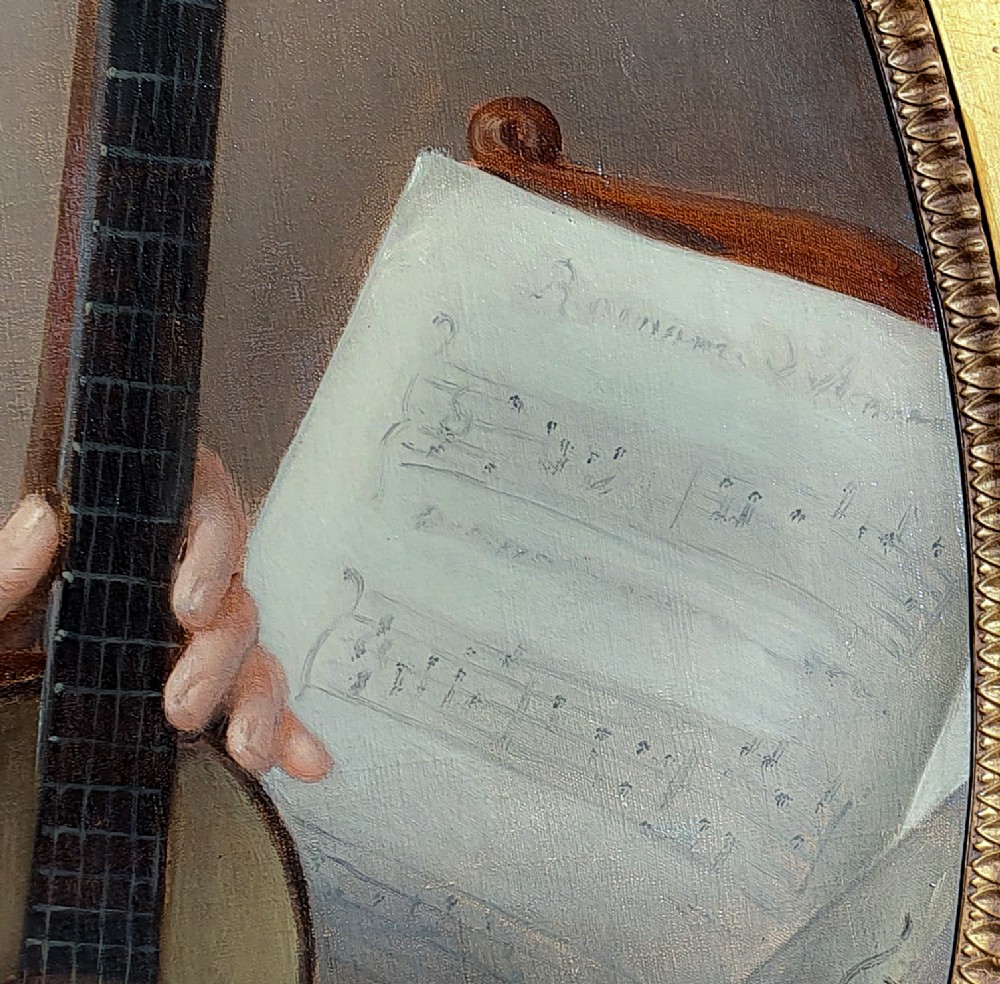
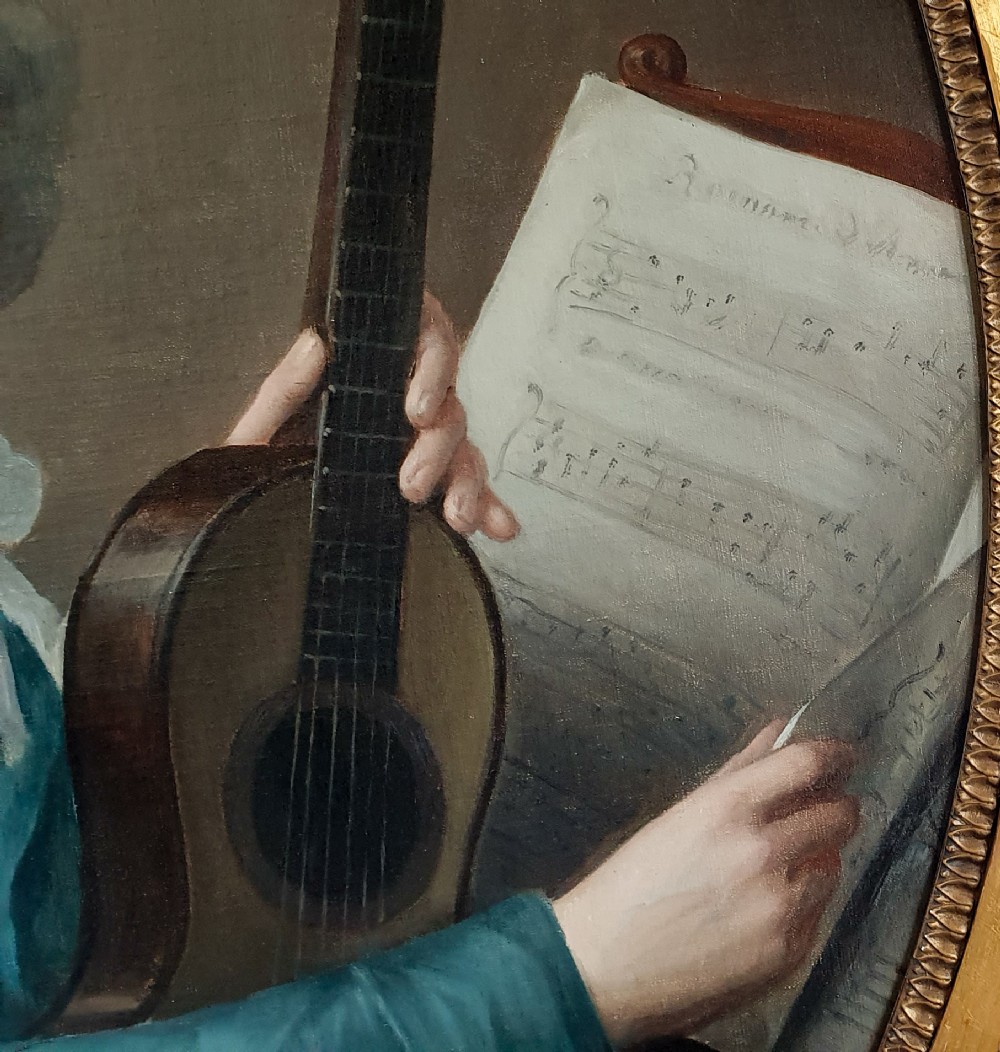
This is a painting about young love. The title on the sheet music reads “Romance d’Amour” and it is likely a composition by the sitter written specially for his loved one – a young man in love, and perhaps practising his guitar so as to be able to serenade his loved one. The rough, thickened grey line under the first system of notation evokes an impression of writing which could be lyrics for the music.
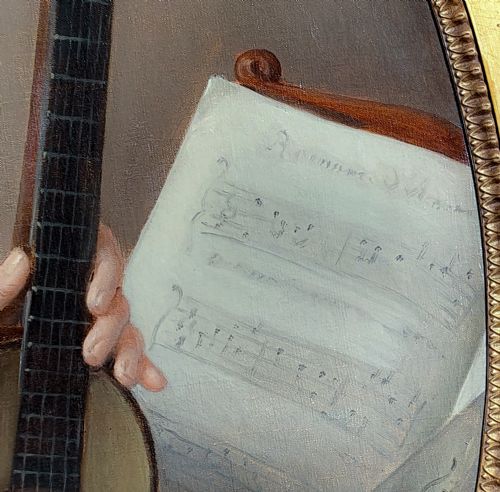
There is an infamous composition called Romance d’Amour – also called "Romance Anónimo" (Anonymous Romance), "Estudio en Mi de Rubira" (Study in E by Rubira), "Spanish Romance", "Romance de España", "Romance de Amor", "Romance of the Guitar", "Romanza" and "Romance d'Amour" - however its tune bears little resemblance to the music in the painting (also, the infamous Romance d’Armour is thought to have originated during the late 19th century).
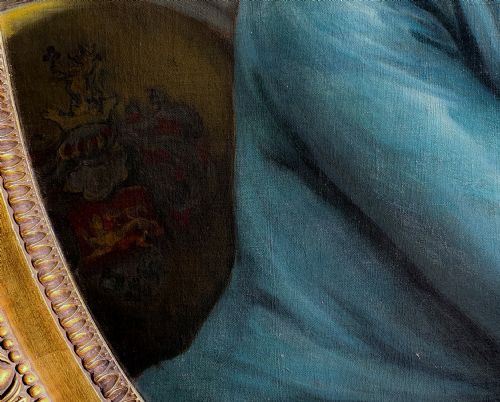
This portrait is datable to circa 1795 not only on stylistic grounds but the fashionable buttoned-up formality of the sitter, the hairstyle, which was now worn longer and more natural, a departure from the omnipresent powered wig, and the guitar. In the 1790s, the guitar was reduced to six single strings and the fingerboard was extended onto the belly. The young man may well be showing off what was then a very new instrument – with
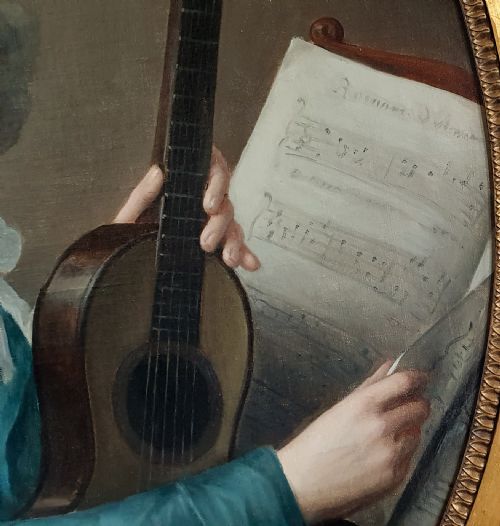
the new extended fingerboard and rich sonorous potential of six strings; even though the design shown retains the influence of the old lute – with the headstock angled backwards. This is possibly one of the first paintings of a six single-string guitar.

He has pride not only in his ‘modern’ instrument but his ability to play and to read the music in front of him which is painted with considerably more detail and accuracy than usual and even may suggest that the painter had music-reading ability. Often sheet music notation in paintings is schematic or placed too far away for the viewer to see.

The music is written in a form that is recognisable today: a five-line staff. This was also new for the guitar at the time.

In 1786, Federico Moretti (1769-1839) released a first manuscript version of his Principles for the Guitar published in 1792 as Principj per la chitarra by Luigi Mareschalchi. Before Moretti, guitar music had been written either in tablature (i.e. lute-style) or in staff notation, with little attempt to separate the different parts and without precise indications of the full duration of all notes. The sheet music in the portrait would, therefore, appear to be very up-to-date in its Morettiinfluenced notation technique with recognisable bar lines, clear durations of notes (crotchets and

quavers are identifiable), two-note chords, and even (at the start of the second system) four marks which could possibly be interpreted as sharps denoting the key of E major. As such it was a respectable and respected instrument, accepted in cultivated circles by this period, despite some of its roots being in the folk guitar.

The unembellished naturalness of the portrait is very pleasing. A f

Physical Dimensions
Height
105cm (41.34")
Width
89cm (35.04")
Depth
5cm (1.97")
Declaration

Titan Fine Art has dated this piece to the 18th Century.

Reference Numbers
Sellingantiques Reference
SA657106
Dealers Notes

Much more info about this item at: www.titanfineart.com

In a market saturated with available paintings, Titan Fine Art offers a distinct advantage: we sift through thousands of works to provide a specially curated selection. Each piece is meticulously chosen based on technical merit, provenance, and decorative appeal, ensuring our clients view only the finest examples of British and European art.

With over 20 years of expertise and 1,000+ works placed with collectors and institutions, we are one of the most prolific specialists in 17th and 18th-century portraiture. We combine a scholarly approach with museum-level rigor to replace the uncertainty of the open market with absolute confidence.

Why Buy From Titan Fine Art?

• Expertly Curated Selection

We act as your expert eye, selecting only high-quality works that offer genuine historical and artistic value.

• Museum-Level Research

Each portrait is supported by extensive academic research, often exceeding 40 hours, to establish attribution, sitter identity, and historical context.

• Professional Conservation

All paintings are carefully cleaned and stabilised by professional conservators, and are presented ready to hang.

• Transparent Pricing

No buyer’s premium or hidden fees—unlike auction houses, where additional costs can add 25–35%.

• Export Pricing Advantage

Reduced pricing is available for works exported outside the UK.

• Specialist Global Shipping

We manage the entire process, including custom crating, export documentation, and fully tracked delivery worldwide.

• Buy with Confidence

A 7-day return policy and the option to pay in GBP, USD, or EUR for convenience and transparency.

• Original Period Frames

Many works retain their original carved and gilded frames, which are works of art in their own right and enhance both historical authenticity and decorative impact.

• Personal Advisory Service

We work directly with collectors and interior designers, offering guidance on selection, scale, and placement—including bespoke room mock-ups on request.

Subscribe to our monthly 'new item alert' to be the first to hear about new works

Description
This painting is possibly one of the earliest paintings to represent a six single-string guitar.

This exquisitely rendered large portrait depicts a charismatic young gentleman with a guitar.

His fashionable clothing speaks visually to his social status and the fine characterisation provides a sense of the sitter’s amiable character.
Titan Fine Art

It is as if the portrait has captured a snapshot in time, whilst the young musician has broken off from playing to turn the pages of his music, and any immediately outpouring of feeling or creation of music is paused, and momentarily glance across at the sitter. The portrait is French, in style and colouring, and the fashions of the sitter. It is worth noting that France greatly excelled in the arts during the 18th century and were pre-eminent in Europe, producing some of the highest quality and most sought after works.

fig 1. Portrait of a Gentleman with an Early Guitar c.1795; Circle of Antoine Vestier (1740–1824)
fig 1. Portrait of a Gentleman with an Early Guitar C.1795; Circle of Antoine Vestier (1740–1824)

This is a painting about young love. The title on the sheet music reads “Romance d’Amour” and it is likely a composition by the sitter written specially for his loved one – a young man in love, and perhaps practising his guitar so as to be able to serenade his loved one. The rough, thickened grey line under the first system of notation evokes an impression of writing which could be lyrics for the music.

fig 2. Portrait of a Gentleman with an Early Guitar c.1795; Circle of Antoine Vestier (1740–1824)
fig 2. Portrait of a Gentleman with an Early Guitar C.1795; Circle of Antoine Vestier (1740–1824)

There is an infamous composition called Romance d’Amour – also called "Romance Anónimo" (Anonymous Romance), "Estudio en Mi de Rubira" (Study in E by Rubira), "Spanish Romance", "Romance de España", "Romance de Amor", "Romance of the Guitar", "Romanza" and "Romance d'Amour" - however its tune bears little resemblance to the music in the painting (also, the infamous Romance d’Armour is thought to have originated during the late 19th century).

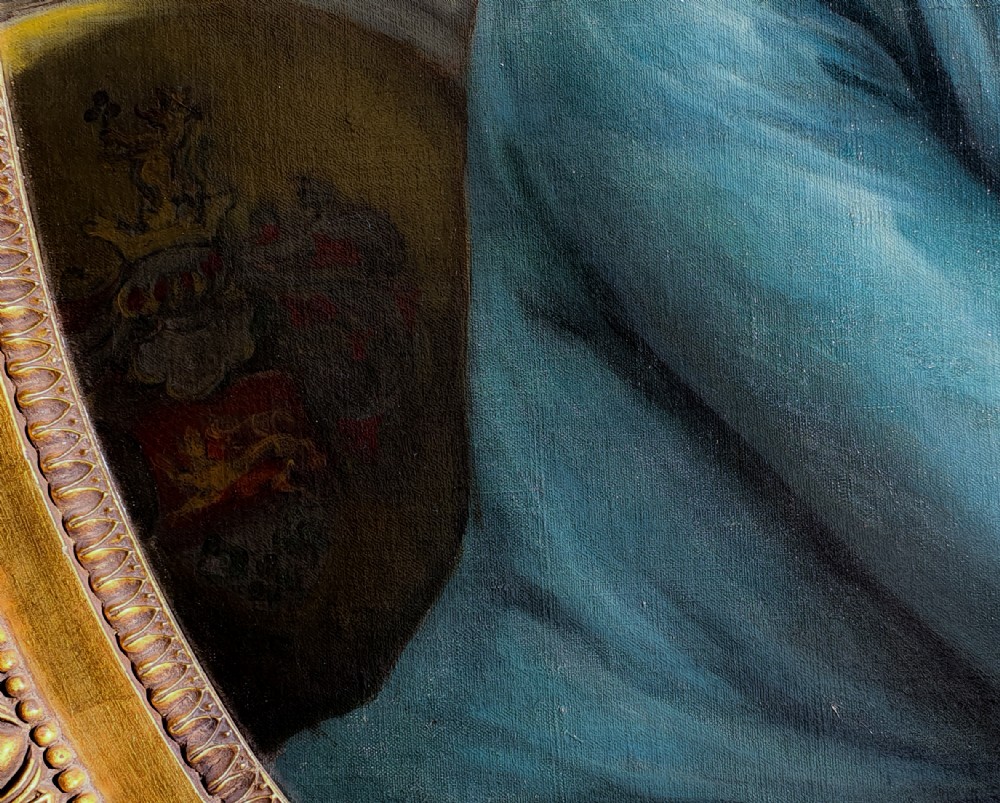
fig 3. Portrait of a Gentleman with an Early Guitar c.1795; Circle of Antoine Vestier (1740–1824)
fig 3. Portrait of a Gentleman with an Early Guitar C.1795; Circle of Antoine Vestier (1740–1824)

This portrait is datable to circa 1795 not only on stylistic grounds but the fashionable buttoned-up formality of the sitter, the hairstyle, which was now worn longer and more natural, a departure from the omnipresent powered wig, and the guitar. In the 1790s, the guitar was reduced to six single strings and the fingerboard was extended onto the belly. The young man may well be showing off what was then a very new instrument – with

fig 4. Portrait of a Gentleman with an Early Guitar c.1795; Circle of Antoine Vestier (1740–1824)
fig 4. Portrait of a Gentleman with an Early Guitar C.1795; Circle of Antoine Vestier (1740–1824)

the new extended fingerboard and rich sonorous potential of six strings; even though the design shown retains the influence of the old lute – with the headstock angled backwards. This is possibly one of the first paintings of a six single-string guitar.

He has pride not only in his ‘modern’ instrument but his ability to play and to read the music in front of him which is painted with considerably more detail and accuracy than usual and even may suggest that the painter had music-reading ability. Often sheet music notation in paintings is schematic or placed too far away for the viewer to see.

The music is written in a form that is recognisable today: a five-line staff. This was also new for the guitar at the time.

In 1786, Federico Moretti (1769-1839) released a first manuscript version of his Principles for the Guitar published in 1792 as Principj per la chitarra by Luigi Mareschalchi. Before Moretti, guitar music had been written either in tablature (i.e. lute-style) or in staff notation, with little attempt to separate the different parts and without precise indications of the full duration of all notes. The sheet music in the portrait would, therefore, appear to be very up-to-date in its Morettiinfluenced notation technique with recognisable bar lines, clear durations of notes (crotchets and

quavers are identifiable), two-note chords, and even (at the start of the second system) four marks which could possibly be interpreted as sharps denoting the key of E major. As such it was a respectable and respected instrument, accepted in cultivated circles by this period, despite some of its roots being in the folk guitar.

The unembellished naturalness of the portrait is very pleasing. A f

Height
105cm (41.34")
Width
89cm (35.04")
Depth
5cm (1.97")
Date of Manufacture

Titan Fine Art has dated this piece to the 18th Century.

Reference Numbers
Sellingantiques Ref
SA657106
Titan Fine Art
Titan Fine Art
Sellingantiques verified Since Jul 2016

Specialist in 17th & 18thc portraits. Highly curated selection, museum-level research & pro conservation. Exceptional art, expertly vetted.

Dealer Profile

You can view the stock and full dealer information on the Titan Fine Art Profile Page
PDF SHARE
SAVE
Portrait of a Gentleman with an Early Guitar c.1795; Circle of Antoine Vestier (1740–1824)
1 / 5
Archive I Portrait of a Gentleman with an Early Guitar c.1795; Circle of Antoine Vestier (1740–1824)
Portrait of a Gentleman with an Early Guitar C.1795; Circle of Antoine Vestier (1740–1824)
Archive II Portrait of a Gentleman with an Early Guitar c.1795; Circle of Antoine Vestier (1740–1824) View II
Archive III Portrait of a Gentleman with an Early Guitar c.1795; Circle of Antoine Vestier (1740–1824) View III
Archive IV Portrait of a Gentleman with an Early Guitar c.1795; Circle of Antoine Vestier (1740–1824) View IV
Archive V Portrait of a Gentleman with an Early Guitar c.1795; Circle of Antoine Vestier (1740–1824) View V
Enlarged Archival View
Telephone 07875 412 111
Location
London
United Kingdom
Dealer Profile Page sellingantiques.co.uk/titan
Verified Since Jul 2016
Items For Sale 16
Items Sold 401
Titan Fine Art
Titan Fine Art
Verified Since Jul 2016
View Dealer Info
Location: London, United Kingdom
Verified
Jul 2016
For Sale
16
Sold
401
Portrait of a Gentleman with an Early Guitar c.1795; Circle of Antoine Vestier (1740–1824)
Ref: SA657106
Portrait of a Gentleman with an Early Guitar c.1795; Circle of Antoine Vestier (1740–1824)
Detail View 1
Detail View 2
Detail View 3
Detail View 4
Archival Detail
Every single antique dealer on our platform is individually approved by our internal team. We verify their professional trade history, ethical standards, and photographic quality to ensure a secure, high-standard buying environment. Upon joining, every dealer agrees to a strict 9-point code of conduct. While issues can occasionally arise, our dealers typically resolve them swiftly and directly with the buyer. In fact, since our founding in 2002, Sellingantiques has only had to step in to help resolve an issue on roughly five occasions—a true testament to the quality of our dealers and their dedication to your happiness.
Our dealers are highly experienced in packing and shipping fragile, high-value antiques. Because you are in direct contact with the dealer, you will be able to easily go through all available shipping and insurance options together to ensure your item arrives safely.
Antiques are the ultimate green purchase. By choosing historical pieces over newly manufactured goods, you completely eliminate the carbon footprint of modern mass production while preserving exceptional, timeless craftsmanship.
items
Add keywords to the filter
Price
£100
£250000
Era
Movements
Material
Origin
Stock Location
Freshness
Online Payments
Categories