17,660  PAGES BROWSED TODAY PAGES TODAY 109 ANTIQUES UPLOADED TODAYNEW ARRIVALS
109 ITEMS ADDED TODAY
Sort Order
Items Per Page
Browse Categories
Sort order
Items per page
ID #SA65665
SOLD
Email Phone WhatsApp
Save
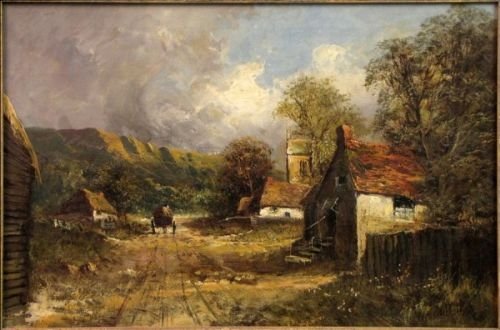
Near Torquay, Main Road, Devon by Henry M Cooper
Sold by Artware Fineart
sold SA65665
Sorry, but this item has been sold.

Artware Fineart

Sellingantiques Verified Since Sep 2008
Id #SA65665
PDF SHARE
SAVE

Near Torquay, Main Road, Devon by Henry M Cooper

19th century
Description

oil on canvas

20 x 30 in. (51 x 77 cm.)

Torquay is a town in the unitary authority area of Torbay and ceremonial county of Devon, England. It lies 16 miles (26 km) miles south of Exeter along the A380 on the north of Torbay, 38 miles (61 km) north-east of Plymouth and adjoins the neighbouring town of Paignton on the west of the bay. Torquay’s population of 63,998 during the 2001 UK Census made it the third largest settlement in Devon. If the Torbay area, of which Torquay forms a third, were to be recognised as a city, as incumbent Torbay Mayor Nicholas Bye has proposed, it would rank as the 45th largest city in the United Kingdom with a population only slightly less than that of Brighton, which was granted city status in 2000. During the peak summer season the resort's population swells to around 200,000 . The town's economy was initially based upon fishing and agriculture as in the case of Brixham across Torbay, but in the early 19th century the town began to develop into a fashionable seaside resort, initially frequented by members of the Royal Navy during the Napoleonic Wars while the Royal Navy anchored in the bay and later by the crème de la crème of Victorian society as the town's fame spread. Renowned for its healthful climate, the town earned the nickname of the English Riviera and favourable comparisons to Montpellier. Torquay was the home of the writer Agatha Christie, who lived most of her life in Torquay. The town contains an "Agatha Christie Mile", a museum dedicated to her life and work. Torquay's name originates in it being the quay of the ancient village of Torre. In turn, Torre takes its name from the tor, the extensively quarried remains of which can be seen by the town's Tor Hill Road. The area comprising modern Torquay has been inhabited since paleolithic times. Hand axes found in Kents Cavern date to, and a maxilla fragment known as Kents Cavern 4 may be the oldest example of a modern human in Europe, dating back to 37,000—40,000 years ago. Torquay, 1811Roman soldiers are known to have visited Torquay at some point during the period when Britain was a part of the Roman Empire, leaving offerings at a curious rock formation in Kent's Cavern, known as 'The Face'. No evidence has been found of Roman settlement in the town.

The first major building in what was to become Torquay was Torre Abbey, a Premonstratensian monastery founded in 1196. Torquay remained a minor settlement until the Napoleonic wars, when Torbay was frequently used as a sheltered anchorage by the Channel Fleet, and relatives of officers often visited Torquay. The mild climate of Torquay attracted many visitors who considered the town a convalescence retreat where they could recover from illness away from the cold winters of more Northerly or Easterly locations. The population of Torquay grew rapidly from 838 in 1801, to 11,474 in 1851. The second phase in the expansion of Torquay began when Torre railway station was opened on 18 December 1848. The improved transport connections resulted in the rapid growth of Torquay at the expense of nearby towns not on Isambard Kingdom Brunel's railways. Torquay, 1842The more central Torquay railway station was open on 2 August 1859. After the growth of the preceding decades, Torquay was granted borough status in 1872. Previously regarded as a convalescence retreat, Torquay began to encourage healthy visitors, and 1902 saw the first advertising campaign to market Torquay to summer tourists.

Physical Dimensions
Height
60cm (23.62")
Width
85cm (33.46")
Depth
3cm (1.18")
Declaration

Artware Fineart has dated this piece to the 19th Century.

Reference Numbers
Sellingantiques Reference
SA65665
Dealers Internal Reference
3287
Description
Oil on canvas

20 x 30 in. (51 x 77 cm.)

Torquay is a town in the unitary authority area of Torbay and ceremonial county of Devon, England.

It lies 16 miles (26 km) miles south of Exeter along the A380 on the north of Torbay, 38 miles (61 km) north-east of Plymouth and adjoins the neighbouring town of Paignton on the west of the bay.
Artware Fineart

Torquay’s population of 63,998 during the 2001 UK Census made it the third largest settlement in Devon. If the Torbay area, of which Torquay forms a third, were to be recognised as a city, as incumbent Torbay Mayor Nicholas Bye has proposed, it would rank as the 45th largest city in the United Kingdom with a population only slightly less than that of Brighton, which was granted city status in 2000. During the peak summer season the resort's population swells to around 200,000 . The town's economy was initially based upon fishing and agriculture as in the case of Brixham across Torbay, but in the early 19th century the town began to develop into a fashionable seaside resort, initially frequented by members of the Royal Navy during the Napoleonic Wars while the Royal Navy anchored in the bay and later by the crème de la crème of Victorian society as the town's fame spread. Renowned for its healthful climate, the town earned the nickname of the English Riviera and favourable comparisons to Montpellier. Torquay was the home of the writer Agatha Christie, who lived most of her life in Torquay. The town contains an "Agatha Christie Mile", a museum dedicated to her life and work. Torquay's name originates in it being the quay of the ancient village of Torre. In turn, Torre takes its name from the tor, the extensively quarried remains of which can be seen by the town's Tor Hill Road. The area comprising modern Torquay has been inhabited since paleolithic times. Hand axes found in Kents Cavern date to, and a maxilla fragment known as Kents Cavern 4 may be the oldest example of a modern human in Europe, dating back to 37,000—40,000 years ago. Torquay, 1811Roman soldiers are known to have visited Torquay at some point during the period when Britain was a part of the Roman Empire, leaving offerings at a curious rock formation in Kent's Cavern, known as 'The Face'. No evidence has been found of Roman settlement in the town.

fig 1. Near Torquay, Main Road,  Devon by Henry M Cooper
fig 1. Near Torquay, Main Road, Devon by Henry M Cooper

The first major building in what was to become Torquay was Torre Abbey, a Premonstratensian monastery founded in 1196. Torquay remained a minor settlement until the Napoleonic wars, when Torbay was frequently used as a sheltered anchorage by the Channel Fleet, and relatives of officers often visited Torquay. The mild climate of Torquay attracted many visitors who considered the town a convalescence retreat where they could recover from illness away from the cold winters of more Northerly or Easterly locations. The population of Torquay grew rapidly from 838 in 1801, to 11,474 in 1851. The second phase in the expansion of Torquay began when Torre railway station was opened on 18 December 1848. The improved transport connections resulted in the rapid growth of Torquay at the expense of nearby towns not on Isambard Kingdom Brunel's railways. Torquay, 1842The more central Torquay railway station was open on 2 August 1859. After the growth of the preceding decades, Torquay was granted borough status in 1872. Previously regarded as a convalescence retreat, Torquay began to encourage healthy visitors, and 1902 saw the first advertising campaign to market Torquay to summer tourists.

Height
60cm (23.62")
Width
85cm (33.46")
Depth
3cm (1.18")
Date of Manufacture

Artware Fineart has dated this piece to the 19th Century.

Reference Numbers
Sellingantiques Ref
SA65665
Dealers Internal Ref
3287
Artware Fineart
Sellingantiques verified Since Sep 2008
Dealer Profile

You can view the stock and full dealer information on the Artware Fineart Profile Page
PDF SHARE
SAVE
Near Torquay, Main Road,  Devon by Henry M Cooper
1 / 1
Archive I Near Torquay, Main Road,  Devon by Henry M Cooper

Near Torquay, Main Road, Devon by Henry M Cooper

Enlarged Archival View
Telephone 07958 699 645
Location
18 La Gare
51 Surrey Row
London
SE1 0BZ
United Kingdom
Verified Since Sep 2008
Items For Sale 243
Items Sold 223
Artware Fineart
Verified Since Sep 2008
View Dealer Info
Location: 18 La Gare , 51 Surrey Row , London , SE1 0BZ , United Kingdom
Verified
Sep 2008
For Sale
243
Sold
223
Near Torquay, Main Road,  Devon by Henry M Cooper
Near Torquay, Main Road, Devon by Henry M Cooper
Ref: SA65665
Near Torquay, Main Road,  Devon by Henry M Cooper
Archival Detail
Every single antique dealer on our platform is individually approved by our internal team. We verify their professional trade history, ethical standards, and photographic quality to ensure a secure, high-standard buying environment. Upon joining, every dealer agrees to a strict 9-point code of conduct. While issues can occasionally arise, our dealers typically resolve them swiftly and directly with the buyer. In fact, since our founding in 2002, Sellingantiques has only had to step in to help resolve an issue on roughly five occasions—a true testament to the quality of our dealers and their dedication to your happiness.
Our dealers are highly experienced in packing and shipping fragile, high-value antiques. Because you are in direct contact with the dealer, you will be able to easily go through all available shipping and insurance options together to ensure your item arrives safely.
Antiques are the ultimate green purchase. By choosing historical pieces over newly manufactured goods, you completely eliminate the carbon footprint of modern mass production while preserving exceptional, timeless craftsmanship.
items
Add keywords to the filter
Price
£100
£250000
Era
Movements
Material
Origin
Stock Location
Freshness
Online Payments
Categories