It was listed by Jason Clarke Antiques. Sold pieces stay on Sellingantiques as a record of what has passed through, and the next one is rarely far away.
Jason Clarke Antiques has dated this piece to the 1920s.
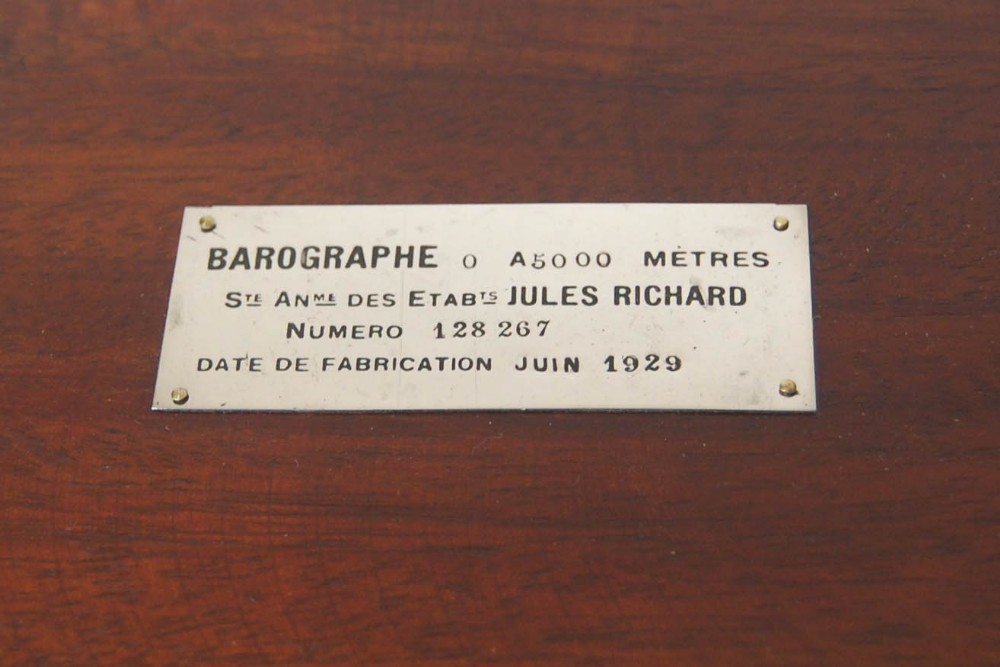
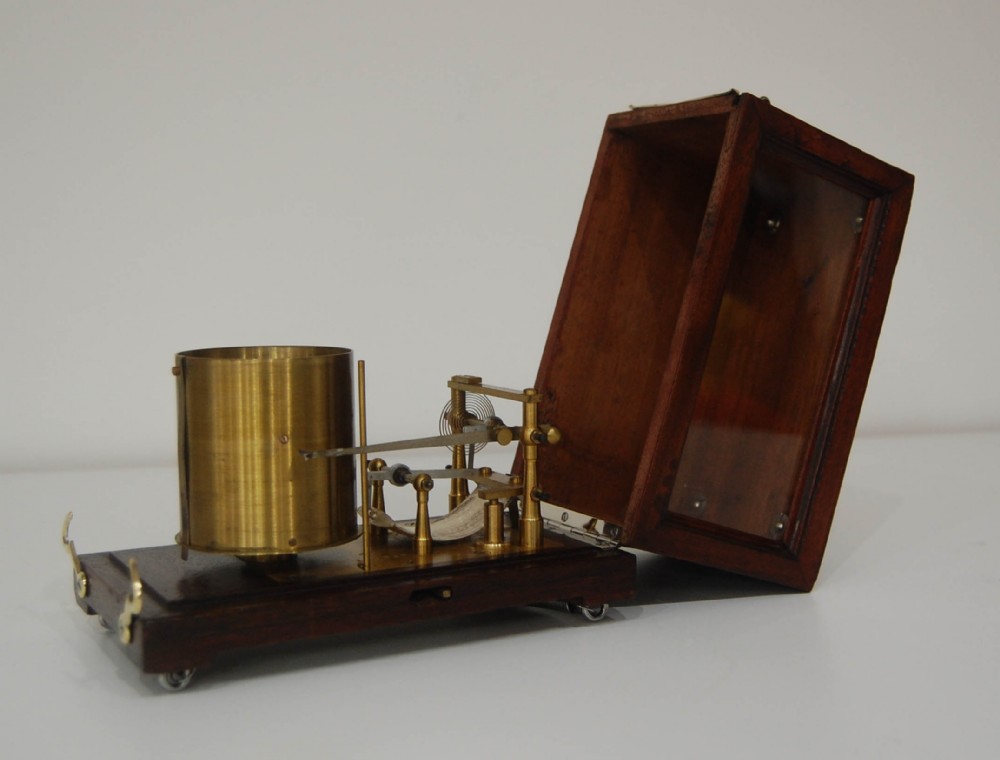
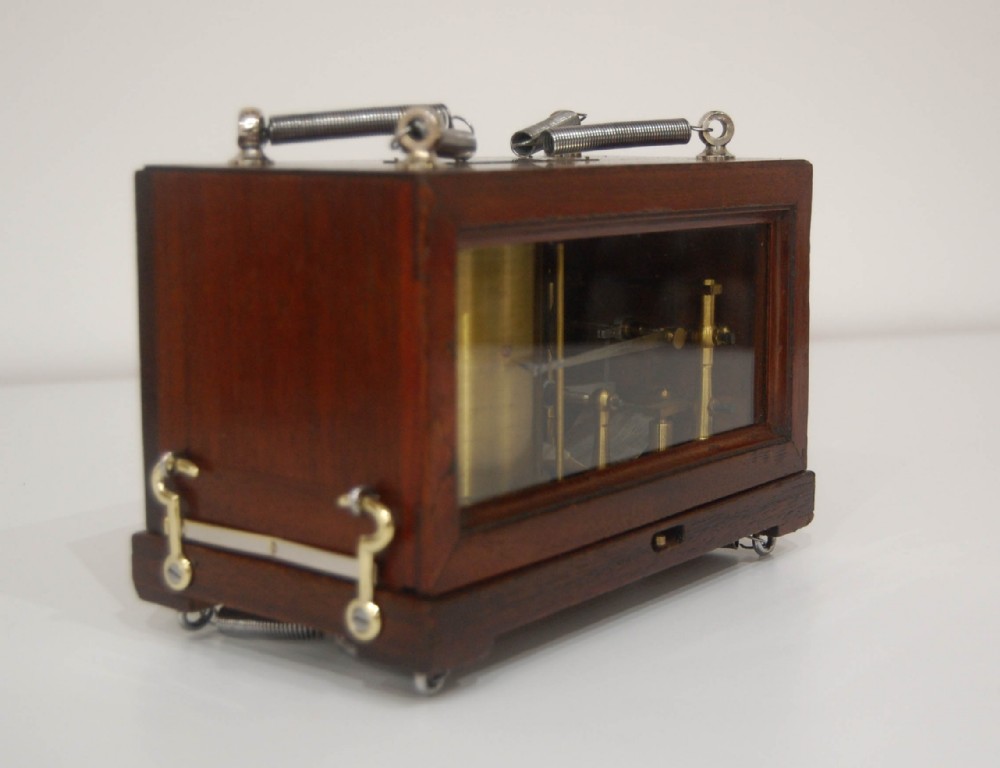
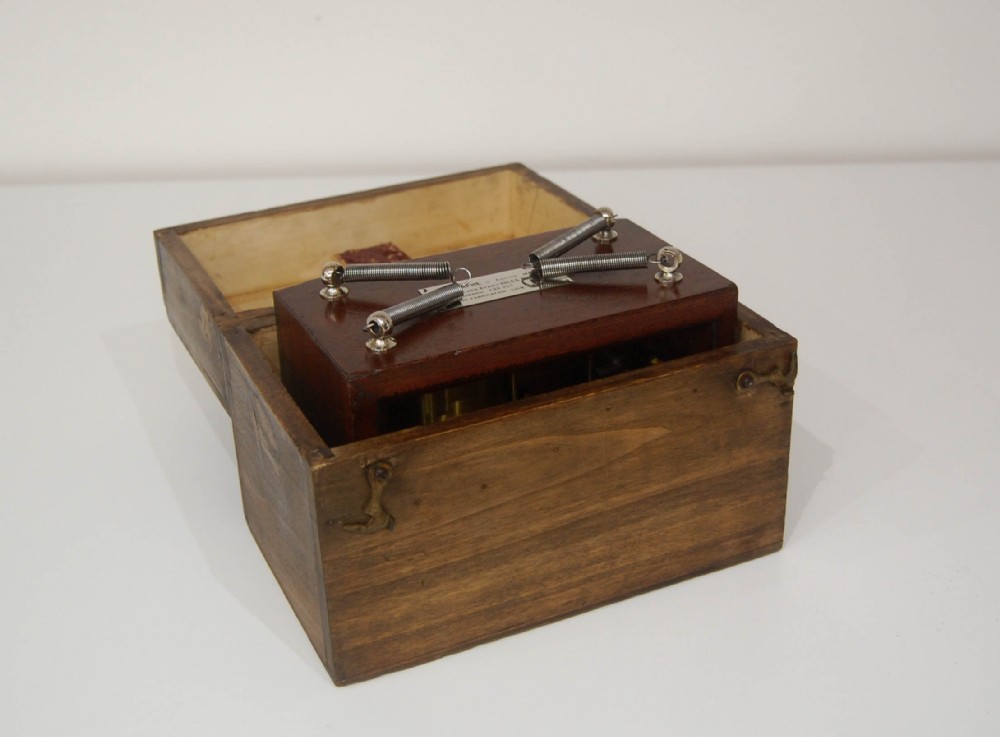
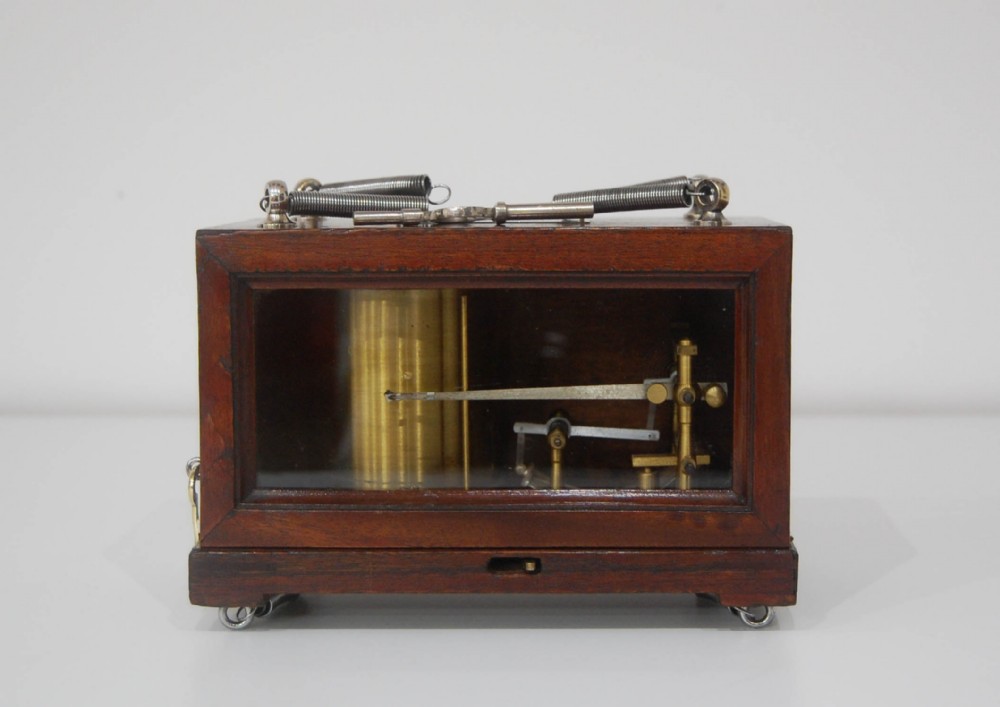
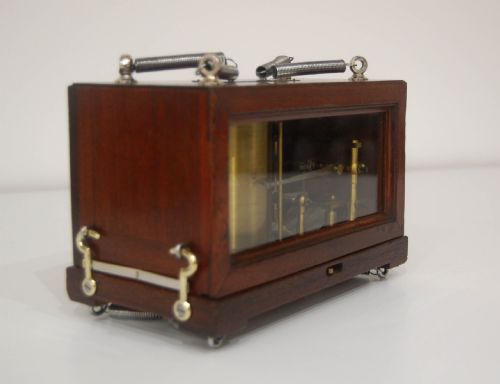
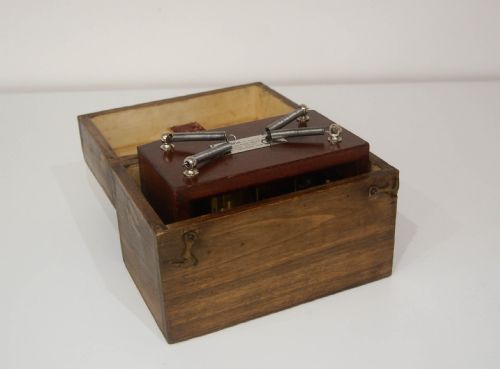
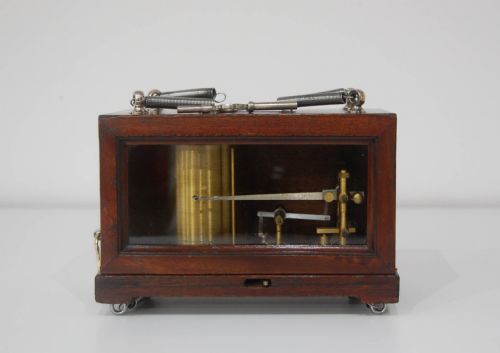
This extremely rare and petit example of a barograph (20cms in length & 12cms in height) is housed in a mahogany case with a single glazed front viewing section which alludes to its use as a working instrument rather than a showpiece. This is further evidenced by the inclusion of springs attached to each corner top and bottom in order for the barograph to be hung within the aircraft whilst in flight and to avoid it encountering any unnecessary impacts. A plate to the lid is engraved with the following:
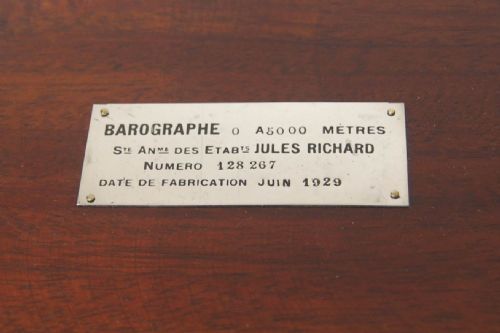
“BAROGRAPHE A 5000 Metres. Ste ANme DES ETABts JULES RICHARD, NUMERO 128267. DATE DE FABRICATION JUIN 1929.”
The lid is hinged at one end and can be lifted by releasing two hook and eye catches.
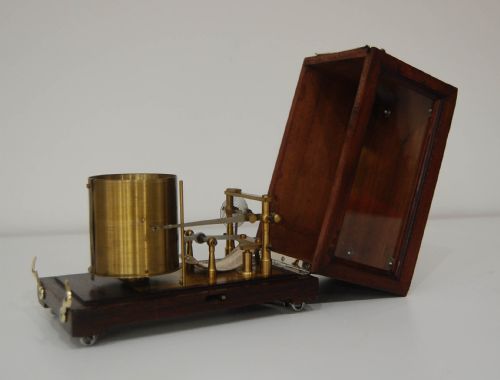
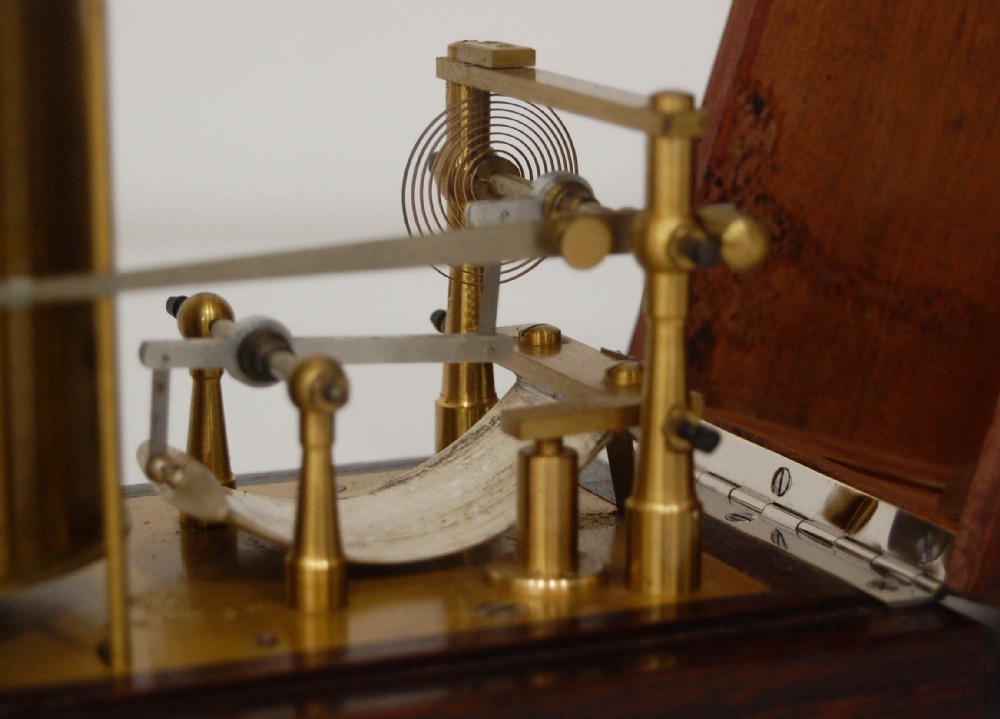
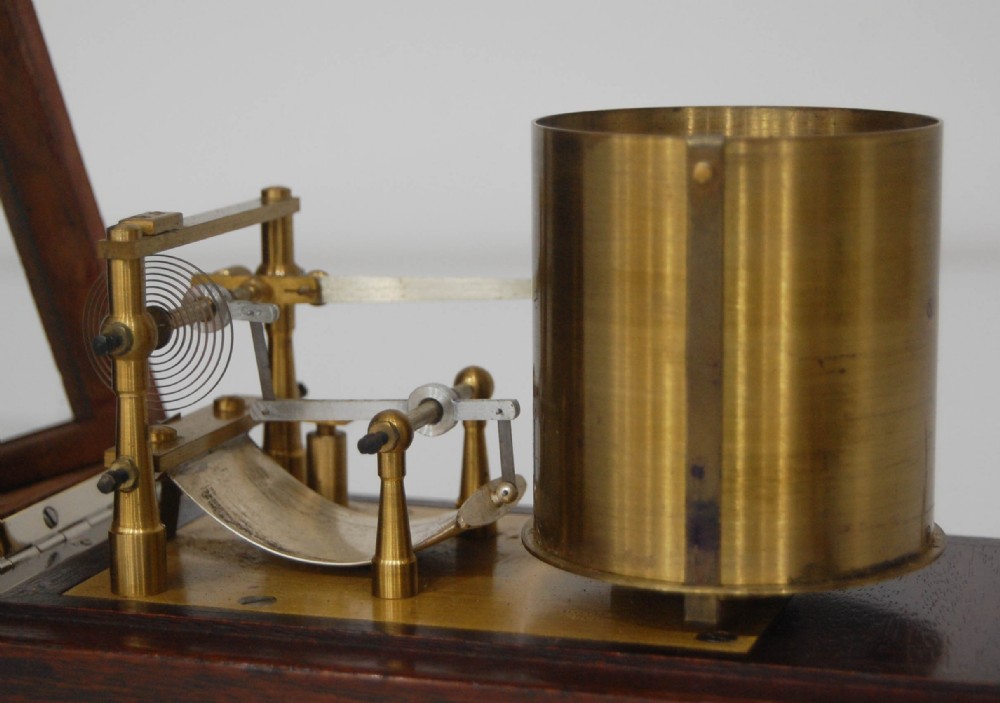
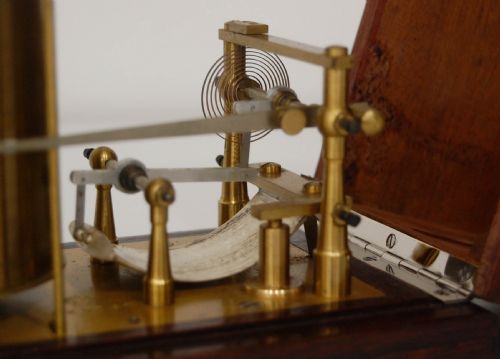
The mechanism is similar in most respects to the more commonly encountered capsule examples in that it contains a drum recorder and pen shaft, however the capsules are instead replaced on this example by a crescent shaped Bourdon tube and therefore the means of transferring the movement of the tube to the drum also differs somewhat in style and manufacture.
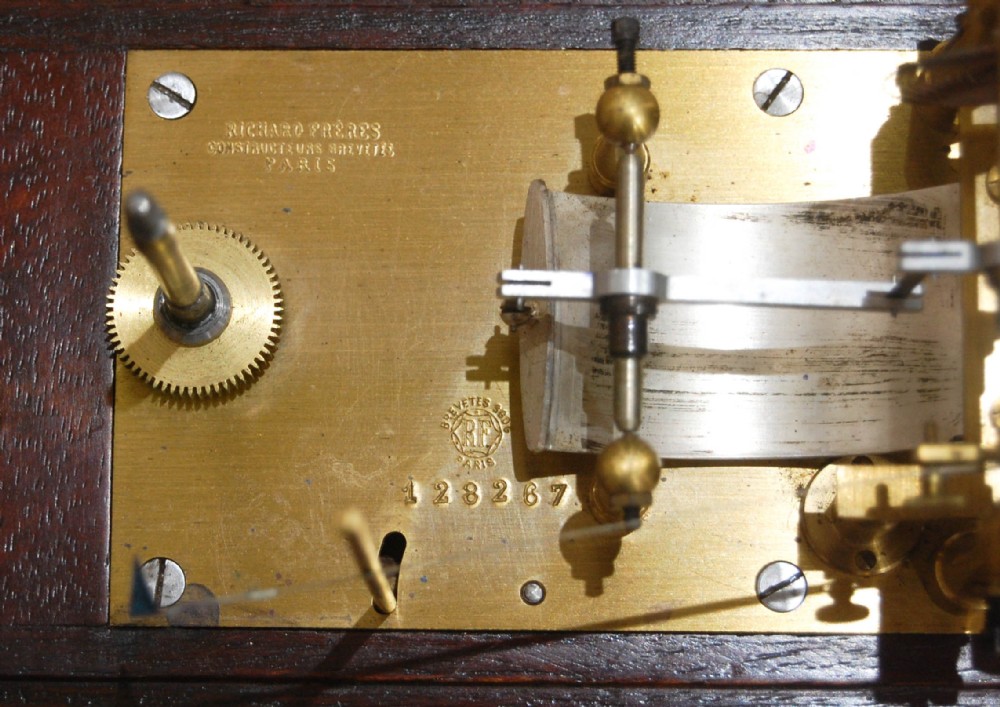
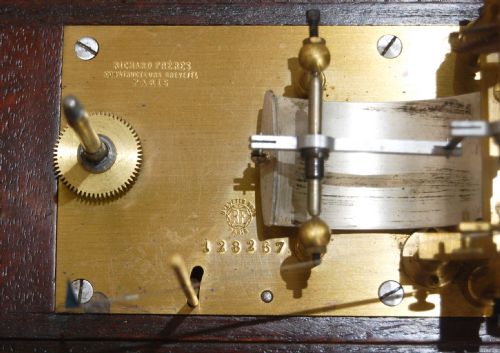
The brass lacquered base of the instrument is further stamped with the same serial number as appears on the lid and is further marked to “Richard Freres Constructeurs Brevetes Paris” and with the “RF” logo and “Brevetes SGDG, Paris”.
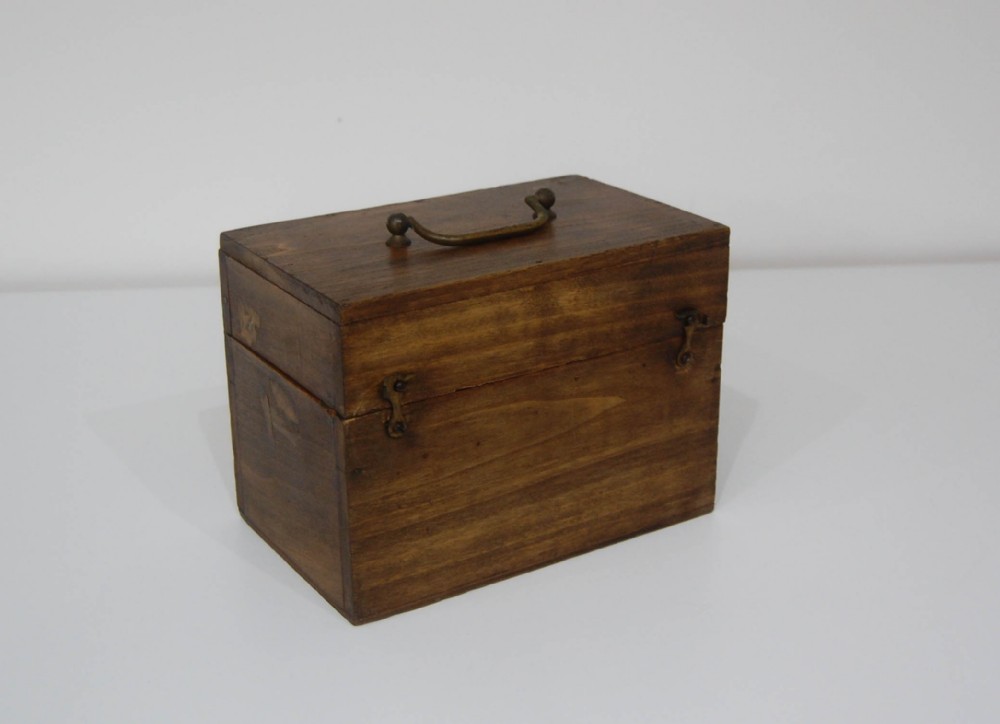
This diminutive example is contained within its original pine case with brass handle to the top and hook latches to the front.
I can find few records of any Bourdon tube barographs which makes this a hugely rare piece for both collectors of scientific instruments and early aviation equipment. It is pictured in an obscure US technical memorandum for the National Advisory Committee for Aeronautics in 1928 (just a year before this pieces manufacture) where Richard Freres products are described. Of this instrument, the publication simply relates that,
“The Richard Company makes entirely satisfactory aneroid barometers. The same firm also makes a Bourdon tube barograph (Fig 19a), which gives very good results, and a very accurate 0-1200m altimeter suspended by springs inside the standard collar required by the French technical services”.
It must therefore be assumed that this barograph had some level of global success as a useful piece of aviation equipment although its rarity is beyond doubt.
The French engineer Eugene Bourdon (1808-1884) was an early competitor to Lucien Vidi (inventor of the bellows movement) registering his crescent shaped mechanism design in 1849; it was originally produced under licence with Felix Richard (Bourdon & Richard), and continued to be produced by his son Jules Richard and latterly by Richard Freres (Jules & Max Richard) renowned for their developments to the barograph in France. Bourdon’s designs for both barometers and pressure gauges were met with approval at The Great Exhibition in 1851 winning him a council medal alongside his competitor Vidi. Bourdon’s movement however were slightly more fragile than Vidi’s and although they continued to be produced until the turn of the century, they were less well received. As early as 1863, Admiral Fitzroy, Chief of the Meteorological Department of the Board of Trade commented that, “they are not so well adapted for travellers, nor for the measurements of considerable elevations, as Vidi aneroids”, which in some part contributed to the lack of uptake in the UK.
Bourdon continued to work on numerous other designs and eventually became more renowned for his work on pressure gauges. He was a prolific inventor and died in 1884 whilst undertaking experiments on the effects of wind on steam locomotives. A fa
Jason Clarke Antiques has dated this piece to the 1920s.
You can view the stock and full dealer information on the Jason Clarke Antiques Profile Page
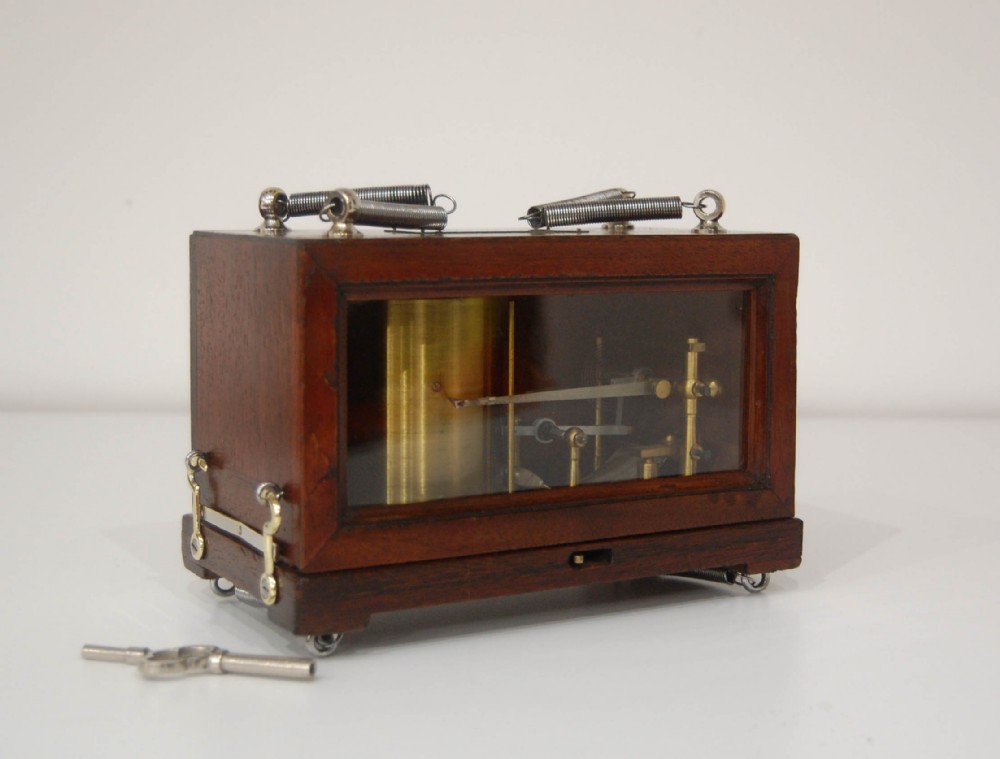
Rare Cased Aviation Bourdon Tube Barograph by Richard Freres of Paris