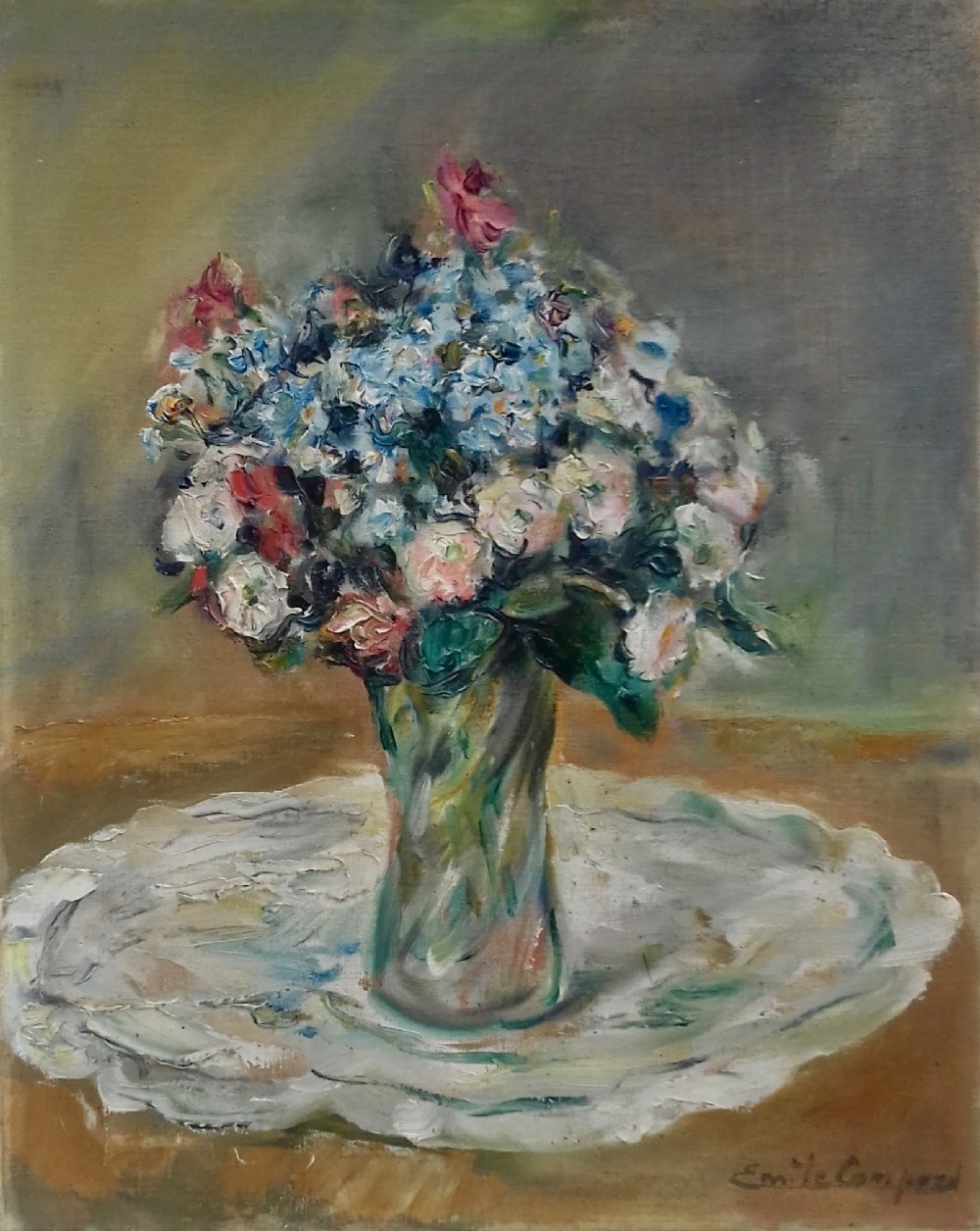
Skippings Fine Arts has dated this piece to the 1930s.
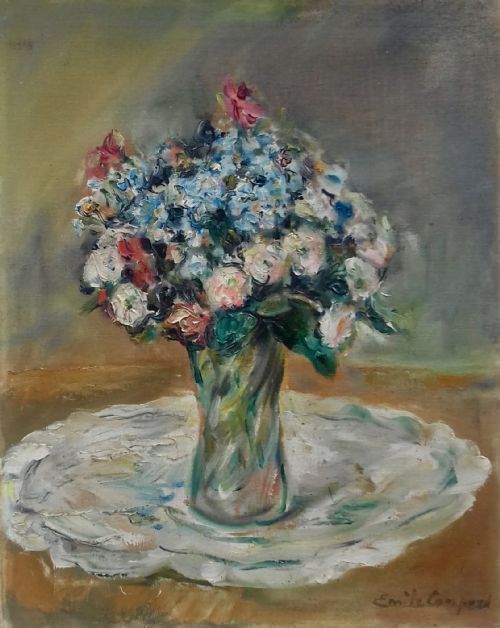
In the 1920s and 30s, Compard, a Parisien, spent much of his time in Brittany. He was encouraged by Matisse, and notably art critic Jean Paulhan.
Compard realised a fresco for the 1937 Universal Exhibition, a study of which is now conserved at the Pompidou Centre.
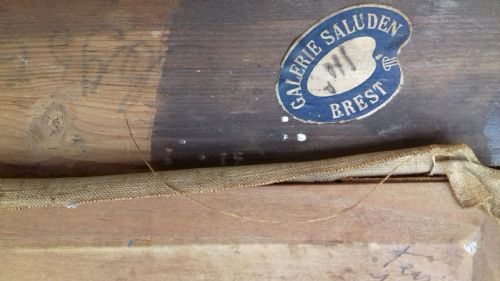
Compard exhibited at the Salon de la Société Nationale des Beaux-Arts, the Salon des Indépendants, the Salon des Tuileries, and the Salon d‘Automne.
The painting presented here stems from this period. It was acquired at an exhibition at the Galerie Saluden in Brest in 1939.
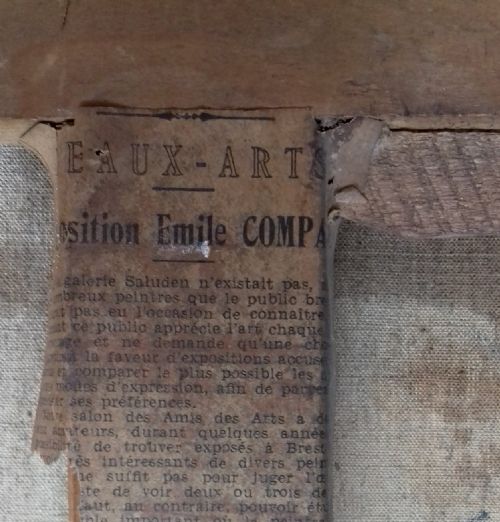
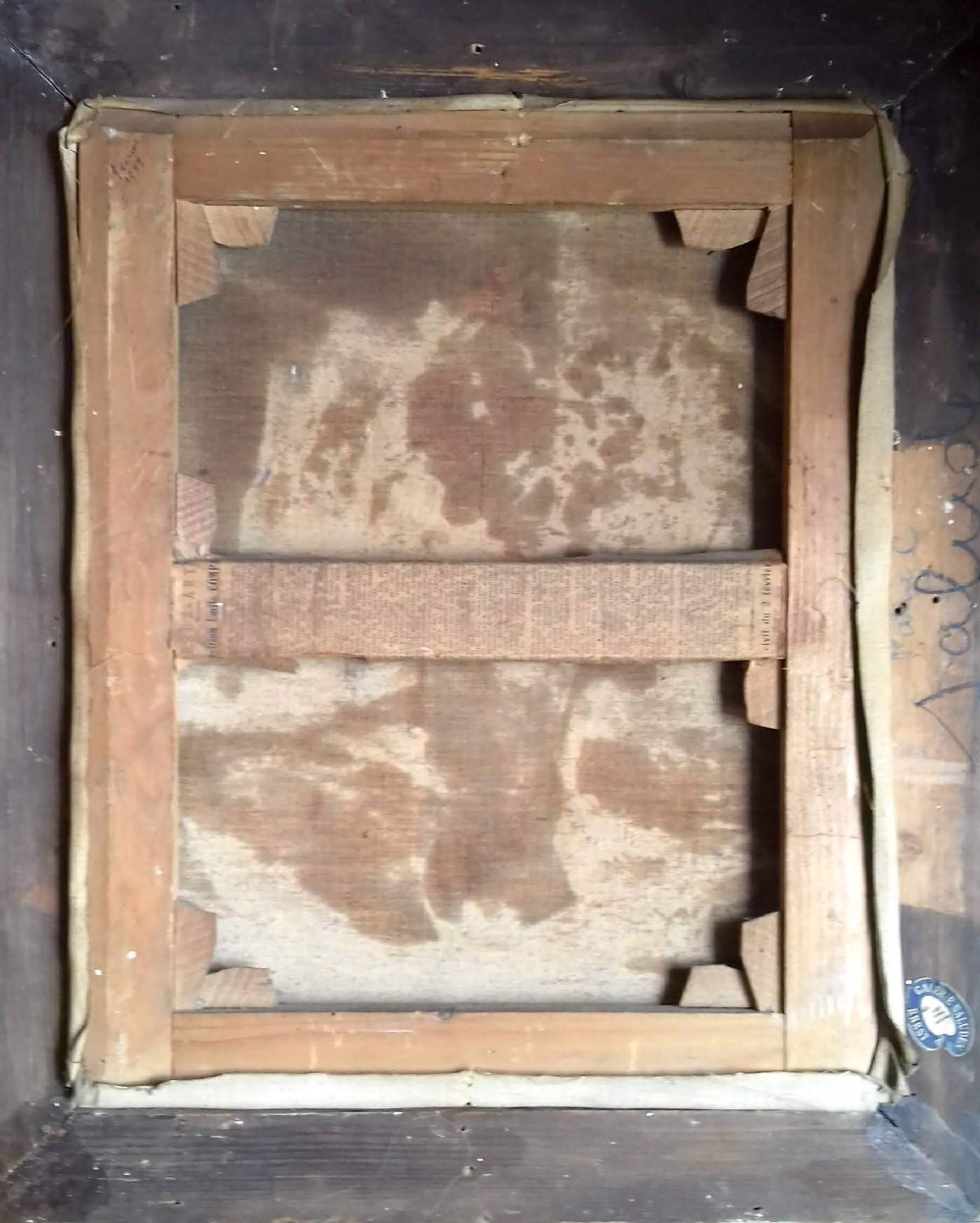
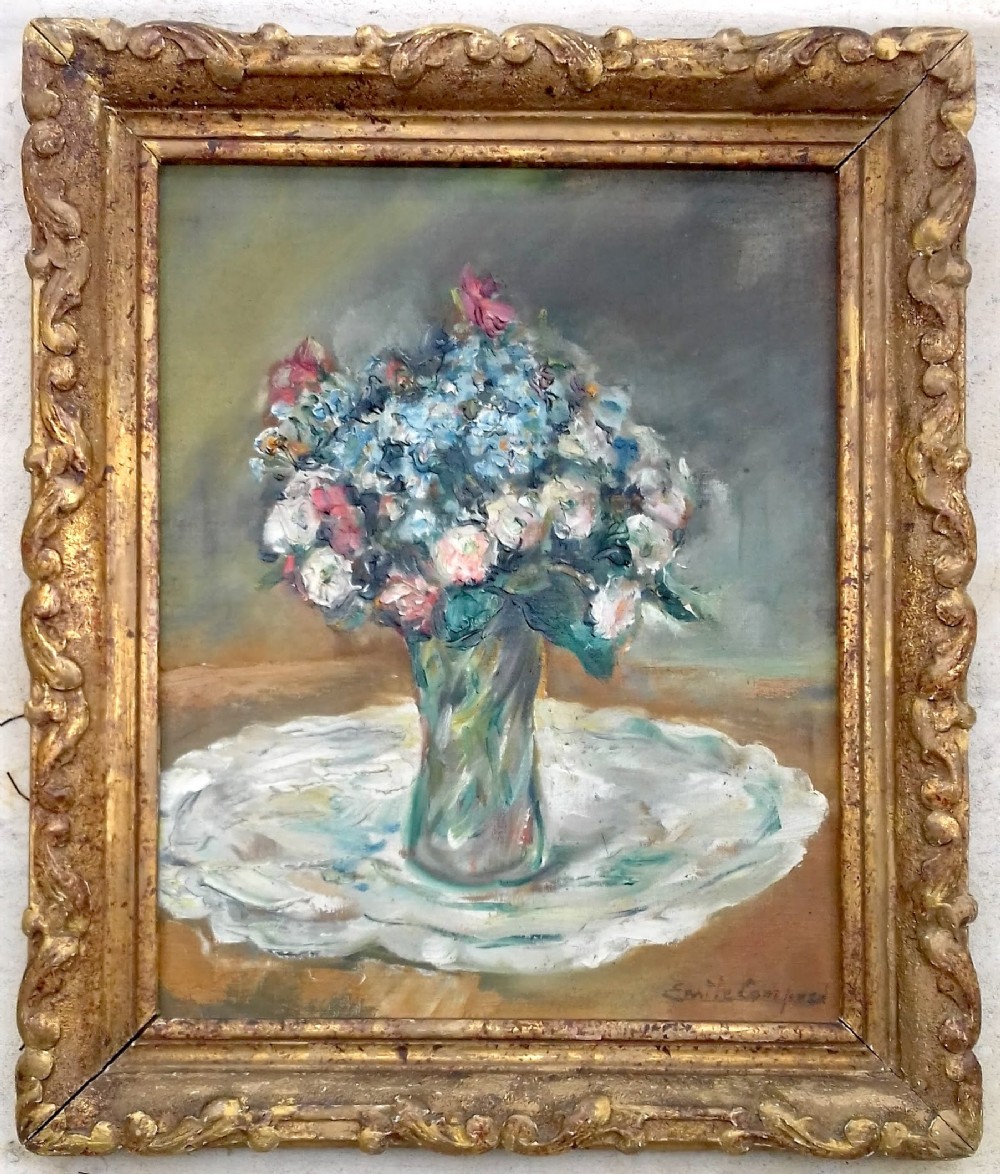
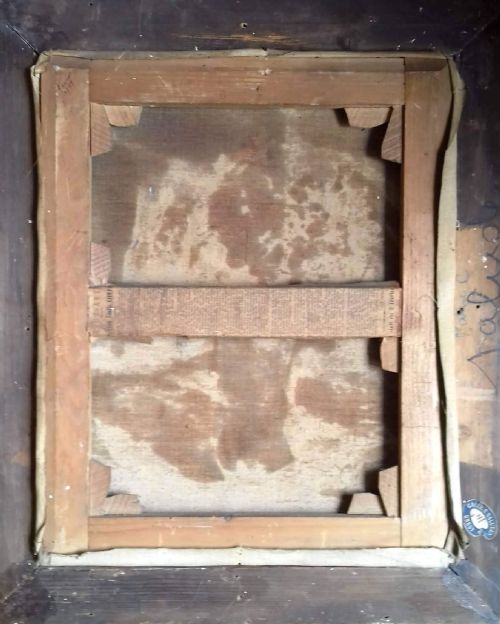
It is presented in its original hand-carved and gilded frame, with a period exhibition review by fellow artist Emile Jim Sevillec stuck to the stretcher.
(The Galerie Saluden was opened in 1907 by Anna Saluden. Although it was completely destroyed in a bombing in 1941, the family run reopened in after the war in Quimper, and is still in existence).
In the post war years, Emile Compard entered a second creative period: influenced by taoism and close to the artists Tal Coat, Degottex and Michaux, he would turn to abstraction. In 1947 - the very year of its creation - the French National Museum of Modern and Contemporary Art, acquired a work by the artist.
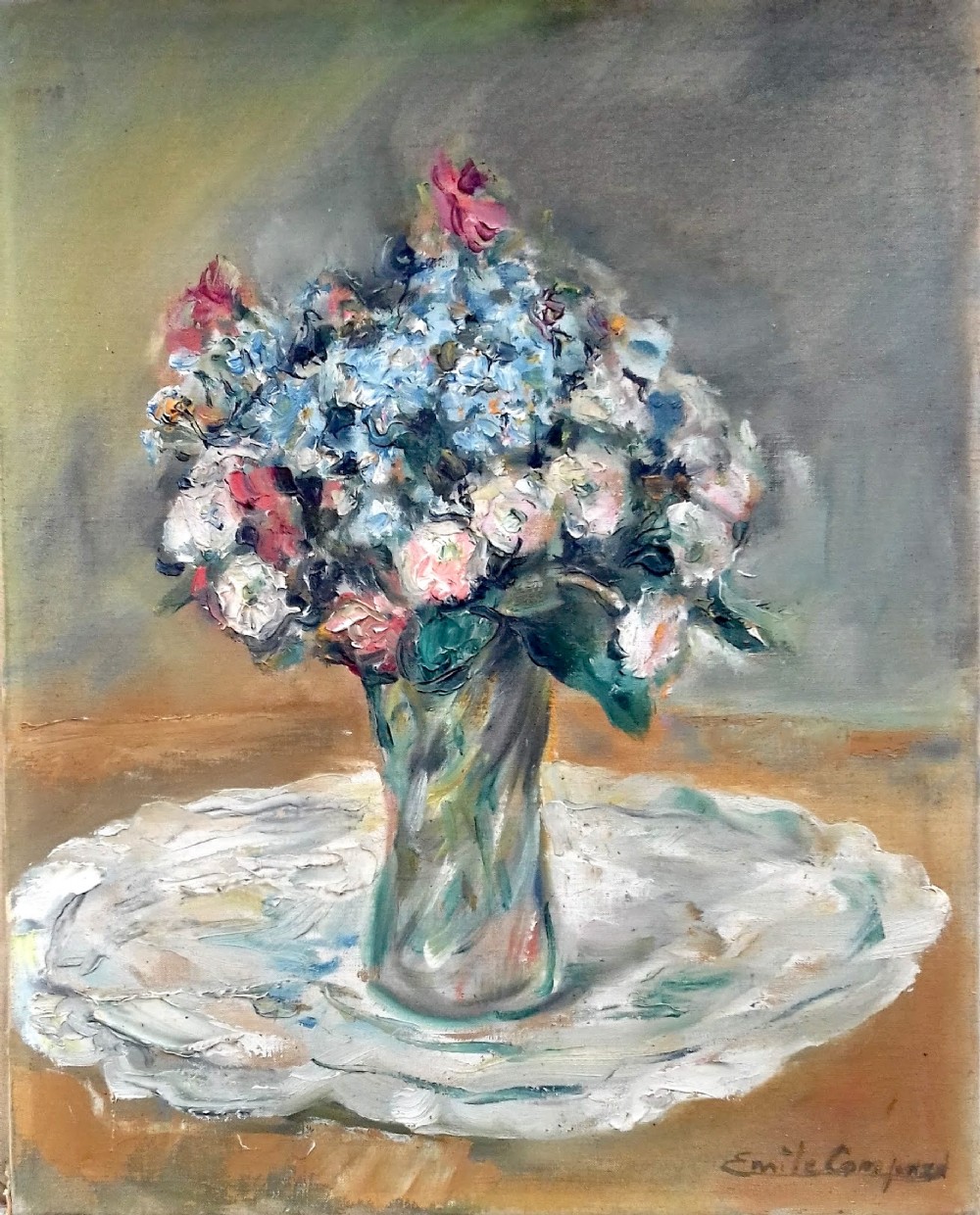
The work presented here is an oil on canvas measuring 41 x 33 cm. The overall framed size is 51 x 43 cm (some chipping to the gilding of the frame).
Skippings Fine Arts has dated this piece to the 1930s.
Modern french & continental pictures selected by a former french auction house expert
You can view the stock and full dealer information on the Skippings Fine Arts Profile Page

Humble Field Flowers: Emile Compard, Friend of Bonnard, 1930s French Floral Still Life Bouquet Oil on Canvas