Titan Fine Art has dated this piece to the 17th Century.
His Italianate flavour was unlike any other artist’s work in England, his lively faces were individualised, and he painted a much superior likeness than his contemporaries such as Peter Lely.
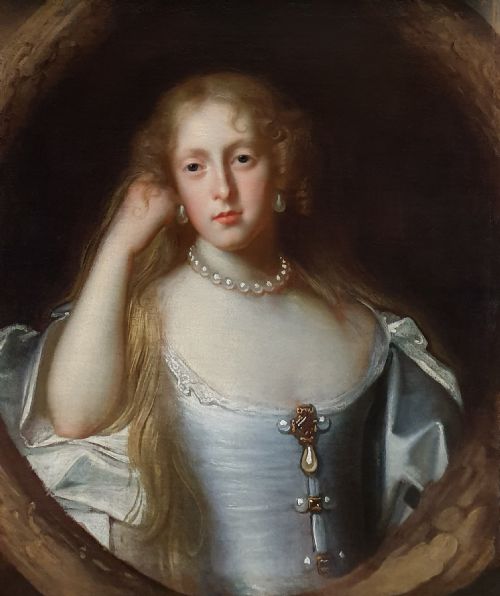
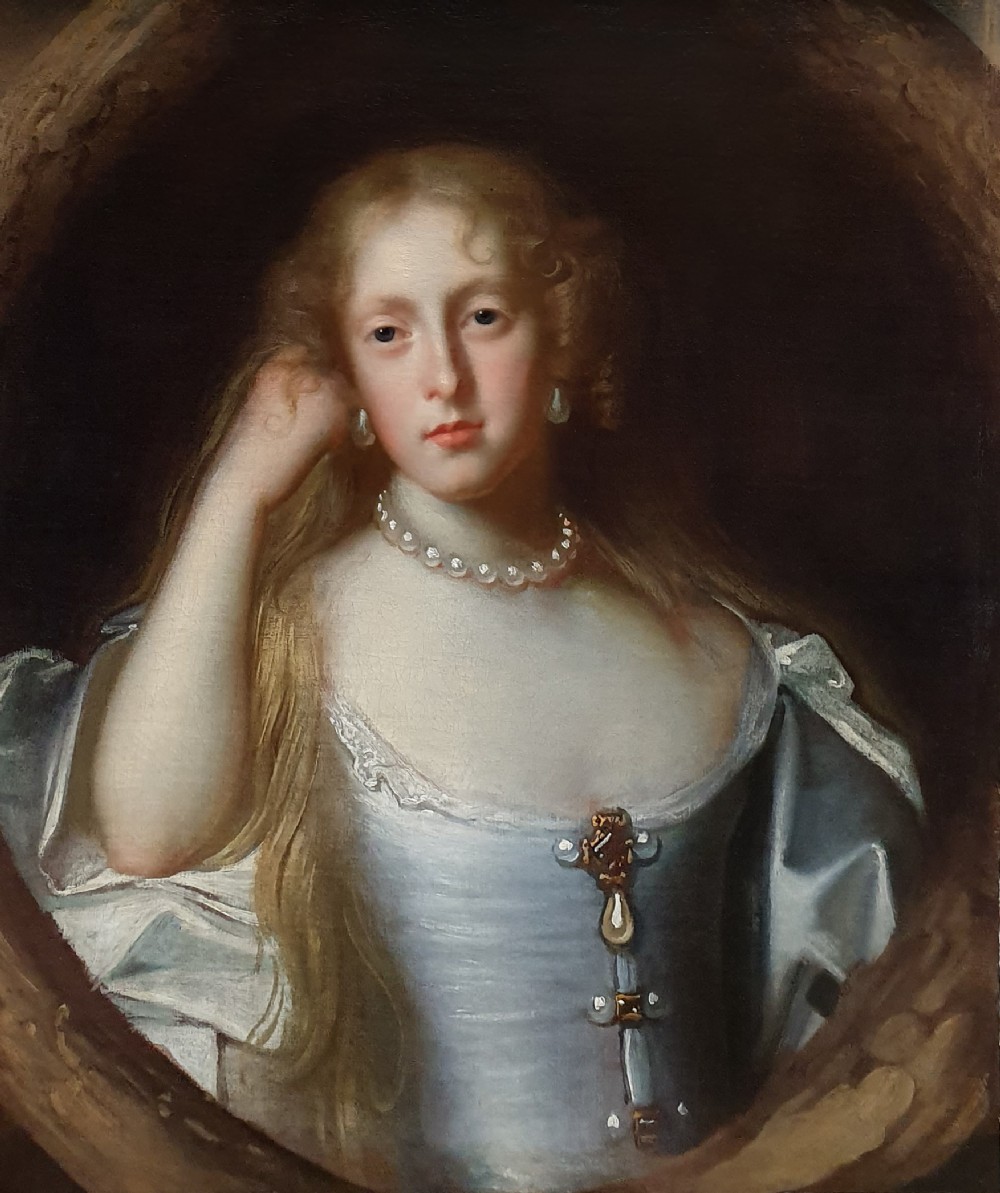
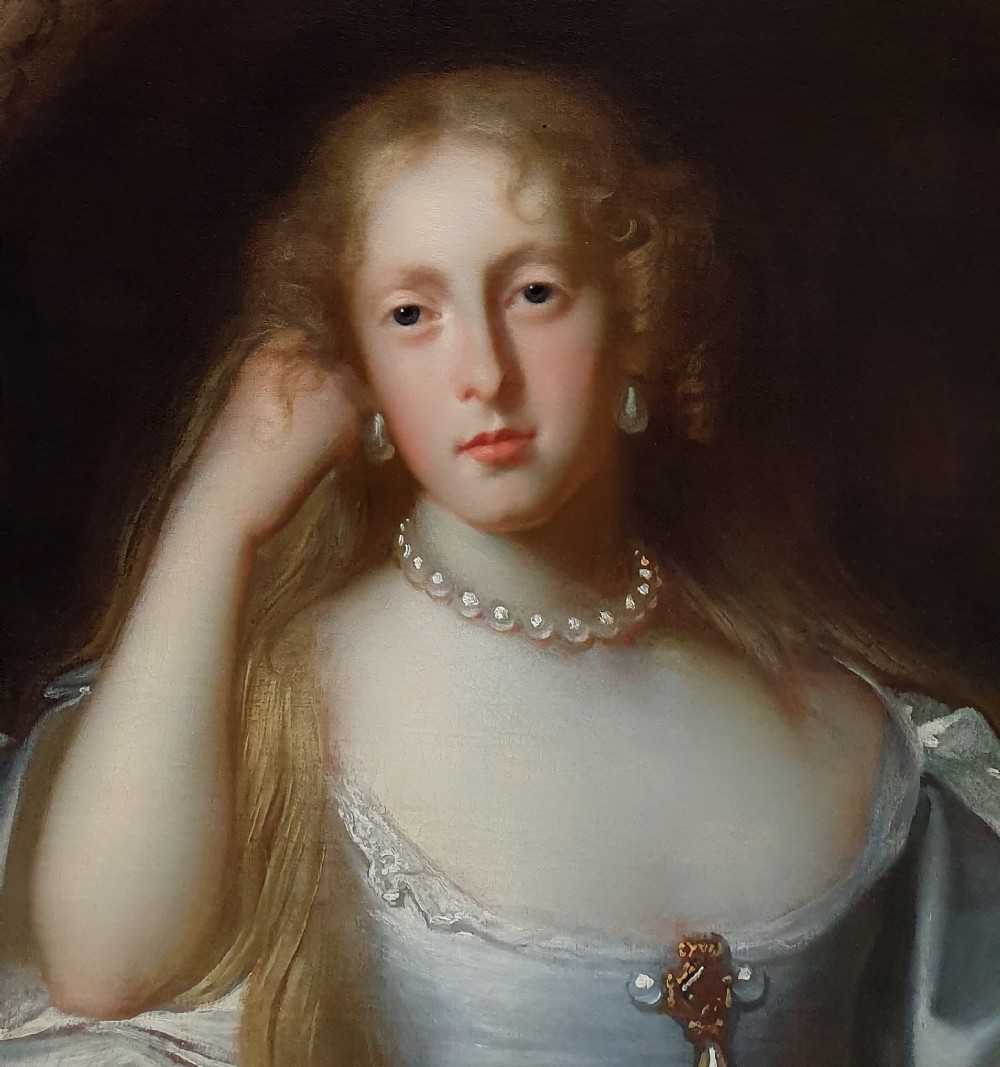
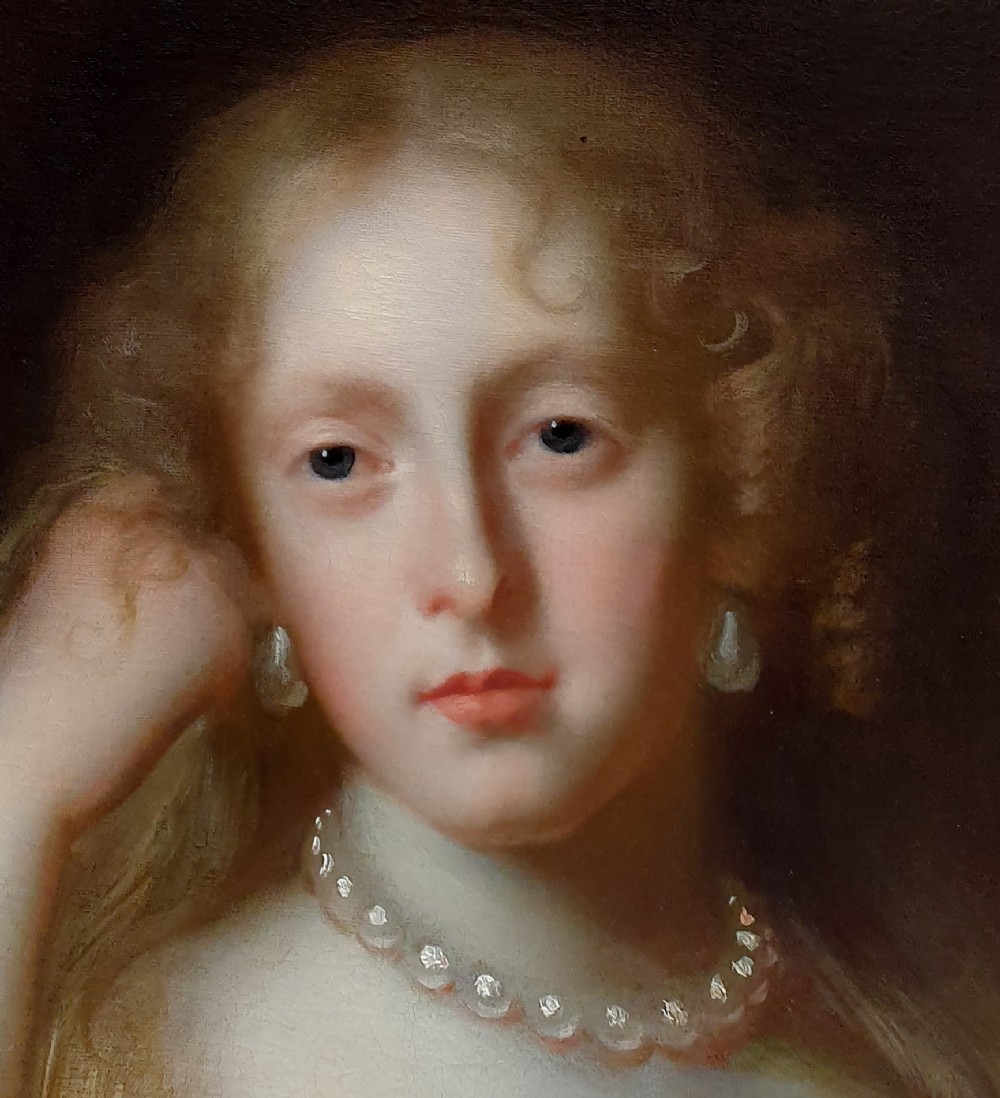
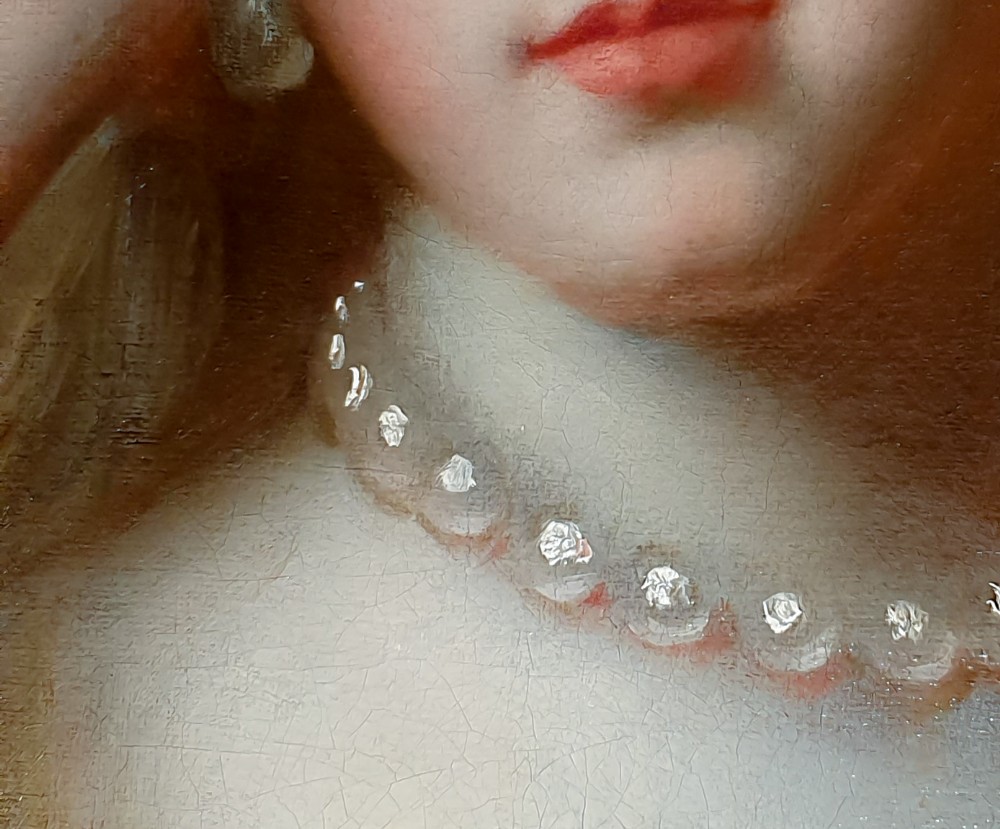
In this touching composition, painted around the time of London’s Great Fire in 1666, a young woman is represented as a confident and alluring individual. At first sight it appears to be a straightforward portrait of a woman dressed in contemporary clothing, the image – and specifically, the direct gaze and the long hair – borders on the erotic (at least by 17th century standards); it is in fact laden with aesthetic and allegorical allusions, possibly with multiple meanings, of which the portrait’s original audiences would certainly have been aware. The ‘head on hand’ portrait became hugely popular in England in the 1660’s, largely due to Peter Lely’s depiction of Barbara Villiers, who was prominent at court (it could be described as her ‘signature image’). John Michael Wright produced his own version of Villiers too; he often used the formula. A notable example is his portrait of Lady Joanna Thornhill (1635-1709), painted c.1666, where it is suggesting contemplation and melancholy, and may allude to the loss of her husband. He painted at least four versions of it. Wright later used an adapted version of this portrait type, with much more explicit connotations of mourning, for his portrait of Anne Howard, Countess of Carlisle, shows the sitter dressed in black and holding a paper inscribed ‘Nothing can repair my Loss’. A similar portrait of a lady by Wright, thought to be Ann Davis, Lady Lee, sold for 155,000 euros (Drouot Richelieu, Paris, lot 53) on June 13, 2007.
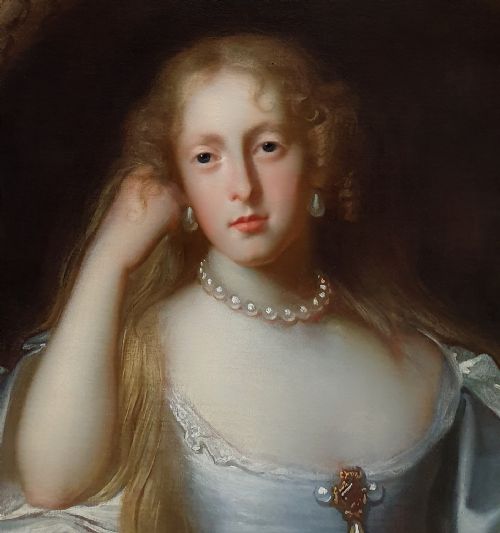
The pose had its origins in the Renaissance depictions of beautiful women, particularly those of Titian and his followers, and also the iconography associated with the depiction of Melancholia. In the 17th century (and still today) their paintings of Italian belle (beauties) were believed to be portraits of Venetian courtesans thinly disguised as images of Venus. The holding of the hair in the hand was a gesture derived directly from Renaissance depictions of that goddess engaged in her private toilette, and women’s portraits featuring the pose were broadly seen as images of modern-day Venuses available and vulnerable to the viewer as they primped and perfected their beauty in the privacy of their boudoirs.
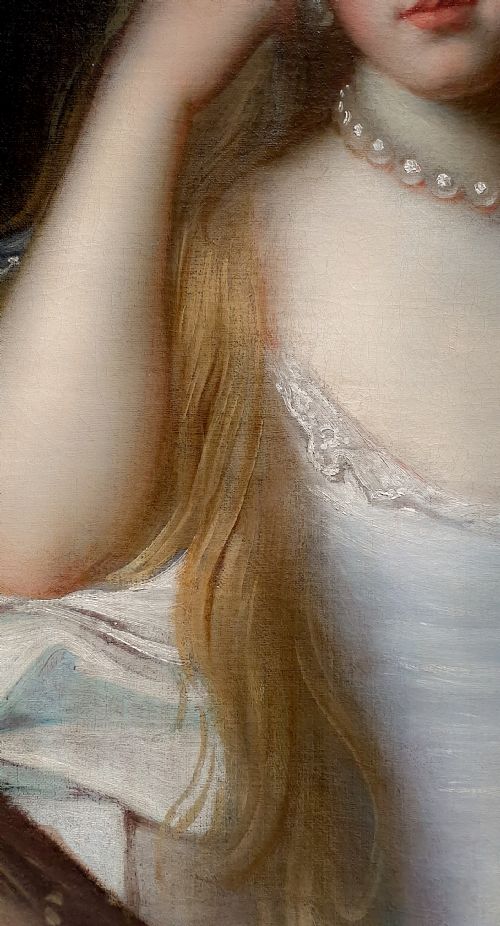
John Michael Wright was one of the most successful native English artists of the seventeenth century, and, along with earlier contemporaries such as Robert Walker and William Dobson, was one of only a handful to find favour amongst the top echelons of society. He introduced a rather Italian flavour into British painting, unlike all the other portrait painters in second half of the century. When placed next to Lely’s work, for example, Wright’s lively and realistic characterisations tend to reinforce Pepy’s critique that Lely’s portraits were ‘good but not like’ and Pepy’s comment in 1662, upon leaving Lely’s studio and visiting Wright’s, states the contrast between the two: “[from] Mr Lillys… Thence to Wrights the painter’s, but Lord, the difference that is between their two works’.
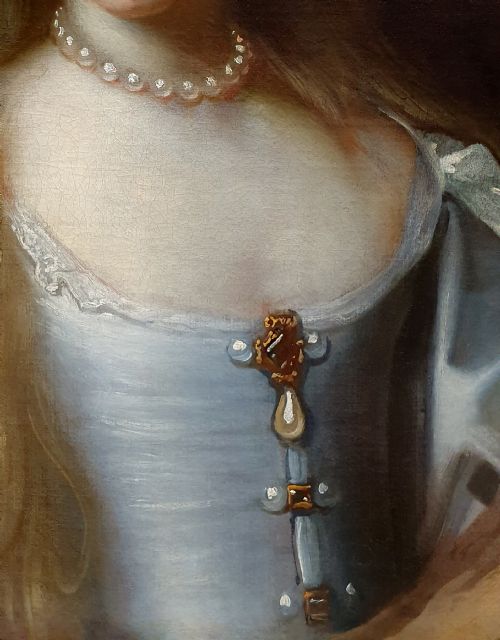
This highly original portrait is notable for being quite unlike the majority of English portraits of the period. No other English artist before Wright had travelled and studied so extensively on the continent. During his more than ten years in Rome, and practise of painting in France and ‘other parts’ presu
Titan Fine Art has dated this piece to the 17th Century.
Specialist in 17th & 18thc portraits. Highly curated selection, museum-level research & pro conservation. Exceptional art, expertly vetted.
You can view the stock and full dealer information on the Titan Fine Art Profile Page
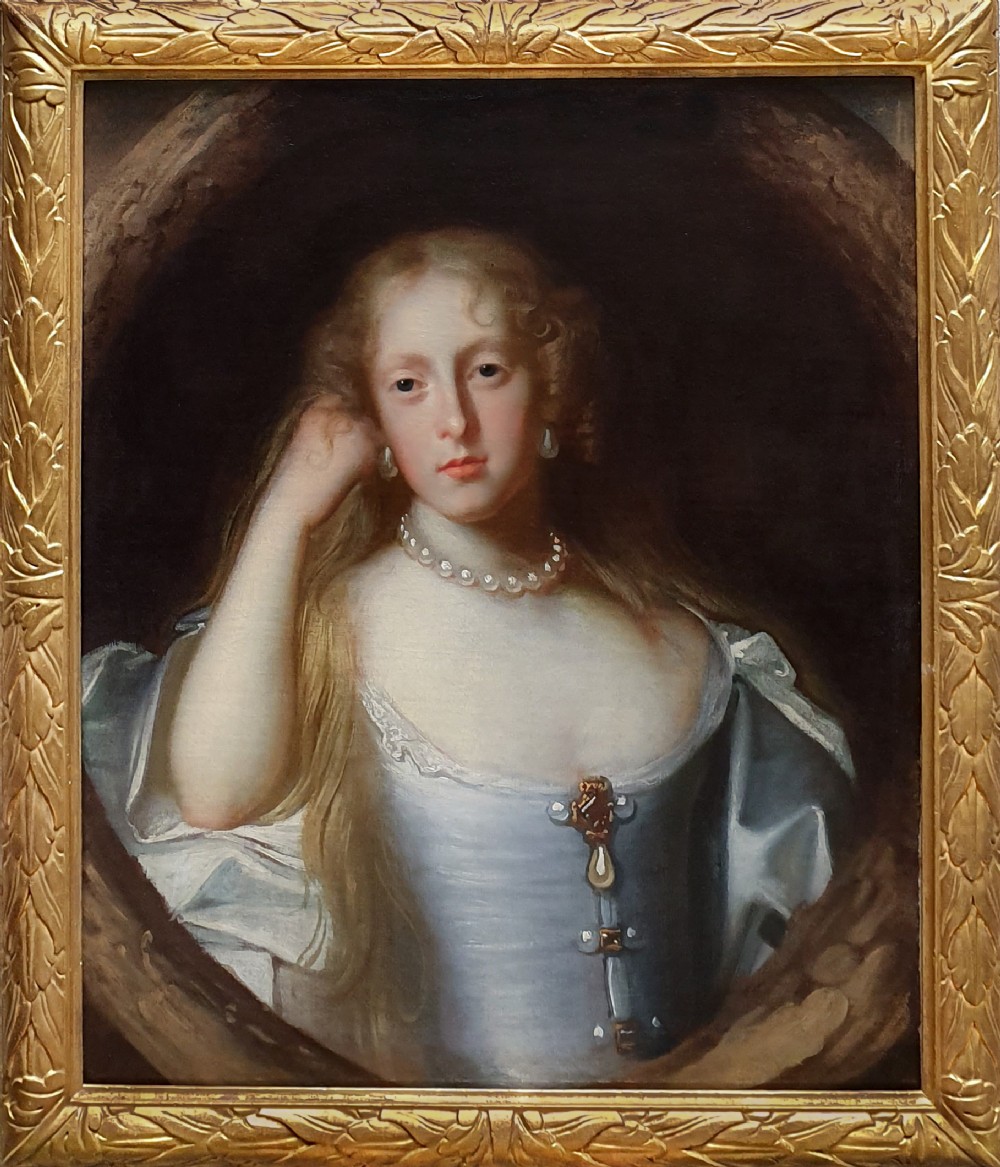
Portrait of a Lady in a Blue Dress C.1665; John Michael Wright (1617-1694)