Brave Fine Art has dated this piece to the 1860s.
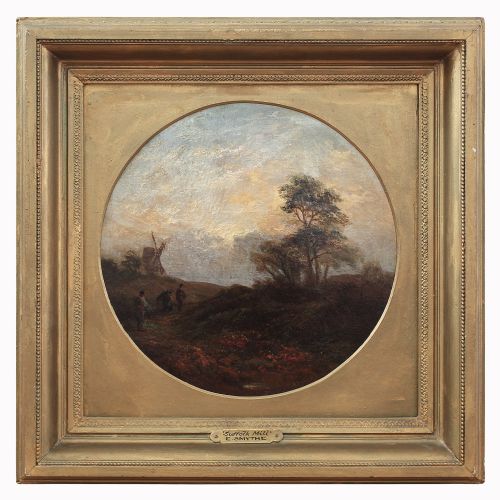
Faggot gathering involved collecting parcels of certain items, often wood or sticks, and the word ‘faggot’ is an archaic English term for a ‘bundle’.
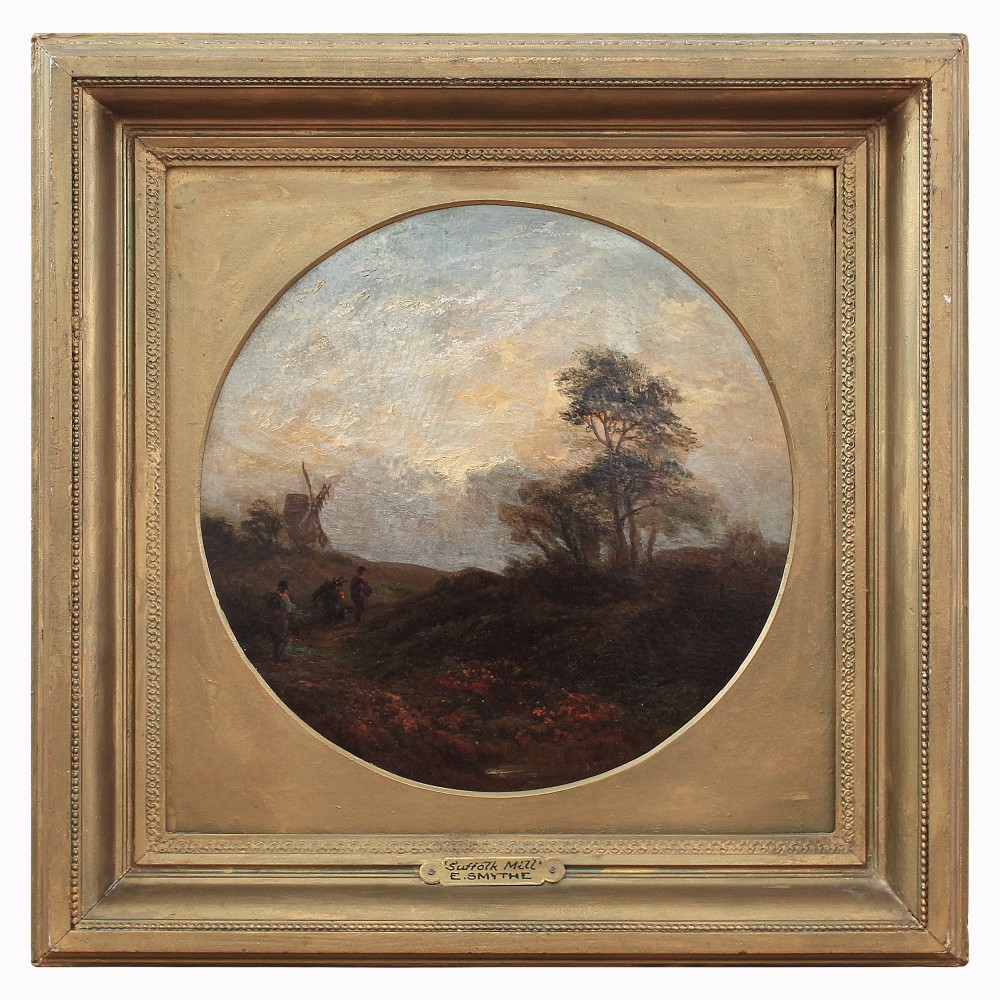
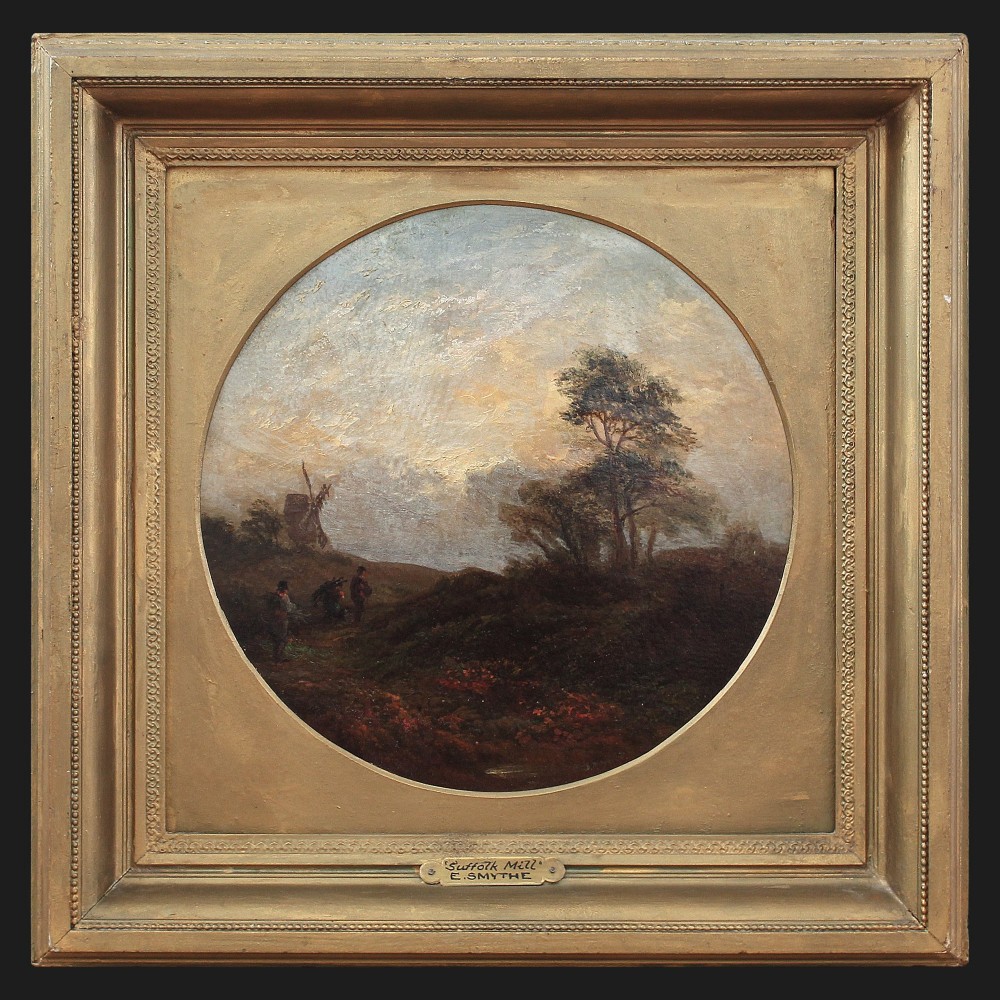
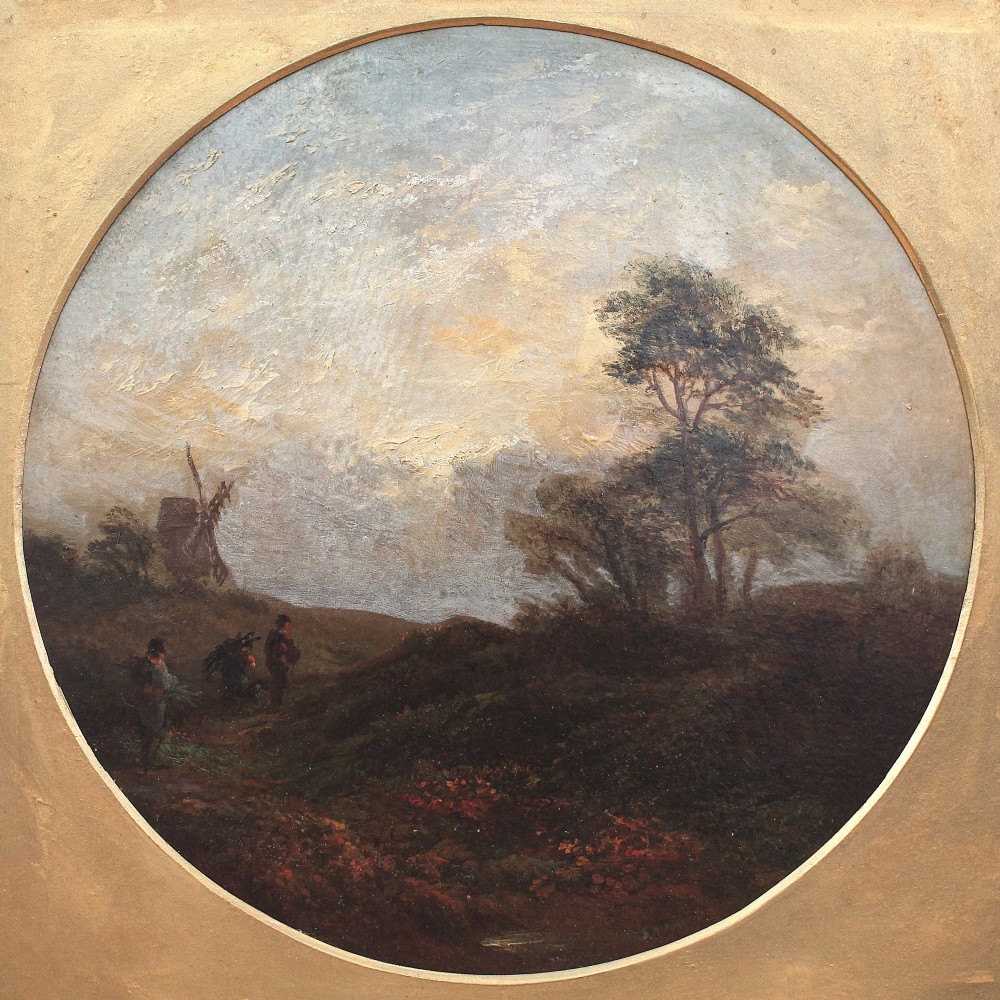
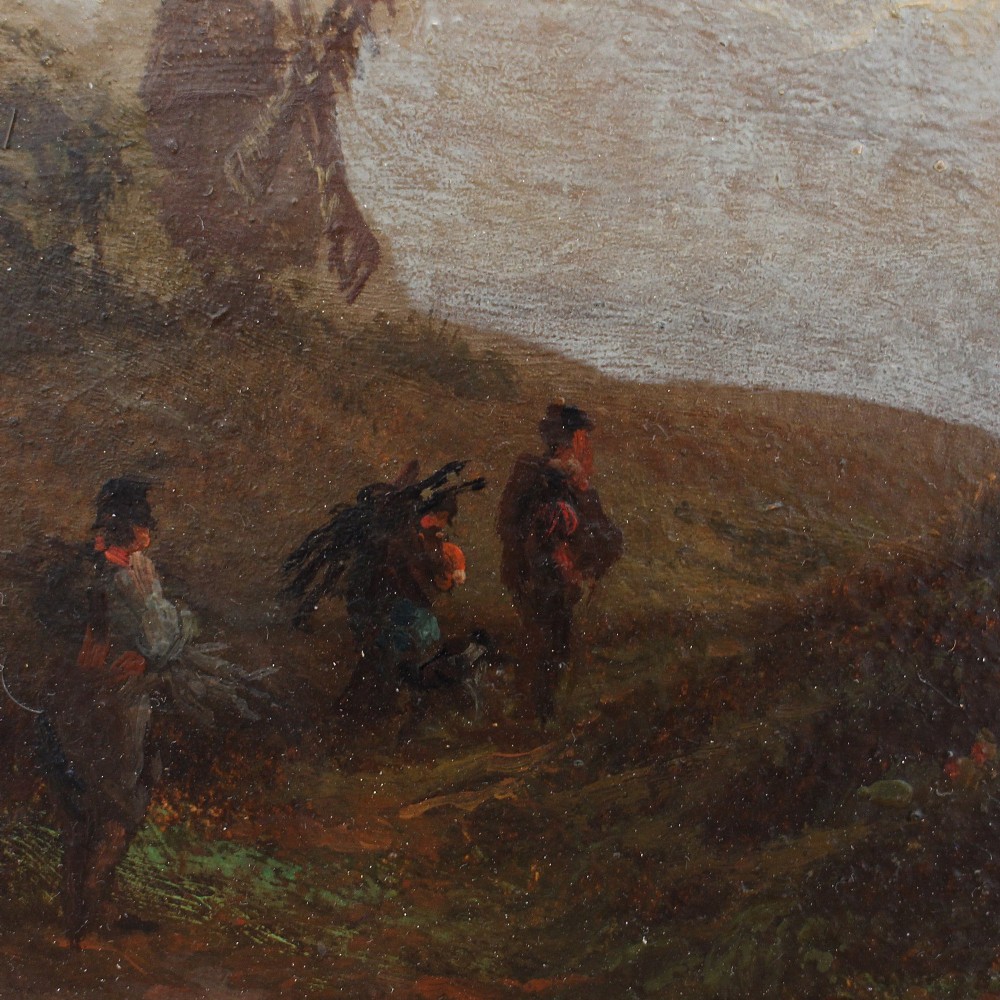
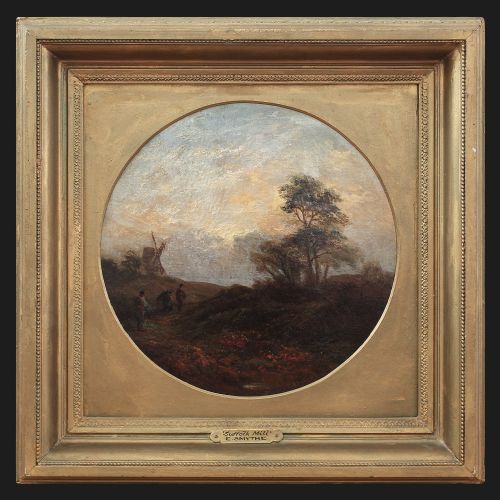
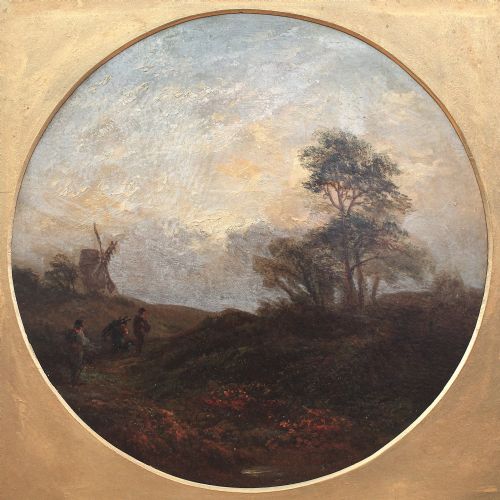
Here, in Smythe’s depiction, we see three men laden with wood walking along a track adjacent to a windmill. Two are upright but one appears to be stooping under the weight. The wispy clouds above them feel typically British and the earth is awash with red flora.
Often when we think of idealised views of the Suffolk countryside, the first name that springs to mind is that of John Constable (1776-1837). Constable’s picturesque scenes were a breath of fresh air against a backdrop of rapid industrialisation.
Emma Smythe, along with her brothers, Edward (1810-1899) and Thomas (1825-1907), often painted in the same vein and each of them had successful careers. Emma is probably the least well-known, despite exhibiting five times at the Royal Academy and also at the British Institution. There’s no question that in the 19th-century, her gender would’ve made it harder to achieve the recognition she deserved.
Emma had two children with her husband, Robinson Taylor, and settled in Ipswich, where she became a drawing and painting teacher.
This particular work appeared at Christie's in 2003 and the original catalogue from the sale will be sent along with the painting.
Medium: Oil on board
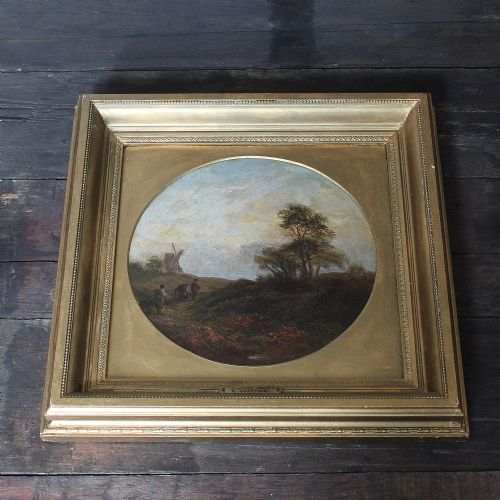
Size including frame: 16” x 16” / 41.5cm x 41.5cm
Year of creation: c. 1860
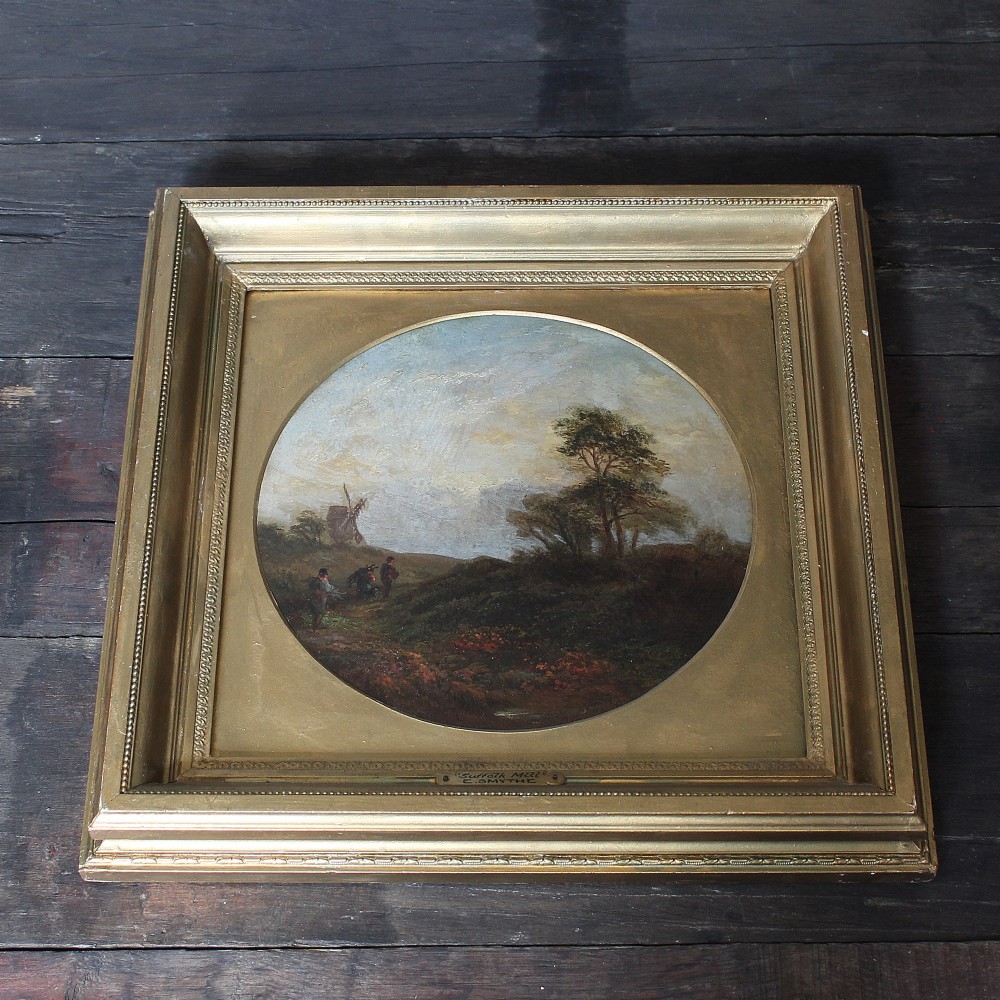
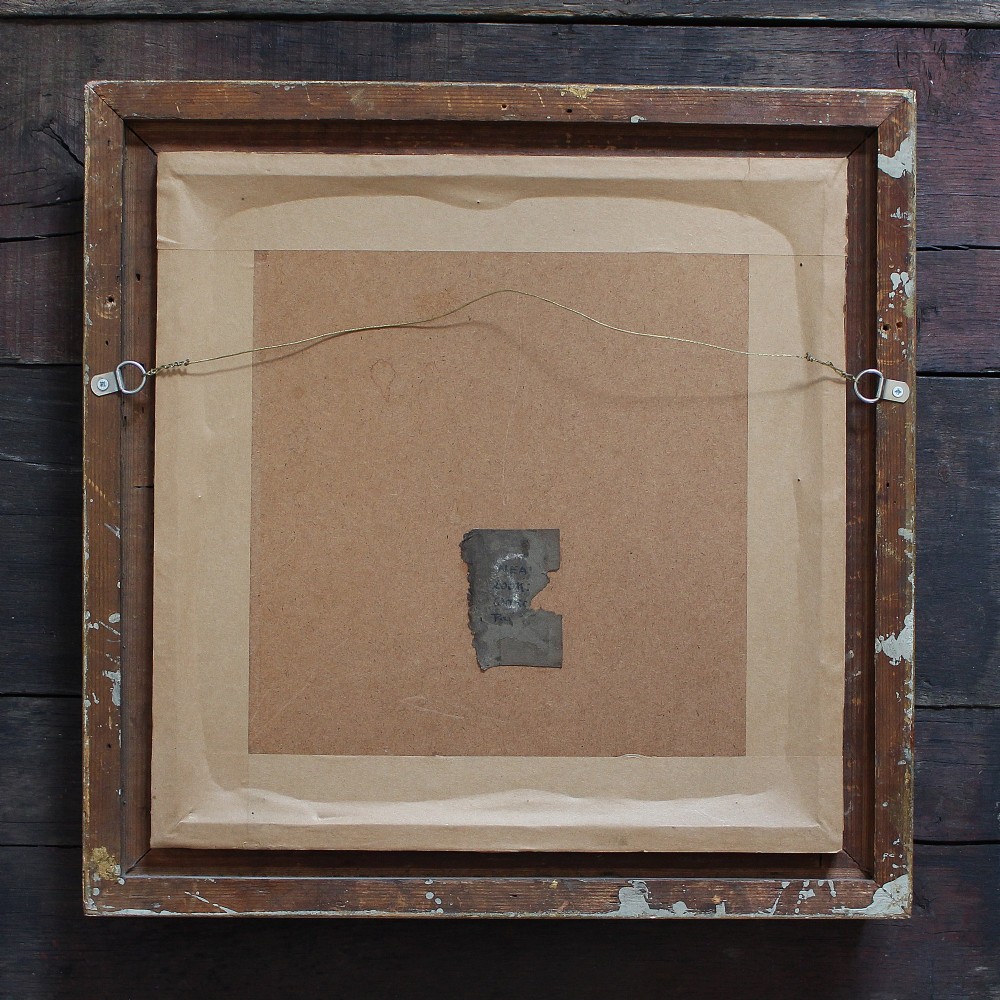
Condition: Artwork in good condition with no issues and frame with light age-related wear.
Brave Fine Art has dated this piece to the 1860s.
Exquisite antique paintings that capture the imagination.
You can view the stock and full dealer information on the Brave Fine Art Profile Page
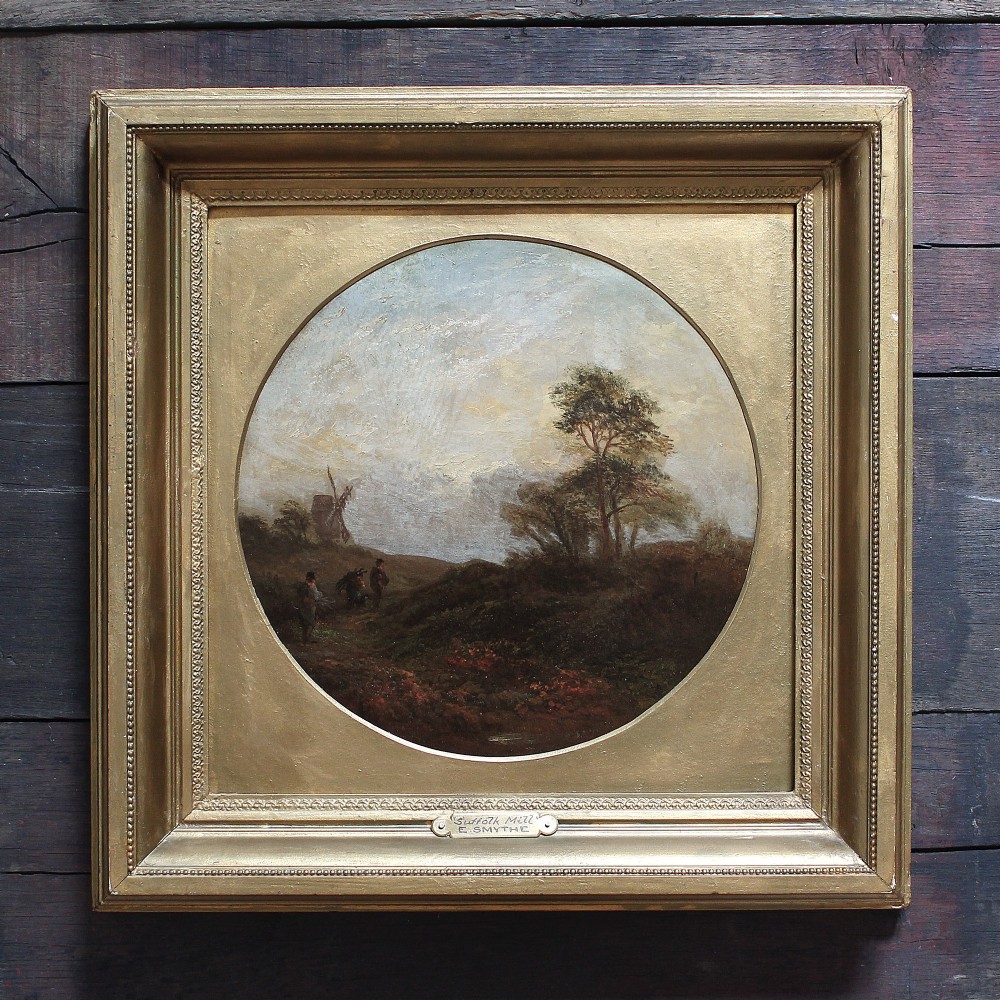
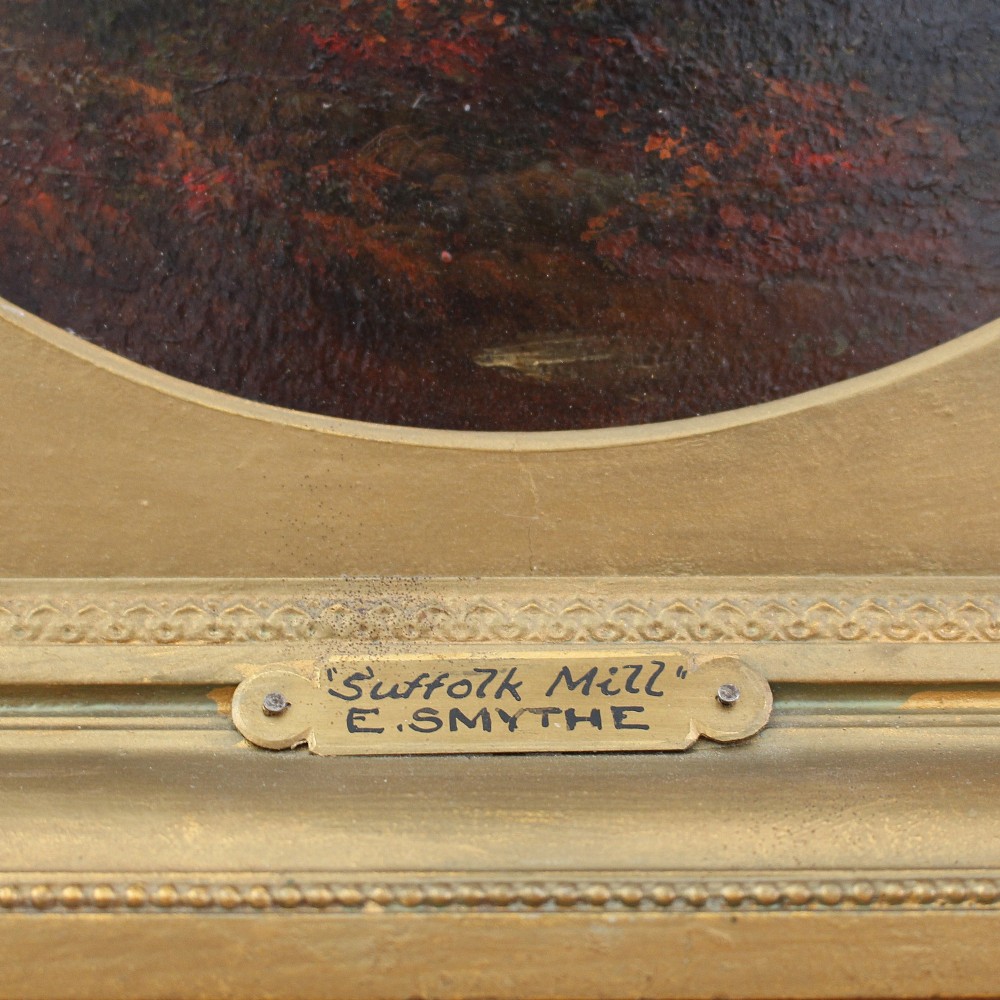
Emma Smythe, Suffolk Mill, Antique English Landscape Painting