Titan Fine Art has dated this piece to the 17th Century.
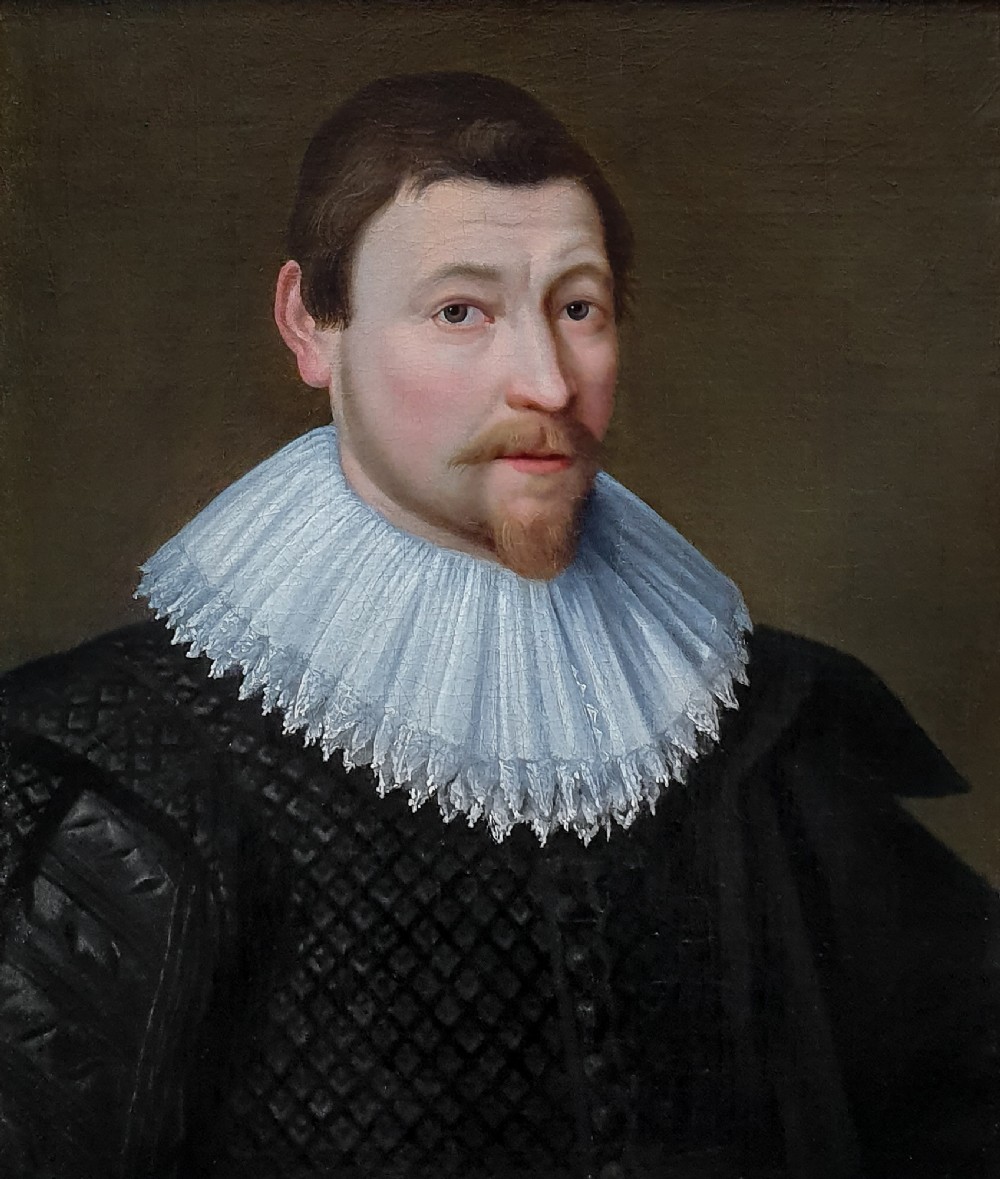
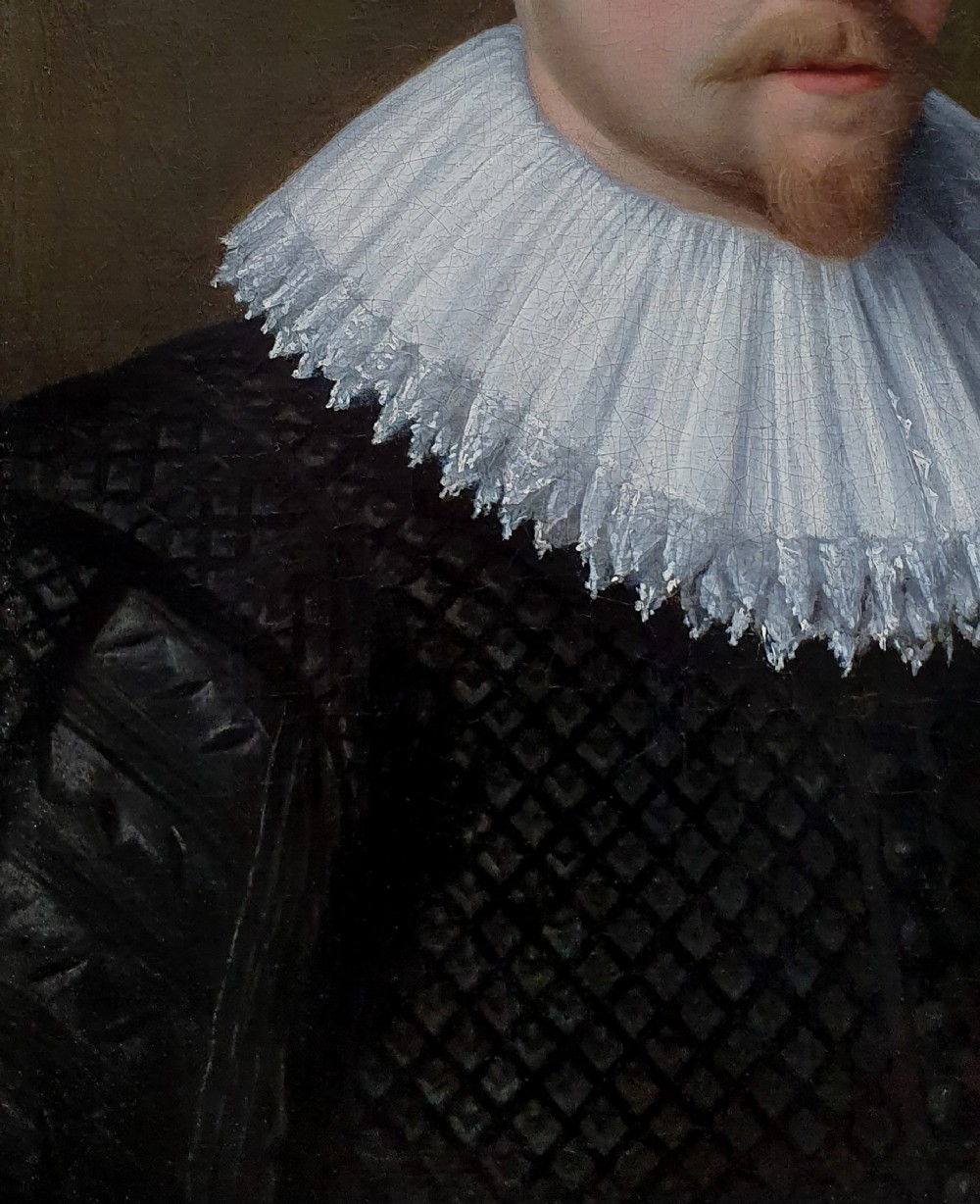
The author of this striking portrait was a painter of considerable talent. It depicts a gentleman wearing an elaborate lace collar and sumptuous black slashed satin coat.
The extraordinary costume with its shimmering quality and costly fabric is of the highest quality and de rigueur for the upper class. This is indicative of the sitter’s wealth and speaks of the status of this gentleman. Black was a predominant colour for clothing (although it was not the dominant colour for everyday apparel) and artists had an array of stunning black fabrics and a wide range of textures to portray in their work. Black may have been dominant but clothing was far from boring and was often intricately detailed, had various sumptuous fabrics often contrasting against each other and with all manner of designs and patterns. The attire was completed with elaborate lace collars, varying considerably within certain patterns (and were prized possessions and were often listed in inventories of estates) depending on current trends.
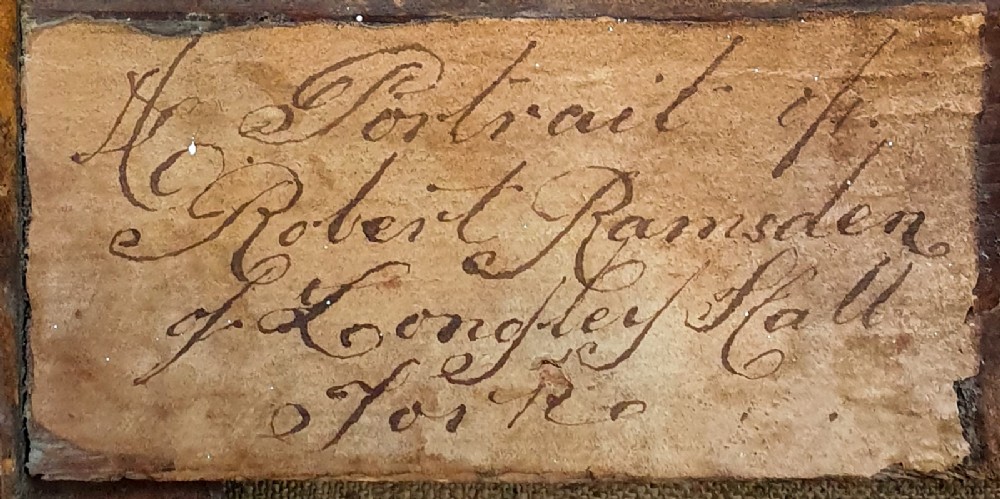
A 19th century handwritten label on the reverse identifies the sitter as “Robert Ramsden of Longley Hall, York”. However there does not appear to be a Robert Ramsden with this name that is congruous with the date of the portrait and the age of the sitter when painted. The sitter is most likely William Ramsden (1558-1623) who was the first in a long line of Ramsdens who were Lords of the Manor of Huddersfield after he purchased that Manor in 1599 from Queen Elizabeth for £965 0s. 9d. When William and his twin brother were born on 27 August 1558 in Almondbury, Yorkshire, their father was 46 and their mother was 40. His uncle, another William, had been agent when the lands of the Kirklees Priory were sold in 1545. William married Rosamund Pilkington (1568-1597) in 1589 and the couple had seven children. Rosamund died in 1597 and in 1600 William married the widow Mary Batte (Batt) (c.1580-1623). This marriage produced one son according to some sources. The Ramsden Baronetcy, of Byram in the County of York, was created in the Baronetage of England on 30 November 1689 for John Ramsden in honour of the services he had given during the Glorious Revolution.
One of the sitter’s sons, Sir John Ramsden (1594-1646), was M.P., High Sherriff, and a distinguished Royalist officer during the civil wars before imprisonment in Newark Castle where he died. The Ramsden Baronetcy was created in the Baronetage of England on 30 November 1689 for John Ramsden in honour of the services he had given during the Glorious Revolution.
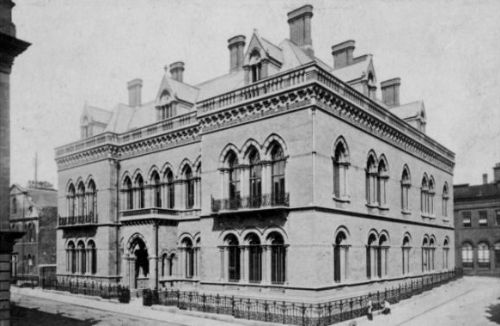
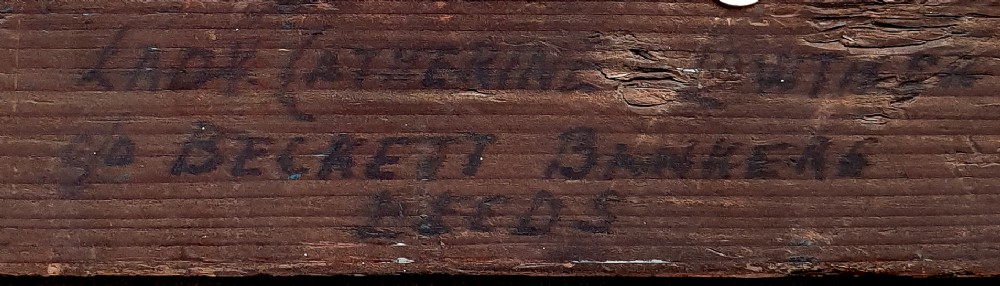
Inscribed “Beckett bankers, Leeds c/o Lady Catherine Lowther” on reverse and Collector’s red wax seal on verso. Beckett & Co, established in Leeds, was the UK’s largest private provisional bank, established around 1774 as Wilson, Arthington, Beckett & Calverley (also known as Leeds Bank). Sir John Beckett, 1st Baronet (1743–1826), one of the bank's original partners, came from a family of Leeds woollen merchants. He developed the bank alongside his merchanting interests, which included the import and export of goods to Portugal. The bank was absorbed into the Westminster Bank in 1921. His son, Sir John Beckett, 2nd Baronet (1775–1847) married Lady Anne Lowther (c.1789-1871) the daughter of the 1st Earl of Lonsdale (1757-1844) in 1817.
Longley Old Hall is a timber framed Grade II listed manor house. It was owned by the Ramsden fami
Titan Fine Art has dated this piece to the 17th Century.
Specialist in 17th & 18thc portraits. Highly curated selection, museum-level research & pro conservation. Exceptional art, expertly vetted.
You can view the stock and full dealer information on the Titan Fine Art Profile Page
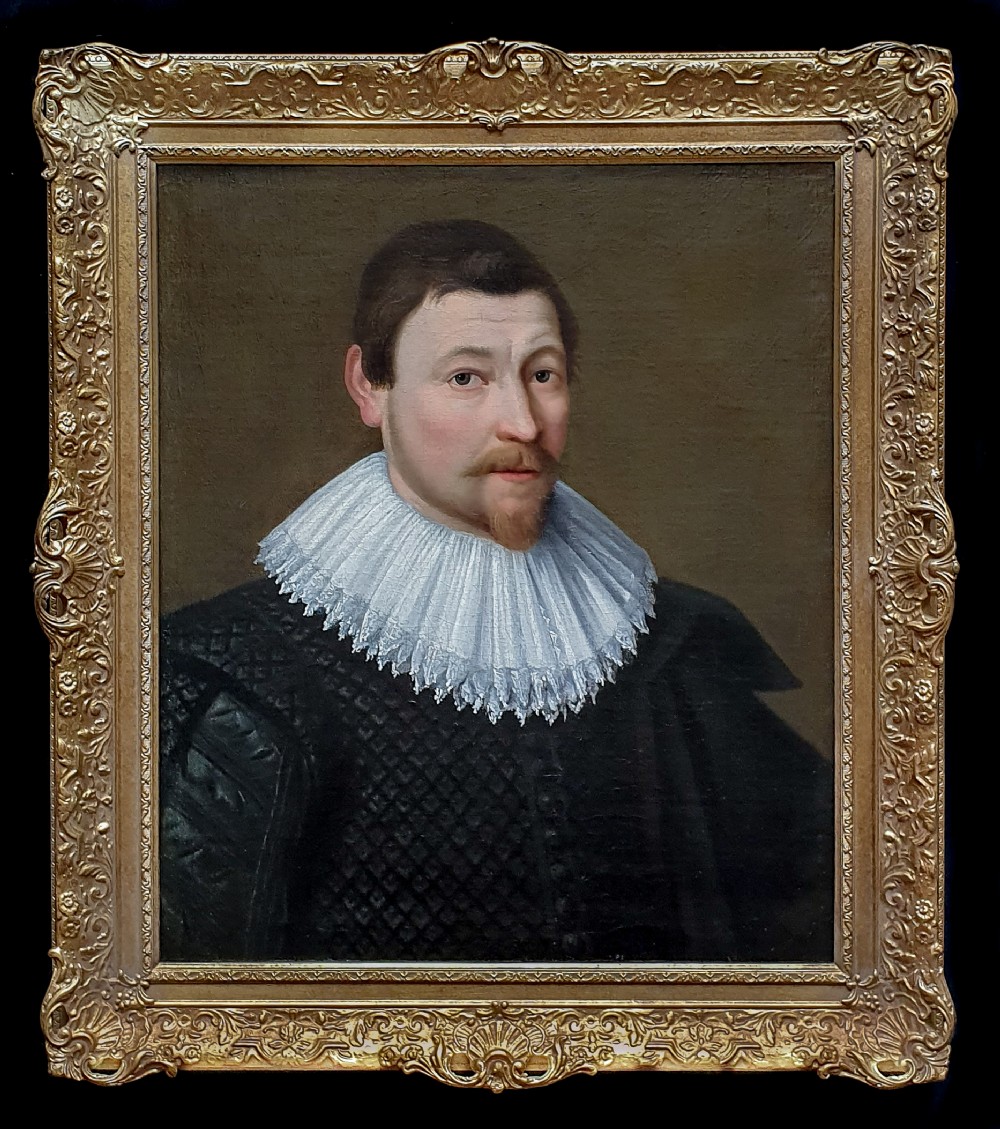
Portrait of William Ramsden (1558-1623) C.1620; Circle of Daniel Mytens (C.1590-c.1648)