66,037  PAGES BROWSED TODAY PAGES TODAY • 27 ANTIQUES UPLOADED TODAYNEW ARRIVALS
GIFTS
27 ITEMS ADDED TODAY
Sort Order
Items Per Page
Browse Categories
Sort order
Items per page
ID #SA627476
SOLD
Email Phone
Save
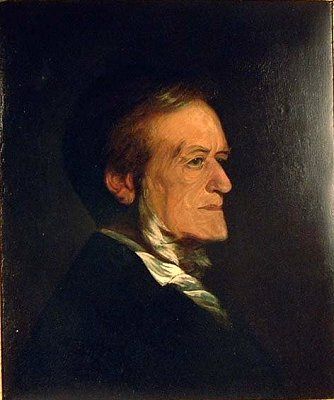
German School 19th, Century portrait of Richard Wagner (1813-1883)
Sold by Artware Fineart
sold SA627476
Sorry, but this item has been sold.

Artware Fineart

Sellingantiques Verified Since Sep 2008
Browse dealers 243 items
Id #SA627476
PDF SHARE
SAVE

German School 19th, Century portrait of Richard Wagner (1813-1883)

19th century
Sold 31 July 2019 · Artware Fineart
This “German School 19th, Century portrait of Richard Wagner (1813-1883)” found a buyer.

It was listed by Artware Fineart. Sold pieces stay on Sellingantiques as a record of what has passed through, and the next one is rarely far away.

Description

German School 19th, Century

Portrait of Richard Wagner (1813-1883)

oil on canvas

64 x 64 cm. (25 x 25in.)

He was the son either of the police actuary Friedrich Wagner, who died soon after his birth, or of his mother's friend the painter, actor and poet Ludwig Geyer, whom she married in August 1814. He went to school in Dresden and then Leipzig; at 15 he wrote a play, at 16 his first compositions. In 1831 he went to Leipzig University, also studying music with the Thomaskantor, C.T. Weinlig; a symphony was written and successfully performed in 1832. In 1833 he became chorus master at the Würzburg theatre and wrote the text and music of his first opera, Die Feen; this remained unheard, but his next, Das Liebesverbot, written in 1833, was staged in 1836. By then he had made his début as an opera conductor with a small company which however went bankrupt soon after performing his opera. He married the singer Minna Planer in 1836 and went with her to Königsberg where he became musical director at the theatre, but he soon left and took a similar post in Riga where he began his next opera, Rienzi, and did much conducting, especially of Beethoven. In 1839 they slipped away from creditors in Riga, by ship to London and then to Paris, where he was befriended by Meyerbeer and did hack-work for publishers and theatres. He also worked on the text and music of an opera on the 'Flying Dutchman' legend; but in 1842 Rienzi, a large-scale opera with a political theme set in imperial Rome, was accepted for Dresden and Wagner went there for its highly successful premiere. Its theme reflects something of Wagner's own politics (he was involved in the semi-revolutionary, intellectual 'Young Germany' movement). Die fliegende Holländer ('The Flying Dutchman'), given the next year, was less well received, though a much tauter musical drama, beginning to move away from the 'number opera' tradition and strong in its evocation of atmosphere, especially the supernatural and the raging seas (inspired by the stormy trip from Riga). Wagner was now appointed joint Kapellmeister at the Dresden court. The theme of redemption through a woman's love, in the Dutchman, recurs in Wagner's operas (and perhaps his life). In 1845 Tannhäuser was completed and performed and Lohengrin begun. In both Wagner moves towards a more continuous texture with semi-melodic narrative and a supporting orchestral fabric helping convey its sense. In 1848 he was caught up in the revolutionary fervour and the next year fled to Weimar (where Liszt helped him) and then Switzerland (there was also a spell in France); politically suspect, he was unable to enter Germany for 11 years. In Zürich, he wrote in 1850-51 his ferociously anti-semitic Jewishness in Music (some of it an attack on Meyerbeer) and his basic statement on musical theatre, Opera and Drama; he also began sketching the text and music of a series of operas on the Nordic and Germanic sagas. By 1853 the text for this four-night cycle (to be The Nibelung's Ring) was written, printed and read to friends - who included a generous patron, Otto Wesendonck, and his wife Mathilde, who loved him, wrote poems that he set, and inspired Tristan und Isolde - conceived in 1854 and completed five years later, by which time more than half of The Ring was written. In 1855 he conducted in London; tension with Minna led to his going to Paris in 1858-9. 1860 saw them both in Paris, where the next year he revived Tannhäuser in revised form for French taste. but it was literally shouted down, partly for political reasons. In 1862 he was allowed freely into Germany; that year he and the ill and childless Minna parted (she died in 1866). In 1863 he gave concerts in Vienna, Russia etc; the next year King Ludwig II invited him to settle in Bavaria, near Munich, discharging his debts and providing him with money. Wagner did not stay long

Date of Manufacture

Artware Fineart has dated this piece to the 19th Century.

Physical Dimensions
Height
64cm (25.20")
Width
64cm (25.20")
Depth
3cm (1.18")
Reference Numbers
Sellingantiques Reference
SA627476
Dealers Internal Reference
2744
Description
German School 19th, Century

Portrait of Richard Wagner (1813-1883)

oil on canvas

64 x 64 cm. (25 x 25in.)

“
He was the son either of the police actuary Friedrich Wagner, who died soon after his birth, or of his mother's friend the painter, actor and poet Ludwig Geyer, whom she married in August 1814.
Artware Fineart

He went to school in Dresden and then Leipzig; at 15 he wrote a play, at 16 his first compositions. In 1831 he went to Leipzig University, also studying music with the Thomaskantor, C.T. Weinlig; a symphony was written and successfully performed in 1832. In 1833 he became chorus master at the Würzburg theatre and wrote the text and music of his first opera, Die Feen; this remained unheard, but his next, Das Liebesverbot, written in 1833, was staged in 1836. By then he had made his début as an opera conductor with a small company which however went bankrupt soon after performing his opera. He married the singer Minna Planer in 1836 and went with her to Königsberg where he became musical director at the theatre, but he soon left and took a similar post in Riga where he began his next opera, Rienzi, and did much conducting, especially of Beethoven. In 1839 they slipped away from creditors in Riga, by ship to London and then to Paris, where he was befriended by Meyerbeer and did hack-work for publishers and theatres. He also worked on the text and music of an opera on the 'Flying Dutchman' legend; but in 1842 Rienzi, a large-scale opera with a political theme set in imperial Rome, was accepted for Dresden and Wagner went there for its highly successful premiere. Its theme reflects something of Wagner's own politics (he was involved in the semi-revolutionary, intellectual 'Young Germany' movement). Die fliegende Holländer ('The Flying Dutchman'), given the next year, was less well received, though a much tauter musical drama, beginning to move away from the 'number opera' tradition and strong in its evocation of atmosphere, especially the supernatural and the raging seas (inspired by the stormy trip from Riga). Wagner was now appointed joint Kapellmeister at the Dresden court. The theme of redemption through a woman's love, in the Dutchman, recurs in Wagner's operas (and perhaps his life). In 1845 Tannhäuser was completed and performed and Lohengrin begun. In both Wagner moves towards a more continuous texture with semi-melodic narrative and a supporting orchestral fabric helping convey its sense. In 1848 he was caught up in the revolutionary fervour and the next year fled to Weimar (where Liszt helped him) and then Switzerland (there was also a spell in France); politically suspect, he was unable to enter Germany for 11 years. In Zürich, he wrote in 1850-51 his ferociously anti-semitic Jewishness in Music (some of it an attack on Meyerbeer) and his basic statement on musical theatre, Opera and Drama; he also began sketching the text and music of a series of operas on the Nordic and Germanic sagas. By 1853 the text for this four-night cycle (to be The Nibelung's Ring) was written, printed and read to friends - who included a generous patron, Otto Wesendonck, and his wife Mathilde, who loved him, wrote poems that he set, and inspired Tristan und Isolde - conceived in 1854 and completed five years later, by which time more than half of The Ring was written. In 1855 he conducted in London; tension with Minna led to his going to Paris in 1858-9. 1860 saw them both in Paris, where the next year he revived Tannhäuser in revised form for French taste. but it was literally shouted down, partly for political reasons. In 1862 he was allowed freely into Germany; that year he and the ill and childless Minna parted (she died in 1866). In 1863 he gave concerts in Vienna, Russia etc; the next year King Ludwig II invited him to settle in Bavaria, near Munich, discharging his debts and providing him with money. Wagner did not stay long

Date of Manufacture

Artware Fineart has dated this piece to the 19th Century.

Height
64cm (25.20")
Width
64cm (25.20")
Depth
3cm (1.18")
Reference Numbers
Sellingantiques Ref
SA627476
Dealers Internal Ref
2744
Artware Fineart
Sellingantiques verified Since Sep 2008
Dealer Profile

You can view the stock and full dealer information on the Artware Fineart Profile Page
PDF SHARE
SAVE
German School 19th, Century
Portrait of Richard Wagner (1813-1883) SOLD6+ MONTHS AGO
1 / 2
Archive I German School 19th, Century
Portrait of Richard Wagner (1813-1883) SOLD6+ MONTHS AGO

German School 19th, Century portrait of Richard Wagner (1813-1883)
Archive II German School 19th, Century
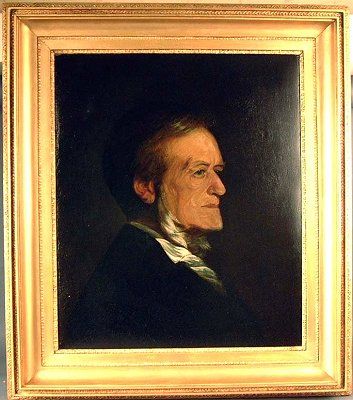
Portrait of Richard Wagner (1813-1883) View II
Enlarged Archival View
Telephone 07958 699 645
Location
18 La Gare
51 Surrey Row
London
SE1 0BZ
United Kingdom
Verified Since Sep 2008
Items For Sale 243
Items Sold 223
Artware Fineart
Verified Since Sep 2008
View Dealer Info
Location: 18 La Gare , 51 Surrey Row , London , SE1 0BZ , United Kingdom
Verified
Sep 2008
For Sale
243
Sold
223
German School 19th, Century
Portrait of Richard Wagner (1813-1883)
German School 19th, Century Portrait of Richard Wagner (1813-1883)
Ref: SA627476
German School 19th, Century
Portrait of Richard Wagner (1813-1883)
Detail View 1
Archival Detail
Every single antique dealer on our platform is individually approved by our internal team. We verify their professional trade history, ethical standards, and photographic quality to ensure a secure, high-standard buying environment. Upon joining, every dealer agrees to a strict 9-point code of conduct. While issues can occasionally arise, our dealers typically resolve them swiftly and directly with the buyer. In fact, since our founding in 2002, Sellingantiques has only had to step in to help resolve an issue on roughly five occasions—a true testament to the quality of our dealers and their dedication to your happiness.
Our dealers are highly experienced in packing and shipping fragile, high-value antiques. Because you are in direct contact with the dealer, you will be able to easily go through all available shipping and insurance options together to ensure your item arrives safely.
Antiques are the ultimate green purchase. By choosing historical pieces over newly manufactured goods, you completely eliminate the carbon footprint of modern mass production while preserving exceptional, timeless craftsmanship.
Written by Sellingantiques from the dealer’s photographs and listing
  • Period19th century
  • SizeH 64 cm (25 in) x W 64 cm (25 in) x D 3 cm (1 in)
items
Add keywords to the filter
Price
£100
£250000
Era
Period
Style
Material
Origin
Stock Location
Recently Added
Online Payments
Categories