It was listed by Jason Clarke Antiques. Sold pieces stay on Sellingantiques as a record of what has passed through, and the next one is rarely far away.
Jason Clarke Antiques has dated this piece to the 1860s.
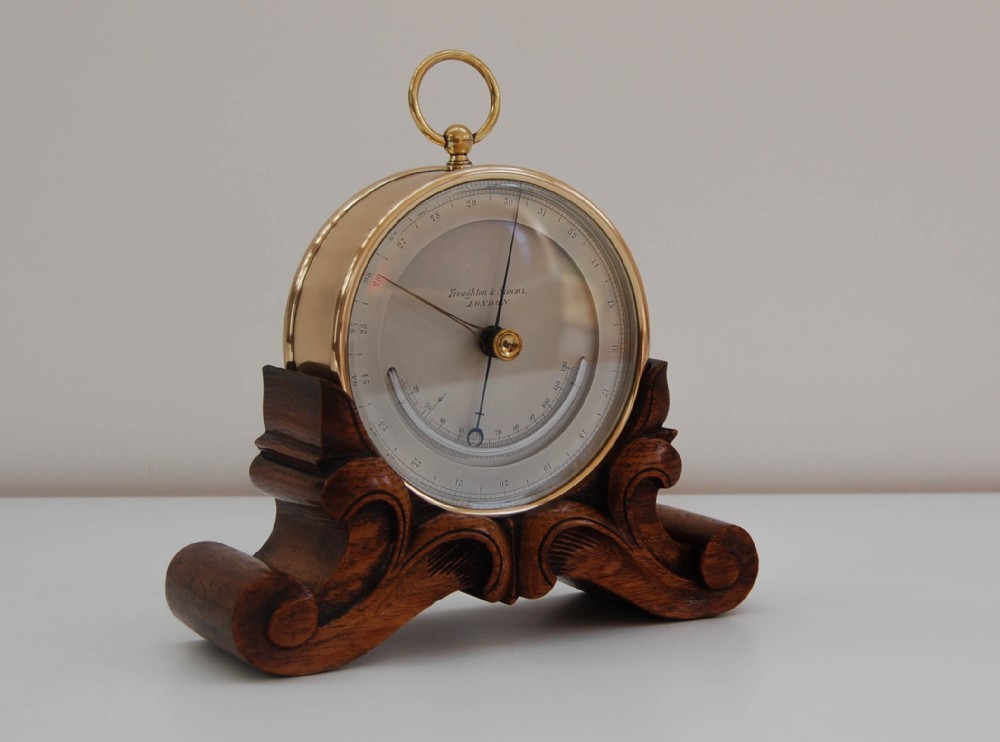
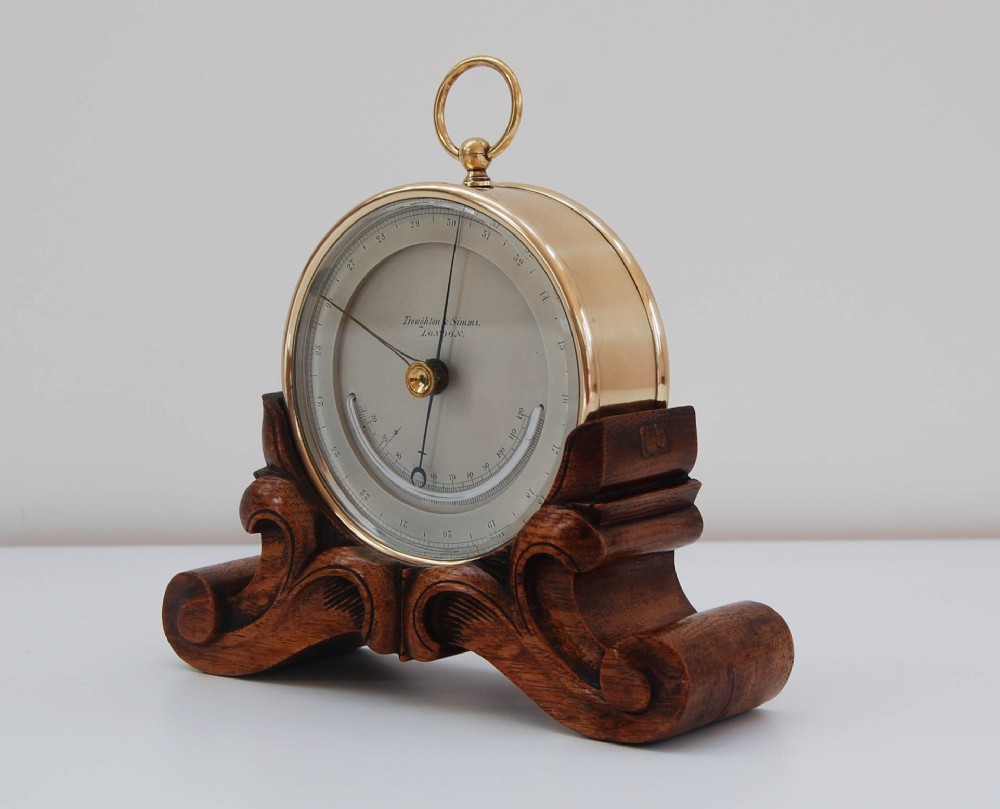
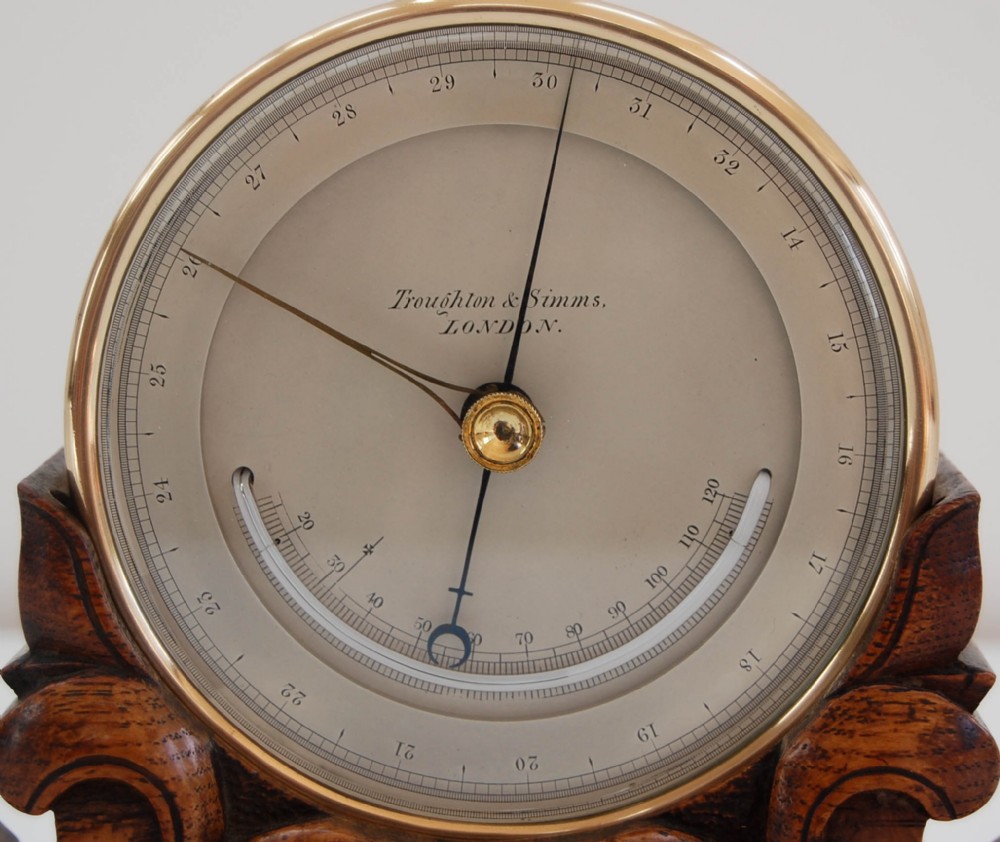
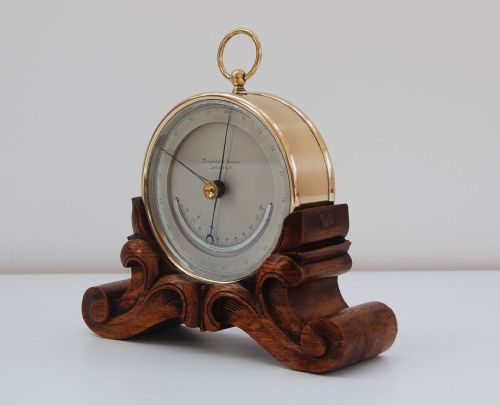
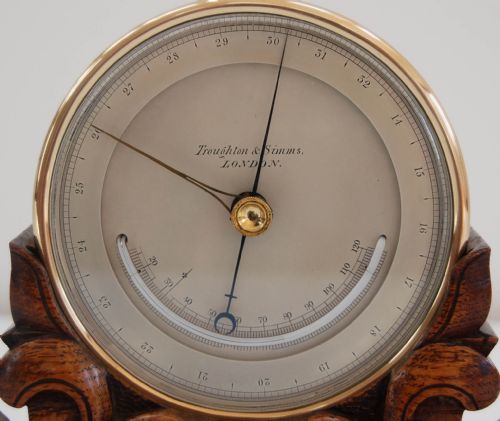
This quality example is comprised of a four and a half inch double level silvered dial with the upper section circumference containing a scale measuring a huge 14 to 32 inches of barometric pressure and divided to tenths of an inch.
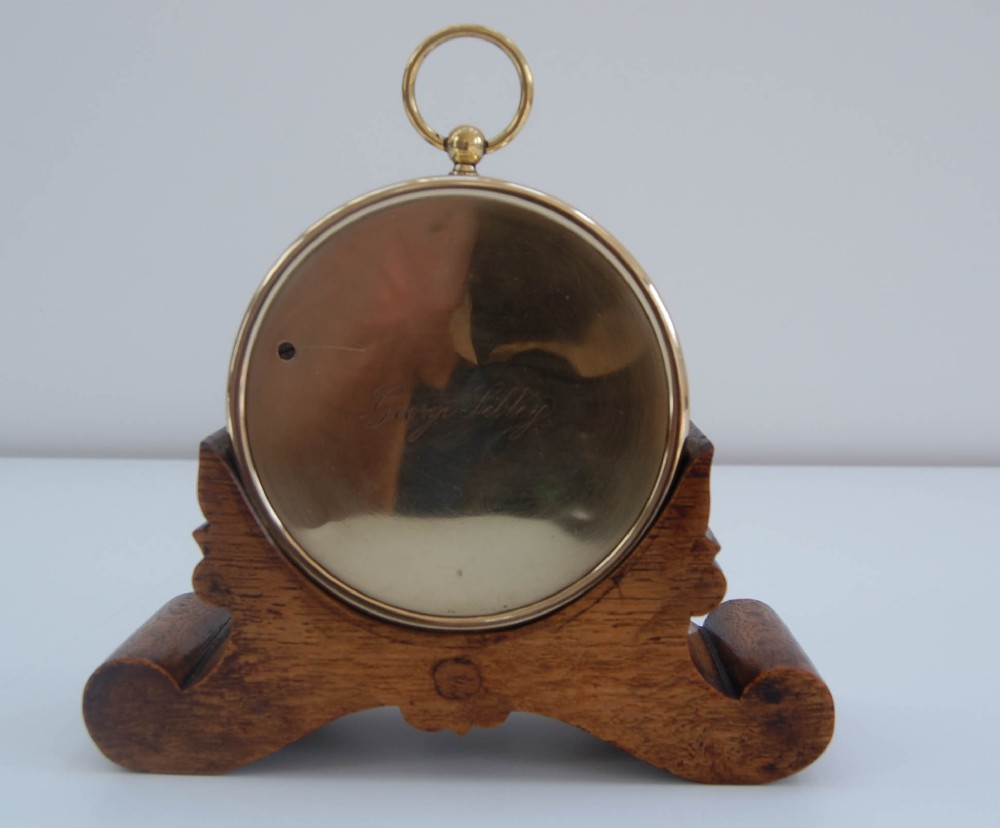
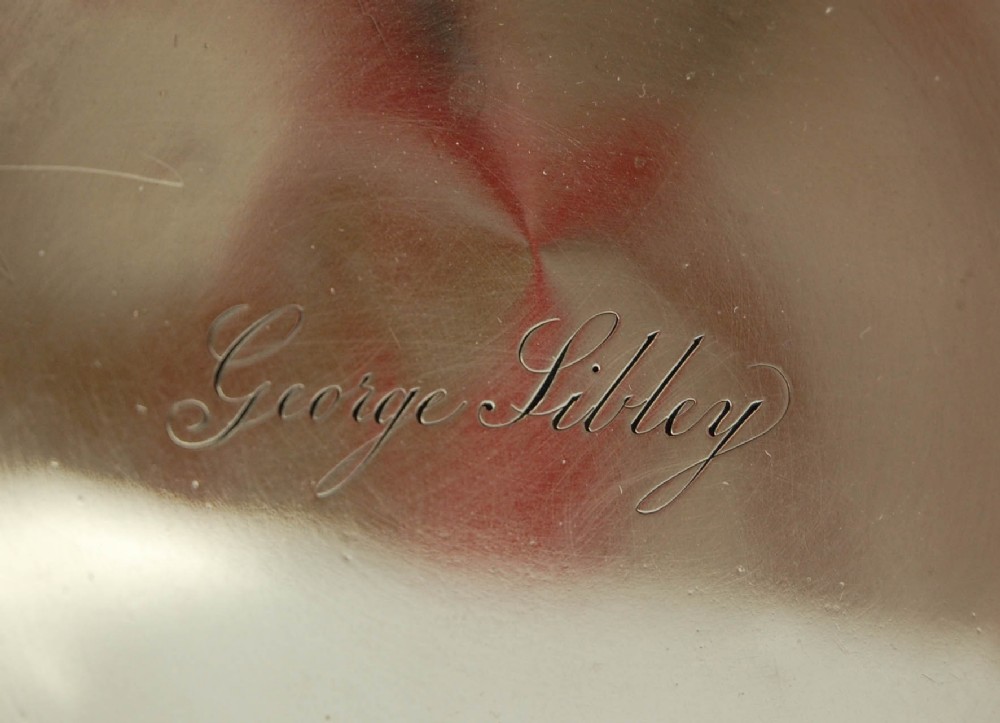
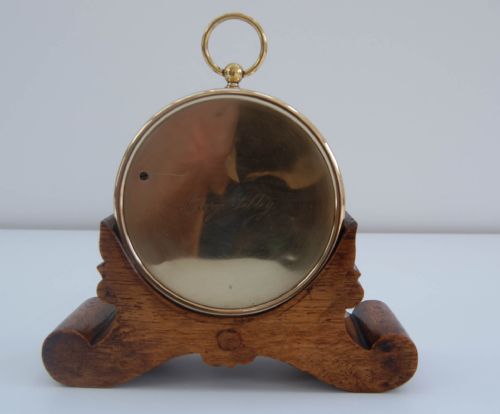
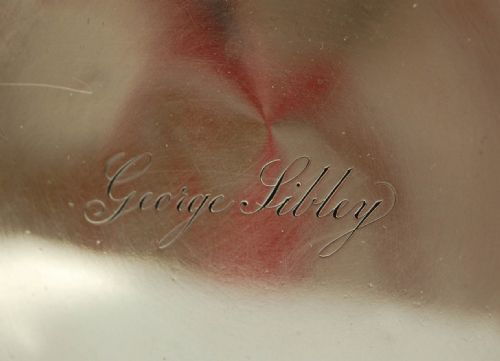
The blue steel indicator hand finished with a crescent moon design and the brass setting hand with an unusually refined double stem. The reverse of the barometer case is further engrave to the owner, a “George Sibley”.
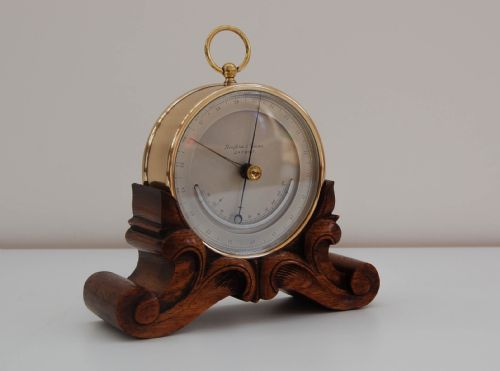
The elegantly sized oak base is superbly executed with floral scroll motifs emanating from either side of the barometer and it retains its original velvet lining intended to cushion the instrument whilst it rests upon it.
The original owner of this instrument is likely to be George Sibley (1824 – 1891), a celebrated Victorian engineer. Educated at UCL, London, he initially undertook an apprenticeship with his father after which Sibley gained employment as an assistant engineer on the Bristol to Exeter under Isambard Kingdom Brunel and later Sir Charles Hutton Gregory.
With such solid credentials, he received an appointment in 1851 as assistant engineer on the East India railway and was put in charge of the Chandernagore district, rising to resident engineer of Beerbhoom district in 1853. He was made deputy chief engineer in 1857 and chief engineer of the North-West Provinces Division in 1859. Following the death of Samuel Power in 1868, Sibley was made Chief Engineer in charge of the entire line.
His obituary in The Engineer reads:
“While these works will always attest to his engineering ability and skill, his services to the East Indian Railway Company were of the greatest importance, however, in his administrative capacity as a Member of the Board of Agency in Calcutta from 1868 to 1875. He then had control of the engineering, the locomotive, the carriage and wagon, and the telegraph departments, and only those who were intimately connected with him in his work knew how largely the success of the company was due to his powers of organization and hard work, and to the initiation of important reforms which in later years added materially to the prosperity of the line.
In 1869 the honour of the profession was unjustifiably assailed by the Government of India in a Notification, the intention of which was plainly to charge Civil Engineers with recognizing as legitimate the receipt of commissions from others than their immediate employers. Mr. Sibley, with his usual energy, immediately took steps to protest against this insinuation, and, in conjunction with other prominent engineers in India, addressed to the Government a remonstrance couched in the strongest and most indignant terms. The Institution took the matter up, and some correspondence passed with the Secretary of State for India which was printed in full as an Appendix to the Report of the Council for that year.
Mr. Sibley left India in January, 1875, on twelve months’ furlough, and retired from the service of the East Indian Railway Company on the 14th of January, 1876. (His son Robert Knowsley Sibley drowned in the Thames in 1875 and may have contributed to his early retirement).
After his retirement he built a house on the top of Whitehill, near Caterham, one of the highest hills in Surrey; it was constructed of concrete, and was one of the largest private houses in this country for which that material was used. There he spent the greater part of the summer months.
Every winter he went abroad; in recent years always to Tenerife. He had been a great traveller, having visited many remote and uncivilized regions, and to the last
Jason Clarke Antiques has dated this piece to the 1860s.
You can view the stock and full dealer information on the Jason Clarke Antiques Profile Page

Early Victorian Aneroid Barometer on Stand by Troughton & Simms & Engraved to George Sibley