Titan Fine Art has dated this piece to the 17th Century.
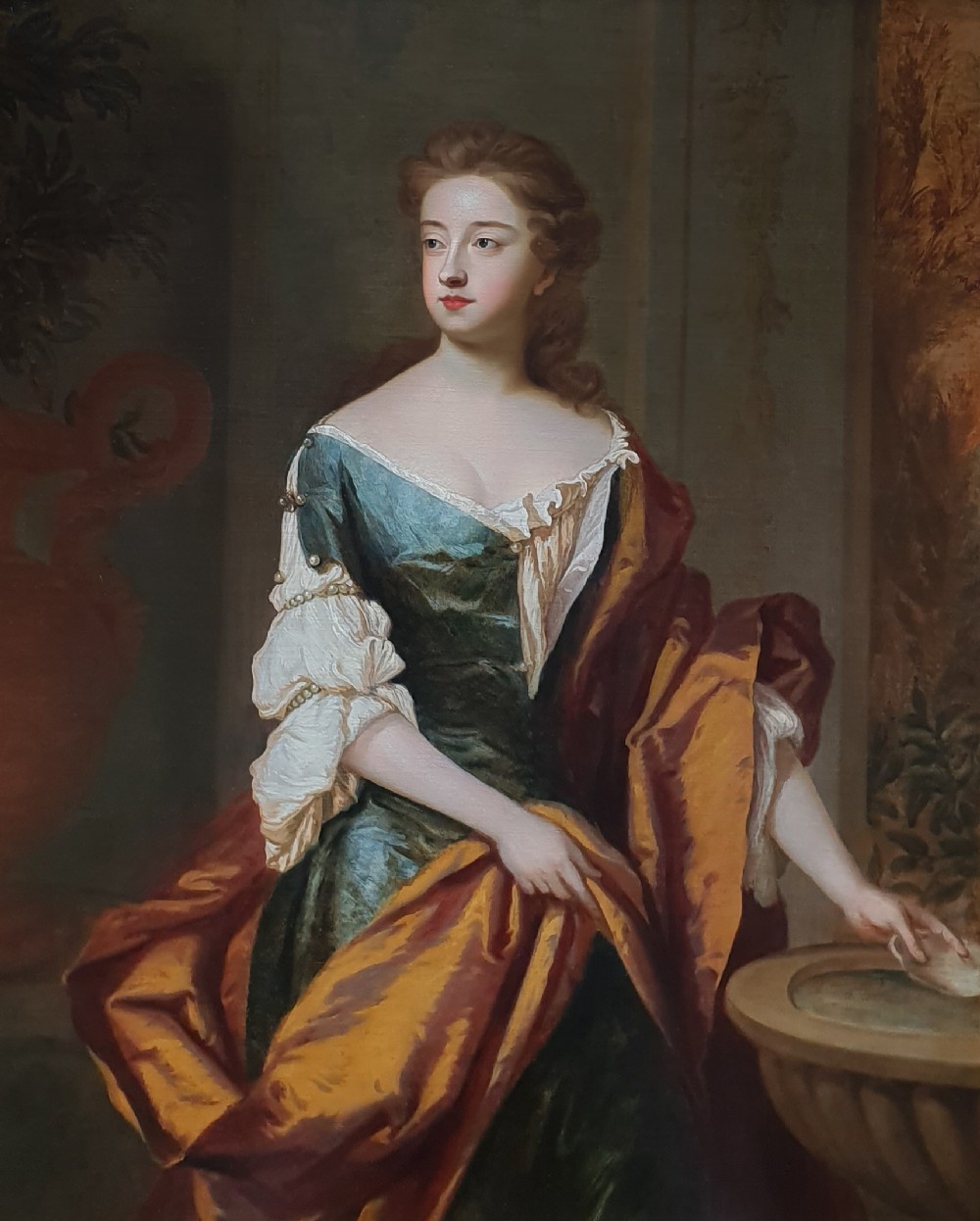
Studio of Sir Godfrey Kneller (1646-1723)
Painted circa 1691, its extravagant grand manner is distinctive of Kneller’s work from this period, where the use of full-length swaggering poses and a heightened sense of movement and physical presence were employed.

In 1690 Mary II commissioned Kneller to paint a series, in Defoe’s words, ‘of the principal Ladies attending upon her Majesty, or who were frequently in her Retinue’. The set of eight portraits were aptly named The Hampton Court Beauties and were the most glamorous ladies from the court of William III. Still to this day they remain at Hampton Court. According to Horace Walpole Mary II was advised by Lady Dorchester against the idea of having the most beautiful of her court painted: ‘Madam, if the King were to ask for the portraits of all the wits in his court, would not the rest think he called them fools?’. The portrait of the Duchess of Grafton, painted January of 1690, the same year that her husband died, was the first in the series of Beauties. The Wardrobe Accounts for Michaelmas 1691 include a payment of £400 to ''Sir Godfrind Kneller Our Principal Painter for Eight pictures drawne att Length''.
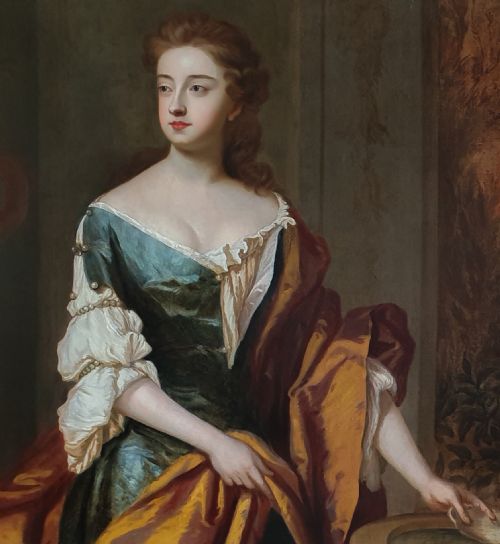
The Lady Isabella Bennet (1667-1723), only daughter and sold heir of Henry Bennet, 1st Earl of Arlington, was precontracted in marriage to Henry Fitzroy, Earl of Euston, later 1st Duke of Grafton K.G. (1683-1690), the second illegitimate son of King Charles II, by Barbara Villiers, Countess of Castlemaine, in 1672, when five years old. The marriage took place on 6 November 1679 and was witnessed by the diarist John Evelyn who commented that ‘the sweetest, hopefulest, most beautiful child, and most virtuous too, was sacrific’d to a boy that had been rudely bred…[she] will in few years be such a paragon, as were fit to make the Wife of the greatest Prince in Europe”’ although he added that he was ‘exceedingly handsome, by far surpassing any of the king’s other naturall issue’ (John Evelyn, Diary, I, 184). Her husband died from wounds sustained during the siege of Cork, and she married secondly Sir Thomas Hanmer, 4th Baronet.
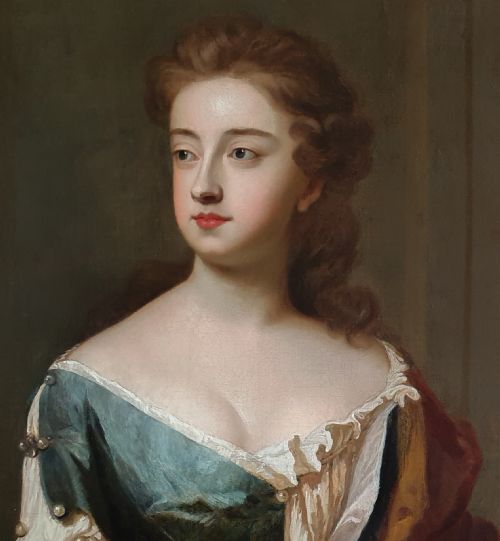
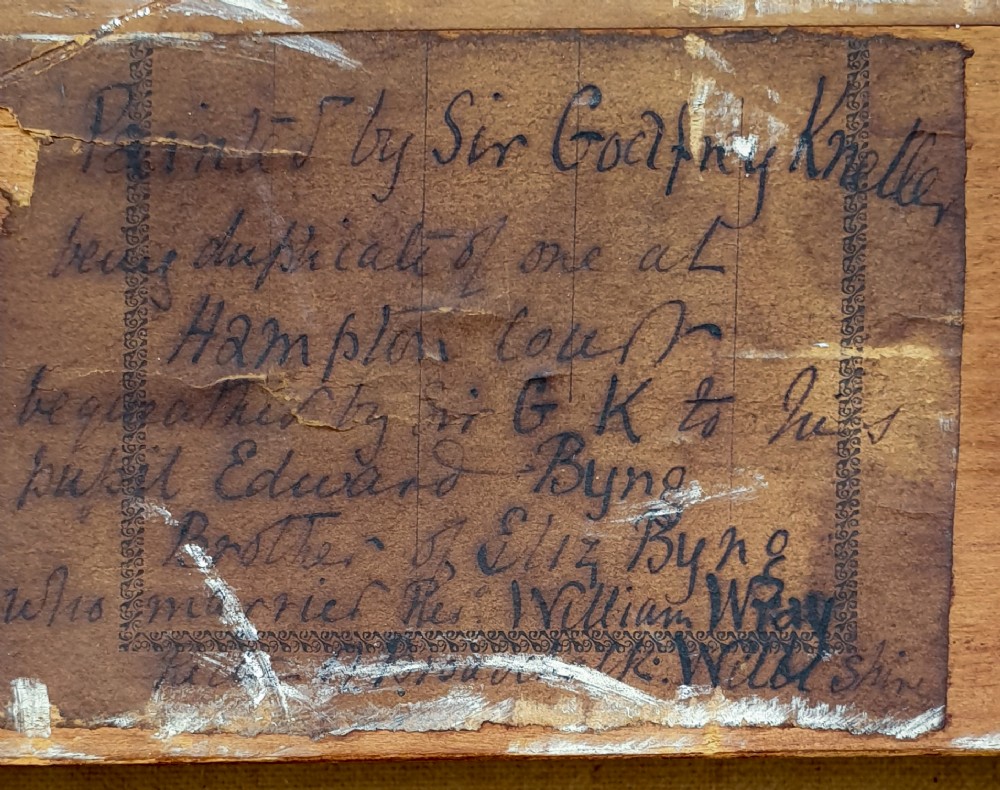
Artists often produced more than one version of a painting. Clients could commission several versions, perhaps for their different homes, or for their children or friends. Portraits were first and foremost mementos and it was not uncommon, even for men, to give their portrait to a friend. There could be a demand for a particular painting and, as such, artists were only too happy to replicate it. It was not unusual for portraits of well-known individuals such as royalty to be replicated more than ten times, sometimes within the same period or several years later. The studio practice of some of the great and prolfici artists also repeated poses that were popular, having sets of stock poses. The two great portrait painters of the second half of the 17th century in Great Britain, Lely and Kneller, employed various specialists, to take care of the landscapes, costumes, draperies, and if needs be animals, ?owers and fruit as well as the accessories in the portraits, allowing the masters to concentrate solely on the faces and hands. This enabled the portrait painters to run an efficient and prolific studio. The younger Willem van de Velde headed a virtual assembly line with assistants like his son Cornelis van deVelde (1675-1729) and the Dutchman Johan C. van der Hagen (1645-c.1720). Many of his seascapes are thus largely or wholly their work. If any picture became particularly popular, they would run off three or four copies or versions in the studio, and in some cases even ten or more. Today these works
Titan Fine Art has dated this piece to the 17th Century.
Specialist in 17th & 18thc portraits. Highly curated selection, museum-level research & pro conservation. Exceptional art, expertly vetted.
You can view the stock and full dealer information on the Titan Fine Art Profile Page

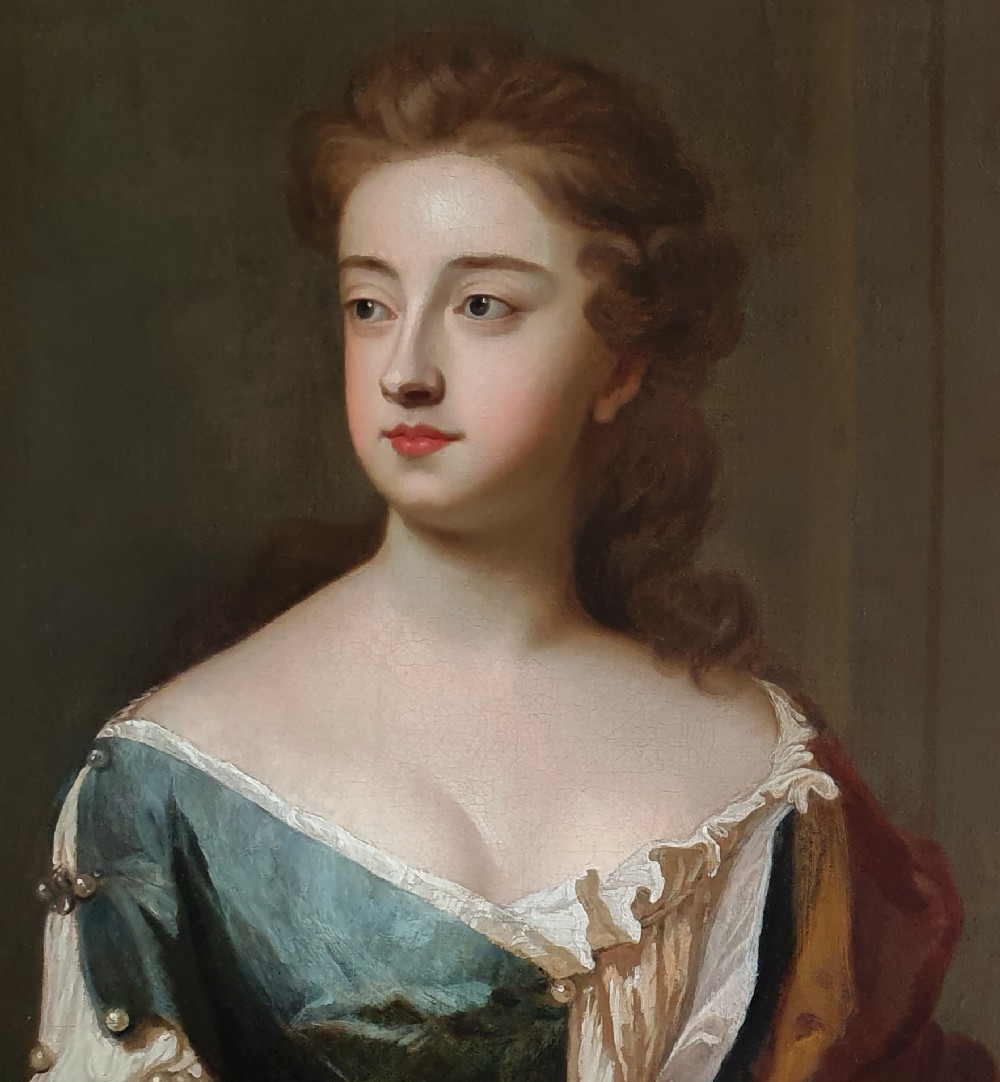
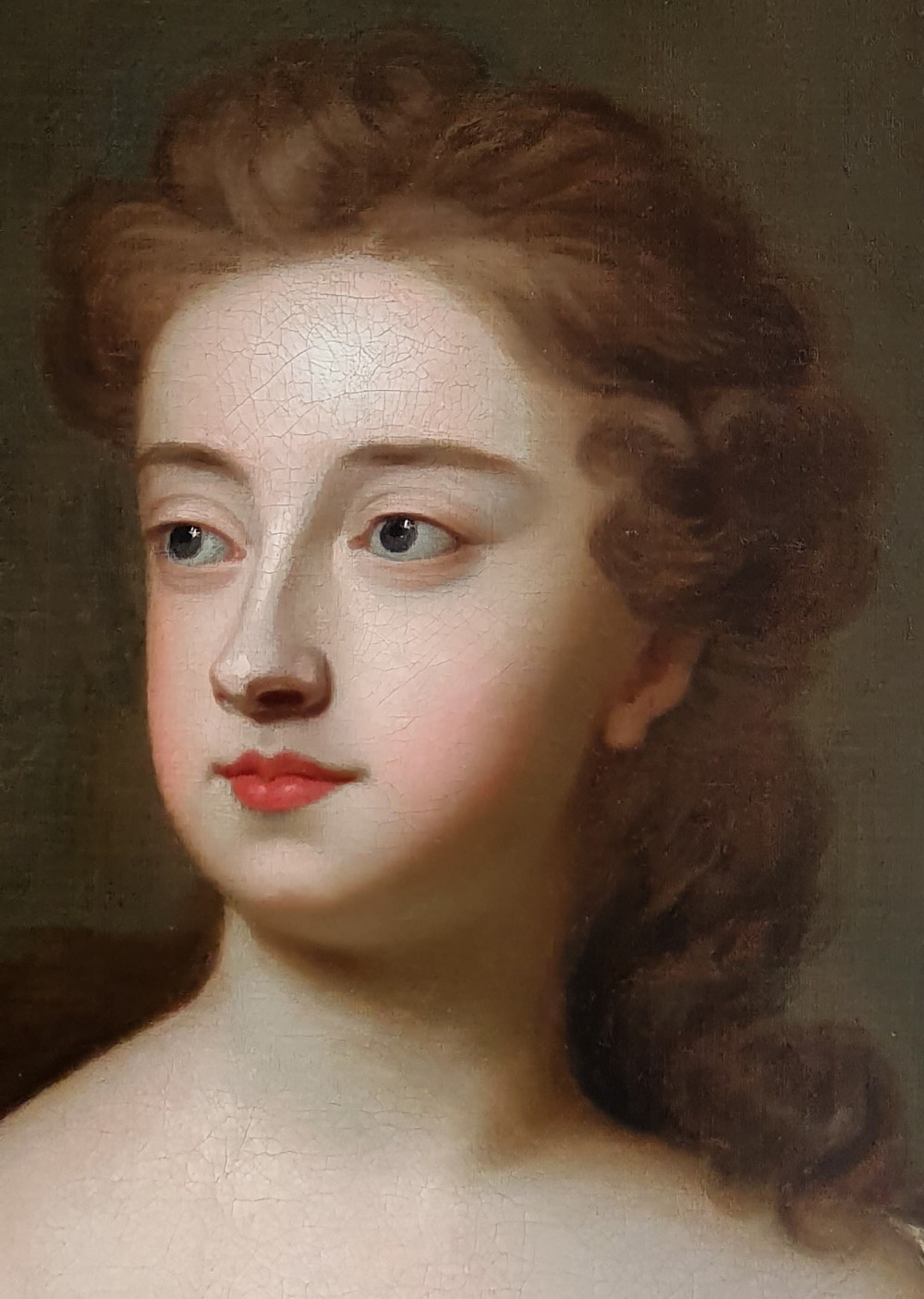
Portrait of Isabella, Duchess of Grafton (C.1688-1723) Circa 1691; Studio of Sir Godfrey Kneller (1646-1723)