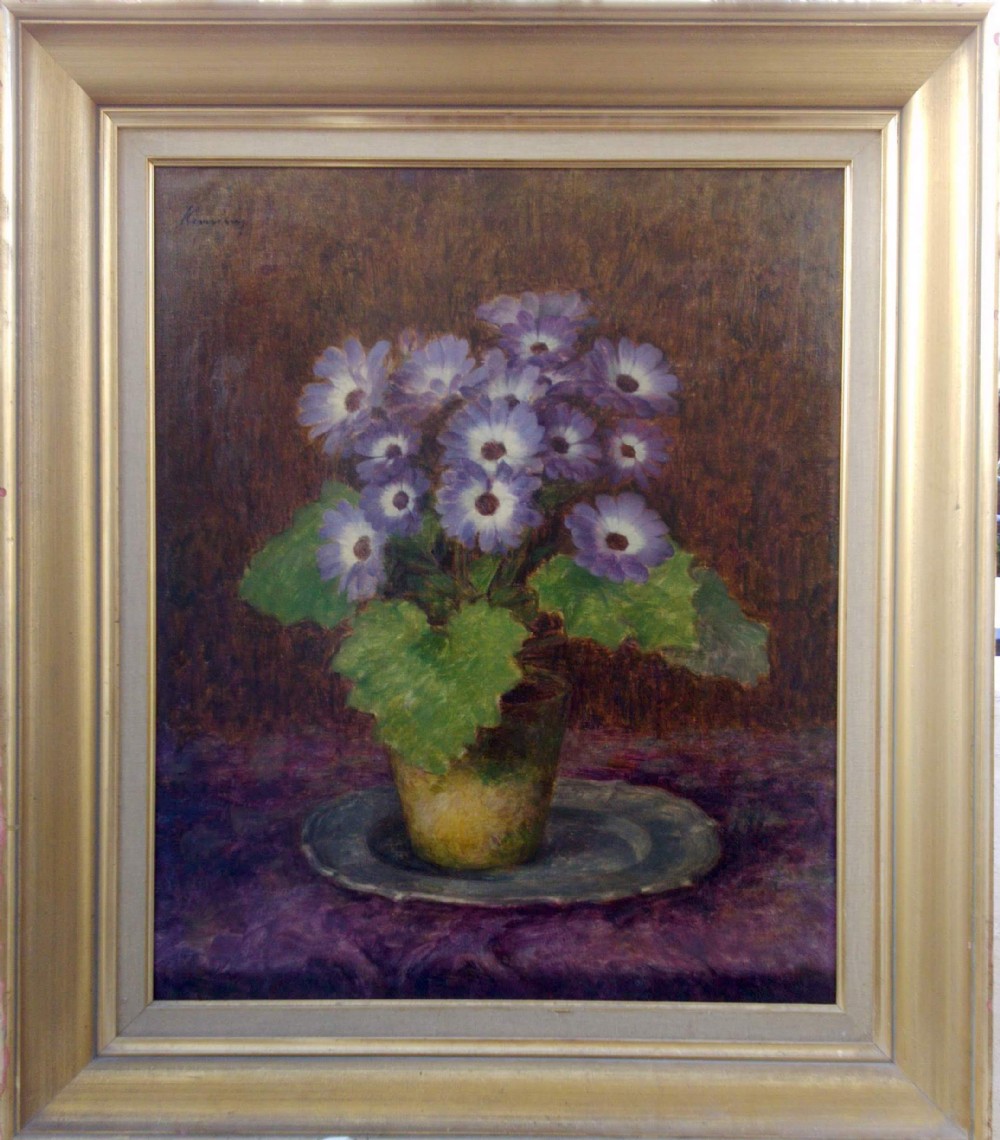
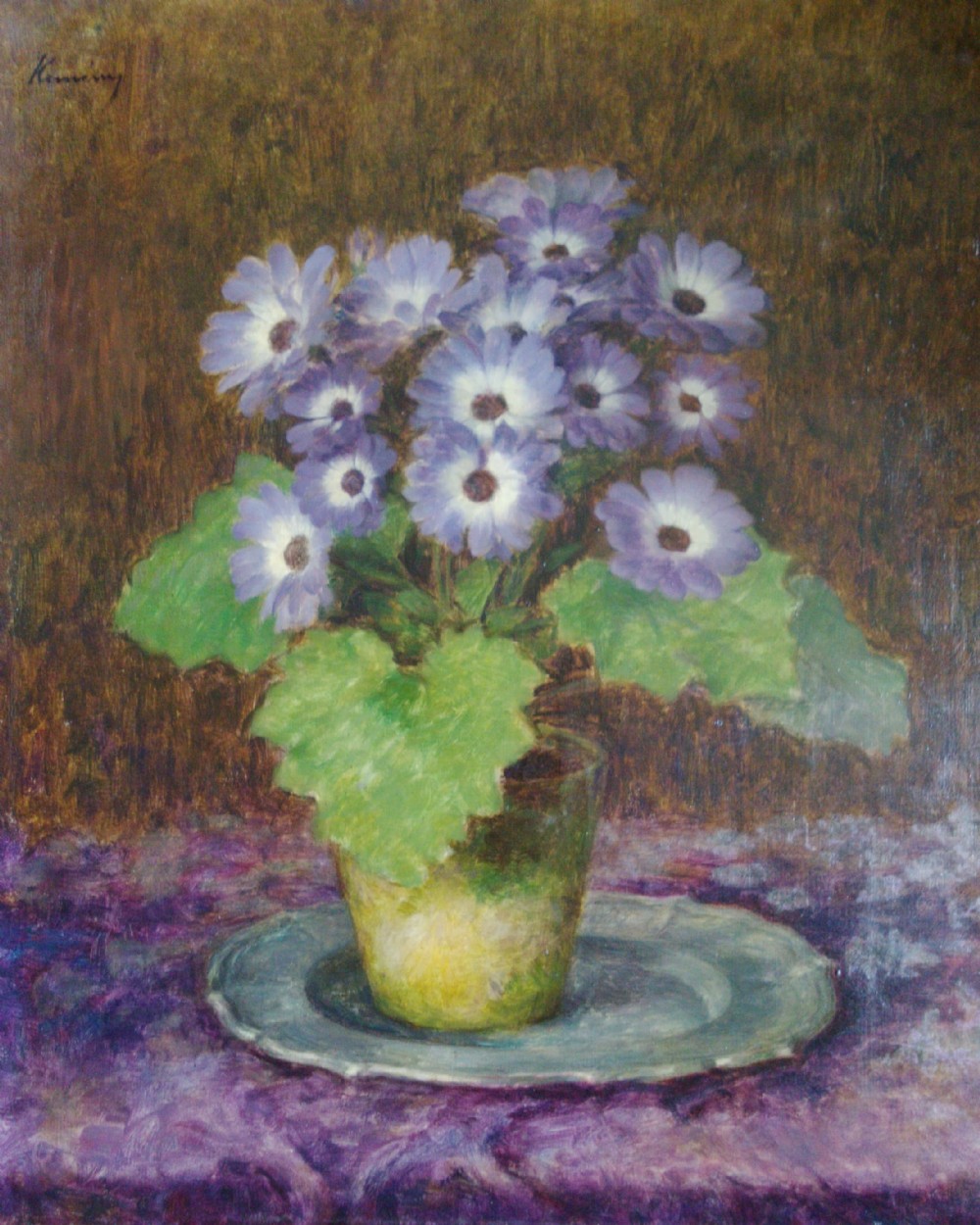
Skippings Fine Arts has dated this piece to the 1940s.
To me, this painting is a reminder how much joy can be derived from very simple things.
The artist, Kelman Kemeny was born in Budapest in 1896 and showed a very early aptitude for art. He attended the Academy of Fine Art in Budapest (1913-1914), but was drafted into the army at the outbreak of WWI. On the recommendation of his Professor, he became the official war artist for the army and, in fact, was the youngest War Artist at the German Austro/Hungarian front. The Imperial War Museum has three of his paintings from this period and, in 1977, interviewed him about his experiences.
After the war, Kemeny lived and worked in Vienna and Czechoslovakia, before eventually settling in London in the 1930s, where he would remain for the rest of his life.
He joined the Ben Uri Art Society where, at an exhibition to be judged by Augustus John, the latter pointed to one of Kemeny's paintings and said 'That's the winner'.
Upon going into another room to view more exhibits, John saw another painting and said 'Forget that chap downstairs, that's the winner'. This was Kalman Kemeny's other entry!
During WWII, Kemeny volunteered and worked in a Spitfire factory and did fire-watching, while continuing to paint and exhibit at the Royal Academy Summer Exhibitions, the New English Art Club and elsewhere and continued to exhibit after the war. He also taught at Hammersmith and Chelsea School of Art (1947-1979), and for some years, was Advisor to the House of Commons Fine Art Committee.
There are three of Kemeny's in the Imperial War Museum, three further ones in the Ben Uri Museum of Art and two at the Hamilton Kerr Institute of the University of Cambridge. They can be viewed at artuk.org.
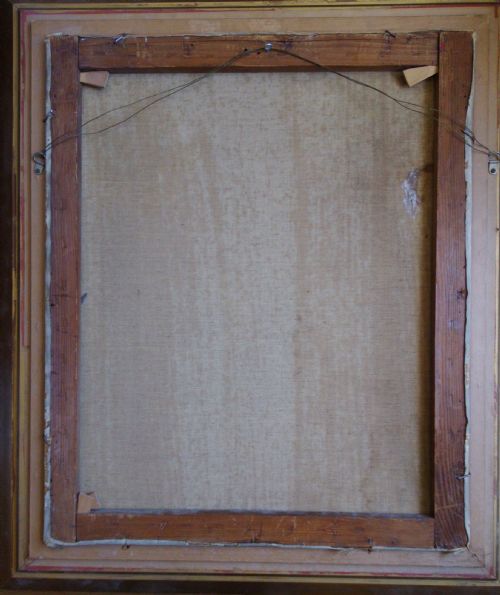
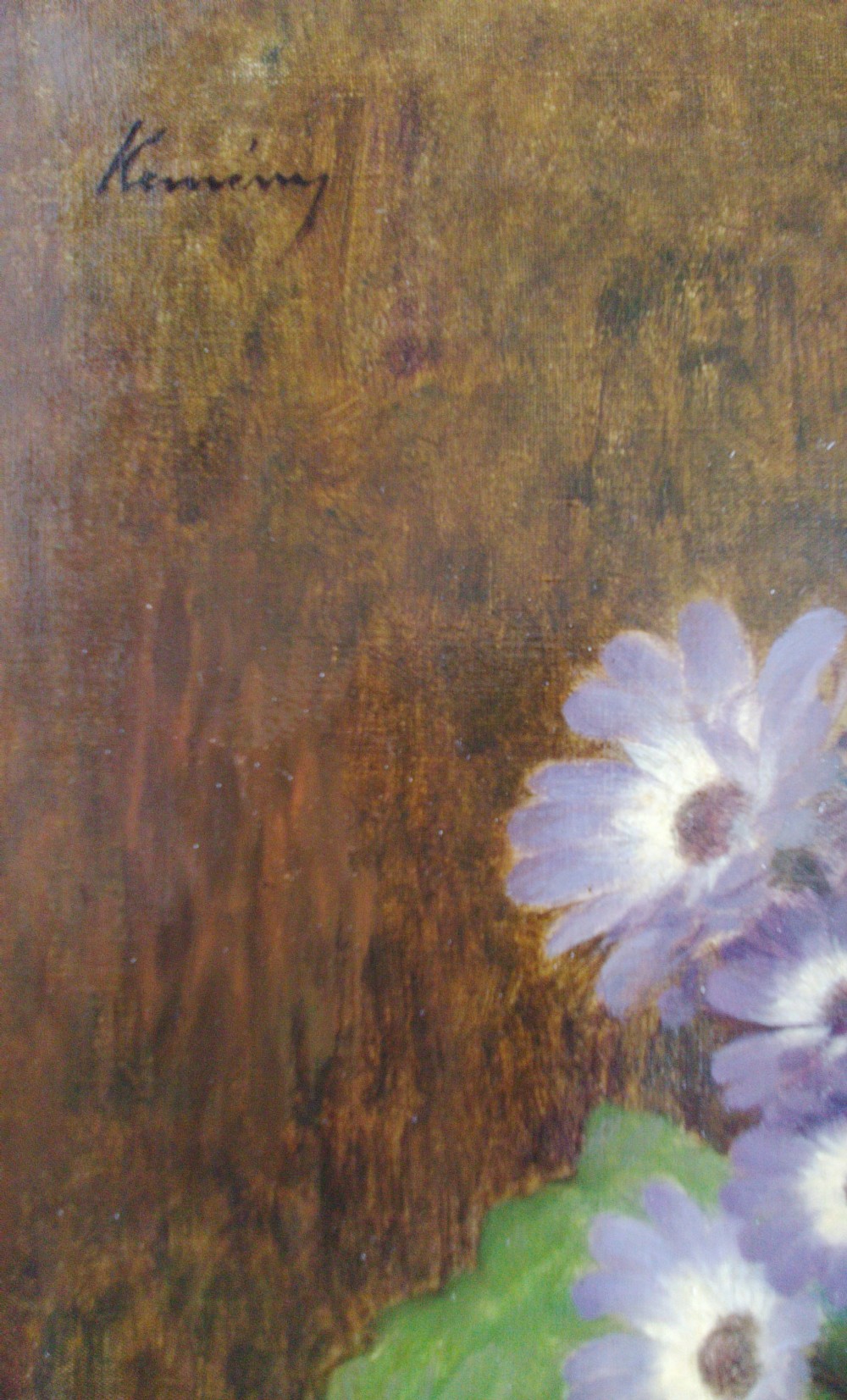
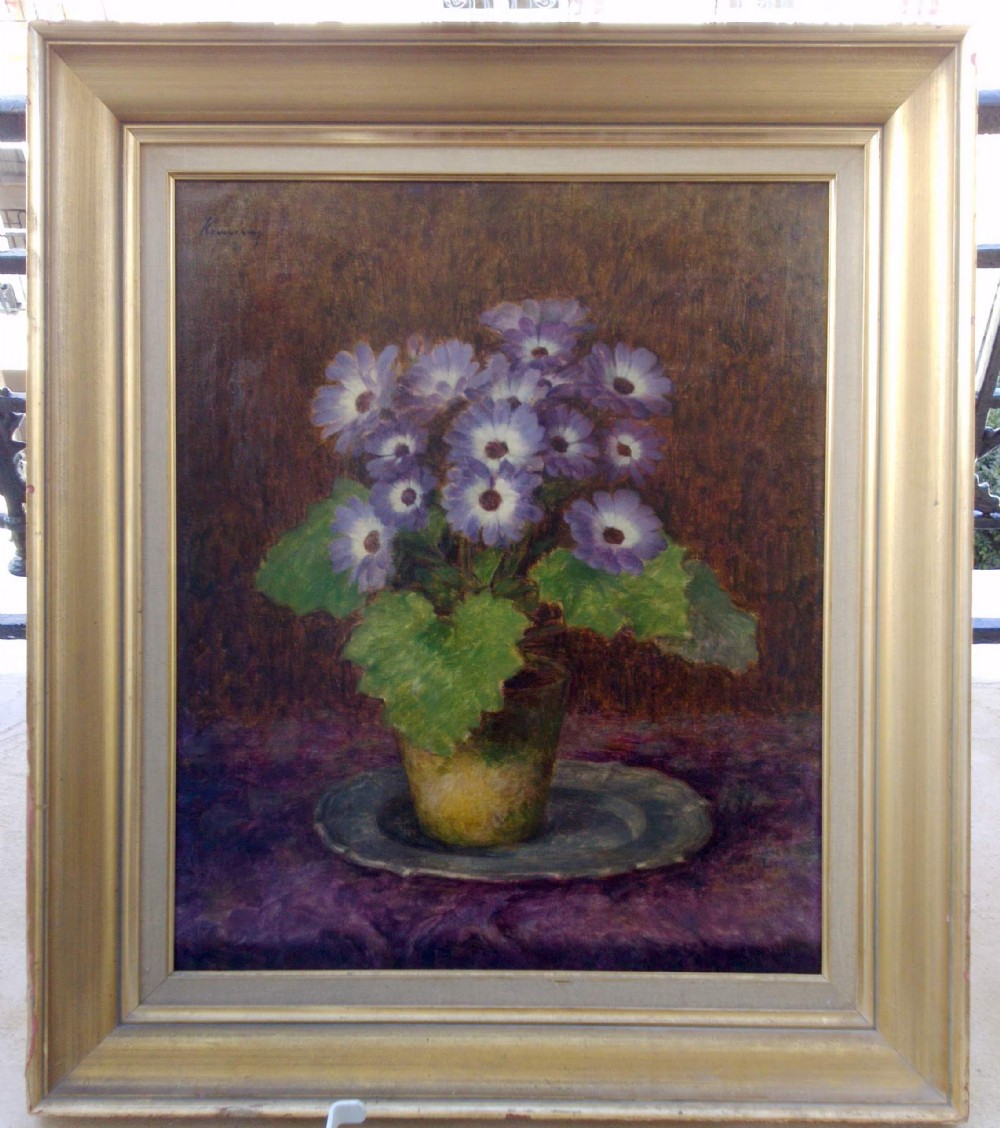
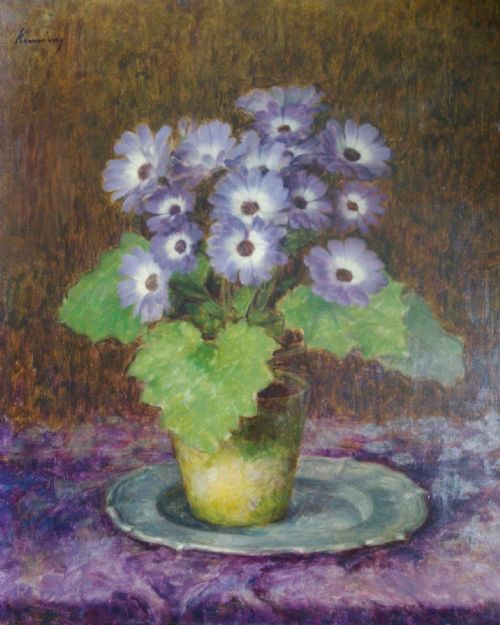
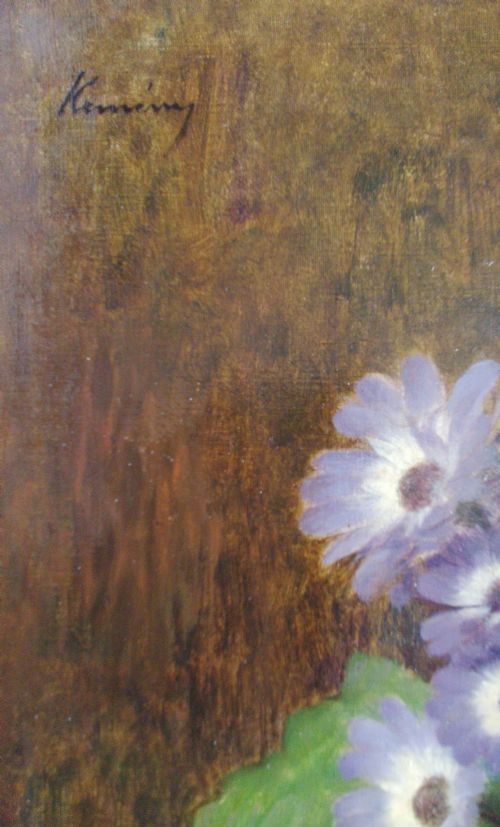
Our oil on canvas measures 51 x 60 cm and is signed at the lower right. It dates from circa 1940, arguably the artist's most creative period, during which depicted the austerity of the time but also the skill of making do.
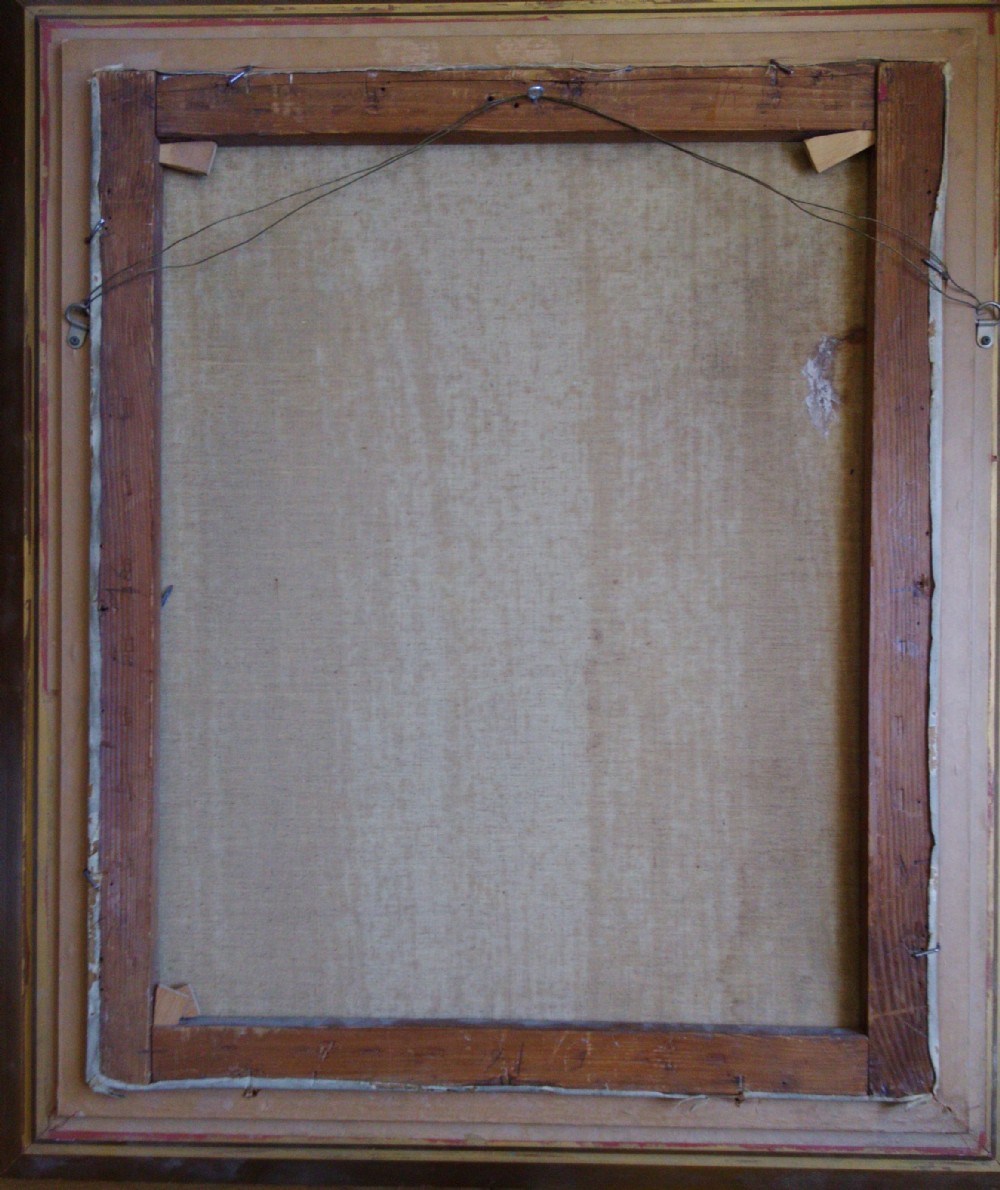
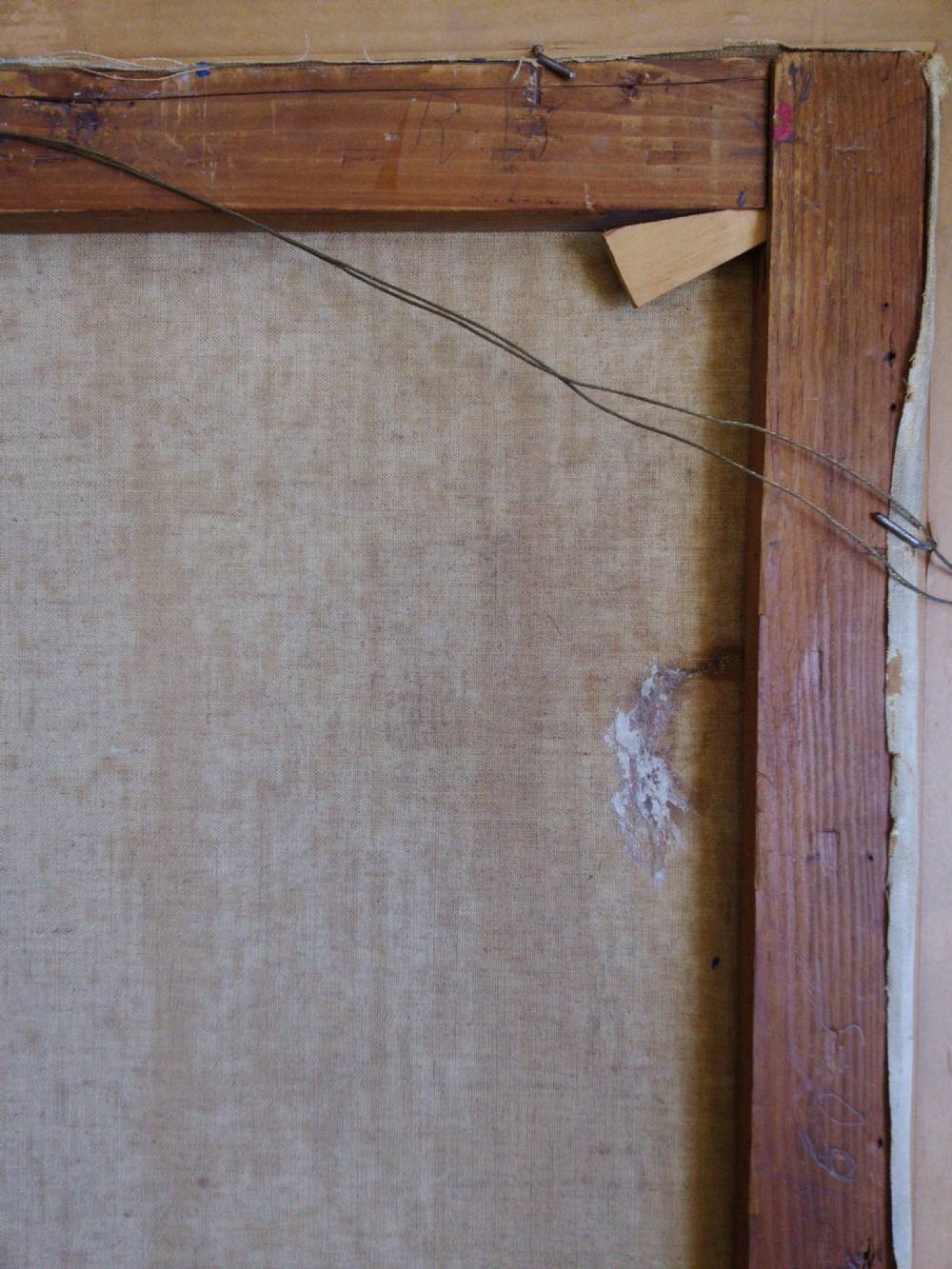
A tear in the canvas in the background to the upper right has been repaired. The overall framed size in a vintage frame is 76 x 66 cm.
Skippings Fine Arts has dated this piece to the 1940s.
Modern french & continental pictures selected by a former french auction house expert
You can view the stock and full dealer information on the Skippings Fine Arts Profile Page
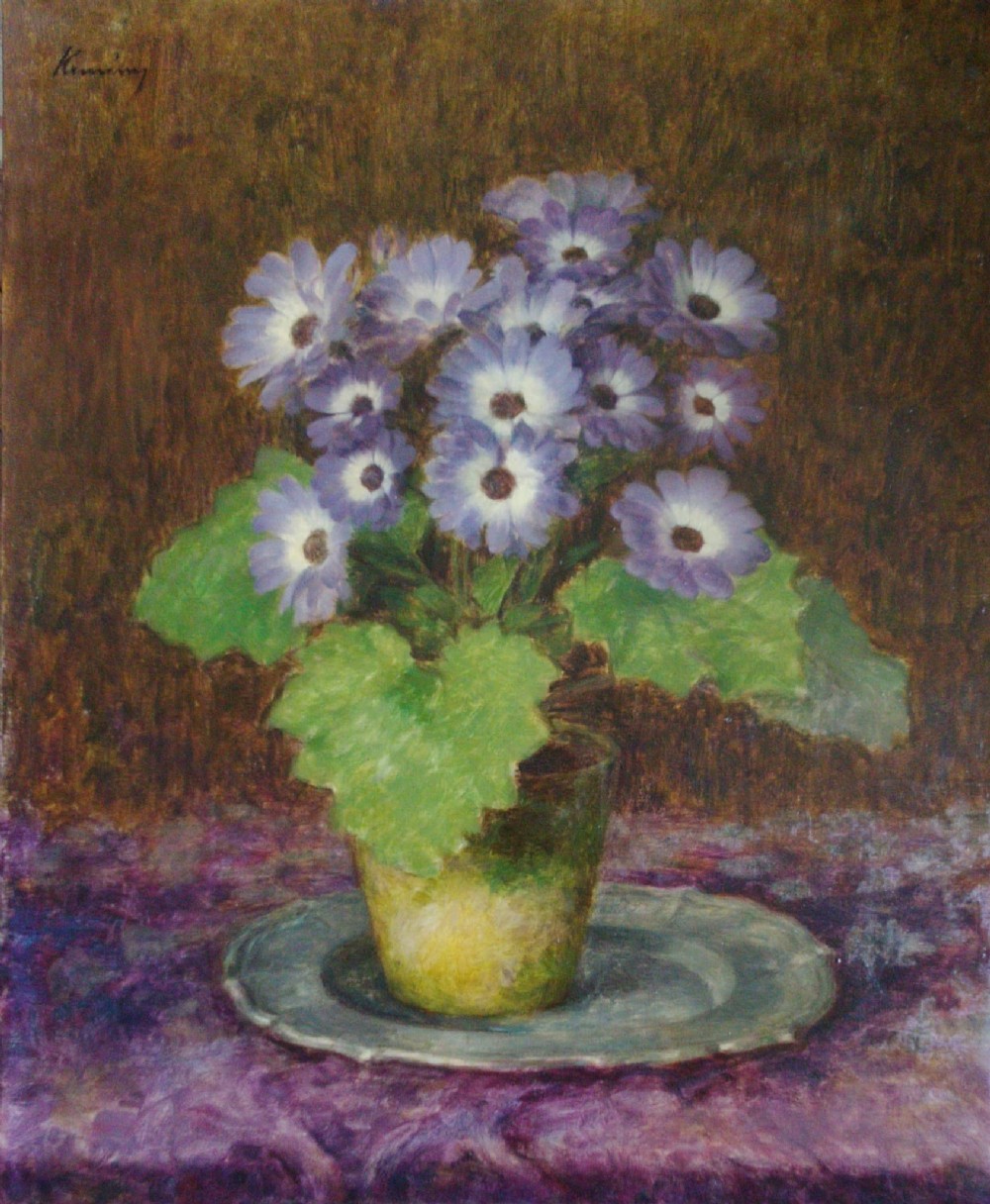
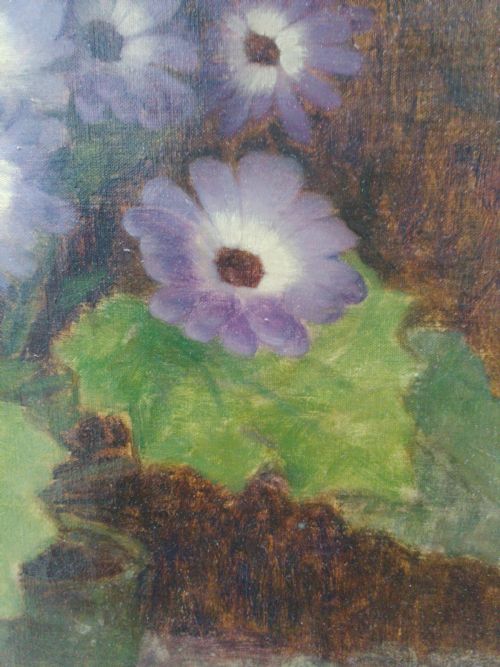
Humble Flowers, the Pot of Daisies, Blue Cineraria by Hungarian British Kelman Kameny Ca 1940 Oil on Canvas