16,184  PAGES BROWSED TODAY PAGES TODAY 109 ANTIQUES UPLOADED TODAYNEW ARRIVALS
109 ITEMS ADDED TODAY
Sort Order
Items Per Page
Browse Categories
Sort order
Items per page
ID #SA60754
SOLD
Email Phone WhatsApp
Save
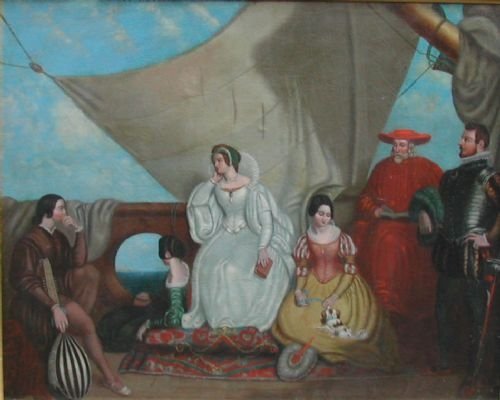
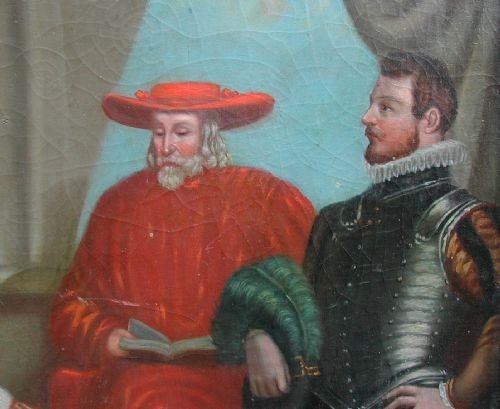
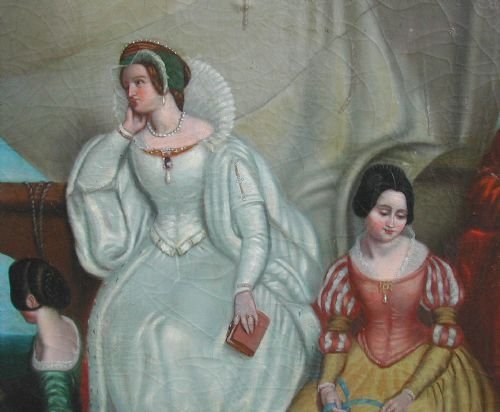
Mary Queen of Scotts, 1542-1587, Farewell to France, After Charles Robert Leslie
Sold by Artware Fineart
sold SA60754
Sorry, but this item has been sold.

Artware Fineart

Sellingantiques Verified Since Sep 2008
Id #SA60754
PDF SHARE
SAVE

Mary Queen of Scotts, 1542-1587, Farewell to France, After Charles Robert Leslie

19th century
Description

Oil on canvas, size: 30.00 x 40.00 ins;

Mary I (popularly known in the English-speaking world as Mary, Queen of Scots and, in France, as Marie Stuart) (8 December 1542 – 8 February 1587) was Queen of Scots from 14 December 1542 to 24 July 1567. She was the only surviving legitimate child of King James V. She was six days old when her father died and made her Queen of Scots. Her mother, Mary of Guise, assumed regency and her daughter was crowned nine months later. In 1558, she married Francis, Dauphin of France, who ascended the French throne as Francis II in 1559. In late November 1560 Mary's husband Francis II of France suffered a series of violent seizures, culminating in his death on the 5th December 1560. Fracnis was replaced by Catherine de Medici as regent of France with his brother Charles IX, aged ten as the new king. Mary had no place in Catherine's plans so she had no alternative but to return to Scotland. After she had completed her 40 days mourning for her late husband, mary retreated to the country in France to gather her thoughts and to appoint new advisers. The most importnt appointment was Henri Cleutin, Seigneur d'Oysel, formely her mother's chief lieutenant . Mary then held a 3 month farewell tour of her relatives in France ending on the 25th july 1561. She accompanied her uncles and a large retinue to the channel ports. False information about her itineray was given out to confuse the English spiesMary was aged 18. She reached Calais on the 10th August, there she rested for four days before boarding the galley on the morning of the 14th. Her uncles arranged for the Marquis d'Elbeuf and two of his older brothers to attend her during the crossing. The Constable's son , Henry was also with them. Her diplomatic escort was Michel de Castelnau, Sieur de Mauvissiere, an astute diplomat and intellectural who was later to play a key role as on eof the French ambassadors in Scotland and England. Also on board Mary's galley were her loyal companions the four Maries, who she had teased so mercilessly on their outward journey 13 years before. A second galley was provided for the rest of her staff, with a flotilla of over a dozen vessels for the baggage, some of them merchant ships chartered from the Dutch. So Many ships were needed because on top of Mary's tapestries, furniture, and several hundred coffers stuffed with gowns, gold and silver plate, paintings and other works of art, vast quantities of bed linen and other stores and equipment were also transported, including a hundred horses and mules.
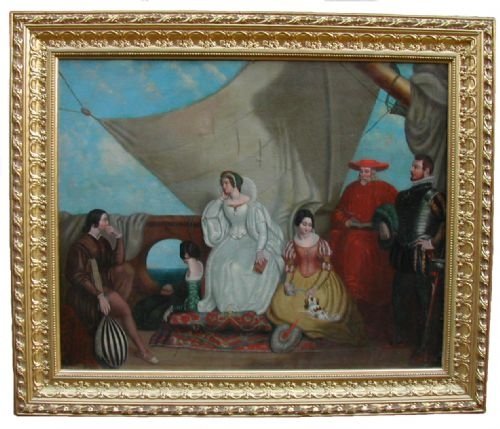
Charles Robert Leslie (1794-1859), English genre painter, was born in London on 19 October 1794. His parents were American, and when he was five years of age he returned with them to their native country. They settled in Philadelphia, where their son was educated and afterwards apprenticed to a bookseller. He was, however, mainly interested in painting and the drama, and when George Frederick Cooke visited the city he executed a portrait of the actor from recollection of him on the stage, which was considered a work of such promise that a fund was raised to enable the young artist to study in Europe.He left for London in 1811, bearing introductions which procured for him the friendship of West, Beechey, Allston, Coleridge and Washington Irving, and was admitted as a student of the Royal Academy, where he carried off two silver medals. At first, influenced by West and Fuseli, he essayed high art, and his earliest important subject depicted Saul and the Witch of Endor; but he soon discovered his true aptitude and became a painter of cabinet-pictures, dealing, not like those of David Wilkie, with the contemporary life that surrounded him, but with scenes from the great masters of fiction, from Shakespeare and Cervantes, Addison and Molière, Swift, Sterne, Fielding and Smollett.

Declaration

Artware Fineart has dated this piece to the 19th Century.

Reference Numbers
Sellingantiques Reference
SA60754
Dealers Internal Reference
3273
Description
Oil on canvas, size: 30.00 x 40.00 ins;

Mary I (popularly known in the English-speaking world as Mary, Queen of Scots and, in France, as Marie Stuart) (8 December 1542 – 8 February 1587) was Queen of Scots from 14 December 1542 to 24 July 1567. She was the only surviving legitimate child of King James V. She was six days old when her father died and made her Queen of Scots. Her mother, Mary of Guise, assumed regency and her daughter was crowned nine months later.

In 1558, she married Francis, Dauphin of France, who ascended the French throne as Francis II in 1559.
Artware Fineart

In late November 1560 Mary's husband Francis II of France suffered a series of violent seizures, culminating in his death on the 5th December 1560. Fracnis was replaced by Catherine de Medici as regent of France with his brother Charles IX, aged ten as the new king. Mary had no place in Catherine's plans so she had no alternative but to return to Scotland. After she had completed her 40 days mourning for her late husband, mary retreated to the country in France to gather her thoughts and to appoint new advisers. The most importnt appointment was Henri Cleutin, Seigneur d'Oysel, formely her mother's chief lieutenant . Mary then held a 3 month farewell tour of her relatives in France ending on the 25th july 1561. She accompanied her uncles and a large retinue to the channel ports. False information about her itineray was given out to confuse the English spiesMary was aged 18. She reached Calais on the 10th August, there she rested for four days before boarding the galley on the morning of the 14th. Her uncles arranged for the Marquis d'Elbeuf and two of his older brothers to attend her during the crossing. The Constable's son , Henry was also with them. Her diplomatic escort was Michel de Castelnau, Sieur de Mauvissiere, an astute diplomat and intellectural who was later to play a key role as on eof the French ambassadors in Scotland and England. Also on board Mary's galley were her loyal companions the four Maries, who she had teased so mercilessly on their outward journey 13 years before. A second galley was provided for the rest of her staff, with a flotilla of over a dozen vessels for the baggage, some of them merchant ships chartered from the Dutch. So Many ships were needed because on top of Mary's tapestries, furniture, and several hundred coffers stuffed with gowns, gold and silver plate, paintings and other works of art, vast quantities of bed linen and other stores and equipment were also transported, including a hundred horses and mules.

fig 1. Mary Queen of Scotts, 1542-1587, Farewell to France, After Charles Robert Leslie

Charles Robert Leslie (1794-1859), English genre painter, was born in London on 19 October 1794. His parents were American, and when he was five years of age he returned with them to their native country. They settled in Philadelphia, where their son was educated and afterwards apprenticed to a bookseller. He was, however, mainly interested in painting and the drama, and when George Frederick Cooke visited the city he executed a portrait of the actor from recollection of him on the stage, which was considered a work of such promise that a fund was raised to enable the young artist to study in Europe.He left for London in 1811, bearing introductions which procured for him the friendship of West, Beechey, Allston, Coleridge and Washington Irving, and was admitted as a student of the Royal Academy, where he carried off two silver medals. At first, influenced by West and Fuseli, he essayed high art, and his earliest important subject depicted Saul and the Witch of Endor; but he soon discovered his true aptitude and became a painter of cabinet-pictures, dealing, not like those of David Wilkie, with the contemporary life that surrounded him, but with scenes from the great masters of fiction, from Shakespeare and Cervantes, Addison and Molière, Swift, Sterne, Fielding and Smollett.

Date of Manufacture

Artware Fineart has dated this piece to the 19th Century.

Reference Numbers
Sellingantiques Ref
SA60754
Dealers Internal Ref
3273
Artware Fineart
Sellingantiques verified Since Sep 2008
Dealer Profile

You can view the stock and full dealer information on the Artware Fineart Profile Page
PDF SHARE
SAVE
Mary Queen of Scotts, 1542-1587, Farewell to France, After Charles Robert Leslie
1 / 5
Archive I Mary Queen of Scotts, 1542-1587, Farewell to France, After Charles Robert Leslie
Mary Queen of Scotts, 1542-1587, Farewell to France, After Charles Robert Leslie
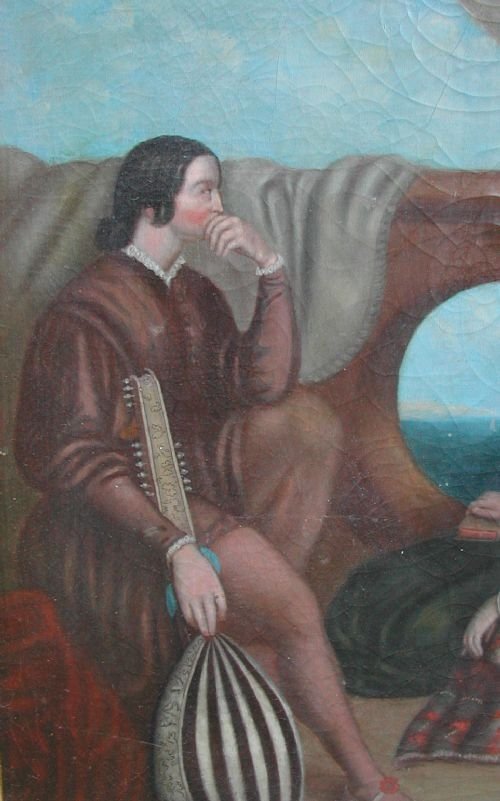
Archive II Mary Queen of Scotts, 1542-1587, Farewell to France, After Charles Robert Leslie View II
Archive III Mary Queen of Scotts, 1542-1587, Farewell to France, After Charles Robert Leslie View III
Archive IV Mary Queen of Scotts, 1542-1587, Farewell to France, After Charles Robert Leslie View IV
Archive V Mary Queen of Scotts, 1542-1587, Farewell to France, After Charles Robert Leslie View V
Enlarged Archival View
Telephone 07958 699 645
Location
18 La Gare
51 Surrey Row
London
SE1 0BZ
United Kingdom
Verified Since Sep 2008
Items For Sale 243
Items Sold 223
Artware Fineart
Verified Since Sep 2008
View Dealer Info
Location: 18 La Gare , 51 Surrey Row , London , SE1 0BZ , United Kingdom
Verified
Sep 2008
For Sale
243
Sold
223
Mary Queen of Scotts, 1542-1587, Farewell to France, After Charles Robert Leslie
Ref: SA60754
Mary Queen of Scotts, 1542-1587, Farewell to France, After Charles Robert Leslie
Detail View 1
Detail View 2
Detail View 3
Detail View 4
Archival Detail
Every single antique dealer on our platform is individually approved by our internal team. We verify their professional trade history, ethical standards, and photographic quality to ensure a secure, high-standard buying environment. Upon joining, every dealer agrees to a strict 9-point code of conduct. While issues can occasionally arise, our dealers typically resolve them swiftly and directly with the buyer. In fact, since our founding in 2002, Sellingantiques has only had to step in to help resolve an issue on roughly five occasions—a true testament to the quality of our dealers and their dedication to your happiness.
Our dealers are highly experienced in packing and shipping fragile, high-value antiques. Because you are in direct contact with the dealer, you will be able to easily go through all available shipping and insurance options together to ensure your item arrives safely.
Antiques are the ultimate green purchase. By choosing historical pieces over newly manufactured goods, you completely eliminate the carbon footprint of modern mass production while preserving exceptional, timeless craftsmanship.
items
Add keywords to the filter
Price
£100
£250000
Era
Movements
Material
Origin
Stock Location
Freshness
Online Payments
Categories