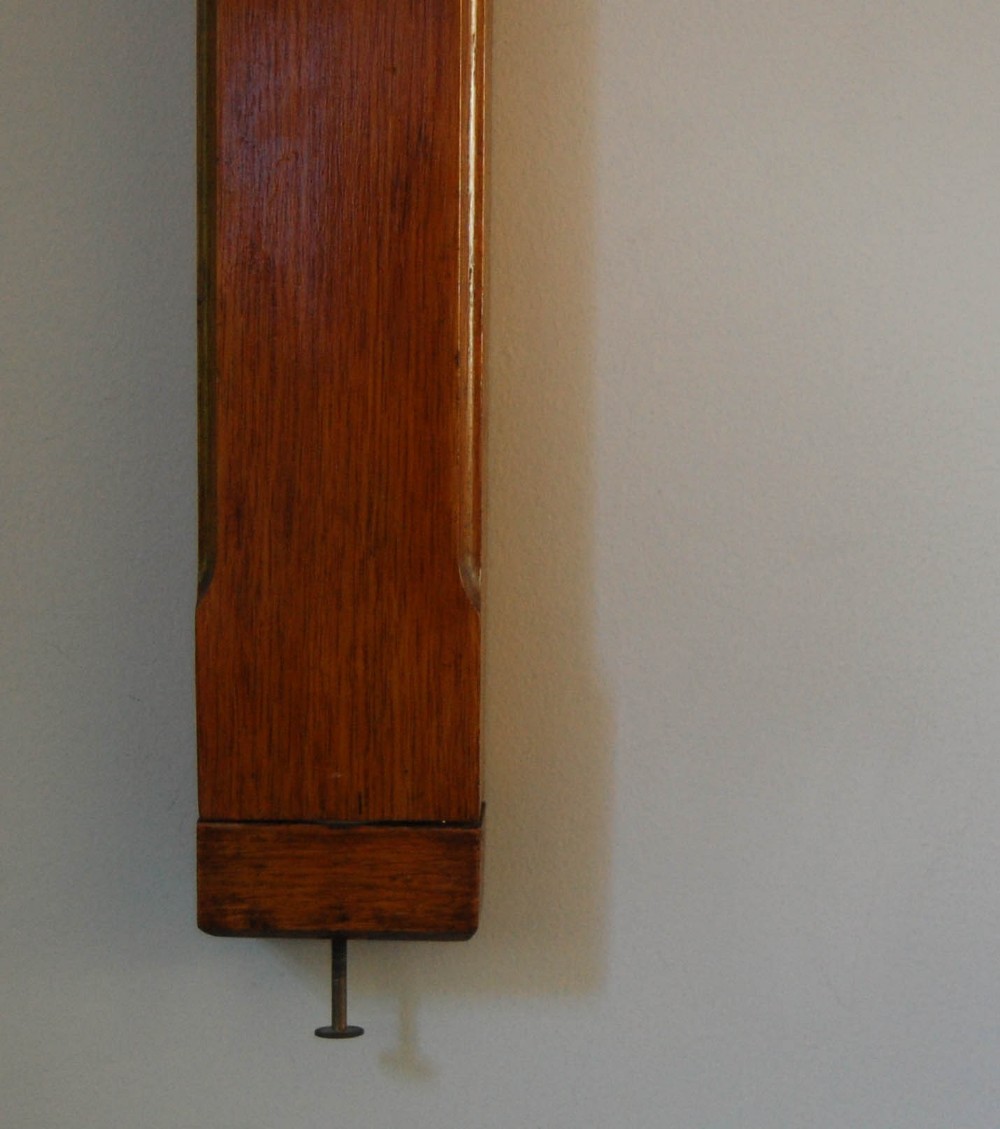
It was listed by Jason Clarke Antiques. Sold pieces stay on Sellingantiques as a record of what has passed through, and the next one is rarely far away.
Jason Clarke Antiques has dated this piece to the 1900s.
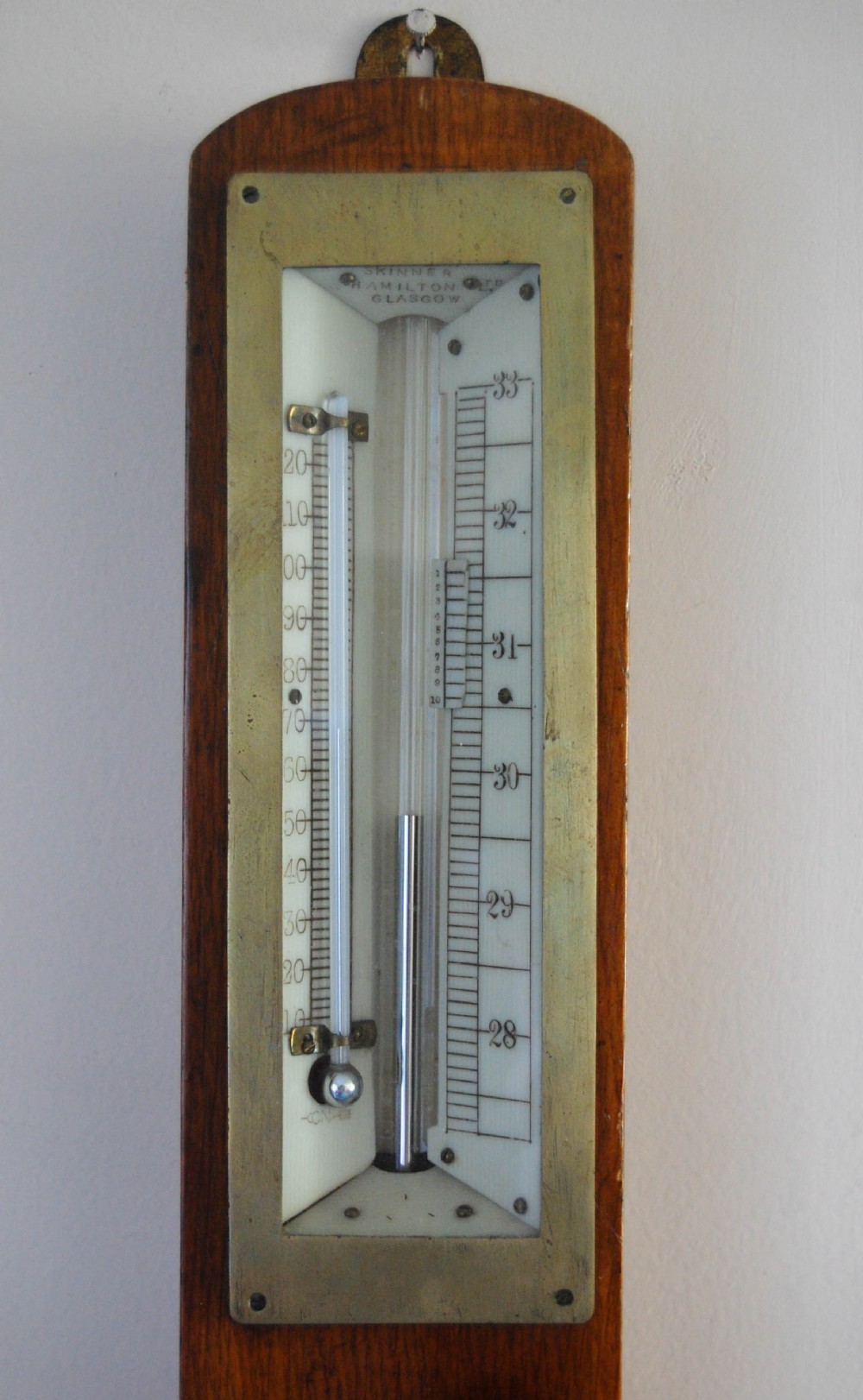
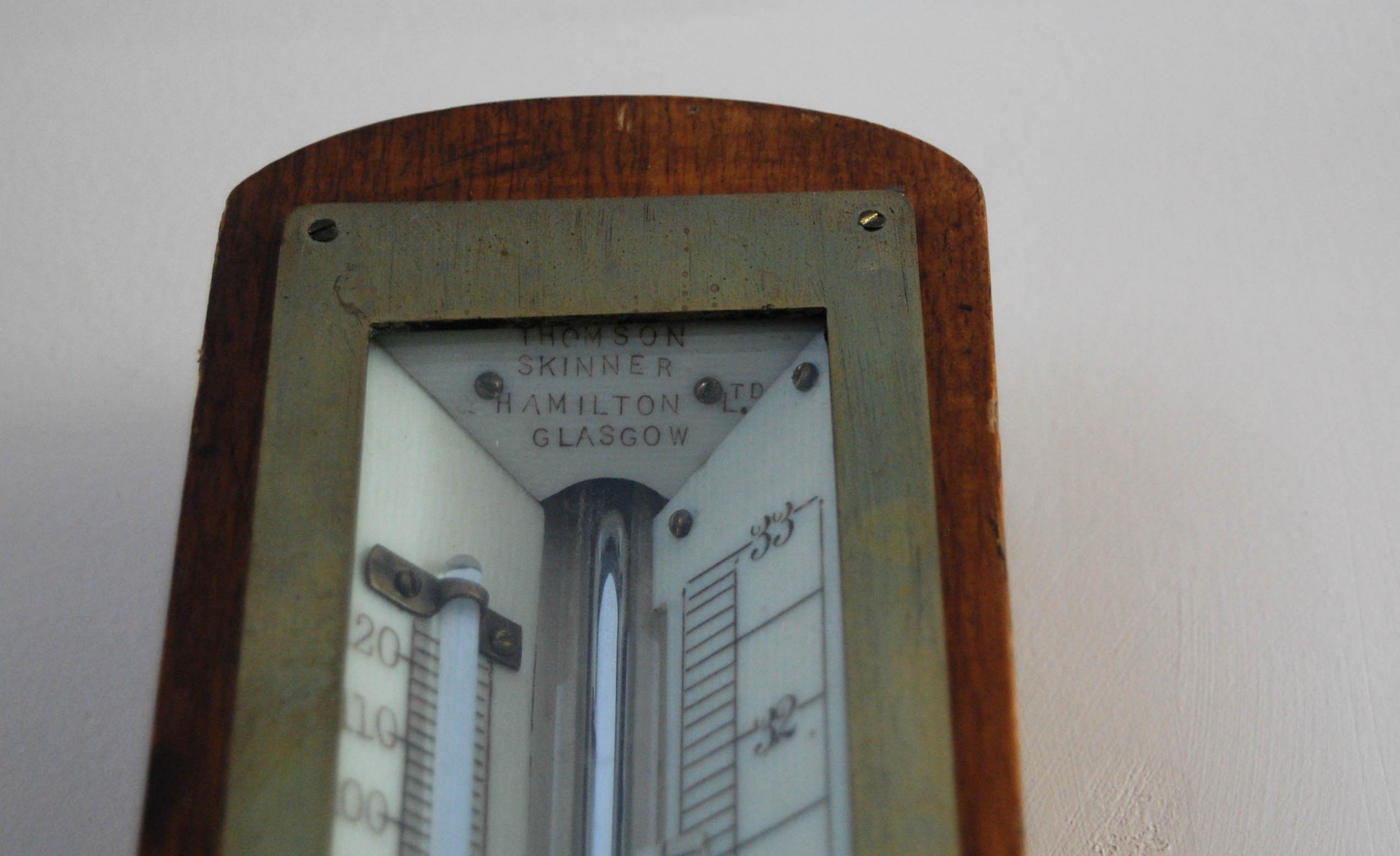
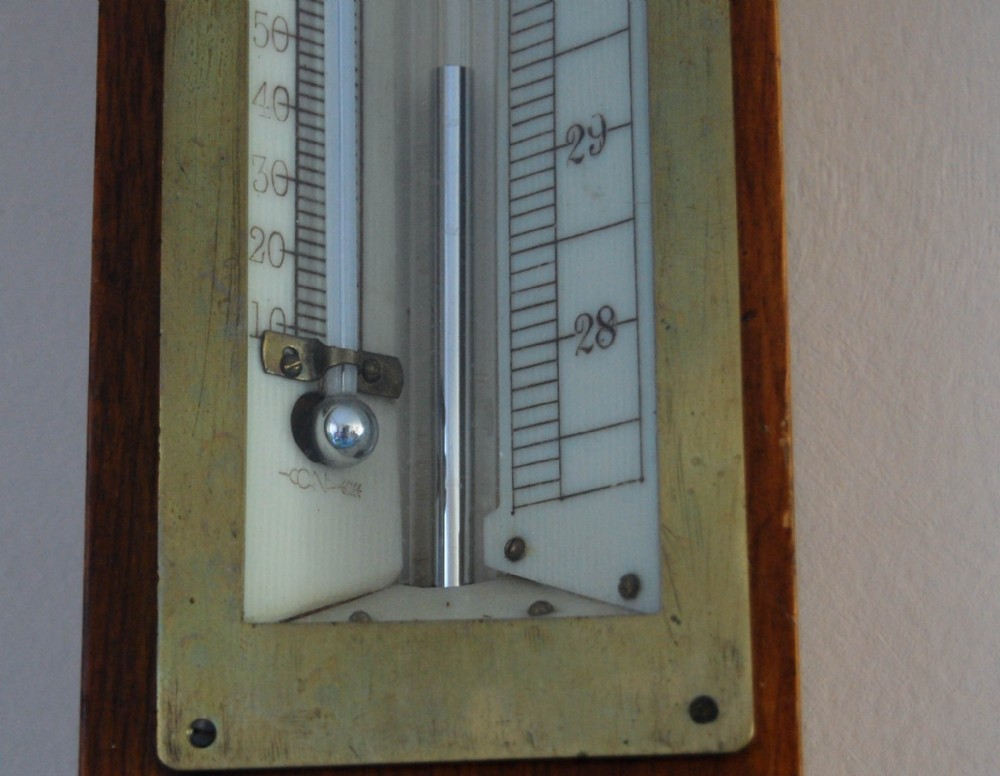
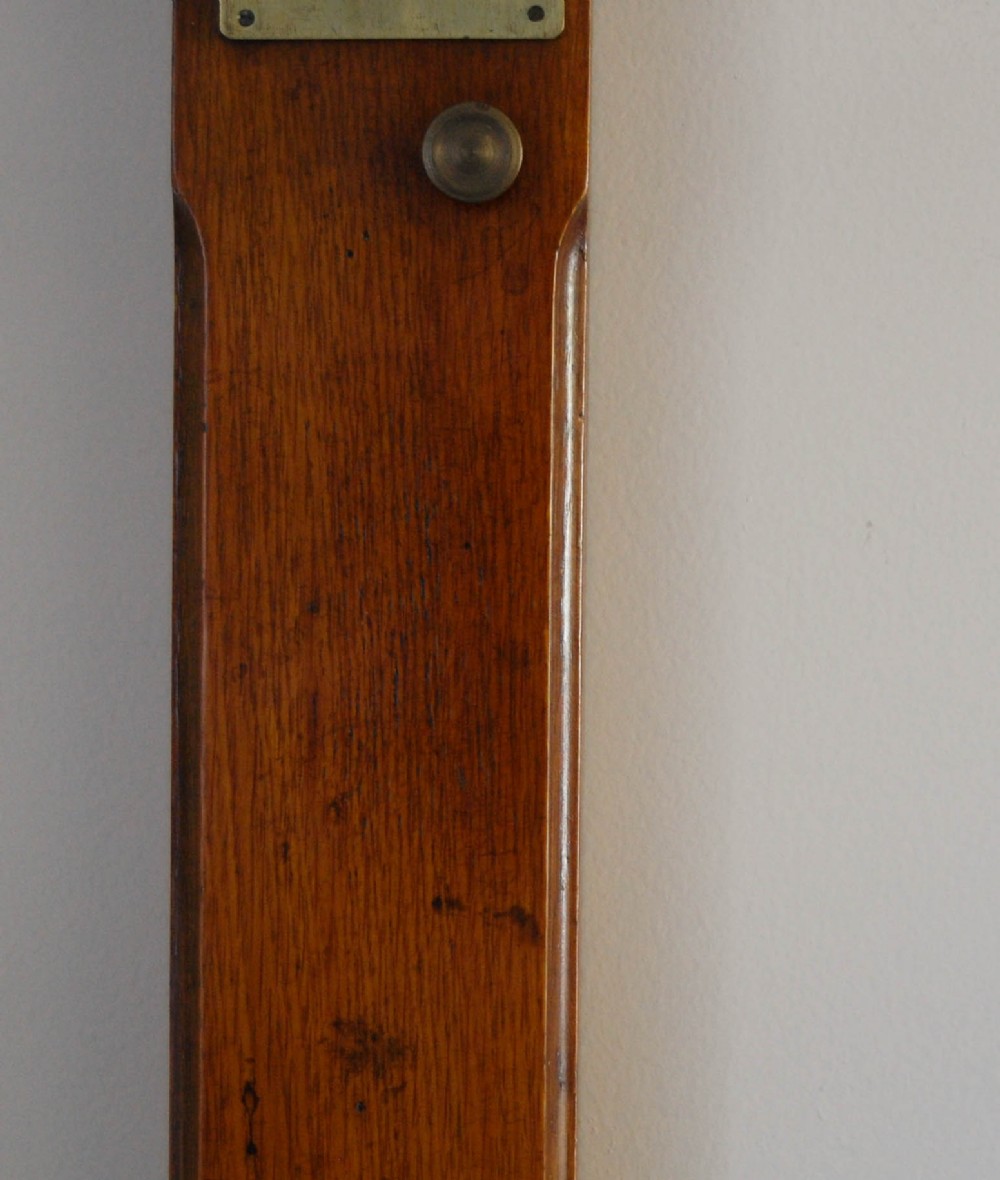
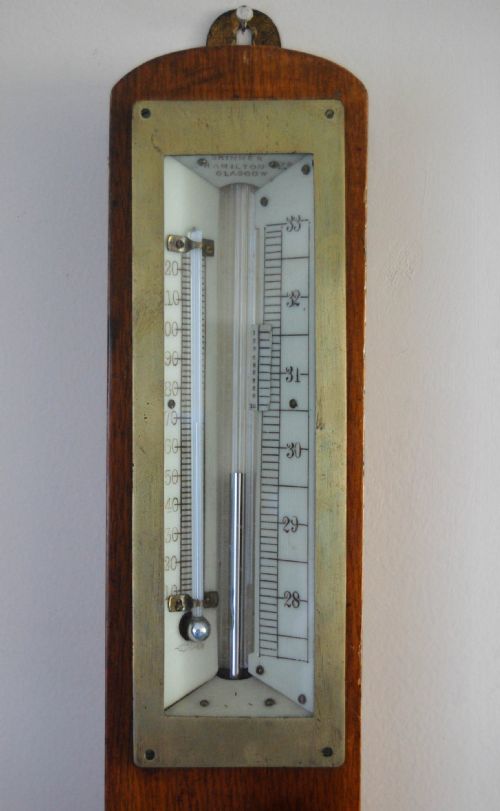
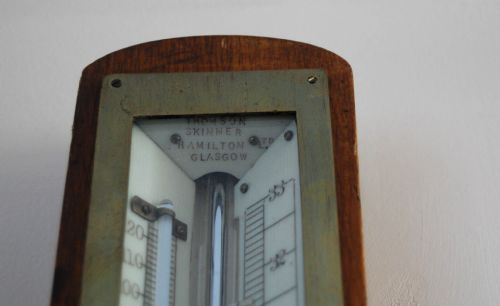
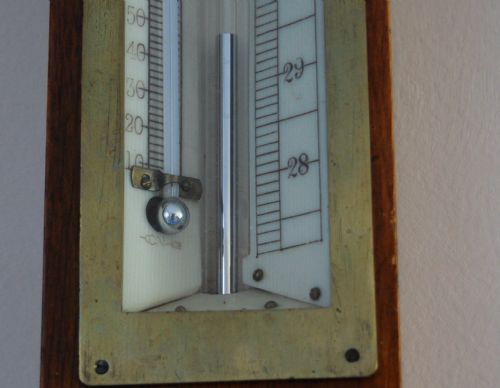
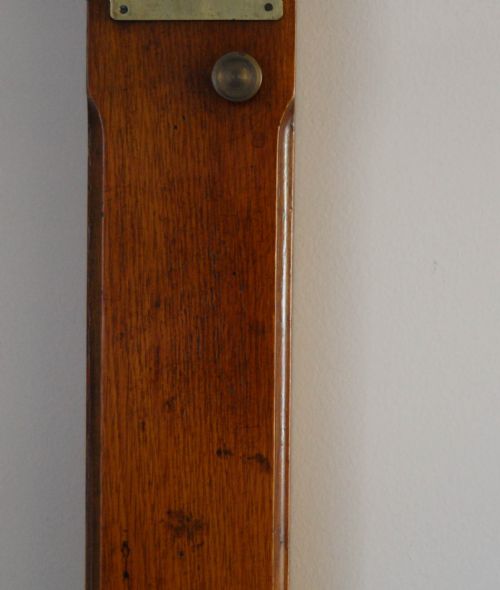
The top of the body has an inverted three sectioned ivorine scale plate reading 28 to 33 inches of barometric pressure with makers name to the top and Fahrenheit thermometer to the side, all of which are enclosed behind a brass framed glass plate. It also maintains a Vernier scale to the side of the scale operated by a brass knob to the front for taking accurate reading and for comparison with earlier observations.
Similar examples were produced by Negretti & Zambra and are thus described in their catalogues:
“It having been observed, that explosions of gas in mines mostly occur when the barometer is very low (showing diminishing atmospheric pressure), it is important that a good barometer should be at hand, for observation by managers and others”.
Barometers of this type were being manufactured as early as the 1860’s, however their use for mining was made compulsory by an act of parliament in 1872. It was understood by this point that a mine explosion was preceded by a corresponding reduction of atmospheric pressure so these instruments had a very real safety purpose for those working in the harsh conditions of a mine.
Section 26 of the Mines (Coal) Regulations Act of 1872 stated that, “After dangerous gas has been found in any mine, a barometer or thermometer shall be placed above ground in a conspicuous position near the entrance to the mine.”
Negretti & Zambra in their “Treatise on Meteorological Instruments” also state the following:
“The inflammable & suffocating gases, known to coal miners as fire damp and choke damp, are specifically heavier than air; and as they issue from the fissures of the mine, or are released from the coal, the atmospheric pressure tends to drive them into the lowest and least ventilated galleries. Consequently a greatly reduced atmospheric pressure will favour a sudden outflow or advance of gas; whence may result cases of explosion or suffocation. It has been found that these accidents occur for the most part about the time of a low barometric column. A reliable barometer should, therefore, be systematically consulted by those entrusted with the management or control of coal mines, so that greater vigilance and caution may be enjoined on the miners whenever the mercury falls low, especially after it has been unusually high for some days.”
Established in 1903 with a Head Office at 38 Sauchiehall St, Glasgow, catalogues from their first year of trading describe Thomson, Skinner & Hamilton as providers of, “Chemical and scientific apparatus for chemists, assayers, smelters, mines, iron & steel works, sugar refineries, schools colleges, universities, bacteriologists etc”.
On the catalogue evidence, this recently established company seems to have initially attempted to appeal to a wide number of industries but by 1906, they had carved a niche in providing scientific products to educational establishments, describing themselves as providing, “scientific apparatus for the subjects of mensuration, hydrostatics, pneumatics, light, heat & meteorology for the use of schools, colleges and technical institutions”. This line of business was to form the backbone of their future trade.
By 1951 the Head Office had moved to 137 Sauchiehall Street with a manufacturing premises at Clifton Works, 24 Harland St, Glasgow and were described as distributors of all types of laboratory glassware.
Just four years later in 1955, according to The Edinburgh Gazette, the company seems to have gone into voluntary liquidation although some successful actions to save the organisation must have followed as evidence of company advertising
Jason Clarke Antiques has dated this piece to the 1900s.
You can view the stock and full dealer information on the Jason Clarke Antiques Profile Page
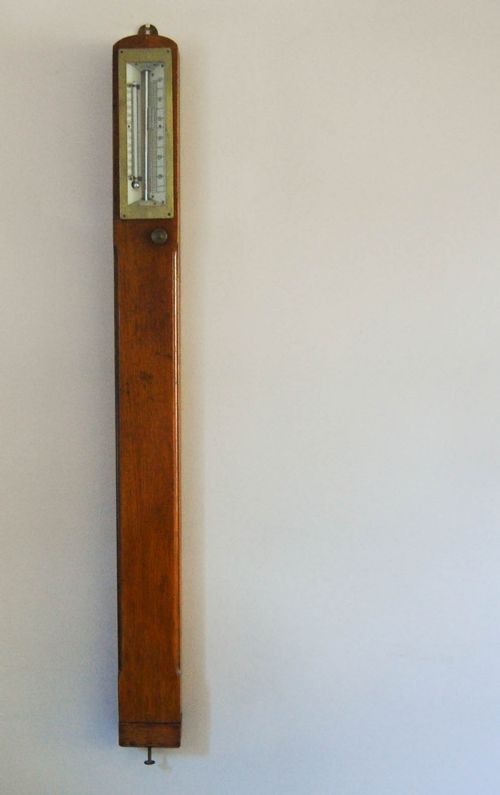
Edwardian Mining Stick Barometer by Thomson Skinner & Hamilton of Glasgow