7,050  PAGES BROWSED TODAY PAGES TODAY 0 ANTIQUES UPLOADED TODAYNEW ARRIVALS
LATEST STOCK
Sort Order
Items Per Page
Browse Categories
Sort order
Items per page
ID #SA594141
SOLD
Email
Save
Late Victorian Self Recording Aneroid Barometer or Weather Station by Jh Steward London
Jason Clarke Antiques
sold SA594141
Sorry, but this item has been sold.
Jason Clarke Antiques

Jason Clarke Antiques

Sellingantiques Verified Since Jul 2015
View Dealers Stock Page
Id #SA594141
PDF SHARE
SAVE

Late Victorian Self Recording Aneroid Barometer or Weather Station by Jh Steward London

19th century
Description

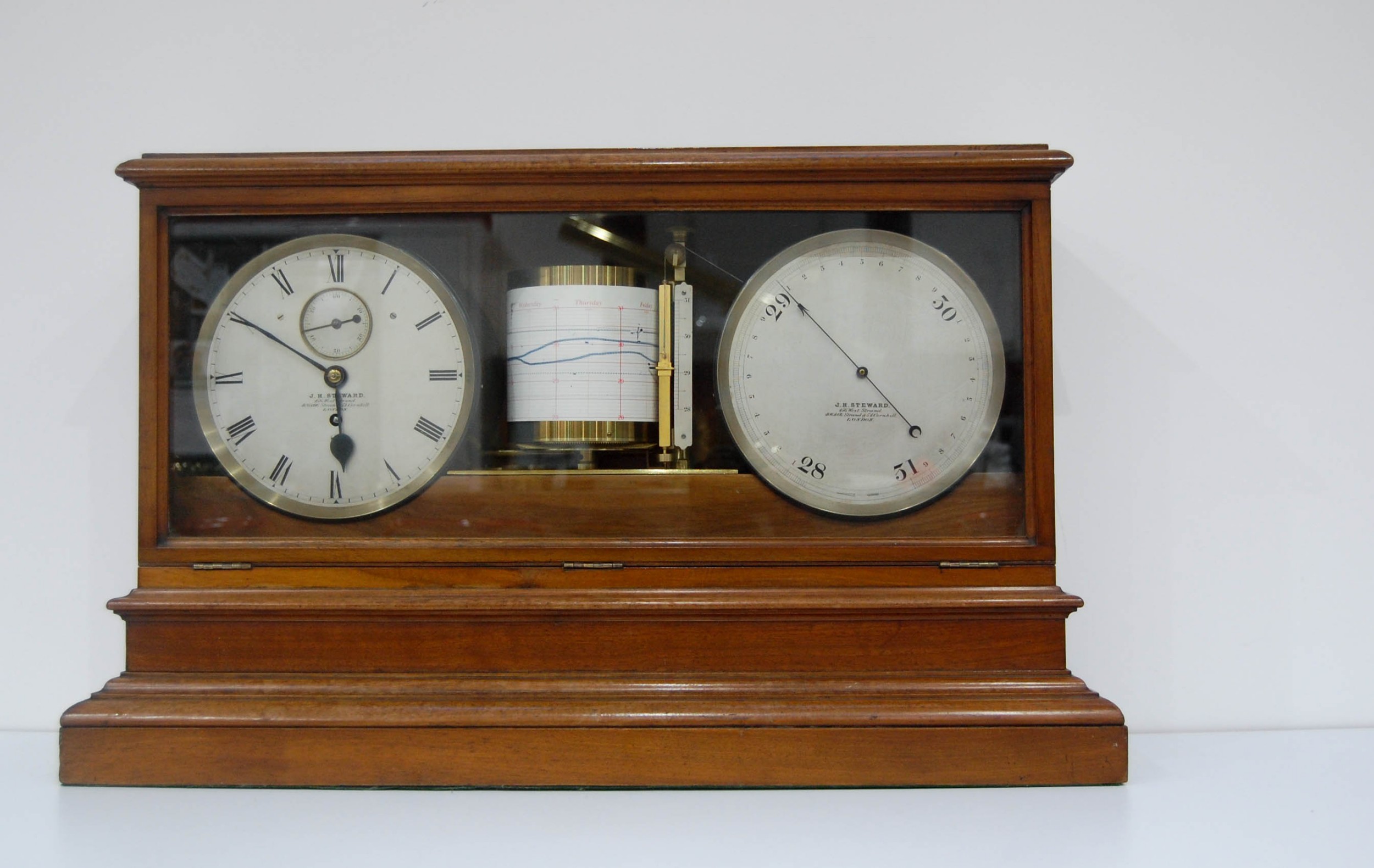
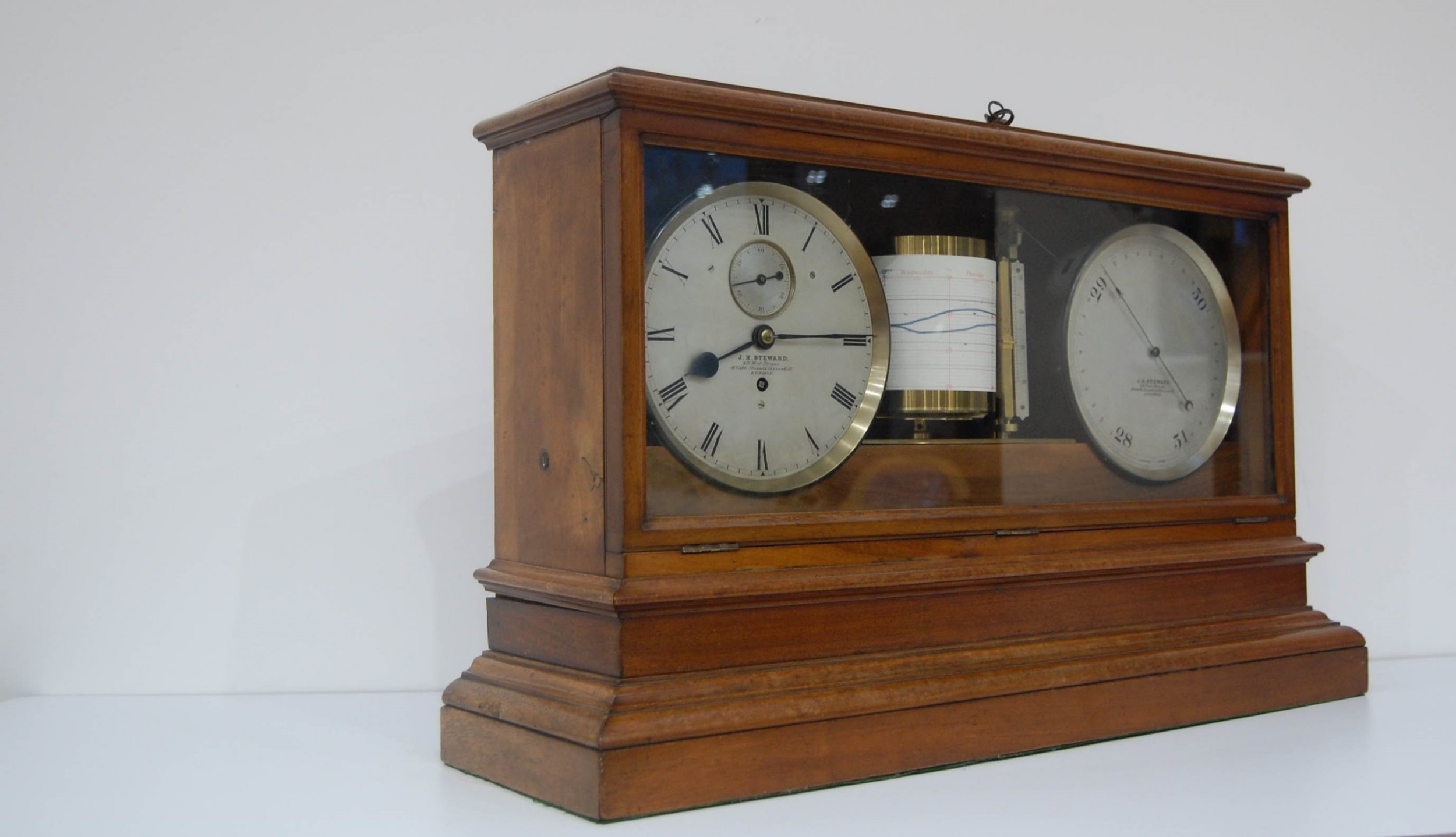
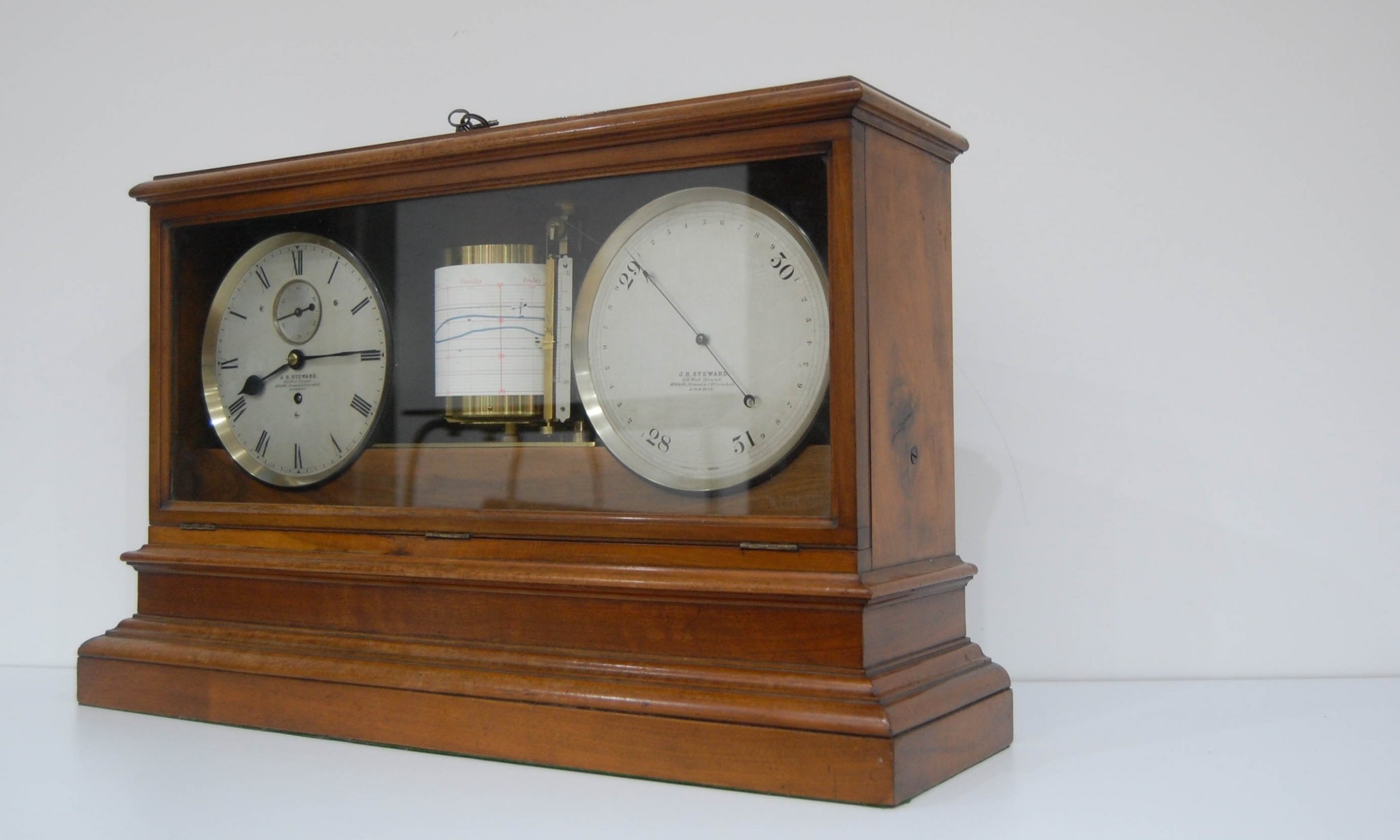
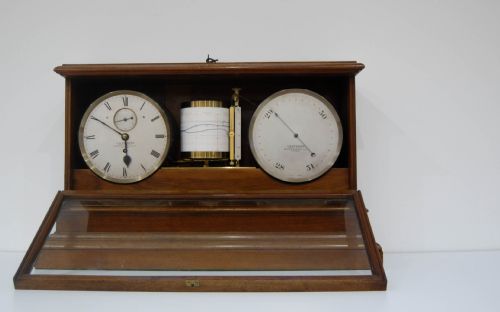
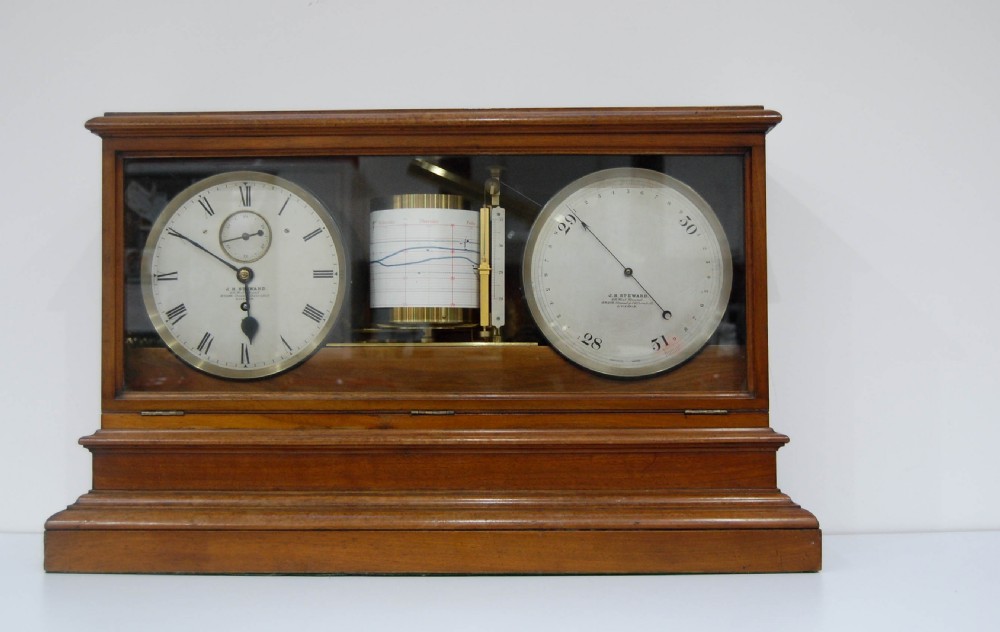
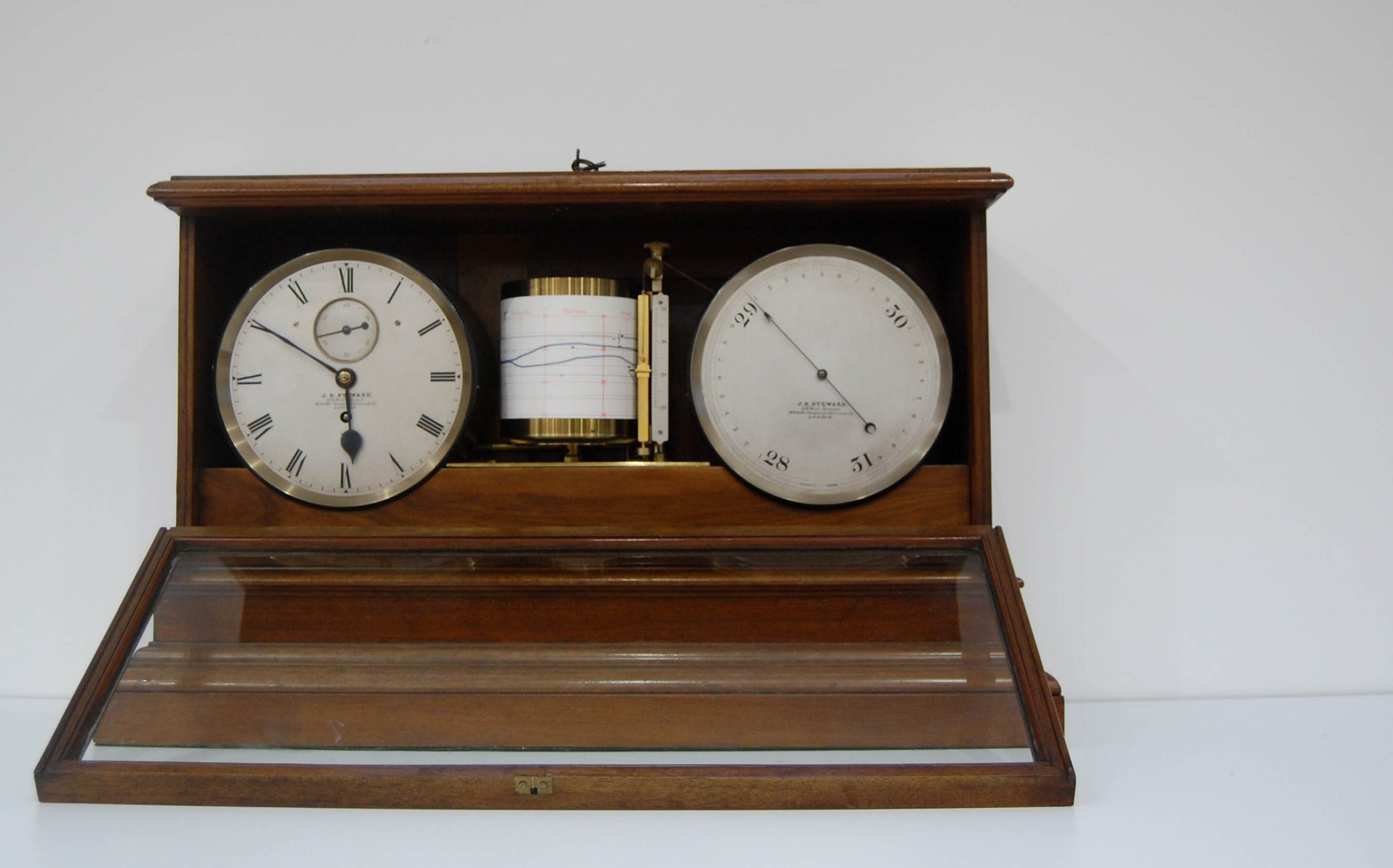
For sale, a late-Victorian weather station or self-recording aneroid barometer by JH Steward of 456 West Strand, 406 & 66 Strand and 54 Cornhill, London.

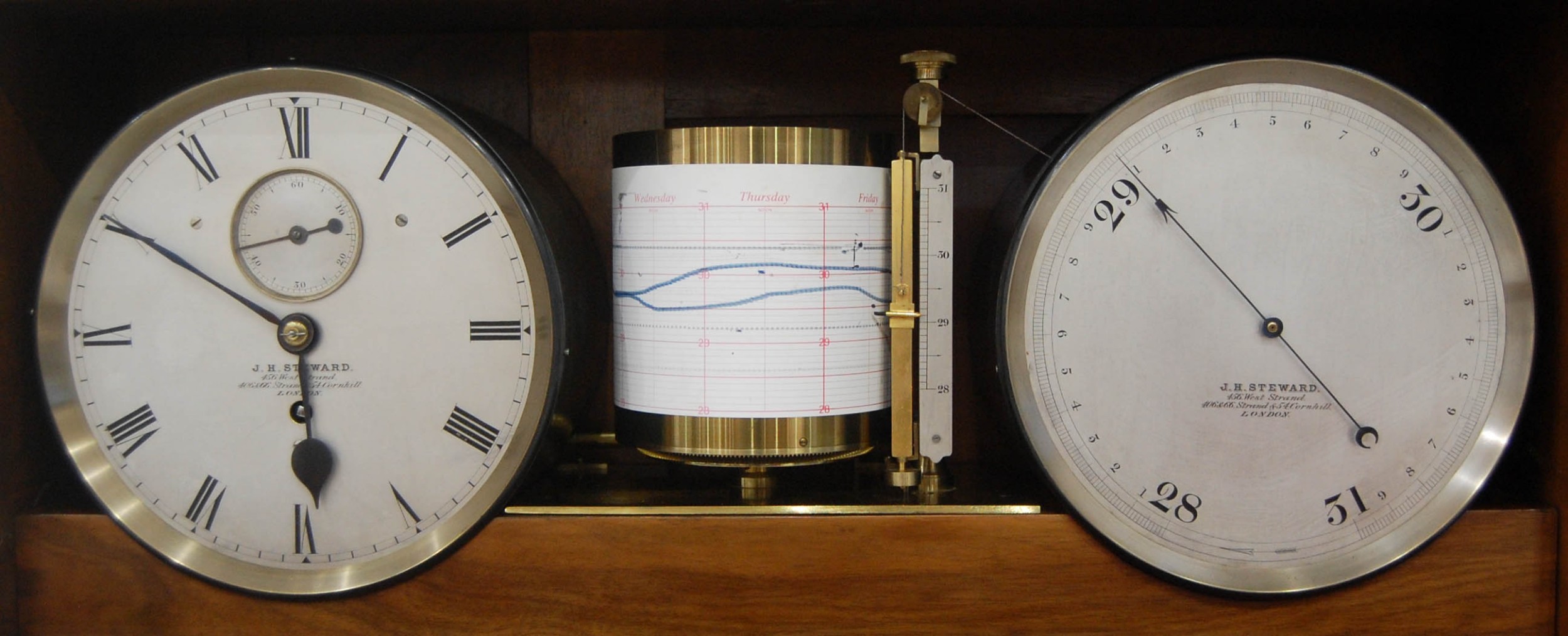
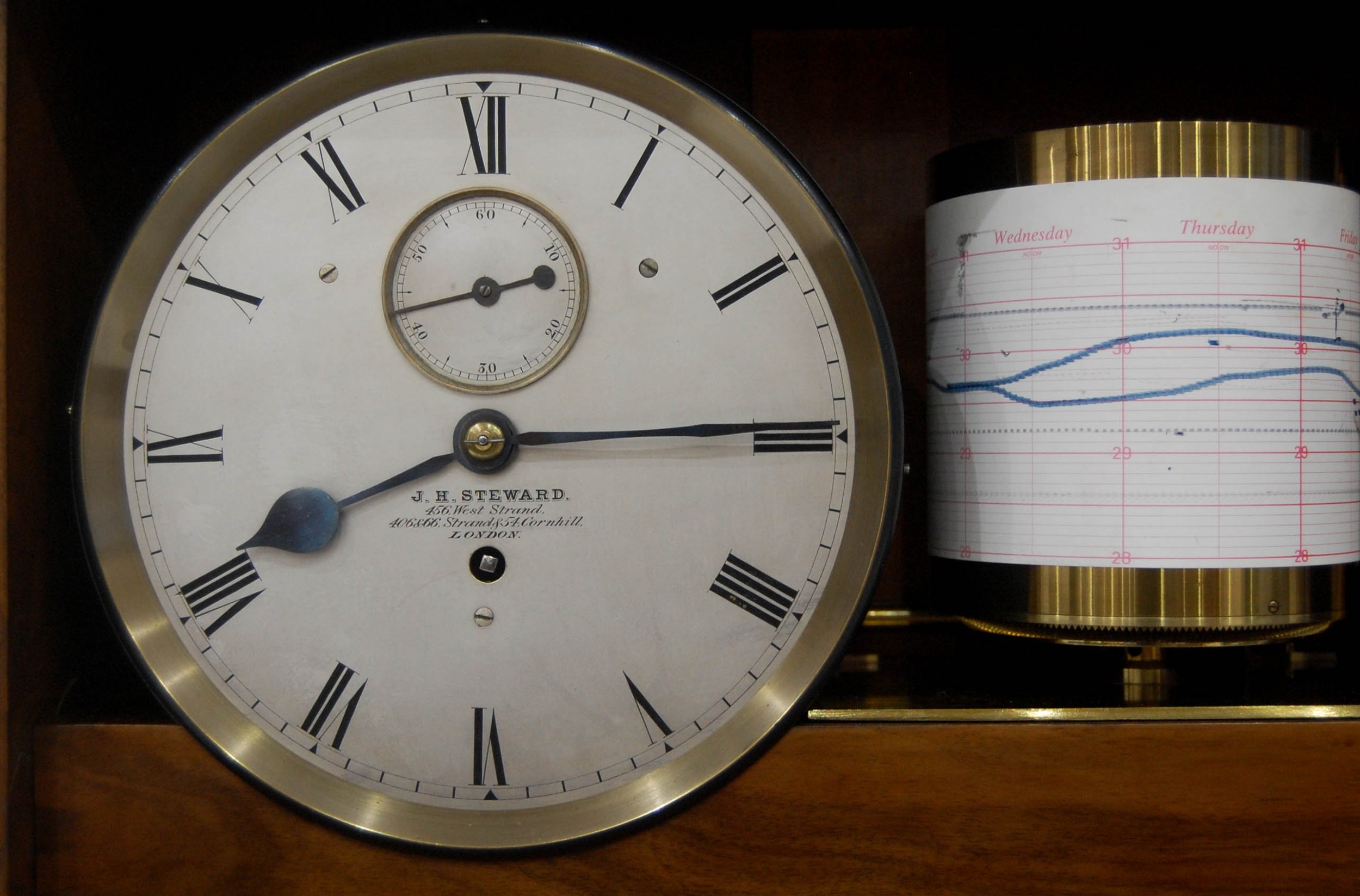
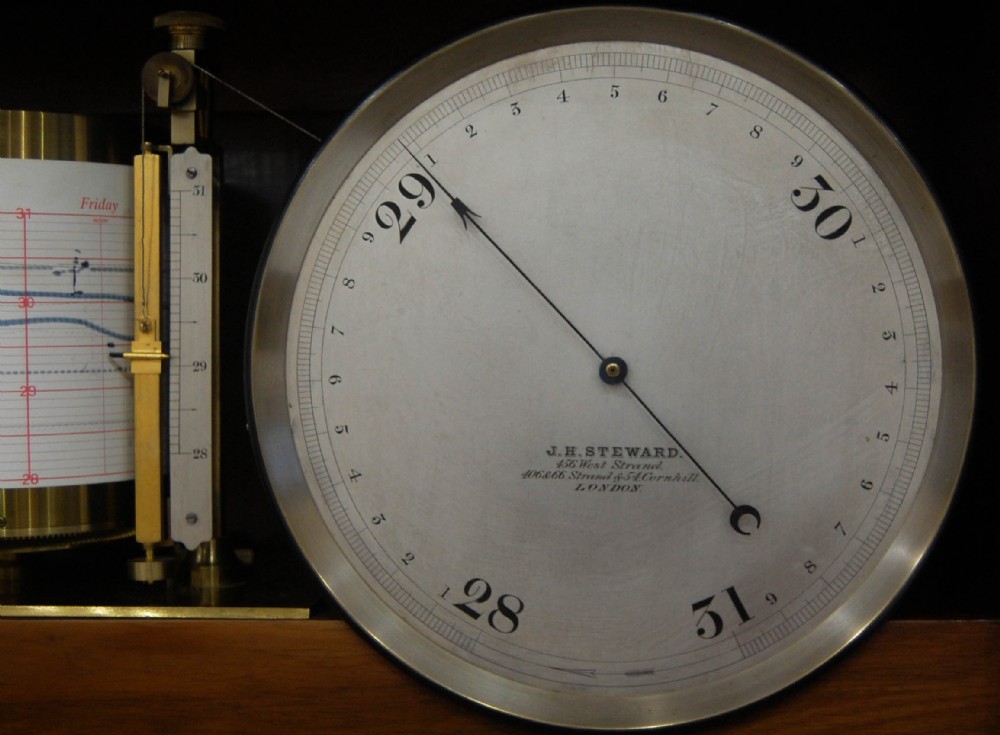
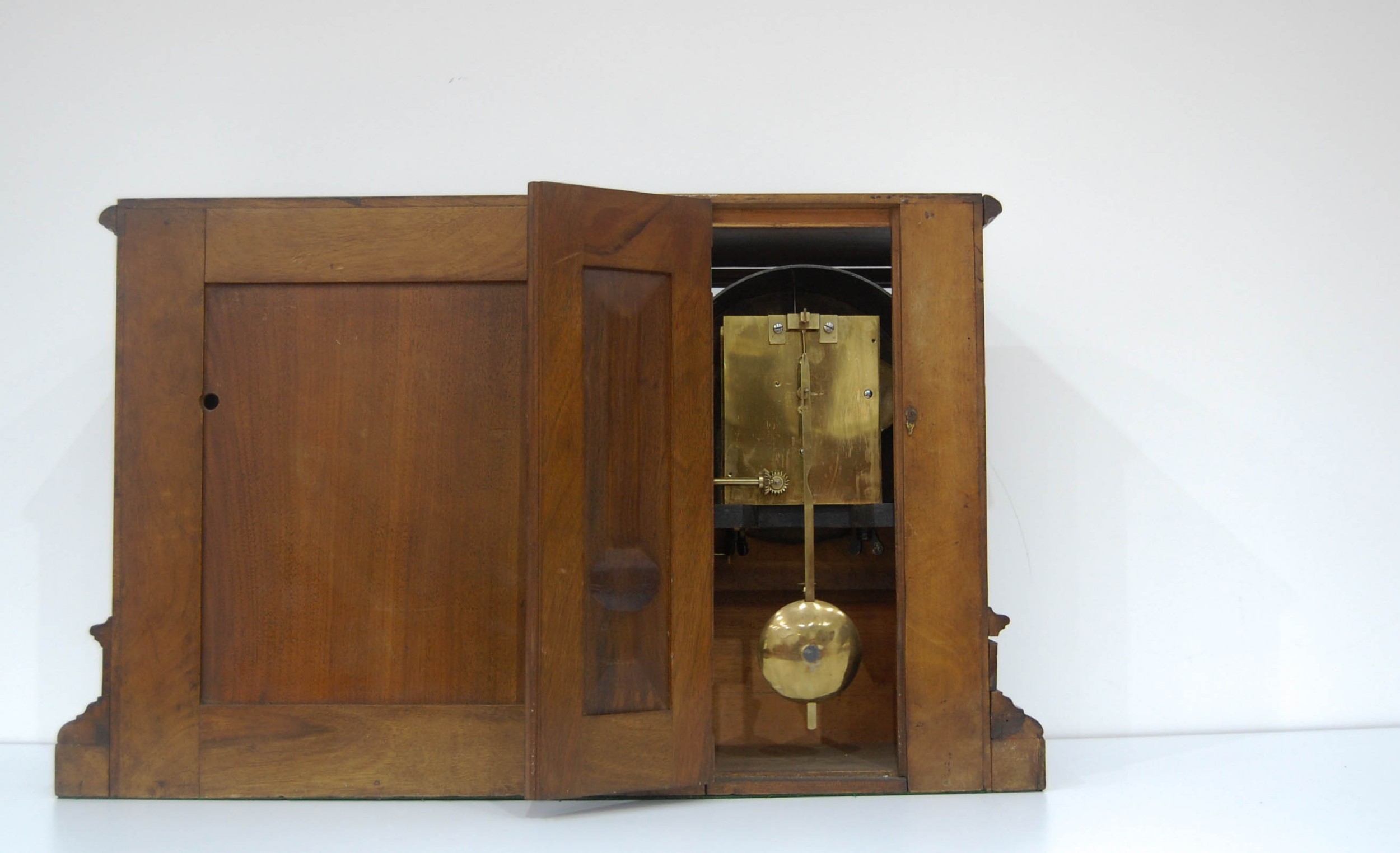
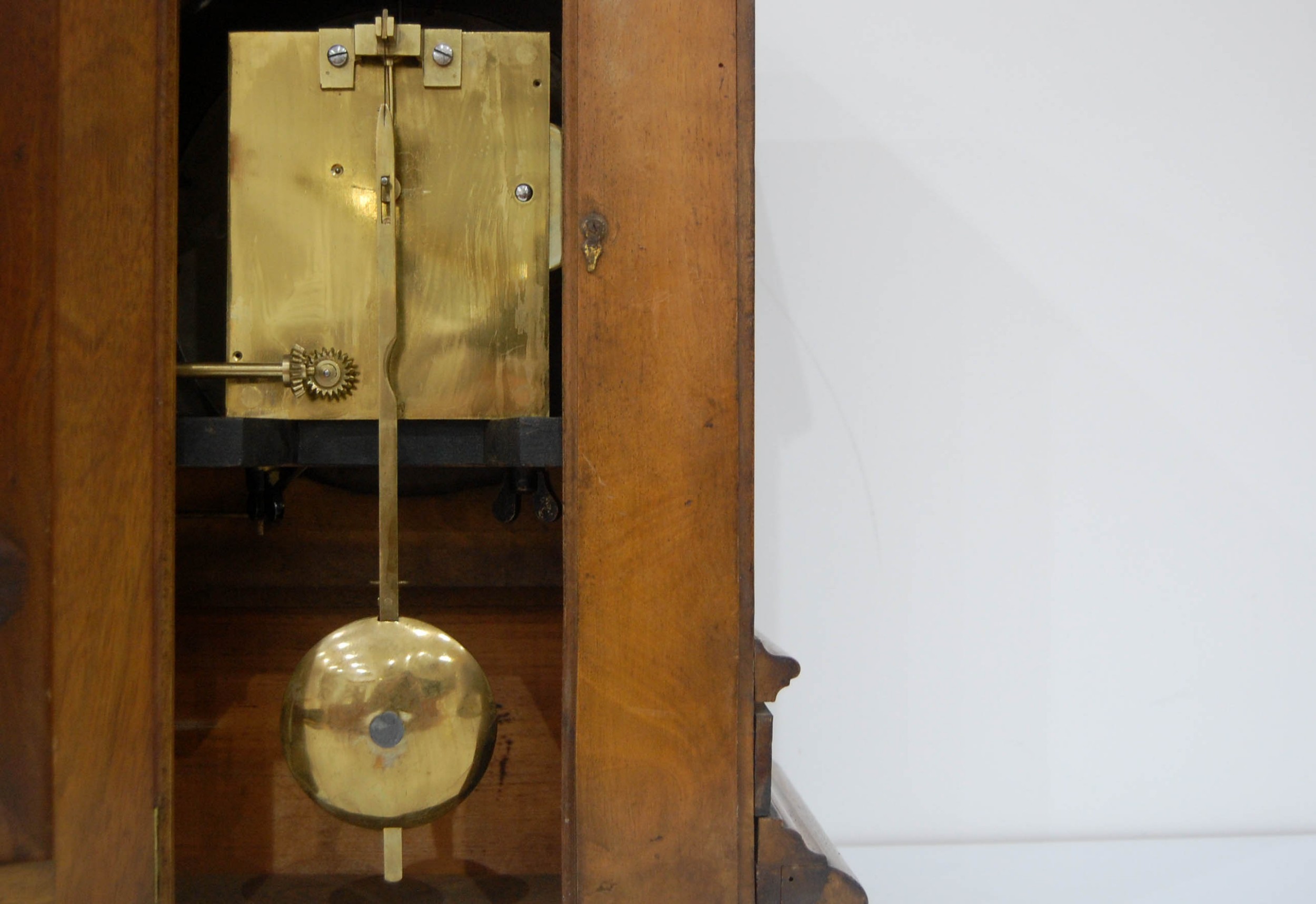
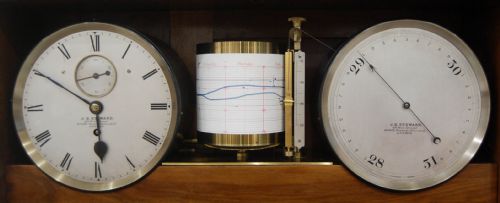
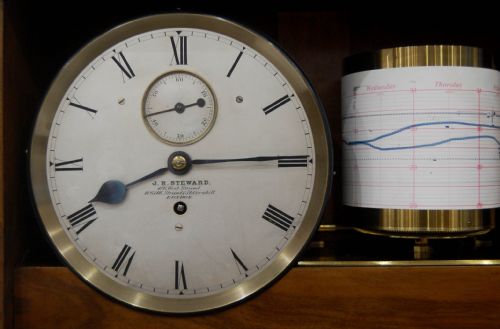
This beautifully imposing instrument is comprised of a super quality chain fuse movement with original pendulum, blue steel spade hands, 7” silvered dial to the front incorporating a secondary seconds dial and engraved to “JH Steward, 456 West Strand, 406 & 66 Strand and 54 Cornhill, London”. The central section contains a barograph type recording drum which rests upon a toothed gear wheel to the base and is rotated by a series of further gears which relate back to the clock movement. The aneroid barometer has a 7” silvered dial also engraved with the maker’s name. The scale measures 28 to 31 inches of barometric pressure and like the clock, the barometer also drives (by means of a fusee chain) the vertical movement of the nib up and down the scale according to the pressure changes on the barometer. The clock also regulates the horizontal movement of the nib which rotates its position every hour to allow it to make contact with the recording paper. As if the clock did not have enough to do, it also has an unseen gong type mechanism underneath the movement shelf which makes contact with the barometer housing three times an hour. This mechanism being required to ensure that the barometer reading remains absolutely precise when it comes into contact with the paper.
These wonderful meteorological instruments came to prominence in the 1870’s by which time the aneroid barometer had become a firm domestic favourite. It is as yet unknown who developed this instrument but either Louis Casella or Negretti & Zambra are likely to have played a role in its creation. Casella is known to have been awarded a prize medal at the 1862 Exhibition for self- registering meteorological instruments. His catalogue of 1871 which contains an example of a self-recording aneroid still proudly refers to the fact that he was the “only” instrument maker awarded for this invention suggesting that there was a healthy level of competition associated with the industry. Negretti in their “Treatise on Meteorological instruments” of 1864 also provides reference to mercury self-registering barometers based upon a design from Admiral Sir A Milne who supposedly constructed the first example in 1857. Admiral Fitzroy seems also to have approved of the design and dubbed it an “Atmoscope” or a “barograph”, perhaps the first occasion that the word is seen in print.
Aside from the above, examples of these aneroid instruments are also known to have been retailed by all prominent scientific instrument makers of the Victorian era and they must have had some continuing popularity as an example remained amongst the product list of the JH Steward catalogue of 1885 where it is described as follows:
“This instrument is designed to show the various fluctuations which may have taken place in the barometer in the intervals between the hours of observation. It consists of a large and powerful aneroid, with very open range, and scale reading to 100ths of an inch, and an eight day clock, each with eight-inch dials; between these is placed, in a vertical position, a cylinder four inches in diameter. The circumference of this cylinder is furnished with a tooth wheel, which works in an endless screw at the back of the instrument; it has a paper attached to it ruled to coincide with the barometer scale. This paper, besides being rules horizontally into inches and tenths, to correspond with the barometer scale, is divided vertically throughout its entire length of 12 inches into seven principal and seven minor divisions indicated by darker and lighter lines; the dark lines represent the noon, and the lighter lines the midnight of every twenty four hours. The paper (which is metallic prepared) thus lasts one week. Near the paper, a

Physical Dimensions
Height
42cm (16.54")
Width
68cm (26.77")
Depth
21cm (8.27")
Declaration

Jason Clarke Antiques has dated this piece to the 1880s.

Reference Numbers
Sellingantiques Reference
SA594141
Description
For sale, a late-Victorian weather station or self-recording aneroid barometer by JH Steward of 456 West Strand, 406 & 66 Strand and 54 Cornhill, London.

This beautifully imposing instrument is comprised of a super quality chain fuse movement with original pendulum, blue steel spade hands, 7” silvered dial to the front incorporating a secondary seconds dial and engraved to “JH Steward, 456 West Strand, 406 & 66 Strand and 54 Cornhill, London”.

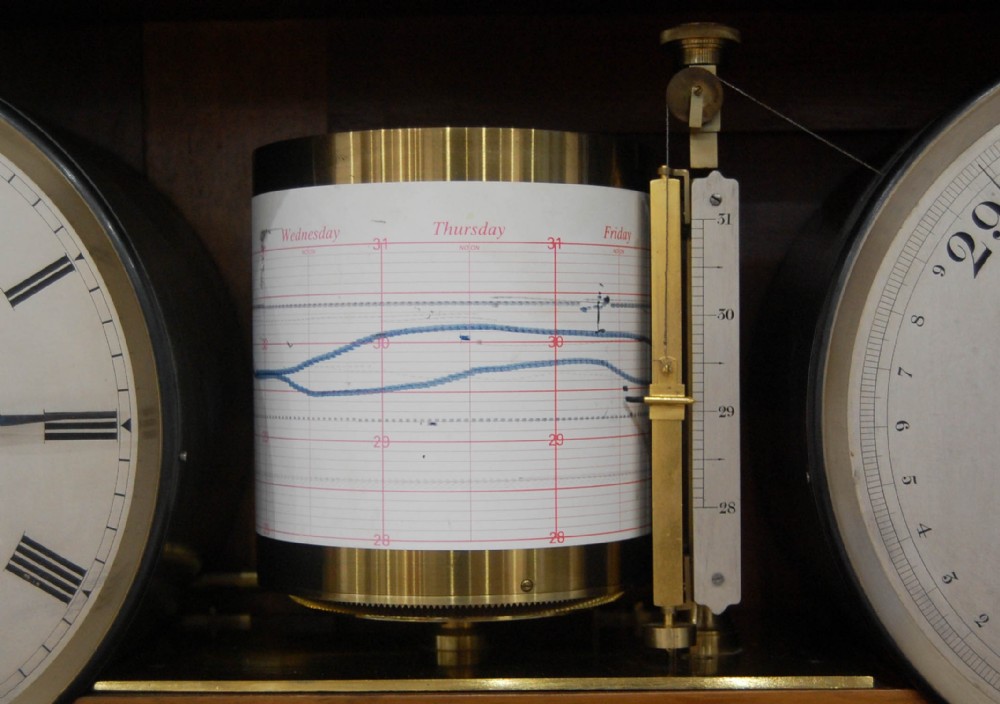
The central section contains a barograph type recording drum which rests upon a toothed gear wheel to the base and is rotated by a series of further gears which relate back to the clock movement.
Jason Clarke Antiques

The aneroid barometer has a 7” silvered dial also engraved with the maker’s name. The scale measures 28 to 31 inches of barometric pressure and like the clock, the barometer also drives (by means of a fusee chain) the vertical movement of the nib up and down the scale according to the pressure changes on the barometer. The clock also regulates the horizontal movement of the nib which rotates its position every hour to allow it to make contact with the recording paper. As if the clock did not have enough to do, it also has an unseen gong type mechanism underneath the movement shelf which makes contact with the barometer housing three times an hour. This mechanism being required to ensure that the barometer reading remains absolutely precise when it comes into contact with the paper.

fig 1. Late Victorian Self Recording Aneroid Barometer or Weather Station by JH Steward London
fig 1. Late Victorian Self Recording Aneroid Barometer or Weather Station by Jh Steward London

These wonderful meteorological instruments came to prominence in the 1870’s by which time the aneroid barometer had become a firm domestic favourite. It is as yet unknown who developed this instrument but either Louis Casella or Negretti & Zambra are likely to have played a role in its creation. Casella is known to have been awarded a prize medal at the 1862 Exhibition for self- registering meteorological instruments. His catalogue of 1871 which contains an example of a self-recording aneroid still proudly refers to the fact that he was the “only” instrument maker awarded for this invention suggesting that there was a healthy level of competition associated with the industry. Negretti in their “Treatise on Meteorological instruments” of 1864 also provides reference to mercury self-registering barometers based upon a design from Admiral Sir A Milne who supposedly constructed the first example in 1857. Admiral Fitzroy seems also to have approved of the design and dubbed it an “Atmoscope” or a “barograph”, perhaps the first occasion that the word is seen in print.

fig 2. Late Victorian Self Recording Aneroid Barometer or Weather Station by JH Steward London
fig 2. Late Victorian Self Recording Aneroid Barometer or Weather Station by Jh Steward London

Aside from the above, examples of these aneroid instruments are also known to have been retailed by all prominent scientific instrument makers of the Victorian era and they must have had some continuing popularity as an example remained amongst the product list of the JH Steward catalogue of 1885 where it is described as follows:

fig 3. Late Victorian Self Recording Aneroid Barometer or Weather Station by JH Steward London
fig 3. Late Victorian Self Recording Aneroid Barometer or Weather Station by Jh Steward London

“This instrument is designed to show the various fluctuations which may have taken place in the barometer in the intervals between the hours of observation. It consists of a large and powerful aneroid, with very open range, and scale reading to 100ths of an inch, and an eight day clock, each with eight-inch dials; between these is placed, in a vertical position, a cylinder four inches in diameter. The circumference of this cylinder is furnished with a tooth wheel, which works in an endless screw at the back of the instrument; it has a paper attached to it ruled to coincide with the barometer scale. This paper, besides being rules horizontally into inches and tenths, to correspond with the barometer scale, is divided vertically throughout its entire length of 12 inches into seven principal and seven minor divisions indicated by darker and lighter lines; the dark lines represent the noon, and the lighter lines the midnight of every twenty four hours. The paper (which is metallic prepared) thus lasts one week. Near the paper, a

Height
42cm (16.54")
Width
68cm (26.77")
Depth
21cm (8.27")
Date of Manufacture

Jason Clarke Antiques has dated this piece to the 1880s.

Reference Numbers
Sellingantiques Ref
SA594141
Jason Clarke Antiques
Sellingantiques verified Since Jul 2015
Dealer Profile

You can view the stock and full dealer information on the Jason Clarke Antiques Profile Page
PDF SHARE
SAVE
Late Victorian Self Recording Aneroid Barometer or Weather Station by JH Steward London
1 / 10
Archive I Late Victorian Self Recording Aneroid Barometer or Weather Station by JH Steward London

Late Victorian Self Recording Aneroid Barometer or Weather Station by Jh Steward London
Archive II Late Victorian Self Recording Aneroid Barometer or Weather Station by JH Steward London View II
Archive III Late Victorian Self Recording Aneroid Barometer or Weather Station by JH Steward London View III
Archive IV Late Victorian Self Recording Aneroid Barometer or Weather Station by JH Steward London View IV
Archive V Late Victorian Self Recording Aneroid Barometer or Weather Station by JH Steward London View V
Archive VI Late Victorian Self Recording Aneroid Barometer or Weather Station by JH Steward London View VI
Archive VII Late Victorian Self Recording Aneroid Barometer or Weather Station by JH Steward London View VII
Archive VIII Late Victorian Self Recording Aneroid Barometer or Weather Station by JH Steward London View VIII
Archive IX Late Victorian Self Recording Aneroid Barometer or Weather Station by JH Steward London View IX
Archive X Late Victorian Self Recording Aneroid Barometer or Weather Station by JH Steward London View X
Enlarged Archival View
Telephone 07815 046645
Location
Newbury
Berkshire
United Kingdom
Verified Since Jul 2015
Items For Sale 80
Items Sold 607
Jason Clarke Antiques
Verified Since Jul 2015
View Dealer Info
Location: Newbury, Berkshire, United Kingdom
Verified
Jul 2015
For Sale
80
Sold
607
Late Victorian Self Recording Aneroid Barometer or Weather Station by JH Steward London
Ref: SA594141
Late Victorian Self Recording Aneroid Barometer or Weather Station by JH Steward London
Detail View 1
Detail View 2
Detail View 3
Detail View 4
Detail View 5
Detail View 6
Detail View 7
Detail View 8
Detail View 9
Archival Detail
Every single antique dealer on our platform is individually approved by our internal team. We verify their professional trade history, ethical standards, and photographic quality to ensure a secure, high-standard buying environment. Upon joining, every dealer agrees to a strict 9-point code of conduct. While issues can occasionally arise, our dealers typically resolve them swiftly and directly with the buyer. In fact, since our founding in 2002, Sellingantiques has only had to step in to help resolve an issue on roughly five occasions—a true testament to the quality of our dealers and their dedication to your happiness.
Our dealers are highly experienced in packing and shipping fragile, high-value antiques. Because you are in direct contact with the dealer, you will be able to easily go through all available shipping and insurance options together to ensure your item arrives safely.
Antiques are the ultimate green purchase. By choosing historical pieces over newly manufactured goods, you completely eliminate the carbon footprint of modern mass production while preserving exceptional, timeless craftsmanship.
items
Add keywords to the filter
Price
£100
£250000
Era
Movements
Material
Origin
Stock Location
Freshness
Online Payments
Categories