Jason Clarke Antiques has dated this piece to the 1880s.
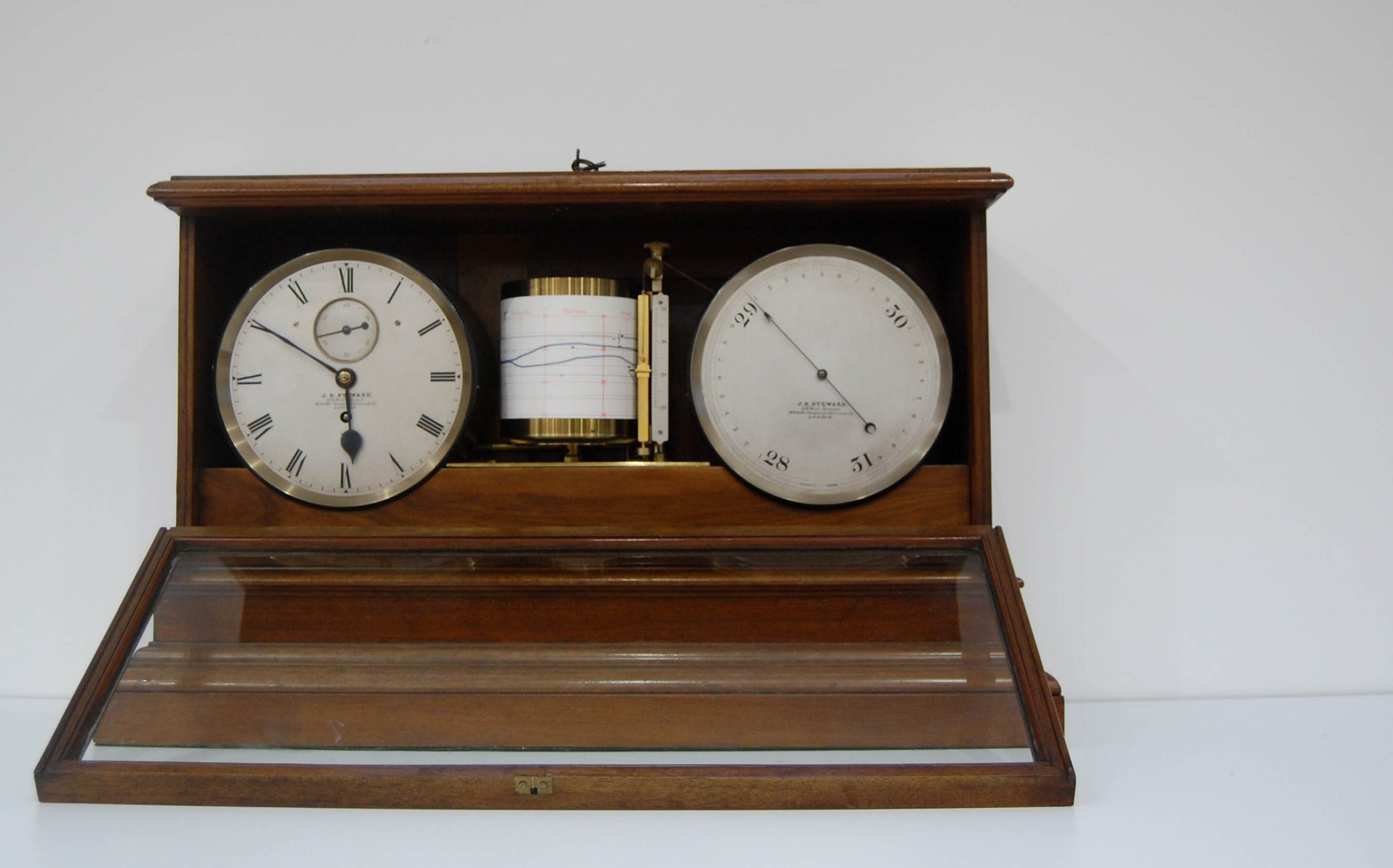
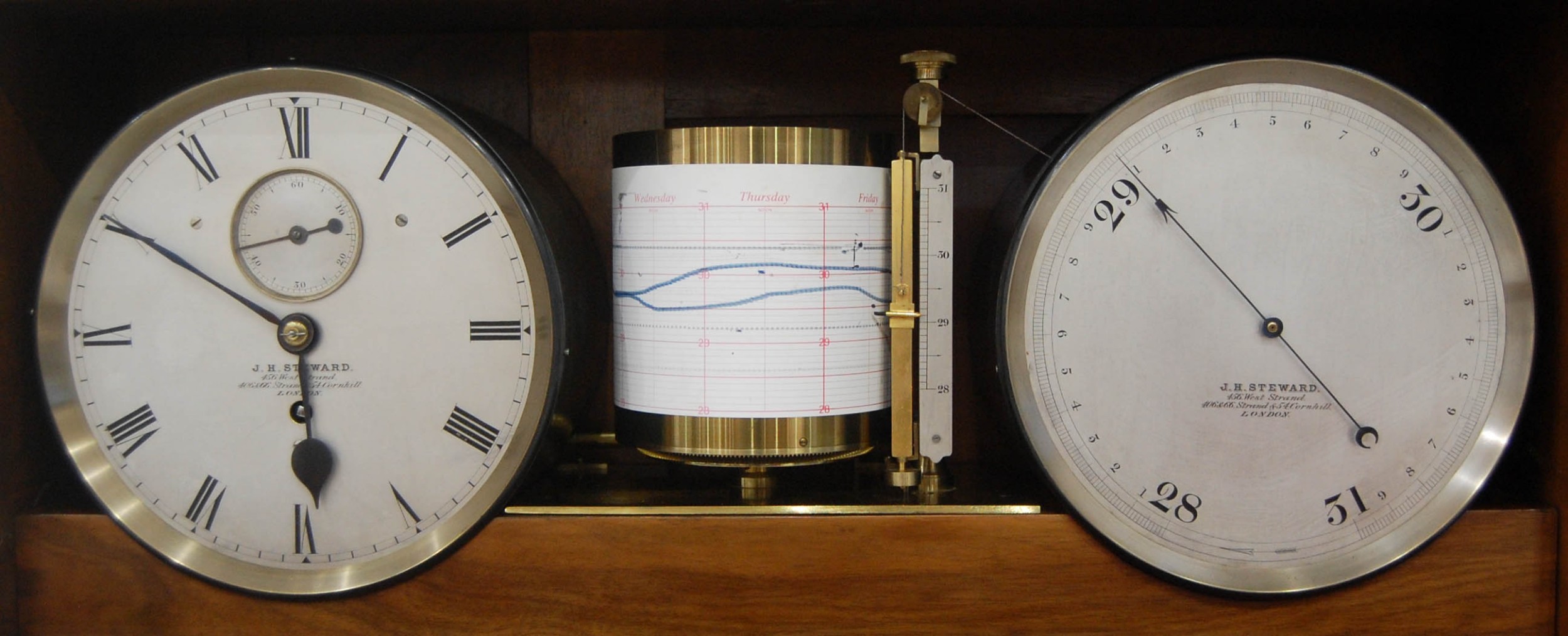
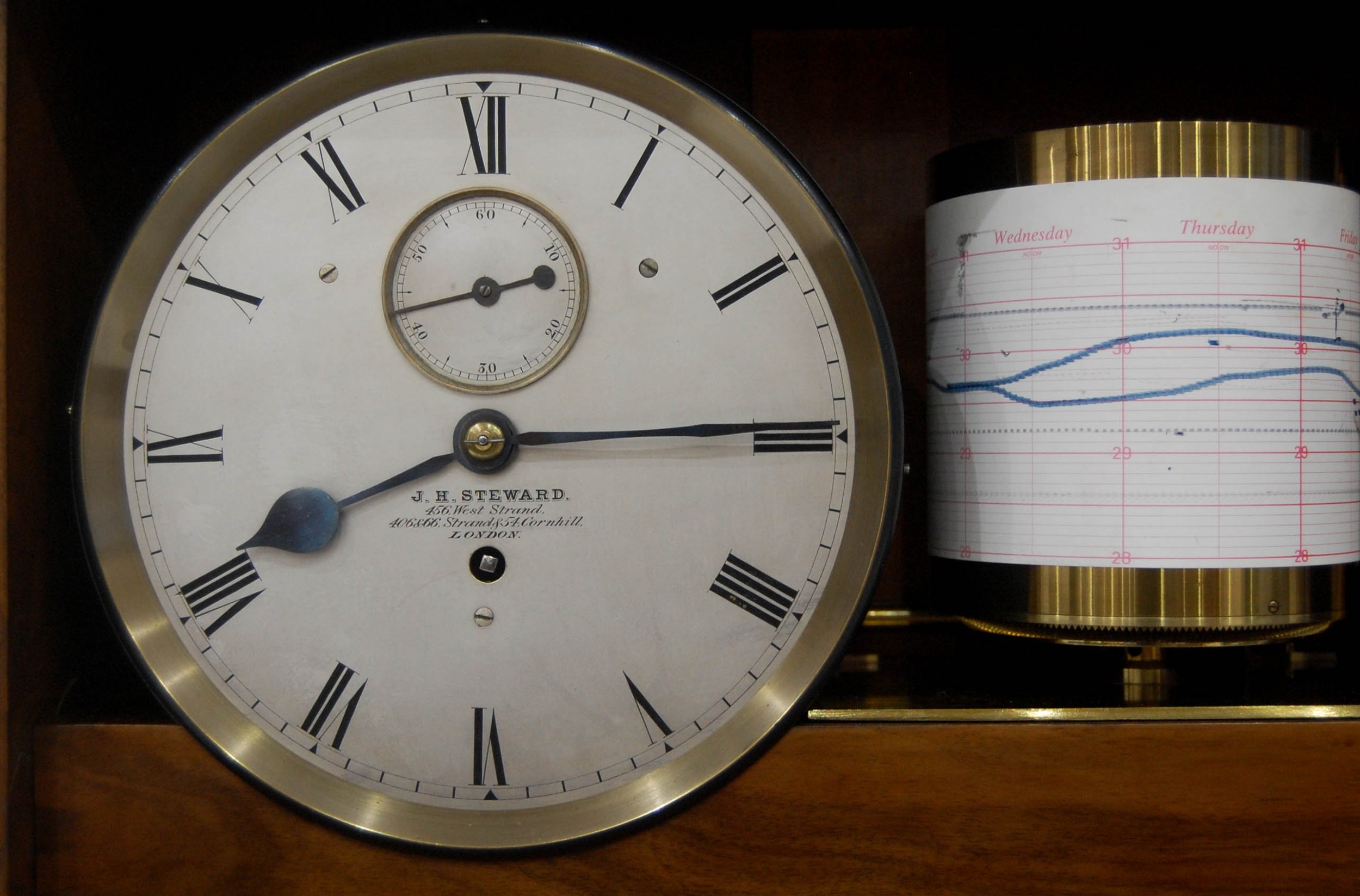
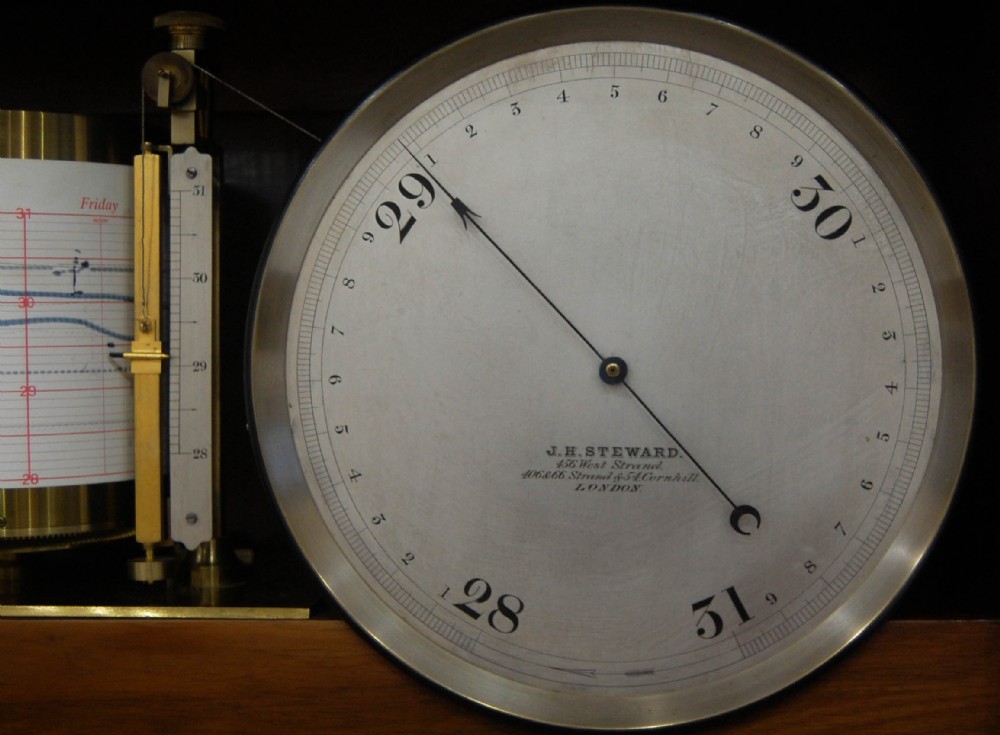
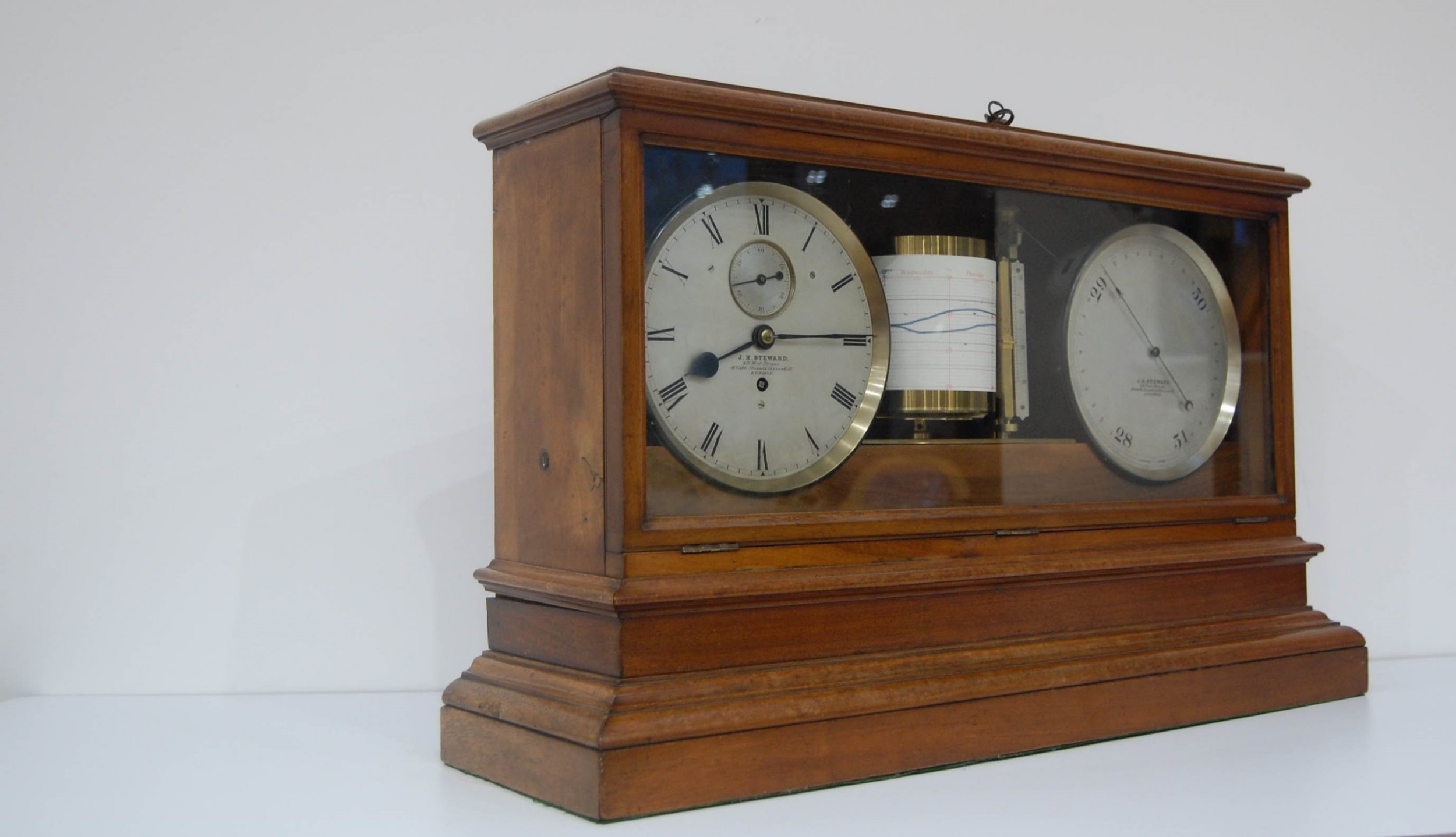
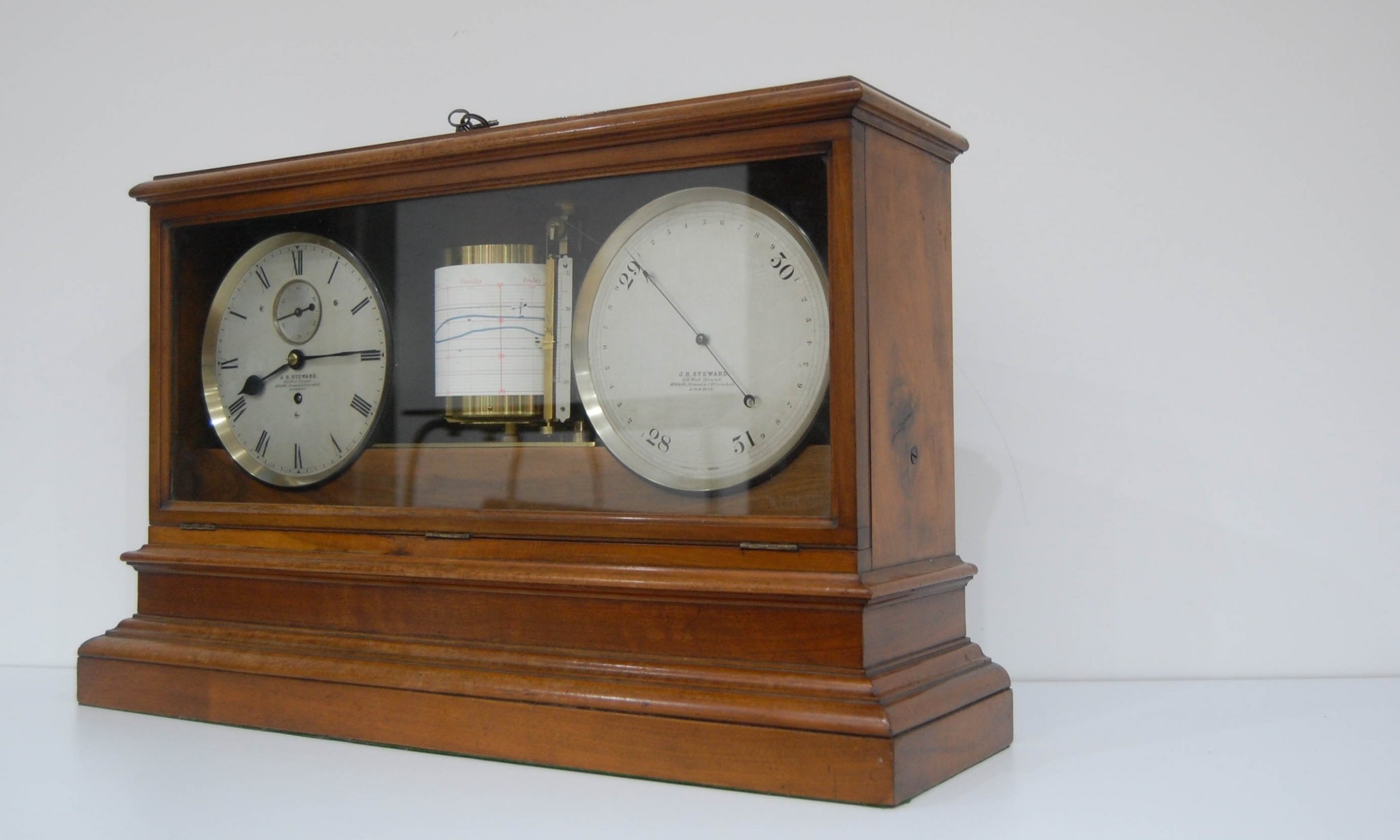
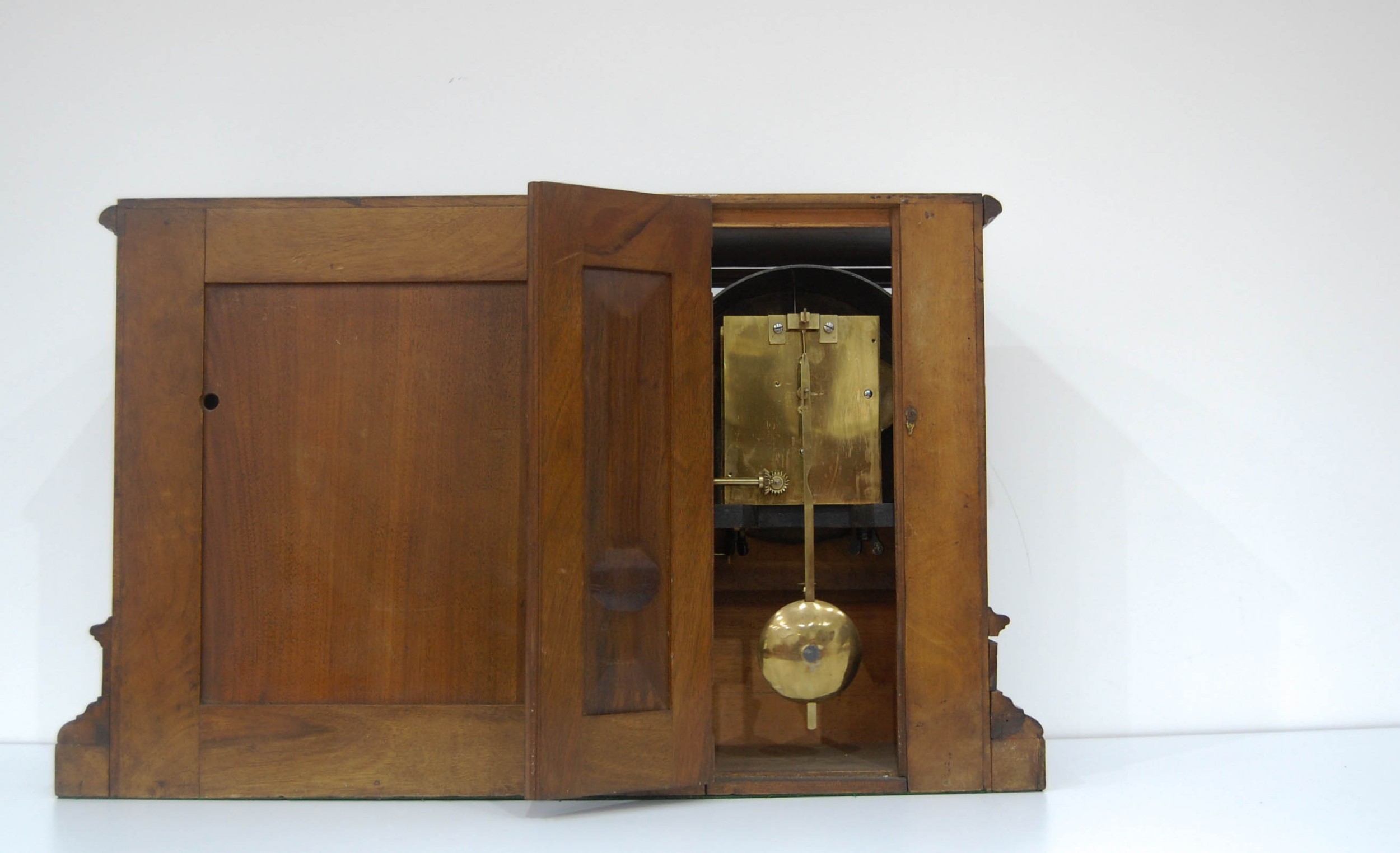
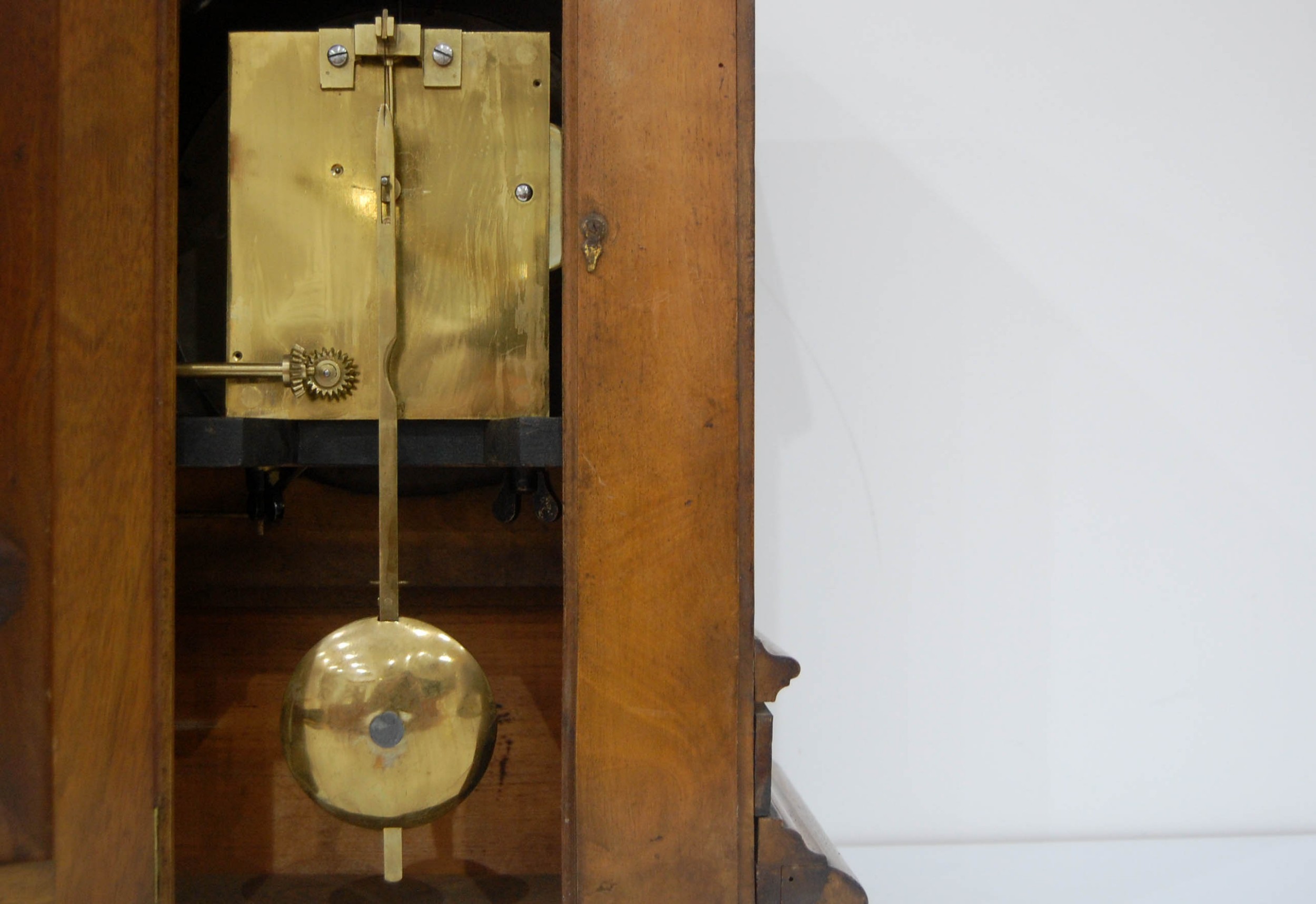
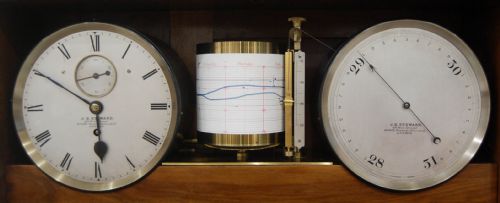
This beautifully imposing instrument is comprised of a super quality chain fuse movement with original pendulum, blue steel spade hands, 7” silvered dial to the front incorporating a secondary seconds dial and engraved to “JH Steward, 456 West Strand, 406 & 66 Strand and 54 Cornhill, London”.
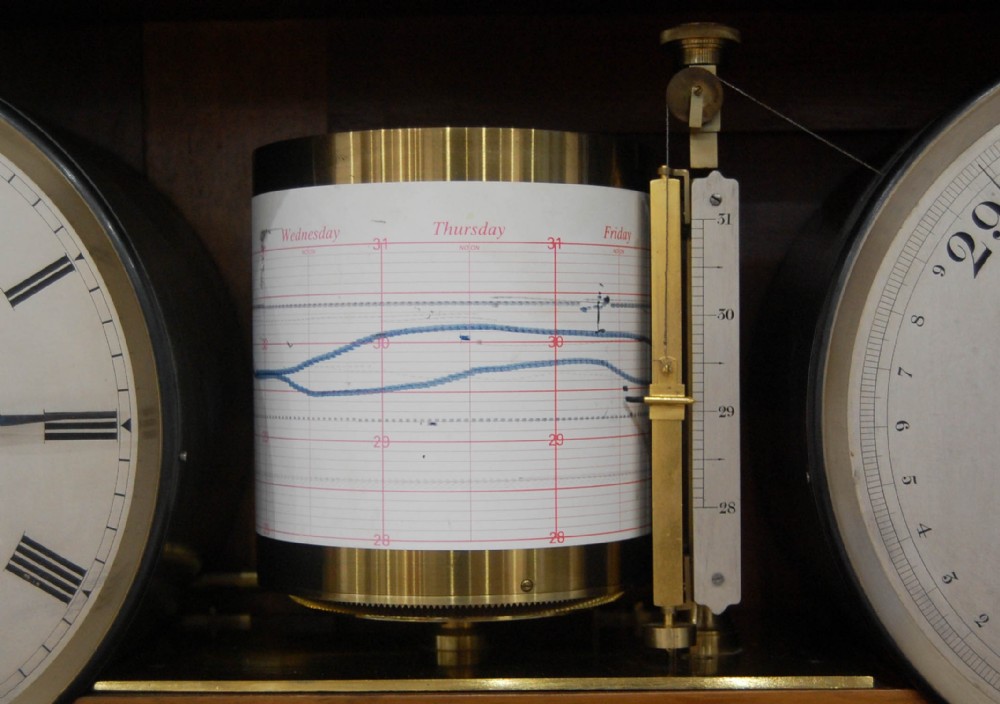
The aneroid barometer has a 7” silvered dial also engraved with the maker’s name. The scale measures 28 to 31 inches of barometric pressure and like the clock, the barometer also drives (by means of a fusee chain) the vertical movement of the nib up and down the scale according to the pressure changes on the barometer. The clock also regulates the horizontal movement of the nib which rotates its position every hour to allow it to make contact with the recording paper. As if the clock did not have enough to do, it also has an unseen gong type mechanism underneath the movement shelf which makes contact with the barometer housing three times an hour. This mechanism being required to ensure that the barometer reading remains absolutely precise when it comes into contact with the paper.
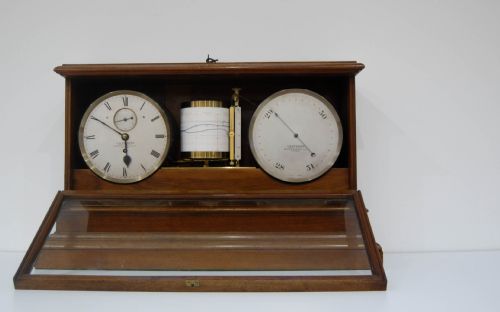
These wonderful meteorological instruments came to prominence in the 1870’s by which time the aneroid barometer had become a firm domestic favourite. It is as yet unknown who developed this instrument but either Louis Casella or Negretti & Zambra are likely to have played a role in its creation. Casella is known to have been awarded a prize medal at the 1862 Exhibition for self- registering meteorological instruments. His catalogue of 1871 which contains an example of a self-recording aneroid still proudly refers to the fact that he was the “only” instrument maker awarded for this invention suggesting that there was a healthy level of competition associated with the industry. Negretti in their “Treatise on Meteorological instruments” of 1864 also provides reference to mercury self-registering barometers based upon a design from Admiral Sir A Milne who supposedly constructed the first example in 1857. Admiral Fitzroy seems also to have approved of the design and dubbed it an “Atmoscope” or a “barograph”, perhaps the first occasion that the word is seen in print.
Aside from the above, examples of these aneroid instruments are also known to have been retailed by all prominent scientific instrument makers of the Victorian era and they must have had some continuing popularity as an example remained amongst the product list of the JH Steward catalogue of 1885 where it is described as follows:
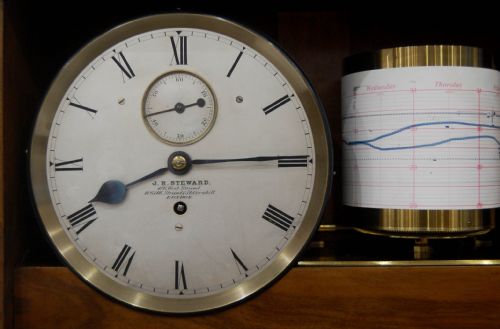
“This instrument is designed to show the various fluctuations which may have taken place in the barometer in the intervals between the hours of observation. It consists of a large and powerful aneroid, with very open range, and scale reading to 100ths of an inch, and an eight day clock, each with eight-inch dials; between these is placed, in a vertical position, a cylinder four inches in diameter. The circumference of this cylinder is furnished with a tooth wheel, which works in an endless screw at the back of the instrument; it has a paper attached to it ruled to coincide with the barometer scale. This paper, besides being rules horizontally into inches and tenths, to correspond with the barometer scale, is divided vertically throughout its entire length of 12 inches into seven principal and seven minor divisions indicated by darker and lighter lines; the dark lines represent the noon, and the lighter lines the midnight of every twenty four hours. The paper (which is metallic prepared) thus lasts one week. Near the paper, a
Jason Clarke Antiques has dated this piece to the 1880s.
You can view the stock and full dealer information on the Jason Clarke Antiques Profile Page
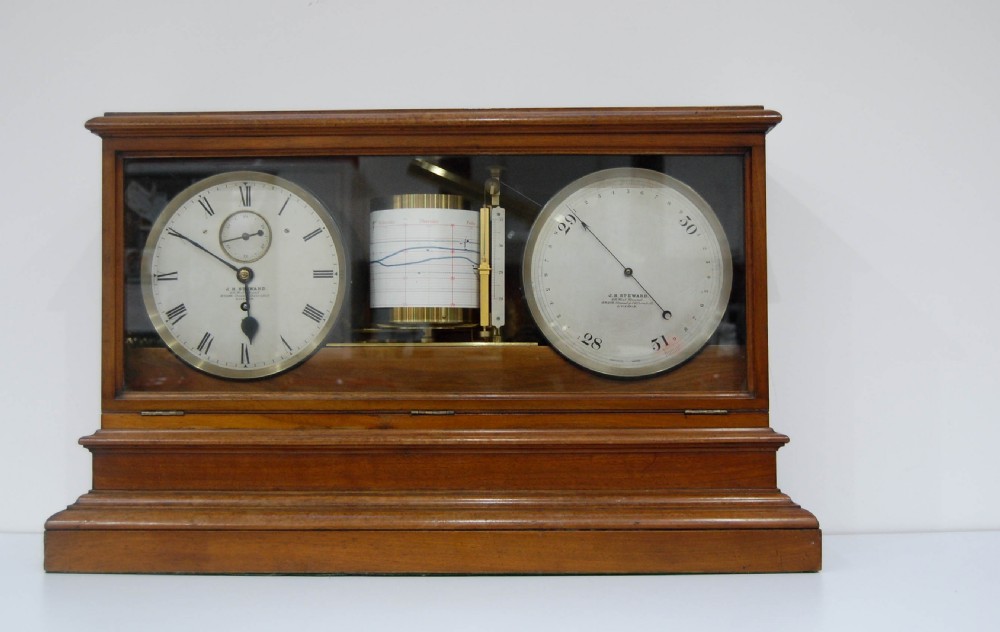
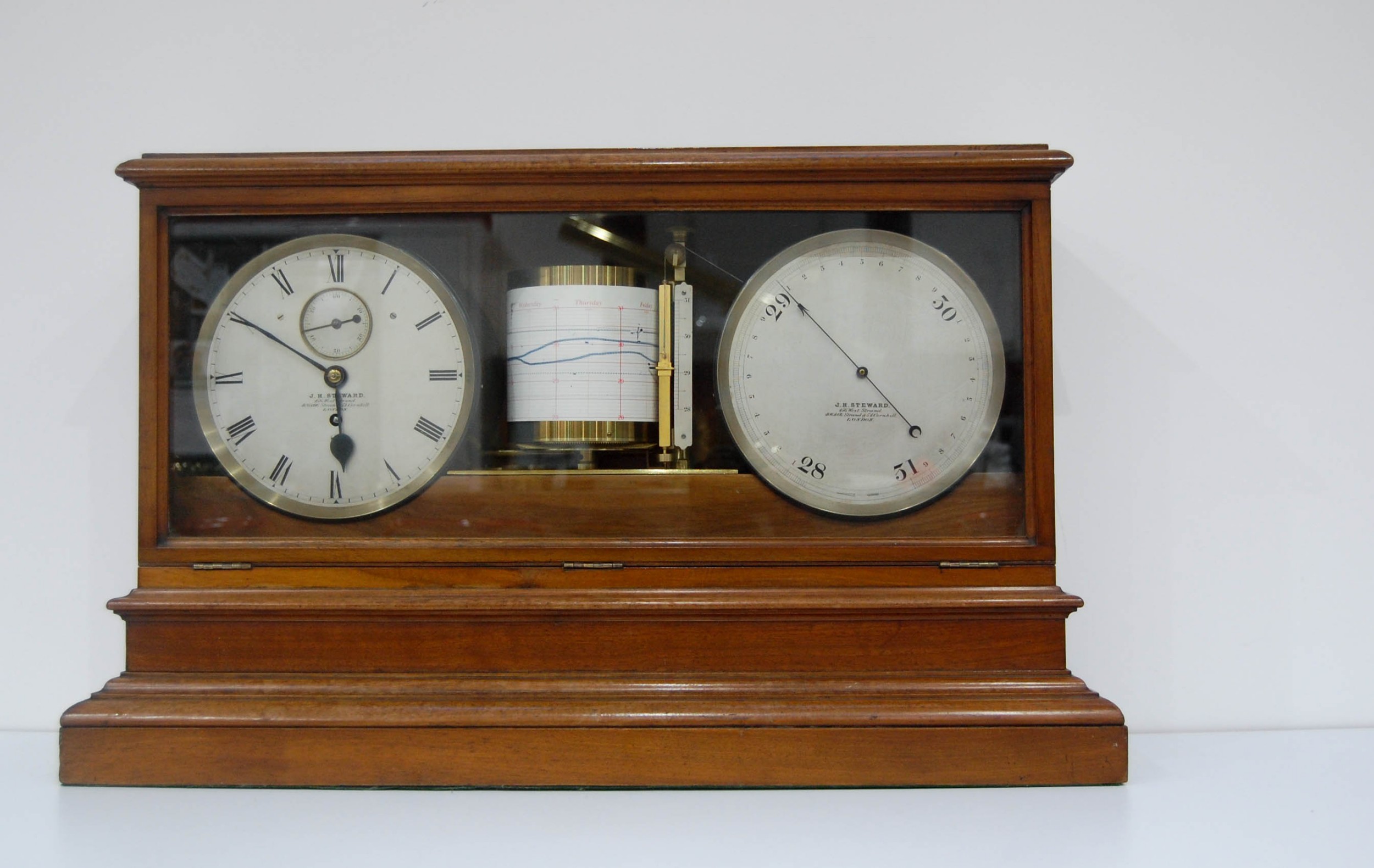
Late Victorian Self Recording Aneroid Barometer or Weather Station by Jh Steward London