4,615  PAGES BROWSED TODAY PAGES TODAY • 0 ANTIQUES UPLOADED TODAYNEW ARRIVALS
GIFTS
LATEST STOCK
Sort Order
Items Per Page
Browse Categories
Sort order
Items per page
ID #SA584169
SOLD
Email Phone
Save
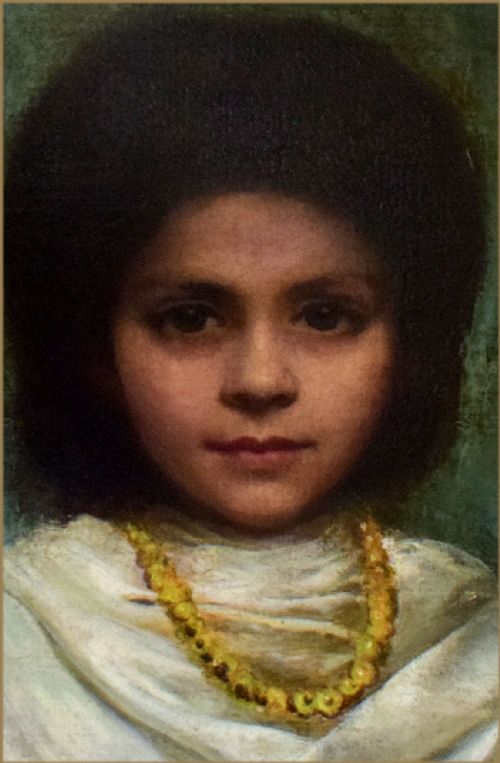
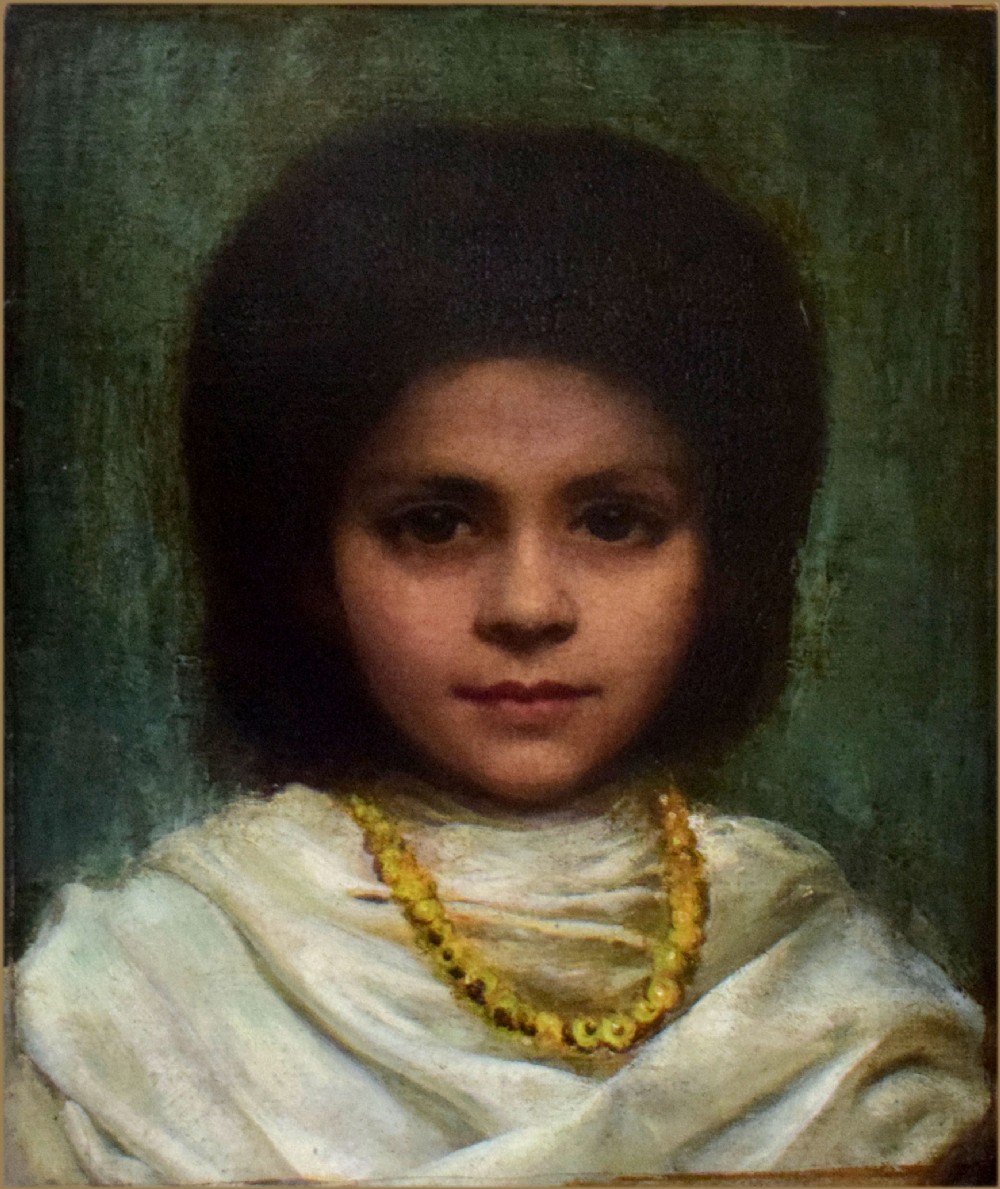
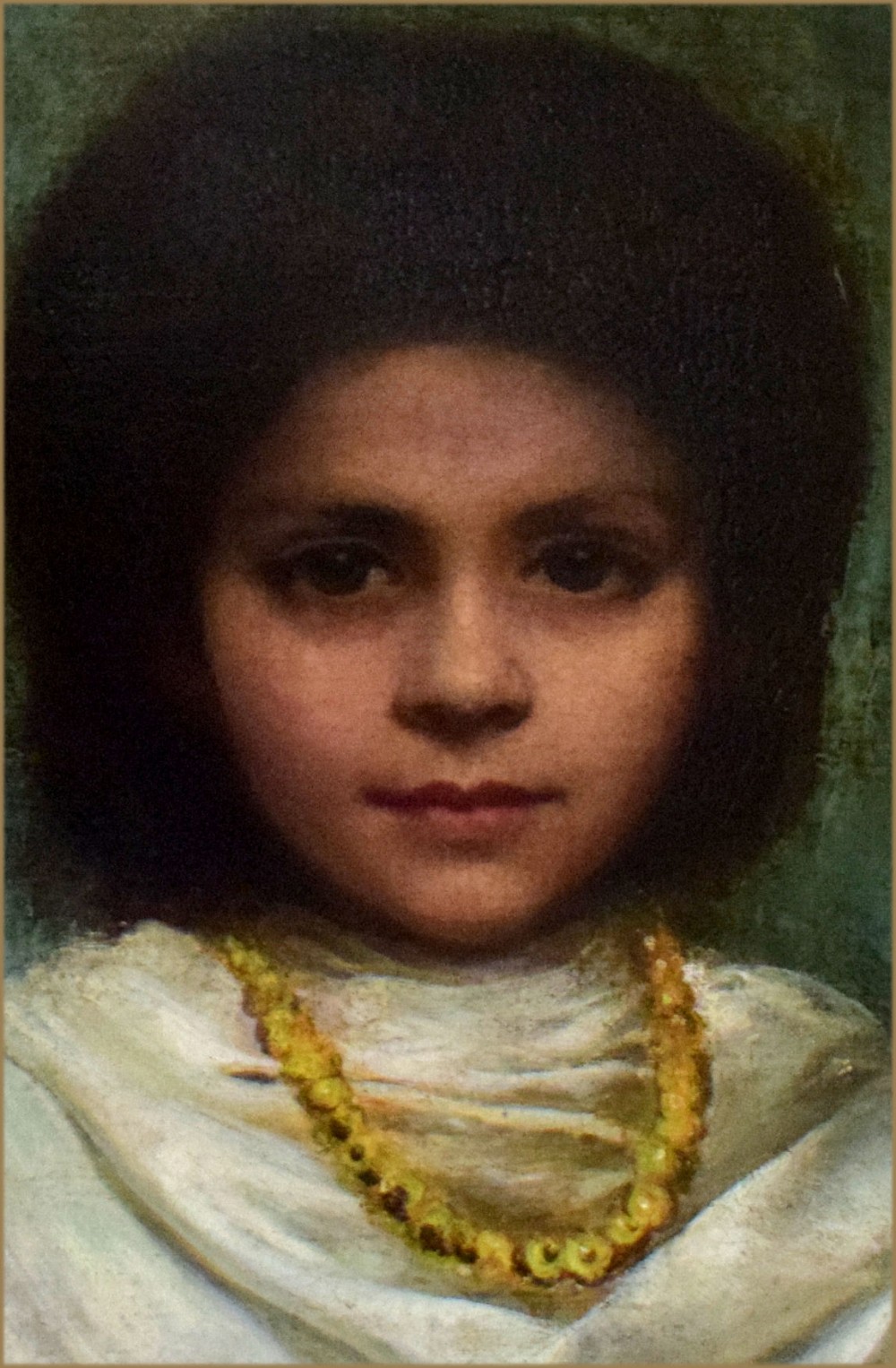
Attributed to Eugène Girardet, 1853 - 1907 Portrait of a Bedouin Child Wearing a White Shawl and Necklace
Sold by Artware Fineart
sold SA584169
Sorry, but this item has been sold.

Artware Fineart

Sellingantiques Verified Since Sep 2008
Browse dealers 243 items
Id #SA584169
PDF SHARE
SAVE

Attributed to Eugène Girardet, 1853 - 1907 Portrait of a Bedouin Child Wearing a White Shawl and Necklace

19th century
Sold 7 January 2019 · Artware Fineart
This “ Attributed to Eugène Girardet, 1853 - 1907 Portrait of a Bedouin Child Wearing a White Shawl and Necklace ” found a buyer.

It was listed by Artware Fineart. Sold pieces stay on Sellingantiques as a record of what has passed through, and the next one is rarely far away.

Description

Attributed to Eugène Girardet, 1853 - 1907

Portrait of a Bedouin Child wearing a white shawl and necklace

oil on canvas

40 x 30 cm. (16 x 12 in.)

Orientalism is a term used by art historians and literary and cultural studies scholars for the imitation or depiction of aspects in Middle Eastern, South Asian, and East Asian cultures. These depictions are usually done by writers, designers, and artists from the West. In particular, Orientalist painting, depicting more specifically "the Middle East",[1] was one of the many specialisms of 19th-century academic art, and the literature of Western countries took a similar interest in Oriental themes.
Since the publication of Edward Said's Orientalism in 1978, much academic discourse has begun to use the term "Orientalism" to refer to a general patronizing Western attitude towards Middle Eastern, Asian, and North African societies. In Said's analysis, the West essentializes these societies as static and undeveloped—thereby fabricating a view of Oriental culture that can be studied, depicted, and reproduced. Implicit in this fabrication, writes Said, is the idea that Western society is developed, rational, flexible, and superior.
Orientalism refers to the Orient, in reference and opposition to the Occident; the East and the West, respectively.The word Orient entered the English language as the Middle French orient. The root word oriens, from the Latin Oriens, has synonymous denotations: The eastern part of the world; the sky whence comes the sun; the east; the rising sun, etc.; yet the denotation changed as a term of geography. In the "Monk's Tale" (1375), Geoffrey Chaucer wrote: "That they conquered many regnes grete / In the orient, with many a fair citee." The term "orient" refers to countries east of the Mediterranean Sea and Southern Europe. In Place of Fear (1952), Aneurin Bevan used an expanded denotation of the Orient that comprehended East Asia: "the awakening of the Orient under the impact of Western ideas". Edward Said said that Orientalism "enables the political, economic, cultural and social domination of the West, not just during colonial times, but also in the present."

In art history, the term Orientalism refers to the works of the Western artists who specialized in Oriental subjects, produced from their travels in Western Asia, during the 19th century. In that time, artists and scholars were described as Orientalists, especially in France, where the dismissive use of the term "Orientalist" was made popular by the art critic Jules-Antoine Castagnary. Despite such social disdain for a style of representational art, the French Society of Orientalist Painters was founded in 1893, with Jean-Léon Gérôme as the honorary president; whereas in Britain, the term Orientalist identified "an artist".

The formation of the French Orientalist Painters Society changed the consciousness of practitioners towards the end of the 19th century, since artists could now see themselves as part of a distinct art movement. As an art movement, Orientalist painting is generally treated as one of the many branches of 19th-century academic art; however, many different styles of Orientalist art were in evidence. Art historians tend to identify two broad types of Orientalist artist: the realists who carefully painted what they observed and those who imagined Orientalist scenes without ever leaving the studio. French painters such as Eugène Delacroix (1798–1863) and Jean-Léon Gérôme (1824–1904) are widely regarded as the leading luminaries of the Orientalist movement.

In the book Orientalism (1978), the cultural critic Edward Said redefined the term Orientalism to describe a pervasive Western tradition — academic and artistic — of prejudiced outsider-interpretations of the Eastern world, which was shaped by the cultural attitudes of European imperialism in the 18th and 19th centuri

Date of Manufacture

Artware Fineart has dated this piece to the 19th Century.

Physical Dimensions
Height
40cm (15.75")
Width
30cm (11.81")
Depth
2cm (0.79")
Reference Numbers
Sellingantiques Reference
SA584169
Dealers Internal Reference
3972
Description
Attributed to Eugène Girardet, 1853 - 1907

Portrait of a Bedouin Child wearing a white shawl and necklace

oil on canvas

40 x 30 cm. (16 x 12 in.)

“
Orientalism is a term used by art historians and literary and cultural studies scholars for the imitation or depiction of aspects in Middle Eastern, South Asian, and East Asian cultures.
Artware Fineart

These depictions are usually done by writers, designers, and artists from the West. In particular, Orientalist painting, depicting more specifically "the Middle East",[1] was one of the many specialisms of 19th-century academic art, and the literature of Western countries took a similar interest in Oriental themes.

fig 1. 
Attributed to Eugène Girardet, 1853 - 1907
Portrait of a Bedouin Child wearing a white shawl and necklace
fig 1. Attributed to Eugène Girardet, 1853 - 1907 Portrait of a Bedouin Child Wearing a White Shawl and Necklace

Since the publication of Edward Said's Orientalism in 1978, much academic discourse has begun to use the term "Orientalism" to refer to a general patronizing Western attitude towards Middle Eastern, Asian, and North African societies. In Said's analysis, the West essentializes these societies as static and undeveloped—thereby fabricating a view of Oriental culture that can be studied, depicted, and reproduced. Implicit in this fabrication, writes Said, is the idea that Western society is developed, rational, flexible, and superior.

fig 2. 
Attributed to Eugène Girardet, 1853 - 1907
Portrait of a Bedouin Child wearing a white shawl and necklace
fig 2. Attributed to Eugène Girardet, 1853 - 1907 Portrait of a Bedouin Child Wearing a White Shawl and Necklace

Orientalism refers to the Orient, in reference and opposition to the Occident; the East and the West, respectively.The word Orient entered the English language as the Middle French orient. The root word oriens, from the Latin Oriens, has synonymous denotations: The eastern part of the world; the sky whence comes the sun; the east; the rising sun, etc.; yet the denotation changed as a term of geography. In the "Monk's Tale" (1375), Geoffrey Chaucer wrote: "That they conquered many regnes grete / In the orient, with many a fair citee." The term "orient" refers to countries east of the Mediterranean Sea and Southern Europe. In Place of Fear (1952), Aneurin Bevan used an expanded denotation of the Orient that comprehended East Asia: "the awakening of the Orient under the impact of Western ideas". Edward Said said that Orientalism "enables the political, economic, cultural and social domination of the West, not just during colonial times, but also in the present."

In art history, the term Orientalism refers to the works of the Western artists who specialized in Oriental subjects, produced from their travels in Western Asia, during the 19th century. In that time, artists and scholars were described as Orientalists, especially in France, where the dismissive use of the term "Orientalist" was made popular by the art critic Jules-Antoine Castagnary. Despite such social disdain for a style of representational art, the French Society of Orientalist Painters was founded in 1893, with Jean-Léon Gérôme as the honorary president; whereas in Britain, the term Orientalist identified "an artist".

The formation of the French Orientalist Painters Society changed the consciousness of practitioners towards the end of the 19th century, since artists could now see themselves as part of a distinct art movement. As an art movement, Orientalist painting is generally treated as one of the many branches of 19th-century academic art; however, many different styles of Orientalist art were in evidence. Art historians tend to identify two broad types of Orientalist artist: the realists who carefully painted what they observed and those who imagined Orientalist scenes without ever leaving the studio. French painters such as Eugène Delacroix (1798–1863) and Jean-Léon Gérôme (1824–1904) are widely regarded as the leading luminaries of the Orientalist movement.

In the book Orientalism (1978), the cultural critic Edward Said redefined the term Orientalism to describe a pervasive Western tradition — academic and artistic — of prejudiced outsider-interpretations of the Eastern world, which was shaped by the cultural attitudes of European imperialism in the 18th and 19th centuri

Date of Manufacture

Artware Fineart has dated this piece to the 19th Century.

Height
40cm (15.75")
Width
30cm (11.81")
Depth
2cm (0.79")
Reference Numbers
Sellingantiques Ref
SA584169
Dealers Internal Ref
3972
Artware Fineart
Sellingantiques verified Since Sep 2008
Dealer Profile

You can view the stock and full dealer information on the Artware Fineart Profile Page
PDF SHARE
SAVE

Attributed to Eugène Girardet, 1853 - 1907
Portrait of a Bedouin Child wearing a white shawl and necklace
SOLD6+ MONTHS AGO
1 / 3
Archive I 
Attributed to Eugène Girardet, 1853 - 1907
Portrait of a Bedouin Child wearing a white shawl and necklace
SOLD6+ MONTHS AGO

Attributed to Eugène Girardet, 1853 - 1907 Portrait of a Bedouin Child Wearing a White Shawl and Necklace
Archive II 
Attributed to Eugène Girardet, 1853 - 1907
Portrait of a Bedouin Child wearing a white shawl and necklace
 View II
Archive III 
Attributed to Eugène Girardet, 1853 - 1907
Portrait of a Bedouin Child wearing a white shawl and necklace
 View III
Enlarged Archival View
Telephone 07958 699 645
Location
18 La Gare
51 Surrey Row
London
SE1 0BZ
United Kingdom
Verified Since Sep 2008
Items For Sale 243
Items Sold 223
Artware Fineart
Verified Since Sep 2008
View Dealer Info
Location: 18 La Gare , 51 Surrey Row , London , SE1 0BZ , United Kingdom
Verified
Sep 2008
For Sale
243
Sold
223

Attributed to Eugène Girardet, 1853 - 1907
Portrait of a Bedouin Child wearing a white shawl and necklace
Attributed to Eugène Girardet, 1853 - 1907 Portrait of a Bedouin Child wearing a white shawl and necklace
Ref: SA584169

Attributed to Eugène Girardet, 1853 - 1907
Portrait of a Bedouin Child wearing a white shawl and necklace
Detail View 1
Detail View 2
Archival Detail
Every single antique dealer on our platform is individually approved by our internal team. We verify their professional trade history, ethical standards, and photographic quality to ensure a secure, high-standard buying environment. Upon joining, every dealer agrees to a strict 9-point code of conduct. While issues can occasionally arise, our dealers typically resolve them swiftly and directly with the buyer. In fact, since our founding in 2002, Sellingantiques has only had to step in to help resolve an issue on roughly five occasions—a true testament to the quality of our dealers and their dedication to your happiness.
Our dealers are highly experienced in packing and shipping fragile, high-value antiques. Because you are in direct contact with the dealer, you will be able to easily go through all available shipping and insurance options together to ensure your item arrives safely.
Antiques are the ultimate green purchase. By choosing historical pieces over newly manufactured goods, you completely eliminate the carbon footprint of modern mass production while preserving exceptional, timeless craftsmanship.
Written by Sellingantiques from the dealer’s photographs and listing
  • Period19th century
  • SizeH 40 cm (16 in) x W 30 cm (12 in) x D 2 cm (1 in)
items
Add keywords to the filter
Price
£100
£250000
Era
Period
Style
Material
Origin
Stock Location
Recently Added
Online Payments
Categories