It was listed by Jason Clarke Antiques. Sold pieces stay on Sellingantiques as a record of what has passed through, and the next one is rarely far away.
Jason Clarke Antiques has dated this piece to the 1870s.
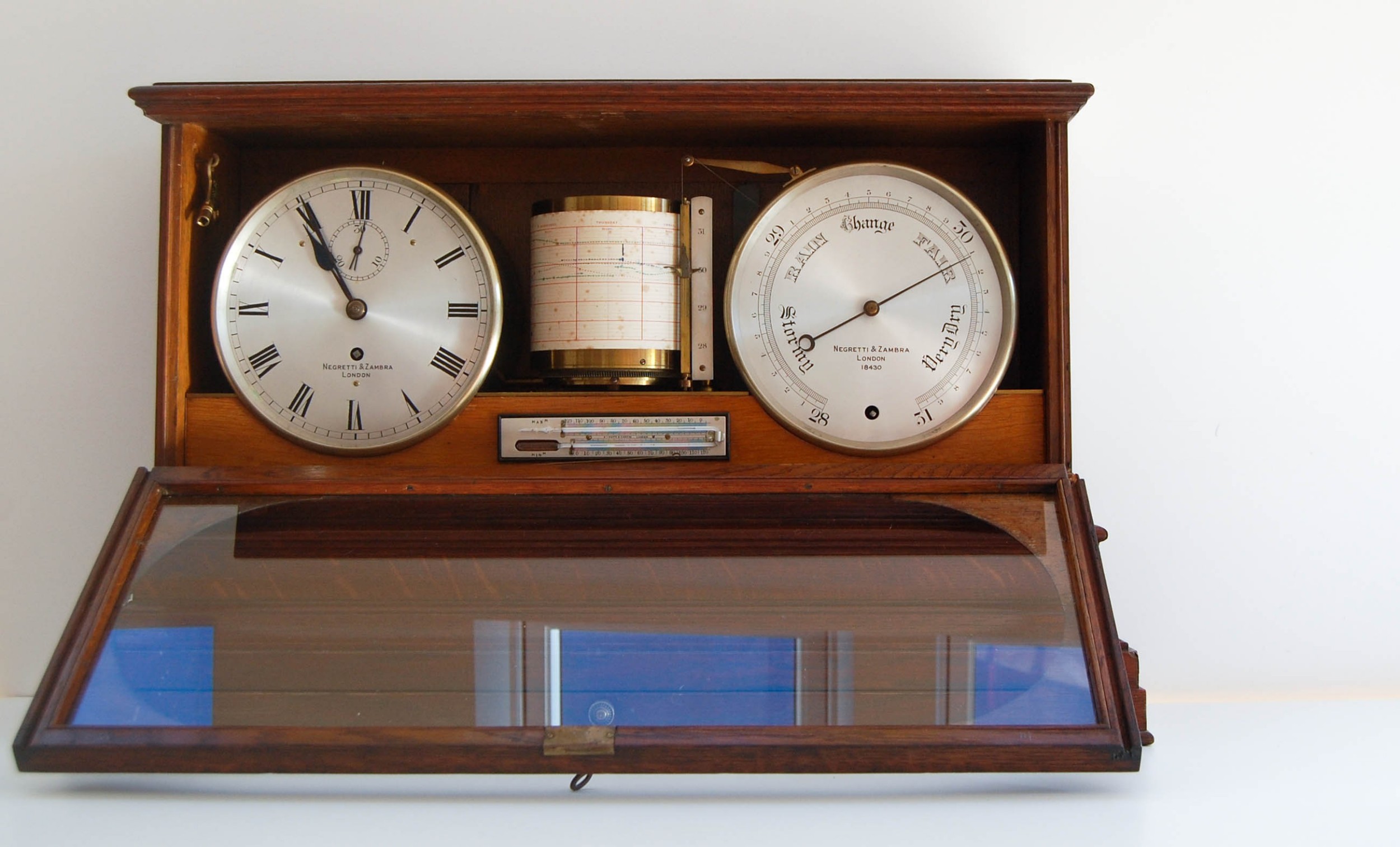
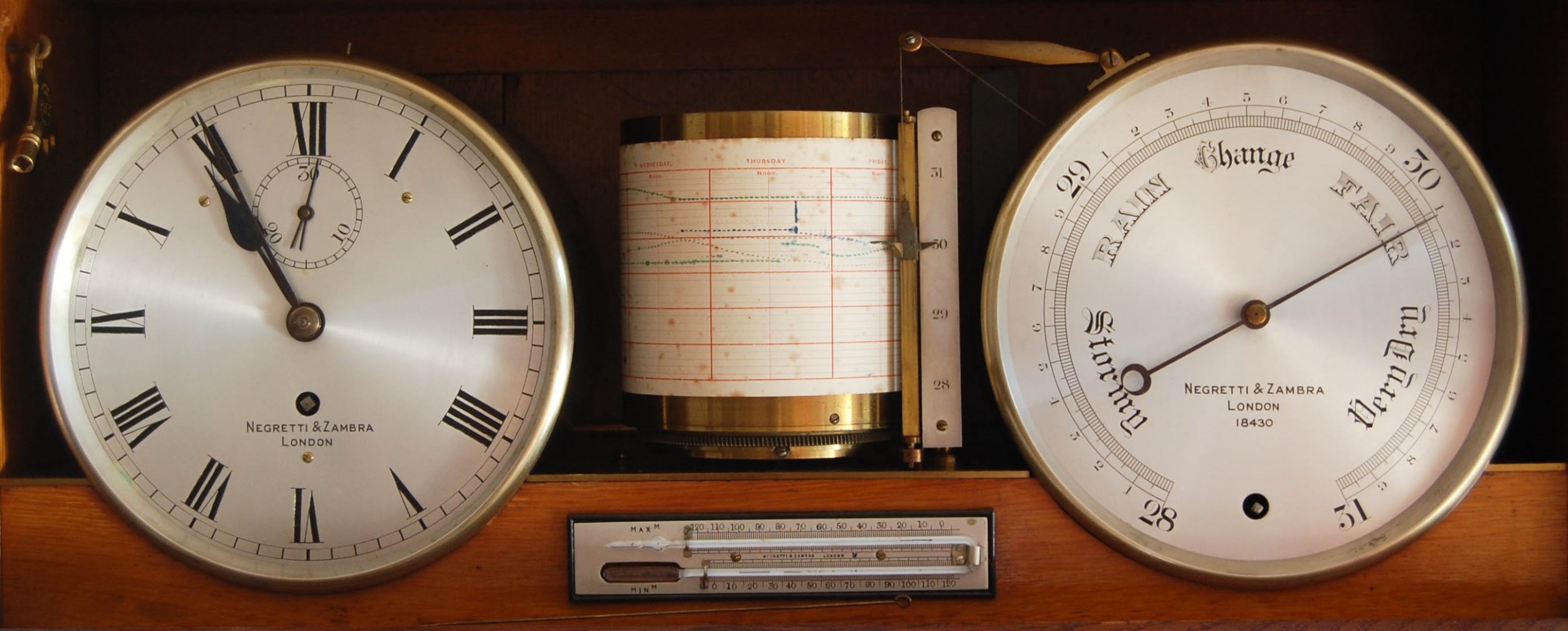
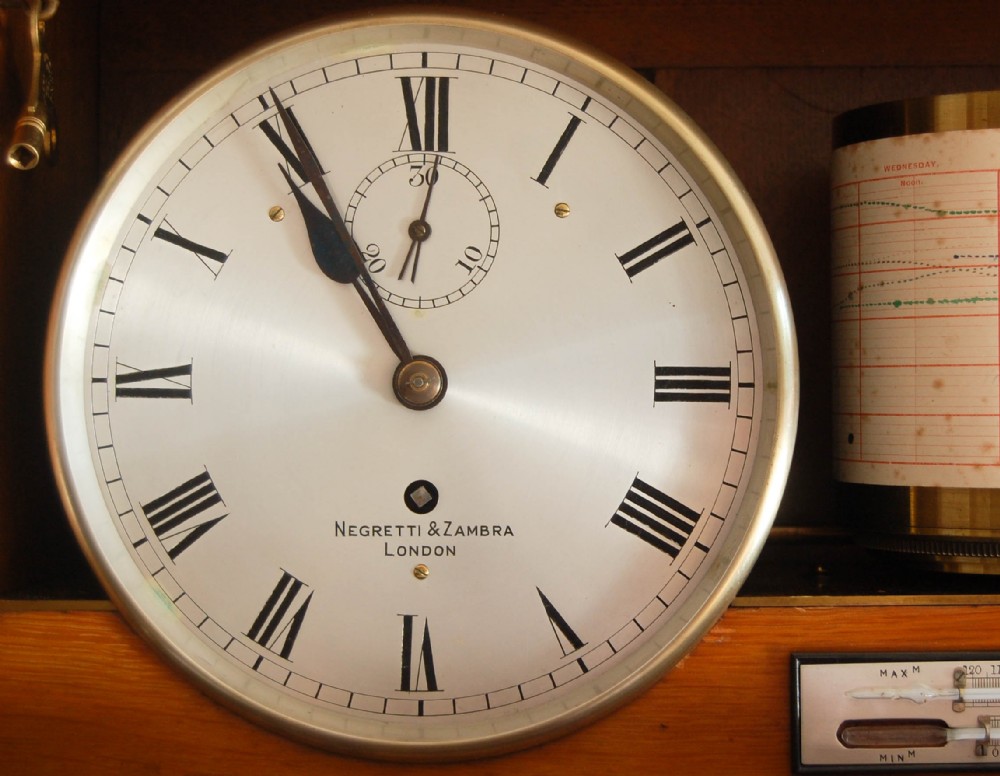
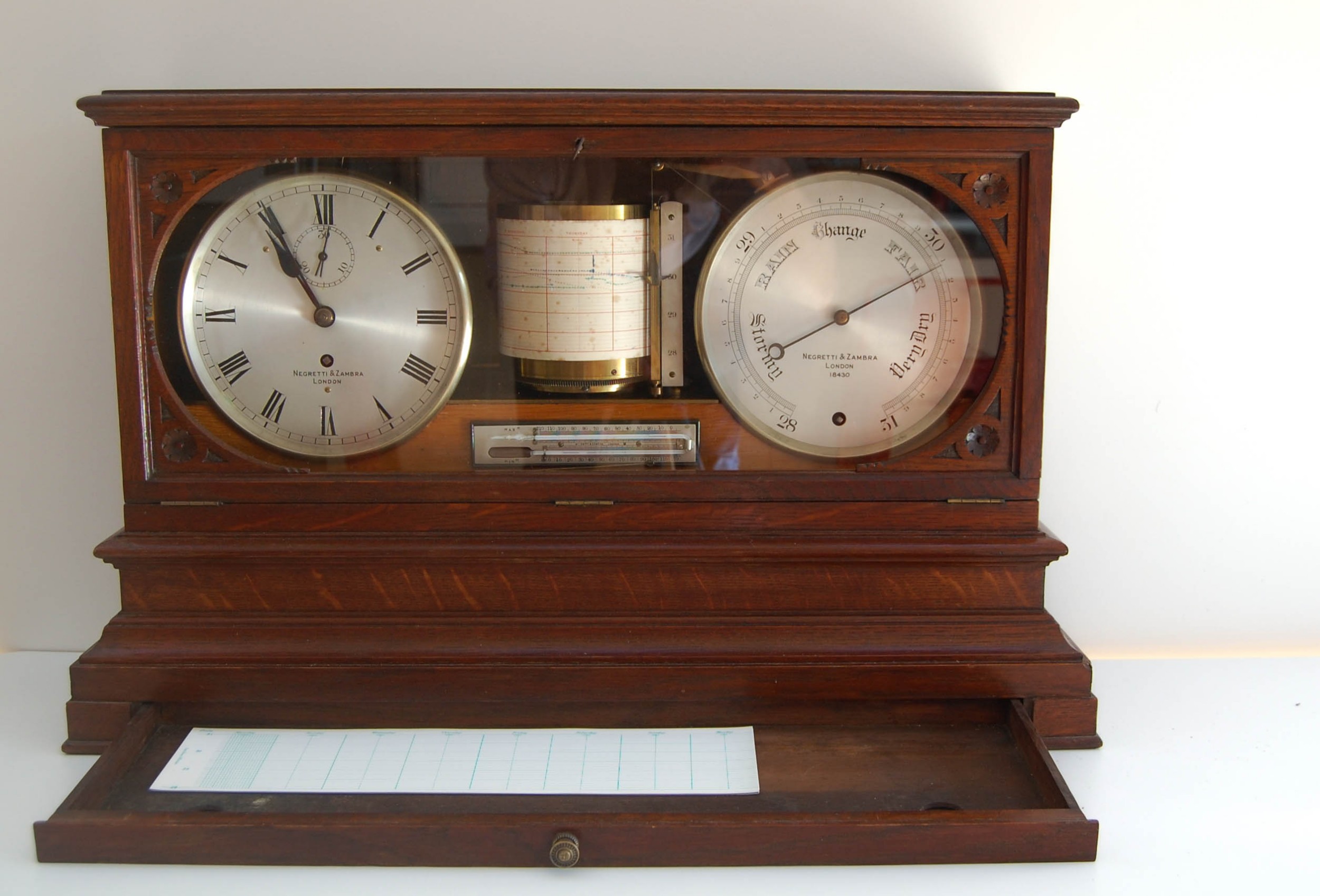
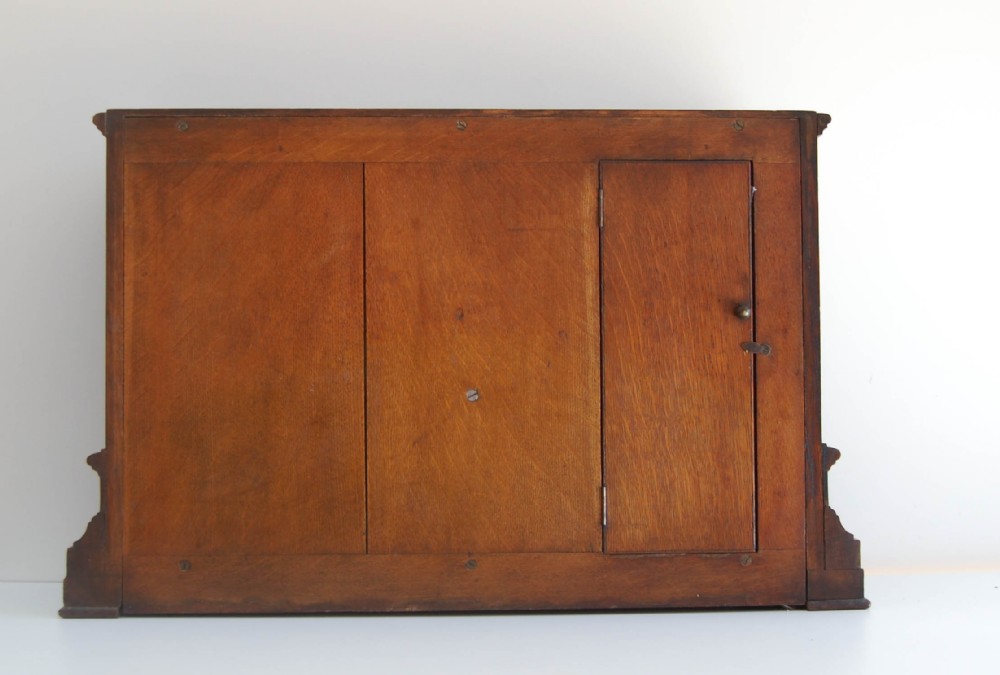
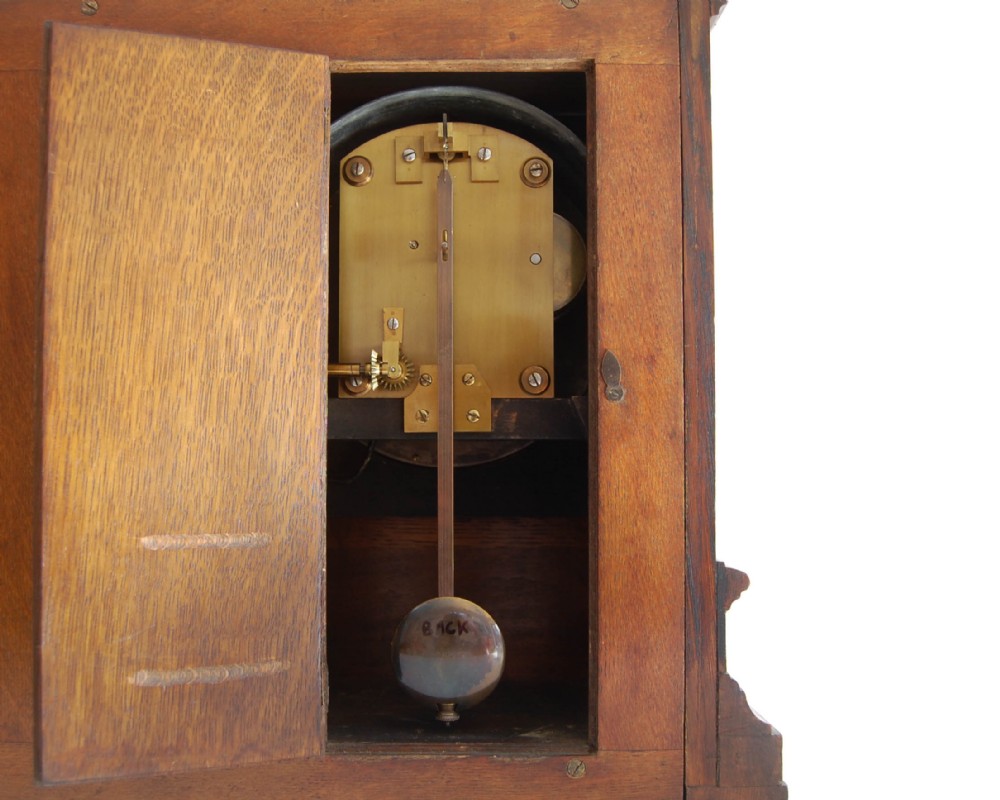
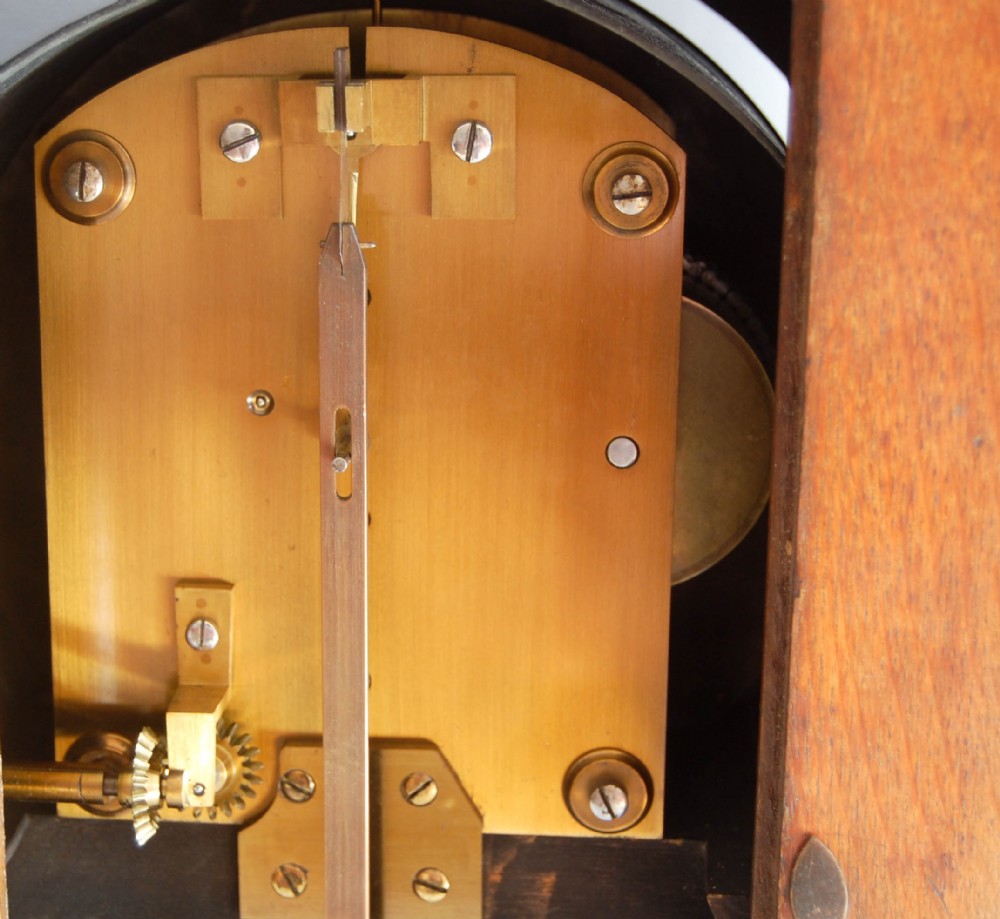
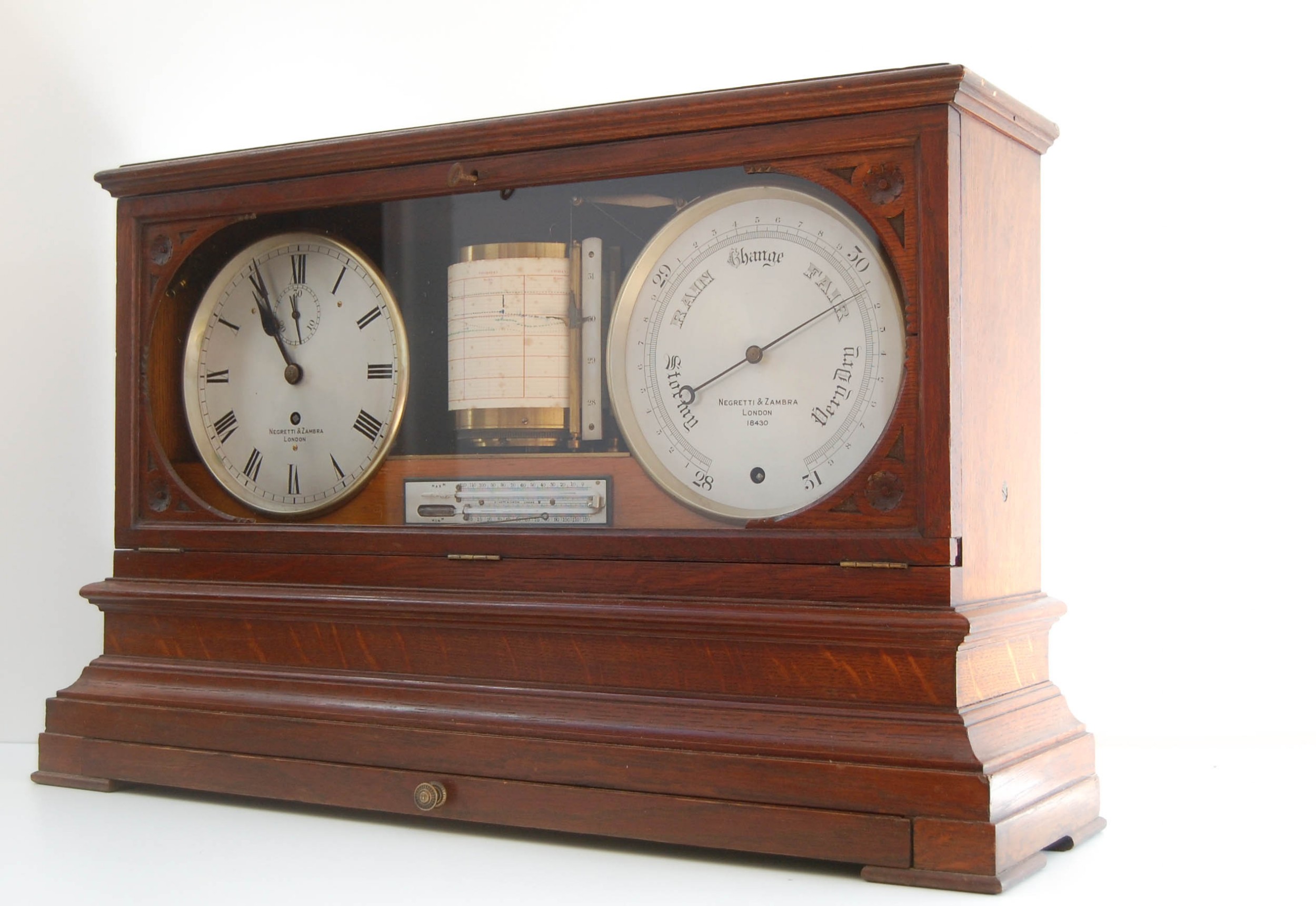
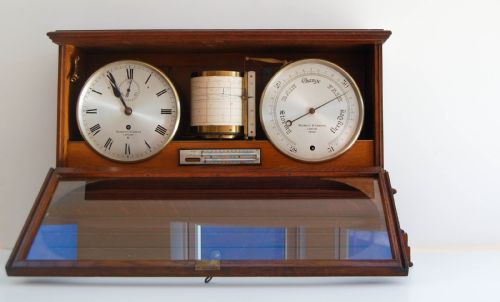
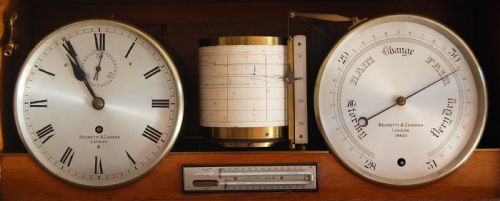
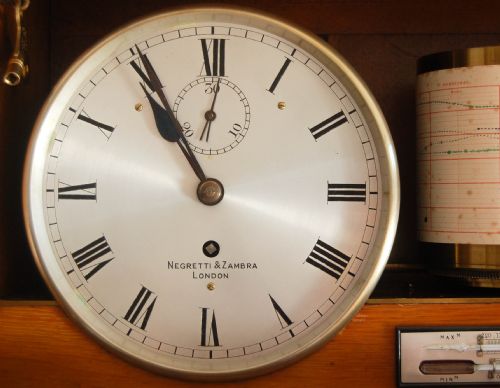
This beautifully imposing instrument is comprised of a super quality chain fuse movement with original pendulum and 7” silvered dial to the front incorporating a secondary seconds dial and engraved to “Negretti & Zambra, London”.
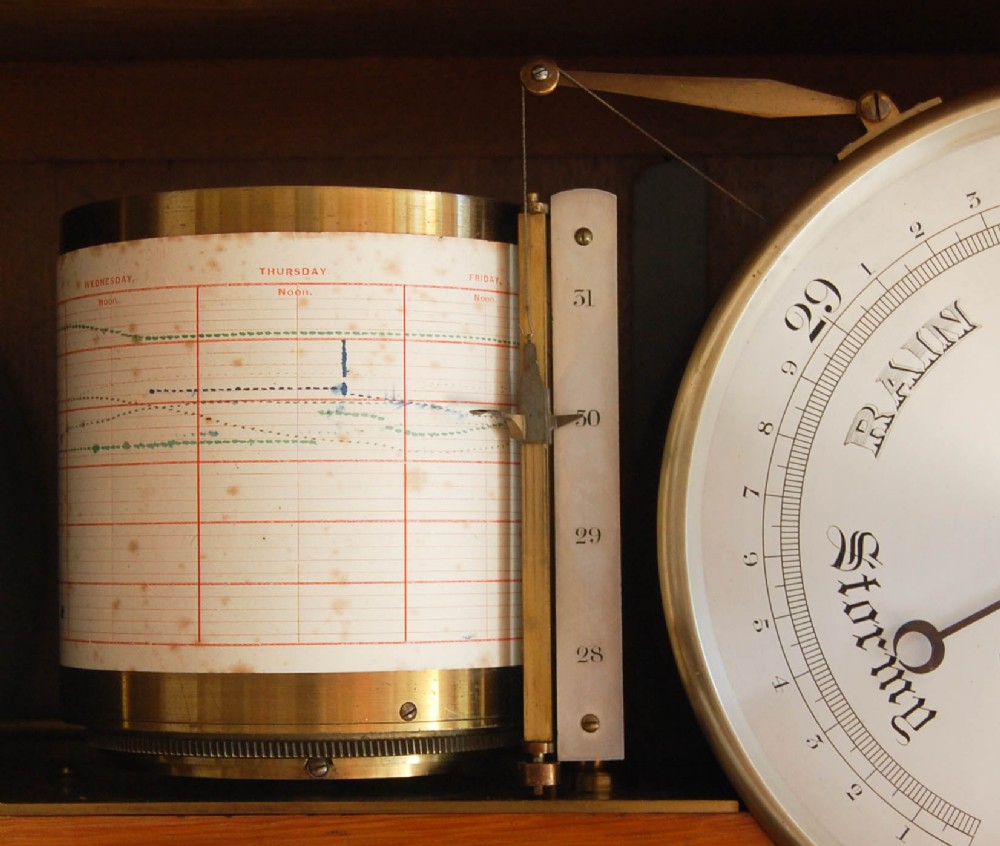
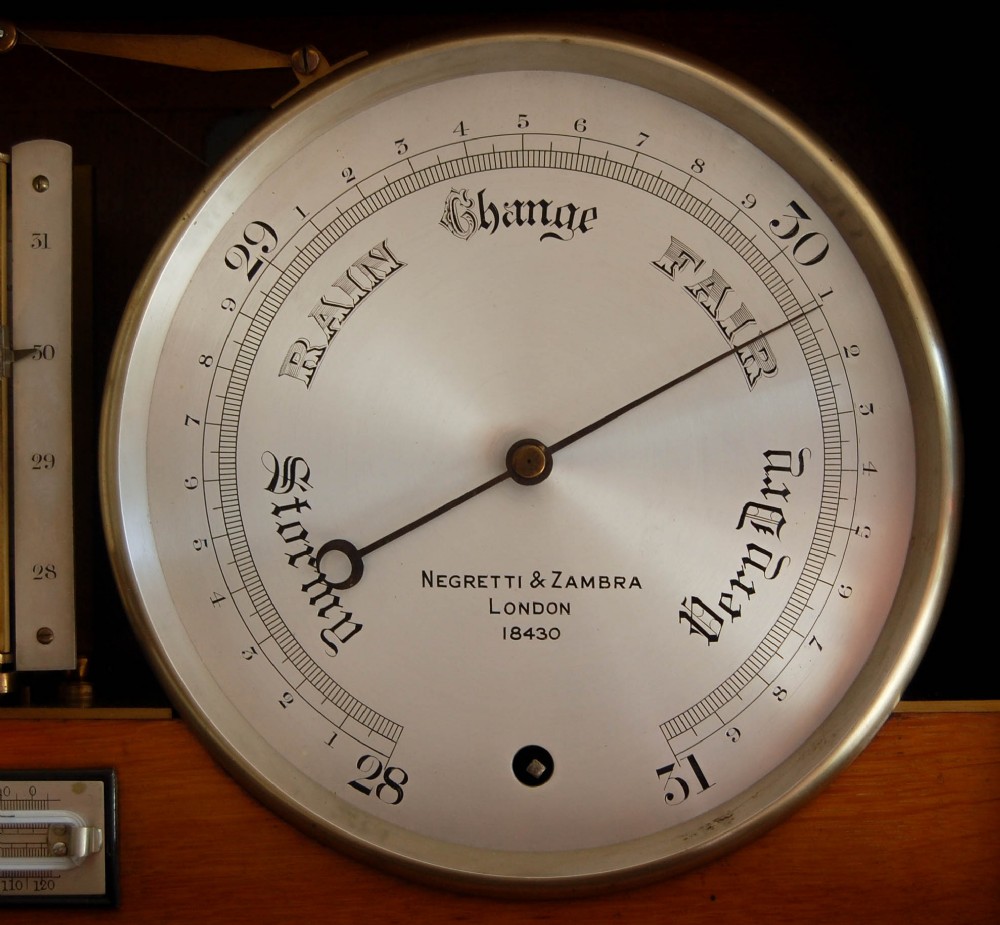
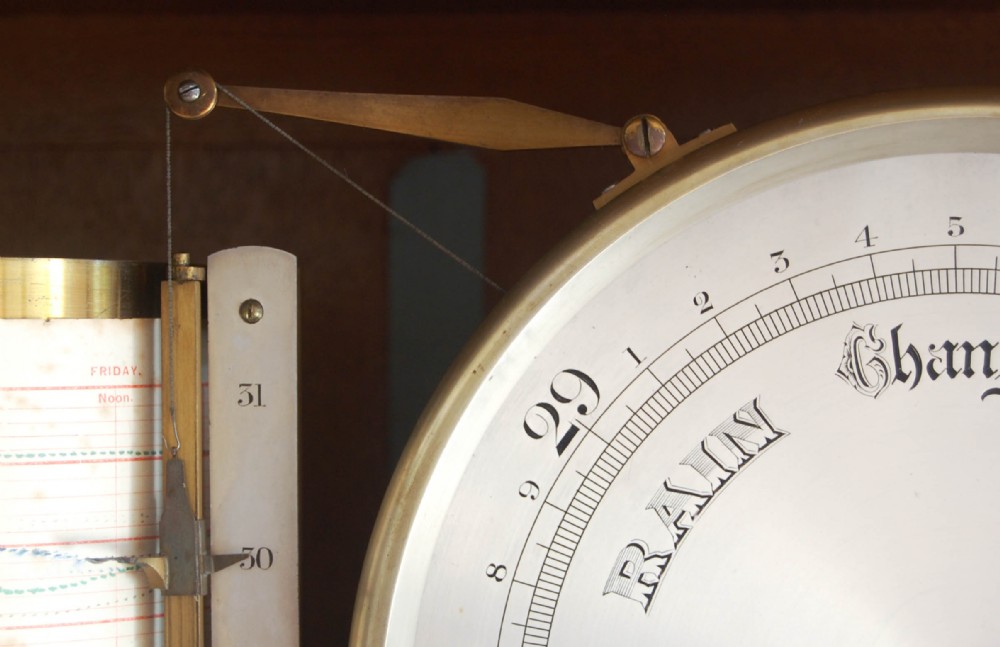
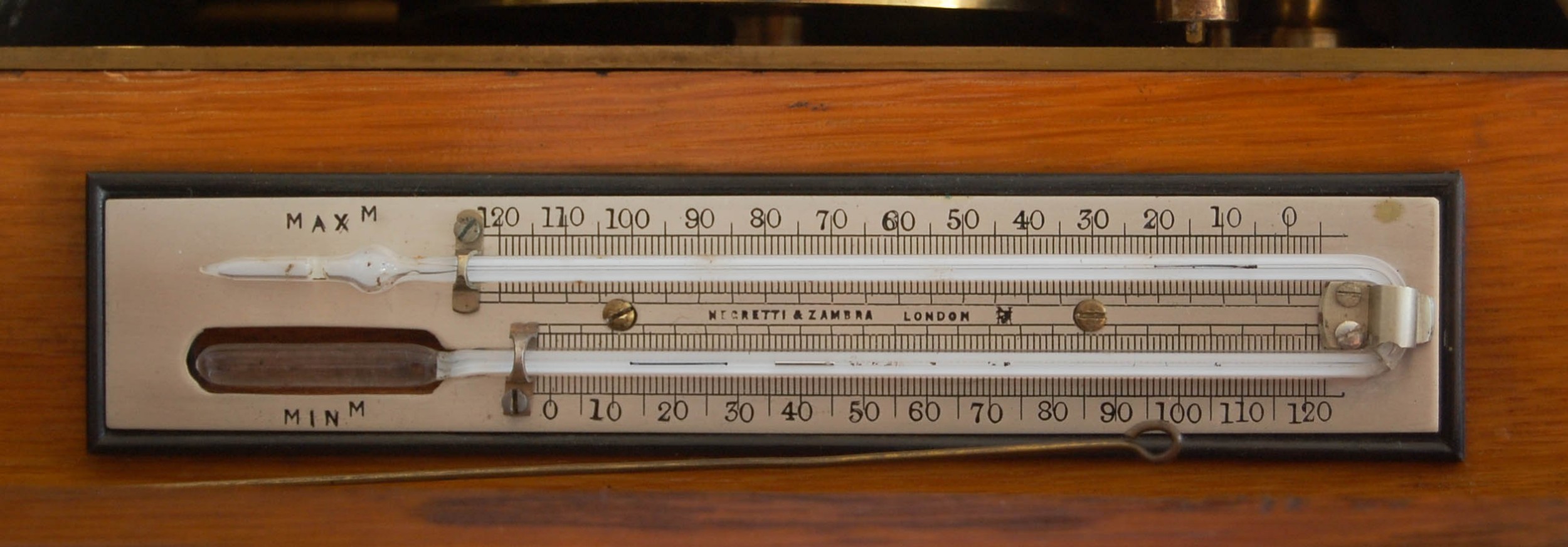
The aneroid barometer has a 7” silvered dial also engraved with the makers name and has a serial number of “18430”. The scale measures 28 to 31 inches of barometric pressure and like the clock, the barometer also drives (by means of a fusee chain) the vertical movement of the nib up and down the scale according to the pressure changes on the barometer. The clock also regulates the horizontal movement of the nib which rotates it position every hour to allow it to make contact with the recording paper. As if the clock did not have enough to do, it also has an unseen gong type mechanism underneath the movement shelf which makes contact with the barometer housing every quarter of an hour. This mechanism being required to ensure that the barometer reading remains absolutely precise when it comes into contact with the paper. Below this ingenious mechanism, a max/min thermometer is also attached to the front of the case which was not a feature on all examples that were available and likely an added feature commanding an addition to the price. The thermometer has sadly failed over the years but has been kept for completeness and originality.
These wonderful meteorological instruments came to prominence in the 1870’s by which time the aneroid barometer had become a firm domestic favourite. Then as now, the English being famed for their obsession with the weather, it is no wonder that companies such as Negretti & Zambra were developing ever more complex instruments to feed the demand. Examples of these instruments were also manufactured by the likes of JB Dancer, Abraham & Co, JH Steward, John Davis and J Hicks to note but a few.
It instrument must have had some popularity as it remained amongst the product lists in the Negretti & Zambra catalogue of the 1880s where it is described as follows:
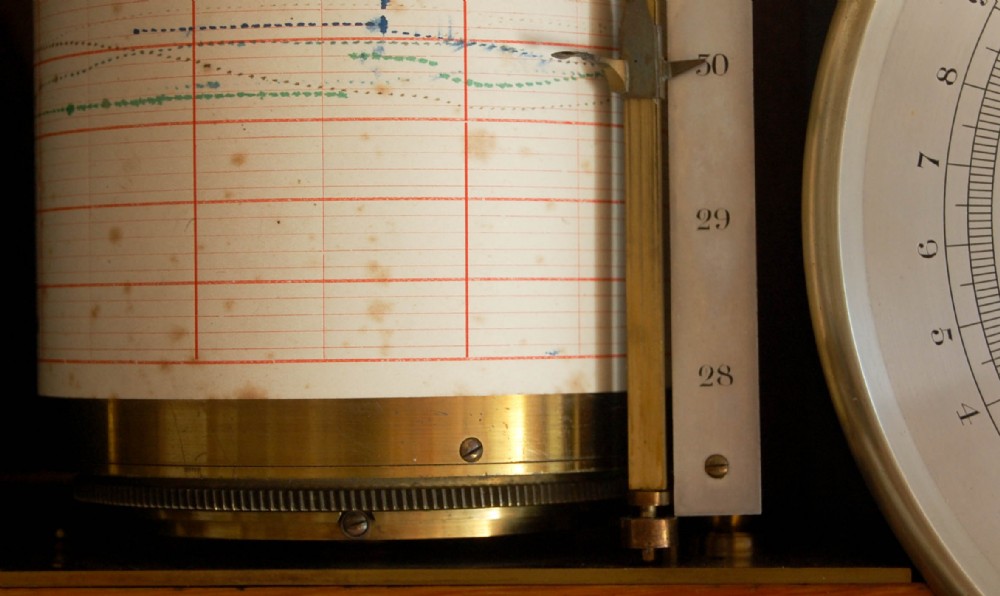
“These instruments are arranged to show the various fluctuations that have taken place in the barometer during the absence of the observer. They consist of a carefully finished aneroid and an eight day clock; between these is placed in a vertical position, a revolving cylinder having a metallic paper attached to it ruled to coincide with the inches and tenths of the barometer scale. Close to this paper, is a pencil mounted on a metallic rod and is moved up and down as the variation of atmospheric pressure acts upon the vacuum chamber of the aneroid; at every hour this pencil is made to mark the paper by simple mechanism in connection with the clock.
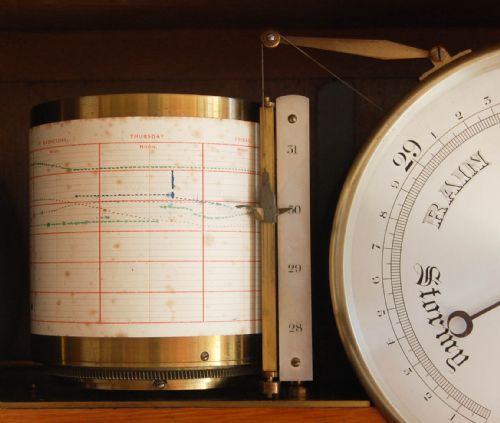
By this means a black dotted curved line is produced on the paper, showing at a glance the present height of the barometer – whether it is falling or rising – for how long it has been doing so, and at what rate the change has taken place – if falling or rising at the rate of one tenth of an inch per hour, or one tenth in twenty four hours; all of which are particulars most essential to know when foretelling the weather, and which can only be obtained from an ordinary barometer by very frequent and regular observations.
Our engraving show the full mounting of the Registering aneroid, combining a reliable timepiece with an exceedingly interesting meteorological instrument, of a suitable and convenient size for a library or dining room mantel shelf”.
The fact that Negretti was also selling barographs by this period shows that this instrument was devised as both an ingenious, and an aesthetic
Jason Clarke Antiques has dated this piece to the 1870s.
You can view the stock and full dealer information on the Jason Clarke Antiques Profile Page
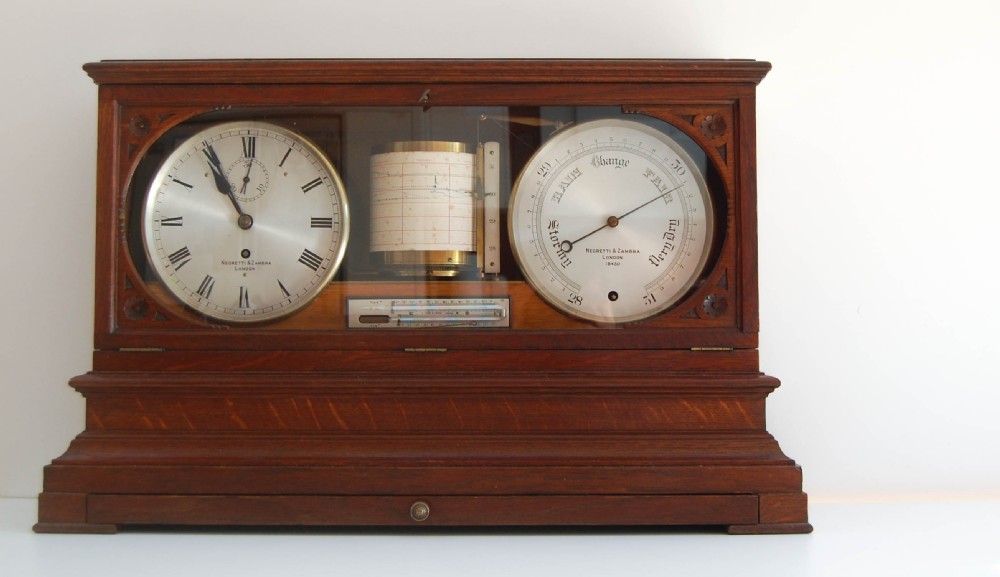
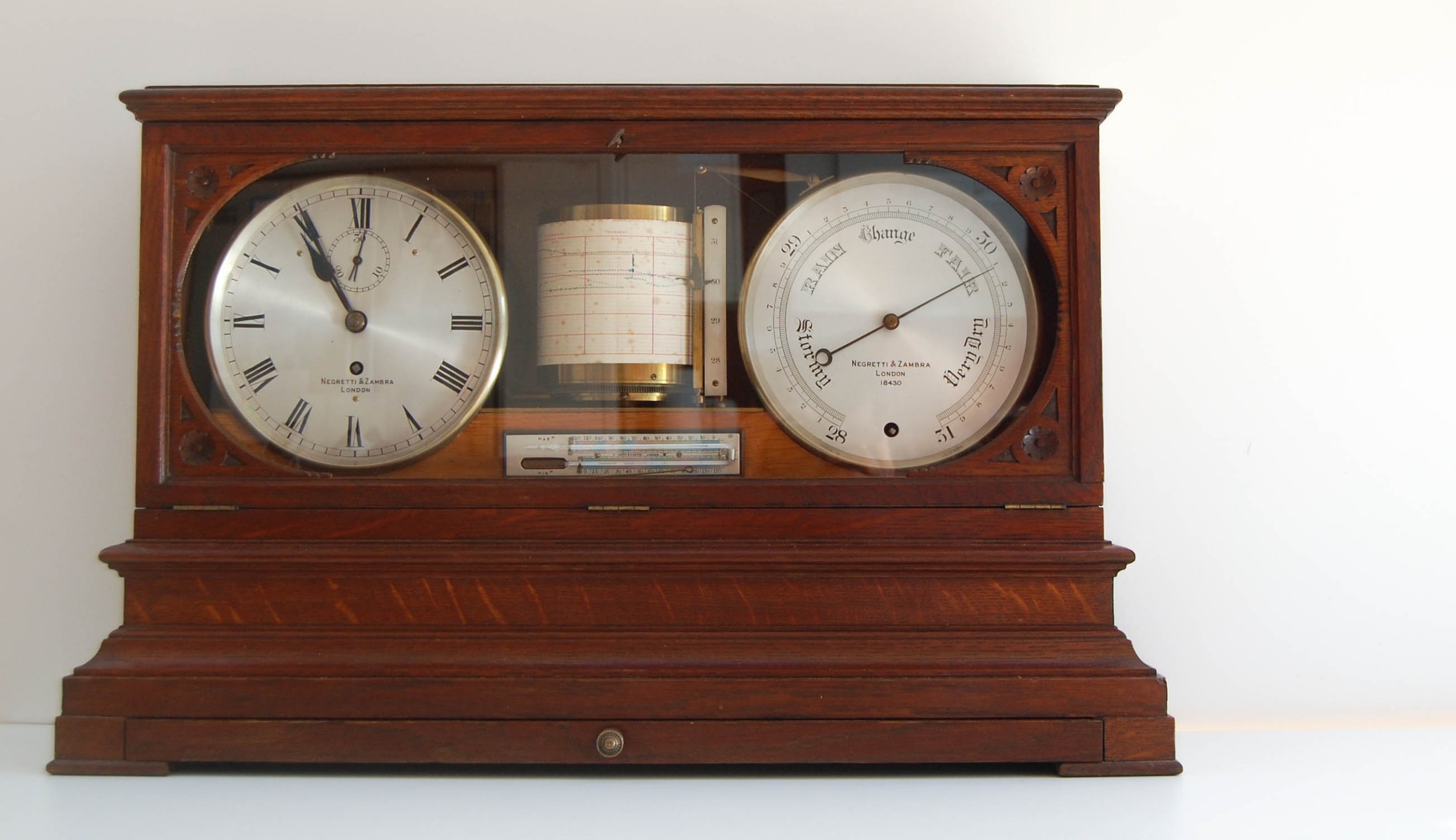
Mid-victorian Weather Station or Self Recording Aneroid Barometer by Negretti & Zambra