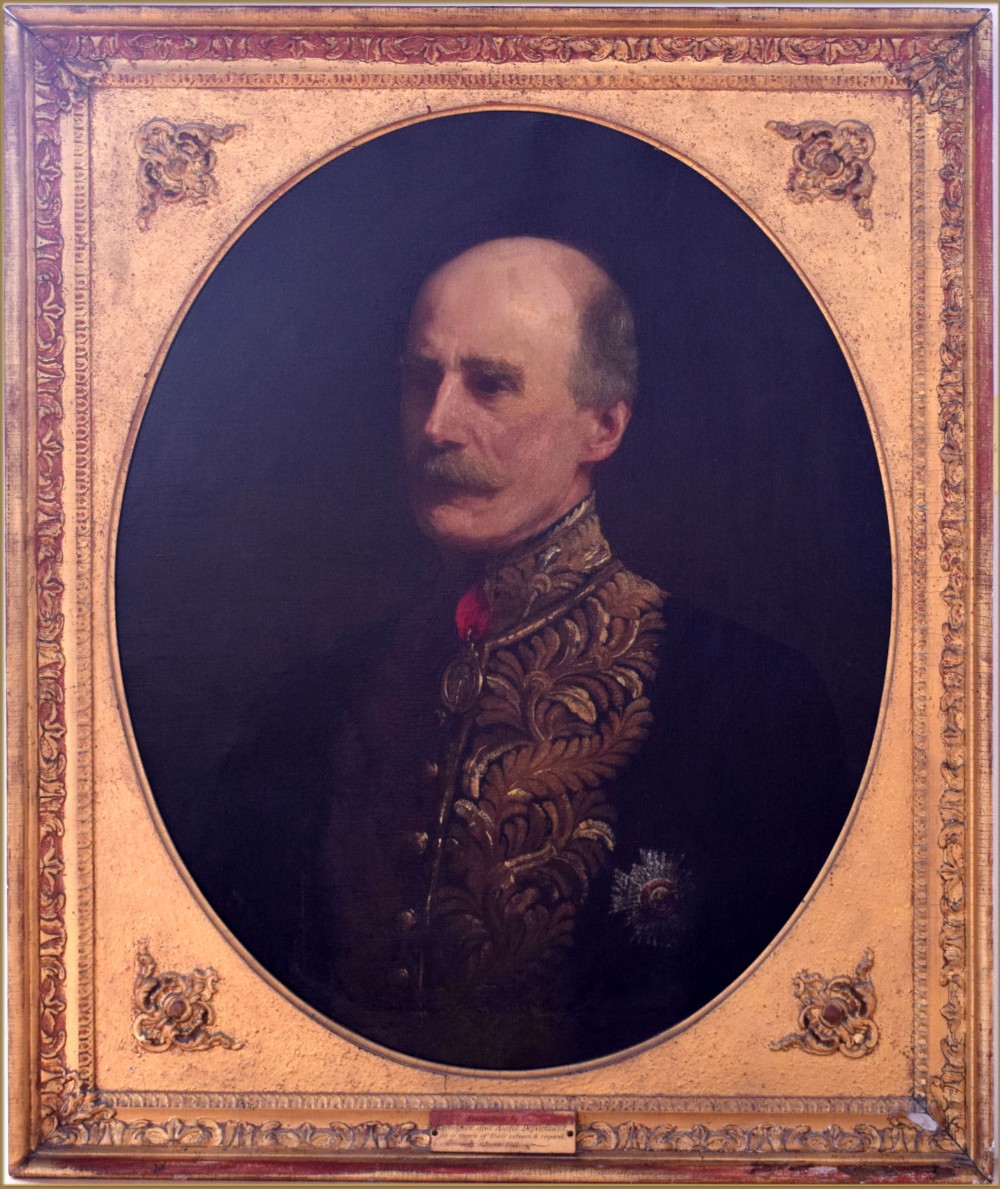
It was listed by Artware Fineart. Sold pieces stay on Sellingantiques as a record of what has passed through, and the next one is rarely far away.
Artware Fineart has dated this piece to the 19th Century.
Signed/Inscribed:
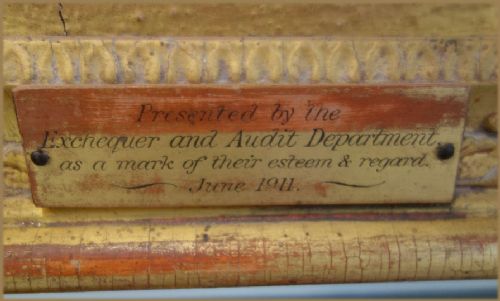
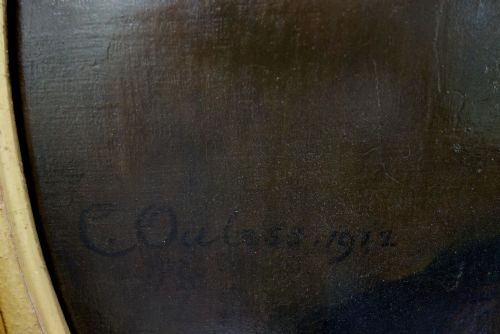
"C. Ouless. 1912" and further inscribed on a plaque attached to the frame " Presented by the / Exchequer and Audit Department / as a mark of their esteem and regard / June 1911
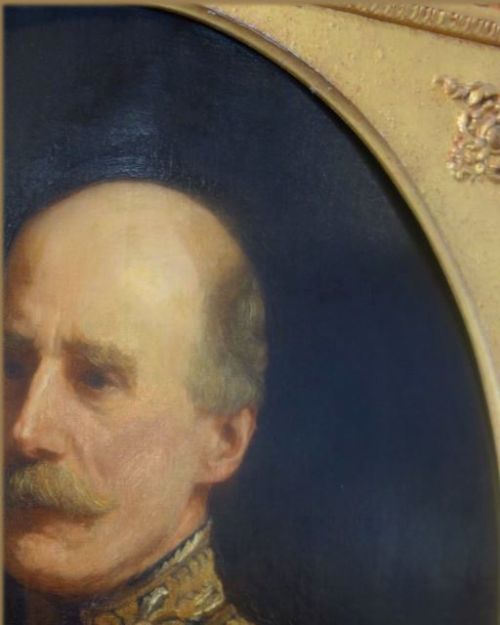
oil on canvas
36 x 28 in. (92 x 72 cm.)
Reginald Baliol Brett, second Viscount Esher (1852–1930), courtier, was born on 30 June 1852 at 19 Prince's Terrace, Kensington, London, the eldest of three children of William Baliol Brett, first Viscount Esher (1815–1899), barrister and later master of the rolls, and his wife, Eugénie (1814–1904), a Frenchwoman, daughter of Louis Mayer and a stepdaughter of Colonel John Gurwood (1790–1845), the editor of Wellington's dispatches. The Bretts had been small squires, but they had no fixed estate. W. B. Brett acquired a moderate fortune at the bar, became a Conservative MP, solicitor-general, and in 1885 was ennobled by Lord Salisbury.
Esher remembered sitting on the lap of an old man who had played violin for Marie Antoinette, Reginald Brett went to preparatory school at Cheam in 1863 and to Eton College in 1865. His five years at Eton were among the most important in his life. The political and romantic friendships he developed there influenced his later career and personality. They rendered Eton a lost golden age that he looked back upon with longing, nostalgia, and regret. His most influential master there, William Johnson (1823–1892), encouraged adolescent homoeroticism and historical study of heroic statesmen. Later, in 1872, Johnson had to resign from Eton, reportedly because of a scandal with a boy. He changed his surname to Cory, married, and lived in retirement, but Brett remained loyal and later published a memoir of him, Ionicus (1923). William Johnson Cory, whose pupils included the future prime minister Lord Rosebery and others in the highest echelons of society. Rosebery's idealistic learning from romantic poets Wordsworth and Coleridge, the liberal philosopher J S Mill, the chemistry of Leibniz, music of Mozart, and Jeremy Bentham were intellectual influences on the young Regy.
Brett went to Trinity College, Cambridge, in 1870 (BA 1875, MA 1879, hon. LLD 1914). He soon met William Harcourt, then a barrister and Cambridge law professor, but later a leading Liberal politician. Harcourt let Brett occupy his rooms at Trinity. Brett's father was a Conservative, but influenced by Harcourt and a new Cambridge friend, son of the queen's former private secretary, Albert Grey, Brett became a Liberal, though he was perhaps most attracted by the style of the aristocratic whigs. Brett was profoundly influenced by William Harcourt the radical lawyer, politician and Professor of International Law. Harcourt controlled Brett's rooms, and lifestyle at Oxford. Brett's father had introduced him to Albert Grey's Committee, but had a long-standing dispute with General Charles Grey, the Queen's Equerry. Brett was admitted to the Society of Apostles, dedicated to emergent philosophies of European atheism; their number included the aristocratic literati of liberalism Frank, Gerald and Eustace Balfour, Frederick and Arthur Myers, Hallam and Lionel Tennyson, Edmund Gurney, S H and J G Butcher. Brett experimented approaching conversion to High Mass from Cardinal Newman on Sundays in London. The Oxford Movement included historians, J Sedgwick and F M Maitland holding an equally profound sway over his youthful scholarship.He was admitted to the Middle Temple in April 1873 and called to the bar in 1881, but never practised as a lawyer.
Brett was seen with the Carlton Gardens set of Lady Granville, he was friend of the Clare brothers, introduced by the Earl de Grey. He visited Howick Park, and took law with Lord Brougham and Vaux. The
Artware Fineart has dated this piece to the 19th Century.
You can view the stock and full dealer information on the Artware Fineart Profile Page
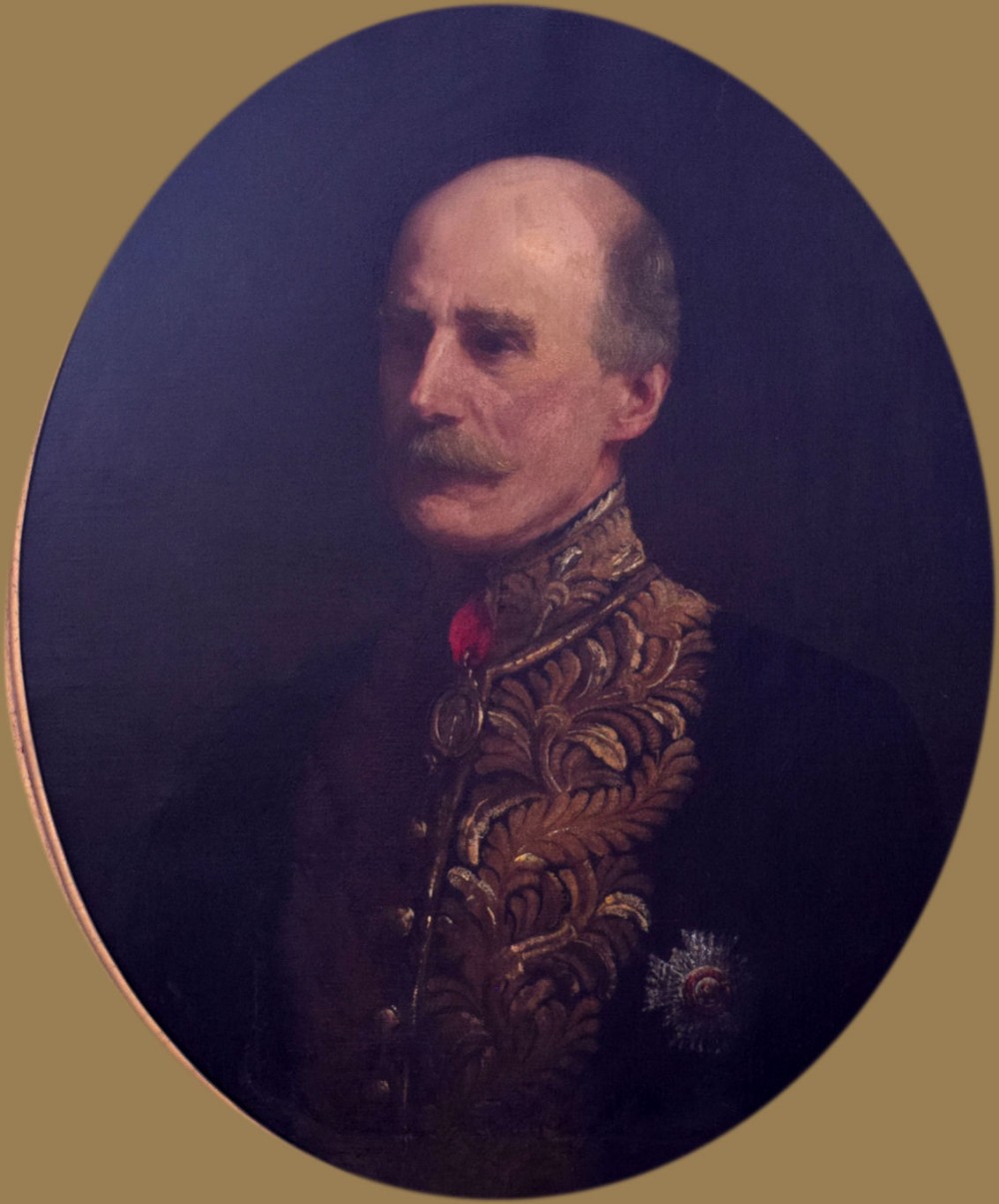
Catherine Ouless, 1879-1961 Portrait of Reginald Brett, 2nd Viscount Esher 1852–1930, Gcvo, Kcb, Pc, Dl, in Diplomatic Dress & the Order of the Bath