It was listed by Artware Fineart. Sold pieces stay on Sellingantiques as a record of what has passed through, and the next one is rarely far away.
Artware Fineart has dated this piece to the 19th Century.
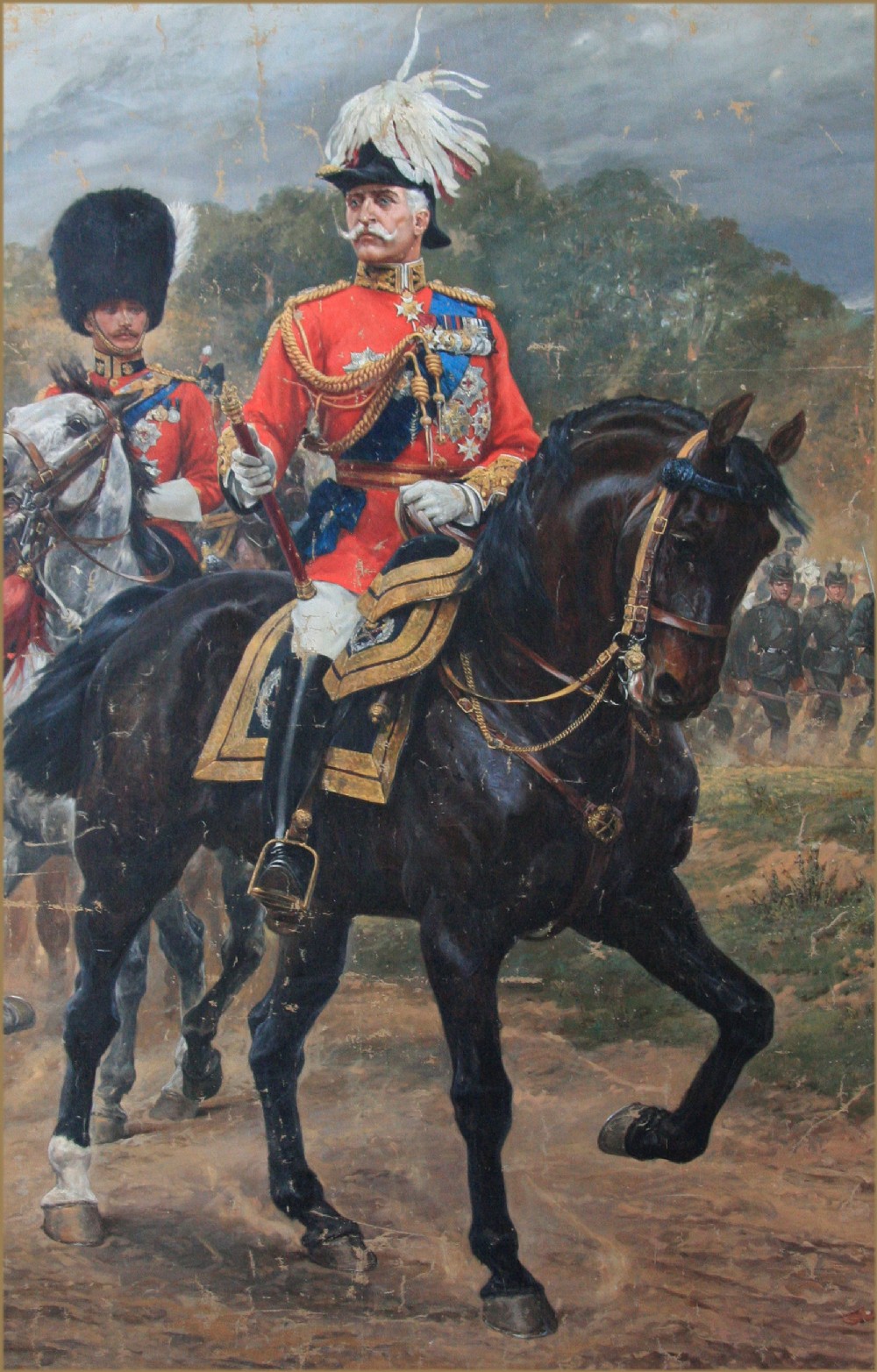
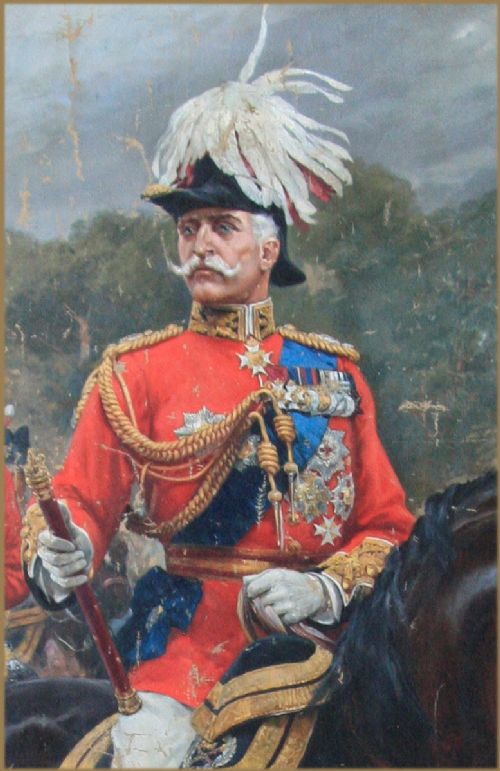
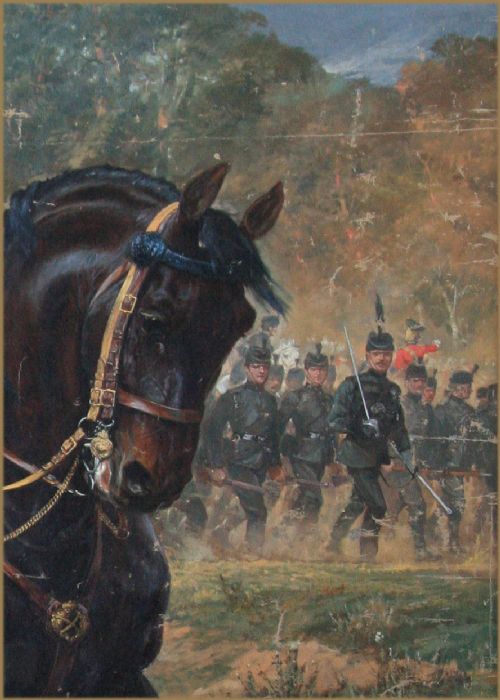
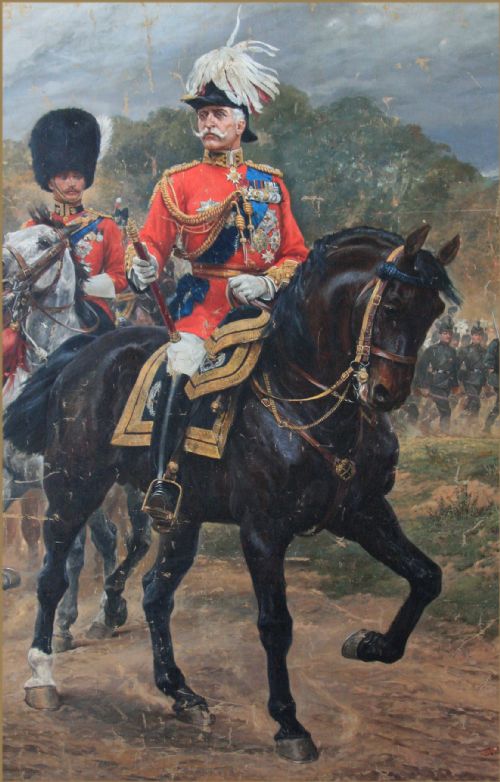
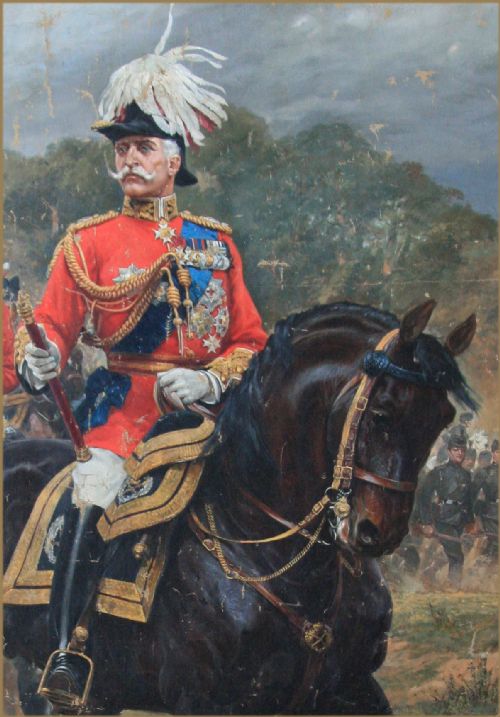
Prince Arthur, Duke of Connaught and Strathearn (Arthur William Patrick Albert ), 1850 – 1942
Signed/Inscribed:
"Richard Caton Woodville / 1914"
oil on canvas
360 x 243 cm. (141.3/4 x 95.3/4 in.)
Prince, Arthur first duke of Connaught and Strathearn (1850–1942), governor-general of Canada, army officer, and son of Queen Victoria, was born at Buckingham Palace, London, the third son and seventh of the nine children of Queen Victoria and Prince Albert, on 1 May 1850, the birthday of his godfather, the duke of Wellington, after whom he was named Arthur William Patrick Albert.
In 1858 his father mapped out a scheme for his education and appointed Captain Howard Elphinstone as his governor. The young prince lived in an independent establishment with his governor at Ranger's House, Greenwich, and, on the death of the prince consort in 1861, Elphinstone took an increasingly paternal role in his charge's life. He was influential in leading the prince to acquire an interest in and appreciation of the arts and sciences, with the result that Arthur was more cultivated than either of his elder brothers, the prince of Wales and the duke of Edinburgh.
Prince Arthur's formal military training began on 11 February 1867 when he entered the Royal Military Academy at Woolwich. In 1868 he was commissioned in the Royal Engineers and was subsequently posted to the various arms of the service to give him the broad qualification which might later be useful if, as was expected, he were to succeed the duke of Cambridge as commander-in-chief. His first service abroad was from 1869 to 1870, in Canada with the rifle brigade. On 24 May 1874, he was created duke of Connaught and of Strathearn, and earl of Sussex, and was subsequently known by his first title. In 1876 he was promoted lieutenant-colonel and placed in command of the 1st battalion of the rifle brigade. From 1880 to 1883, as a major-general, he commanded the infantry brigade at Aldershot. His promotion had been accelerated, but he was to show that it had not outstripped his competence. In 1882 he commanded the brigade of guards during the Egyptian campaign, which culminated in Wolseley'sbrilliant victory at Tell al-Kebir against Arabi Pasha's much larger, well-entrenched, and powerfully gunned army. Connaught's brigade was in the second line, but it, and he personally, came under fire during the engagement. He had succeeded in bringing his men to the right place at the right time after an adventurous night march in which much might have gone wrong. Wolseley declared that he had 'taken more care of his men and is more active in the discharge of his duties than any of the generals now with me'. Thus the duke acquitted himself well in battle and became the last British prince to command a significant formation in action.
During the pacification of Egypt, Connaught was governor of Cairo, but he had little taste for that work and was glad in 1883 to embark on service in India, first as a divisional commander and then, from 1886 until 1890, as commander-in-chief of the Bombay army. His area of responsibility extended from Bombay to Aden, but his wish to modernize the Indian armies and to reduce the social gap between the British and the Indian officers and troops was not encouraged by the duke of Cambridge nor, indeed, by almost anyone other than the queen. While in India, he travelled extensively and strenuously throughout the subcontinent carrying out military inspections, and on diplomatic and imperial missions. His interests ranged from improving the efficiency of his forces to concern for the status of women in what he considered a primitive form of society.
In these roles, Connaught excelled and, both before and after he was
Artware Fineart has dated this piece to the 19th Century.
You can view the stock and full dealer information on the Artware Fineart Profile Page

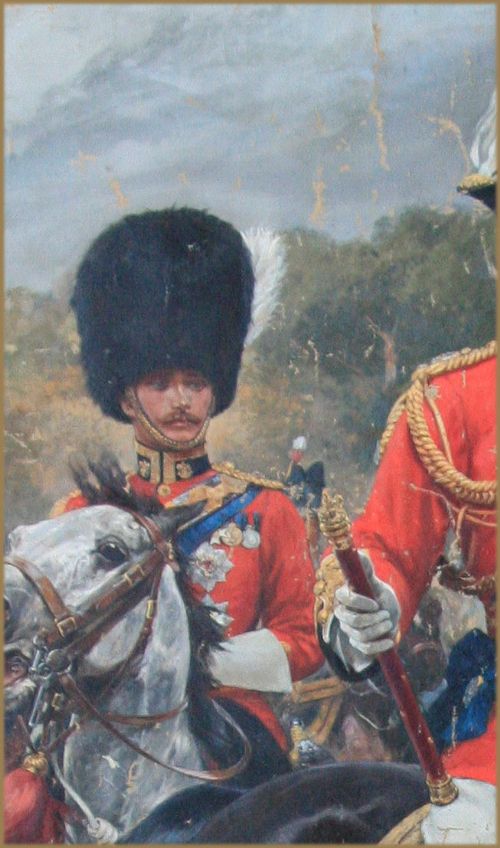
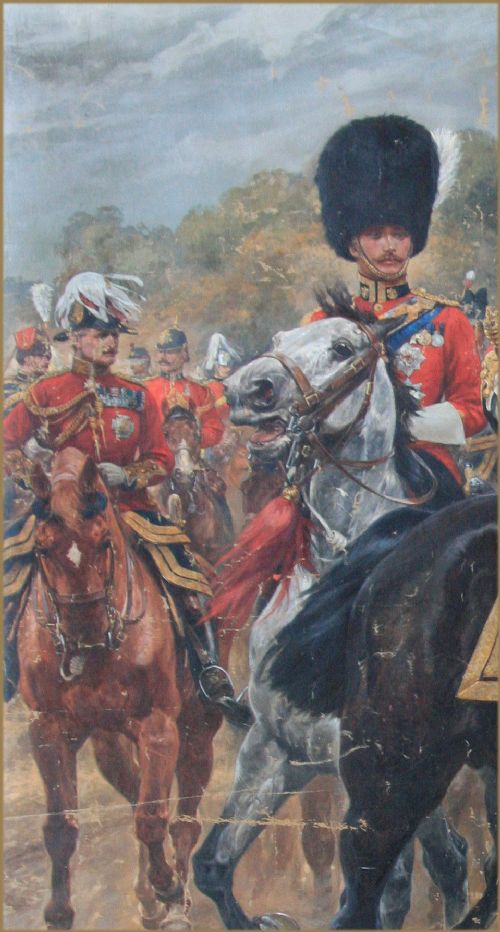
Richard Caton Woodville, 1856 – 1927 Prince Arthur, Duke of Connaught and Strathearn (Arthur William Patrick Albert ), 1850 – 1942